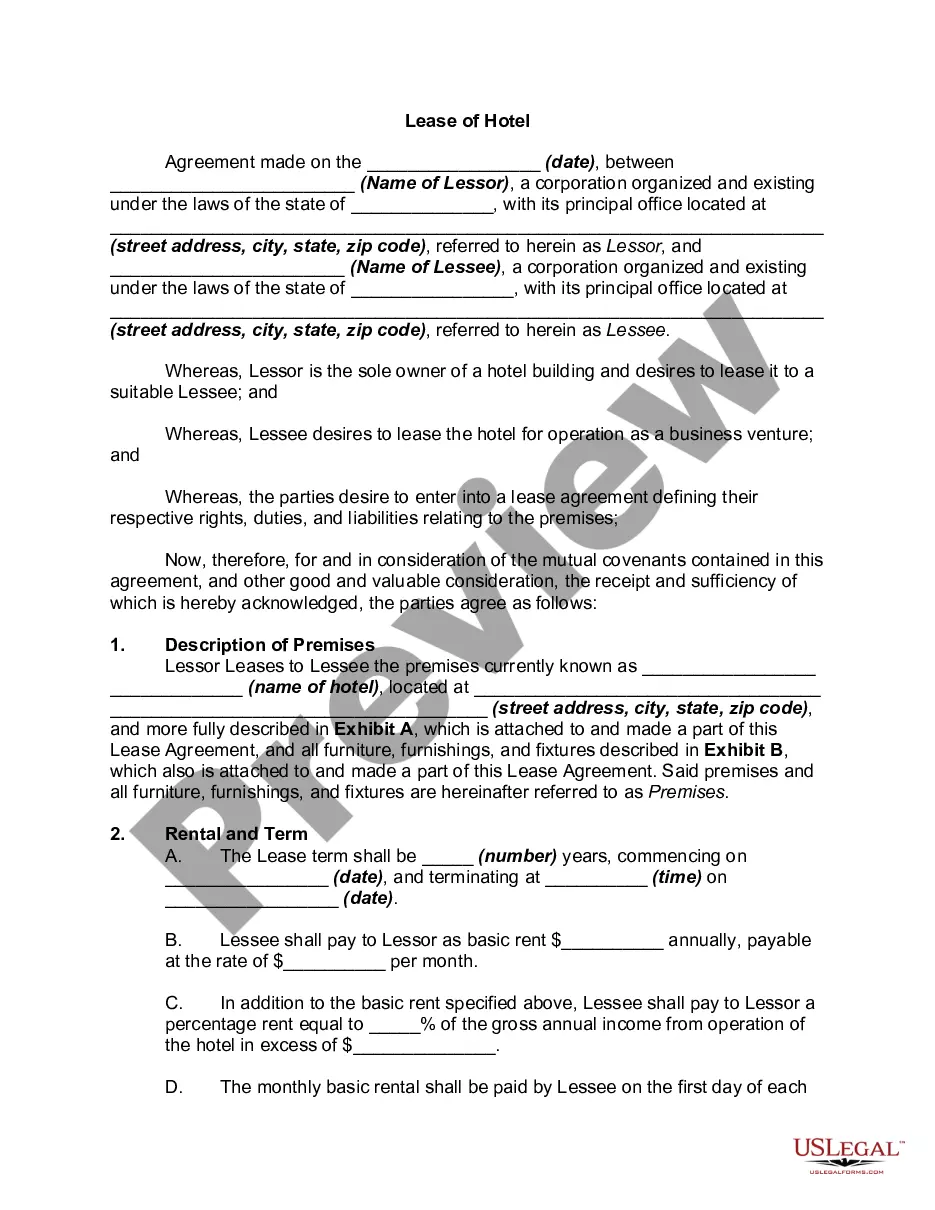
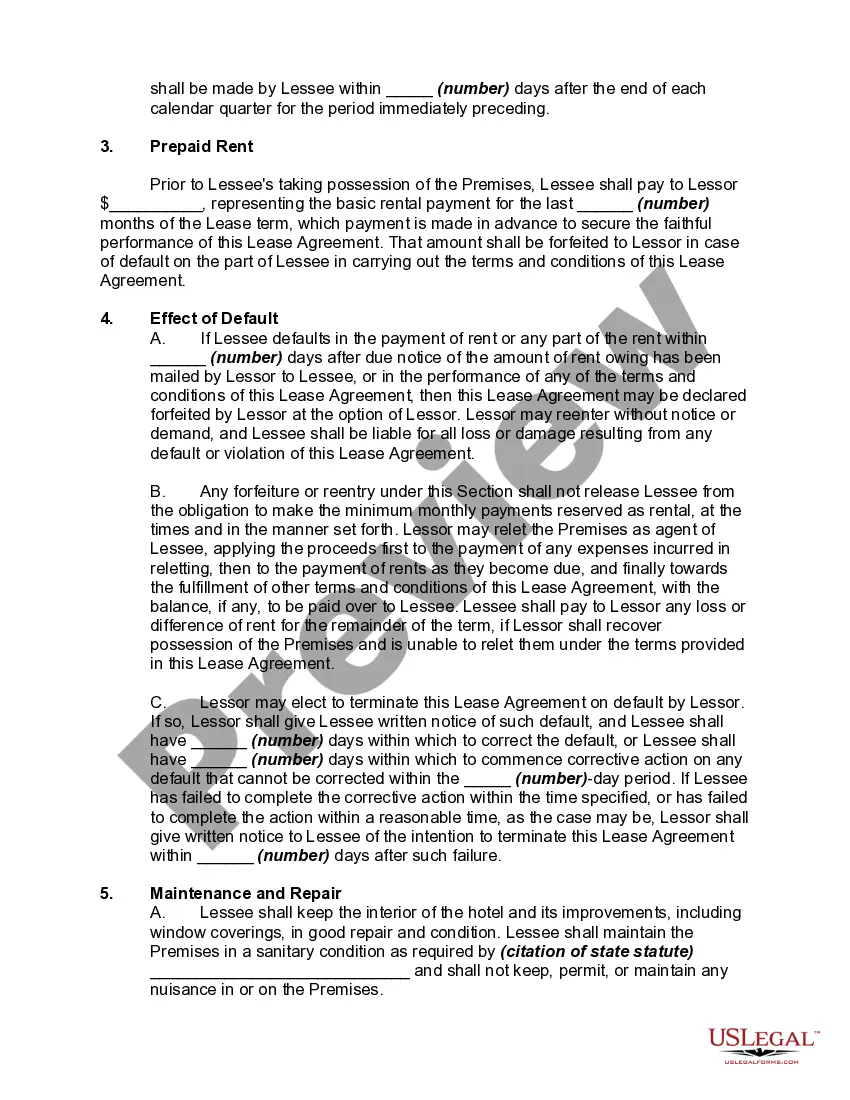
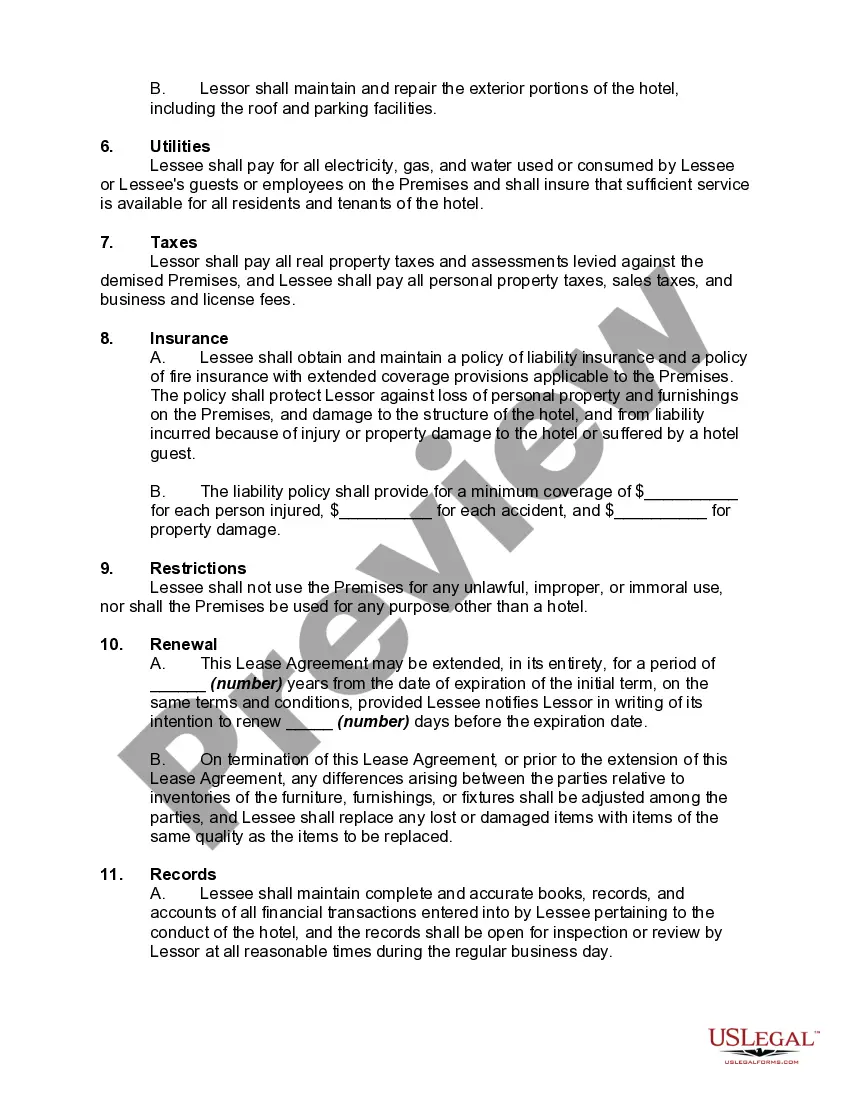
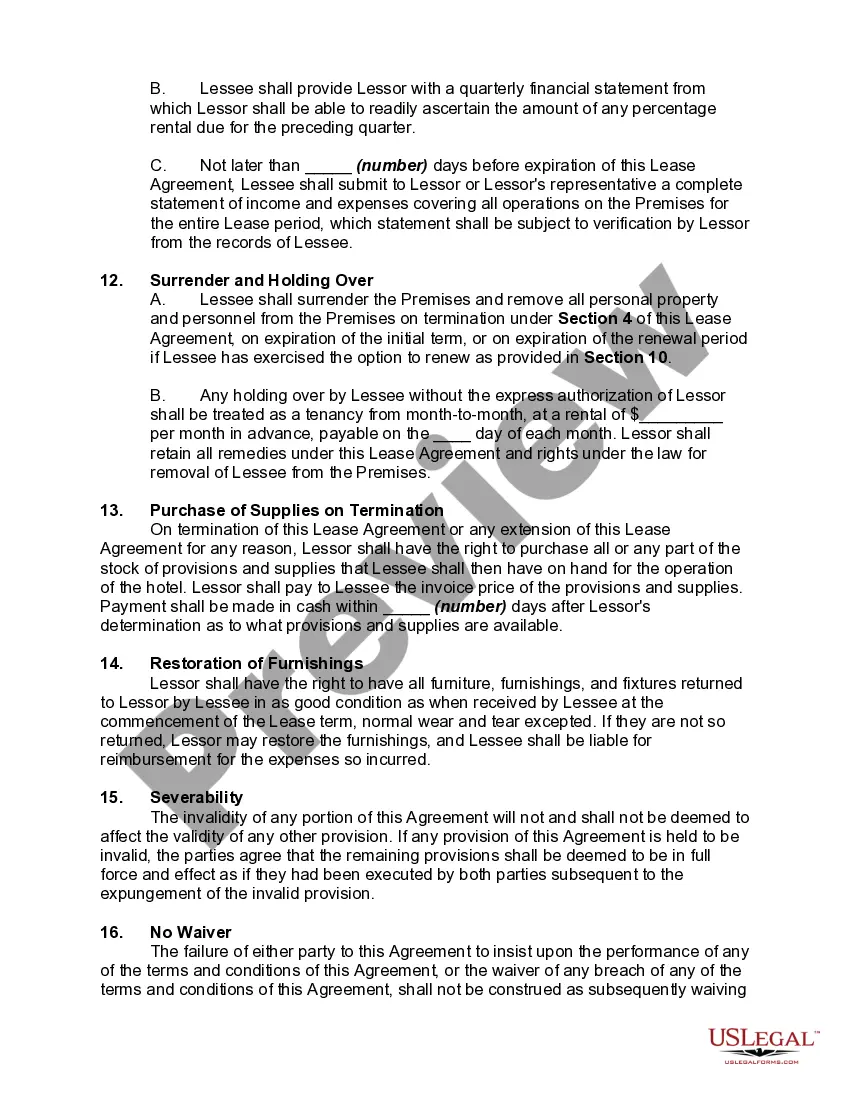
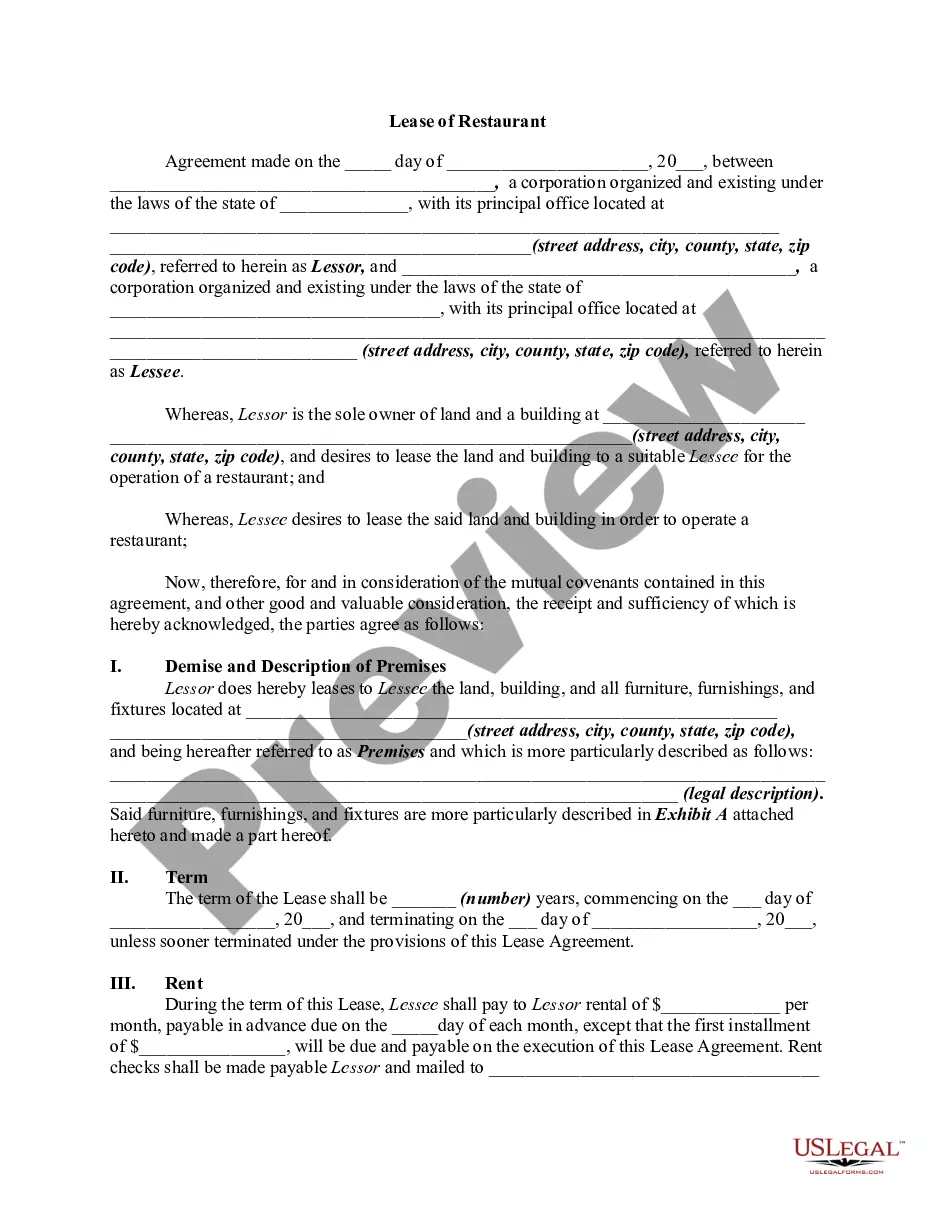
Texas Lease of Hotel
Description
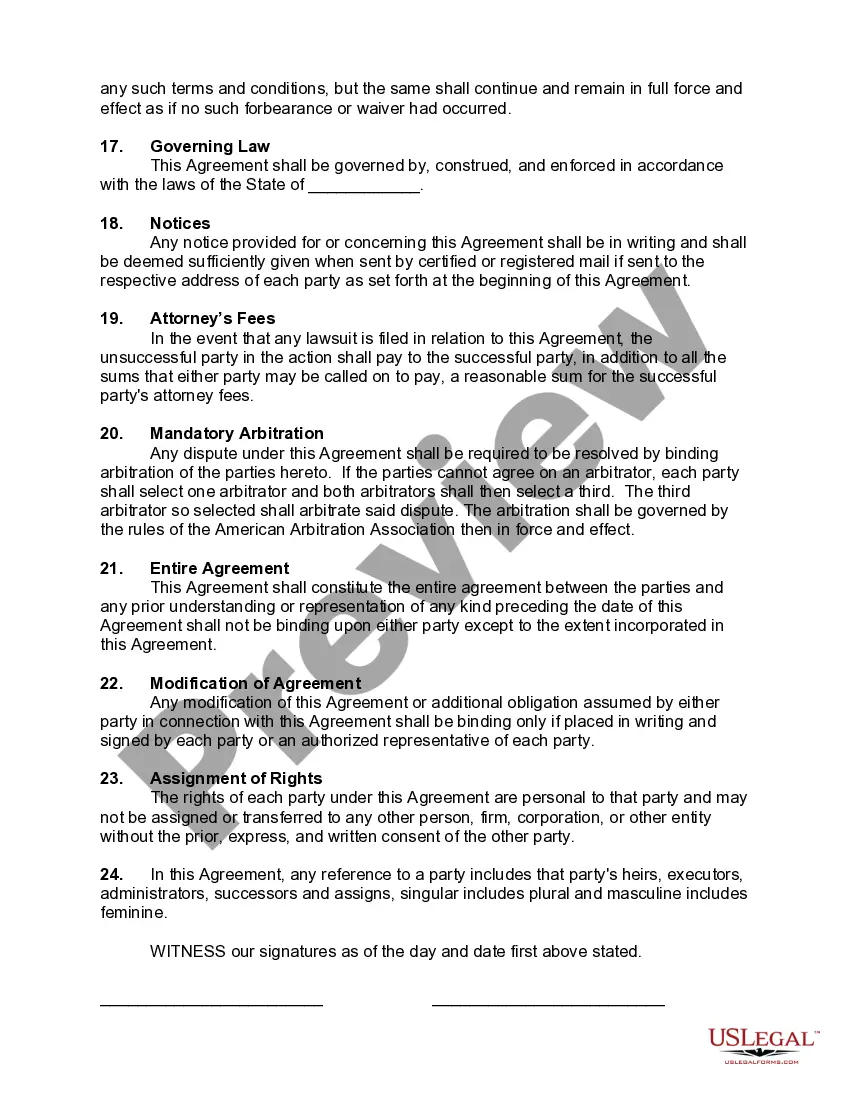
Get your form ready online
Our built-in tools help you complete, sign, share, and store your documents in one place.
Make edits, fill in missing information, and update formatting in US Legal Forms—just like you would in MS Word.
Download a copy, print it, send it by email, or mail it via USPS—whatever works best for your next step.
Sign and collect signatures with our SignNow integration. Send to multiple recipients, set reminders, and more. Go Premium to unlock E-Sign.
If this form requires notarization, complete it online through a secure video call—no need to meet a notary in person or wait for an appointment.
We protect your documents and personal data by following strict security and privacy standards.

Make edits, fill in missing information, and update formatting in US Legal Forms—just like you would in MS Word.

Download a copy, print it, send it by email, or mail it via USPS—whatever works best for your next step.

Sign and collect signatures with our SignNow integration. Send to multiple recipients, set reminders, and more. Go Premium to unlock E-Sign.

If this form requires notarization, complete it online through a secure video call—no need to meet a notary in person or wait for an appointment.

We protect your documents and personal data by following strict security and privacy standards.
Looking for another form?
How to fill out Lease Of Hotel?
Locating the appropriate authorized document template can be challenging.
Clearly, there are numerous templates available online, but how can you find the legal form you need.
Utilize the US Legal Forms website. This service offers a vast selection of templates, including the Texas Lease of Hotel, which you can use for both business and personal purposes.
You can browse the form using the Preview button and review the form description to verify it fits your requirements.
- All of the forms are reviewed by experts and comply with federal and state regulations.
- If you are already registered, sign in to your account and click on the Acquire button to access the Texas Lease of Hotel.
- Use your account to search for the legal forms you may have previously purchased.
- Go to the My documents tab in your account and download another copy of the form you need.
- If you are a new user of US Legal Forms, here are simple instructions to follow.
- First, make sure you've selected the correct form for your city/state.
Form popularity
FAQ
To register for hotel occupancy tax in Texas, start by filling out the Texas Hotel Occupancy Tax Registration Application. You can submit this application online or through your local tax office. If you're managing a Texas Lease of Hotel, timely registration ensures compliance with state laws and helps you avoid penalties down the road. Additionally, the uLegalForms platform offers resources to facilitate this process smoothly.
Texas hotel occupancy law dictates the rights and responsibilities of hotel operators and guests. This law primarily addresses issues such as rental terms, payment obligations, and eviction processes. If you are engaging in a Texas Lease of Hotel, being familiar with these laws can help you avoid disputes and ensure compliance with local regulations.
Establishing residency at a hotel in Texas is possible, but it comes with specific conditions. Generally, if you stay for more than 30 days, you may be considered a resident, which can affect your taxes and rental agreements. For those entering into a Texas Lease of Hotel, it’s crucial to clarify your status to avoid complications with official documentation and hotel rules.
The hotel tax in Texas generally includes both state and local components. The state imposes a 6% occupancy tax, which can be supplemented by local jurisdictions, resulting in a total tax that varies by city. For example, in major cities like Houston or Austin, the combined rate can reach up to 17%. If you are considering a Texas Lease of Hotel, understanding these tax obligations is essential for your financial planning.
Leaseback agreements in Texas can vary greatly, depending on the specific needs of both the property owner and the tenant. Generally, these agreements can range from a few months to several years. It's crucial to detail the duration and terms in the Texas Lease of Hotel to avoid any misunderstandings down the line.
Leases in Texas are legal contracts that outline the terms under which one party agrees to rent property from another. They establish the duration, payment details, and responsibilities for both the landlord and tenant. Familiarity with the Texas Lease of Hotel framework can guide you through potential issues and ensure compliance with state laws.
In Texas, a guest becomes a tenant when they sign a lease agreement that specifies their rights and responsibilities beyond just a short stay. This transition typically happens when a guest's stay extends beyond a set period outlined in the hotel policy, leading to a lease agreement under the Texas Lease of Hotel guidelines. Understanding these distinctions can help avoid confusion regarding tenant rights.
Leasing a hotel involves negotiating terms with the property owner, which may include rent, duration, and operational guidelines. The operator takes over management responsibilities while the owner retains ownership. This arrangement can provide financial flexibility for both parties when structured effectively.
Hotel leases in Texas are agreements between property owners and operators that outline the responsibilities of both parties. They specify how property management will operate the hotel, including maintenance, staffing, and guest services. Understanding the specific terms of a Texas Lease of Hotel can help both owners and operators make informed decisions.
In a Texas Lease of Hotel, the leasing method of payment typically involves a fixed monthly amount agreed upon in the lease contract. This payment often covers the use of the premises and may include additional fees such as maintenance or utilities. Always ensure to read the terms carefully as they can vary significantly from one lease to another.