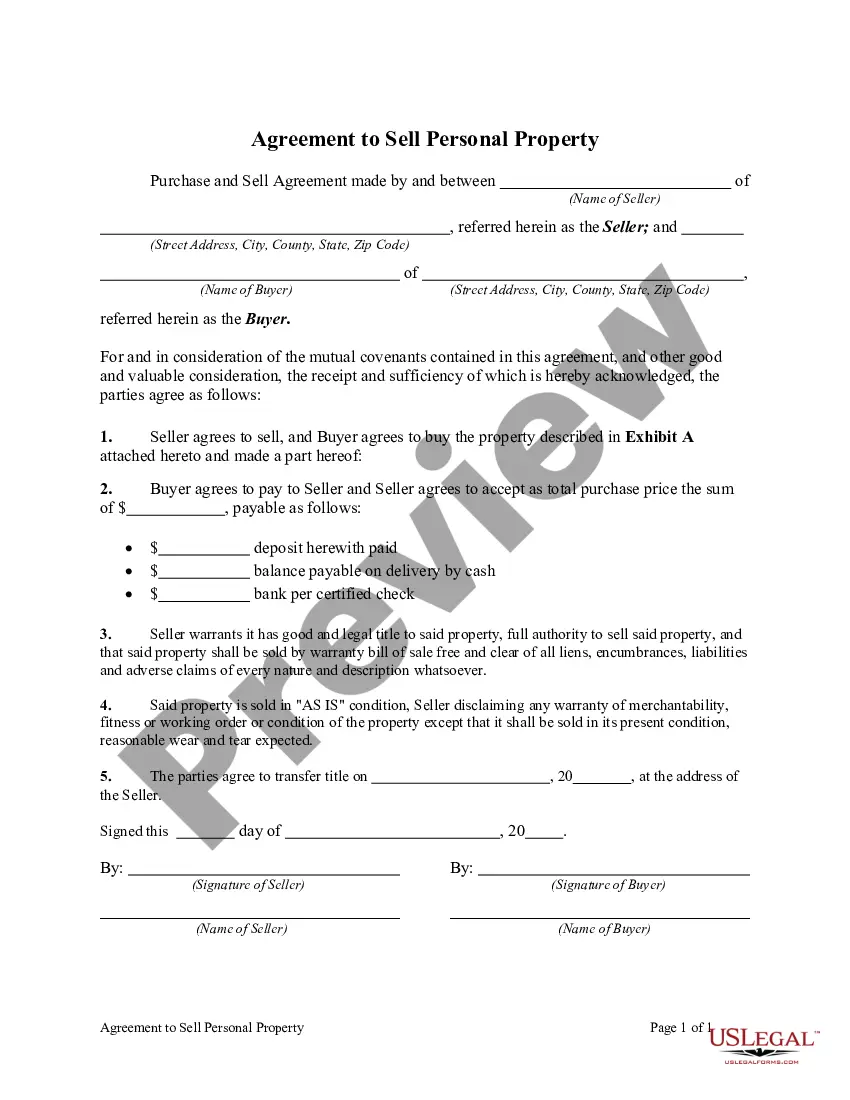
Texas Agreement to Sell Personal Property
Description
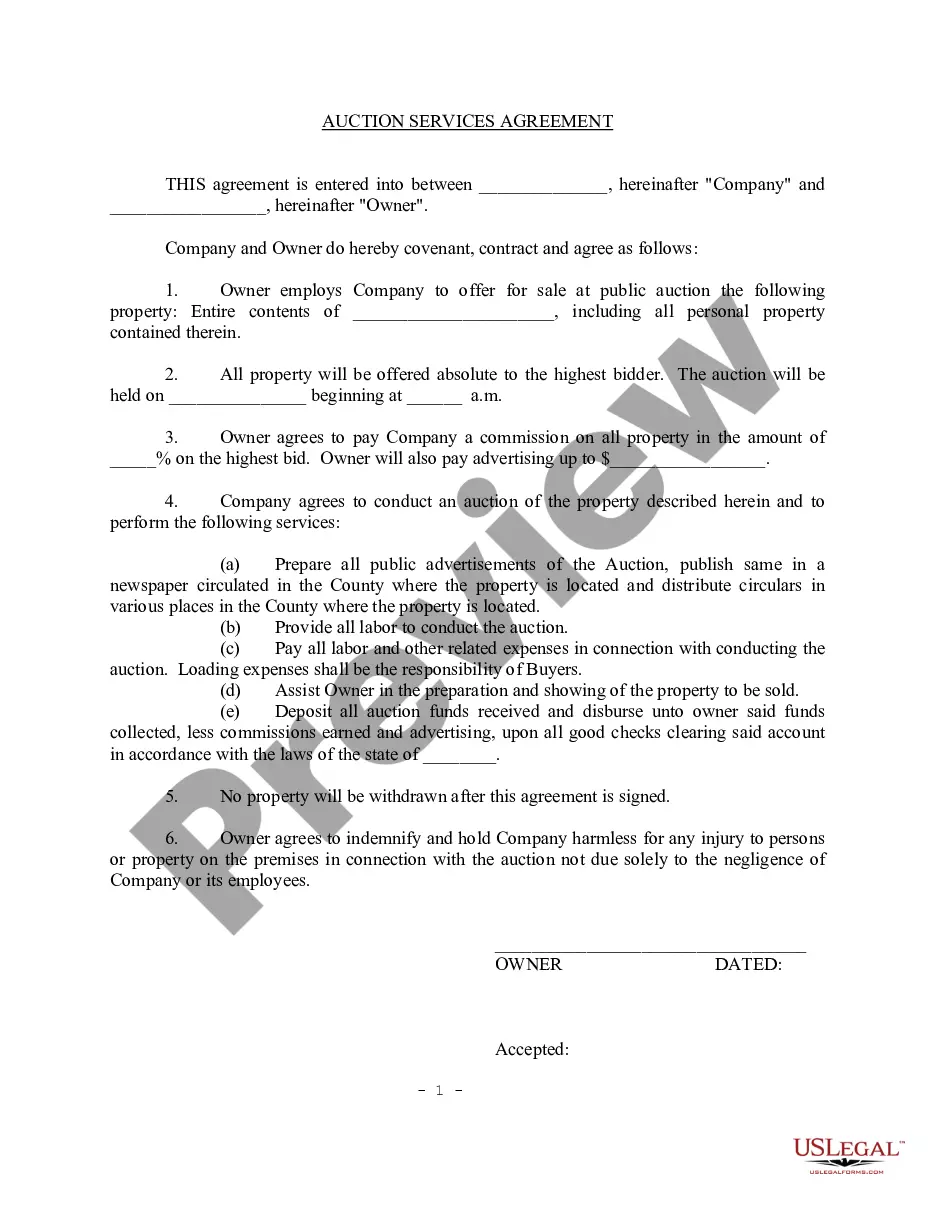
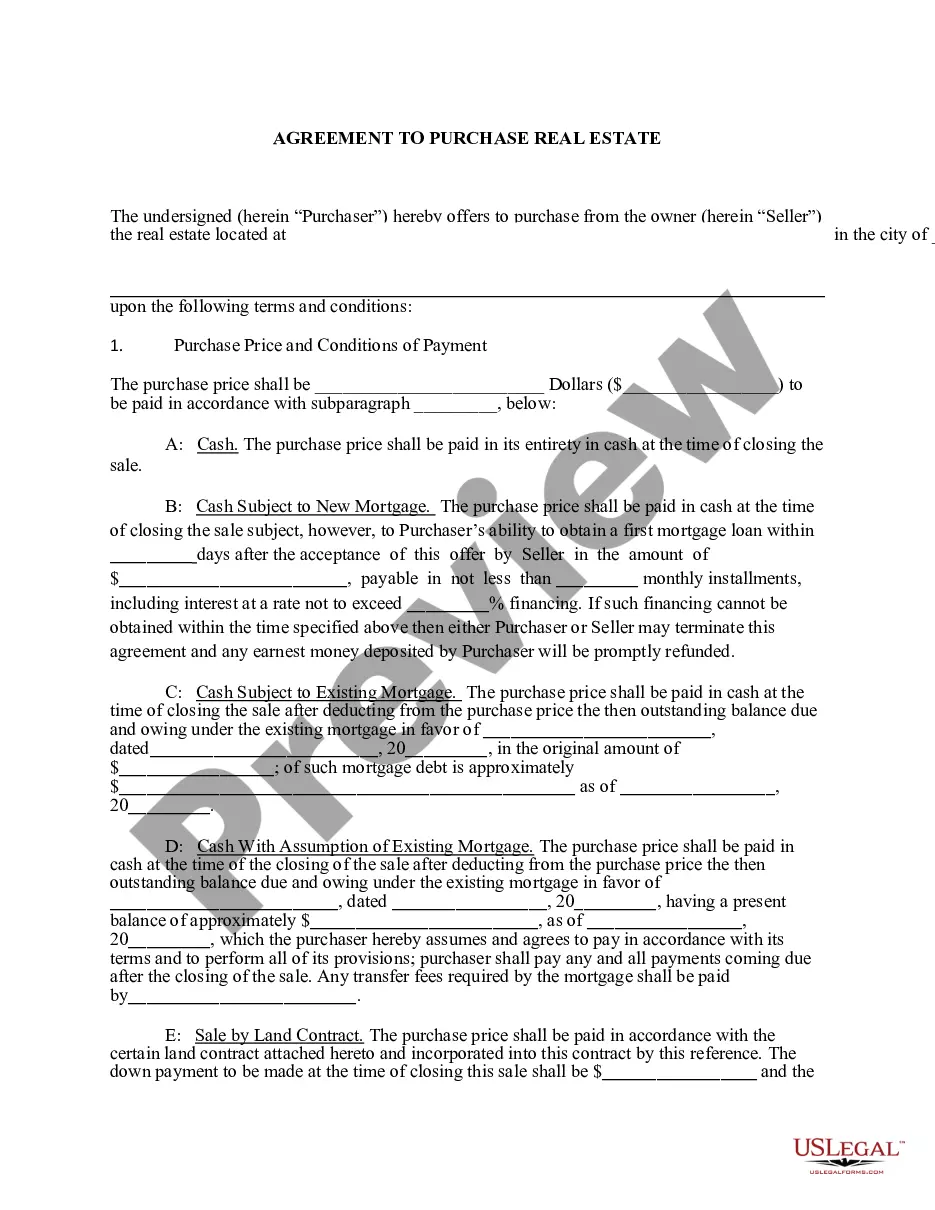
Get your form ready online
Our built-in tools help you complete, sign, share, and store your documents in one place.
Make edits, fill in missing information, and update formatting in US Legal Forms—just like you would in MS Word.
Download a copy, print it, send it by email, or mail it via USPS—whatever works best for your next step.
Sign and collect signatures with our SignNow integration. Send to multiple recipients, set reminders, and more. Go Premium to unlock E-Sign.
If this form requires notarization, complete it online through a secure video call—no need to meet a notary in person or wait for an appointment.
We protect your documents and personal data by following strict security and privacy standards.

Make edits, fill in missing information, and update formatting in US Legal Forms—just like you would in MS Word.

Download a copy, print it, send it by email, or mail it via USPS—whatever works best for your next step.

Sign and collect signatures with our SignNow integration. Send to multiple recipients, set reminders, and more. Go Premium to unlock E-Sign.

If this form requires notarization, complete it online through a secure video call—no need to meet a notary in person or wait for an appointment.

We protect your documents and personal data by following strict security and privacy standards.
Looking for another form?

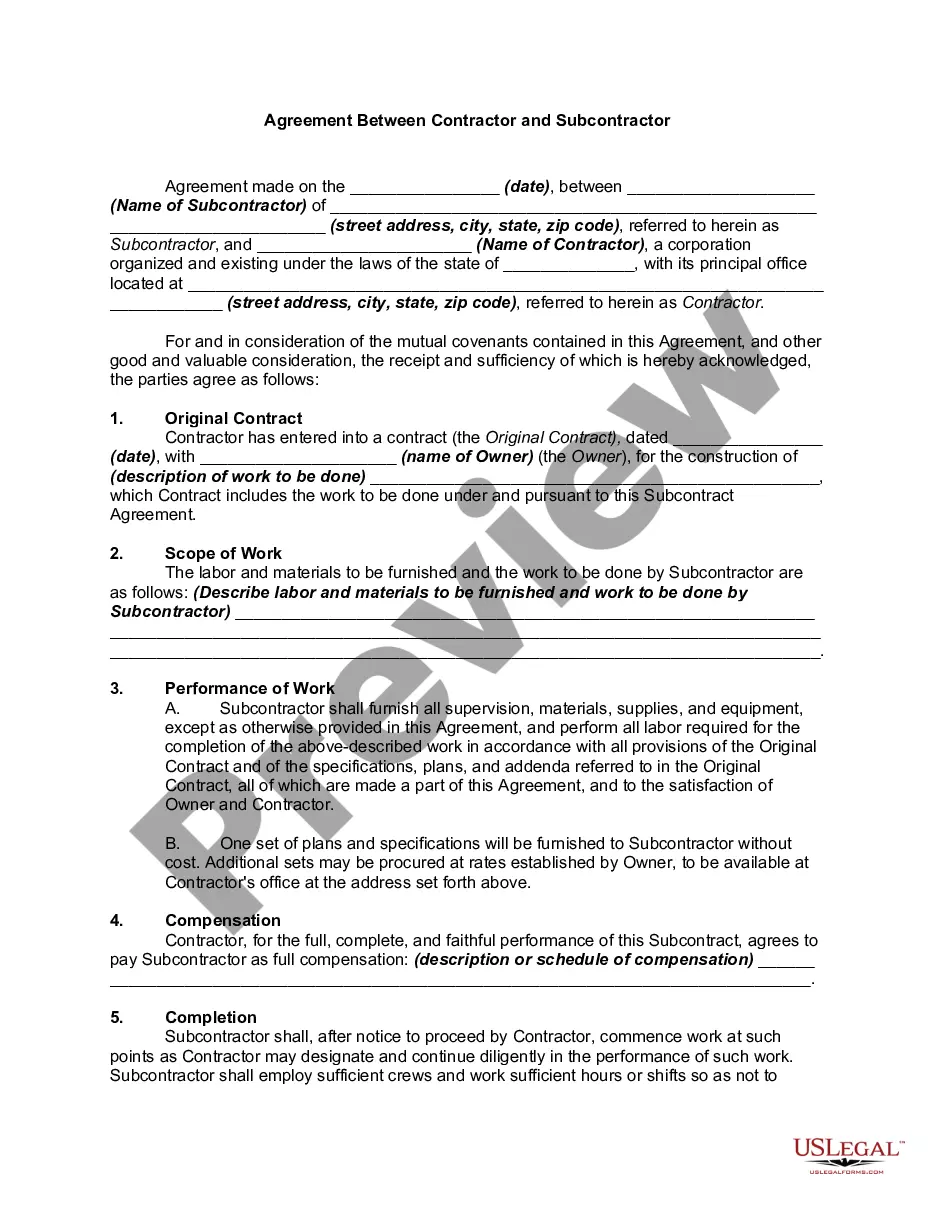

How to fill out Agreement To Sell Personal Property?
In the event you need to total, download, or print out legal document templates, utilize US Legal Forms, the largest collection of legal documents available online.
Make use of the site’s straightforward and efficient search to find the documents you require.
Various templates for business and personal purposes are organized by categories and states, or keywords.
Step 4. Once you have found the form you require, click the Download Now button. Select your preferred pricing option and enter your details to create an account.
Step 5. Process the payment. You may use your credit card or PayPal account to finalize the transaction.
- Utilize US Legal Forms to acquire the Texas Agreement to Sell Personal Property with just a few clicks.
- If you are a current US Legal Forms subscriber, Log In to your account and click on the Download button to obtain the Texas Agreement to Sell Personal Property.
- You can also access forms you have previously obtained from the My documents tab in your account.
- If you are using US Legal Forms for the first time, follow the instructions below.
- Step 1. Ensure you have selected the form appropriate for your city/state.
- Step 2. Use the Preview feature to review the form’s details. Don’t forget to read the description.
- Step 3. If you are not satisfied with the form, utilize the Search box at the top of the screen to find other variations of the legal form template.
Form popularity
FAQ
To sell property in Texas without a realtor, start by preparing a Texas Agreement to Sell Personal Property to outline the sale terms. Next, market your property through online listings, social media, and signage. Lastly, be prepared to negotiate and handle all legal aspects involved in the sale to ensure a successful transaction.
Yes, you can sell your house without a realtor in Texas. Many homeowners choose to do so using the Texas Agreement to Sell Personal Property, which provides a legal framework for the sale. However, you must be prepared to handle marketing, negotiations, and paperwork yourself.
In Texas, the seller typically pays for the closing costs associated with selling a house, although this can be negotiated. These costs may include title insurance, escrow fees, and other related expenses outlined in the Texas Agreement to Sell Personal Property. It's crucial to discuss these details early in the process to avoid surprises.
The 40 or 48 rule often refers to the timeframe involved in the sale process in Texas. Under this rule, buyers must provide a specific notice under the Texas Agreement to Sell Personal Property to ensure that both parties are aware of their rights and obligations. Understanding this rule is vital to avoid potential disputes during the transaction.
While it is not mandatory to hire an attorney when selling property in Texas, it may be beneficial. An attorney can help ensure your Texas Agreement to Sell Personal Property meets all legal requirements and protects your interests. If you're unsure about the process, consulting with a legal professional can provide peace of mind.
To sell real estate in Texas, you must have a clear title to the property and comply with local and state regulations. You need to prepare a Texas Agreement to Sell Personal Property to outline the details of the transaction. Additionally, consider obtaining necessary disclosures and inspections to facilitate a smooth sale.
Yes, you can write your own real estate contract in Texas. However, it is essential to ensure that the document includes all necessary terms and conditions, as well as complies with Texas laws. Utilizing a Texas Agreement to Sell Personal Property template can simplify this process and help avoid legal pitfalls.
In Texas, a power of attorney does not have to be filed with the court; rather, it must be properly executed and signed by the principal. This document can be crucial when managing aspects of the Texas Agreement to Sell Personal Property, especially if the seller or buyer cannot be present. Always ensure that the power of attorney meets Texas laws to function effectively in the transaction. Proper documentation can facilitate a smoother closing process.
To sell a house in Texas, you will need several key documents to complete the Texas Agreement to Sell Personal Property. Essential documents include the property deed, seller's disclosure notice, and any mortgage details. Additionally, if applicable, provide closing statements and tax information. Collecting these documents ahead of time streamlines the selling process and helps avoid delays.
In Texas, you do not need an attorney for closing, though it can be beneficial. You can complete transactions related to the Texas Agreement to Sell Personal Property using a title company or a qualified escrow agent. However, having legal expertise ensures that all paperwork is properly executed and can help avoid potential pitfalls in the process. If you feel unsure about the transaction, consulting an attorney can offer peace of mind.