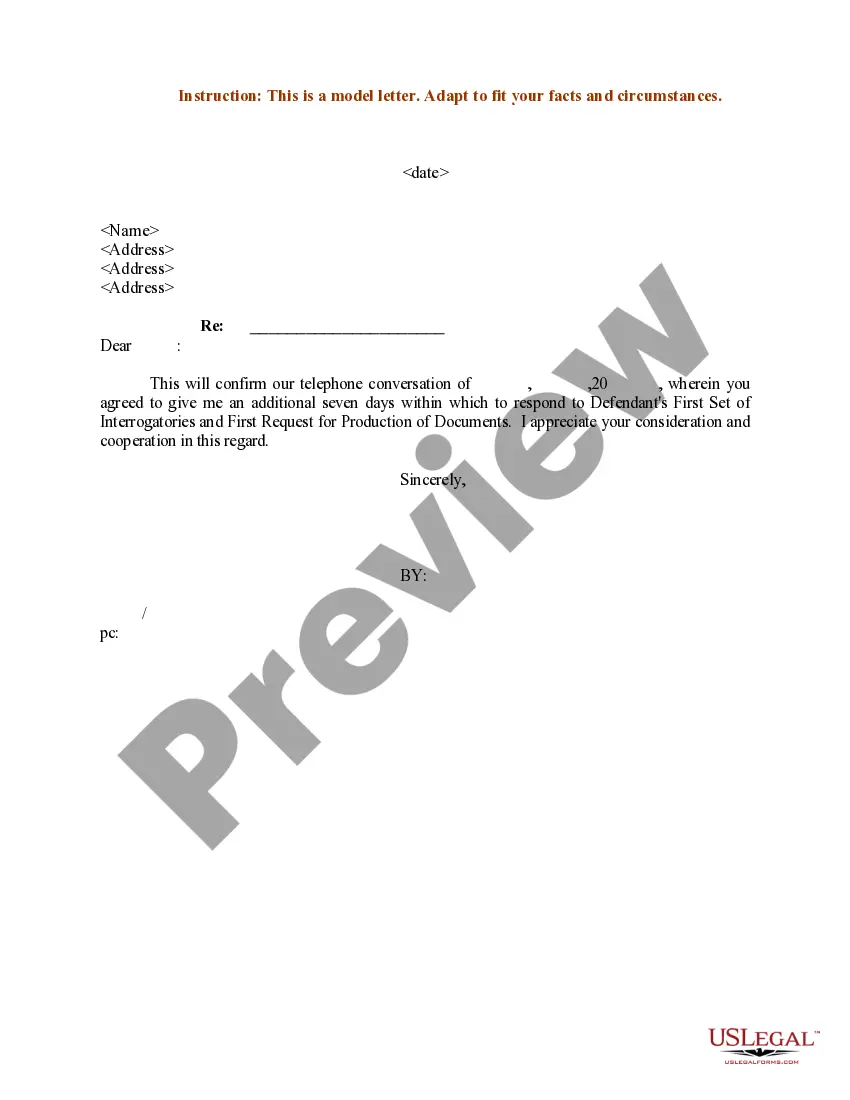
Texas Sample Letter Confirming Additional Time to Respond to Defendant's First Set of Interrogatories and First Request for Production of Documents
Description

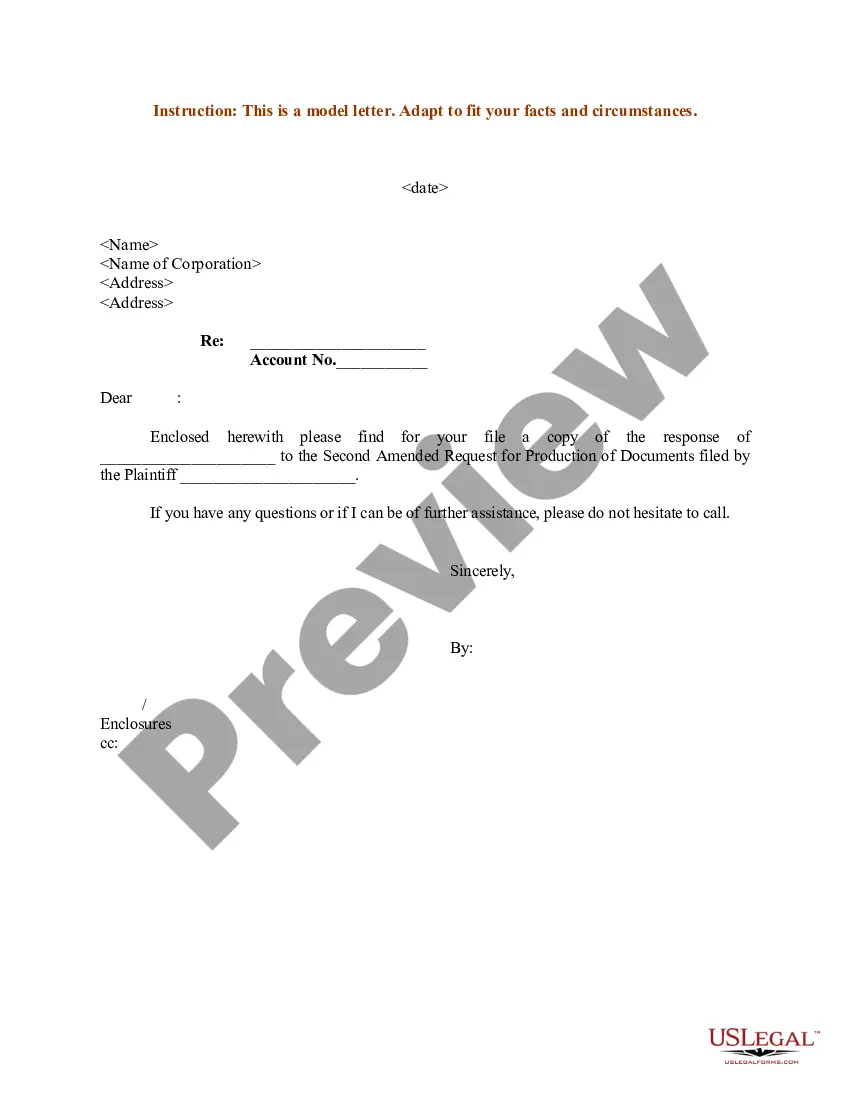
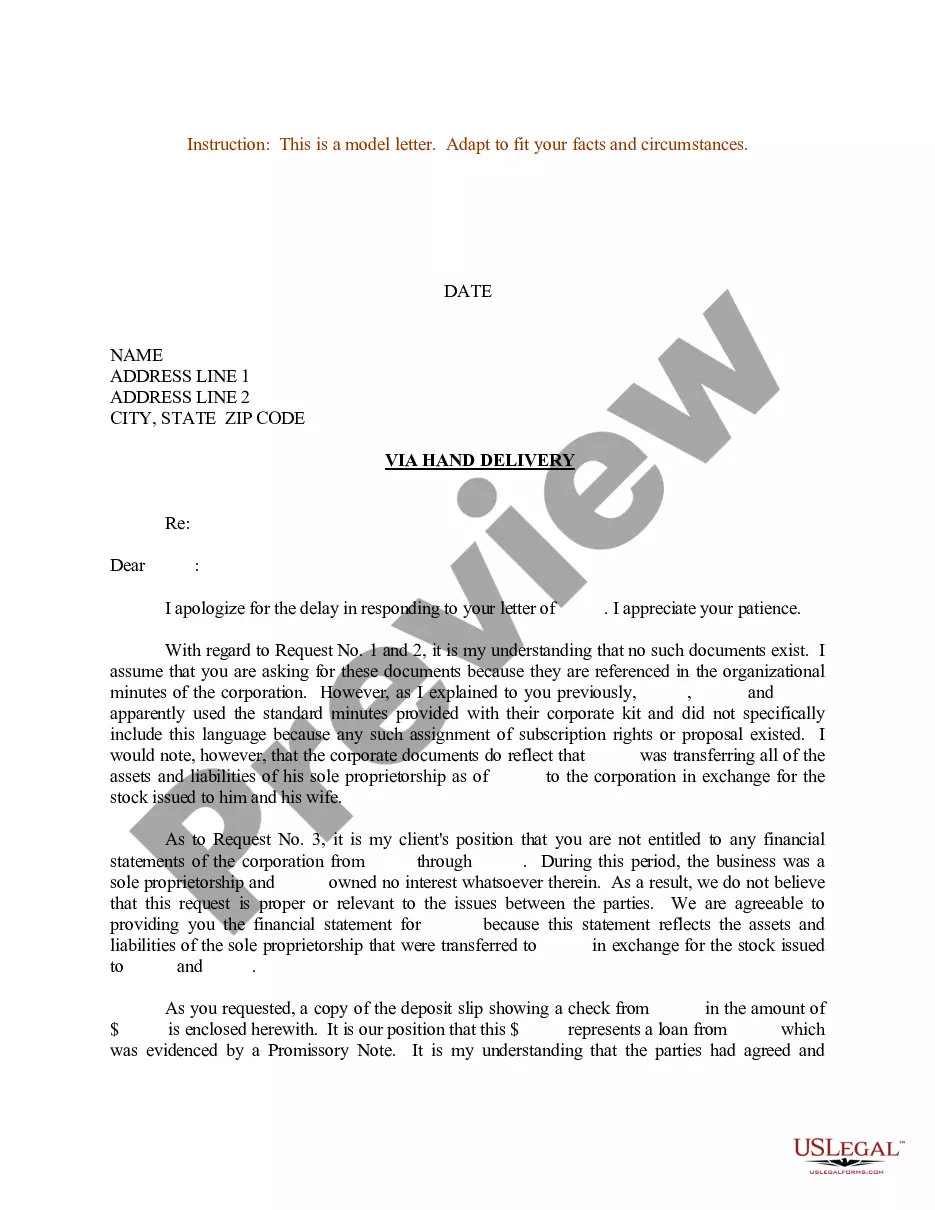
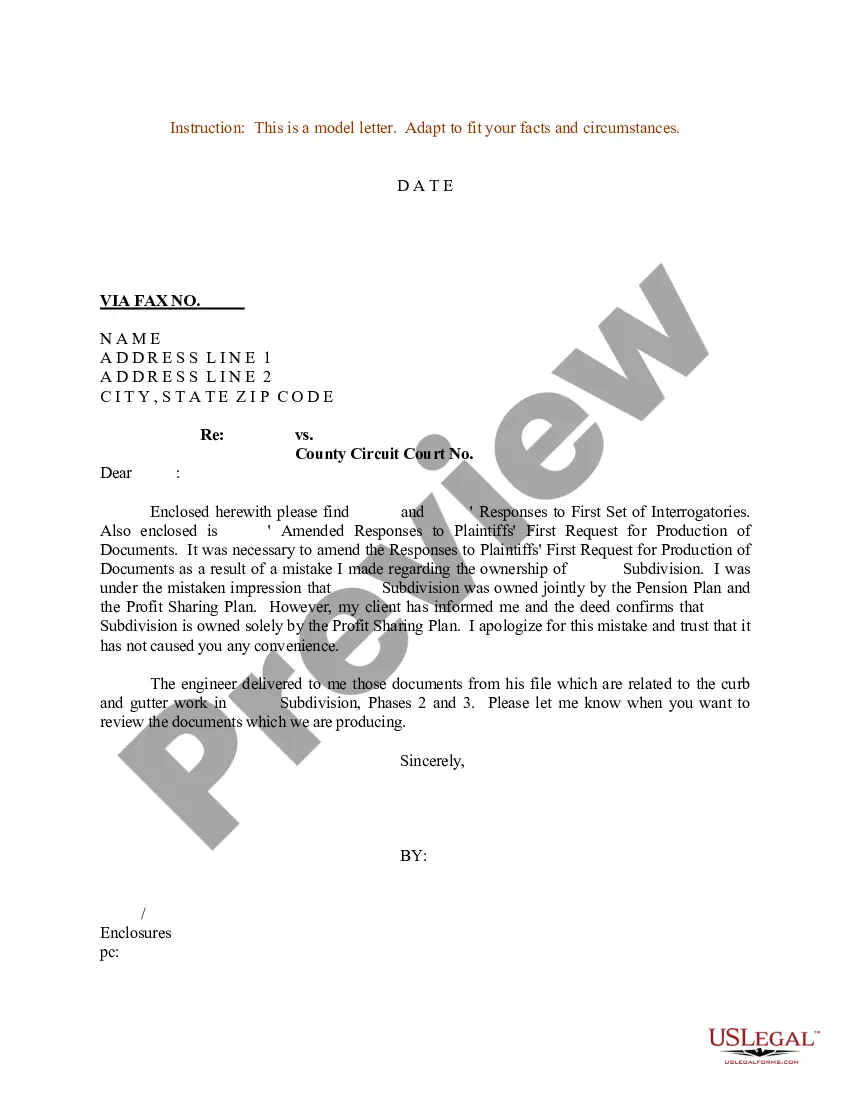
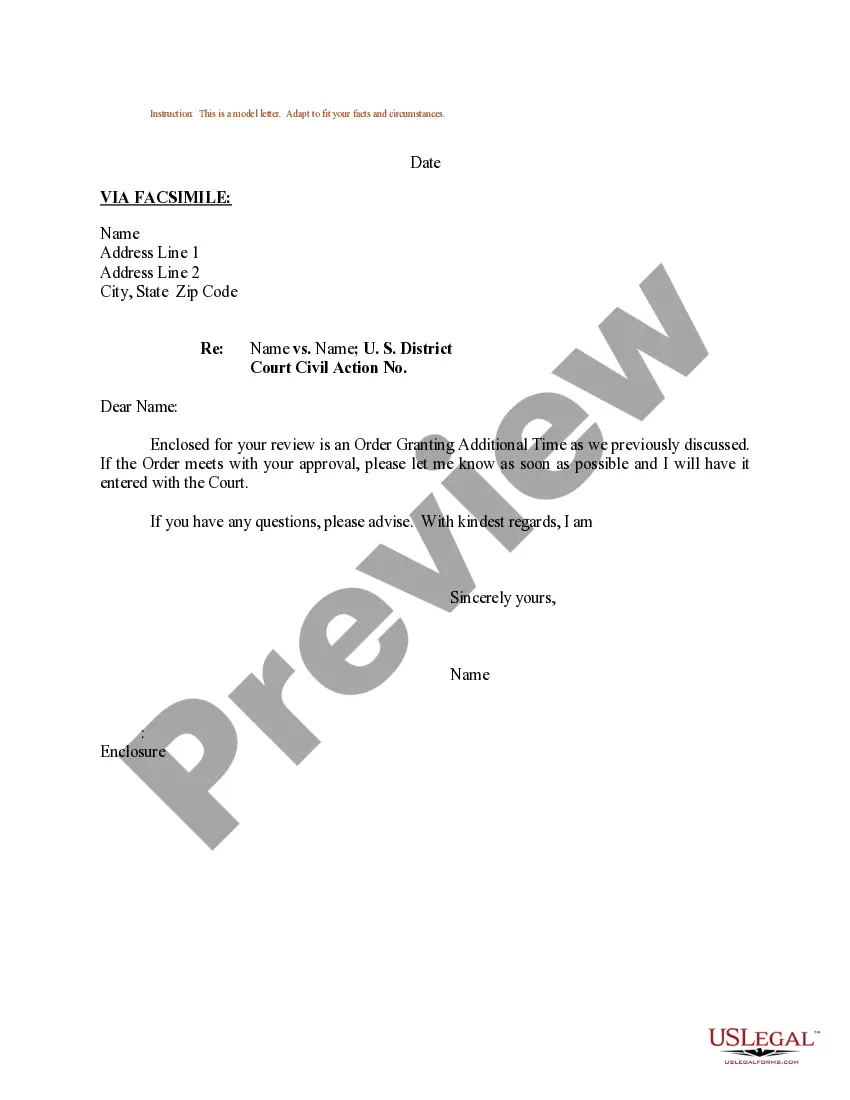






How to fill out Sample Letter Confirming Additional Time To Respond To Defendant's First Set Of Interrogatories And First Request For Production Of Documents?
Have you ever been in a situation where you require documents for occasional organization or specific purposes almost every day? There are numerous legal document templates available online, but finding reliable ones isn't easy. US Legal Forms provides a vast array of document templates, including the Texas Sample Letter Confirming Additional Time to Respond to Defendant's First Set of Interrogatories and First Request for Production of Documents, designed to satisfy federal and state requirements.
If you are already familiar with the US Legal Forms website and have an account, simply Log In. Then, you can download the Texas Sample Letter Confirming Additional Time to Respond to Defendant's First Set of Interrogatories and First Request for Production of Documents template.
If you do not have an account and wish to start using US Legal Forms, follow these steps: Find the document you need and ensure it is for the correct city/region. Utilize the Preview button to review the form. Check the description to confirm that you have selected the correct document. If the form isn't what you're looking for, use the Search field to find the form that meets your needs and requirements. Once you have obtained the correct document, click Get now. Choose the pricing plan you want, fill in the required information to create your account, and complete the payment using your PayPal or credit card. Select a convenient document format and download your copy.
- Access all the document templates you have purchased in the My documents section. You can download an additional copy of the Texas Sample Letter Confirming Additional Time to Respond to Defendant's First Set of Interrogatories and First Request for Production of Documents at any time, if needed. Just click on the desired document to download or print the template.
- Utilize US Legal Forms, the most comprehensive collection of legal templates, to save time and avoid errors. The service offers professionally crafted legal document templates that you can use for various purposes. Create an account on US Legal Forms and start simplifying your life.
Form popularity
FAQ
The discovery rule is a ?narrow exception? to the legal injury rule that ?defers accrual of a cause of action until the plaintiff knew or, exercising reasonable diligence, should have known of the facts giving rise to the cause of action.? Berry, 646 S.W.
(B) In a suit governed by the Family Code, all discovery must be conducted during the discovery period, which begins when the suit is filed and continues until 180 days after the date the first request for discovery of any kind is served on a party.
Requests for Production or Demands for Inspection require you to produce documents for copying or in some cases actual items for inspection. Responding to the request has 2 parts: State if you can comply with the request (all of it or some of it) or give the reason why you can't comply.
The responding party must serve a written response on the requesting party within 30 days after service of the interrogatories, except that a defendant in a suit governed by the Family Code served with a request before the defendant's answer is due need not respond until 50 days after service of the request.
Generally, the party receiving the discovery request has 30 days to respond. Some exceptions and variations apply, so make sure you review how much time you have to respond depending on the type of case, the rules, and the type of discovery method used.
In a county or district court, the defendant must answer ?on or before a.m. on the Monday next after the expiration of 20 days after the date of service thereof.? Tex. R.
They are provided for your information. There is no form for your answer, but you typically have to respond in a specified format, using paper with numbers down the left-hand side, with your name and address at the top left, the name of the court and of the case, and the case number.
Your answers to the interrogatories should usually be short, clear, and direct and should answer only the question that is being asked. This is not the time to set out your entire case or defense to the other side. Take the time to make sure your answers are correct and truthful.