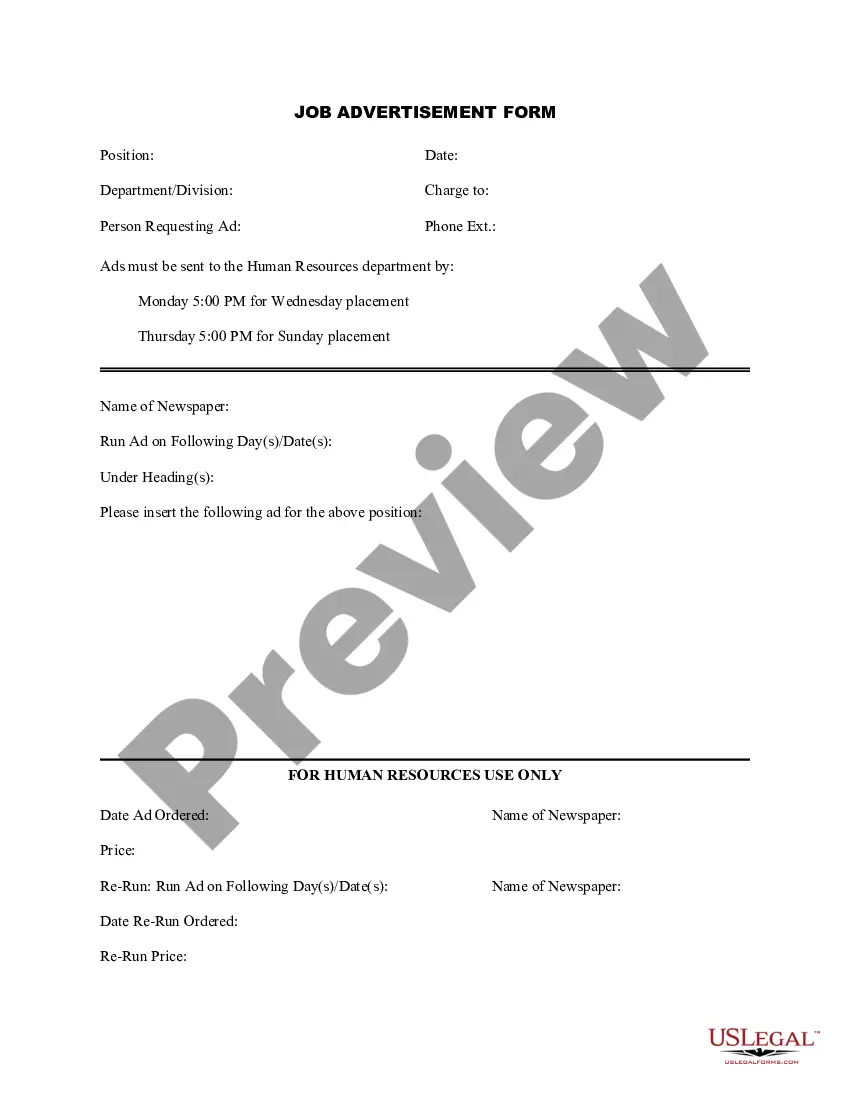
Texas Mutual Aid Contract for Emergencies
Description

Get your form ready online
Our built-in tools help you complete, sign, share, and store your documents in one place.
Make edits, fill in missing information, and update formatting in US Legal Forms—just like you would in MS Word.
Download a copy, print it, send it by email, or mail it via USPS—whatever works best for your next step.
Sign and collect signatures with our SignNow integration. Send to multiple recipients, set reminders, and more. Go Premium to unlock E-Sign.
If this form requires notarization, complete it online through a secure video call—no need to meet a notary in person or wait for an appointment.
We protect your documents and personal data by following strict security and privacy standards.

Make edits, fill in missing information, and update formatting in US Legal Forms—just like you would in MS Word.

Download a copy, print it, send it by email, or mail it via USPS—whatever works best for your next step.

Sign and collect signatures with our SignNow integration. Send to multiple recipients, set reminders, and more. Go Premium to unlock E-Sign.

If this form requires notarization, complete it online through a secure video call—no need to meet a notary in person or wait for an appointment.

We protect your documents and personal data by following strict security and privacy standards.
Looking for another form?
How to fill out Mutual Aid Contract For Emergencies?
Selecting the appropriate legal document template can be quite a challenge.
Obviously, there are numerous formats available online, but how can you obtain the specific legal document you need.
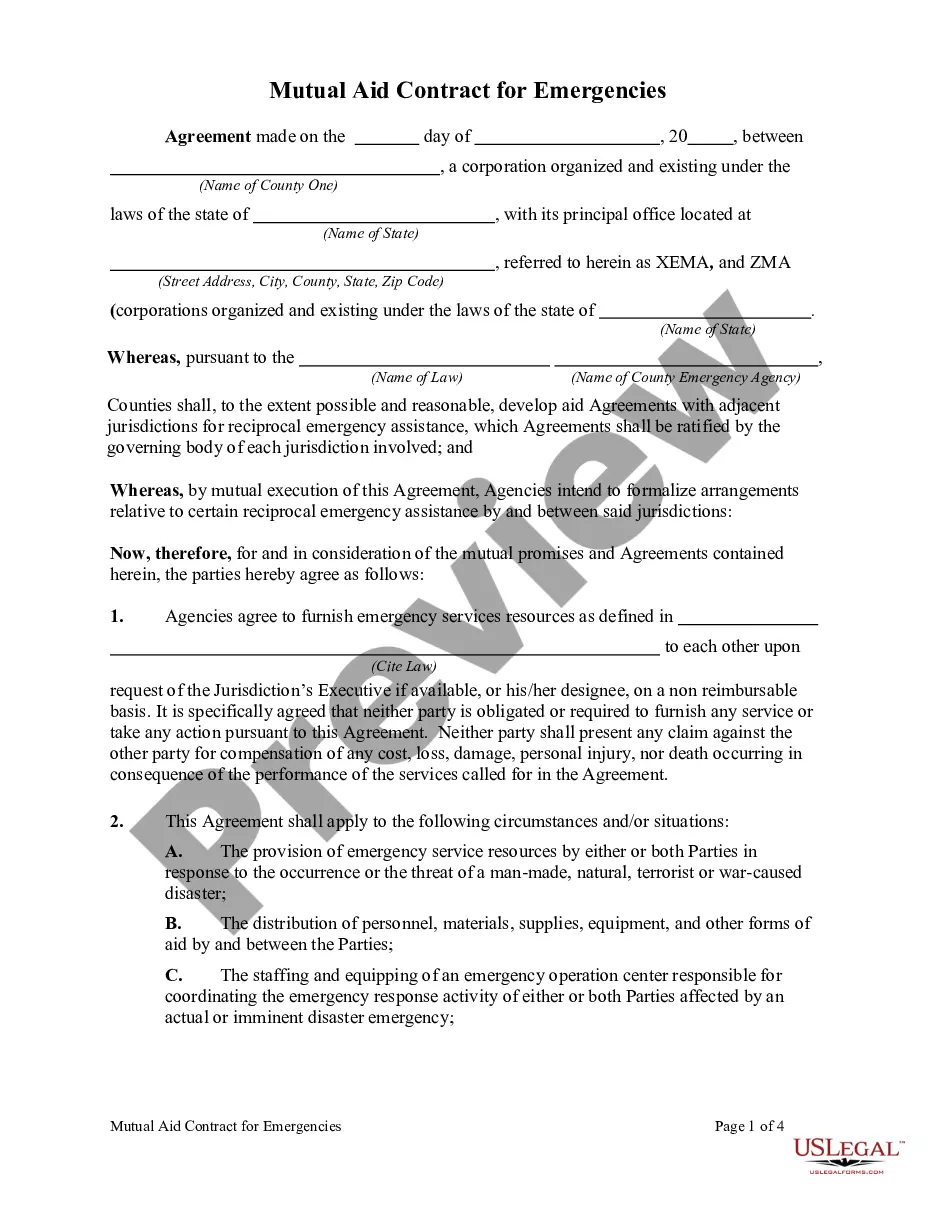
Utilize the US Legal Forms website. This service provides thousands of templates, including the Texas Mutual Aid Agreement for Emergencies, which can be used for both business and personal purposes.
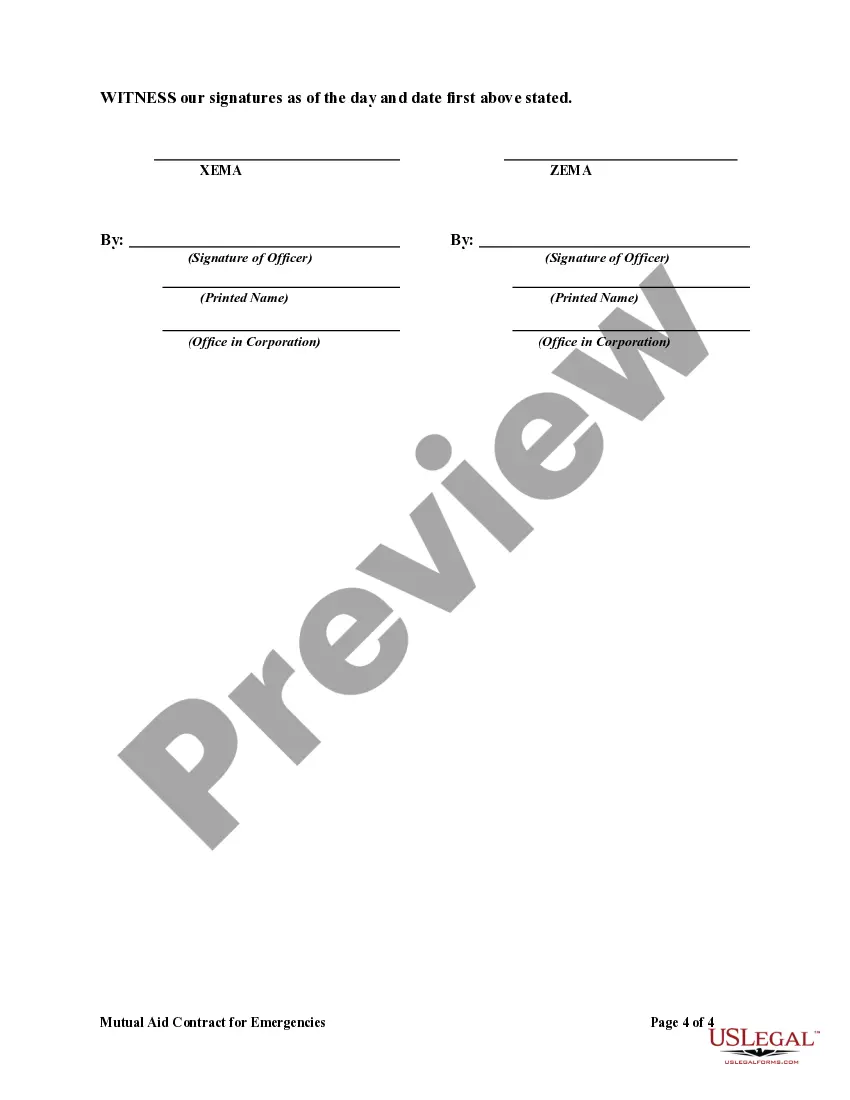
First, ensure you have selected the correct form for your city/state. You can review the document using the Preview button and check the document description to confirm it is the right one for you.
- All forms are reviewed by experts and comply with state and federal regulations.
- If you are already registered, Log In to your account and click the Download button to obtain the Texas Mutual Aid Agreement for Emergencies.
- Use your account to browse the legal forms you have purchased previously.
- Visit the My documents section of your account and download another copy of the document you need.
- If you are a new user of US Legal Forms, here are some simple steps to follow.
Form popularity
FAQ
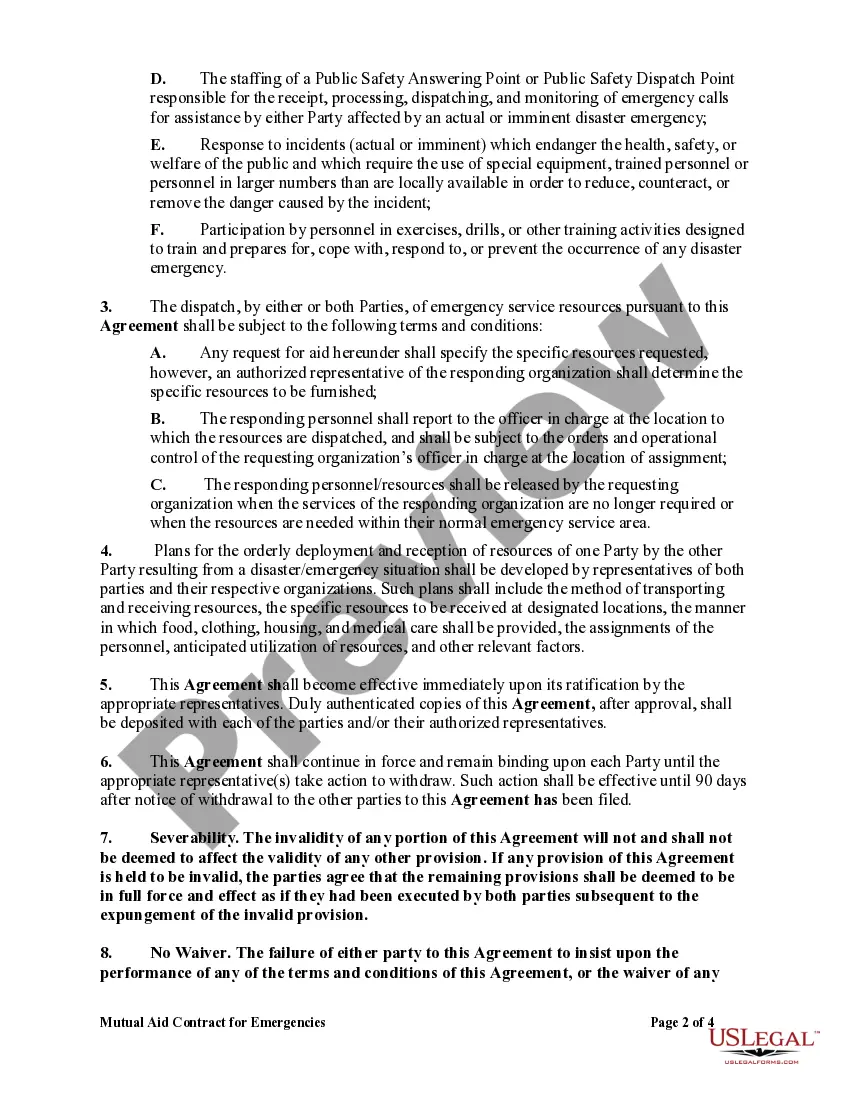
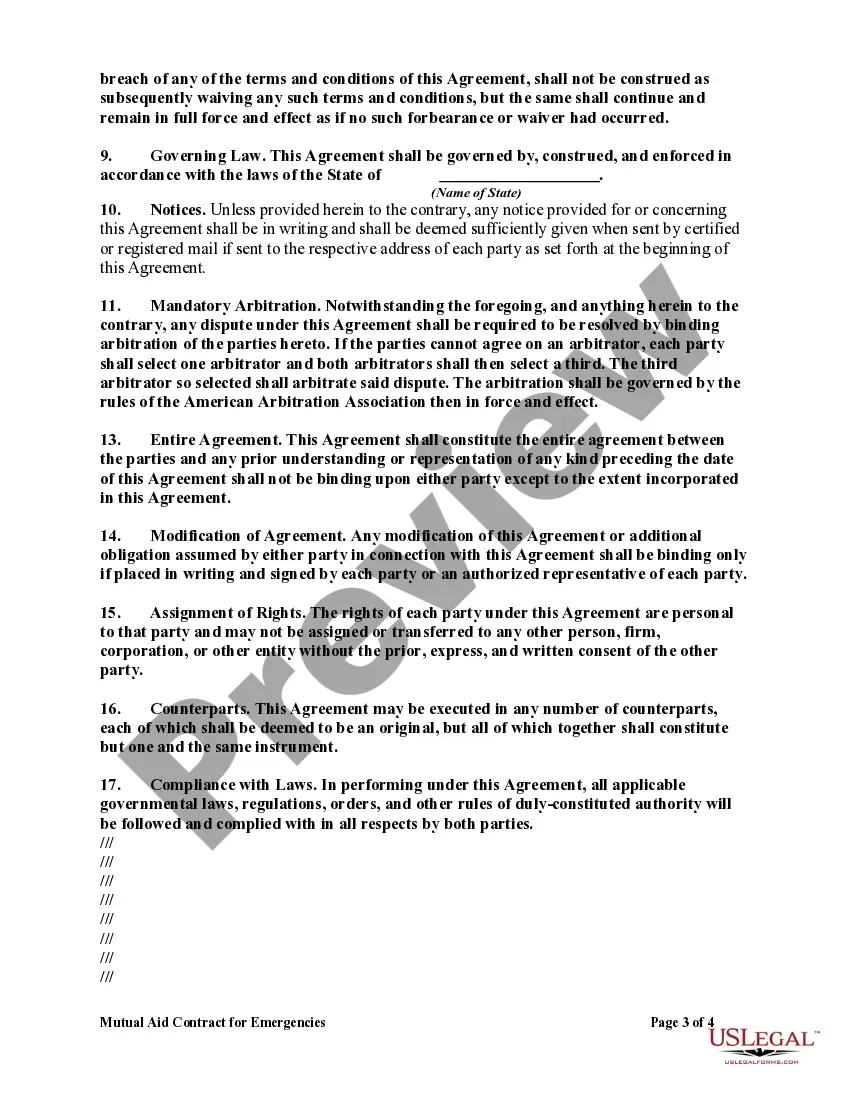
A mutual aid agreement typically includes elements such as scope of assistance, terms and conditions, and liability considerations. The Texas Mutual Aid Contract for Emergencies specifies the types of resources and support that will be provided. Each agreement should detail how costs will be managed and outline the responsibilities of each party. Clear articulation of these elements promotes transparency and trust among participants.
Three essential features of a mutual aid agreement include defined roles, resource sharing, and communication protocols. The Texas Mutual Aid Contract for Emergencies clearly delineates each participant's responsibilities, ensuring a well-coordinated response. Additionally, establishing how resources will be shared minimizes confusion during emergencies. Effective communication protocols further enhance coordination among emergency responders.
Mutual aid agreements are typically established by local governments, emergency service providers, and organizations involved in disaster response. Each party works collaboratively to define the terms of the Texas Mutual Aid Contract for Emergencies. By directly involving stakeholders, these agreements become more effective and applicable to community needs. It is essential to have input from all parties to ensure successful cooperation.
The first step in creating a mutual aid agreement is to identify potential partners who share the same commitment to emergency preparedness. With the Texas Mutual Aid Contract for Emergencies, participants discuss their specific capabilities and needs. This dialogue helps ensure that the agreement reflects the strengths and resources available. Engaging community stakeholders early fosters trust and a shared understanding of the goals.
A mutual aid agreement with FEMA establishes a framework for cooperation among local, state, and federal agencies during disasters. This agreement aligns with the Texas Mutual Aid Contract for Emergencies, enabling effective resource use and deployment. It offers assurance that necessary help will arrive swiftly and without unnecessary delays. Such collaboration maximizes the effectiveness of emergency responses, benefiting communities.
The main purpose of mutual aid is to ensure a coordinated and effective response to emergencies. The Texas Mutual Aid Contract for Emergencies facilitates quick resource sharing, which can be crucial during critical situations. Through these agreements, organizations can quickly access additional personnel, equipment, or expertise when facing large-scale emergencies. This proactive approach ultimately saves lives and reduces recovery time.
A mutual aid pact is a formal agreement between organizations or jurisdictions to provide assistance during emergencies. The Texas Mutual Aid Contract for Emergencies outlines how resources and support will be shared among partners. This agreement fosters collaboration and strengthens community response capabilities. By participating in such a pact, entities enhance their readiness to manage crises effectively.
A mutual aid agreement typically includes sections that specify the scope of assistance, the obligations of each party, and the procedures for requesting aid. It may also cover liability protections and resource availability. Utilizing the Texas Mutual Aid Contract for Emergencies helps organizations include these essential elements, ensuring clarity and preparedness for unforeseen events.
Components of mutual aid generally include a defined agreement, resource inventories, and communication protocols. Each of these components plays a vital role in ensuring that aid can be mobilized quickly and effectively during emergencies. With the Texas Mutual Aid Contract for Emergencies, organizations can easily access these components and implement them within their own emergency plans.
The three key elements of mutual aid include cooperation, coordination, and resource sharing. Cooperation fosters trust between agencies, while coordination ensures that aid is delivered effectively and efficiently. The Texas Mutual Aid Contract for Emergencies enhances these elements by providing a framework that simplifies engagements and streamlines the process for all involved parties.