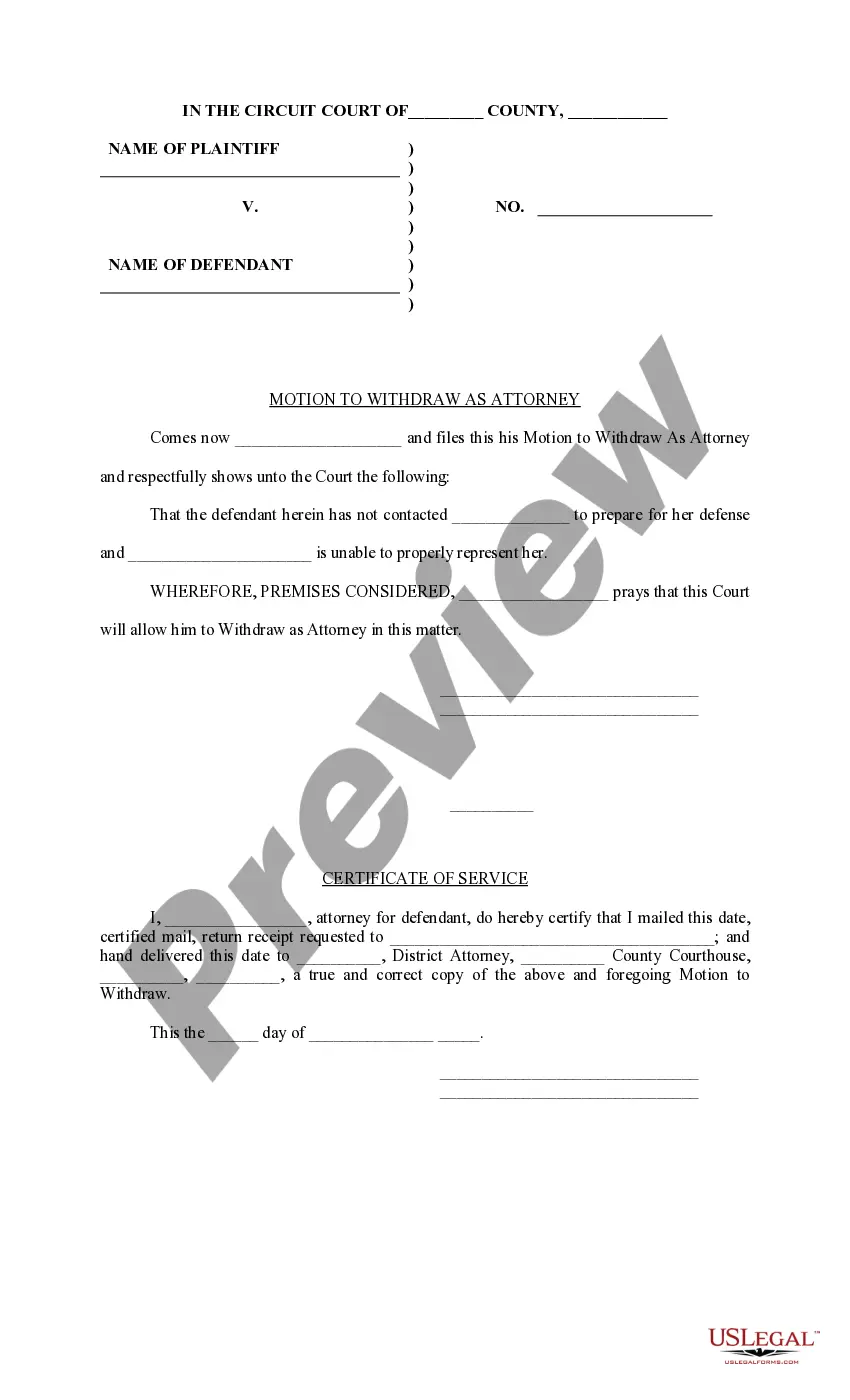
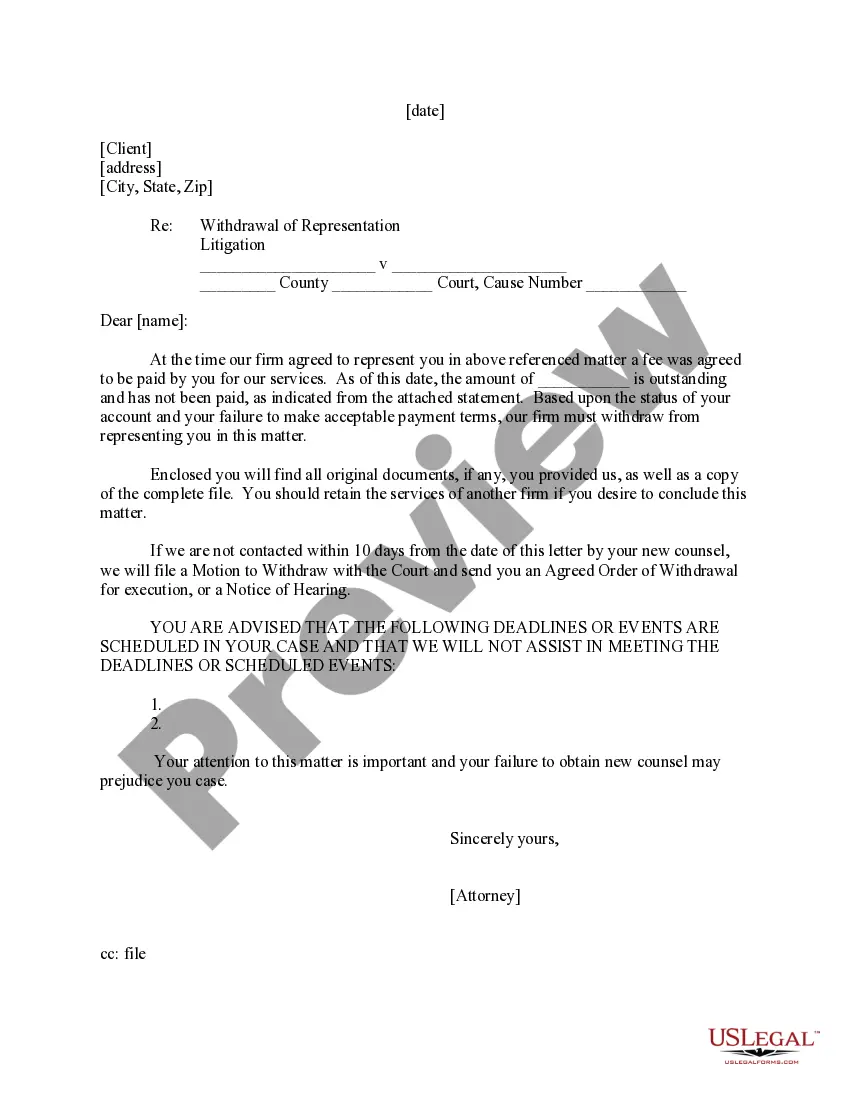
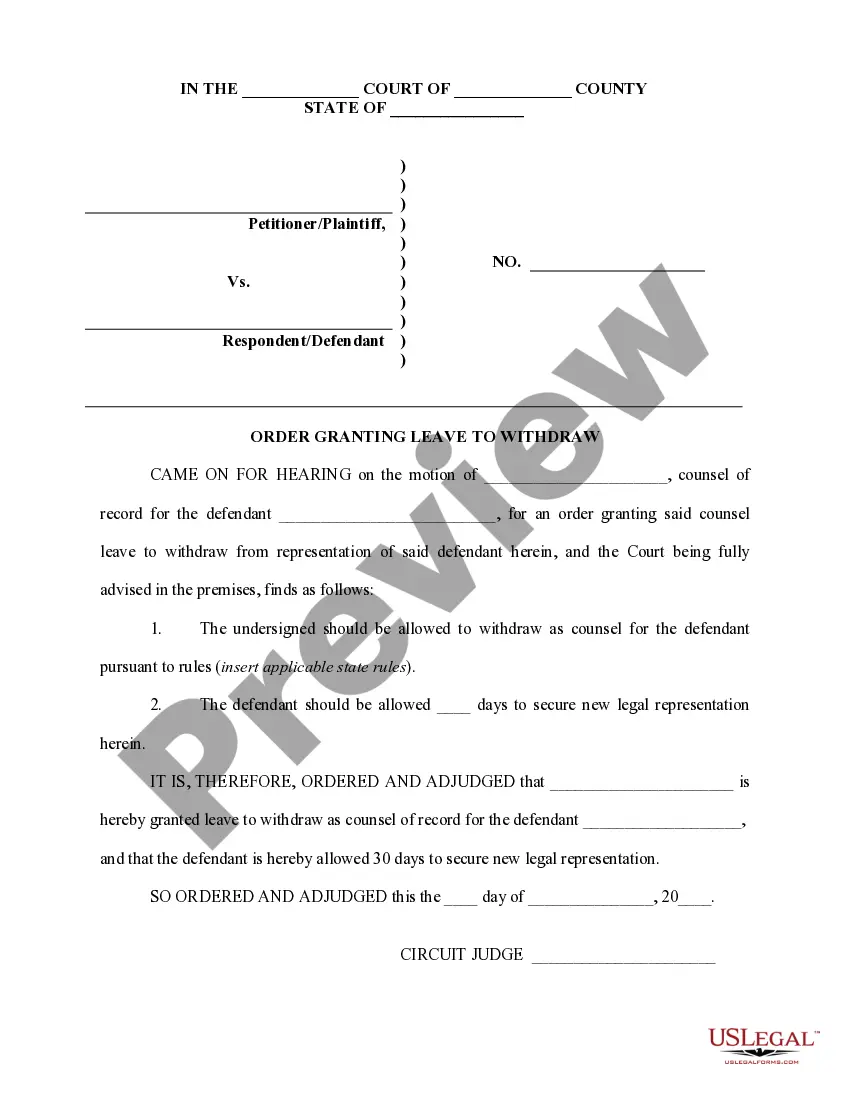
Texas Motion to Withdraw as Attorney
Description
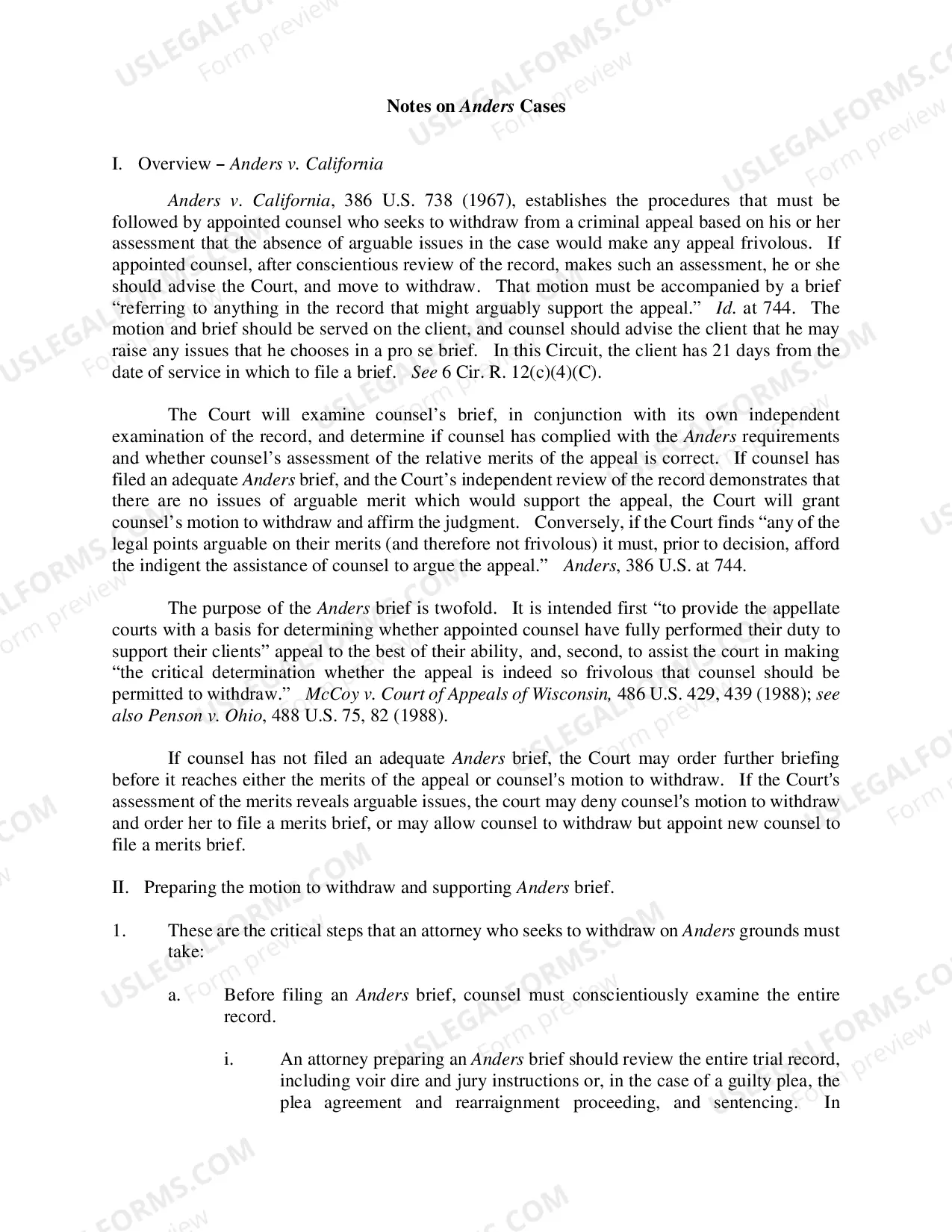
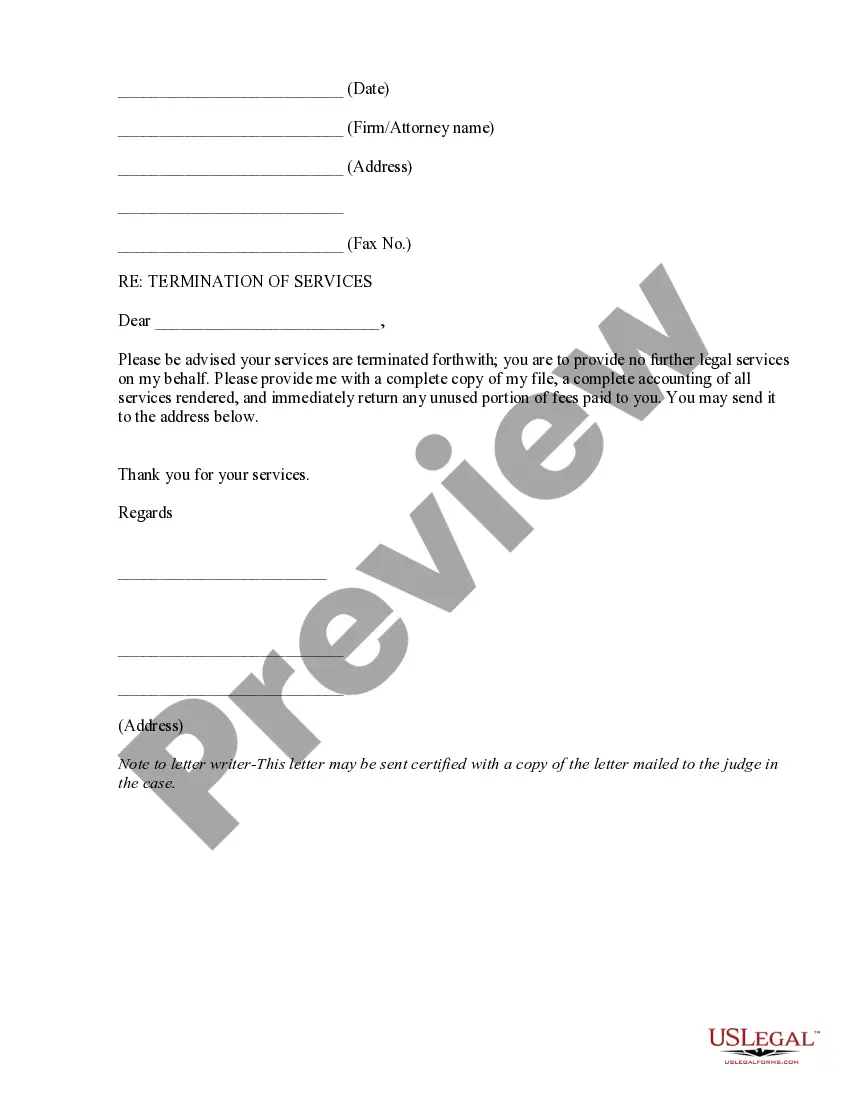
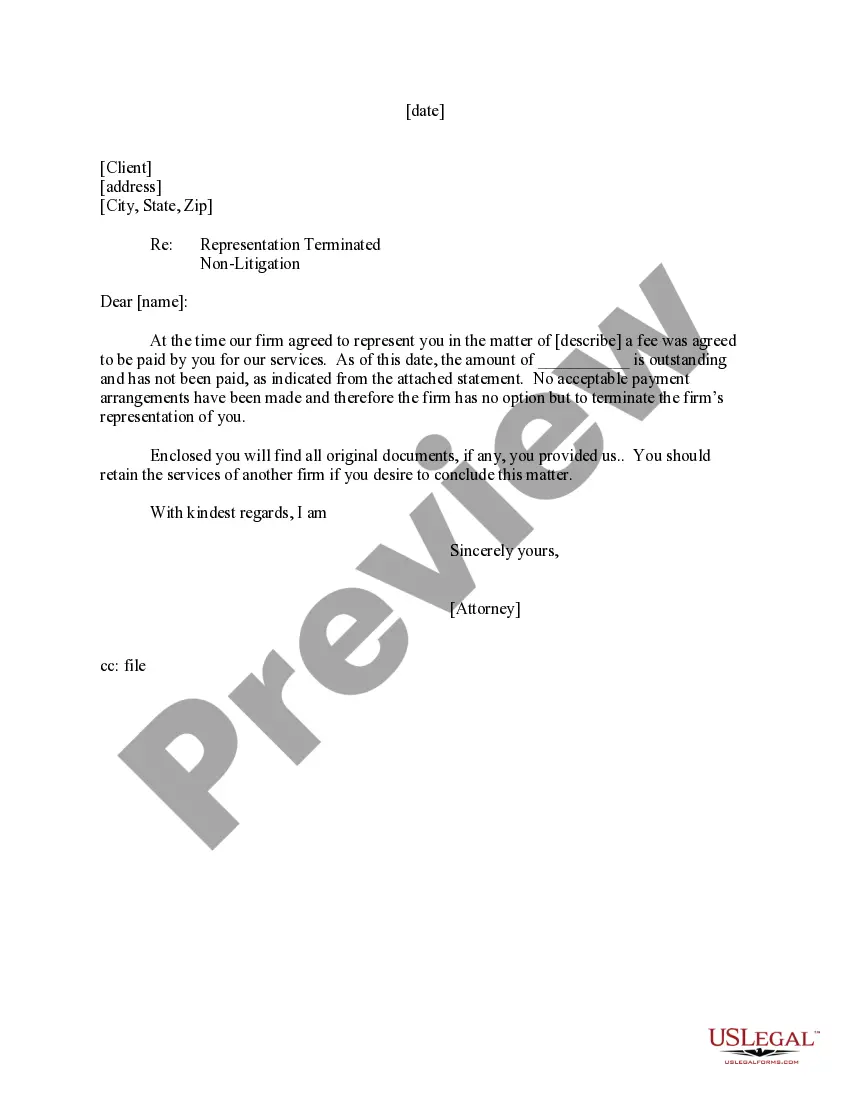
Get your form ready online
Our built-in tools help you complete, sign, share, and store your documents in one place.
Make edits, fill in missing information, and update formatting in US Legal Forms—just like you would in MS Word.
Download a copy, print it, send it by email, or mail it via USPS—whatever works best for your next step.
Sign and collect signatures with our SignNow integration. Send to multiple recipients, set reminders, and more. Go Premium to unlock E-Sign.
If this form requires notarization, complete it online through a secure video call—no need to meet a notary in person or wait for an appointment.
We protect your documents and personal data by following strict security and privacy standards.

Make edits, fill in missing information, and update formatting in US Legal Forms—just like you would in MS Word.

Download a copy, print it, send it by email, or mail it via USPS—whatever works best for your next step.

Sign and collect signatures with our SignNow integration. Send to multiple recipients, set reminders, and more. Go Premium to unlock E-Sign.

If this form requires notarization, complete it online through a secure video call—no need to meet a notary in person or wait for an appointment.

We protect your documents and personal data by following strict security and privacy standards.
Looking for another form?









How to fill out Motion To Withdraw As Attorney?
Selecting the finest authentic document template can be challenging. Naturally, there are numerous templates available online, but how do you locate the genuine type you require? Utilize the US Legal Forms website. The service offers thousands of templates, such as the Texas Motion to Withdraw as Attorney, that you can utilize for business and personal purposes. All of the forms are verified by experts and comply with federal and state requirements.
If you are already registered, Log In to your account and click the Obtain button to access the Texas Motion to Withdraw as Attorney. Use your account to browse through the legal forms you have previously purchased. Navigate to the My documents section of your account and retrieve another copy of the document you need.
If you are a new user of US Legal Forms, here are simple steps you should follow: First, ensure you have selected the correct form for your city/county. You can review the form using the Review button and check the form details to confirm it is suitable for you. If the form does not meet your requirements, use the Search field to find the appropriate form. Once you are confident the form is correct, click the Get now button to acquire the form. Choose the pricing plan you prefer and enter the necessary information. Create your account and complete the purchase using your PayPal account or credit card. Select the file format and download the legal document template to your device. Complete, modify, print, and sign the obtained Texas Motion to Withdraw as Attorney. US Legal Forms is the largest repository of legal forms where you can explore a variety of document templates. Take advantage of the service to obtain professionally-crafted documents that comply with state regulations.
Take advantage of the service to obtain professionally-crafted documents that comply with state regulations.
- Selecting the finest authentic document template can be challenging.
- Utilize the US Legal Forms website.
- All of the forms are verified by experts.
- If you are already registered, Log In to your account.
- If you are a new user of US Legal Forms, here are simple steps you should follow.
- Complete, modify, print, and sign the obtained Texas Motion to Withdraw as Attorney.
Form popularity
FAQ
Withdrawal of an attorney may be effected (a) upon motion showing good cause and under such conditions imposed by the Court; or (b) upon presentation by such attorney of a notice of substitution designating the name, address, telephone number, and State Bar of Texas identification number of the substitute attorney, ...
A motion to withdraw is a procedure used to ask a court's permission to take back or ?withdraw? some step the party or lawyer has taken.
Under Rule 1.16(a), lawyers are required to either decline to represent a client, or to withdraw, when the representation would result in a violation of the rules of professional conduct or other law; the lawyer's physical or mental condition materially impairs their ability to represent client; or the lawyer has been ...
A motion to withdraw may be granted without hearing if: (a) The client has signed the motion or order, consenting to the withdrawal; (b) Another lawyer has made an appearance on behalf of the client; or (c) The motion is accompanied by a letter that notifies the client of the client's right to object to the withdrawal ...
Model Rule 1.16(b) and similar rules in many states impose additional limits on a lawyer's ability to withdraw, permitting withdrawal when: the client persists in a criminal or fraudulent course of action; the client has used the lawyer's services to perpetrate a crime or fraud;
A motion to withdraw may be granted without hearing if: (a) The client has signed the motion or order, consenting to the withdrawal; (b) Another lawyer has made an appearance on behalf of the client; or (c) The motion is accompanied by a letter that notifies the client of the client's right to object to the withdrawal ...
As always, students may drop classes without penalty prior to the 12th class day (Census Day) in any semester. Non-academic withdrawals are exempt from counting toward the 6-Withdrawals rule. Non-academic withdrawals include withdrawals due to severe illness, death, military duty, work schedule conflict, or good cause.
Withdrawal is also permitted if the lawyer's services were misused in the past. The lawyer also may withdraw where the client insists on pursuing a repugnant or imprudent objective or one with which the lawyer has fundamental disagreement.