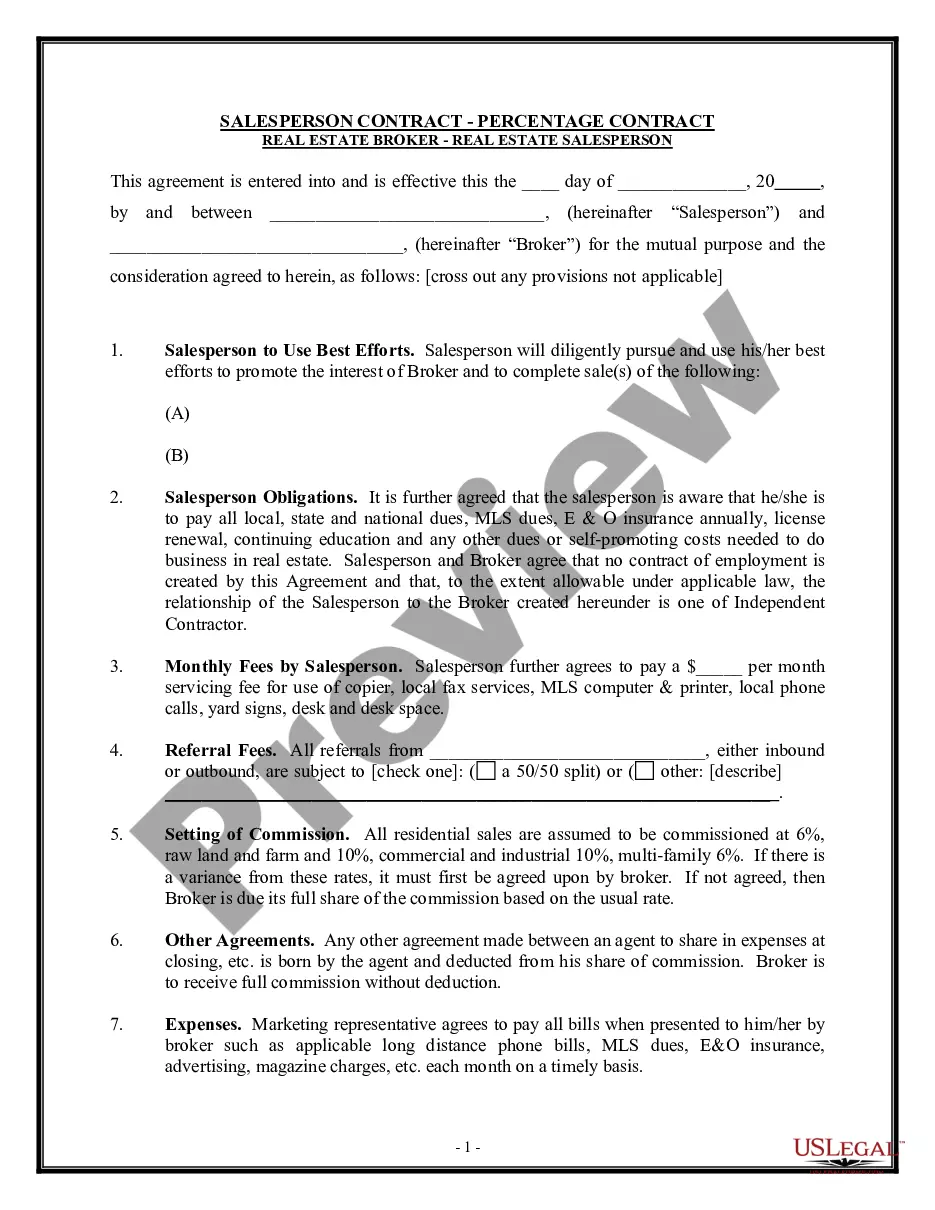
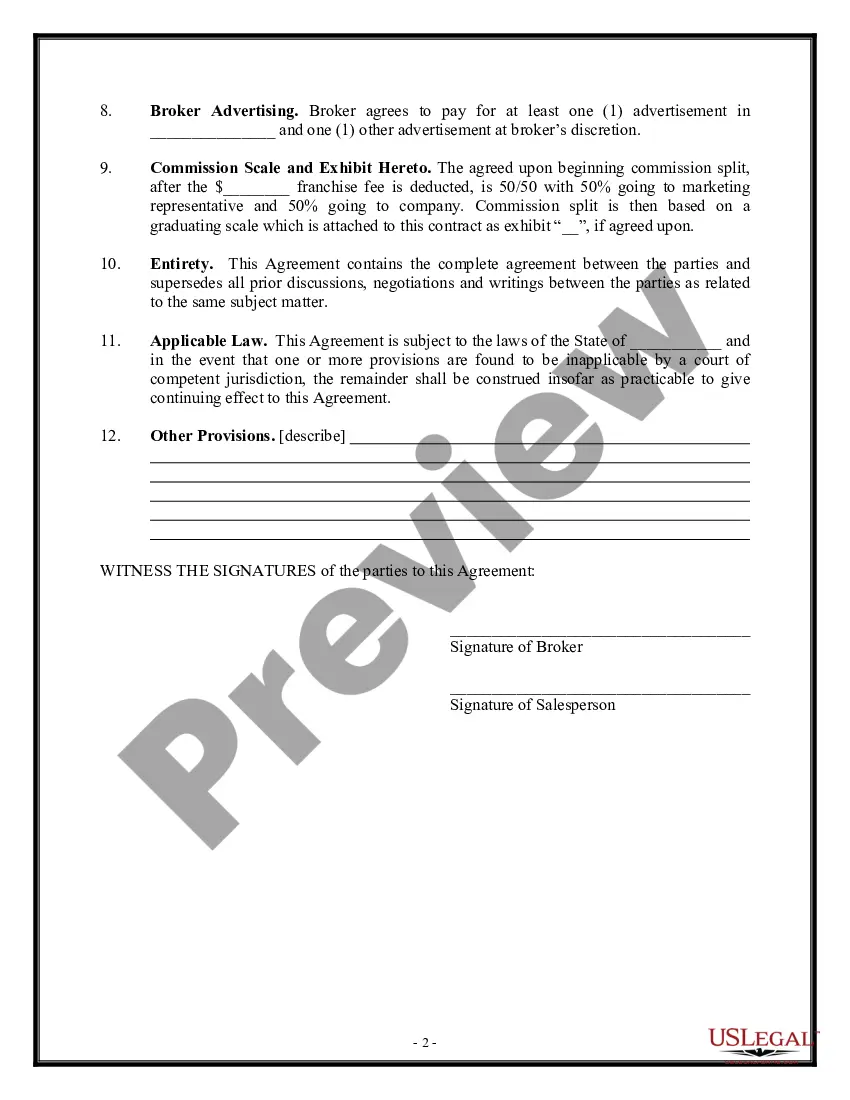
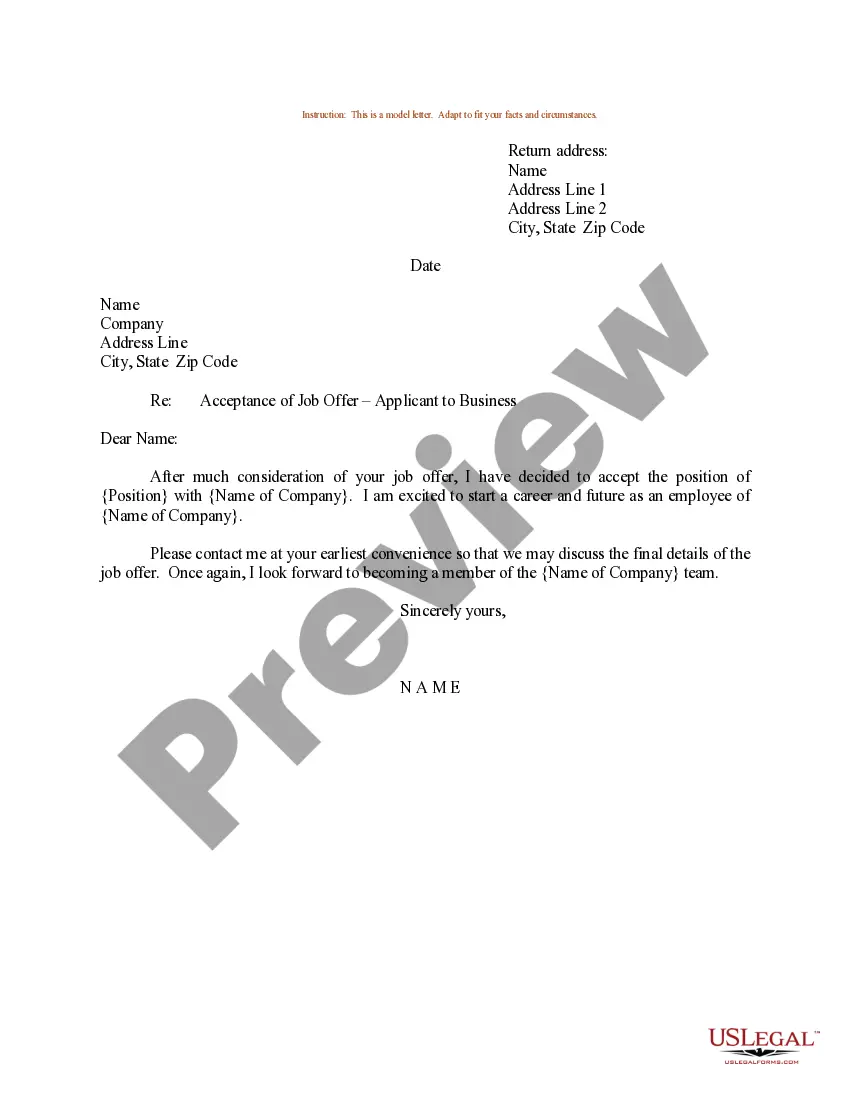
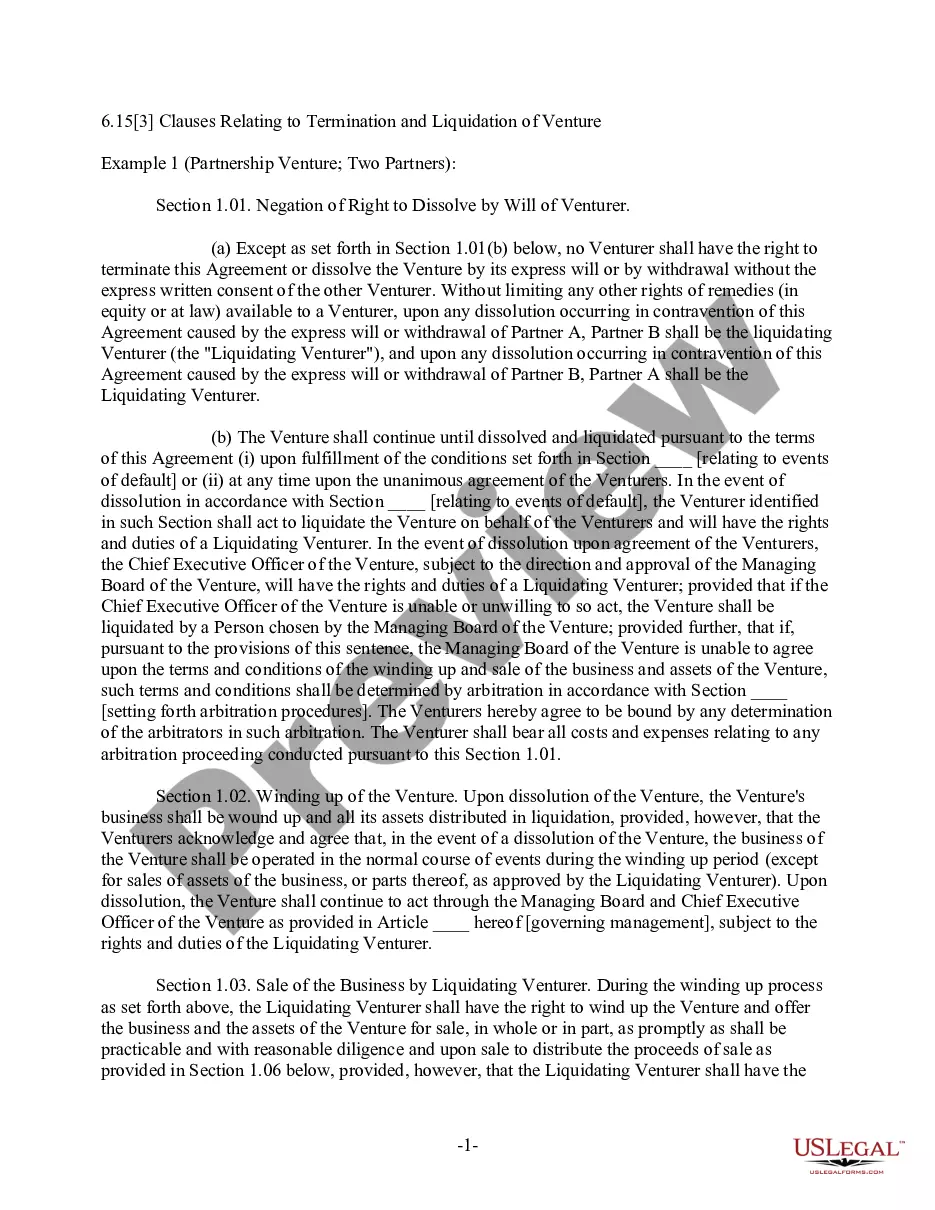
This form is a Salesperson Percentage Contract. The form provides that the salesperson will diligently pursue and use his/her best efforts to promote the interest of the employer and to obtain sales for the employer.
Texas Salesperson Contract - Percentage Contract - Asset Purchase Transaction
Category:
State:
Multi-State
Control #:
US-00623
Format:
Word;
Rich Text
Instant download
Description
Free preview

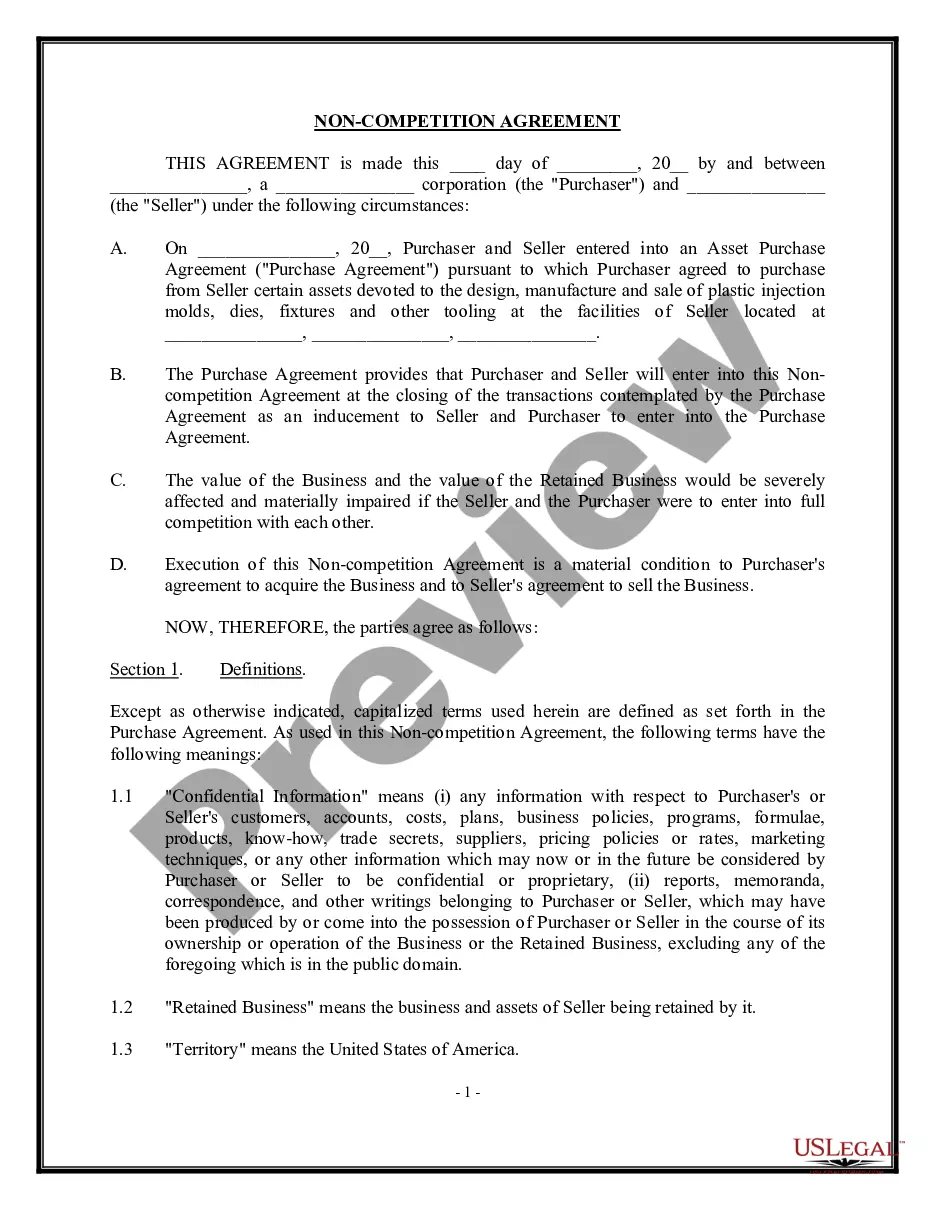
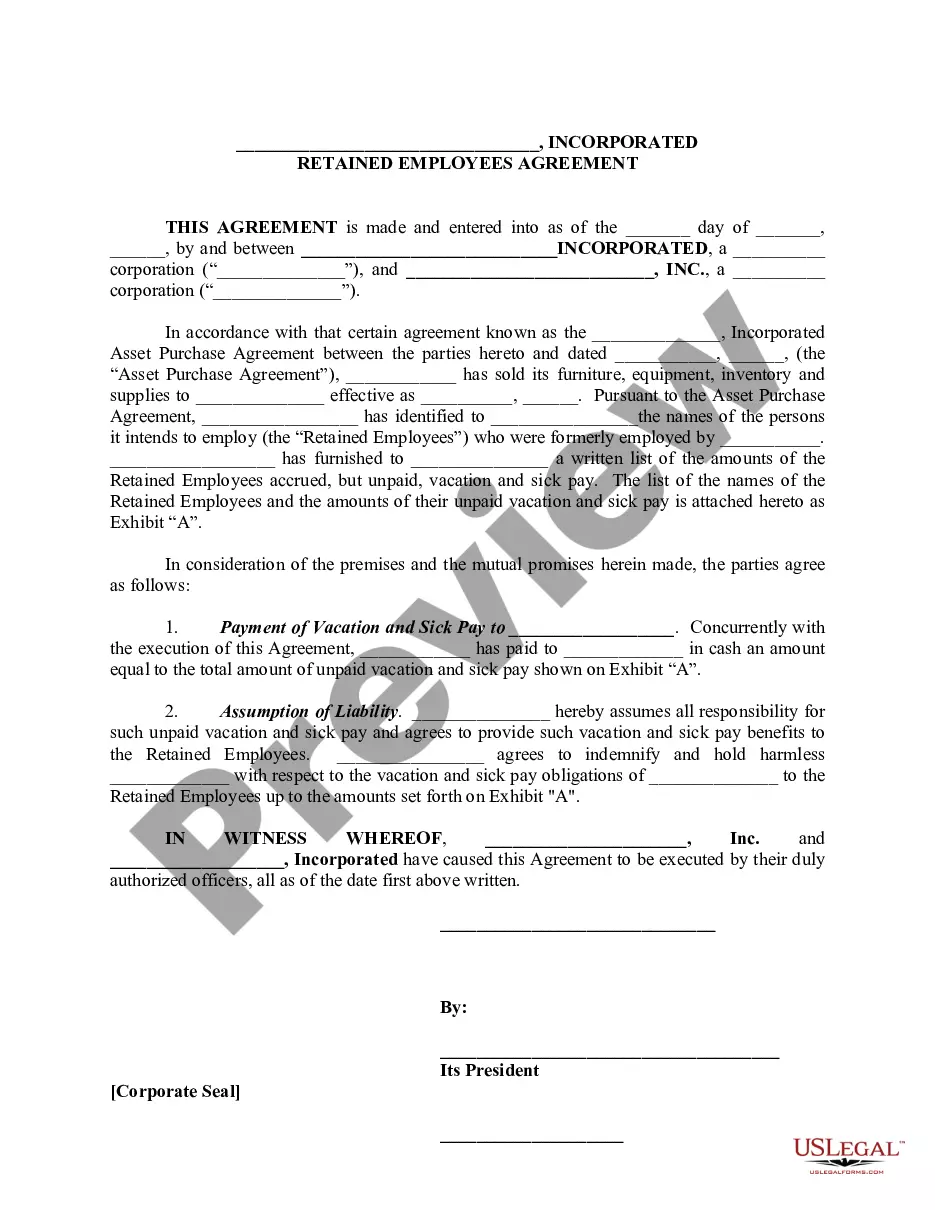
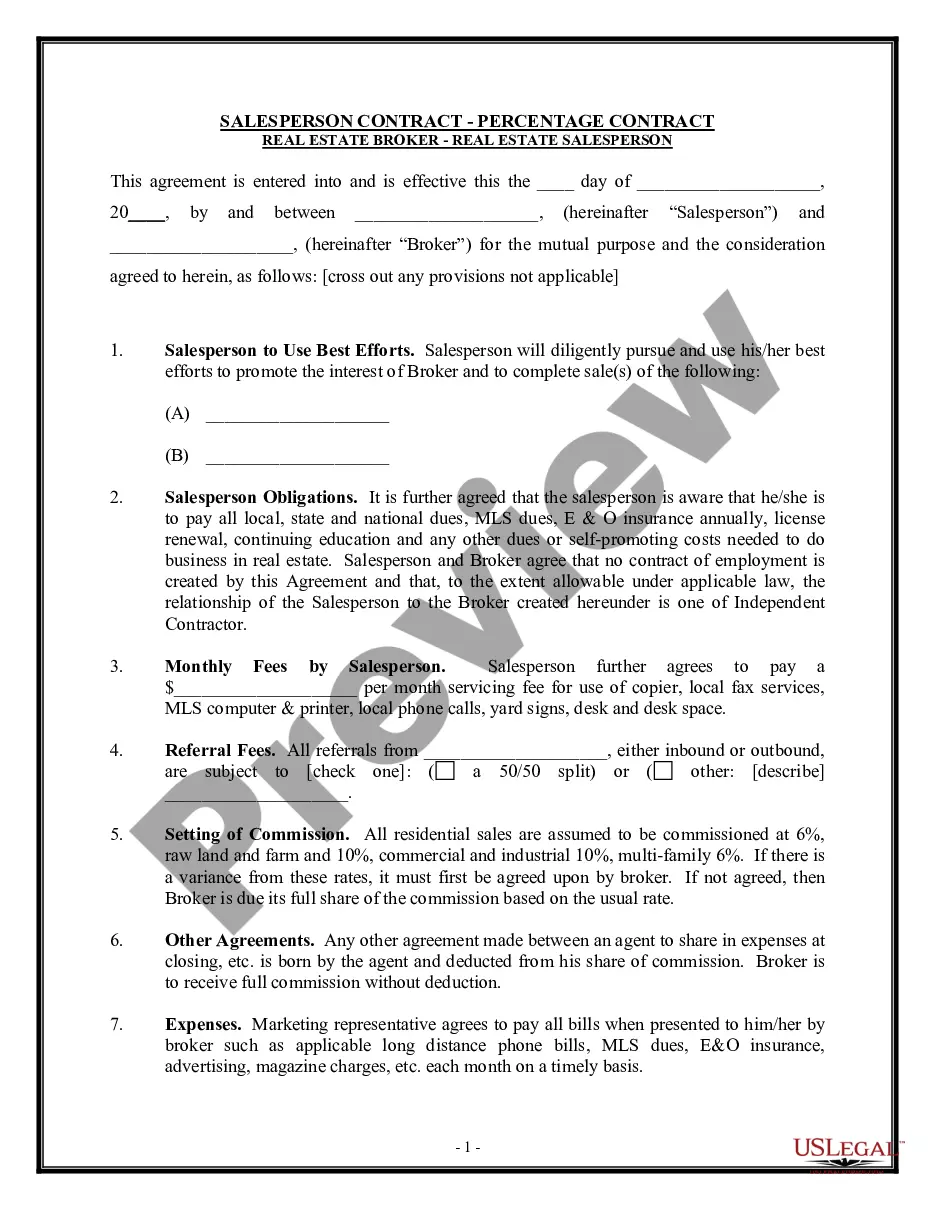



How to fill out Salesperson Contract - Percentage Contract - Asset Purchase Transaction?
Locating the appropriate legitimate document template can be a challenge.
It's obvious that there are multitude of templates accessible online, but how do you identify the authentic one you require.
Utilize the US Legal Forms website. The platform offers a wide array of templates, such as the Texas Salesperson Agreement - Percentage Agreement - Asset Acquisition Transaction, which can be applied for both business and personal needs.
If you are a new US Legal Forms user, here are simple steps you can follow: First, ensure you have picked the right template for your region. You can preview the template using the Review option and read the template description to confirm this is suitable for you. If the template does not meet your requirements, use the Search field to find the correct one. Once you are confident the template is accurate, click the Buy Now button to obtain it. Choose your desired pricing plan and enter the necessary information. Create your account and complete the transaction using your PayPal account or credit card. Select the download format and save the legal document template to your device. Complete, edit, print, and sign the downloaded Texas Salesperson Agreement - Percentage Agreement - Asset Acquisition Transaction. US Legal Forms is the largest repository of legal templates where you can find various document templates. Leverage the service to obtain professionally crafted documents that comply with state requirements.
- All documents are verified by professionals.
- Meet state and federal regulations.
- If you are already signed up.
- Log In to your account and click the Download button to get the Texas Salesperson Agreement - Percentage Agreement - Asset Acquisition Transaction.
- Use your account to search through the legal templates you have previously acquired.
- Visit the My documents tab in your account to download another copy of the document you require.
Form popularity
FAQ
Exiting a real estate contract in Texas typically involves reviewing the terms outlined in the agreement. If the contract includes a termination clause or if both parties agree to cancel, you may proceed accordingly. For individuals using a Texas Salesperson Contract in a percentage contract setting, seeking legal advice may also clarify your options.
Recording the purchase and its effects on your balance sheet can be done by:Creating an assets account and debiting it in your records according to the value of your assets.Creating another cash account and crediting it by how much cash you put towards the purchase of the assets.More items...
Assigning a contract (transferring a contract)Unless an assignment is prohibited in a contract, a party may generally assign the rights (benefit) under the contract to a third party without the consent of the other party. However, you cannot usually assign the obligations (burden) under a contract.
An asset purchase agreement is exactly what it sounds like: an agreement between a buyer and a seller to transfer ownership of an asset for a price. The difference between this type of contract and a merger-acquisition transaction is that the seller can decide which specific assets to sell and exclude.
(1) A contract of sale of goods is a contract whereby the seller transfers or agrees to transfer the property in goods to the buyer for a price. There may be a contract of sale between one part-owner and another.
In an asset sale the target's contracts are transferred to the buyer by means of assigning the contracts to the buyer. The default rule is generally that a party to a contract has the right to assign the agreement to a third party (although the assigning party remains liable to the counter-party under the agreement).
Generally, in an asset purchase, the purchasing company is not liable for the seller's debts, obligations and liabilities. But there are exceptions, such as when the buyer agrees to assume the debts, obligation or liabilities in exchange for a lower sales price, for example.
In an asset sale, a firm sells some or all of its actual assets, either tangible or intangible. The seller retains legal ownership of the company that has sold the assets but has no further recourse to the sold assets. The buyer assumes no liabilities in an asset sale.
While buyer's counsel typically prepares the first draft of an asset purchase agreement, there may be circumstances (such as an auction) when seller's counsel prepares the first draft.
Transfer (assignment) of contracts. If shares in a company are being sold, then the contracts that the company has with third parties will not need to be changed. However, if assets are being sold, then contracts will need to be assigned or novated (different types of transfer) to the buyer.