Texas General Warranty Deed for Individuals or Husband and Wife to an Individual or Individuals
What is this form?
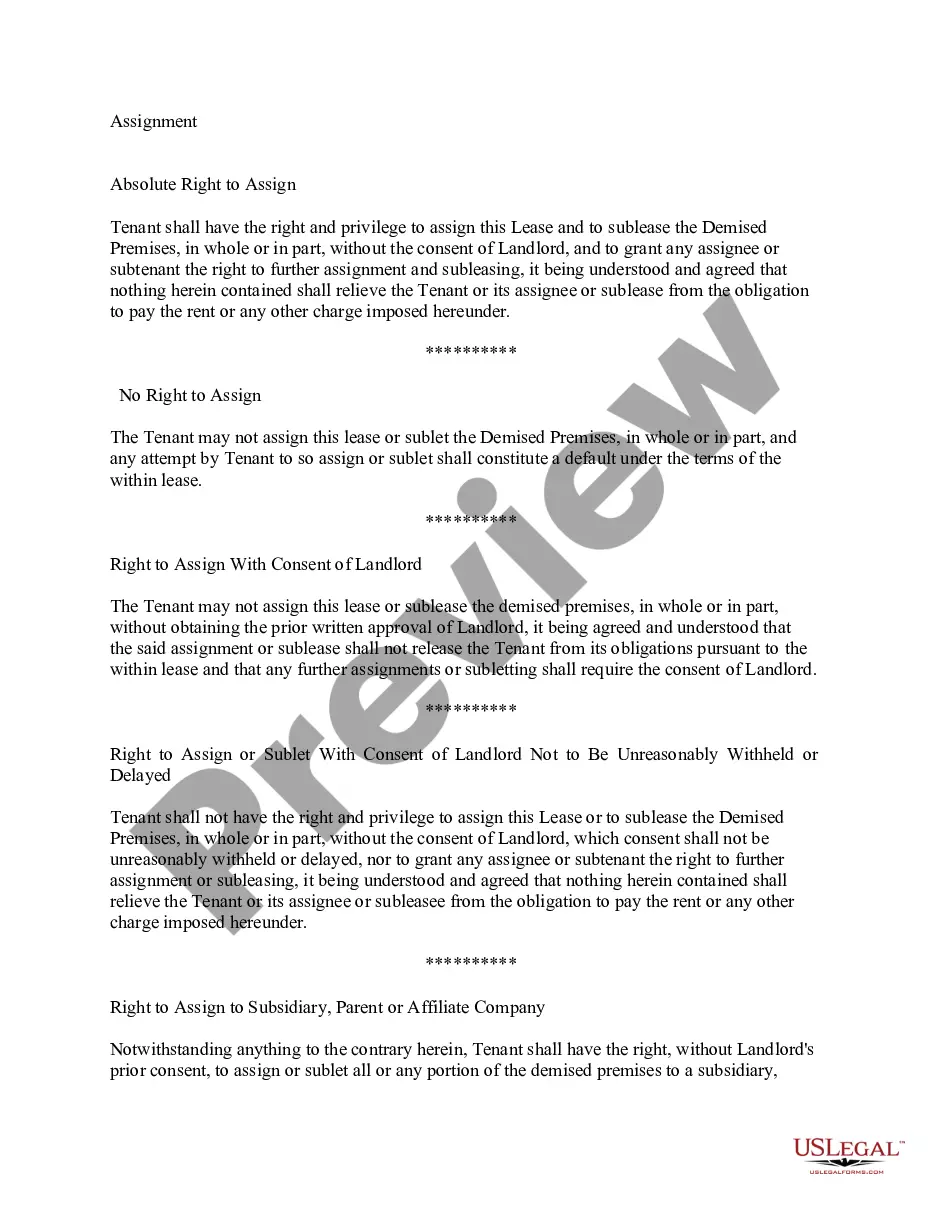
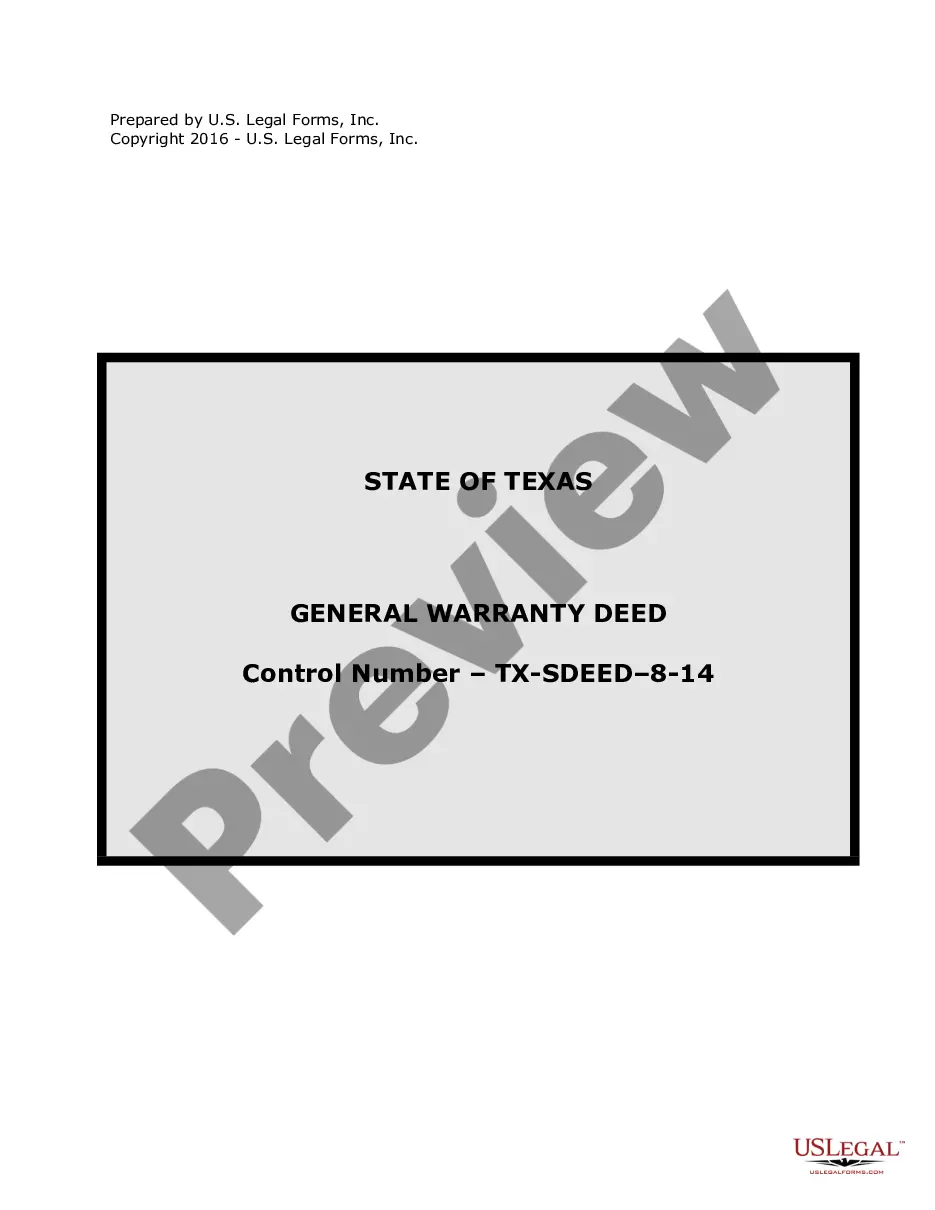
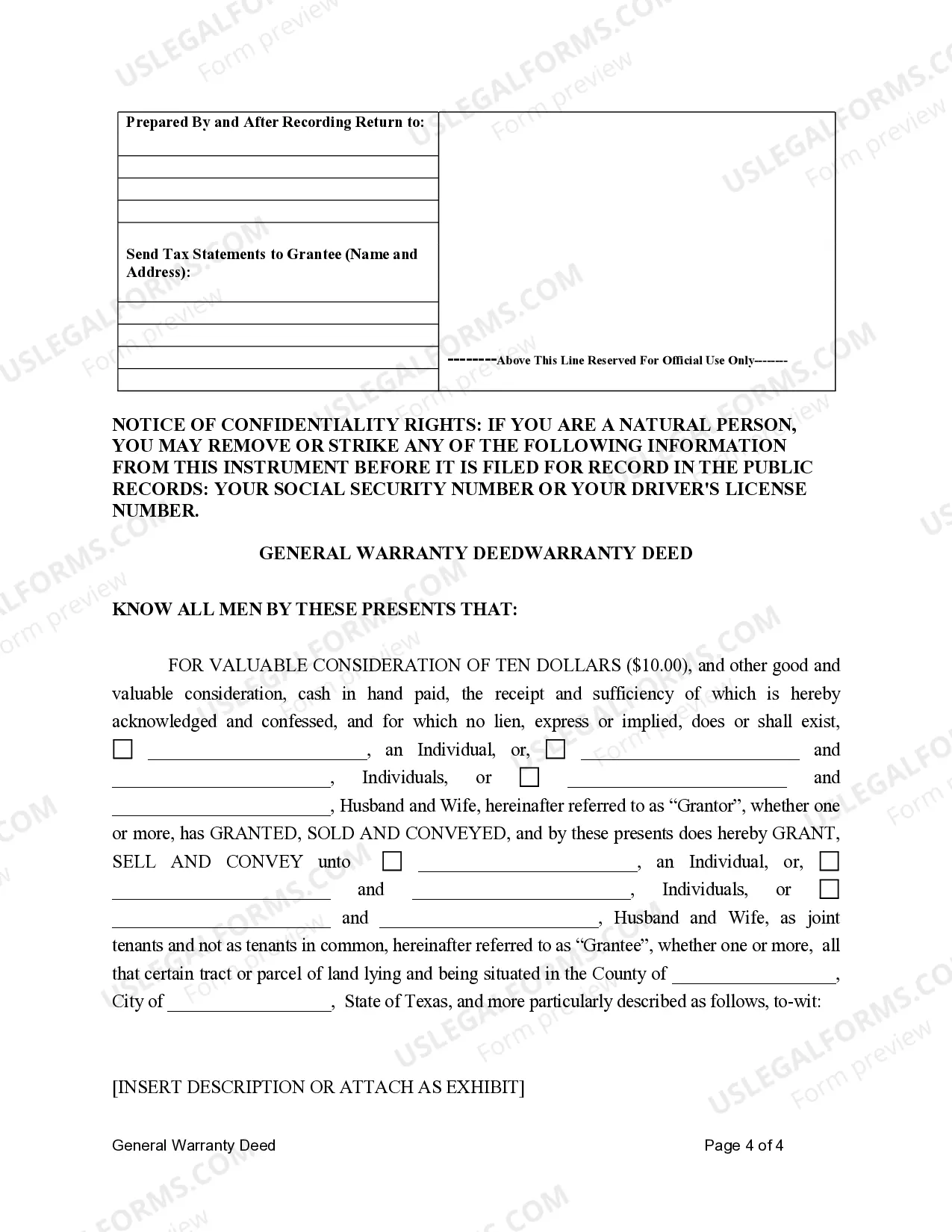
The General Warranty Deed for Individuals or Husband and Wife to an Individual or Individuals is a legal document used to transfer ownership of real property. This form guarantees that the grantor (the seller) holds clear title to the property and has the right to transfer it without any undisclosed claims. Unlike other deeds, the General Warranty Deed offers the highest level of protection to the grantee (the buyer), ensuring they can freely enjoy their property without fear of future claims against it. This form is particularly useful for individuals or couples transferring property to a single person or multiple individuals.
Main sections of this form
- Identification of the grantor(s) (individuals or couple) and the grantee(s) (individual or individuals).
- Clear description of the property being transferred.
- Statement of consideration, confirming the payment for the property.
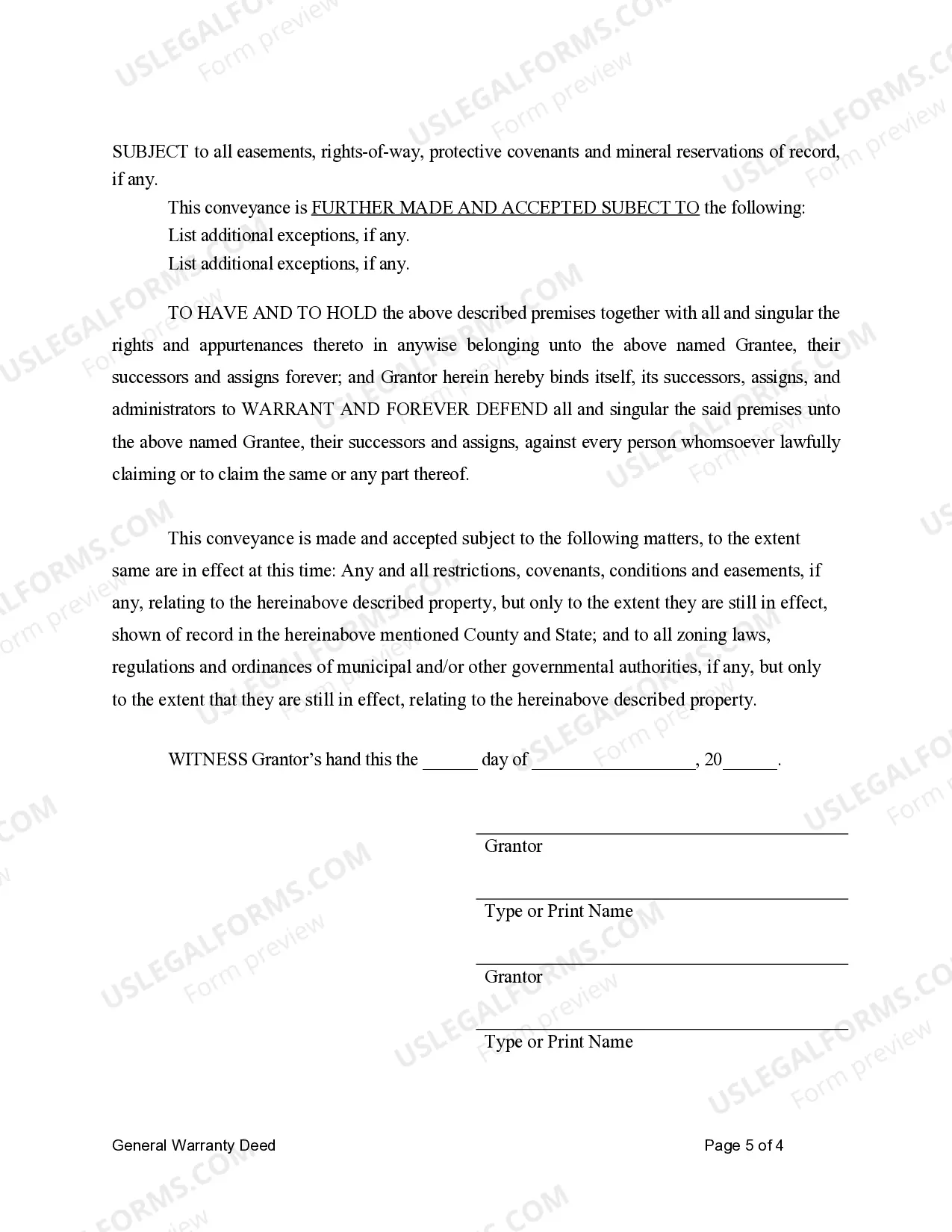
- Legal assurances regarding the property's title and any existing covenants or easements.
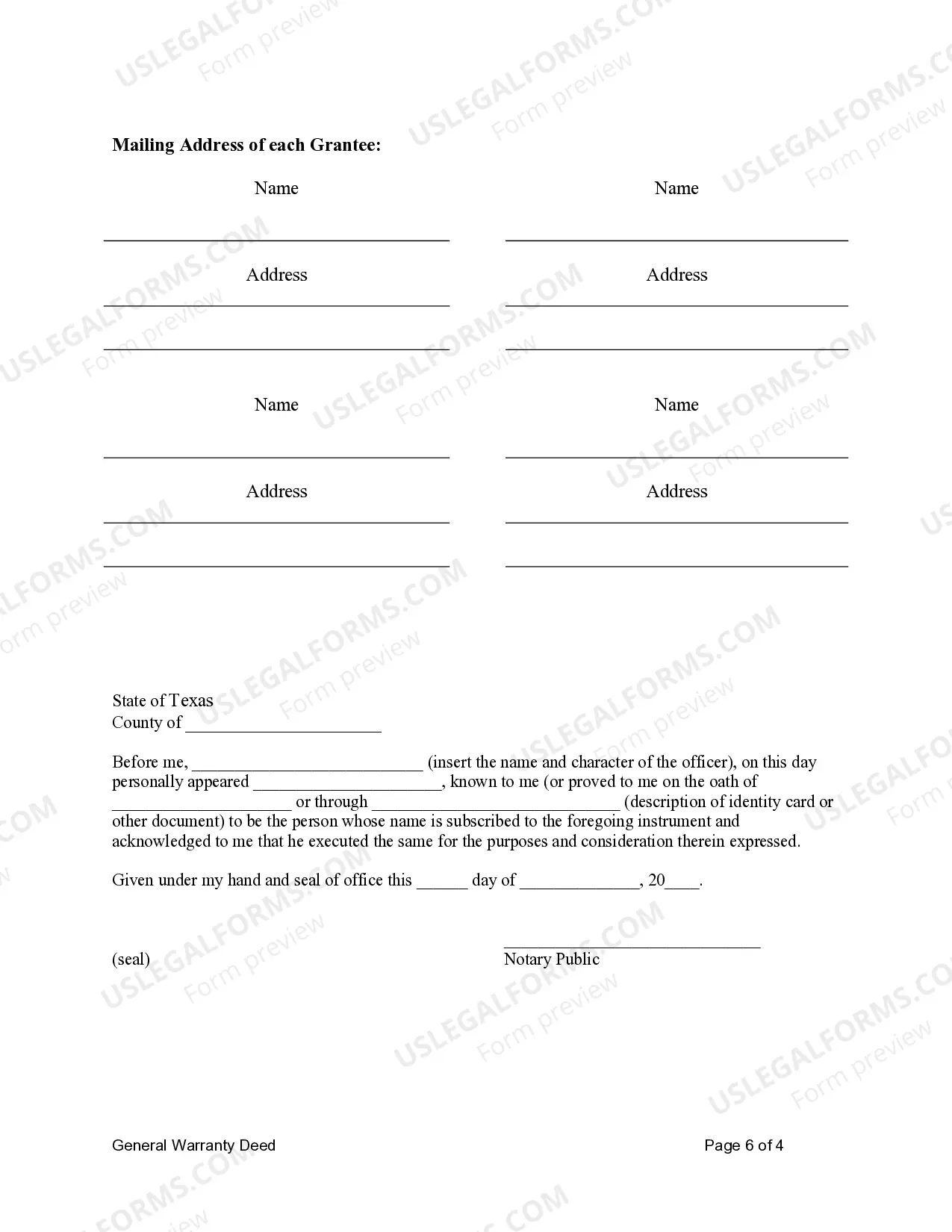
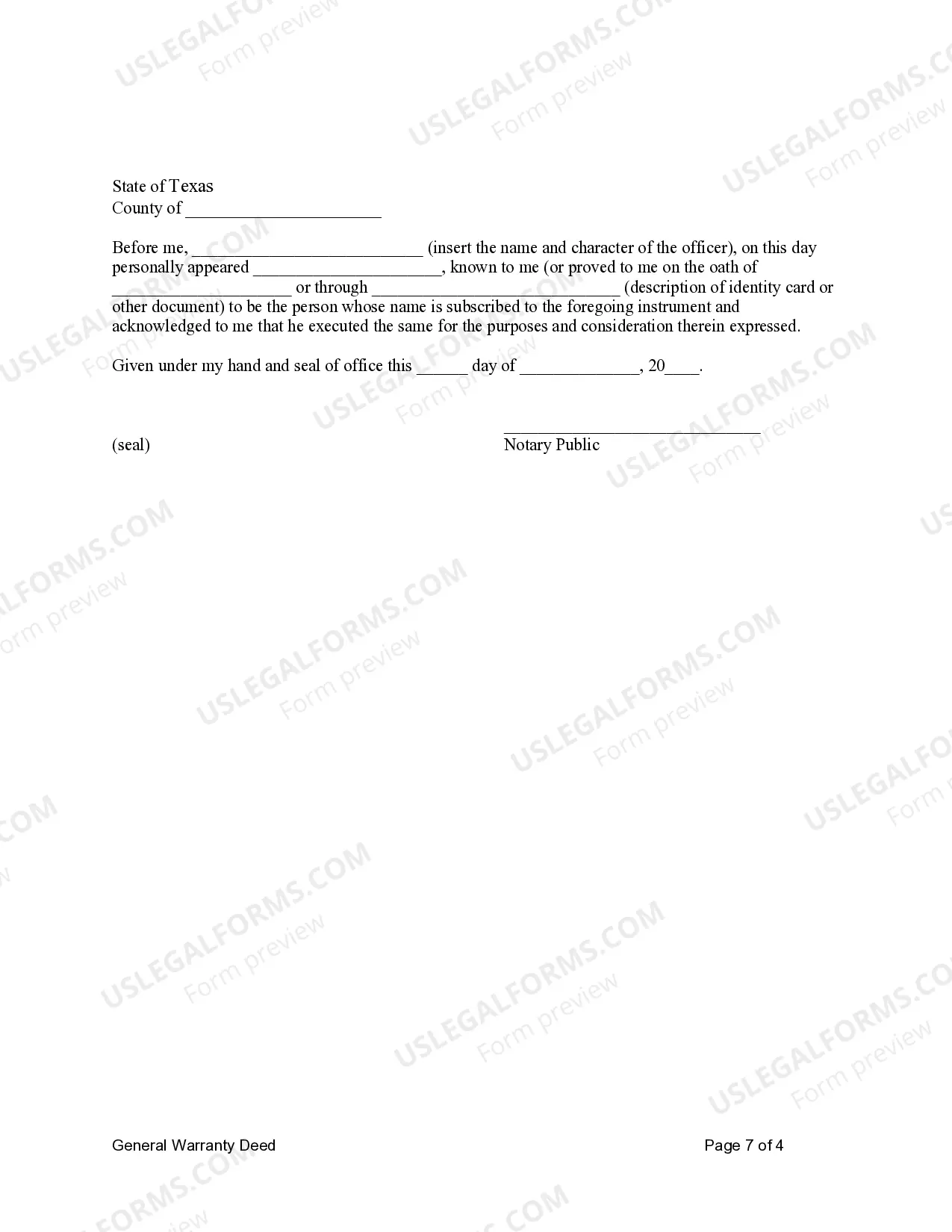
- Signature blocks for the grantor(s) and acknowledgment sections for notarization.

Common use cases
This General Warranty Deed should be used when a property owner wishes to transfer ownership to another individual or individuals. It is necessary in transactions where the seller wants to ensure that the buyer receives full rights to the property free of any claims, making it ideal for private sales, gifts, or transfers between family members.
Who can use this document
This form is suitable for:
- Individuals transferring real estate to another individual.
- Married couples wishing to convey property to an individual or multiple individuals.
- Anyone ensuring comprehensive legal protection for the buyer against future claims.
Instructions for completing this form
- Identify the grantor(s) by entering their names as individuals or as a married couple.
- Specify the grantee(s) by entering their names as a single individual or multiple individuals.
- Insert the complete description of the property being transferred, including any legal identifiers.
- Complete the statement of consideration, mentioning the amount paid for the property.
- Have the grantor(s) sign the deed, ensuring all required witnesses and notary sections are properly filled out.
Notarization guidance
This document requires notarization to meet legal standards. US Legal Forms provides secure online notarization powered by Notarize, allowing you to complete the process through a verified video call, available 24/7.
Get your form ready online
Our built-in tools help you complete, sign, share, and store your documents in one place.
Make edits, fill in missing information, and update formatting in US Legal Forms—just like you would in MS Word.
Download a copy, print it, send it by email, or mail it via USPS—whatever works best for your next step.
Sign and collect signatures with our SignNow integration. Send to multiple recipients, set reminders, and more. Go Premium to unlock E-Sign.
If this form requires notarization, complete it online through a secure video call—no need to meet a notary in person or wait for an appointment.
We protect your documents and personal data by following strict security and privacy standards.

Make edits, fill in missing information, and update formatting in US Legal Forms—just like you would in MS Word.

Download a copy, print it, send it by email, or mail it via USPS—whatever works best for your next step.

Sign and collect signatures with our SignNow integration. Send to multiple recipients, set reminders, and more. Go Premium to unlock E-Sign.

If this form requires notarization, complete it online through a secure video call—no need to meet a notary in person or wait for an appointment.

We protect your documents and personal data by following strict security and privacy standards.
Common mistakes to avoid
- Failing to fully describe the property, leading to potential disputes.
- Not having the document notarized, which may invalidate the deed.
- Skipping the acknowledgment section, which is necessary for formal acceptance.
- Leaving out necessary signatures, which can cause legal complications.
Advantages of online completion
- Convenient access to a professionally drafted legal document.
- Edit and complete the form easily using available digital fields.
- Secure storage and retrieval of your legal documents.
- No physical trips required; complete the form from anywhere at any time.
Looking for another form?
Form popularity
FAQ
The mortgage company usually prepares this deed as part of the loan package and delivers it to the title company for you to sign at closing. The title company is commonly the trustee to the deed and holds legal title to the property until the loan gets fully repaid.
If you've recently married and already own a home or other real estate, you may want to add your new spouse to the deed for your property so the two of you own it jointly. To add a spouse to a deed, all you have to do is literally fill out, sign and record a new deed in your county recorder's office.
The Texas warranty deed is a form of deed that provides an unlimited warranty of title. It makes an absolute guarantee that the current owner has good title to the property.When a buyer is purchasing residential property from a seller for full value; When the buyer does not intend to purchase title insurance; or.
The seller or lender, also known as the grantor, and the buyer or the grantee are the two parties involved in a warranty contract. A party may be a person or a company, and they are often strangers. There are several types of deeds, such as the special warranty deed, the quitclaim deed, and the warranty deed.
Adding someone to your house deed requires the filing of a legal form known as a quitclaim deed. When executed and notarized, the quitclaim deed legally overrides the current deed to your home. By filing the quitclaim deed, you can add someone to the title of your home, in effect transferring a share of ownership.
A personal representative deed and warranty deed are the same only in that they both convey ownership of land. The types of title assurance that the different deeds provide to the new owner are very different.
In California, all property bought during the marriage with income that was earned during the marriage is deemed "community property." The law implies that both spouses own this property equally, regardless of which name is on the title deed.
If you live in a common-law state, you can keep your spouse's name off the title the document that says who owns the property.You can put your spouse on the title without putting them on the mortgage; this would mean that they share ownership of the home but aren't legally responsible for making mortgage payments.
A In order to make your partner a joint owner you will need to add his name at the Land Registry, for which there is a fee of £280 (assuming you transfer half the house to him). You won't, however, have to pay capital gains tax, as gifts between civil partners (and spouses) are tax free.