Married Person's Will for the State of Texas with Children With a Credit Shelter Trust for Spouse and a Trust for Children - Marital Trust
About this form
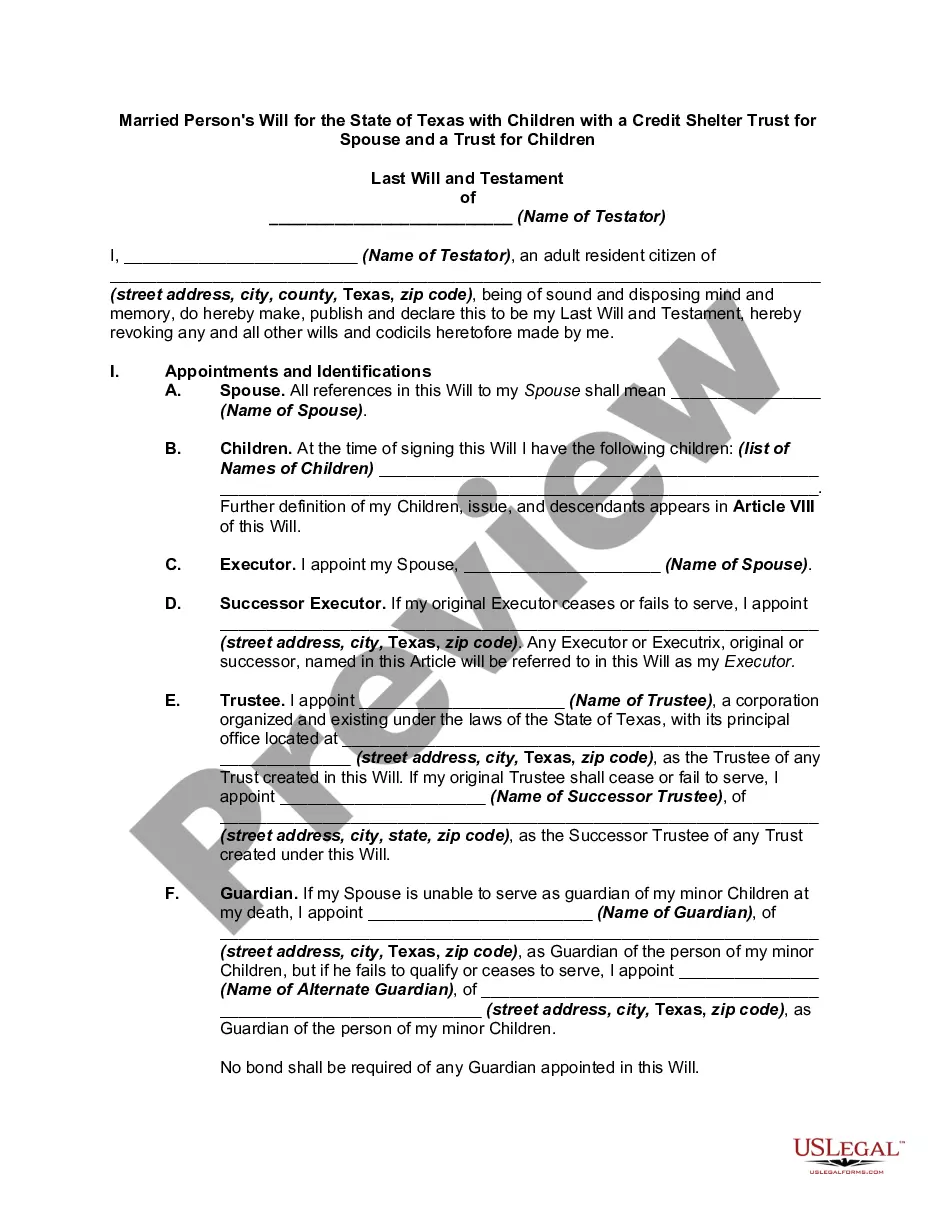
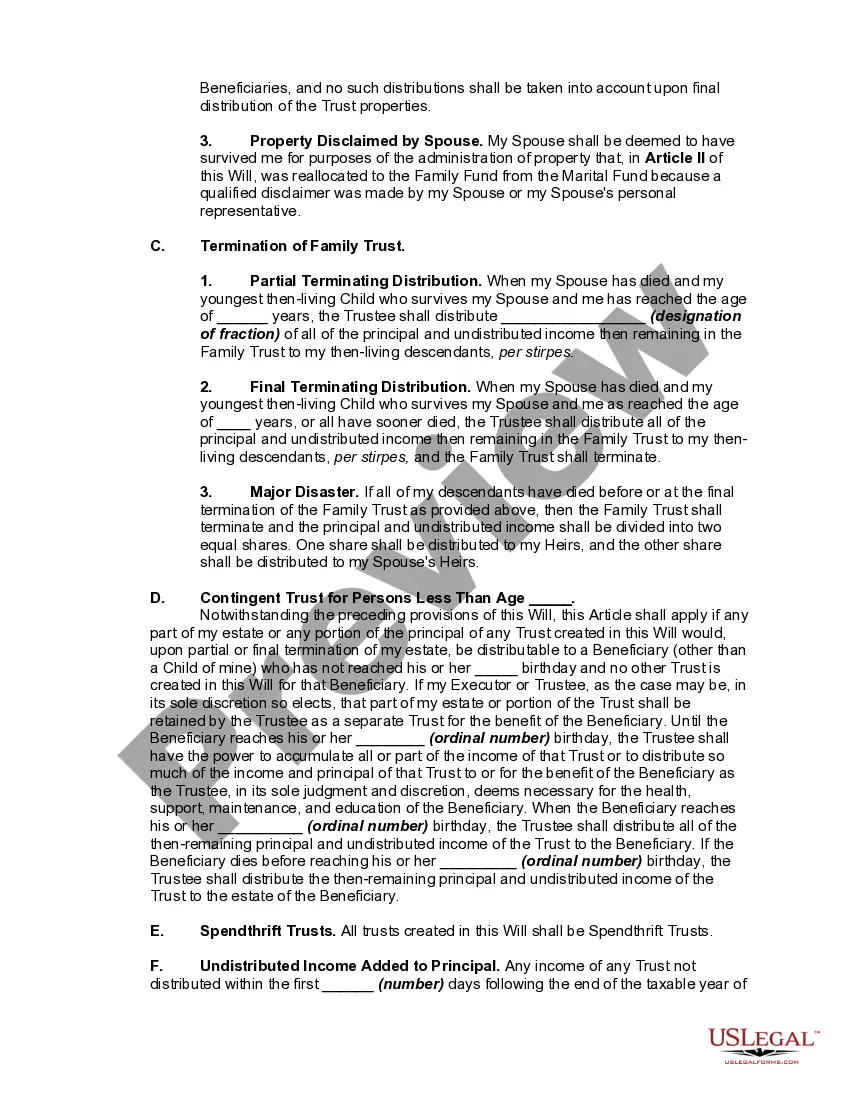
The Married Person's Will for the State of Texas with Children with a Credit Shelter Trust for Spouse and a Trust for Children is a comprehensive legal document that allows a married individual to outline their wishes regarding the distribution of their estate after death. This form is specifically designed for Texas residents and includes provisions for a credit shelter trust to maximize estate tax exemptions. This form differs from a standard will by incorporating trusts that can provide for both the surviving spouse and children, ensuring a more tax-efficient transfer of assets.
Form components explained
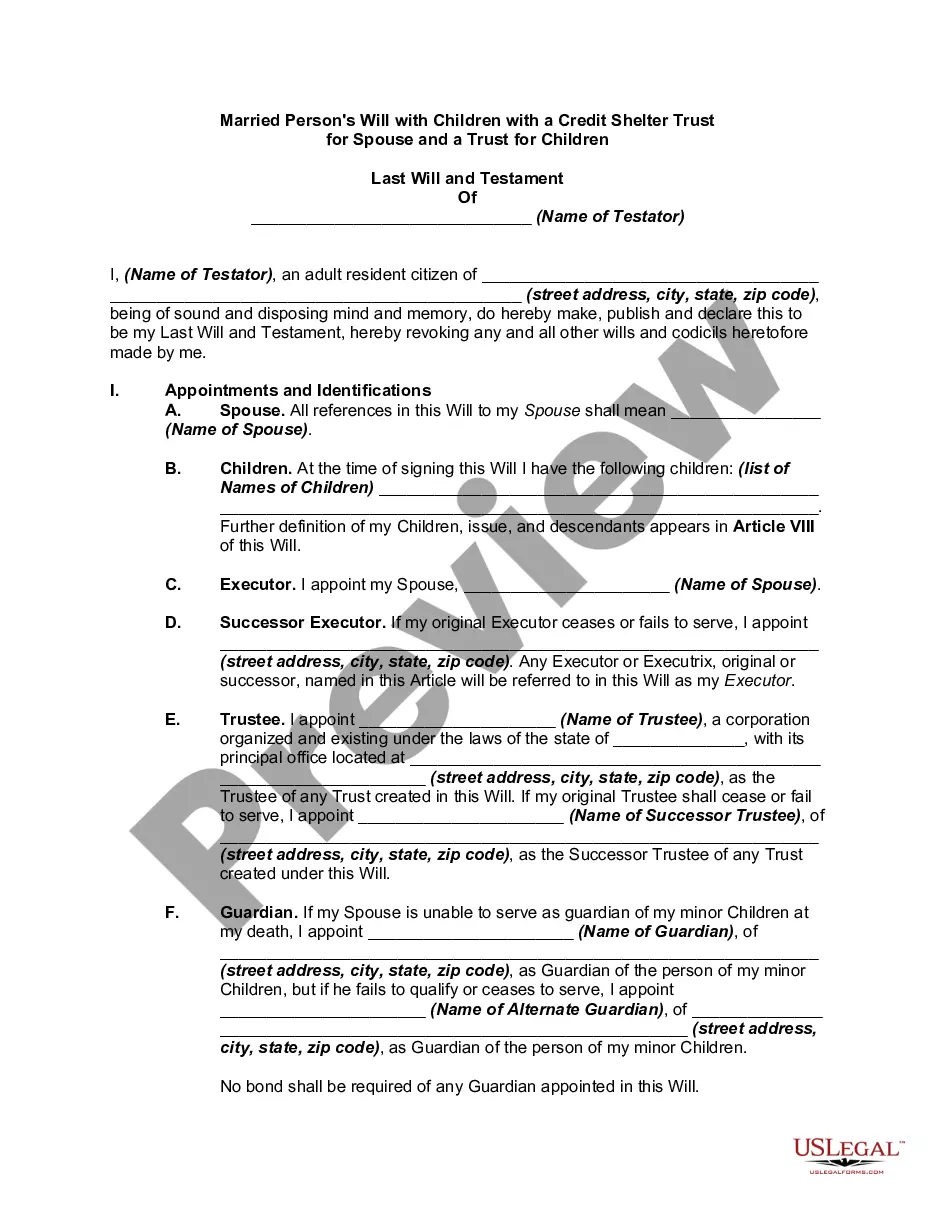
- Declaration of the testator's intent and revocation of previous wills.
- Identification of the testator's spouse and children.
- Appointment of an executor and successor executor.
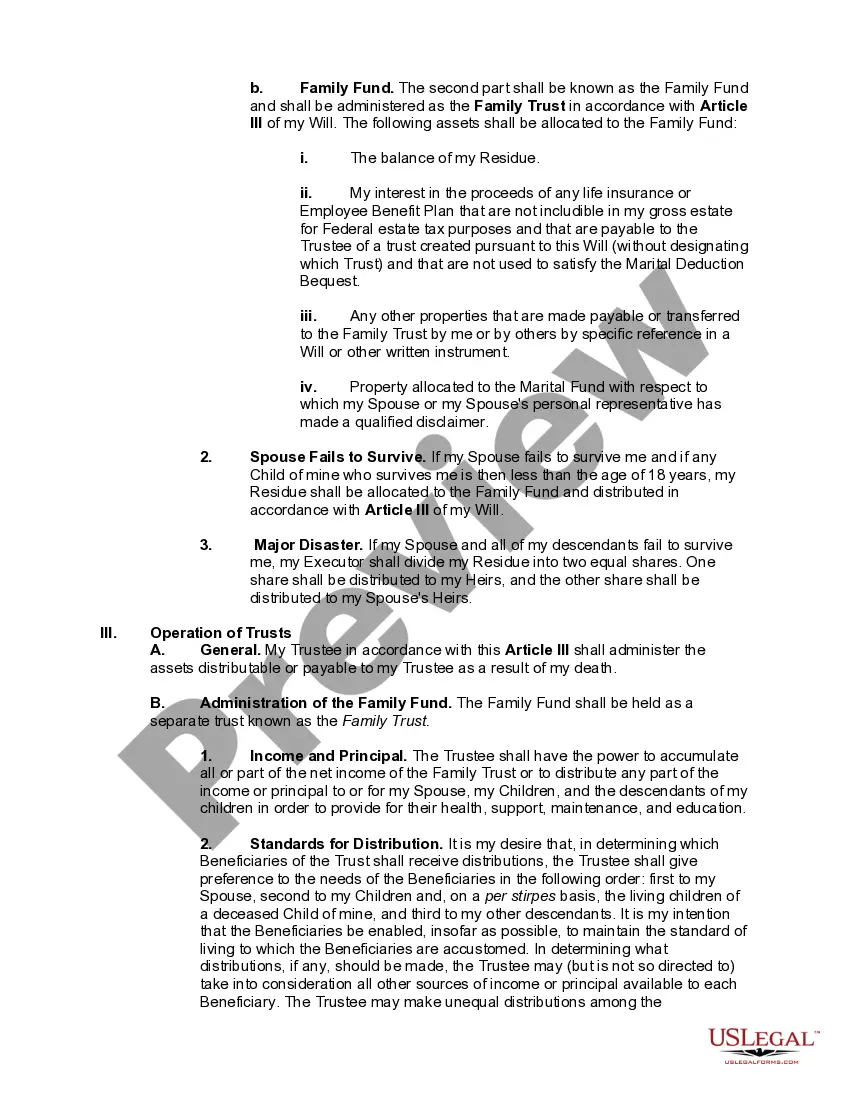
- Creation of a credit shelter trust for the surviving spouse and a trust for children.
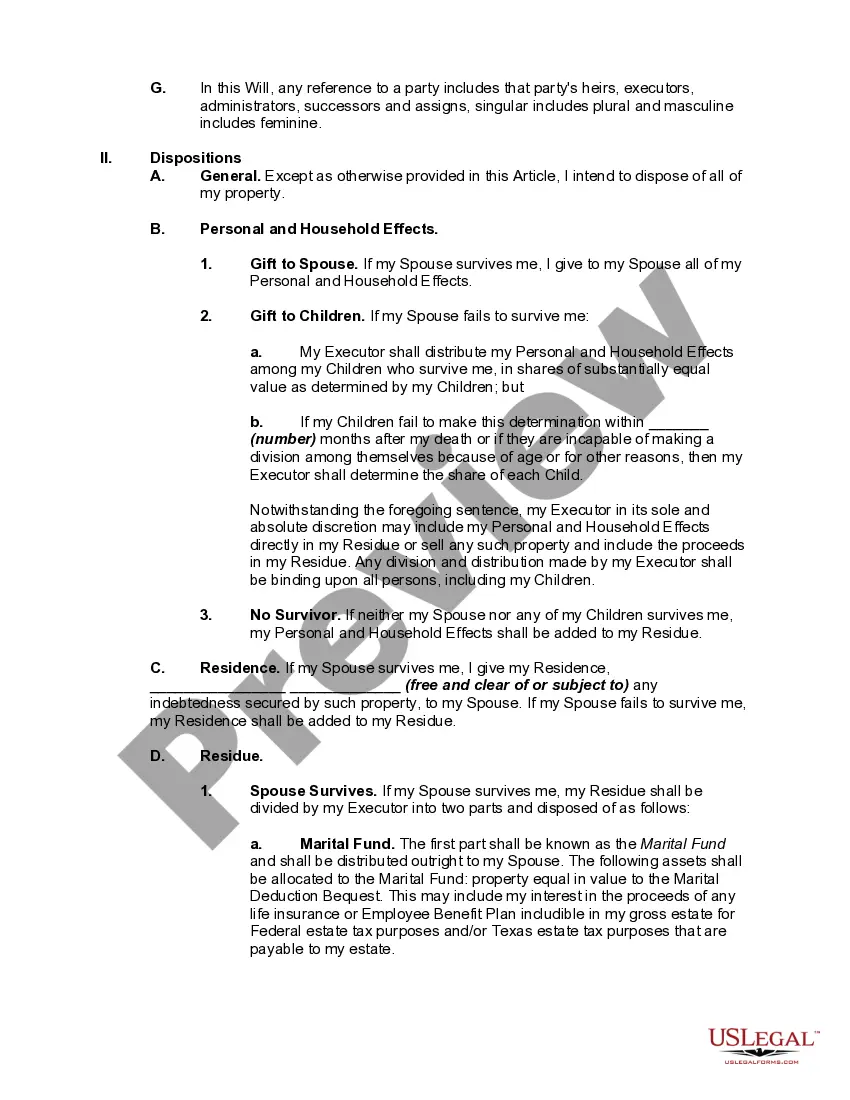
- Distribution of personal and household effects, residence, and overall estate residue.
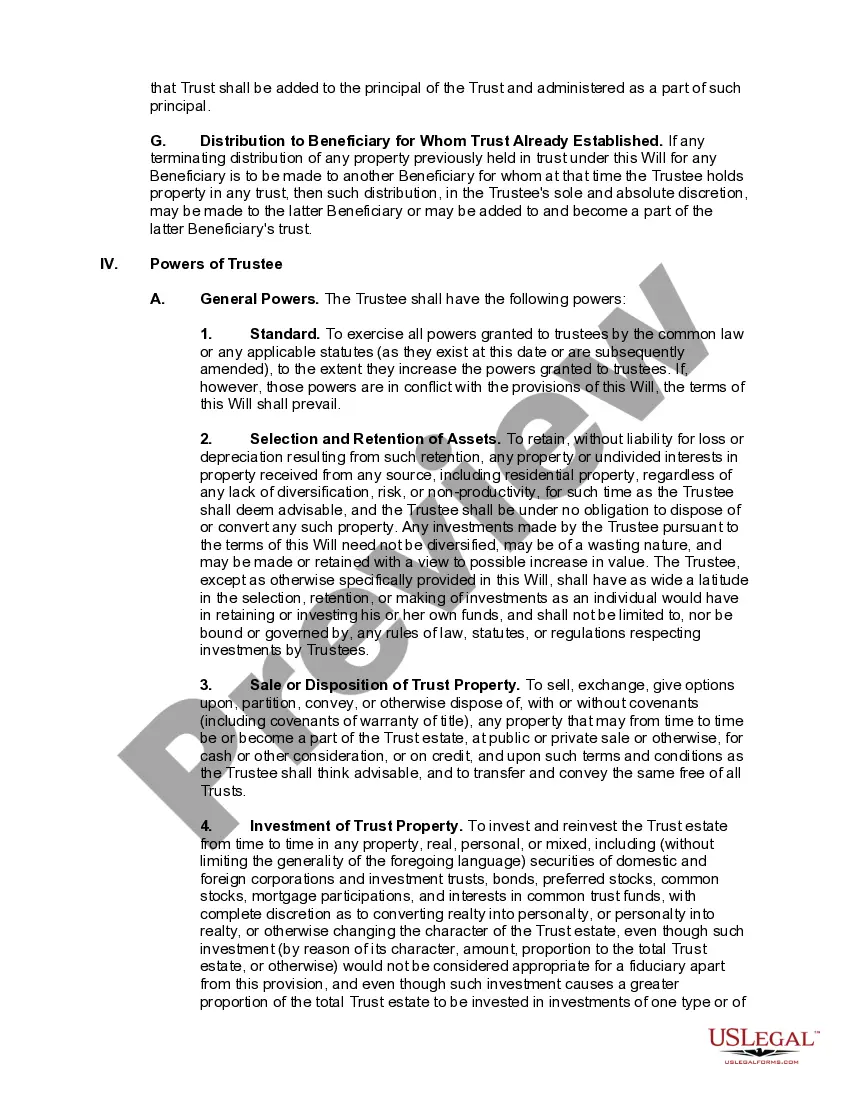
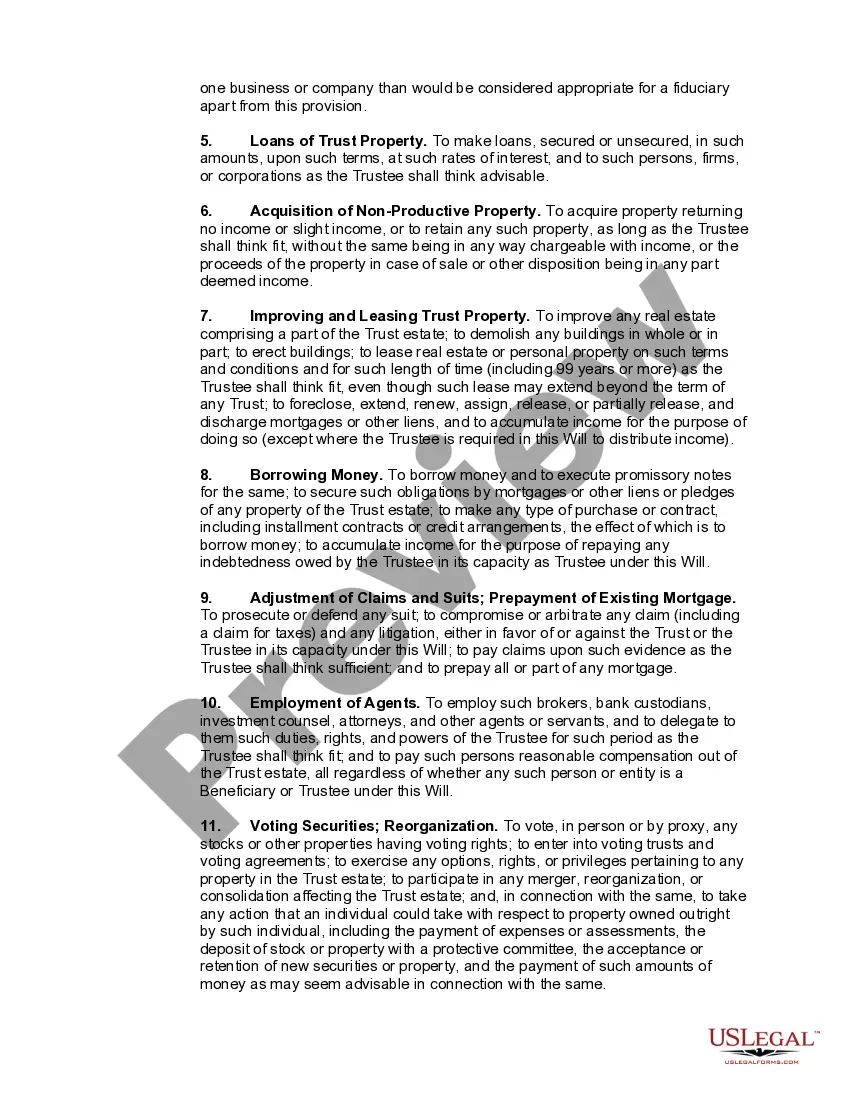
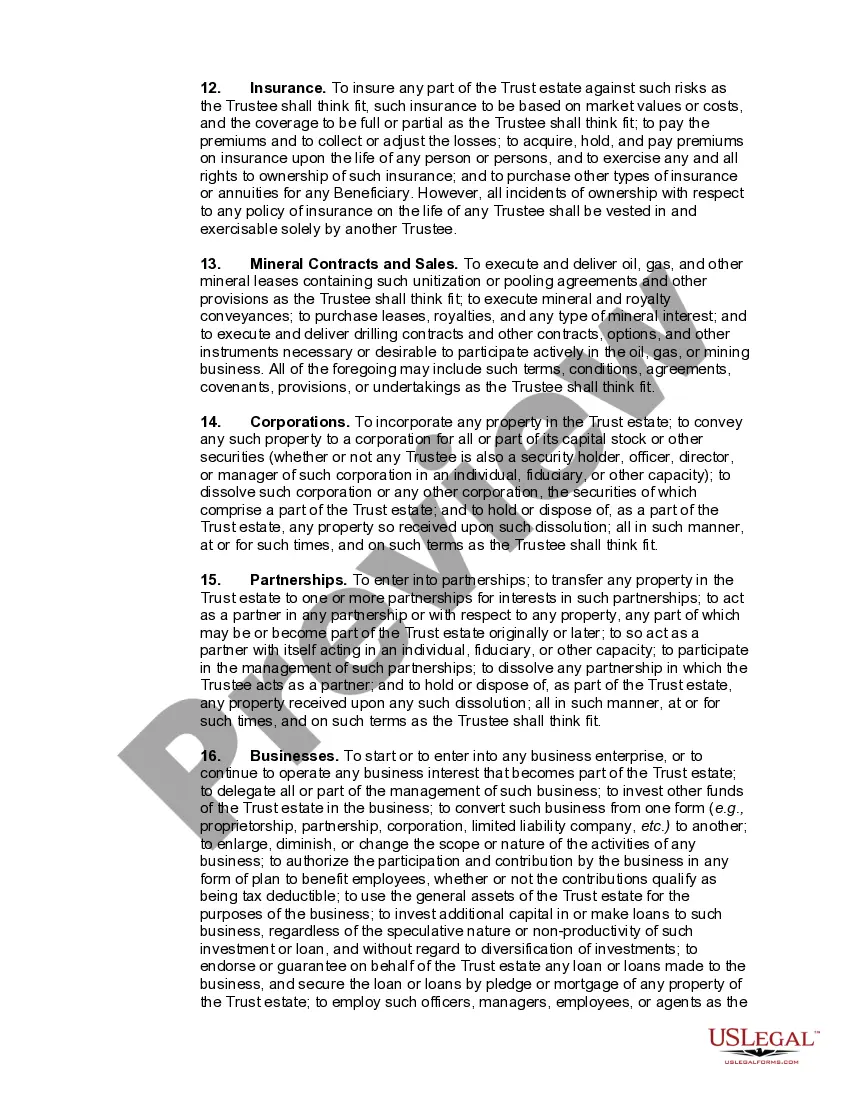
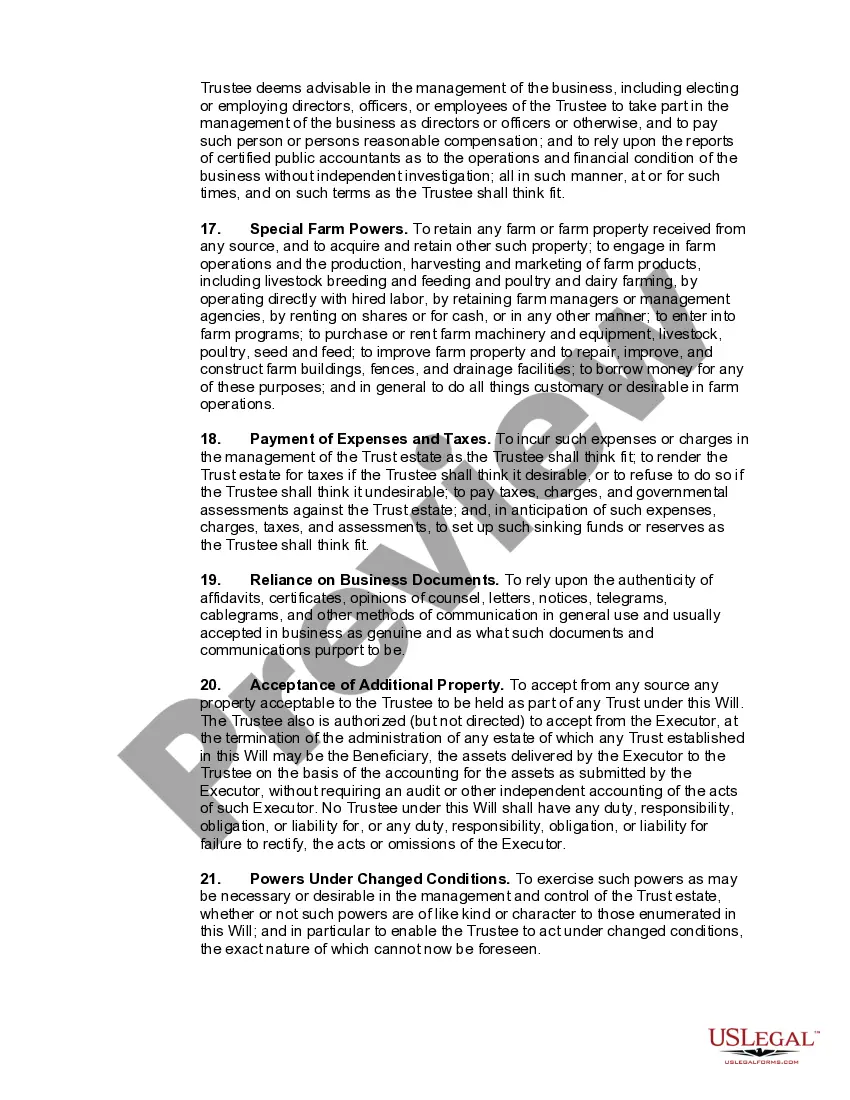
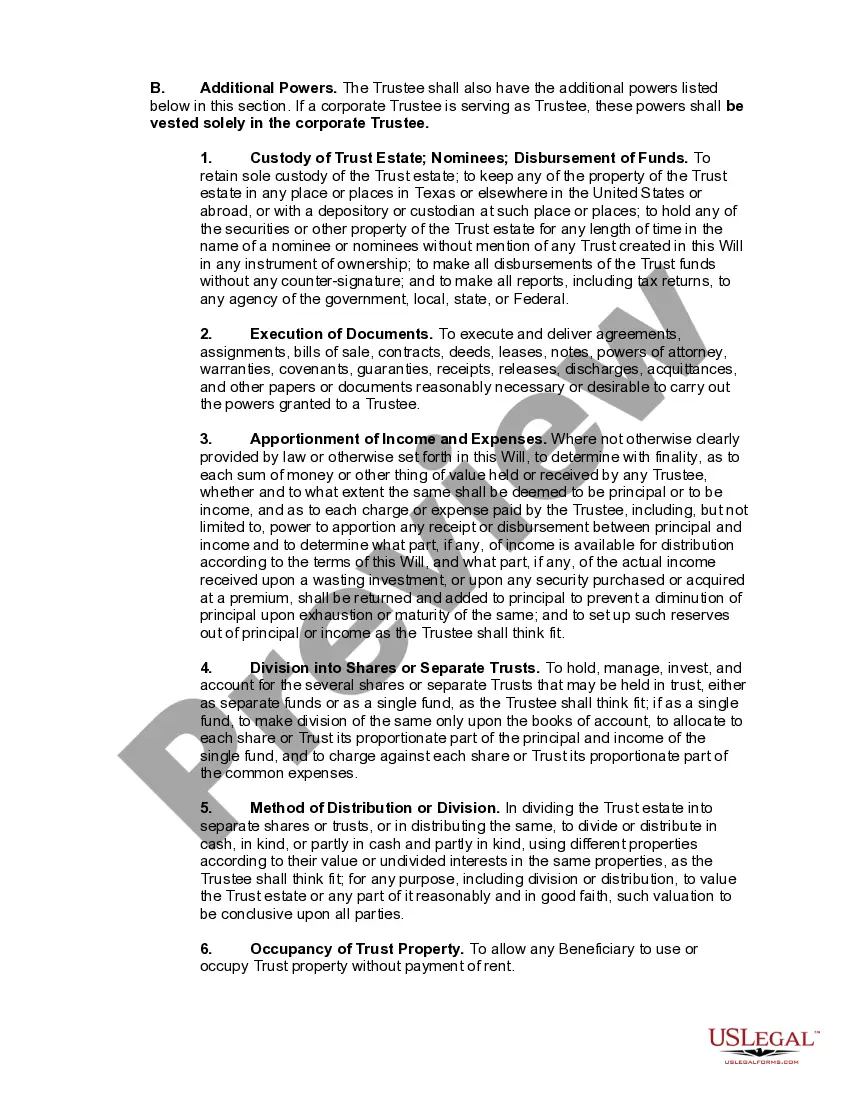
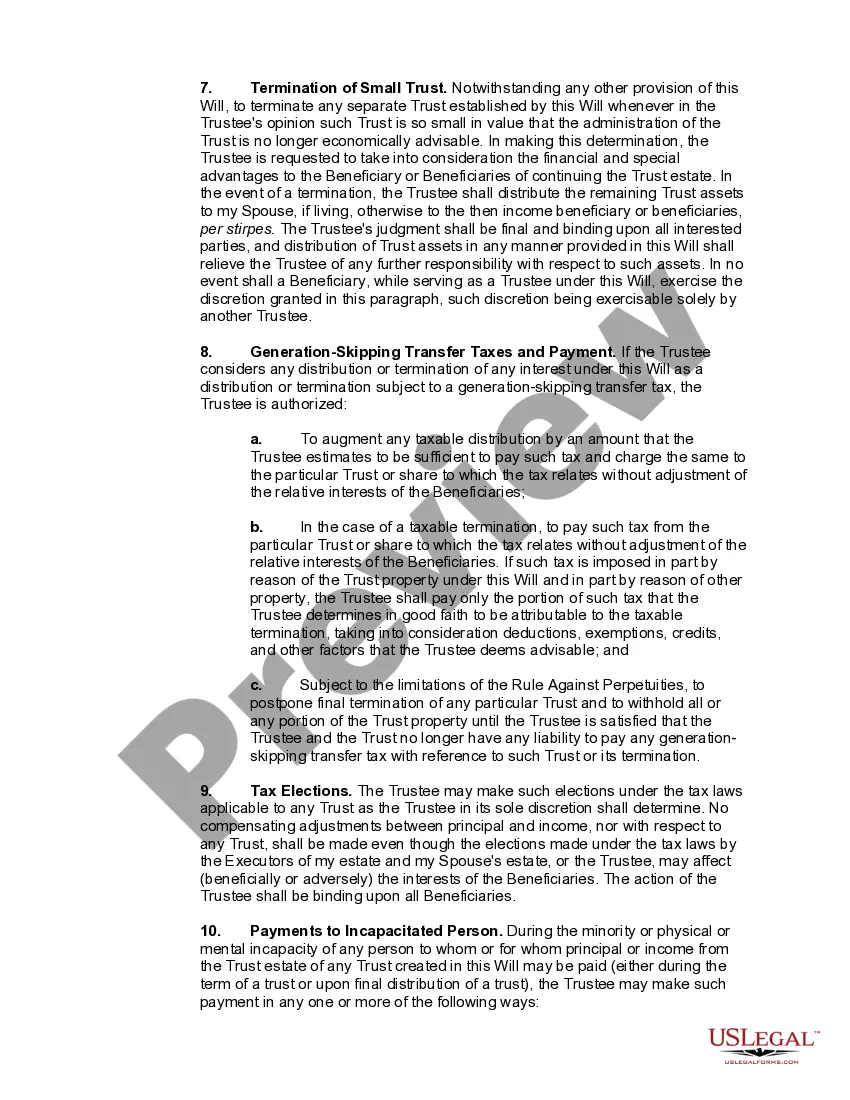
- Specific provisions for administration of trusts and powers of the trustee.



When to use this document
This form should be used by married individuals in Texas who wish to outline their last will and testament while ensuring that their spouse and children are provided for after their passing. It is particularly beneficial for those with significant assets, as it includes a credit shelter trust that helps minimize estate taxes, allowing for a more effective wealth transfer to heirs.
Intended users of this form
- Married individuals residing in Texas.
- Parents with minor or dependent children.
- Couples looking to minimize estate taxes through strategic asset planning.
- Those wishing to establish trusts for beneficiaries.
- Individuals seeking to ensure clear distribution of their assets after death.
Steps to complete this form
- Identify and clearly write the full names of the testator, spouse, and children.
- Appoint an executor and a successor executor to manage the estate.
- Specify the assets to be placed in the credit shelter trust and trust for children.
- Outline how personal and household effects, residence, and other assets will be distributed.
- Sign the document in the presence of witnesses and a notary public, if required.
Notarization guidance
This form needs to be notarized to ensure legal validity. US Legal Forms provides secure online notarization powered by Notarize, allowing you to complete the process through a verified video call, available anytime.
Get your form ready online
Our built-in tools help you complete, sign, share, and store your documents in one place.
Make edits, fill in missing information, and update formatting in US Legal Forms—just like you would in MS Word.
Download a copy, print it, send it by email, or mail it via USPS—whatever works best for your next step.
Sign and collect signatures with our SignNow integration. Send to multiple recipients, set reminders, and more. Go Premium to unlock E-Sign.
If this form requires notarization, complete it online through a secure video call—no need to meet a notary in person or wait for an appointment.
We protect your documents and personal data by following strict security and privacy standards.

Make edits, fill in missing information, and update formatting in US Legal Forms—just like you would in MS Word.

Download a copy, print it, send it by email, or mail it via USPS—whatever works best for your next step.

Sign and collect signatures with our SignNow integration. Send to multiple recipients, set reminders, and more. Go Premium to unlock E-Sign.

If this form requires notarization, complete it online through a secure video call—no need to meet a notary in person or wait for an appointment.

We protect your documents and personal data by following strict security and privacy standards.
Common mistakes
- Failing to name alternative beneficiaries in case the primary ones do not survive.
- Not updating the will after significant life changes such as marriage, divorce, or the birth of children.
- Neglecting to consult with a legal professional, leading to non-compliance with state laws.
- Inadequate identification of assets to be included in trusts.
- Omitting or incorrectly filling out witness requirements, which can invalidate the will.
Benefits of using this form online
- Convenience of downloading and completing the form from home.
- Editable fields allow users to customize their estate planning easily.
- Access to professionally drafted templates ensures legal compliance.
- Quick and efficient process without the need for in-person attorney consultations.
- Easy storage and retrieval of documents as needed.
Legal use & context
- This form serves as a legal document that dictates how the testator's assets will be distributed after death.
- Using this will ensures that assets are managed according to the testator's wishes and can limit potential disputes among heirs.
- It provides clear directions regarding estate management and reduces court involvement after death.
Key takeaways
- The married person's will with a credit shelter trust is essential for estate planning in Texas.
- This form helps maximize tax benefits while securing financial support for a spouse and children.
- Proper completion and notarization are critical for its legal validity.
- Consultation with legal professionals can enhance effectiveness and compliance with state laws.
Looking for another form?


Form popularity
FAQ
One document that is explicitly written to supersede a will is a codicil, which is a separate document that amends the latest version of a last will and testament. The codicil must control distribution of the assets it references and supersede certain sections of the latest document.
Wills and Trusts FAQs Deciding between a will or a trust is a personal choice, and some experts recommend having both. A will is typically less expensive and easier to set up than a trust, an expensive and often complex legal document.
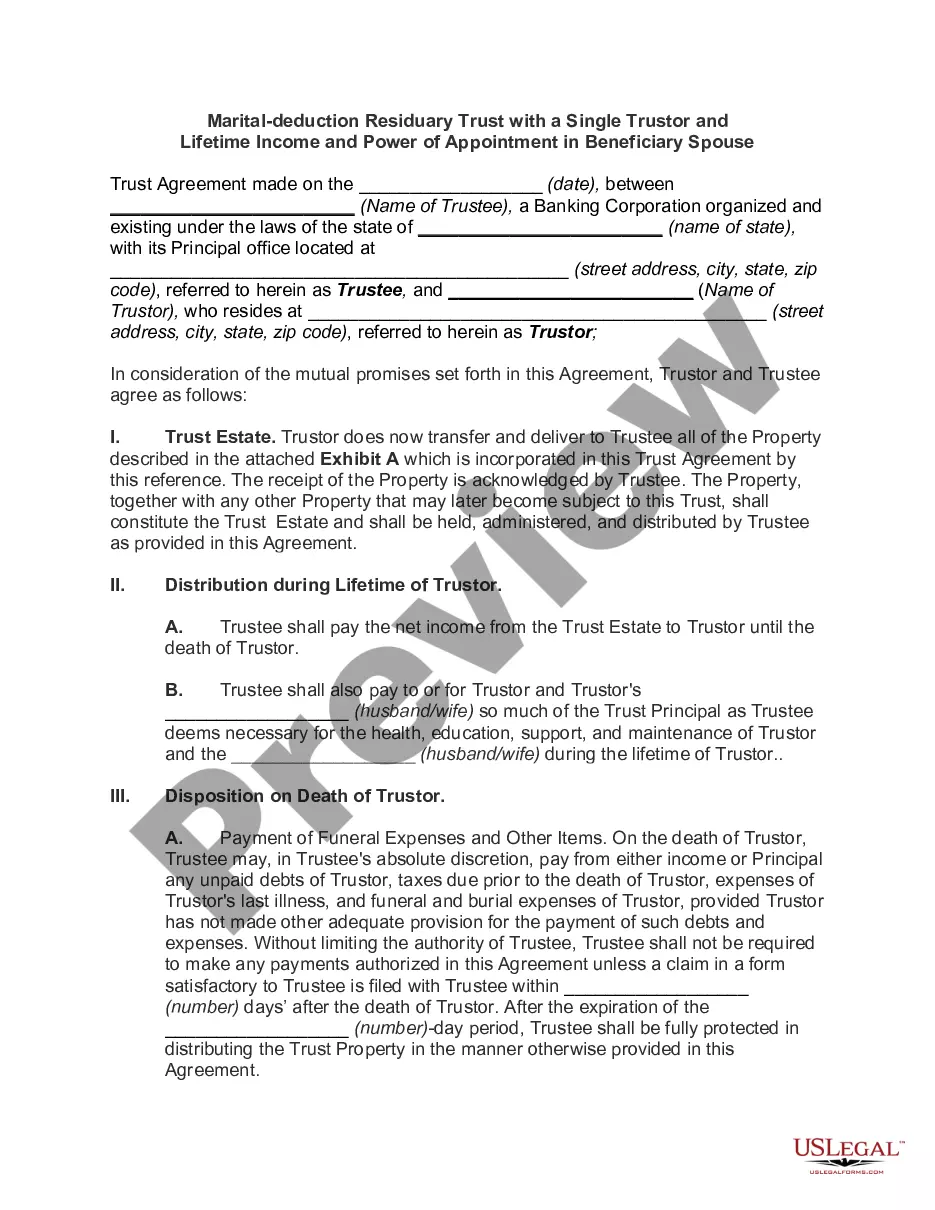
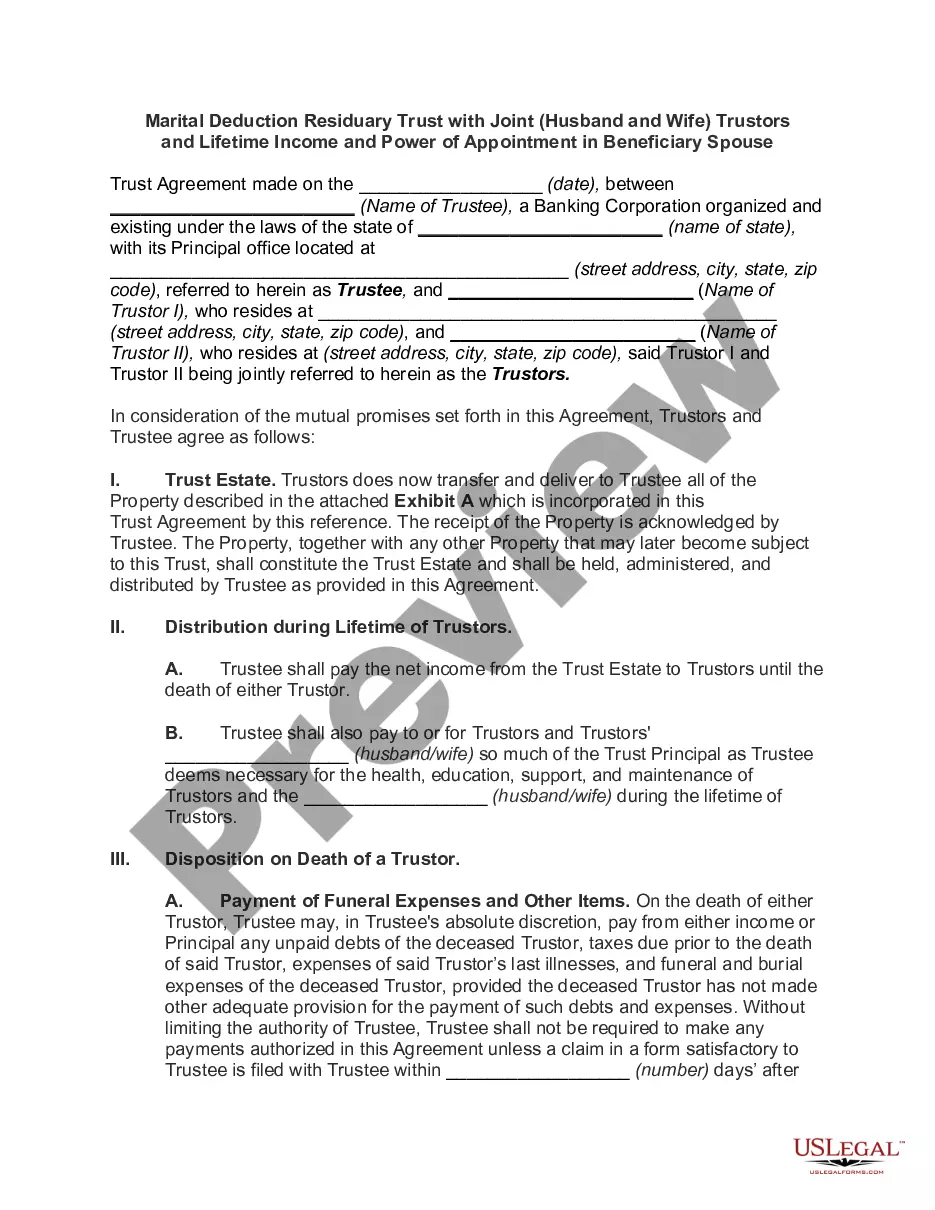
In the case of a marital trust, the IRS subjects the remaining trust assets to federal estate taxes when the surviving spouse passes. However, a couple can take advantage of the federal gift and estate tax exemption. This is the amount that you can pass on to heirs before you'd ever owe an actual estate tax.
A will and a trust are separate legal documents that typically share a common goal of facilitating a unified estate plan.Since revocable trusts become operative before the will takes effect at death, the trust takes precedence over the will, when there are discrepancies between the two.
A marital trust allows the couple's heirs to avoid probate and take less of a hit from estate taxes by taking full advantage of the unlimited marital deductiona provision that enables spouses to pass assets to each other without tax consequences.
The short answer is yes. Generally, a revocable living trust cannot entirely replace the need for a will. There are some assets you may not wish to place in a trust. For example, it may be impractical to transfer tangible personal property such as automobiles, furniture, and jewelry to a trust.
While a QTIP does offer more overall direction of the funds, a marital gift trust has the flexibility of not mandating that the surviving spouse take annual allotments. Instead, they are able to leave principal in the trust if so desired, which may continue to increase the total assets through interest over time.
The assets in the marital trust, the A trust, do receive a step-up at the death of the surviving spouse since these assets are included in the spouse's taxable estate.
A will is also useful if you have a trust.Any assets that are not retitled in the name of the trust are considered subject to probate. As a result, if you haven't specified in a will who should get those assets, a court may decide to distribute them to heirs whom you may not have chosen.