Texas Assumed Name Certificate - Sole Proprietor
Understanding this form
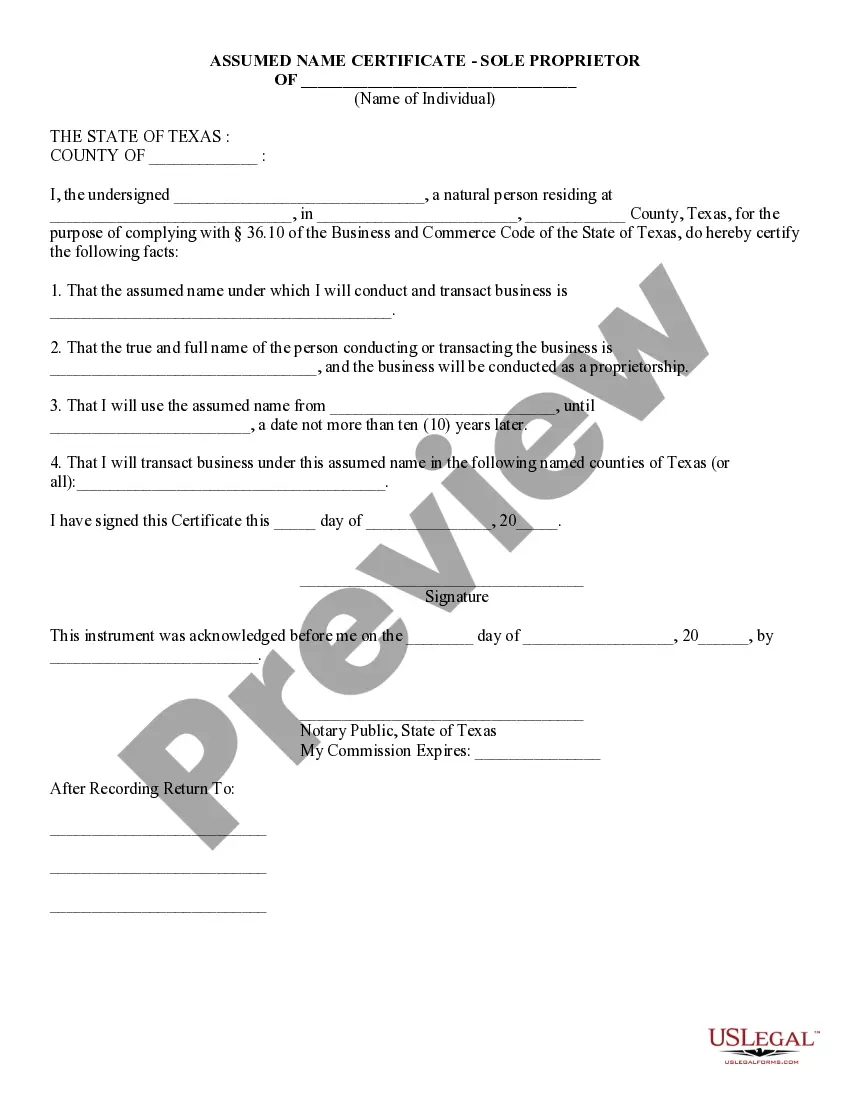
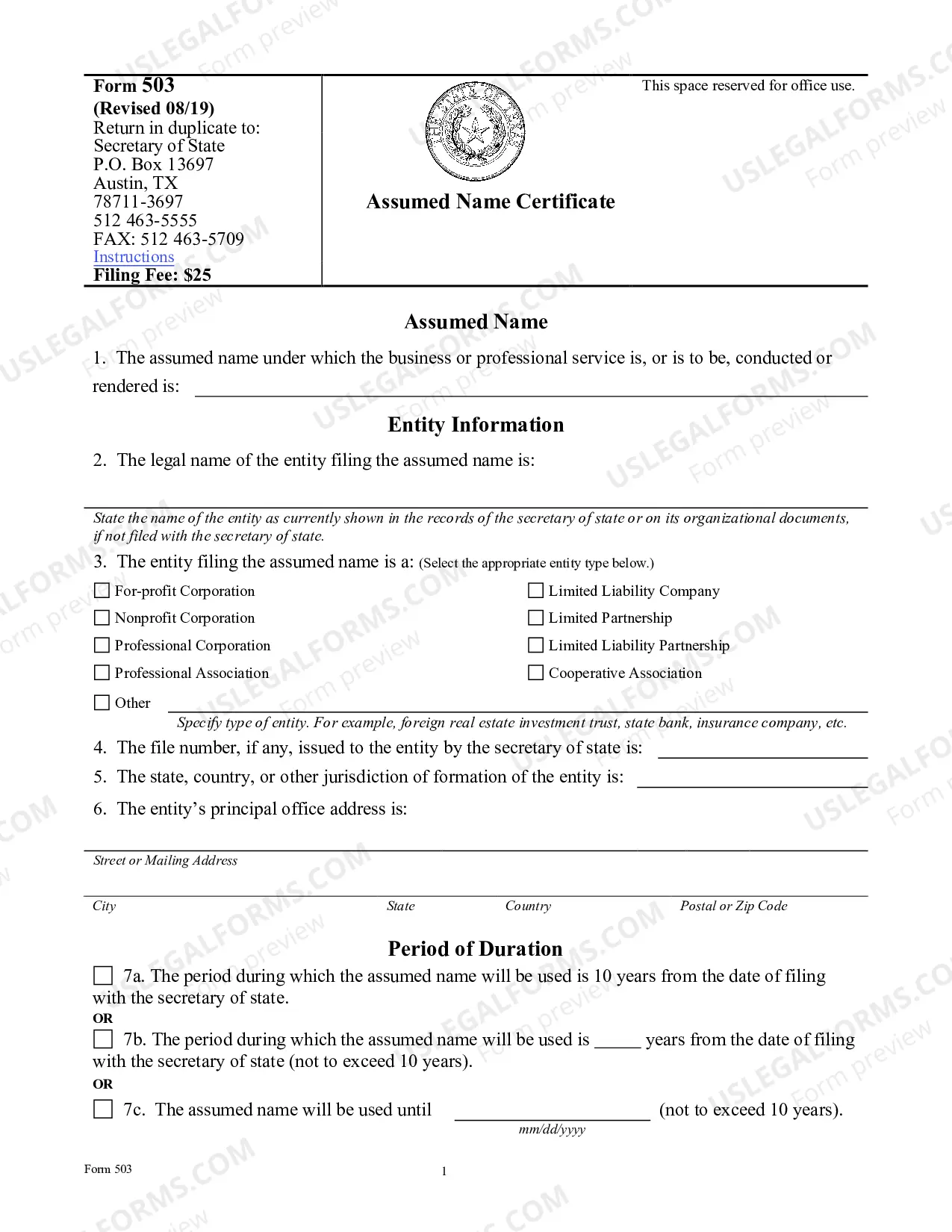
The Assumed Name Certificate for Sole Proprietors is a legal document used in Texas to register the name under which a sole proprietor intends to conduct business. This form is required to inform the public of the individual's true identity behind the business name, distinguishing it from other business entities. Unlike other business registration forms, this certificate specifically addresses names used by individuals and is essential for compliance with Texas law.
Main sections of this form
- Name of the individual conducting business.
- Assumed name under which the business will operate.
- Duration of use for the assumed name (not exceeding ten years).
- Counties in Texas where business will be transacted.
- Signature of the individual and notary acknowledgment.

When to use this form
Use the Assumed Name Certificate when you are a sole proprietor planning to operate your business under a name other than your personal legal name. This is particularly important when you want to create a distinct brand identity or marketing presence. Filing this certificate is a necessary step to comply with Texas laws and protect your business legally.
Intended users of this form
- Sole proprietors operating under a name that is not their own.
- Individuals who wish to establish a distinct business identity.
- Entrepreneurs in Texas looking to comply with local business regulations.
- Self-employed individuals offering services under a business name.
How to complete this form
- Enter your full legal name in the designated field.
- Specify the assumed name under which you will conduct your business.
- Indicate the start and end date for using the assumed name.
- List the counties in Texas where your business activities will occur.
- Sign the document and have it notarized by a licensed notary public.
Notarization guidance
Yes, this form must be notarized to be legally valid. It must be signed in the presence of a notary public, ensuring the authenticity of the signatures and the acceptance of the document in legal contexts. US Legal Forms offers integrated online notarization services, allowing for secure video calls with licensed notaries at any time, ensuring compliance without the need for in-person visits.
Get your form ready online
Our built-in tools help you complete, sign, share, and store your documents in one place.
Make edits, fill in missing information, and update formatting in US Legal Forms—just like you would in MS Word.
Download a copy, print it, send it by email, or mail it via USPS—whatever works best for your next step.
Sign and collect signatures with our SignNow integration. Send to multiple recipients, set reminders, and more. Go Premium to unlock E-Sign.
If this form requires notarization, complete it online through a secure video call—no need to meet a notary in person or wait for an appointment.
We protect your documents and personal data by following strict security and privacy standards.

Make edits, fill in missing information, and update formatting in US Legal Forms—just like you would in MS Word.

Download a copy, print it, send it by email, or mail it via USPS—whatever works best for your next step.

Sign and collect signatures with our SignNow integration. Send to multiple recipients, set reminders, and more. Go Premium to unlock E-Sign.

If this form requires notarization, complete it online through a secure video call—no need to meet a notary in person or wait for an appointment.

We protect your documents and personal data by following strict security and privacy standards.
Mistakes to watch out for
- Not including all counties where the business will be conducted.
- Failing to notarize the document, making it invalid.
- Using a name that is too similar to an existing business name.
- Not specifying the duration of use for the assumed name.
Benefits of completing this form online
- Convenient access to a ready-made template drafted by licensed attorneys.
- Edit the form to suit your specific business situation easily.
- Save time with immediate download options in various formats.
- Reduce the risk of errors by using professionally crafted language.
Summary of main points
- The Assumed Name Certificate is essential for sole proprietors in Texas using a name different from their legal name.
- Proper completion ensures compliance with state business laws and protects your business identity.
- Notarization is required to validate the document.
Looking for another form?

Form popularity
FAQ
Do I need to file a DBA for a sole proprietorship? While a sole proprietor is required by law to use his legal name to conduct business, the use of a DBA, however, is optional. If a sole proprietor does want to use a DBA, he must obtain permission from local authorities first.
A DBA is always required in California when a sole proprietor, or any other business entity, wants to operate and sign legal documents under a different name.Many sole proprietors are required to file a DBA in the state of California. The only exception is when the owner's last name is part of the business name.
As a sole proprietor, by default, the legal name of your business is your own name. But you can choose to operate the business under another name, known as a fictitious business name or doing business as (DBA).
Your business may need to obtain business licenses or professional licenses depending on its business activities. Texas provides a comprehensive website of every profession and occupation that requires a license by any sole proprietorship.
In Texas, all corporations, limited liability companies (LLCs), limited partnerships (LPs), limited liability partnerships (LLPs), or out of state companies that regularly conduct business in Texas under a name other than its legal name, must file a DBA with the Secretary of State.
DBA Requirements in Texas Many Texas sole proprietorships use DBAs, but state law does not require it.If you are a sole proprietorship operating under an assumed name in Texas, you must register your name with the office of the county clerk in the county of your business's principal location.
Check the DBA's Name Availability. Submit an Application for the DBA. Obtain a State Business License. Obtain Necessary Licenses or Permits. Register with the State Tax Department. Apply for an Employer Identification Number.