Texas Grant Deed from an Individual to an Individual
Overview of this form
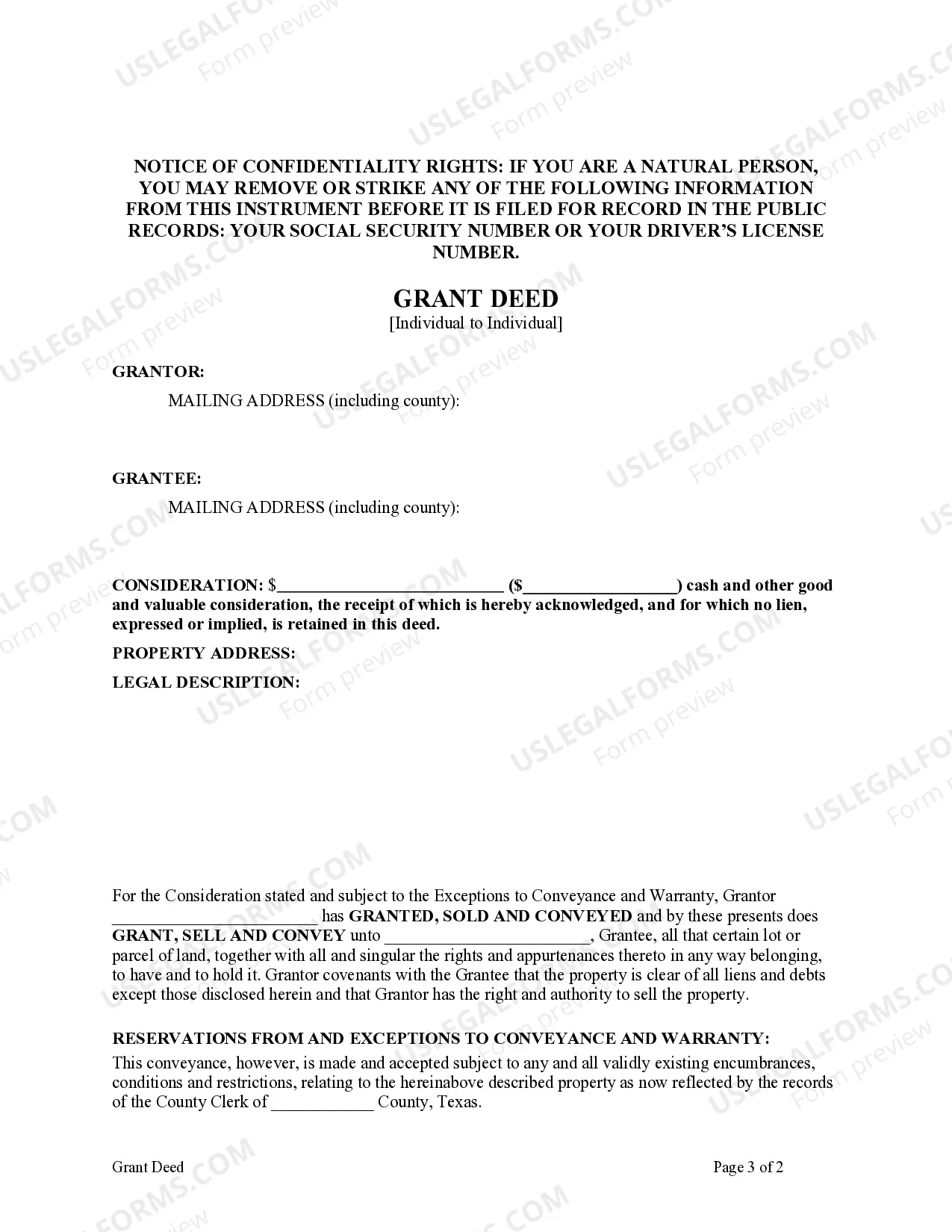
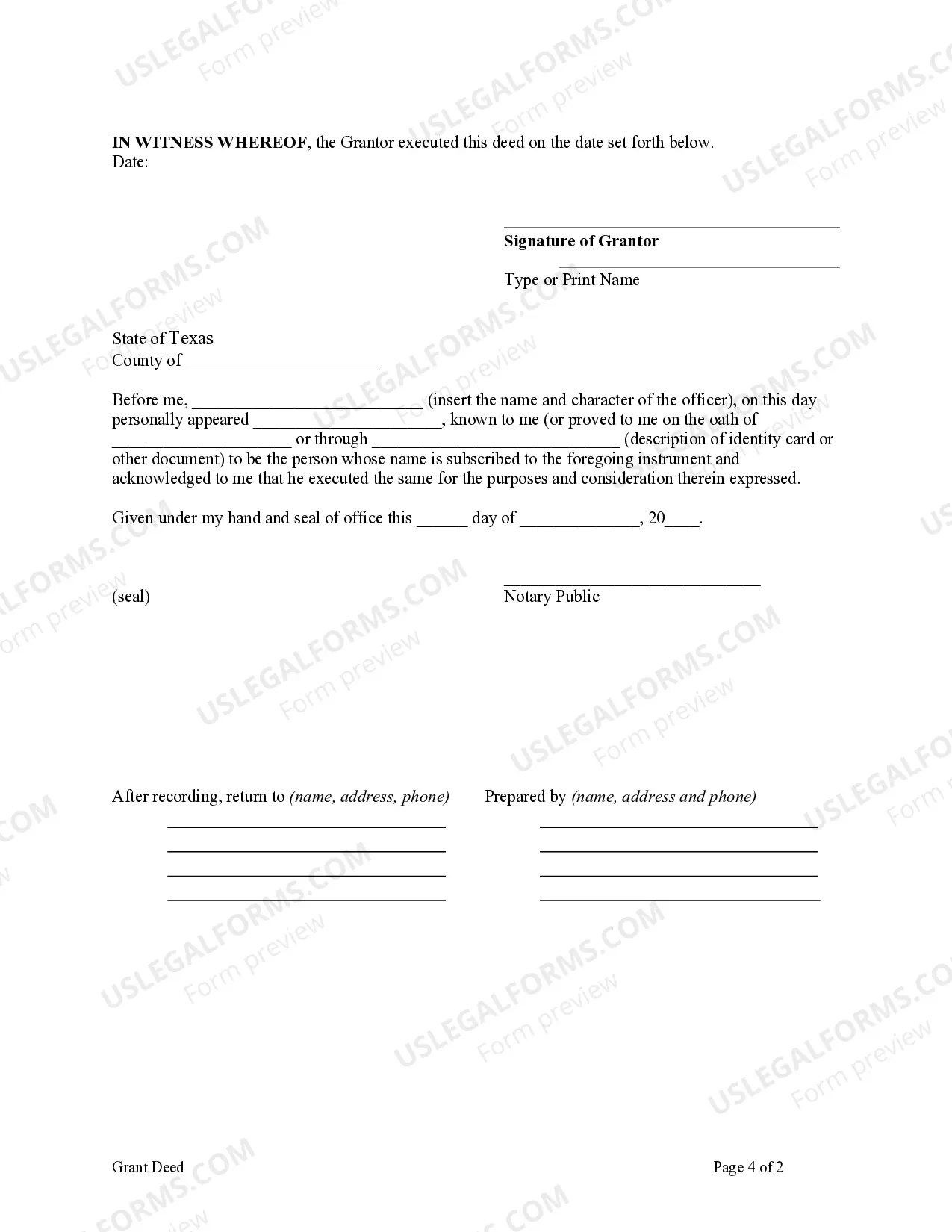
This Grant Deed is a legal document through which an individual (the grantor) conveys property to another individual (the grantee). It serves to establish ownership transfer and is compliant with state statutory laws. This form differs from other property transfer documents as it includes warranties of ownership and the right to transfer the property, ensuring the grantee receives clear title without encumbrances.
Form components explained
- Identifying details of the grantor and grantee.
- Description of the property being transferred.
- Warranties regarding the ownership and rights to convey the property.
- Signature lines for both the grantor and the notary (if required).
- Space for the date of the transfer.





When this form is needed
This form is essential when an individual wants to transfer ownership of real estate to another individual, such as when friends or family are buying or gifting property. It can also be used during estate planning or property settlements following a divorce when clarity of title is necessary.
Intended users of this form
- Individuals transferring property to another individual.
- Property owners looking to gift real estate to family or friends.
- Individuals involved in real estate transactions without a real estate broker.
Instructions for completing this form
- Identify the parties involved: the grantor and the grantee.
- Clearly describe the property being transferred, including any applicable legal descriptions.
- Enter the date of the transaction.
- Have the grantor sign the deed in the presence of a notary (if required).
- Review the completed document to ensure all information is accurate before filing.
Does this document require notarization?
To make this form legally binding, it must be notarized. Our online notarization service, powered by Notarize, lets you verify and sign documents remotely through an encrypted video session.
Get your form ready online
Our built-in tools help you complete, sign, share, and store your documents in one place.
Make edits, fill in missing information, and update formatting in US Legal Forms—just like you would in MS Word.
Download a copy, print it, send it by email, or mail it via USPS—whatever works best for your next step.
Sign and collect signatures with our SignNow integration. Send to multiple recipients, set reminders, and more. Go Premium to unlock E-Sign.
If this form requires notarization, complete it online through a secure video call—no need to meet a notary in person or wait for an appointment.
We protect your documents and personal data by following strict security and privacy standards.

Make edits, fill in missing information, and update formatting in US Legal Forms—just like you would in MS Word.

Download a copy, print it, send it by email, or mail it via USPS—whatever works best for your next step.

Sign and collect signatures with our SignNow integration. Send to multiple recipients, set reminders, and more. Go Premium to unlock E-Sign.

If this form requires notarization, complete it online through a secure video call—no need to meet a notary in person or wait for an appointment.

We protect your documents and personal data by following strict security and privacy standards.
Common mistakes to avoid
- Failing to include a complete and accurate property description.
- Not signing or dating the deed.
- Forgetting to have the deed notarized when required by state law.
- Using outdated forms that do not comply with current laws.
Advantages of online completion
- Convenience of completing the form from home without needing a lawyer.
- Editability allows for easy corrections and modifications.
- Access to professionally drafted templates, ensuring legal compliance.
- Immediate access to downloadable forms, saving time.
Legal use & context
- This form serves as a binding legal document that transfers property rights.
- It must be properly executed and filed to be enforceable in property law.
- Ensure compliance with local laws to avoid disputes regarding the validity of the transfer.
Looking for another form?

Form popularity
FAQ
To sign over property ownership to another person, you'll use one of two deeds: a quitclaim deed or a warranty deed.
Grantor's name. Grantee's name and address. Description of grantee (ex: unmarried man, husband and wife, joint tenants) Person who requested grant deed. Address of real estate that is being transferred. Legal description of property (lot number) Original title order number for property.
A grant deed is the instrument used to transfer title to an interest in real property from one owner to someone else.A deed of trust is the security instrument given to a lender to secure a loan or other obligation. Bare naked title is deeded to the trustee, who holds the power of sale or the power to re-convey.
Print a grant deed from an online source. Sign the document in the presence of a notary public. Take the deed to the recorder's office in the county where the property is located.
Contrary to normal expectations, the Deed DOES NOT have to be recorded to be effective or to show delivery, and because of that, the Deed DOES NOT have to be signed in front of a Notary Public. However, if you plan to record it, then it does have to be notarized as that is a County Recorder requirement.
The seller or the seller's broker will hire an attorney to prepare the real estate deed to ensure that all of the requirements in the creation of a valid deed are met before the seller conveys title to the property. All real estate deeds must be in writing.
To be valid, gift deeds in Texas further require the document set forth (1) the intent of the grantor, (2) the delivery of the property to the grantee, and (3) the gift to be accepted by the grantee. The one claiming the gift bears the burden to establish each of the elements.
Find the most recent deed to the property. It is best to begin with a copy of the most recent deed to the property (the deed that transferred the property to the current grantor). Create a new deed. Sign and notarize the deed. File the documents in the county land records.
Locate the deed that's in trust. Use the proper deed. Check with your title insurance company and lender. Prepare a new deed. Sign in the presence of a notary. Record the deed in the county clerk's office.