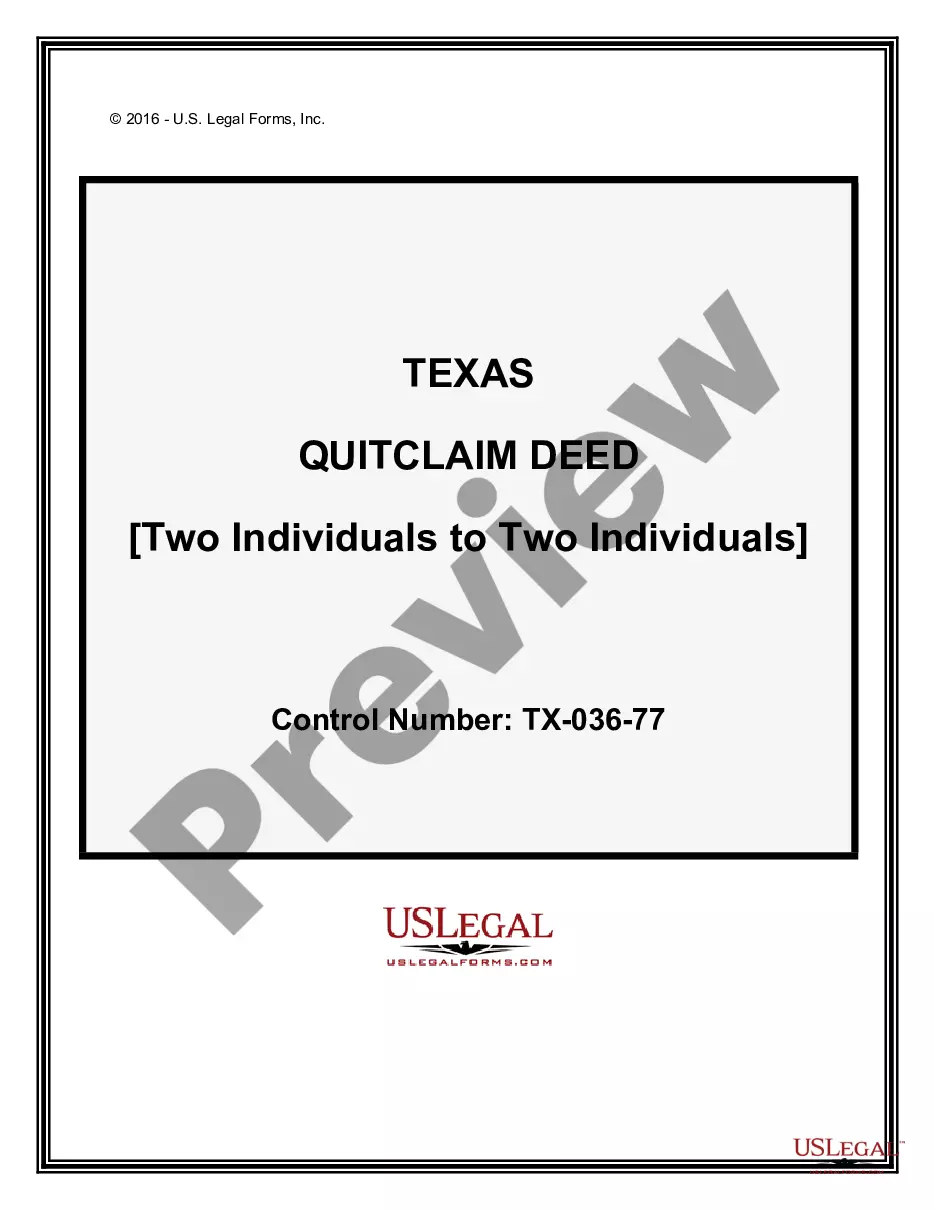
Texas Quitclaim Deed from Two (2) Individuals to Two (2) Individuals
About this form
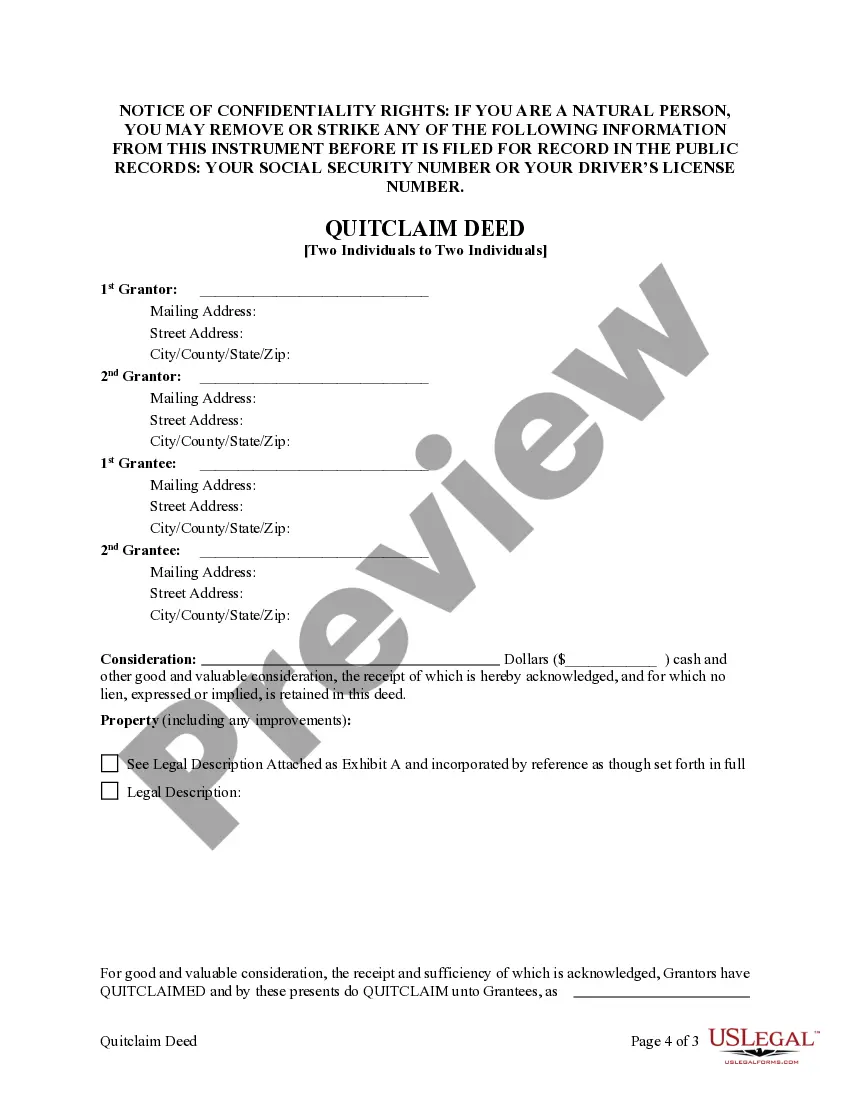
This Quitclaim Deed from Two Individuals to Two Individuals is a legal document where two individuals (the Grantors) transfer their interest in a property to two other individuals (the Grantees). Unlike a warranty deed, a quitclaim deed does not guarantee that the property title is free of claims or defects; it merely conveys whatever interest the Grantors possess. This deed is particularly useful for transferring property among family members or within trusts and organizations.
Form components explained
- Grantors and Grantees: Clearly identify the individuals transferring the property and those receiving it.
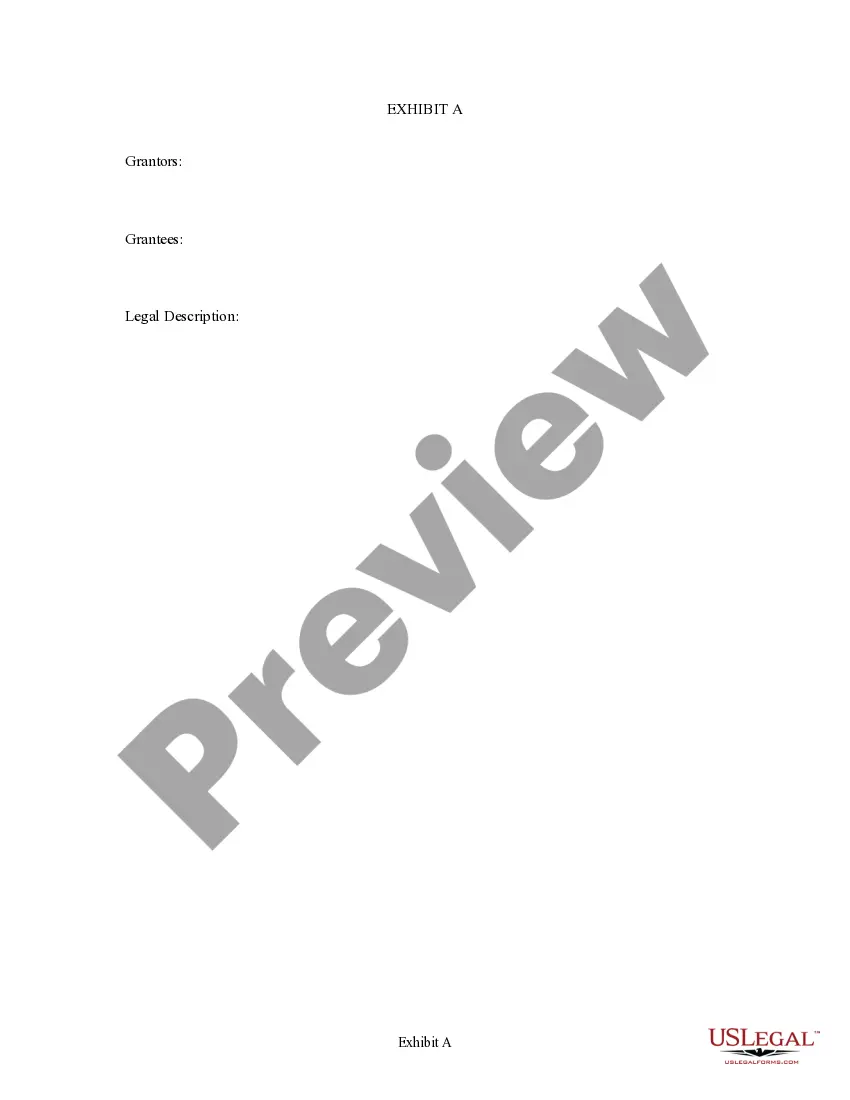
- Property Description: Include a specific legal description of the property being transferred.
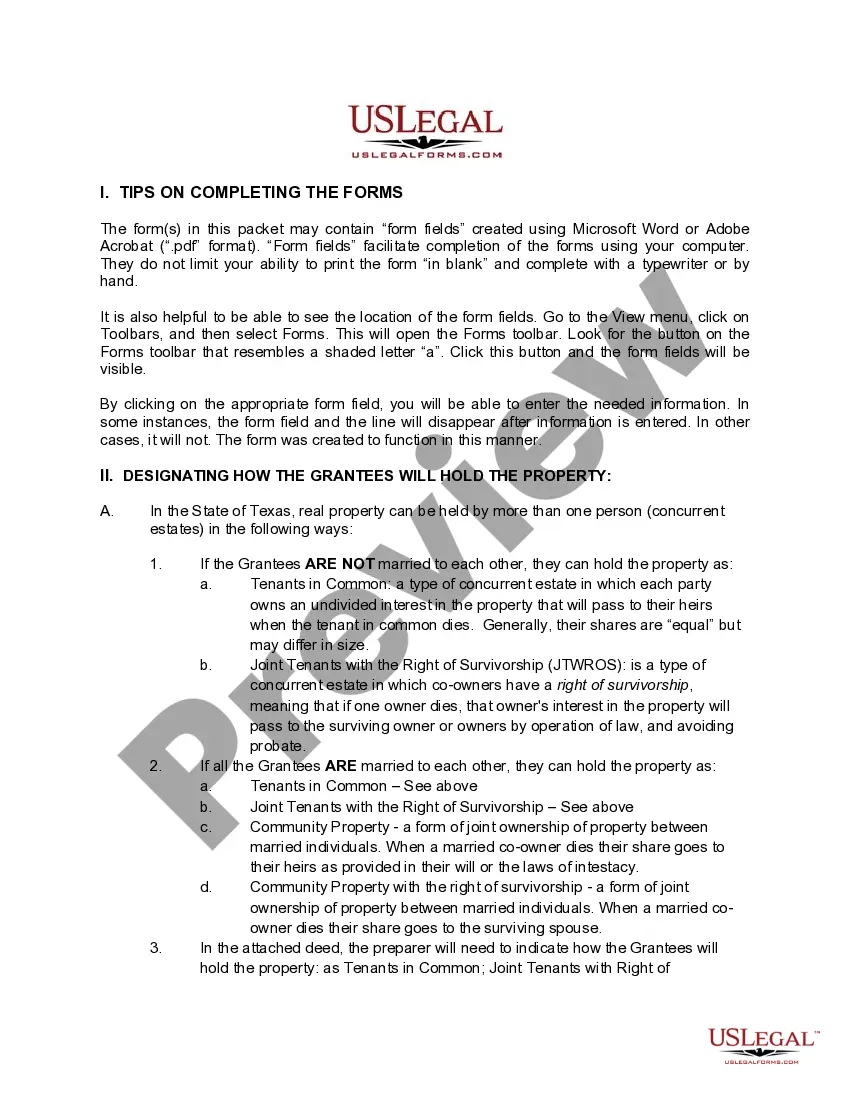
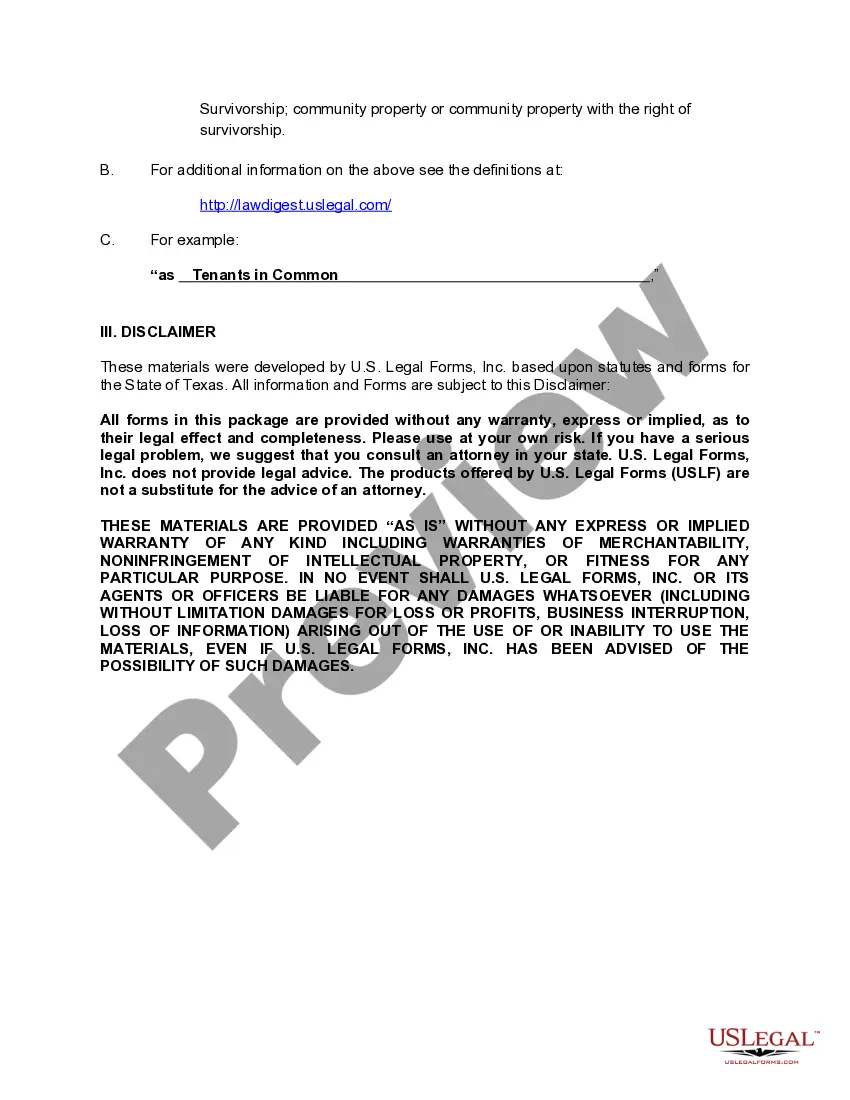
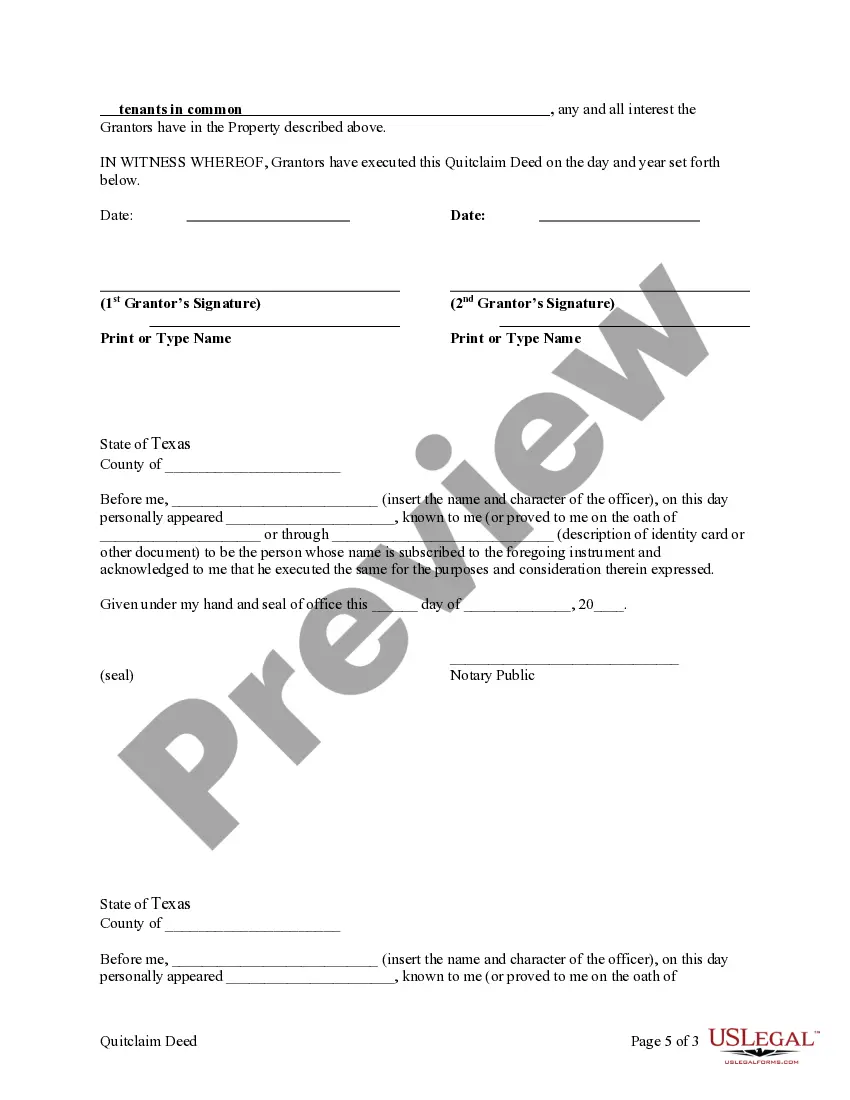
- Ownership Type: Indicate how the Grantees will hold the property (e.g., as joint tenants or tenants in common).
- Signatures: Require signatures from all Grantors and notarization to validate the deed.
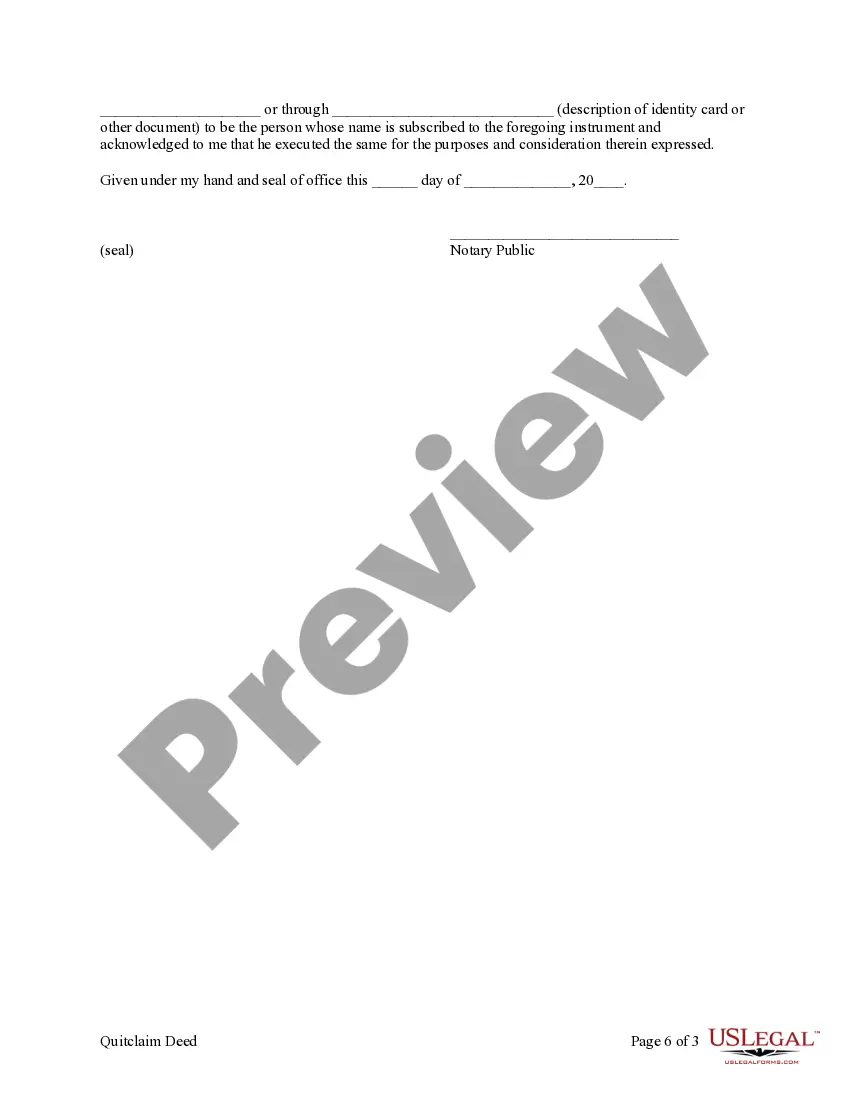
- Notary Acknowledgment: A section for the notary public to confirm the identities of the signers.





Common use cases
This form is used when two individuals wish to transfer their ownership interests in a property to two other individuals without making any guarantees about the title. Common situations include transferring property within families, to business partners, or as part of a divorce settlement. It's also suitable when quick transfer of property is necessary without extensive legal research.
Intended users of this form
- Individuals transferring property between family members.
- Partners in a business who need to adjust ownership stakes.
- Parties involved in a divorce or separation agreement.
- Friends or acquaintances transferring property informally.
- Anyone seeking a quick and simple method of property transfer without the need for legal warranties.
Completing this form step by step
- Identify the parties involved: Clearly state the names of the Grantors and Grantees.
- Specify the property: Enter the legal description of the property being conveyed.
- Indicate ownership type: Choose how the Grantees will hold the property (e.g., tenants in common or joint tenants with right of survivorship).
- Gather signatures: All Grantors must sign the document in the presence of a notary public.
- Complete notary section: Ensure a notary public completes the acknowledgment to validate the deed.
Notarization requirements for this form
Yes, this form must be notarized to be legally valid. Notarization ensures that the identities of the signers are confirmed, which helps prevent fraud. With US Legal Forms, you can utilize our integrated online notarization services, offering secure video calls with a licensed notary, available 24/7, to streamline the process without needing to travel.
Get your form ready online
Our built-in tools help you complete, sign, share, and store your documents in one place.
Make edits, fill in missing information, and update formatting in US Legal Forms—just like you would in MS Word.
Download a copy, print it, send it by email, or mail it via USPS—whatever works best for your next step.
Sign and collect signatures with our SignNow integration. Send to multiple recipients, set reminders, and more. Go Premium to unlock E-Sign.
If this form requires notarization, complete it online through a secure video call—no need to meet a notary in person or wait for an appointment.
We protect your documents and personal data by following strict security and privacy standards.

Make edits, fill in missing information, and update formatting in US Legal Forms—just like you would in MS Word.

Download a copy, print it, send it by email, or mail it via USPS—whatever works best for your next step.

Sign and collect signatures with our SignNow integration. Send to multiple recipients, set reminders, and more. Go Premium to unlock E-Sign.

If this form requires notarization, complete it online through a secure video call—no need to meet a notary in person or wait for an appointment.

We protect your documents and personal data by following strict security and privacy standards.
Typical mistakes to avoid
- Failing to include a proper legal description of the property.
- Not specifying how the Grantees will hold the property.
- Omitting necessary signatures or failing to notarize the form.
- Using the form without understanding the implications of a quitclaim deed.
- Forgetting to check local laws that might affect property transfer procedures.
Benefits of using this form online
- Easy access and convenient downloading of the form at any time.
- Editable fields allow for quick customization to fit individual needs.
- Clear instructions help ensure proper completion to avoid common errors.
- Reduces the time and effort compared to drafting a deed from scratch.
Quick recap
- A Quitclaim Deed allows for the quick transfer of property interest between parties without title guarantees.
- Proper completion of the form is essential to ensure that the transaction is legally recognized.
- Understanding how the Grantees will hold the property is crucial for avoiding future legal issues.
Looking for another form?
Form popularity
FAQ
The Quit Claim Deed form uses the terms of Grantor (Seller or Owner of said property) and Grantee (Buyer of said property) for the two parties involved. First, the parties must fill in the date. Then, write in the name of the county and state in which the property is located.
Step 1: Download the TX quitclaim deed form. Step 2: In the upper left-hand corner, add the name and address of the person preparing the form. Under this, add the name and address of the person who will receive the form after the recorder's office is finished with it. Step 3: Write the county in the appropriate blank.
Laws Section 13.002. Recording This form must be filed at the Recorder's Office in the County Clerk's Office. Signing (Section 11.002(c)) The Grantor(s) has the choice of authorizing this form in the presence of Two (2) Witnesses or a Notary Public.
Rates vary by state and law office but typically fall in the range of $200 to $400 per hour. Title companies routinely prepare quitclaim deeds in many states.
The deed and any related agreements should be filed in the land records of the county where the property is located. The county clerk will require a recording fee. Recording fees can vary, but usually range from $11.00 to $30.00 for the first page and $4.00 for each additional page.
Discuss property ownership interests. Access a copy of your title deed. Complete, review and sign the quitclaim or warranty form. Submit the quitclaim or warranty form. Request a certified copy of your quitclaim or warranty deed.
But you might be wondering if an owner can transfer a deed to another person without a real estate lawyer. The answer is yes. Parties to a transaction are always free to prepare their own deeds.A quitclaim deed, for example, is far simpler than a warranty deed.
In Texas, you can't add your spouse's name to an existing deed, but you can create a new deed by transferring the property from yourself to you and your spouse jointly. You can do this by using either a deed without warranty or a quit claim deed.
You can use a simple form, called a quitclaim deed, to transfer your joint property ownership to either yourself, a family member, a former spouse, or even a trust. Many utilize this deed to make property title transfers without the time and expense of legal fees.