Texas Gift Deed - Two Individuals to One Individual
What this document covers
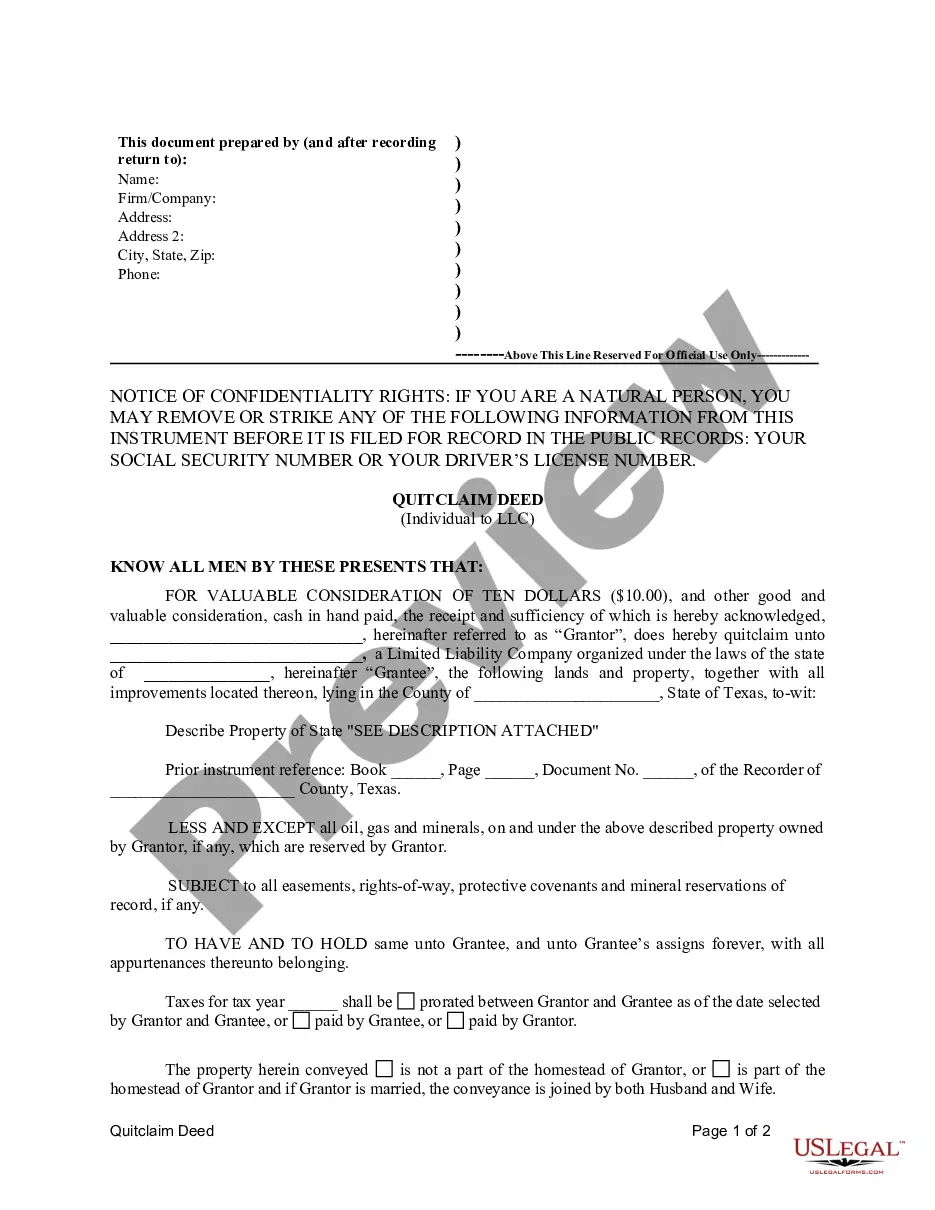
This Gift Deed is a legal document that allows two individuals (the grantors) to transfer property to another individual (the grantee) as a gift. Unlike a sale deed, this transfer does not involve any monetary exchange. It is crucial for documenting the intended transfer of property ownership and ensures compliance with state laws.
Main sections of this form
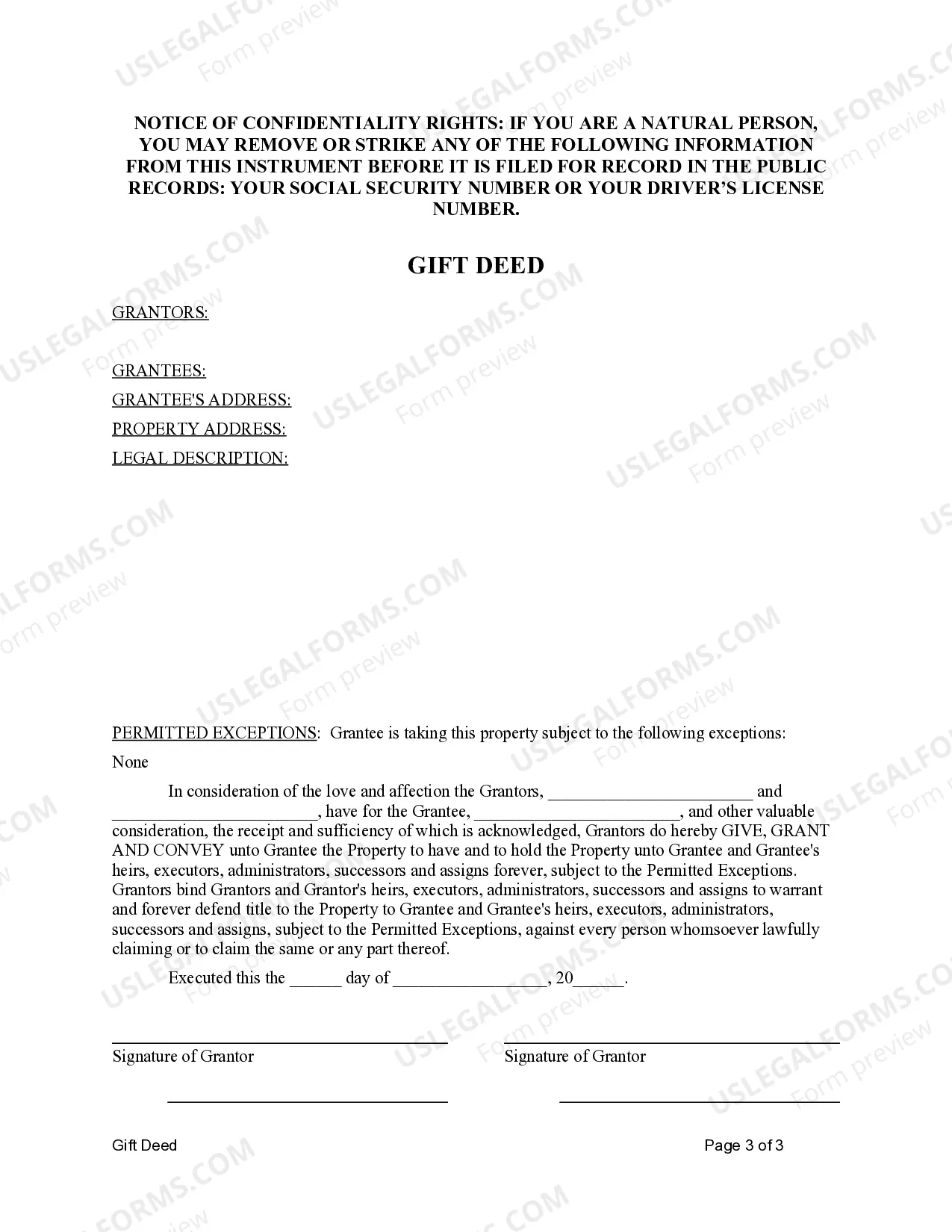
- Identification of the grantors and grantee.
- Description of the property being transferred.
- Statement of the consideration, including love and affection.
- Grantors' warranties to defend the title against claims.
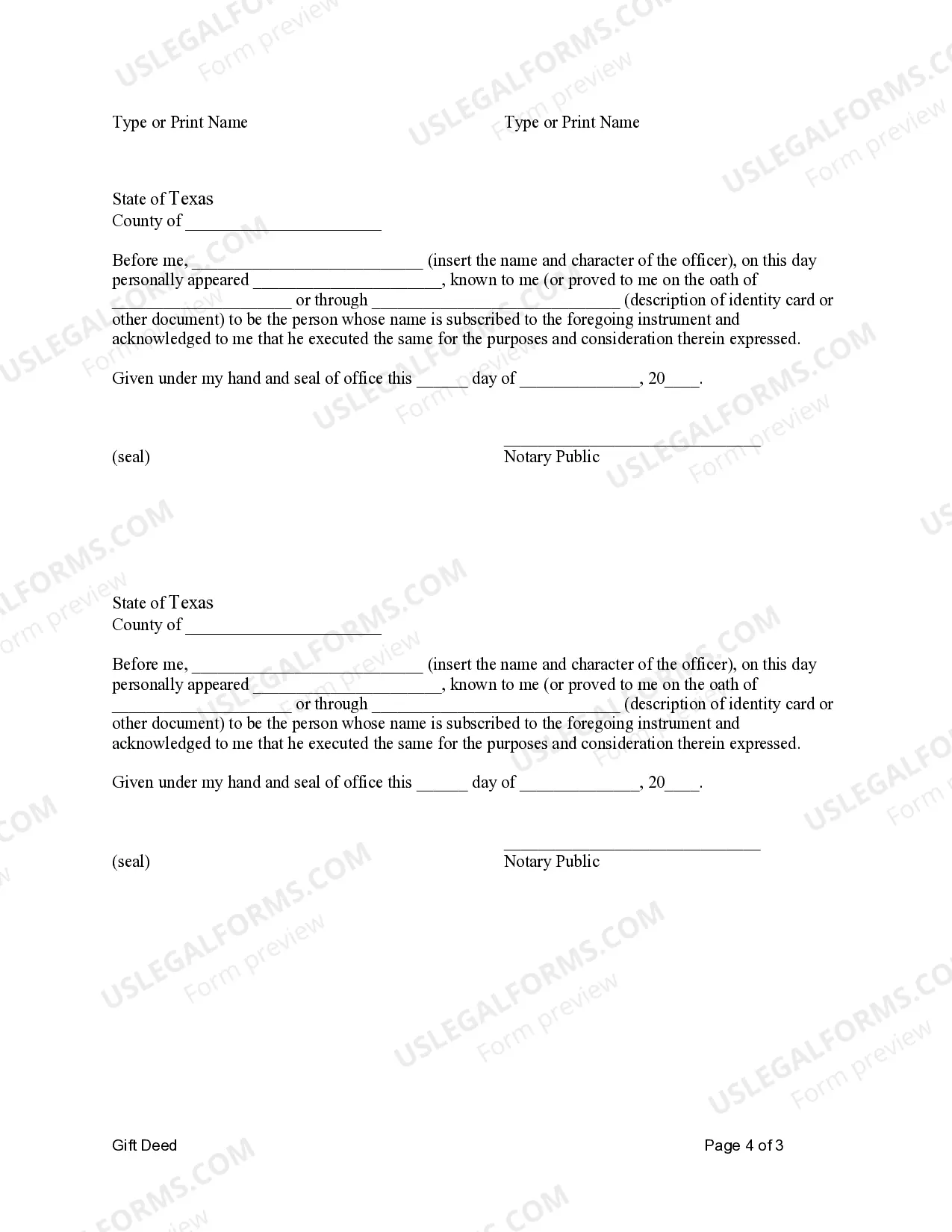
- Signature lines for all parties involved.


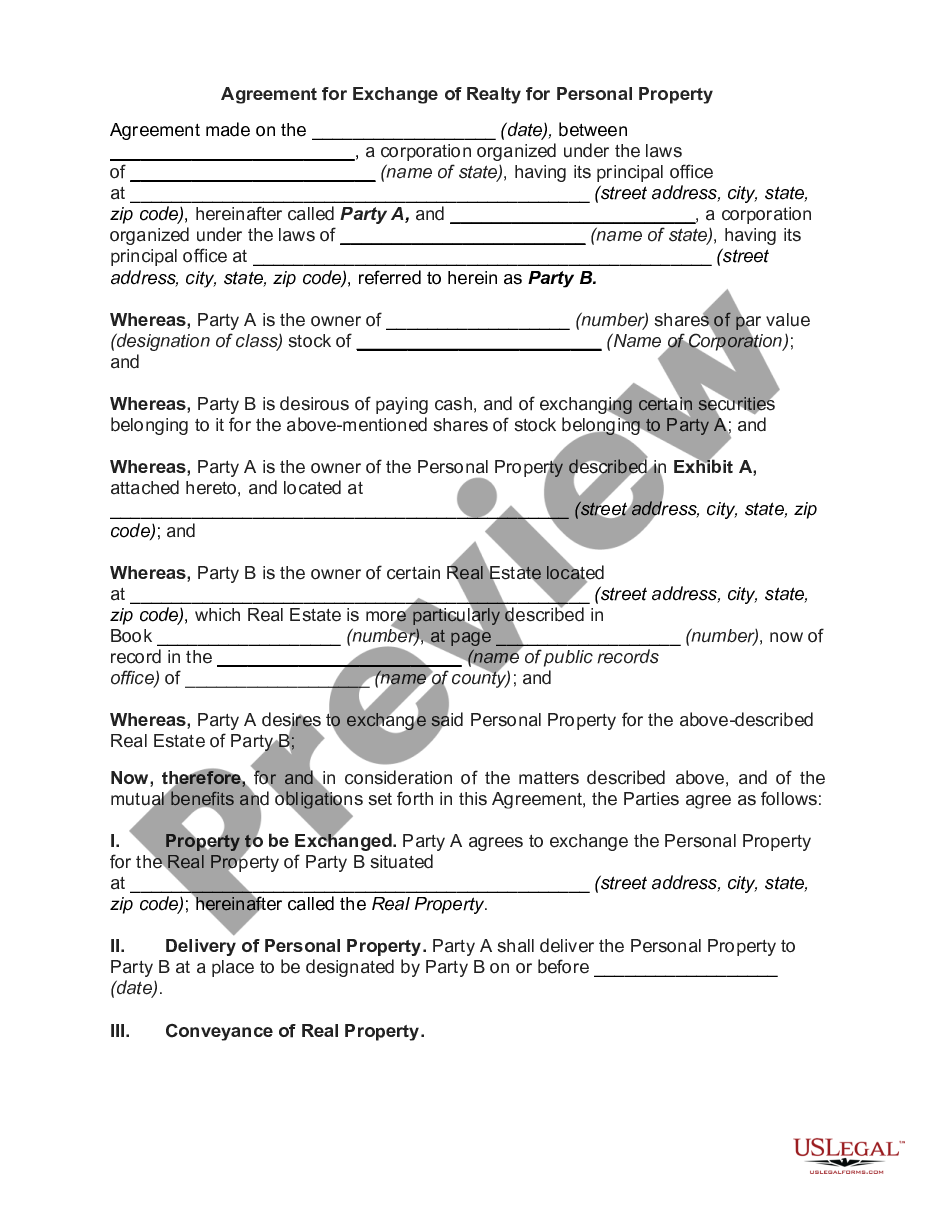
Common use cases
This form is useful in several scenarios, such as when family members wish to gift property to one another without financial exchange, when real estate is transferred as part of estate planning, or when multiple parties are involved in gifting a single property to one individual.
Who can use this document
- Individuals looking to gift property to a family member or friend.
- Property owners wanting to ensure a clear and legal transfer of ownership.
- Individuals seeking to simplify the process of property transfer without financial considerations.
How to prepare this document
- Identify the grantors by entering their full names in the designated fields.
- Specify the grantee by entering their full name.
- Provide a detailed description of the property being gifted.
- Include any necessary information regarding consideration (if applicable).
- Have all parties sign the form where indicated.
Does this form need to be notarized?
To make this form legally binding, it must be notarized. Our online notarization service, powered by Notarize, lets you verify and sign documents remotely through an encrypted video session.
Get your form ready online
Our built-in tools help you complete, sign, share, and store your documents in one place.
Make edits, fill in missing information, and update formatting in US Legal Forms—just like you would in MS Word.
Download a copy, print it, send it by email, or mail it via USPS—whatever works best for your next step.
Sign and collect signatures with our SignNow integration. Send to multiple recipients, set reminders, and more. Go Premium to unlock E-Sign.
If this form requires notarization, complete it online through a secure video call—no need to meet a notary in person or wait for an appointment.
We protect your documents and personal data by following strict security and privacy standards.

Make edits, fill in missing information, and update formatting in US Legal Forms—just like you would in MS Word.

Download a copy, print it, send it by email, or mail it via USPS—whatever works best for your next step.

Sign and collect signatures with our SignNow integration. Send to multiple recipients, set reminders, and more. Go Premium to unlock E-Sign.

If this form requires notarization, complete it online through a secure video call—no need to meet a notary in person or wait for an appointment.

We protect your documents and personal data by following strict security and privacy standards.
Avoid these common issues
- Failing to accurately describe the property being transferred.
- Not including the signatures of all grantors.
- Omitting important details regarding consideration.
Benefits of using this form online
- Convenience of completing the form electronically.
- Editability allows for easy corrections and updates.
- Access to a legally compliant and professionally drafted template.
Looking for another form?

Form popularity
FAQ
This form records a non-monetary transfer of property from two grantors to one grantee as a gift, ensuring the transfer of ownership complies with Texas gifting practices. It lays out the parties, the property description, a statement of consideration (love and affection), warranties by the grantors, and signature lines for all parties.
Common mistakes include missing or incorrect identification of the grantors and the grantee, failing to describe the property accurately, omitting the statement of consideration, and not securing all required signatures. The Texas Gift Deed - Two Individuals to One Individual requires identification, property description, consideration, warranties, and signatures from all parties.
The form is designed for two grantors to transfer property to one grantee as a gift. Both grantors are identified and must sign, and both provide warranties to defend the title. The document records the joint transfer and confirms the lack of monetary consideration.
Using this Gift Deed, two individuals can gift property to a single grantee by completing the identification of all parties, describing the property, stating the consideration as love and affection, and obtaining the signatures of both grantors and the grantee. After execution, consult a Texas-licensed attorney for next steps.
This deed is intended for individuals who want to gift property to a family member or friend without monetary exchange, property owners seeking a clear transfer of ownership, and those simplifying transfer as part of estate planning. It is especially useful when two grantors are transferring to one grantee.
The key difference is that this form documents a gift from two grantors to one grantee, requiring both grantors to be identified and to sign, with warranties from both. A standard gift deed with one grantor would list a single grantor and a single signature.