Texas Gift Deed Gift Deed from Husband and Wife, or Two Individuals, to Husband and Wife, or Two Individuals.
What this document covers
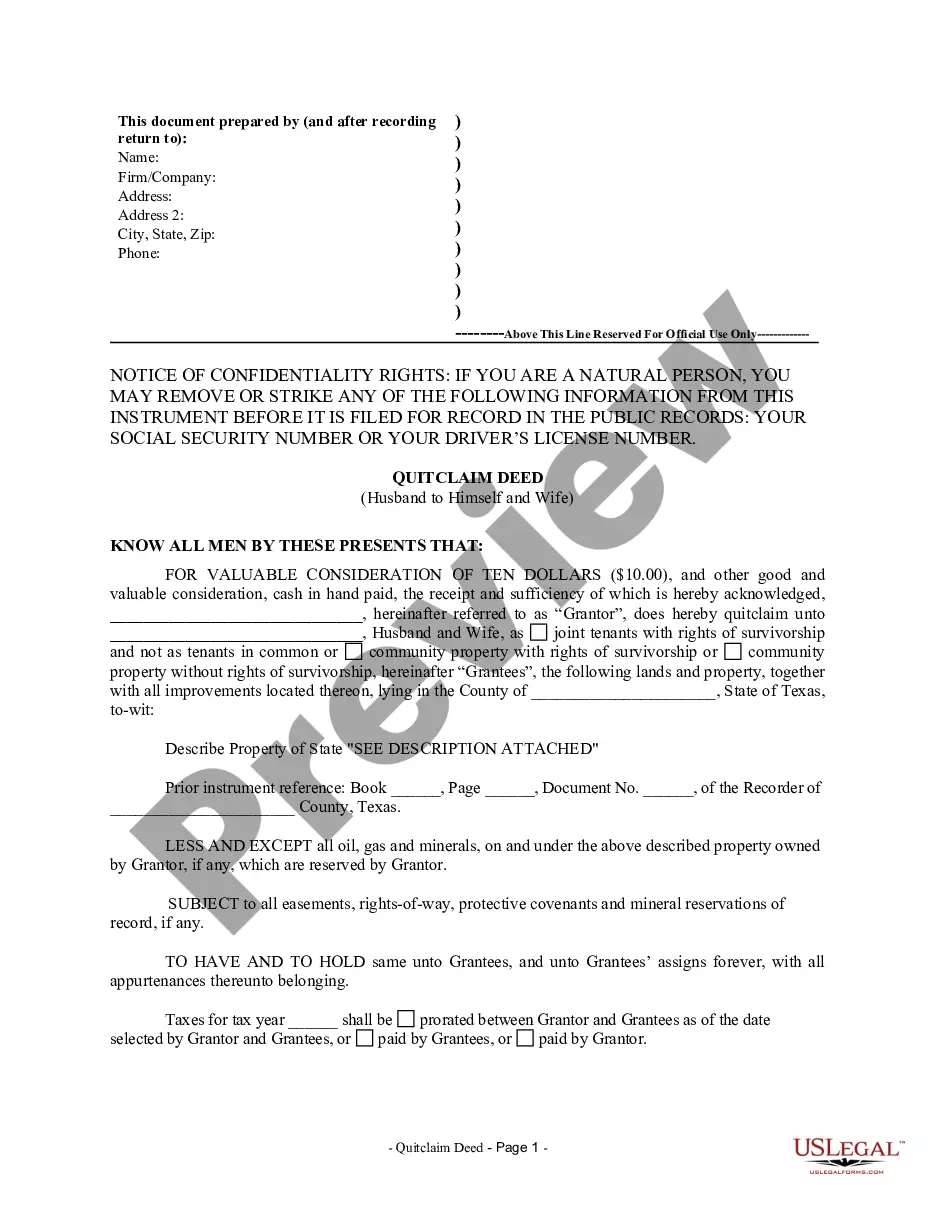
The Gift Deed from Husband and Wife, or Two Individuals, to Husband and Wife, or Two Individuals is a legal document that allows the grantors (the husband and wife or two individuals) to convey property as a gift to the grantees (the husband and wife or two individuals). This form ensures that the transfer of property complies with all state statutory laws and is suitable for those looking to gift real estate without financial exchange, differentiating it from sales contracts or lease agreements.
Main sections of this form
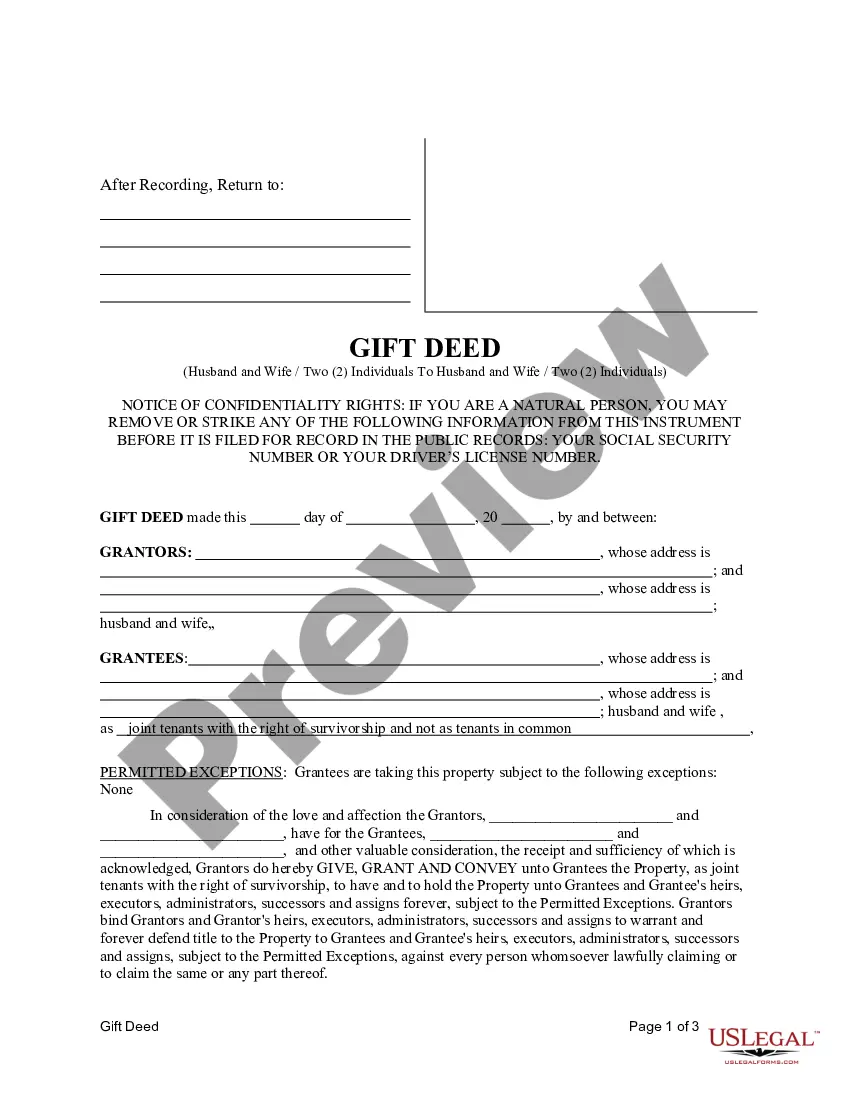
- Identifies the grantors and grantees involved in the property transfer.
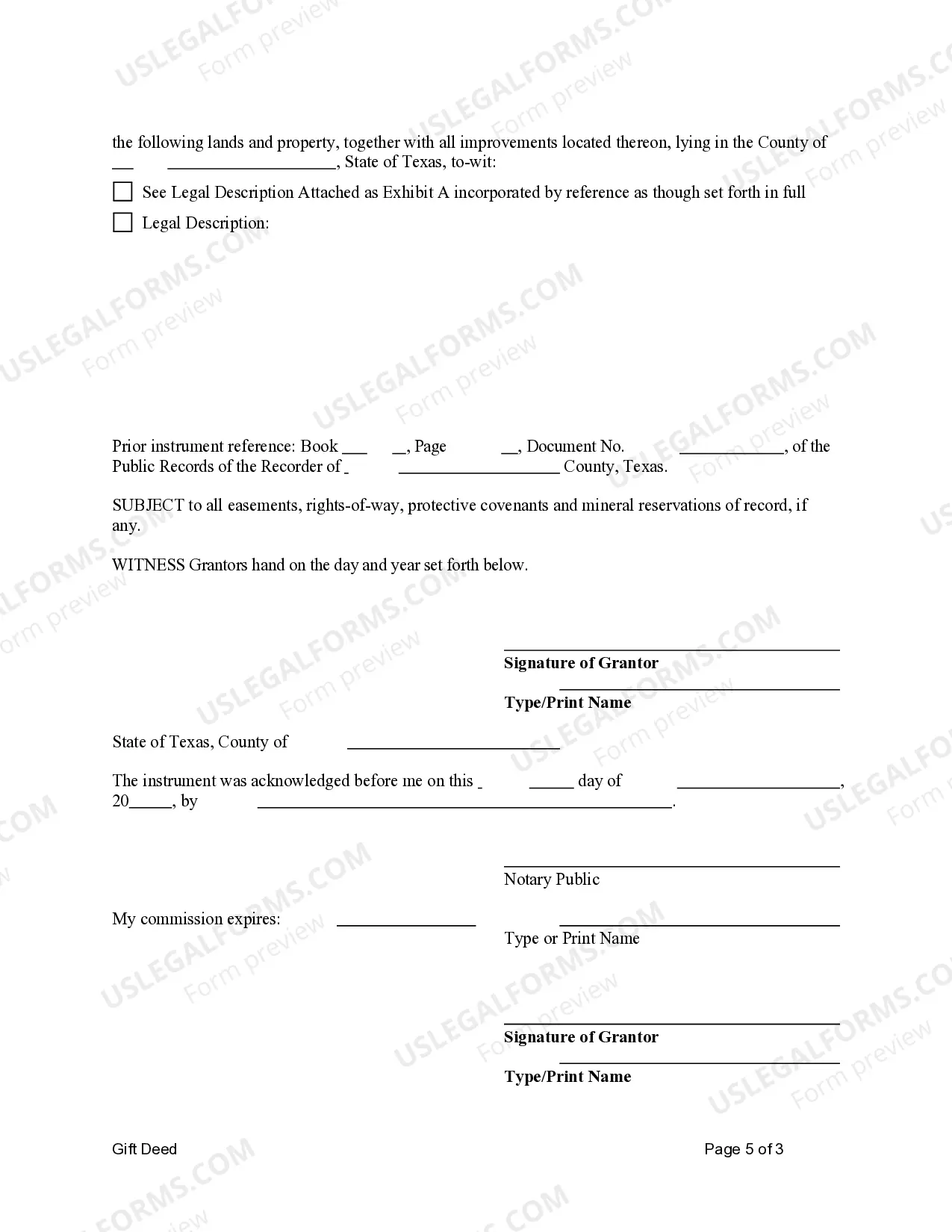
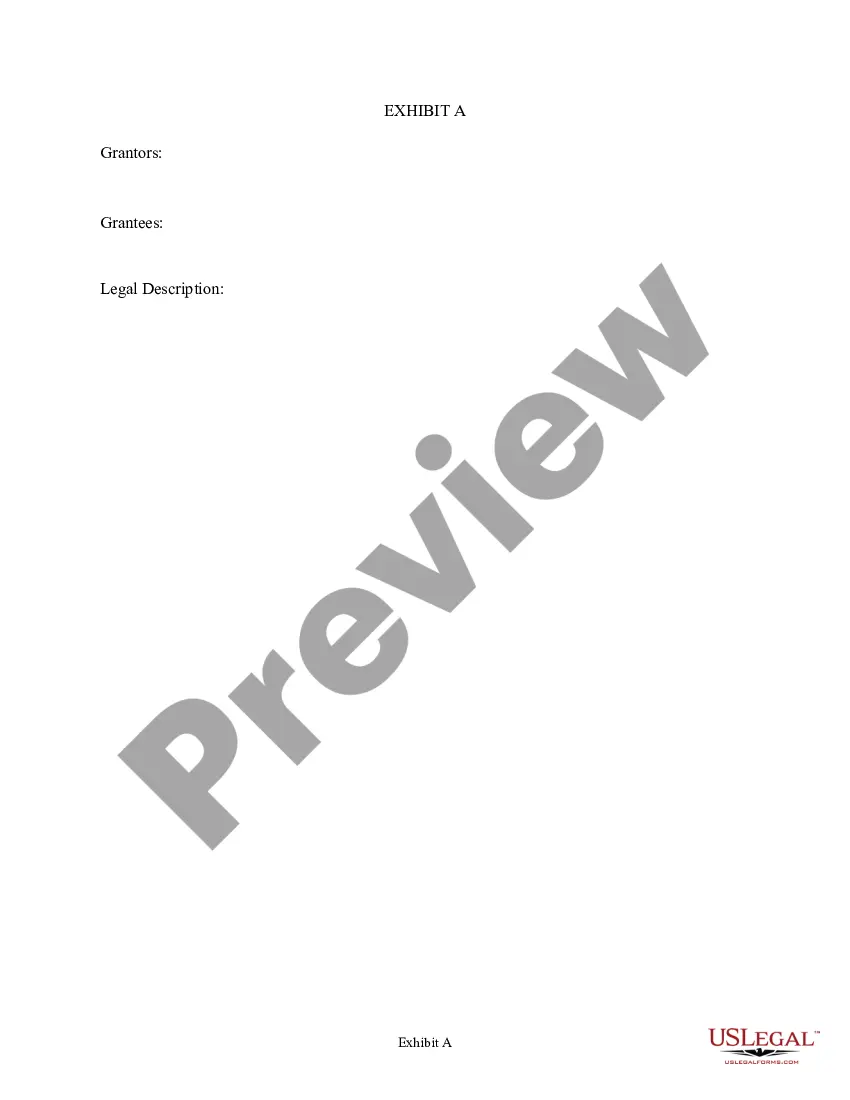
- Describes the specific property being gifted.
- Includes signatures of both grantors to finalize the deed.
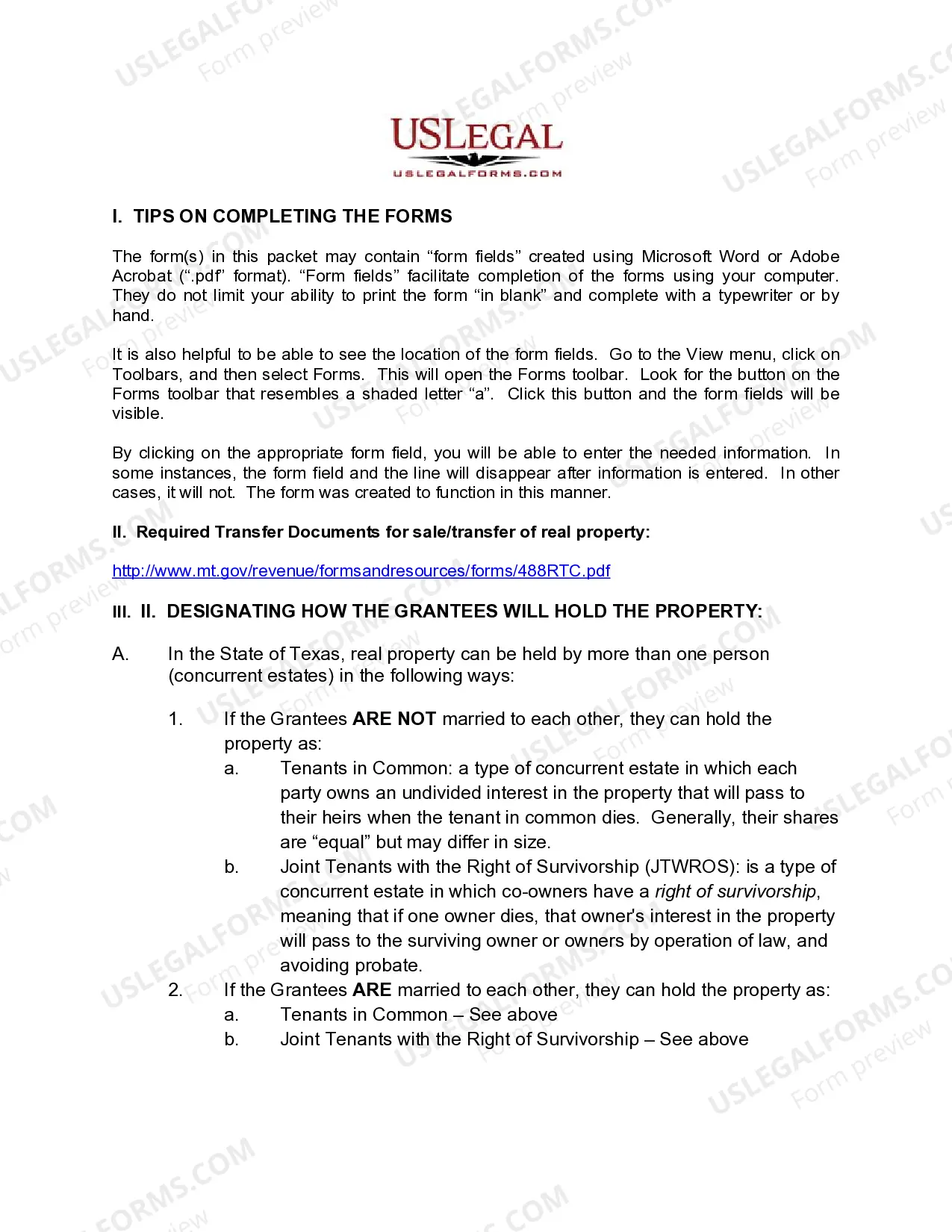
- Describes how the grantees will hold the property (Tenants in Common or Joint Tenants with Right of Survivorship).
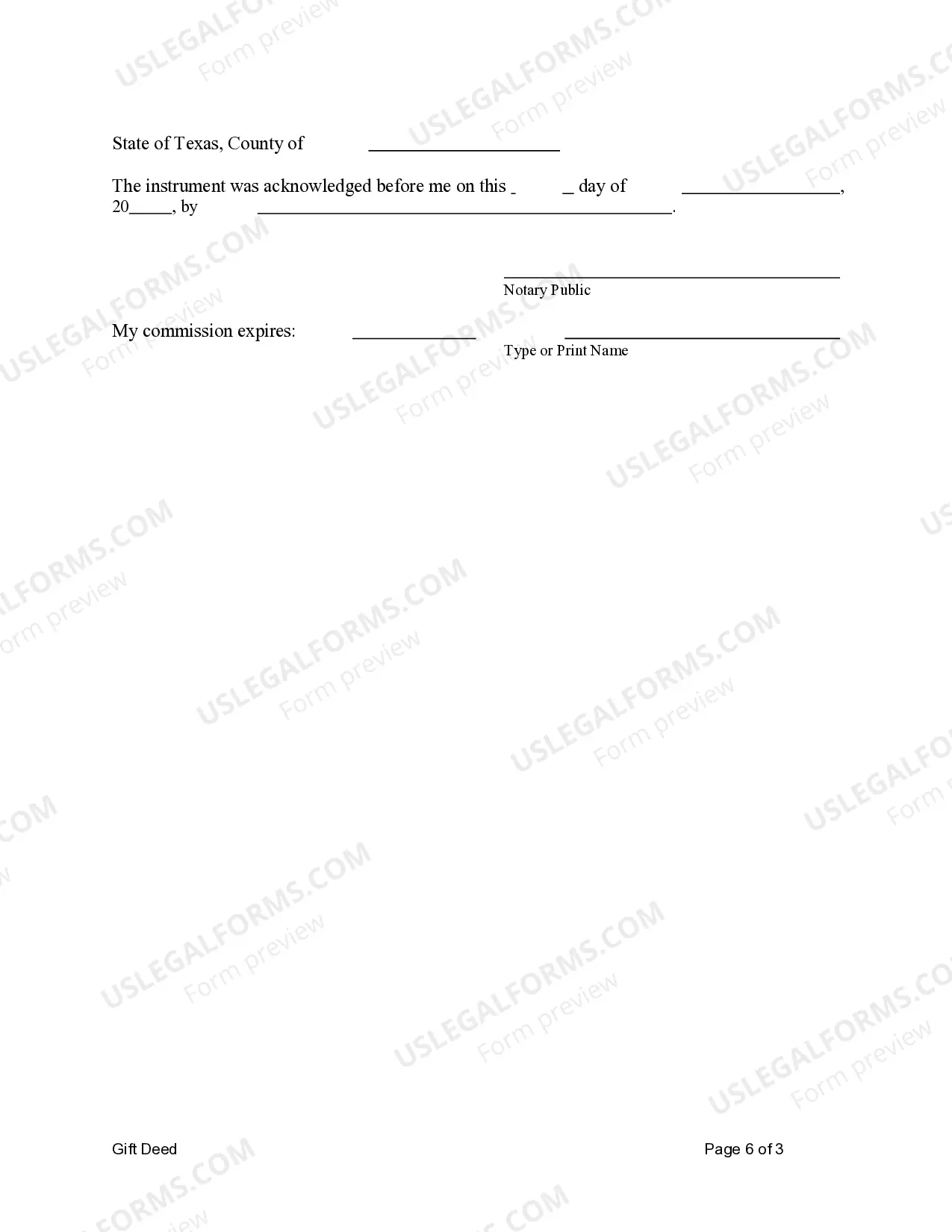
- Optional notarization section if required by state law.


Situations where this form applies
This form is appropriate to use when a husband and wife or two individuals wish to gift property to each other or to another couple. It applies in circumstances where no monetary exchange is involved. Examples include transferring a family home or other real estate to a loved one as a gesture of goodwill or to assist with estate planning.
Who this form is for
- Individuals looking to legally gift property to their spouse or partner.
- Couples wishing to transfer ownership of real estate without selling it.
- Families who want to document property transfers as part of estate planning.
How to complete this form
- Identify the grantors (the people giving the gift) and the grantees (the people receiving the gift).
- Clearly describe the property being gifted, including its legal address.
- Select how the grantees will hold the property (either as Tenants in Common or Joint Tenants with Right of Survivorship).
- Enter the date of the transfer.
- Both grantors should sign the form to validate the transfer.
Is notarization required?
This form does not typically require notarization unless specified by local law. However, notarization can provide additional security and validation for the transaction.
Get your form ready online
Our built-in tools help you complete, sign, share, and store your documents in one place.
Make edits, fill in missing information, and update formatting in US Legal Forms—just like you would in MS Word.
Download a copy, print it, send it by email, or mail it via USPS—whatever works best for your next step.
Sign and collect signatures with our SignNow integration. Send to multiple recipients, set reminders, and more. Go Premium to unlock E-Sign.
If this form requires notarization, complete it online through a secure video call—no need to meet a notary in person or wait for an appointment.
We protect your documents and personal data by following strict security and privacy standards.

Make edits, fill in missing information, and update formatting in US Legal Forms—just like you would in MS Word.

Download a copy, print it, send it by email, or mail it via USPS—whatever works best for your next step.

Sign and collect signatures with our SignNow integration. Send to multiple recipients, set reminders, and more. Go Premium to unlock E-Sign.

If this form requires notarization, complete it online through a secure video call—no need to meet a notary in person or wait for an appointment.

We protect your documents and personal data by following strict security and privacy standards.
Common mistakes
- Failing to accurately describe the property being transferred.
- Not identifying the grantors and grantees correctly.
- Omitting signatures, which can invalidate the deed.
- Choosing the incorrect holding type for the property.
Benefits of using this form online
- Easy access to customizable templates that save time and effort.
- Forms can be completed electronically, reducing the chance of errors.
- Secure storage options for completed forms, ensuring important documents are safe.
Looking for another form?
Form popularity
FAQ
Find the most recent deed to the property. It is best to begin with a copy of the most recent deed to the property (the deed that transferred the property to the current grantor). Create a new deed. Sign and notarize the deed. File the documents in the county land records.
To be valid, gift deeds in Texas further require the document set forth (1) the intent of the grantor, (2) the delivery of the property to the grantee, and (3) the gift to be accepted by the grantee. The one claiming the gift bears the burden to establish each of the elements.
The deed and any related agreements should be filed in the land records of the county where the property is located. The county clerk will require a recording fee. Recording fees can vary, but usually range from $11.00 to $30.00 for the first page and $4.00 for each additional page.
California married couples generally have three options to take title to their community (vs separate) property real estate: community property, joint tenancy or Community Property with Right of Survivorship. The latter coming into play in California July of 2001.
In most states you can file a disclaimer or deed of disclaimer that says specifically you were placed in title without your knowledge or consent and disclaim the deed.
You can arrange to legally transfer the deed to your house to your children before you die. To do so, you sign a deed transfer and record it with the county recorder's office.
Date and Place where the deed is to be executed. Information about Donor and Donee like Name, Residential Address, Relationship among them, Date of Birth, etc. Details about the property. Two Witnesses. Signatures of Donor and Donee along with the witnesses.
Yes you can. This is called a transfer of equity but you will need the permission of your lender. If you are not married or in a civil partnership you may wish to consider creating a deed of trust and a living together agreement which we can explain to you.
In Texas, you can't add your spouse's name to an existing deed, but you can create a new deed by transferring the property from yourself to you and your spouse jointly. You can do this by using either a deed without warranty or a quit claim deed.