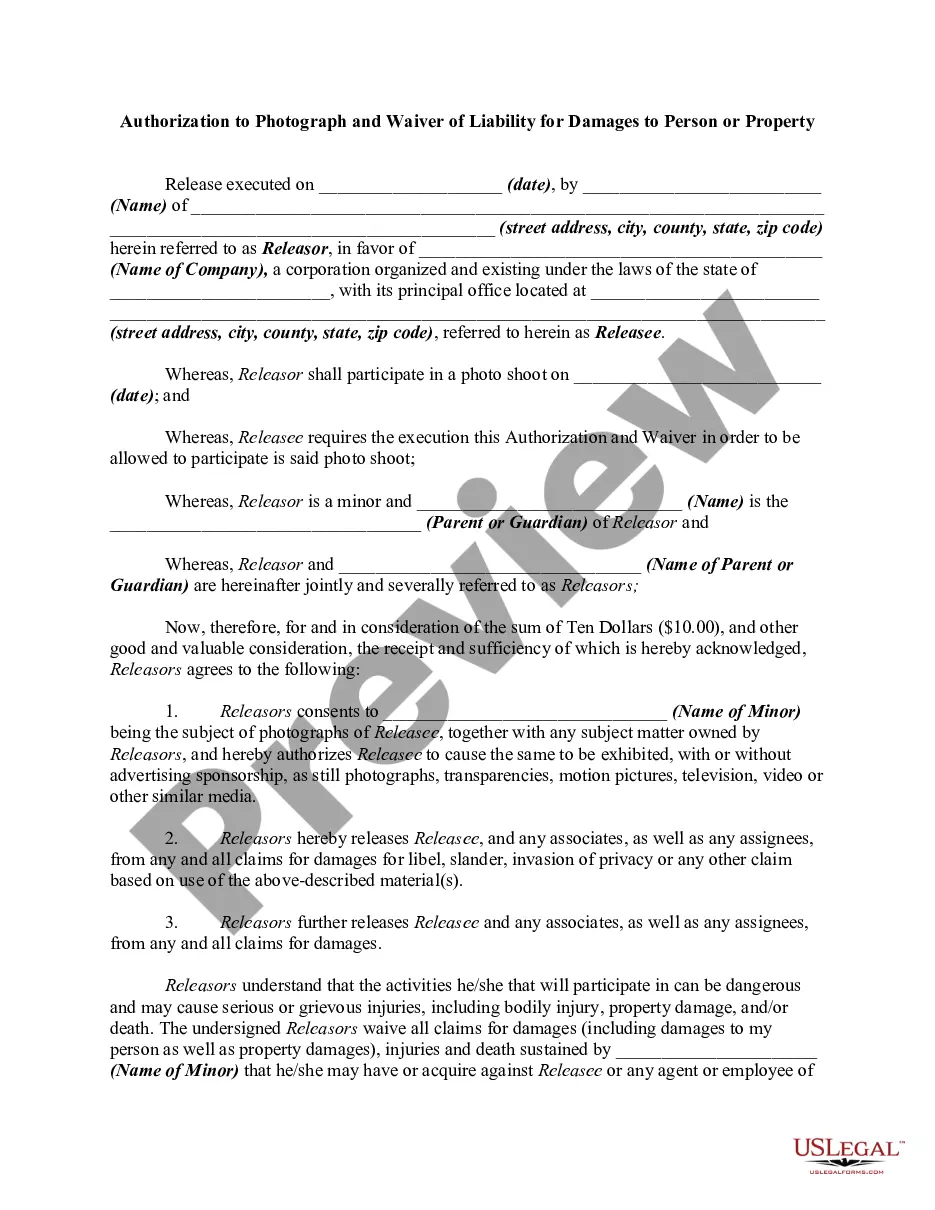
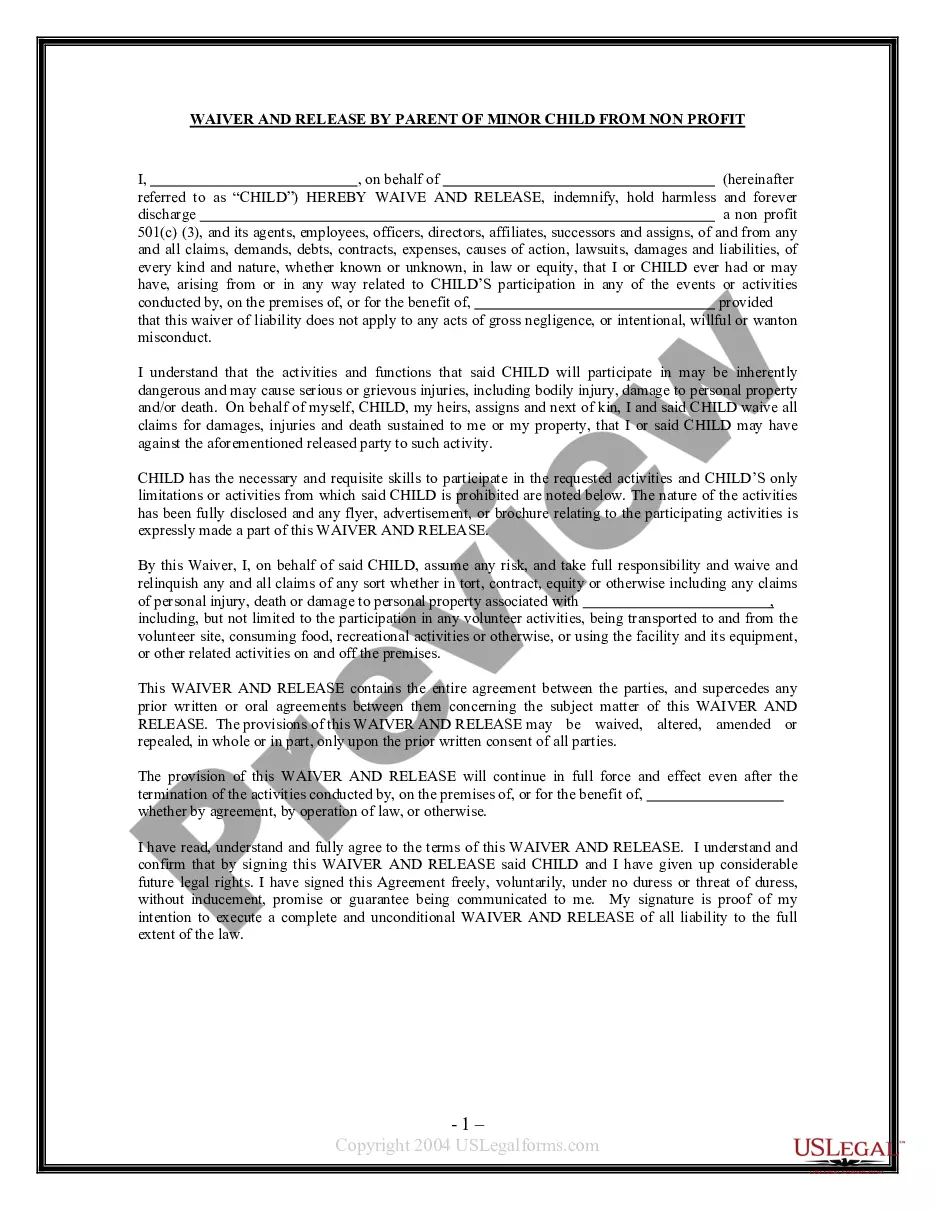
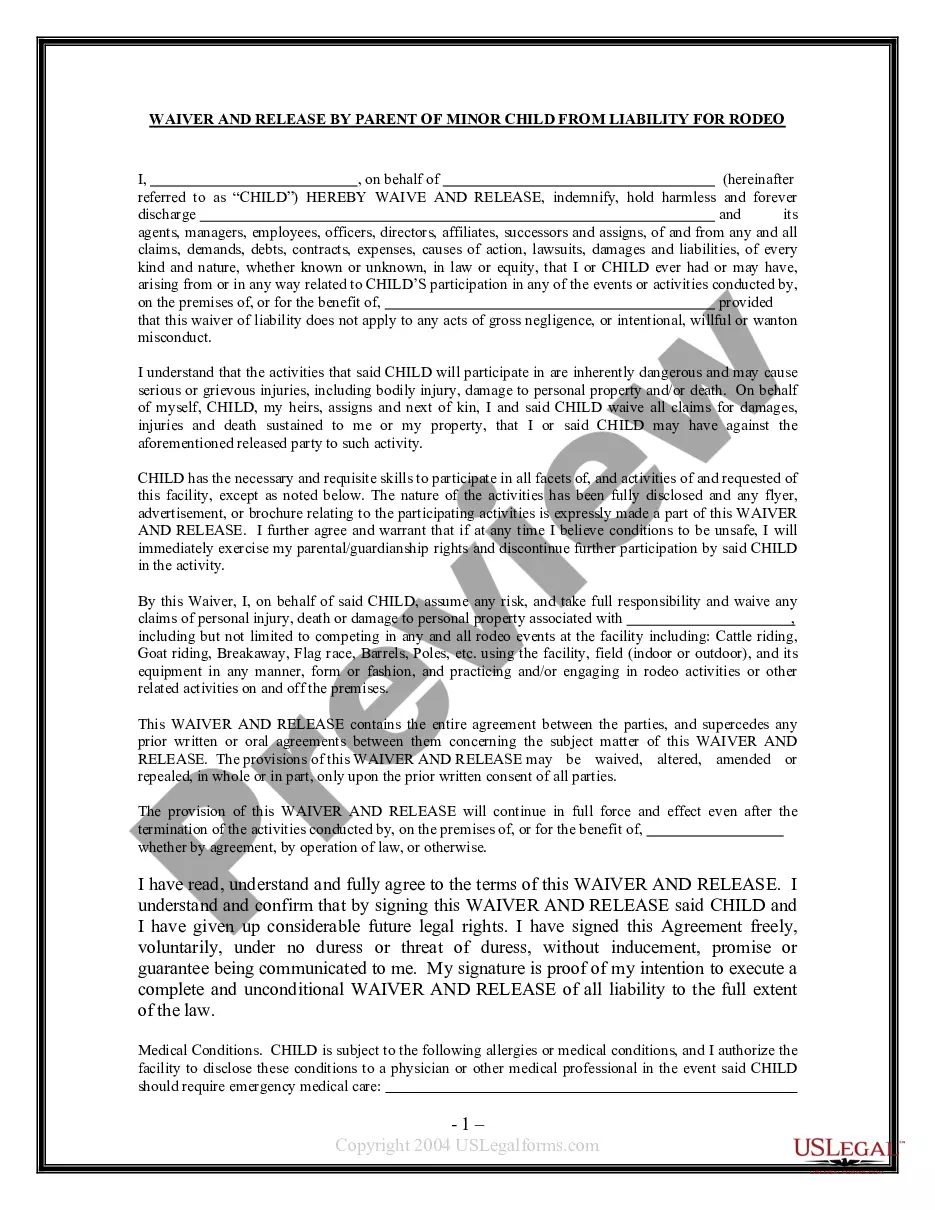
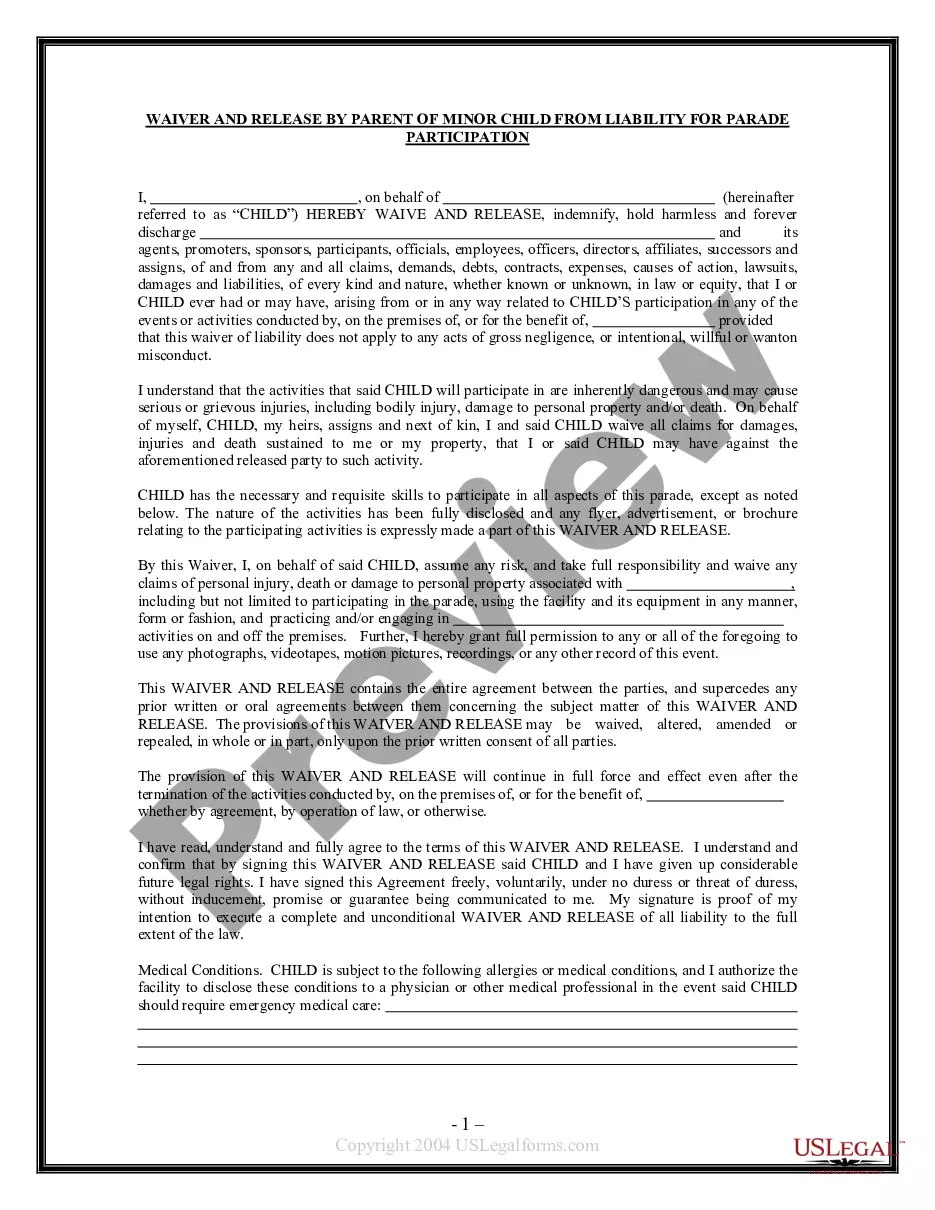
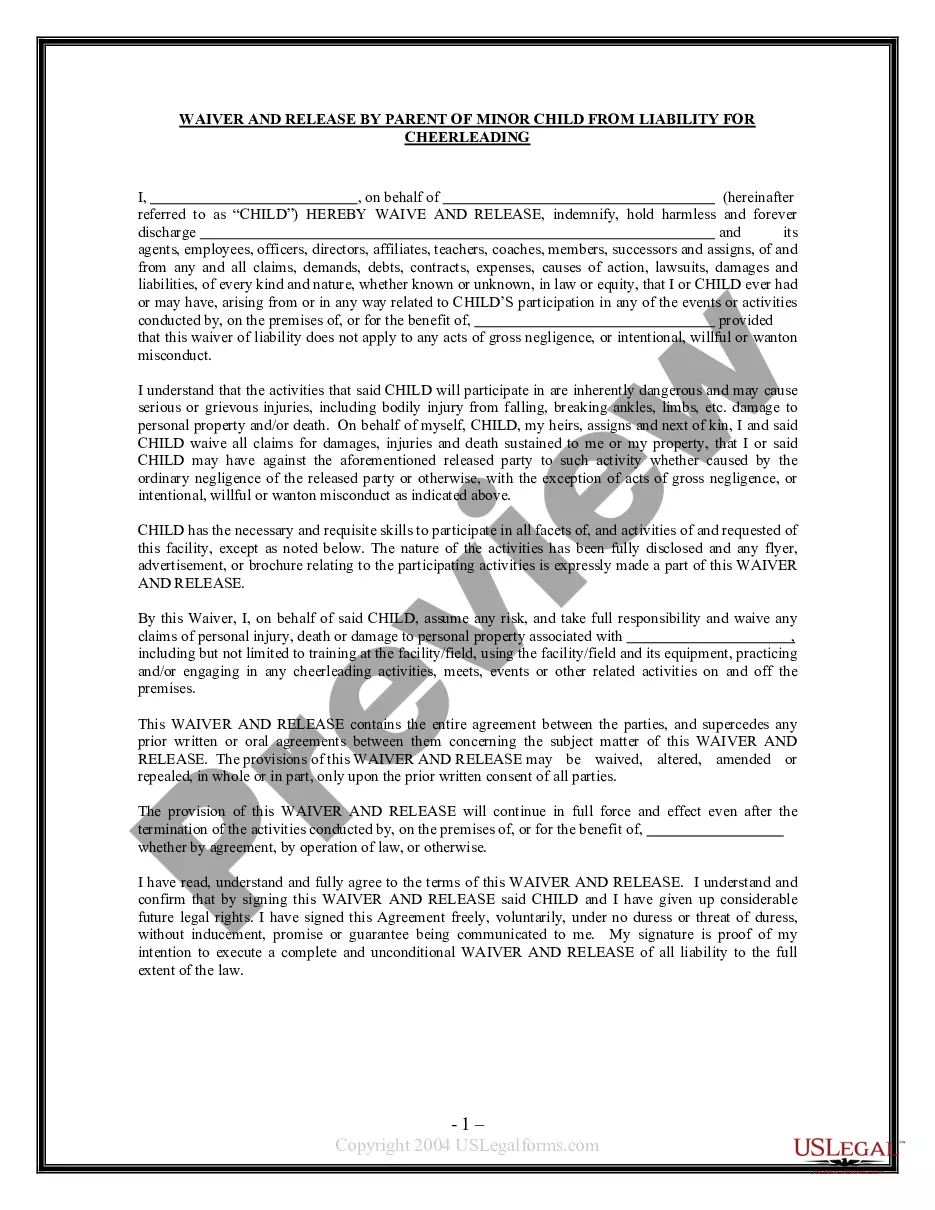
This form allows a parent or guardian to release a minor for reenactment from liability for injuries which may be incurred by a minor child while on the premises, taking part in activities, etc.
Tennessee Waiver and Release From Liability For Minor Child for Reenactment
Category:
State:
Multi-State
Control #:
US-WAV-79M
Format:
Word;
Rich Text
Instant download
Description
Free preview
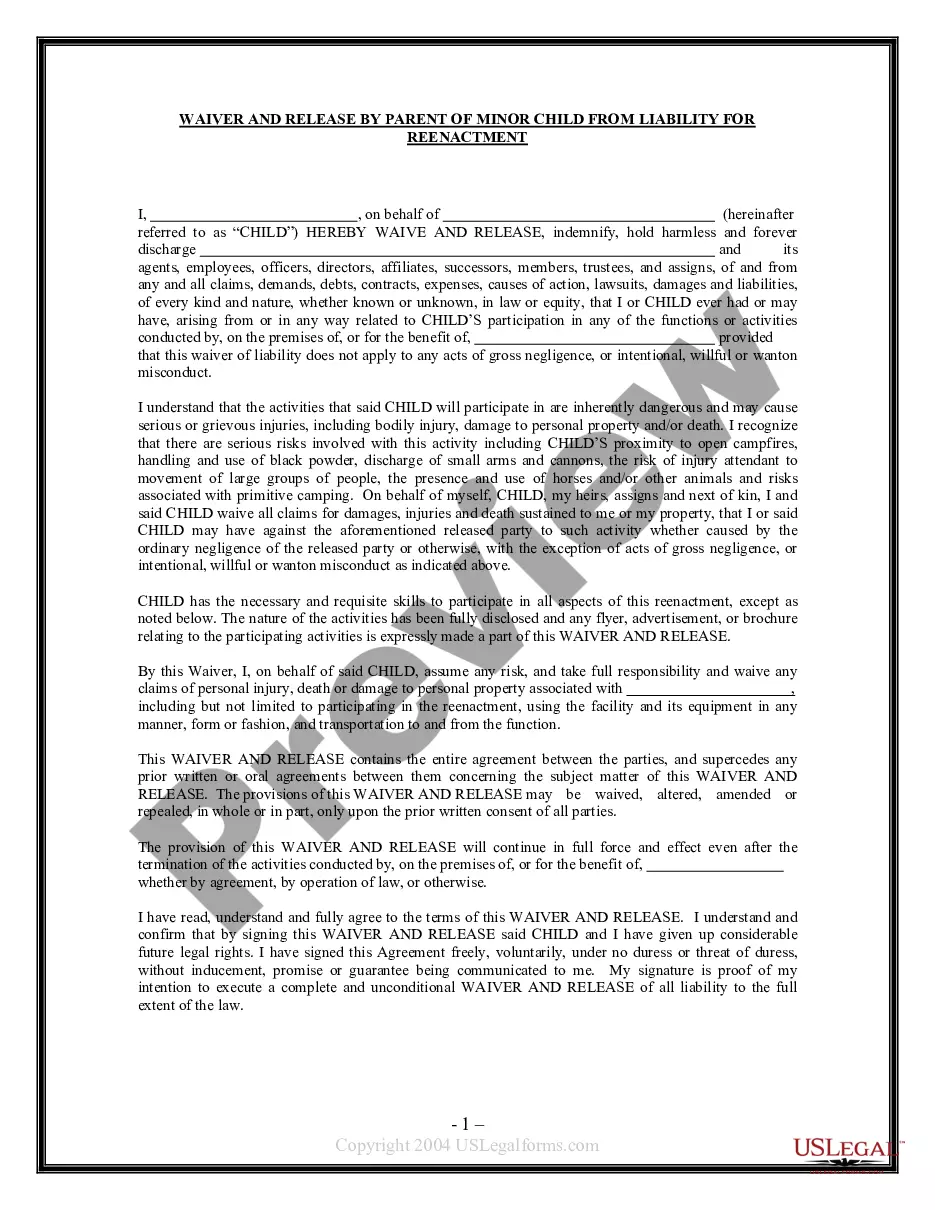
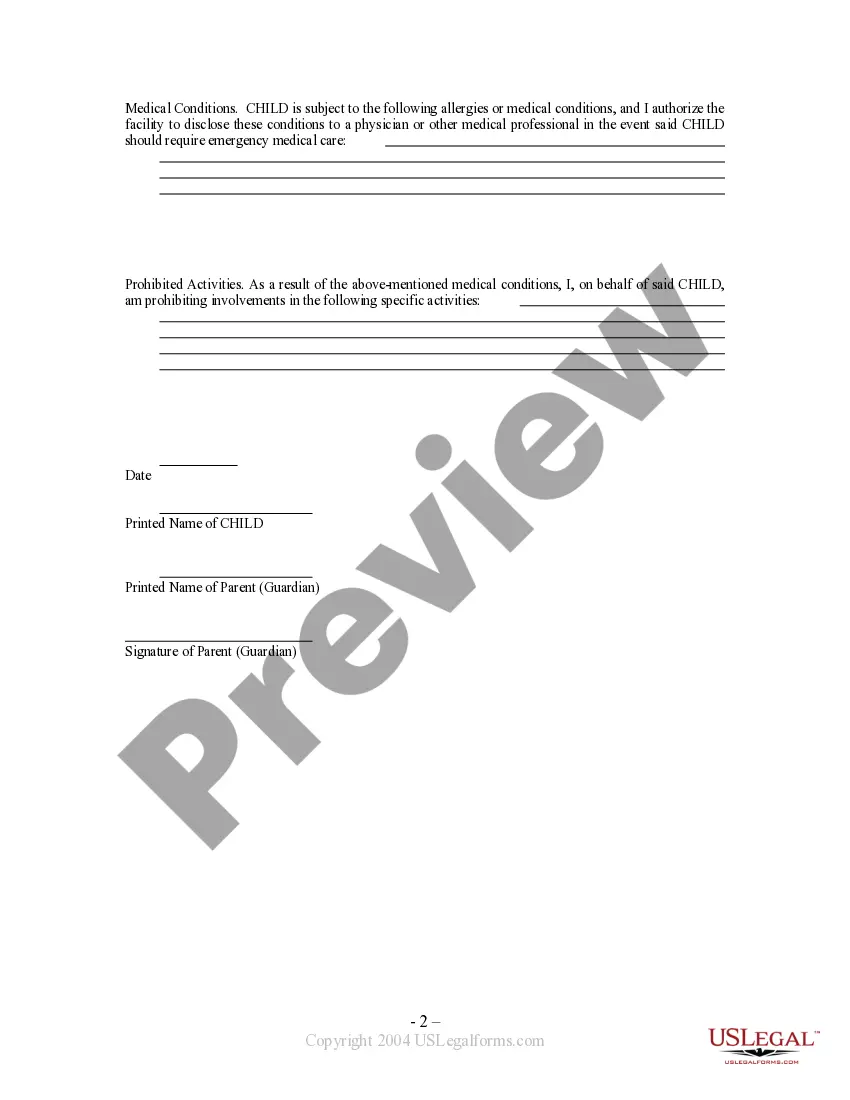
How to fill out Waiver And Release From Liability For Minor Child For Reenactment?
Selecting the appropriate legitimate document template can be a challenge. Obviously, there are numerous designs available online, but how can you find the legitimate template you require? Utilize the US Legal Forms website. The service provides a vast array of templates, including the Tennessee Waiver and Release From Liability For Minor Child for Reenactment, which you can use for business and personal purposes. All of the forms are reviewed by experts and comply with federal and state regulations.
If you are already registered, Log In to your account and click the Download button to obtain the Tennessee Waiver and Release From Liability For Minor Child for Reenactment. Use your account to browse through the legitimate forms you have previously purchased. Go to the My documents tab in your account and download another copy of the document you need.
If you are a new user of US Legal Forms, here are simple steps for you to follow: First, ensure that you have selected the correct form for your city/state. You can view the document using the Preview button and read the document description to confirm it is the right one for you. If the form does not meet your requirements, utilize the Search field to find the appropriate form. Once you are confident that the document is suitable, click the Buy now button to obtain the form. Choose the payment plan you wish and enter the necessary information. Create your account and complete your purchase using your PayPal account or Visa or Mastercard. Select the file format and download the legitimate document template to your device. Complete, edit, print, and sign the acquired Tennessee Waiver and Release From Liability For Minor Child for Reenactment.
- US Legal Forms is the largest collection of legitimate forms where you can find a variety of document templates.
- Utilize the service to download professionally crafted paperwork that adhere to state regulations.
- The forms are designed to be user-friendly and accessible for individuals and businesses.
- You have the ability to customize each document according to your specific needs.
- The platform is regularly updated to ensure compliance with the latest legal standards.
- Customer support is available to assist with any questions or concerns regarding the forms.
Form popularity
FAQ
When writing up a waiver form, begin with a clear title that indicates its purpose, such as Tennessee Waiver and Release From Liability For Minor Child for Reenactment. Include sections that detail the activities, risks involved, and the intent to release liability. Make sure to specify that the form must be signed by a parent or guardian for minors. Using a reliable platform like US Legal Forms can streamline this process, offering templates that ensure compliance and clarity.
Filling out a general waiver and release form involves providing accurate information about the participant, such as their name and date of birth, along with details of the event. Be sure to read through the terms carefully, especially the sections related to the Tennessee Waiver and Release From Liability For Minor Child for Reenactment. After filling in the required information, both the parent or guardian and the organization should sign the form to validate it. This process helps ensure that all parties understand their rights and responsibilities.
To write a simple release of liability, start by clearly stating the purpose of the document. Include the names of the parties involved, specifically the parent or guardian and the organization hosting the reenactment. Next, outline the activities covered under the Tennessee Waiver and Release From Liability For Minor Child for Reenactment, and include a clause that releases the organization from any claims. Finally, ensure that the document is signed and dated by the appropriate parties.
Signatures from minors are typically not considered legally binding in Tennessee. This applies to documents like a Tennessee Waiver and Release From Liability For Minor Child for Reenactment, where the minor's signature alone may not hold legal weight. Instead, it is the responsibility of parents or guardians to sign on behalf of the minor. It’s wise to seek legal advice to navigate these matters effectively.
In general, waivers are not enforceable against minors in Tennessee. This means that even if a minor signs a Tennessee Waiver and Release From Liability For Minor Child for Reenactment, the waiver may not hold up in court. However, parents may still be held accountable for the minor's actions. Consulting a legal expert can provide clarity on how to approach these situations.
A minor waiver form is designed specifically for minors and their parents or guardians to sign. This document typically outlines the risks associated with an activity and releases the organization from liability. In Tennessee, this is often part of a Tennessee Waiver and Release From Liability For Minor Child for Reenactment. It is essential for organizations to have this form to protect themselves while ensuring that parents are informed.
Waiver forms can be legally binding, provided they meet certain criteria. In Tennessee, a properly drafted Tennessee Waiver and Release From Liability For Minor Child for Reenactment can protect organizations against claims if it is clear and comprehensive. However, factors such as the age of the signer and the form's clarity can affect its enforceability. Always consider consulting a legal professional to ensure compliance.
Yes, a release form is essentially a type of waiver. It serves to release one party from liability for potential claims arising from another party's activities. In the context of a Tennessee Waiver and Release From Liability For Minor Child for Reenactment, it is a legal document that informs parents about the risks and releases the organization from responsibility. This distinction is critical for understanding how these documents function.
A parental release of liability form is a document that parents or guardians sign to protect an organization from legal claims related to their child's participation in activities. This form is often included in a Tennessee Waiver and Release From Liability For Minor Child for Reenactment. It helps clarify that parents understand the risks involved and agree to waive certain rights. Using such forms can enhance safety and reduce the risk of liability.
Generally, waivers signed by minors are not legally binding in Tennessee. This means that if a minor signs a Tennessee Waiver and Release From Liability For Minor Child for Reenactment, parents or guardians may still choose to pursue legal action. However, the enforceability of such waivers can vary based on specific circumstances. It’s important to consult with a legal expert to understand the implications.