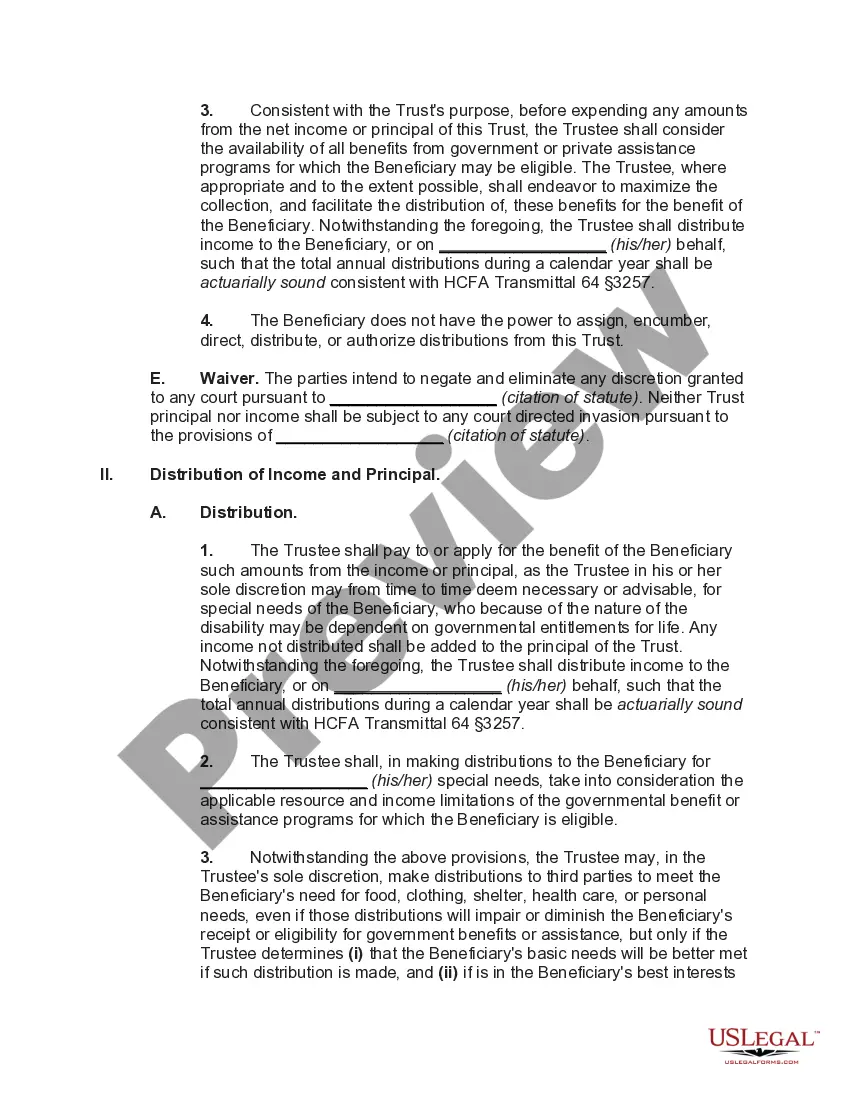
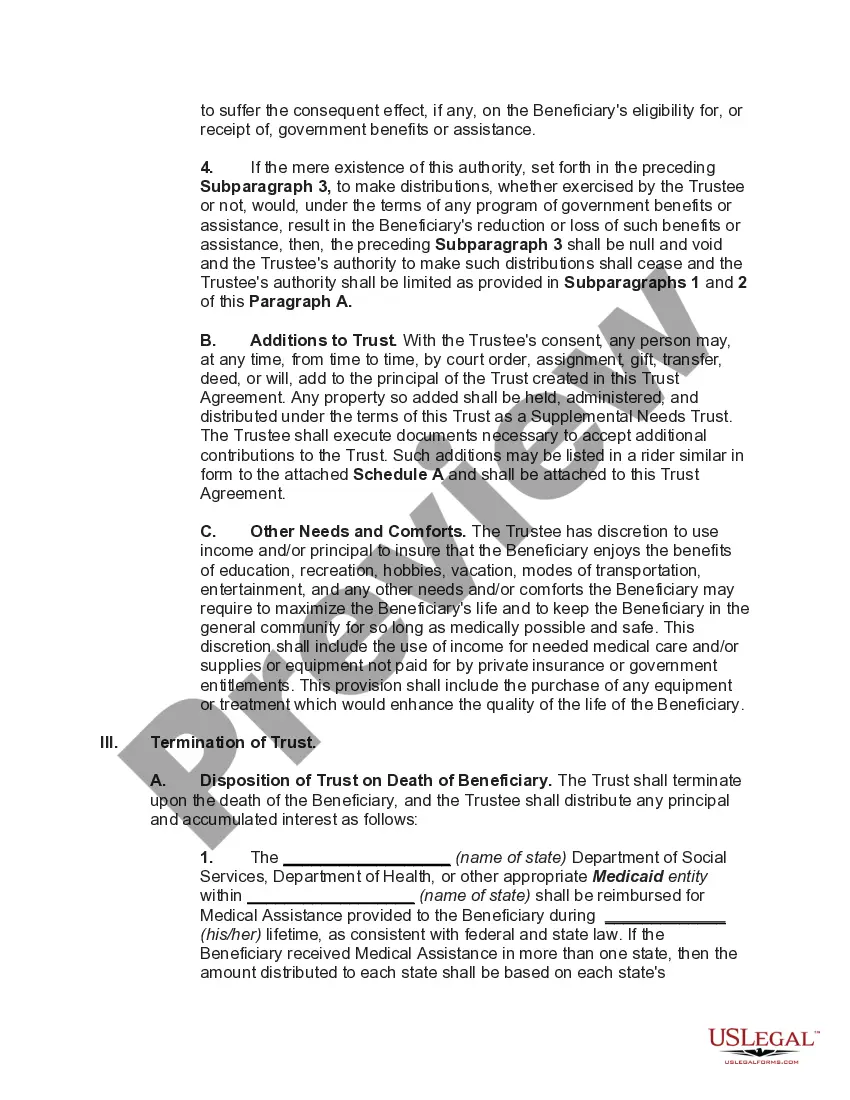
Tennessee Special Needs Irrevocable Trust Agreement for Benefit of Disabled Child of Trustor
Description
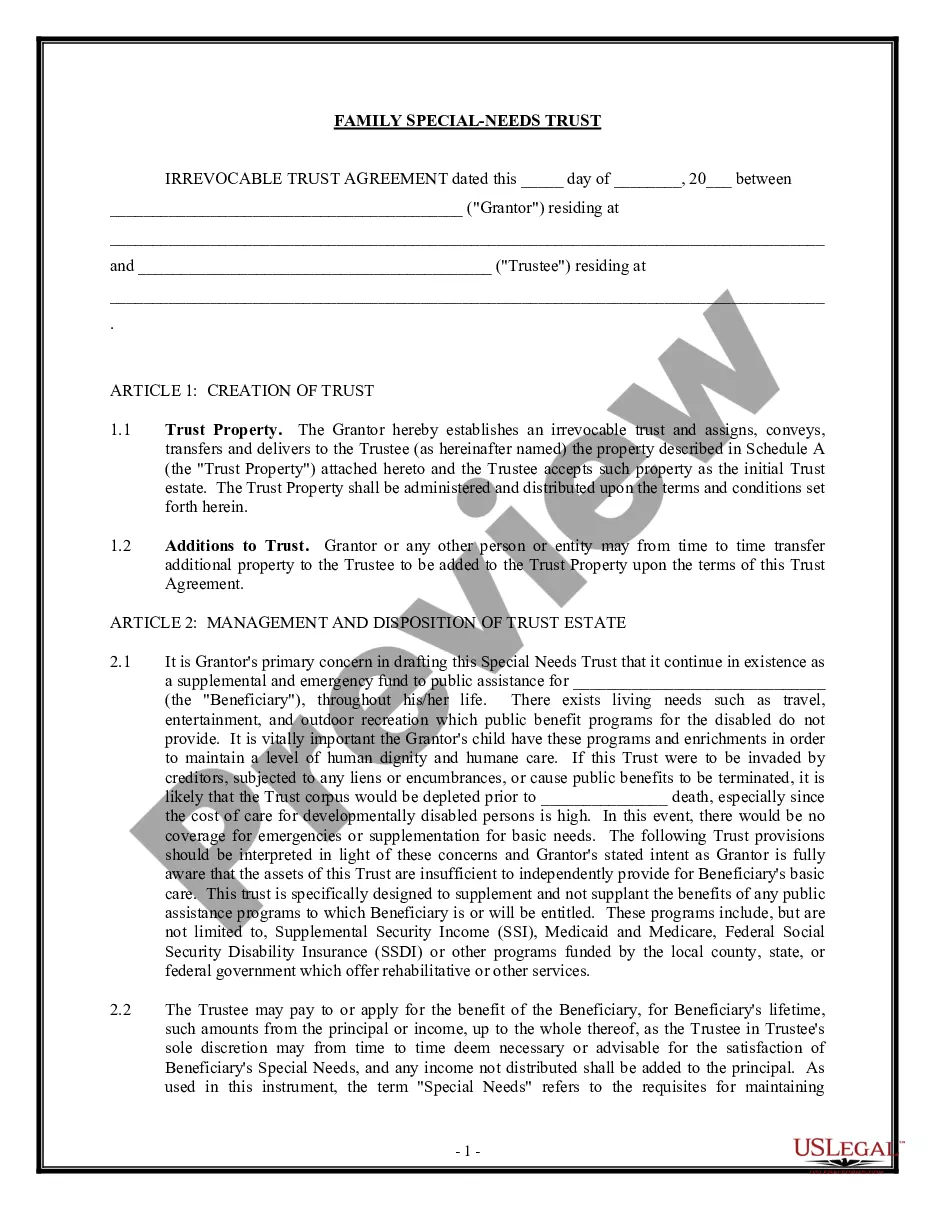

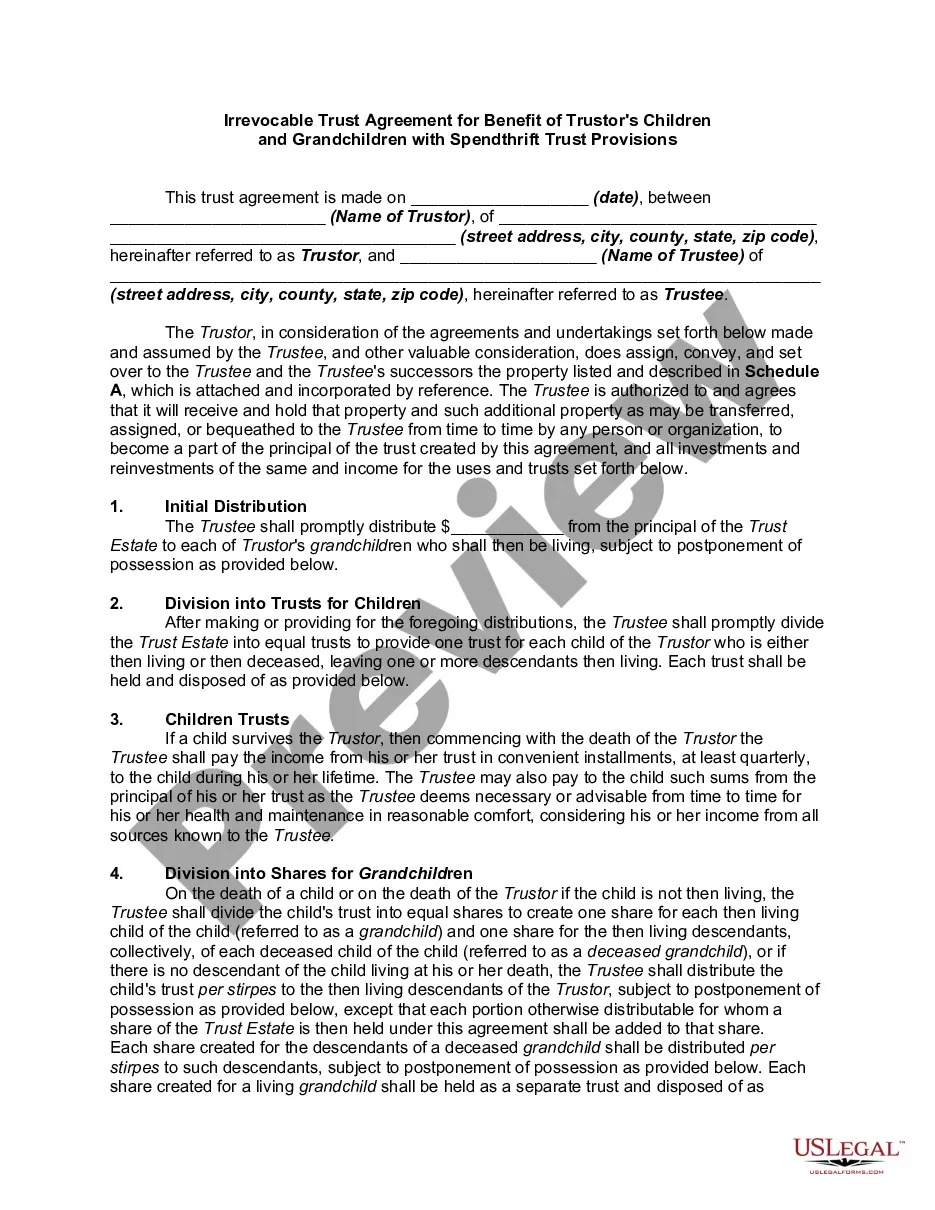
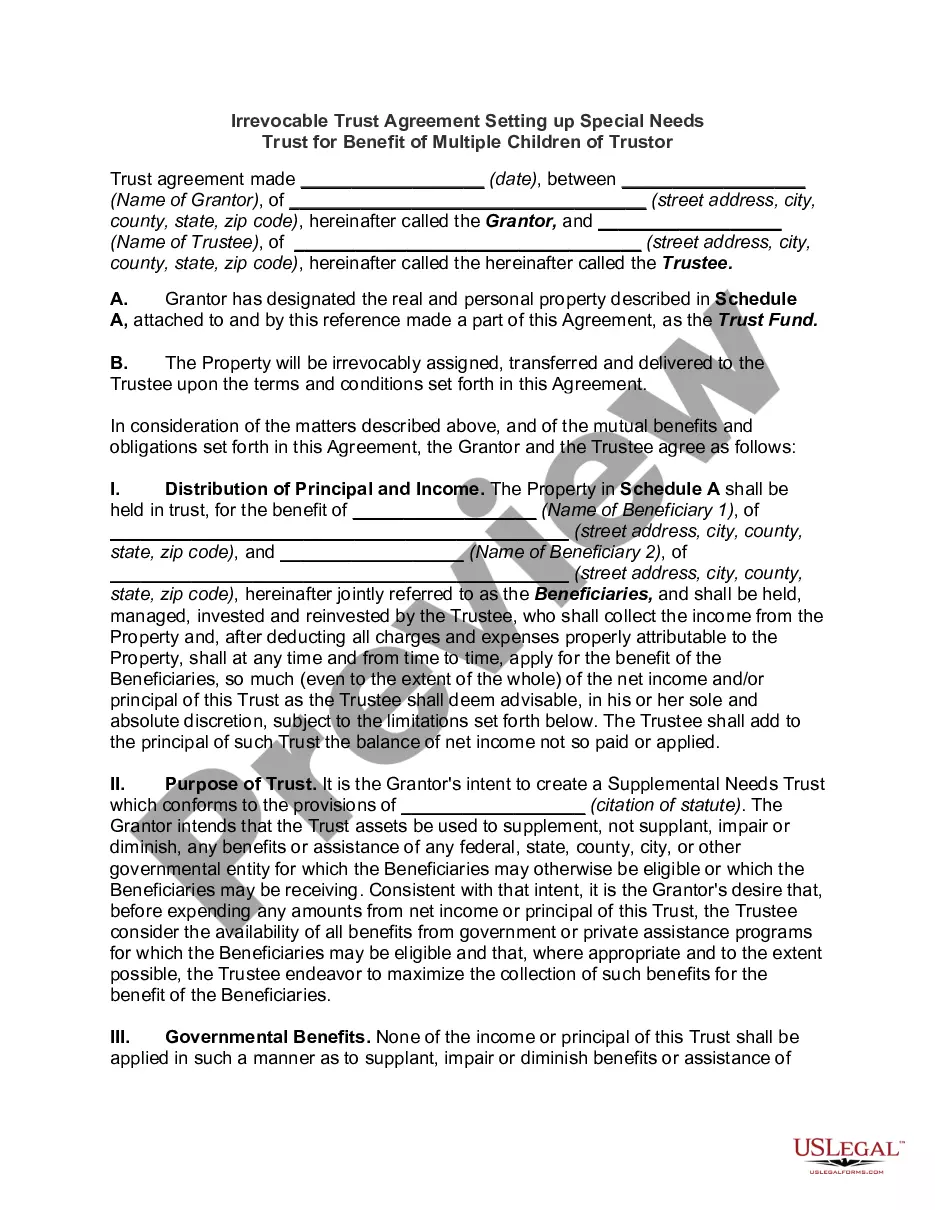
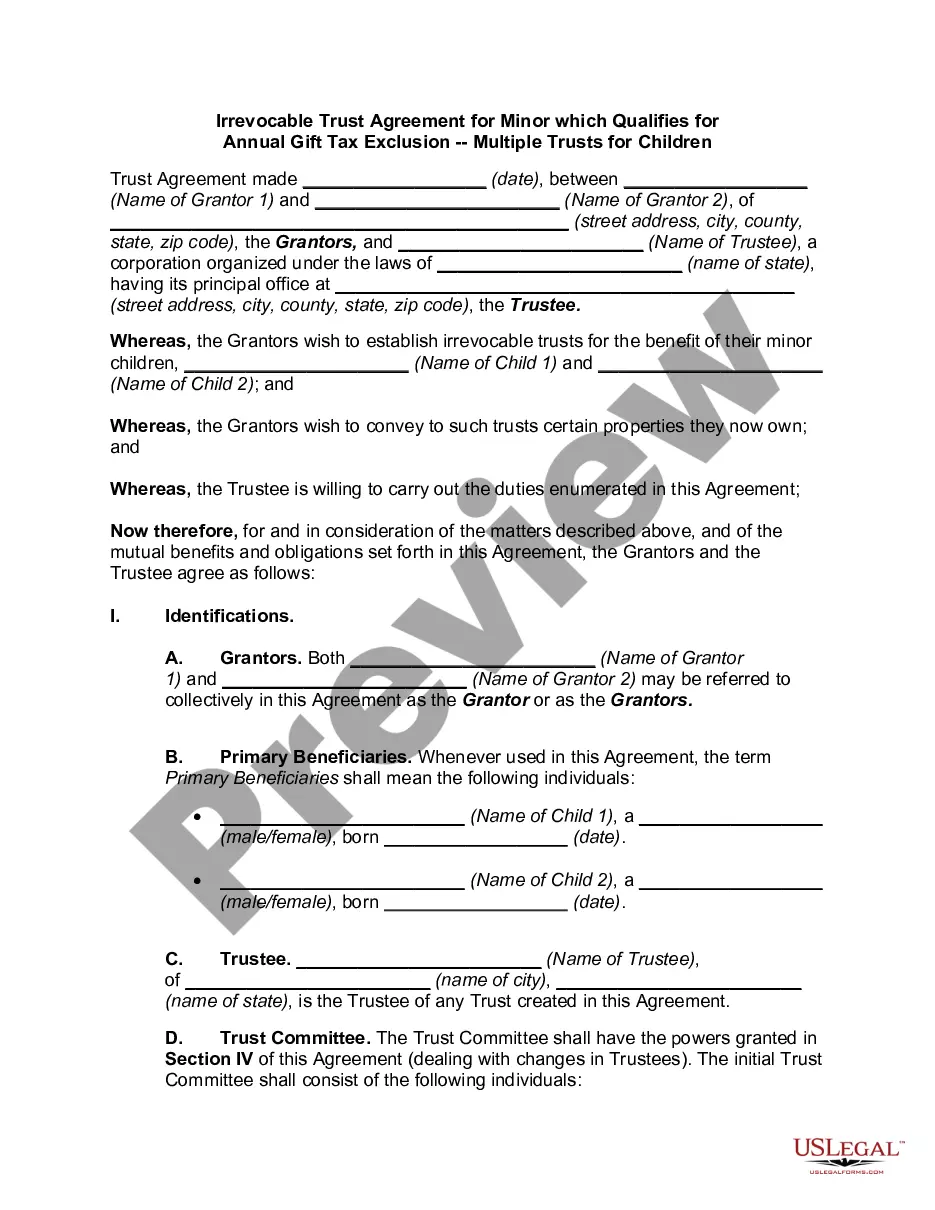
Get your form ready online
Our built-in tools help you complete, sign, share, and store your documents in one place.
Make edits, fill in missing information, and update formatting in US Legal Forms—just like you would in MS Word.
Download a copy, print it, send it by email, or mail it via USPS—whatever works best for your next step.
Sign and collect signatures with our SignNow integration. Send to multiple recipients, set reminders, and more. Go Premium to unlock E-Sign.
If this form requires notarization, complete it online through a secure video call—no need to meet a notary in person or wait for an appointment.
We protect your documents and personal data by following strict security and privacy standards.

Make edits, fill in missing information, and update formatting in US Legal Forms—just like you would in MS Word.

Download a copy, print it, send it by email, or mail it via USPS—whatever works best for your next step.

Sign and collect signatures with our SignNow integration. Send to multiple recipients, set reminders, and more. Go Premium to unlock E-Sign.

If this form requires notarization, complete it online through a secure video call—no need to meet a notary in person or wait for an appointment.

We protect your documents and personal data by following strict security and privacy standards.
Looking for another form?





How to fill out Special Needs Irrevocable Trust Agreement For Benefit Of Disabled Child Of Trustor?
If you wish to be thorough, obtain, or print legal document templates, utilize US Legal Forms, the leading collection of legal forms that are available online.
Leverage the site's straightforward and user-friendly search to find the documents you require.
Various templates for business and personal purposes are organized by categories and states, or keywords.
Step 3. If you are dissatisfied with the form, use the Search field at the top of the screen to find other types of legal document templates.
Step 4. Once you have located the form you need, click the Purchase now button. Select the payment plan you prefer and provide your information to register for an account.
- Employ US Legal Forms to acquire the Tennessee Special Needs Irrevocable Trust Agreement for the Benefit of a Disabled Child of the Trustor with just a few clicks.
- If you are already a US Legal Forms client, Log In to your account and click the Acquire button to obtain the Tennessee Special Needs Irrevocable Trust Agreement for the Benefit of a Disabled Child of the Trustor.
- You can also access forms you've previously downloaded from the My documents section of your account.
- If this is your first time using US Legal Forms, follow these steps.
- Step 1. Ensure you have selected the form for the correct city/state.
- Step 2. Use the Preview option to review the contents of the form. Be sure to read the details.
Form popularity
FAQ
The major disadvantages that are associated with trusts are their perceived irrevocability, the loss of control over assets that are put into trust and their costs. In fact trusts can be made revocable, but this generally has negative consequences in respect of tax, estate duty, asset protection and stamp duty.
Disadvantages to SNTCost. Annual fees and a high cost to set up a SNT can make it financially difficult to create a SNT The yearly costs to manage the trust can be high.Lack of independence.Medicaid payback.
Pooled Trusts. A pooled trust, found in the US Code under 1396p(d)(4)(C), is also known as a d4C trust. It is established and managed by a charity or non-profit organization and is funded by the disabled person, for that individual's sole benefit.
The term special needs trust refers to the purpose of the trust to pay for the beneficiary's unique or special needs. In short, the name is focused more on the beneficiary, while the name supplemental needs trust addresses the shortfalls of our public benefits programs.
A spendthrift trust is a trust designed so that the beneficiary is unable to sell or give away her equitable interest in the trust property. The trustee is in control of the managing the property. Thus, the beneficiary of the trust is not in control of the property and her creditors cannot reach those assets.
A special needs trust is a legal arrangement that lets a physically or mentally ill person, or someone chronically disabled, have access to funding without potentially losing the benefits provided by public assistance programs.
Some of the benefits of utilizing an SNT include asset management and maximizing and maintaining government benefits (including Medicaid and Supplemental Security Income). Some possible negatives of utilizing an SNT include lack of control and difficulty or inability to identify an appropriate Trustee.
To help you get started on understanding the options available, here's an overview the three primary classes of trusts.Revocable Trusts.Irrevocable Trusts.Testamentary Trusts.More items...?
So the special-needs trust is a type of trust that is used to provide assets and resources to take care of a person with a disability, while the living trust is a will substitute that I might use in place of having a will for my estate plan.
Trusts considered to be qualified disability trusts are entitled to the same personal exemption allowed to all individual taxpayers when filing a tax return. The personal exemption in 2012 is $3,800.