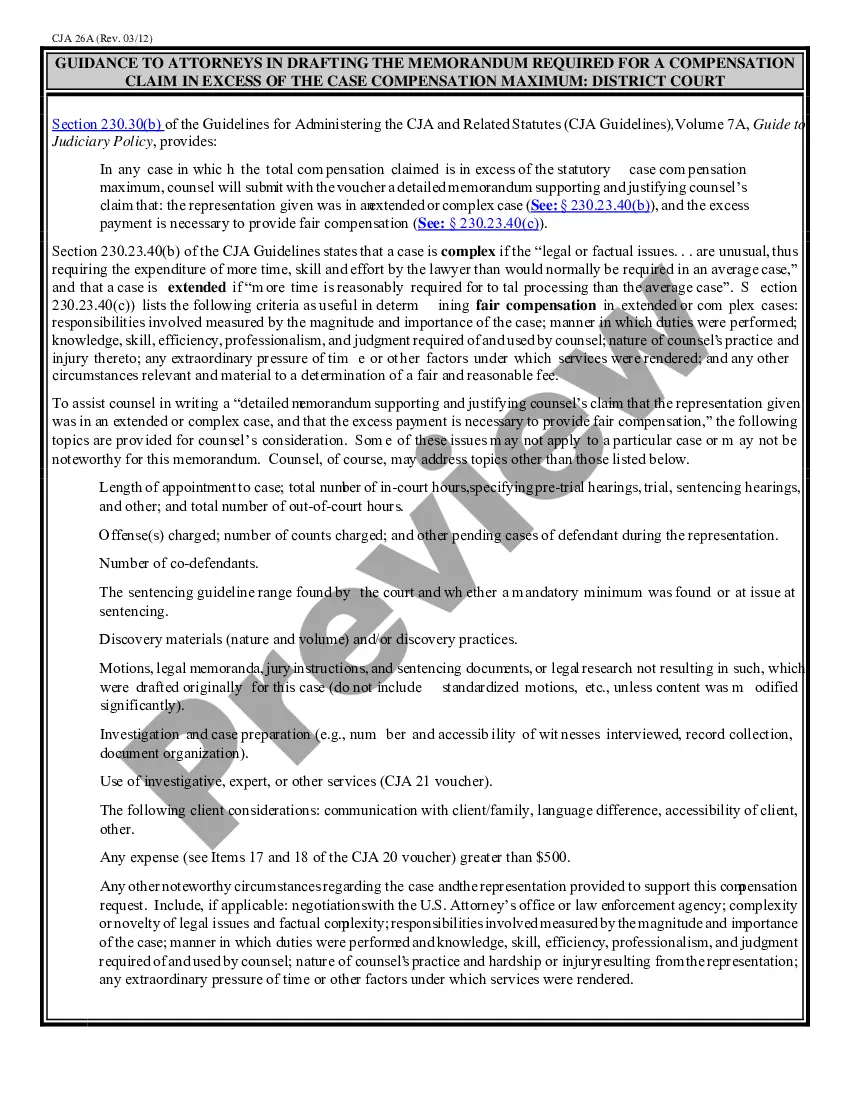
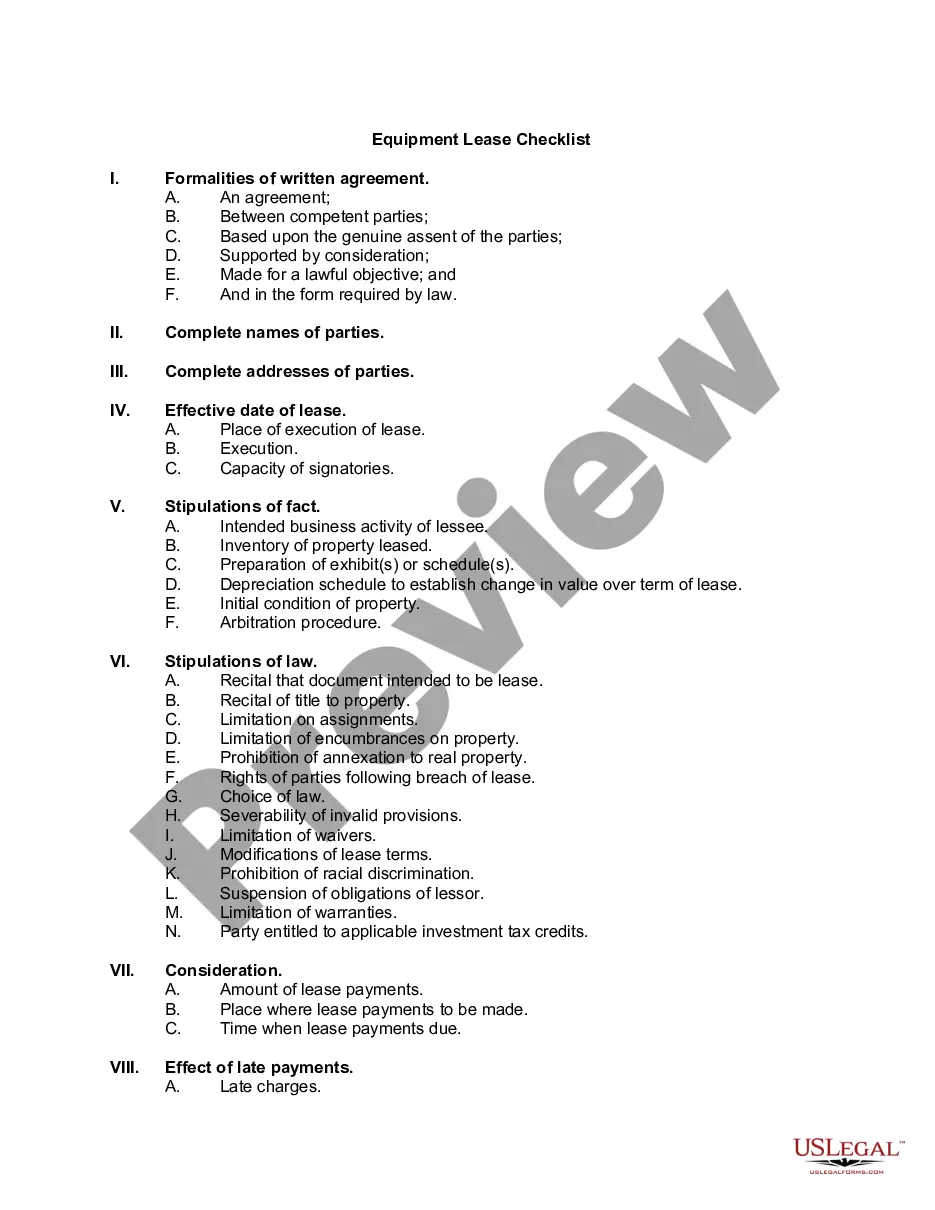
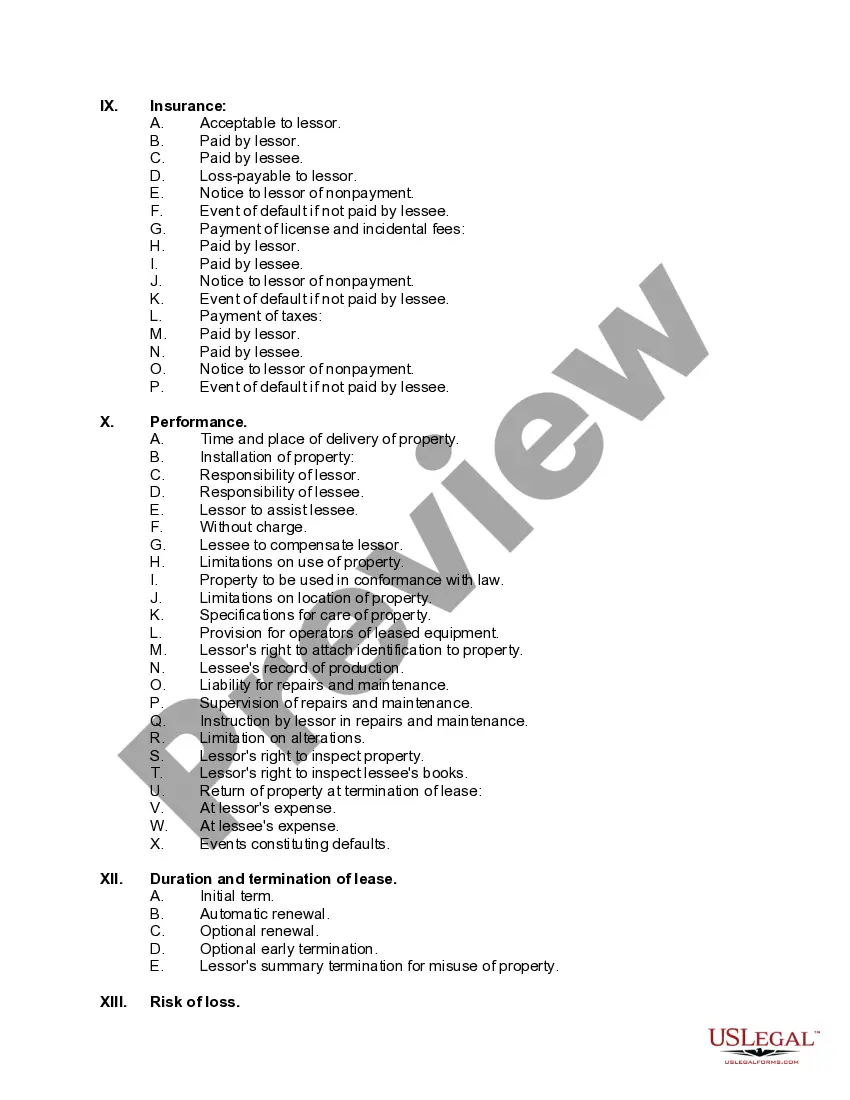
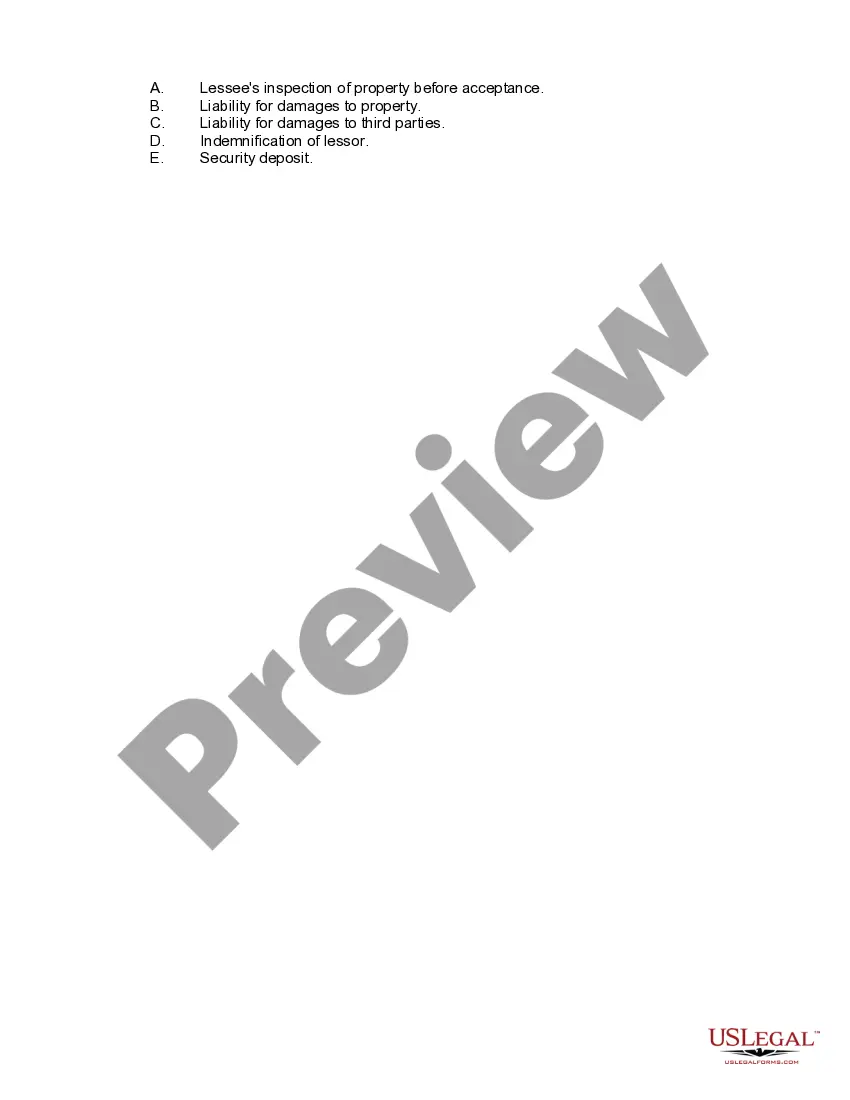
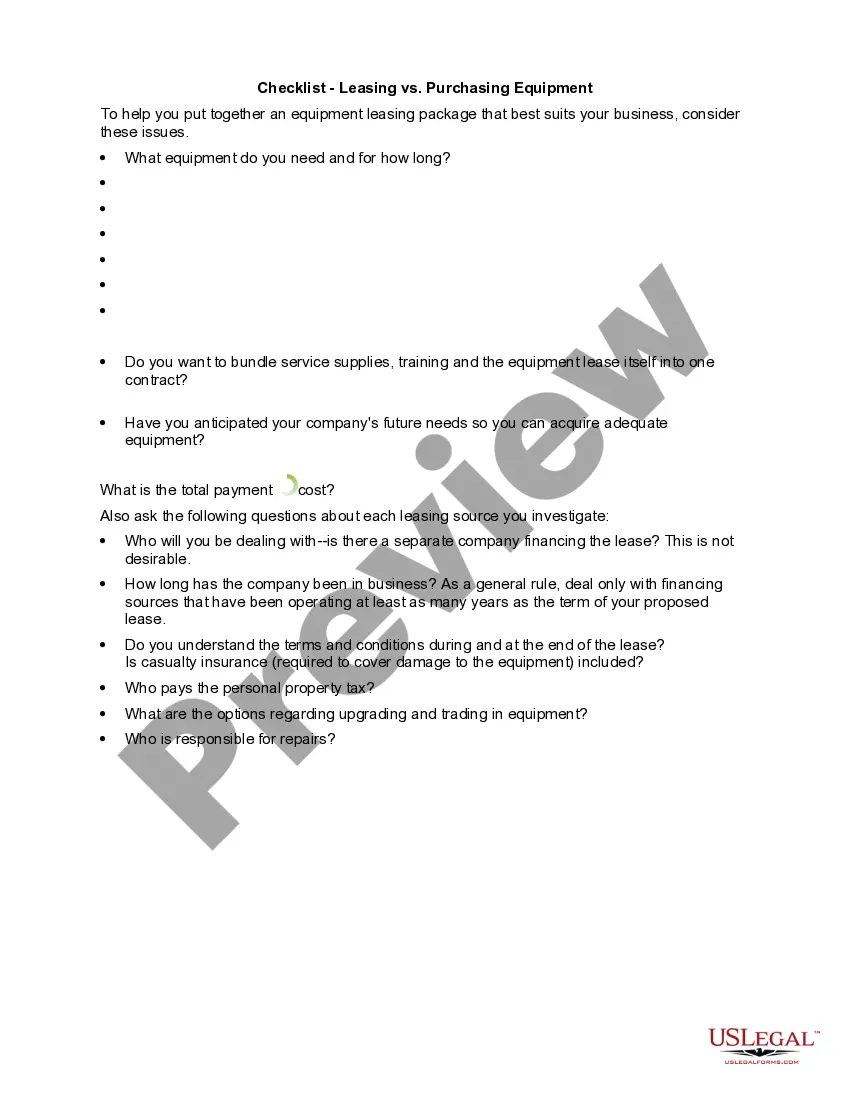
Tennessee Equipment Lease Checklist
Description
How to fill out Equipment Lease Checklist?
US Legal Forms - one of the largest collections of legal documents in the United States - offers a vast selection of legal document templates that you can download or print.
By utilizing the website, you will access thousands of forms for business and personal use, organized by categories, states, or keywords. You can retrieve the latest versions of forms like the Tennessee Equipment Lease Checklist within moments.
If you hold a subscription, Log In to download the Tennessee Equipment Lease Checklist from the US Legal Forms database. The Download option will appear on each form you view. You have access to all previously downloaded forms in the My documents section of your account.
Make adjustments. Complete, modify, print, and sign the downloaded Tennessee Equipment Lease Checklist.
Each template you save to your account does not have an expiration date and belongs to you indefinitely. Therefore, if you wish to download or print another copy, simply go to the My documents section and click on the form you desire.
- Ensure you have selected the correct form for your city/state.
- Click the Preview button to examine the details of the form. Review the form summary to confirm you've chosen the correct document.
- If the form does not meet your requirements, utilize the Search field at the top of the screen to find one that does.
- If you are satisfied with the form, confirm your choice by selecting the Purchase now button. Then choose the pricing plan that suits you and provide your details to register for an account.
- Complete the transaction. Use your credit card or PayPal account to finalize the payment.
- Select the format and download the form to your device.
Form popularity
FAQ
Equipment leases are typically calculated based on the total value of the equipment, the term of the lease, and the interest rate applied. The Tennessee Equipment Lease Checklist can help you understand these components better, especially how they affect your monthly payments. You should also consider any additional fees or taxes that may apply. Utilizing the checklist ensures that you have a clear, straightforward overview when negotiating lease terms.
Yes, a handwritten lease agreement can be legally binding in Tennessee. The key is that it must include all necessary details and signatures from both parties. While a handwritten lease can be enforceable, using the Tennessee Equipment Lease Checklist can help ensure that no important items are missed, thus protecting your interests.
When signing a lease, it is typically required to have the names of all parties, a description of the property, the duration of the lease, and the terms of payment. Both parties should carefully review the agreement to ensure mutual understanding. Using the Tennessee Equipment Lease Checklist can streamline this process and confirm all essential elements are included. Clear communication here will help prevent future misunderstandings.
No, a lease does not have to be notarized in Tennessee. The essential criteria are the signatures of both the lessor and the lessee. You can feel secure knowing that the lease remains enforceable without notarization, provided it meets the legal requirements. The Tennessee Equipment Lease Checklist can guide you through these necessary components.
Yes, a lease agreement is legal even if it is not notarized in Tennessee. What matters is that both parties have signed the agreement, showing mutual consent. This understanding is essential for ensuring enforceability. Following the Tennessee Equipment Lease Checklist can help you draft a solid lease agreement without the need for notarization.
In Tennessee, a lease does not need to be notarized to be valid. The law recognizes that a written lease agreement, signed by both parties, is sufficient. However, having a lease notarized can provide an extra layer of security and authenticity. For those using the Tennessee Equipment Lease Checklist, remember that notarization can help avoid disputes later.
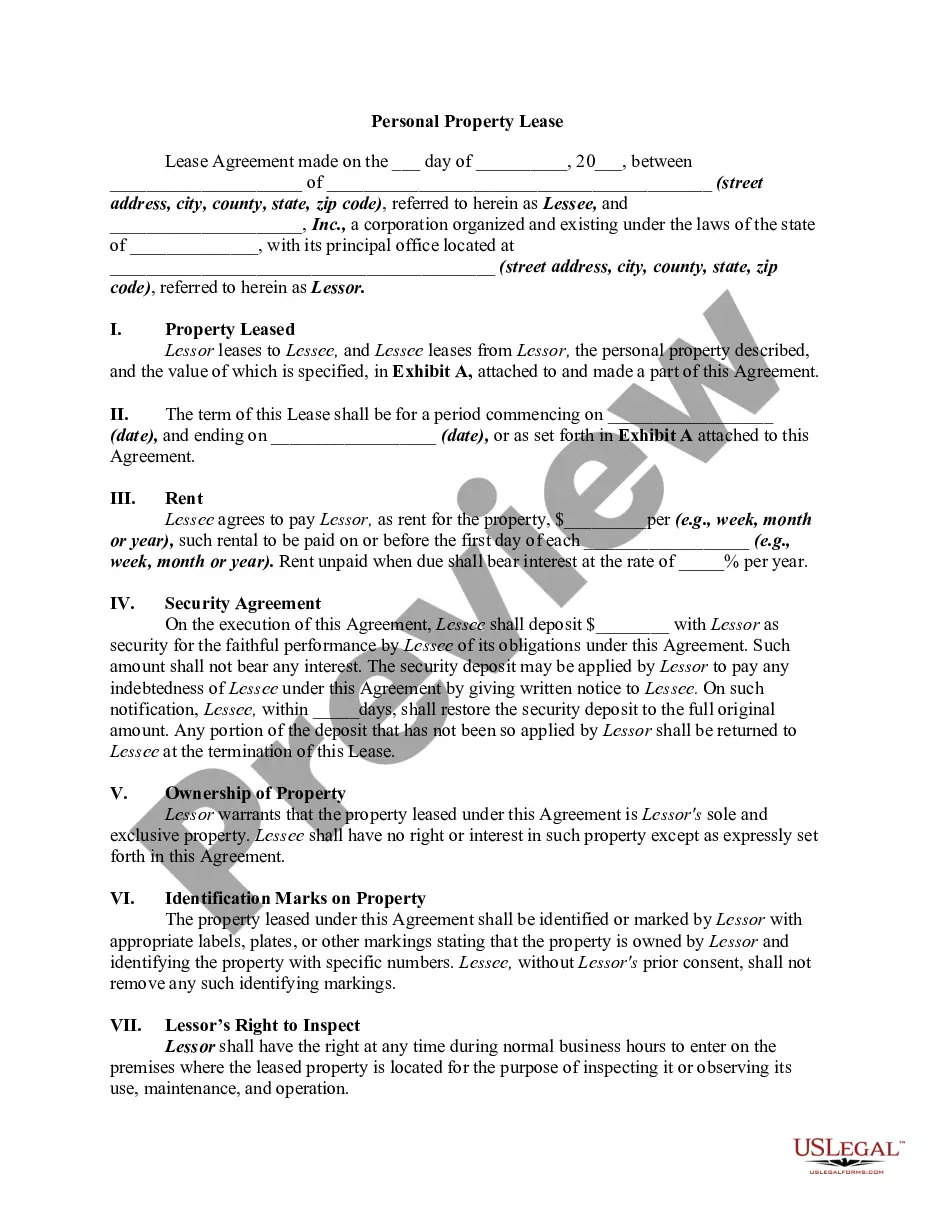
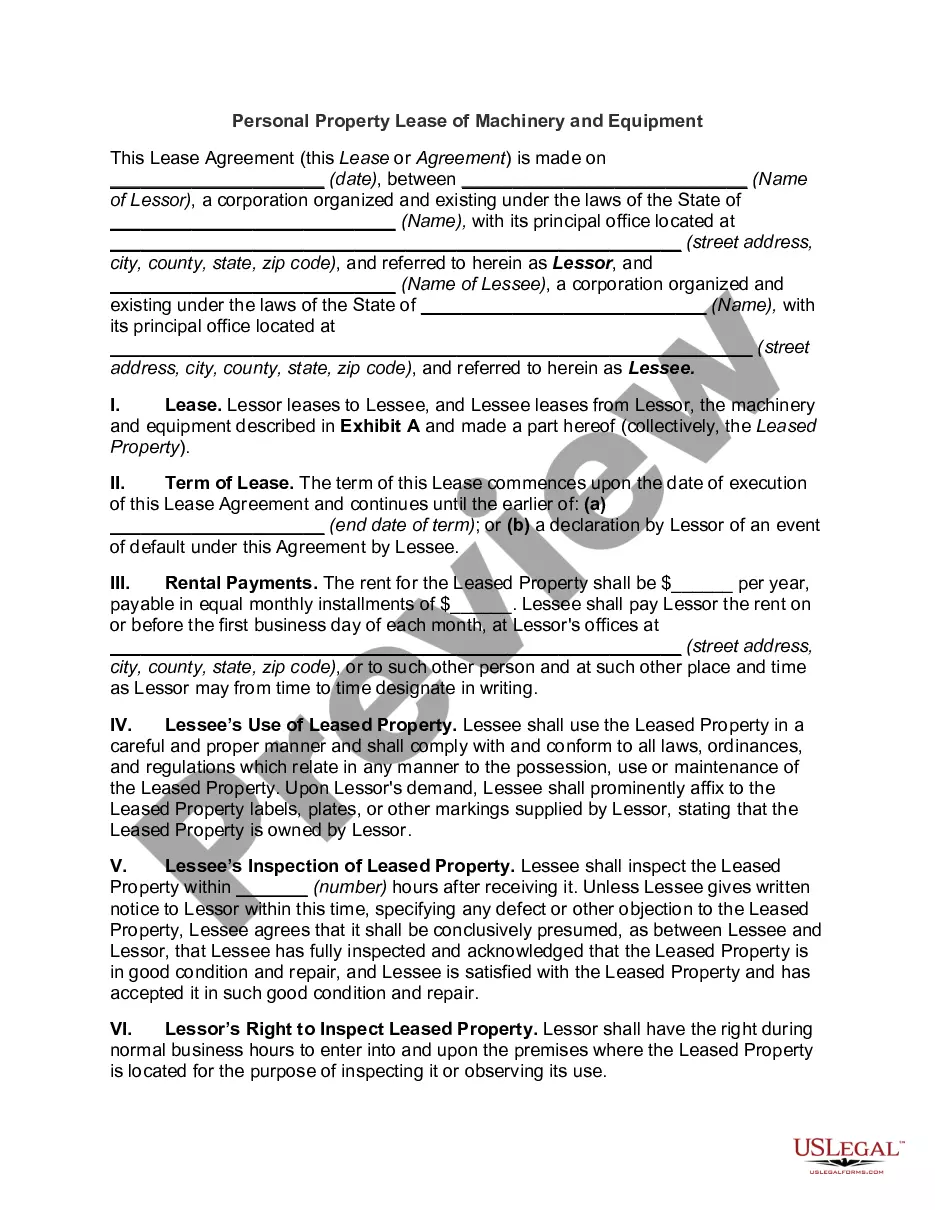
An equipment lease agreement is a formal contract that specifies the rights and obligations of both the equipment owner and the user. This document typically covers rental rates, duration of lease, and responsibilities for maintenance or damages. By employing a Tennessee Equipment Lease Checklist, you can streamline the creation of this agreement, ensuring it meets legal standards and protects all parties involved.
A lease agreement for equipment is a contract between the lessor and lessee that outlines the terms under which the lessee can use the equipment. This document includes payment terms, duration, maintenance responsibilities, and other important details. By using a Tennessee Equipment Lease Checklist, you can ensure your lease agreement covers all necessary aspects to protect your interests.
An operating lease typically allows you to use equipment without taking ownership, usually for a shorter period, whereas an equipment lease often involves longer terms that may lead to ownership at the end of the lease. Understanding these distinctions is vital for making informed decisions in your business. Utilizing a Tennessee Equipment Lease Checklist can help clarify the terms and implications of each type of lease.
Equipment held for lease refers to various types of machinery or tools that are owned by one party and provided to another party for a specified duration in exchange for payment. This arrangement allows businesses to access crucial equipment without a large upfront investment. When you follow a Tennessee Equipment Lease Checklist, you ensure that all essential details regarding the equipment and lease terms are clearly defined.