This is a multi-state form covering the subject matter of the title.
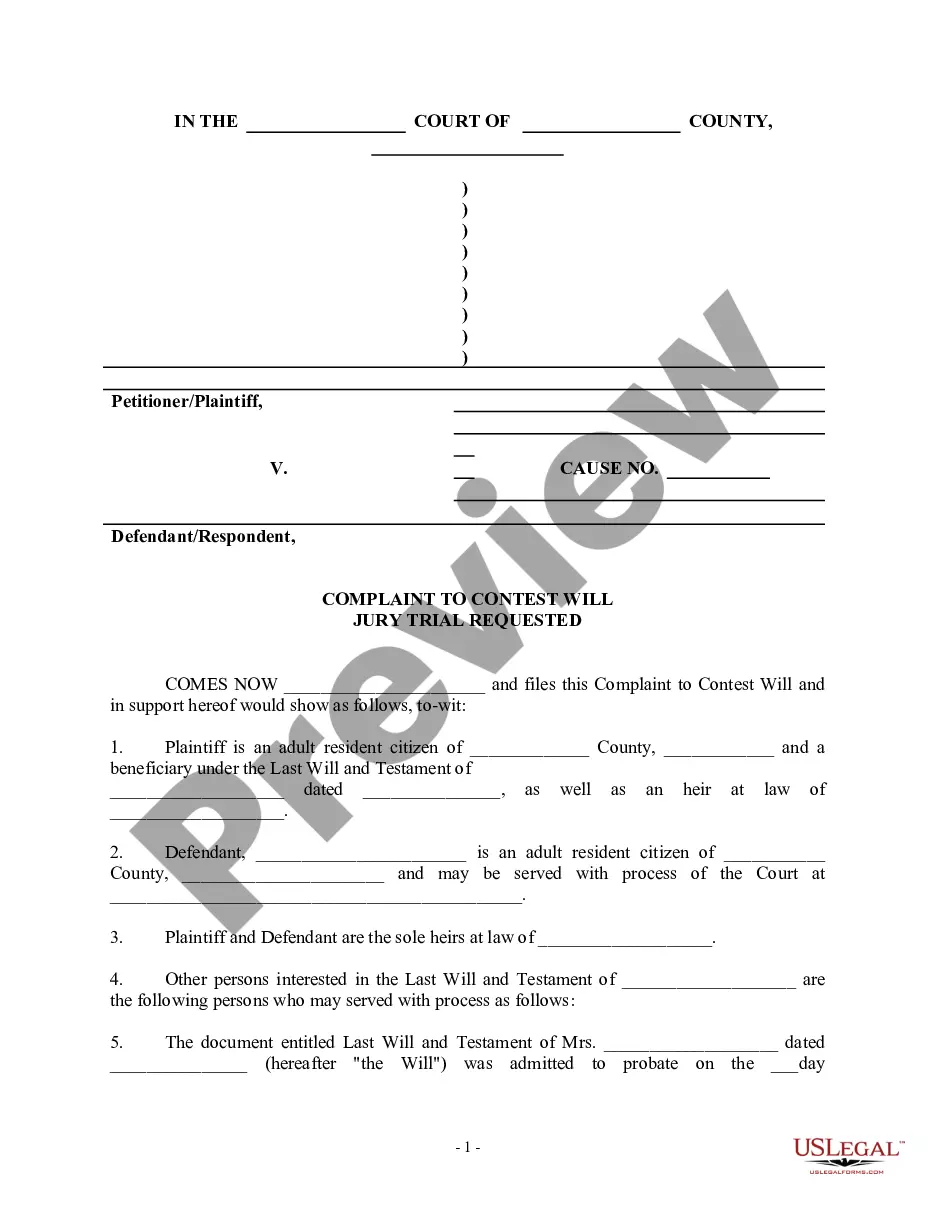
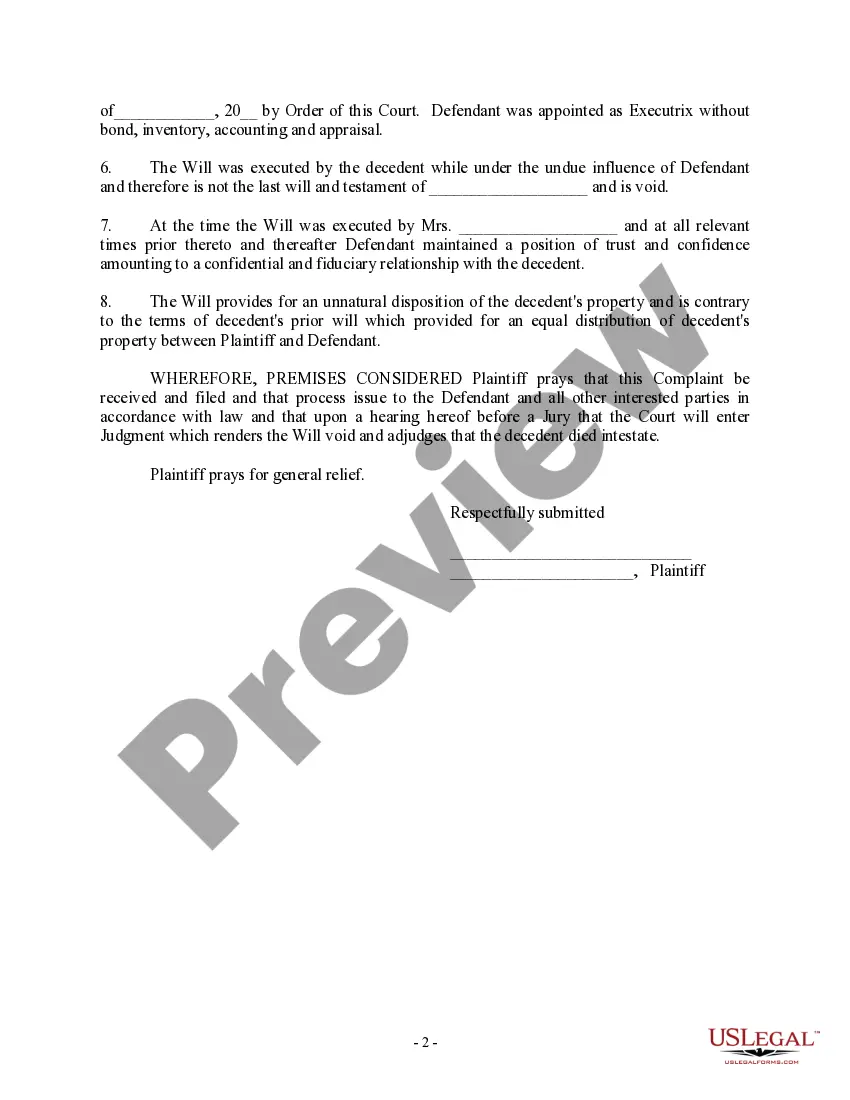
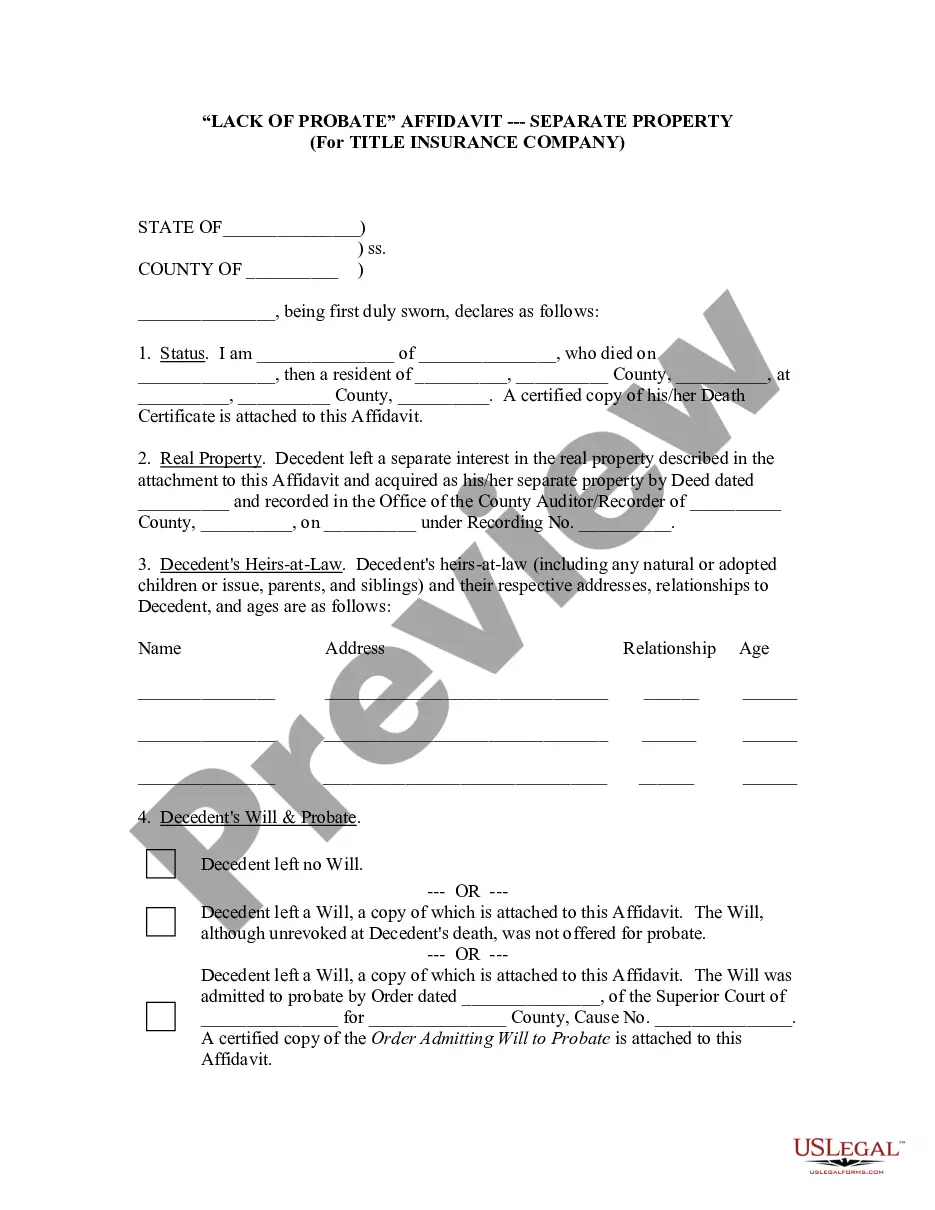
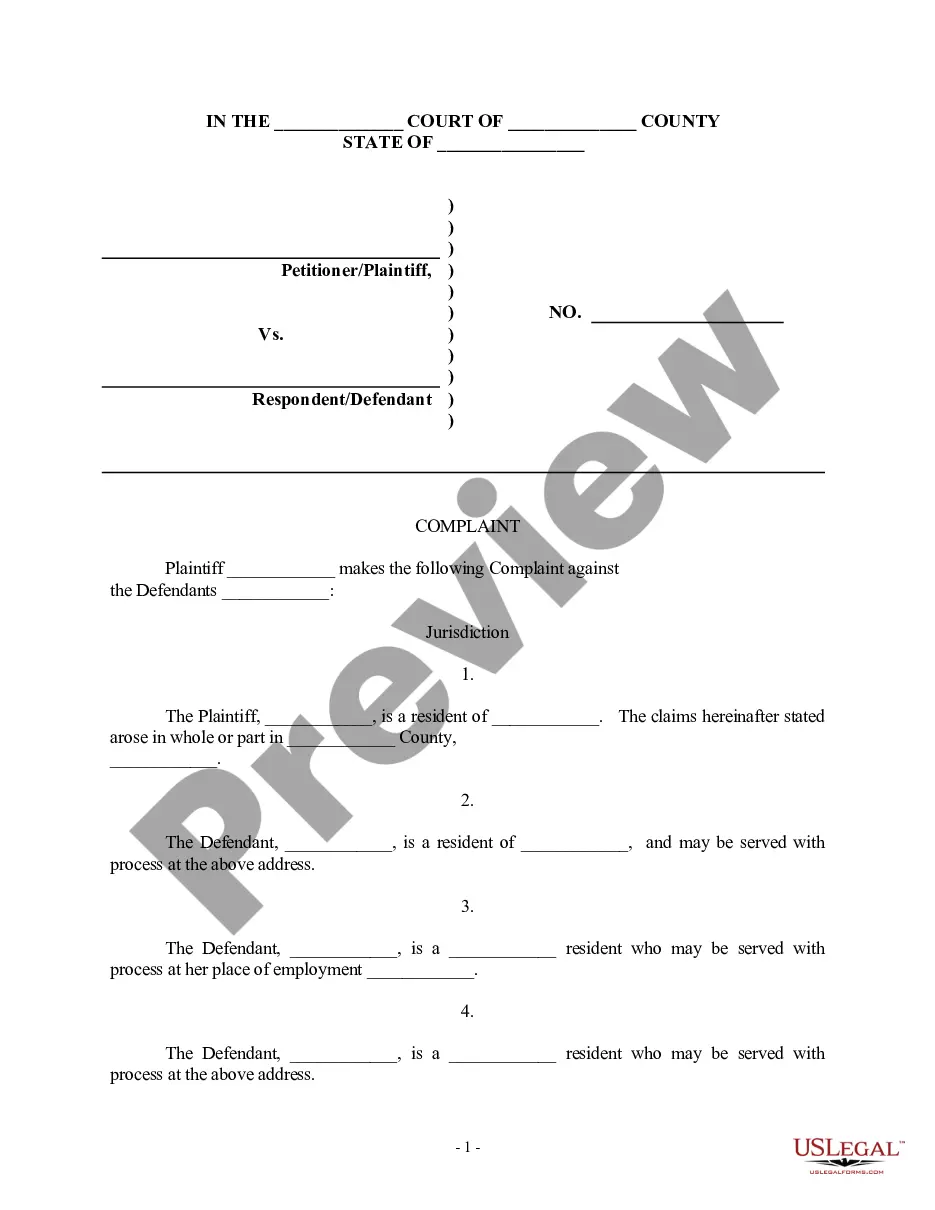
Tennessee Complaint to Contest Will
336 downloads
Description
Free preview
Get your form ready online
Our built-in tools help you complete, sign, share, and store your documents in one place.
Built-in online Word editor
Make edits, fill in missing information, and update formatting in US Legal Forms—just like you would in MS Word.
Export easily
Download a copy, print it, send it by email, or mail it via USPS—whatever works best for your next step.
E-sign your document
Sign and collect signatures with our SignNow integration. Send to multiple recipients, set reminders, and more. Go Premium to unlock E-Sign.
Notarize online 24/7
If this form requires notarization, complete it online through a secure video call—no need to meet a notary in person or wait for an appointment.
Store your document securely
We protect your documents and personal data by following strict security and privacy standards.
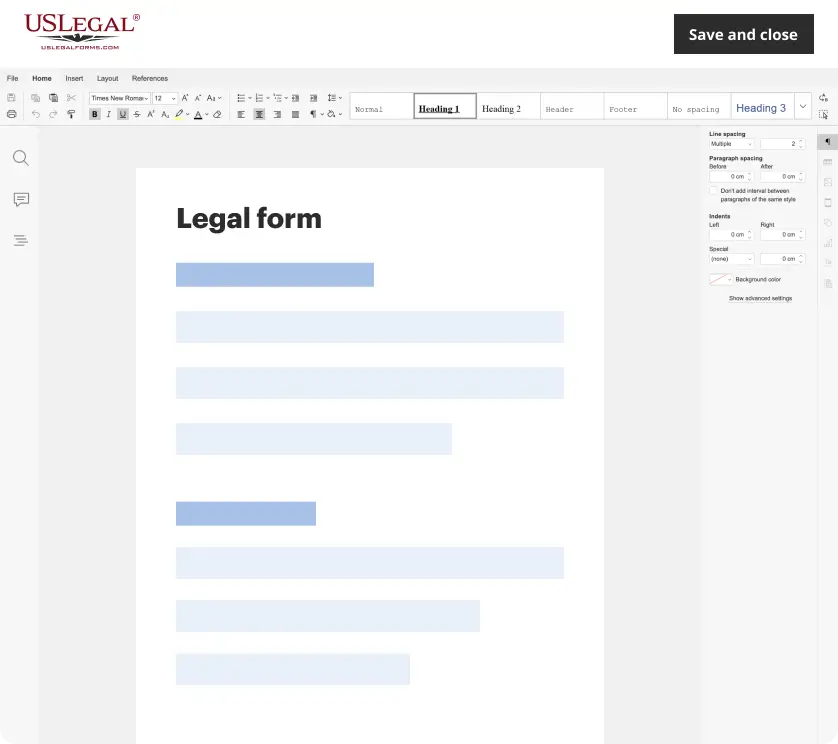
Make edits, fill in missing information, and update formatting in US Legal Forms—just like you would in MS Word.
Download a copy, print it, send it by email, or mail it via USPS—whatever works best for your next step.
Sign and collect signatures with our SignNow integration. Send to multiple recipients, set reminders, and more. Go Premium to unlock E-Sign.

If this form requires notarization, complete it online through a secure video call—no need to meet a notary in person or wait for an appointment.
We protect your documents and personal data by following strict security and privacy standards.
Looking for another form?
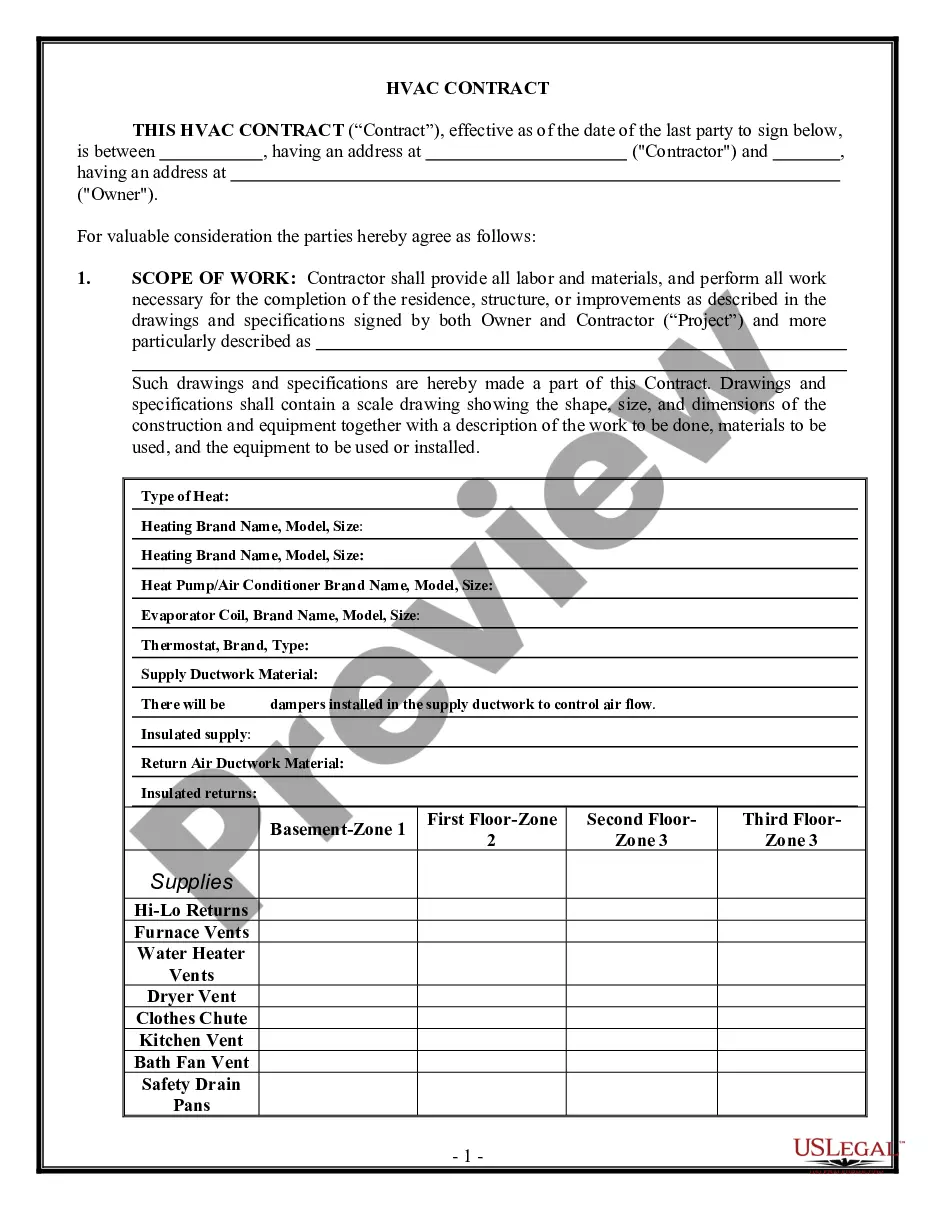
How to fill out Complaint To Contest Will?
You might spend time online trying to locate the legal document template that meets the federal and state requirements you need.
US Legal Forms provides thousands of legal templates that can be examined by professionals.
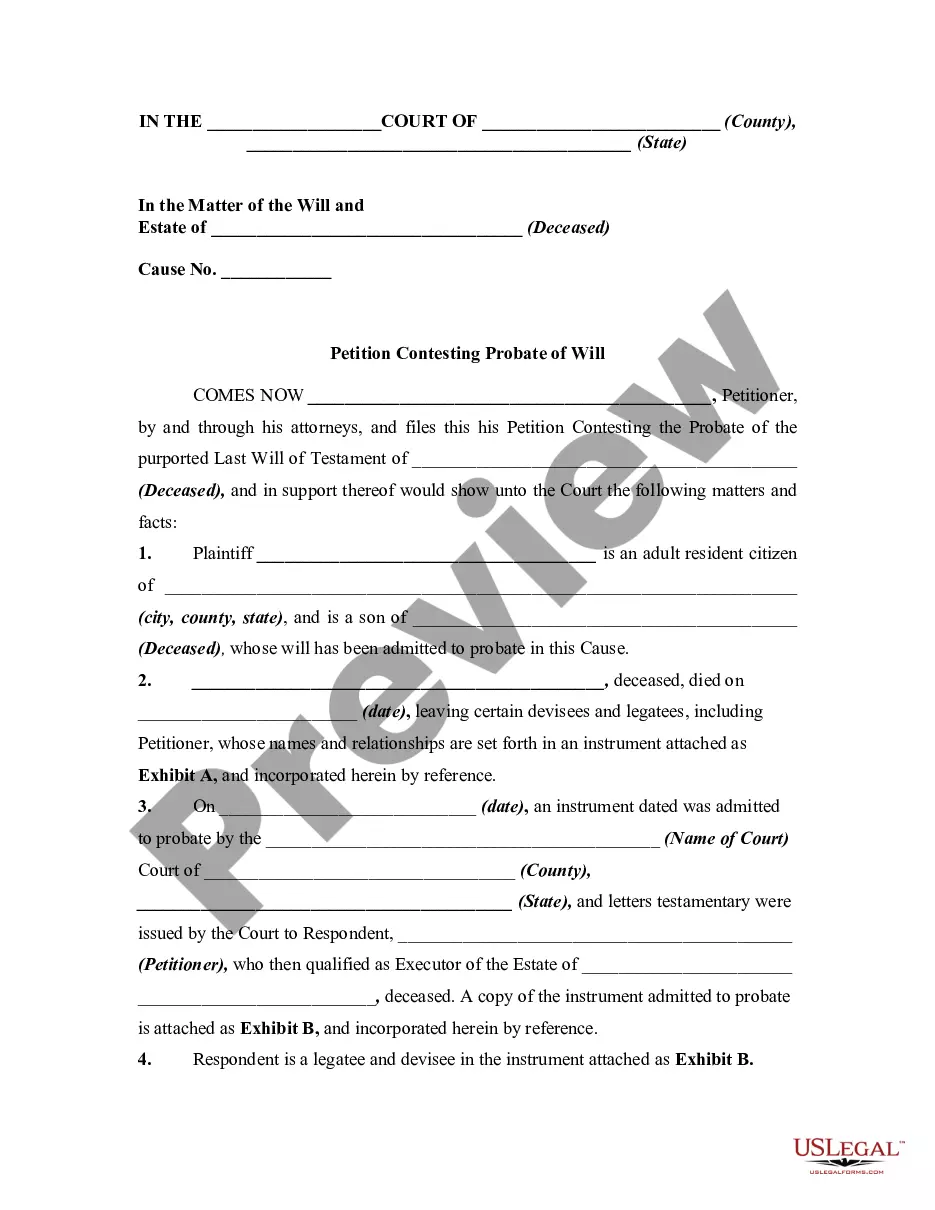
It is easy to obtain or print the Tennessee Complaint to Contest Will from their service.
If available, utilize the Review button to browse through the document template as well. If you wish to obtain another version of your template, use the Search field to locate the template that suits your needs and requirements. Once you have found the template you want, click Get now to proceed. Choose the pricing plan you need, enter your details, and register for your account on US Legal Forms. Complete the purchase. You can use your credit card or PayPal account to buy the legal document. Retrieve the template of your document and download it to your device. Make modifications to your document if required. You can complete, edit, sign, and print the Tennessee Complaint to Contest Will. Access and print thousands of document templates using the US Legal Forms website, which offers the largest collection of legal templates. Utilize professional and state-specific templates to address your business or personal needs.
- If you already have a US Legal Forms account, you can sign in and click on the Obtain button.
- Then, you can complete, modify, print, or sign the Tennessee Complaint to Contest Will.
- Every legal document template you receive is yours indefinitely.
- To get another copy of the purchased form, visit the My documents section and click on the appropriate button.
- If you are using the US Legal Forms website for the first time, follow the simple instructions below.
- First, ensure you have selected the correct document template for the county or area of your choice.
- Review the form summary to confirm you have chosen the right template.
Form popularity
FAQ
In terrorem clauses, sometimes called no-contest or forfeiture clauses, are used in wills to keep beneficiaries from contesting the will by either completely disinheriting them from any share, or reducing their share to a nominal amount.
An interested party who wants to challenge a Will must have a valid legal reason to do so. The grounds for challenging a Will can include: The Will does not comply with the state's legal requirements by, for example, not having enough witnesses or having a witness that was also a beneficiary. Ambiguous provisions exist.
Include a No Contest Clause in the Will Another strategy to avoid a Will contest includes a ?no-contest? or ?in terrorem? clause in your Will. A typical ?no-contest? clause states that if an heir challenges your Will and loses, then he or she gets nothing.
Incorrect execution of the will: Wills in Tennessee must be in writing, signed by the individual making the will (the ?testator?), and witnessed and signed by two witnesses. If a will was incorrectly executed, a court may invalidate it.
In most cases, wills are final and absolute. However, wills can be contested by people or parties who believe they would have been entitled to a share of the deceased person's estate provided that they have grounds to do so. In Tennessee, most wills are contested on two grounds: competence and undue influence.
In Tennessee, only some individuals can contest a will. These people include those who would have been entitled to a share of the deceased's estate; or someone who will stand to receive something in the deceased's will. For those who have the legal standing to challenge a will, they must prove the will is invalid.