Tennessee Non-Disturbance and Attornment Agreement
Overview of this form
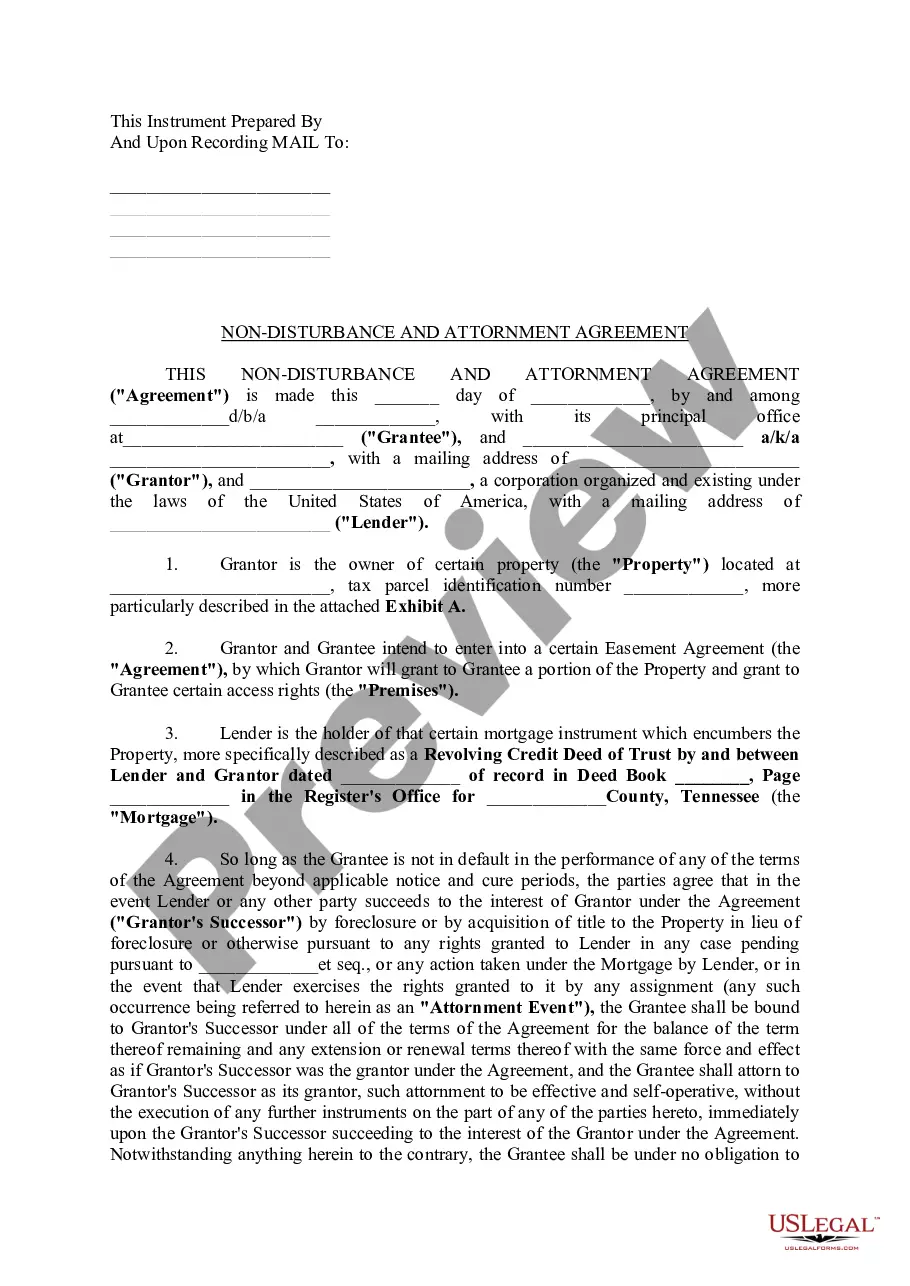
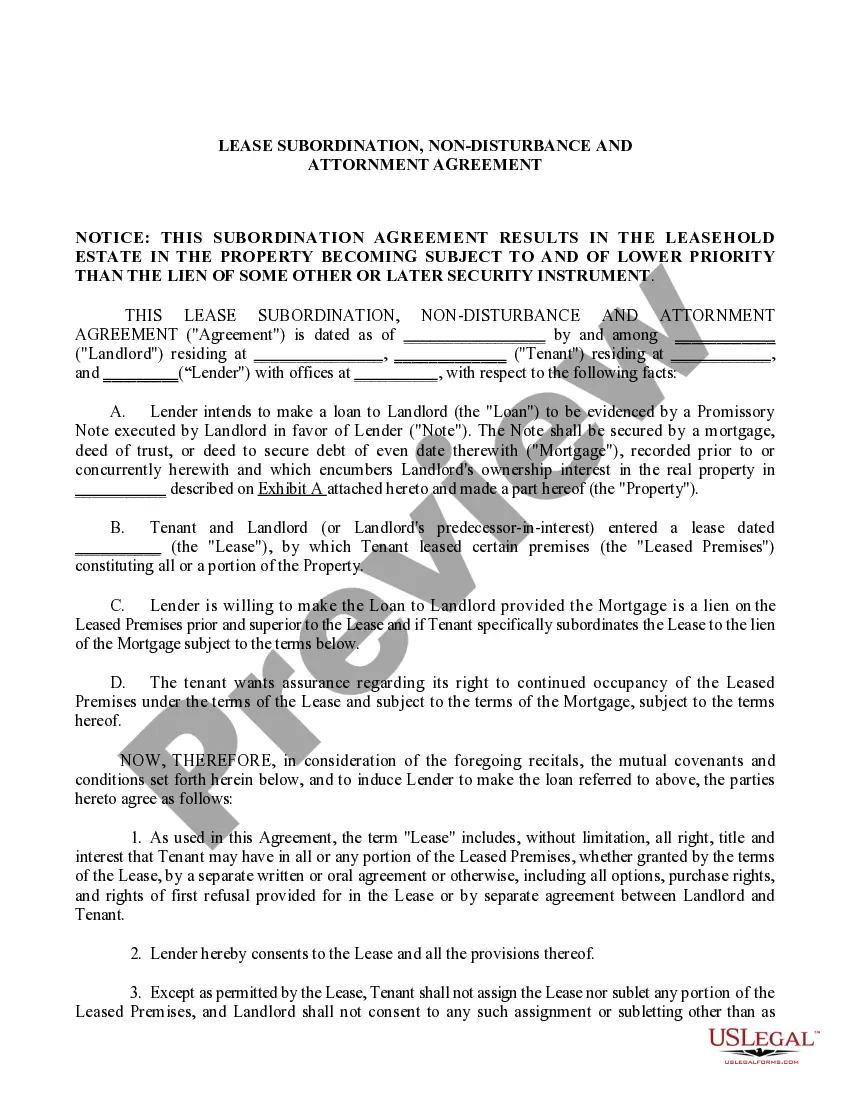
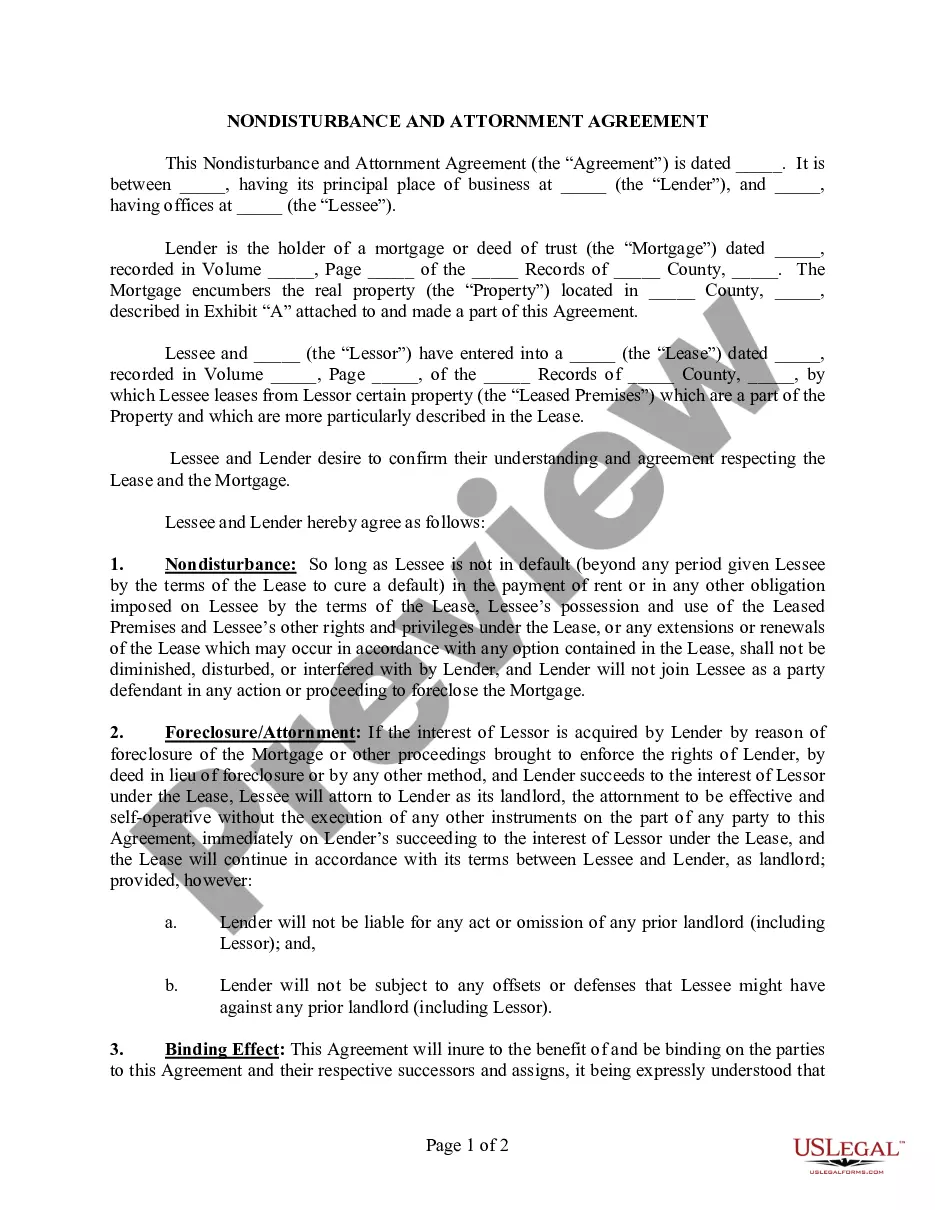
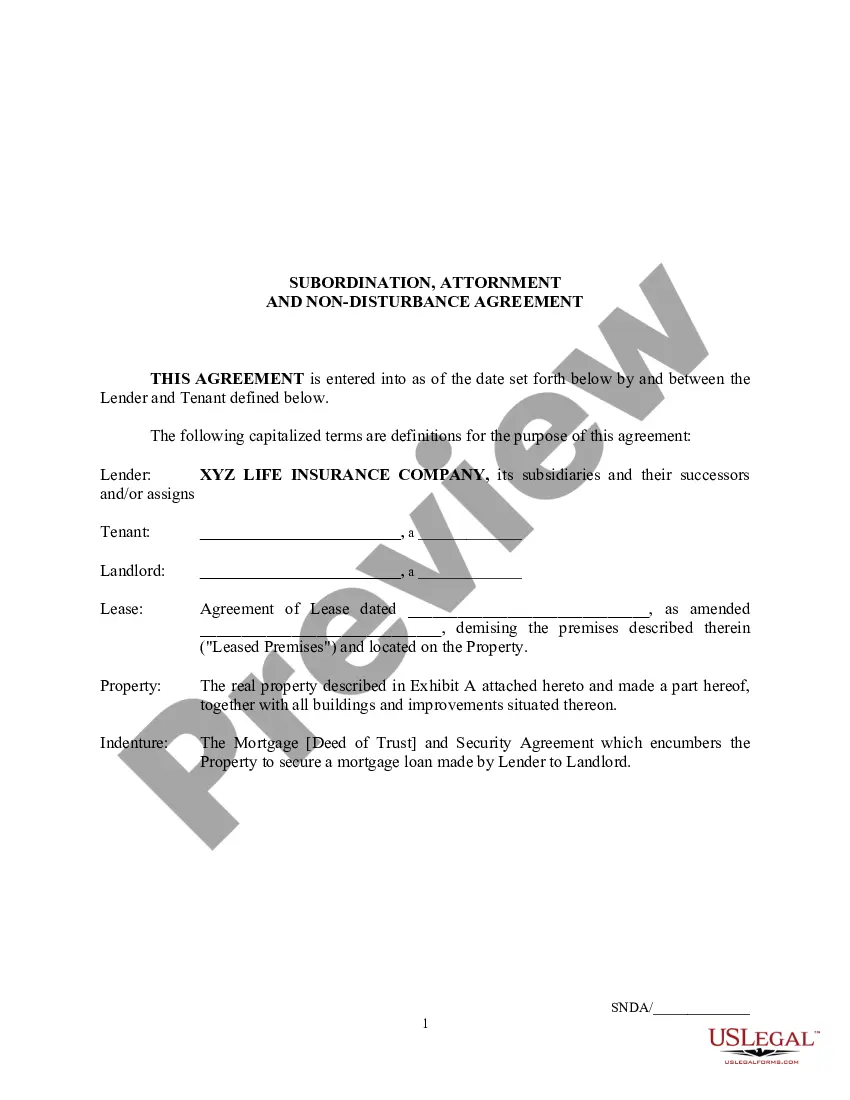
The Non-Disturbance and Attornment Agreement is a legal document that ensures the rights of a tenant (Grantee) are protected in the event of changes in ownership of the property due to a mortgage foreclosure. This form establishes that the tenant can continue occupying the property under the terms of the original agreement, even if the property is taken over by the lender or a new owner. Unlike other real estate agreements, this specific agreement focuses on the relationships between the property owner, the tenant, and the lender, securing tenant rights and clarifying expectations during ownership transitions.
What’s included in this form
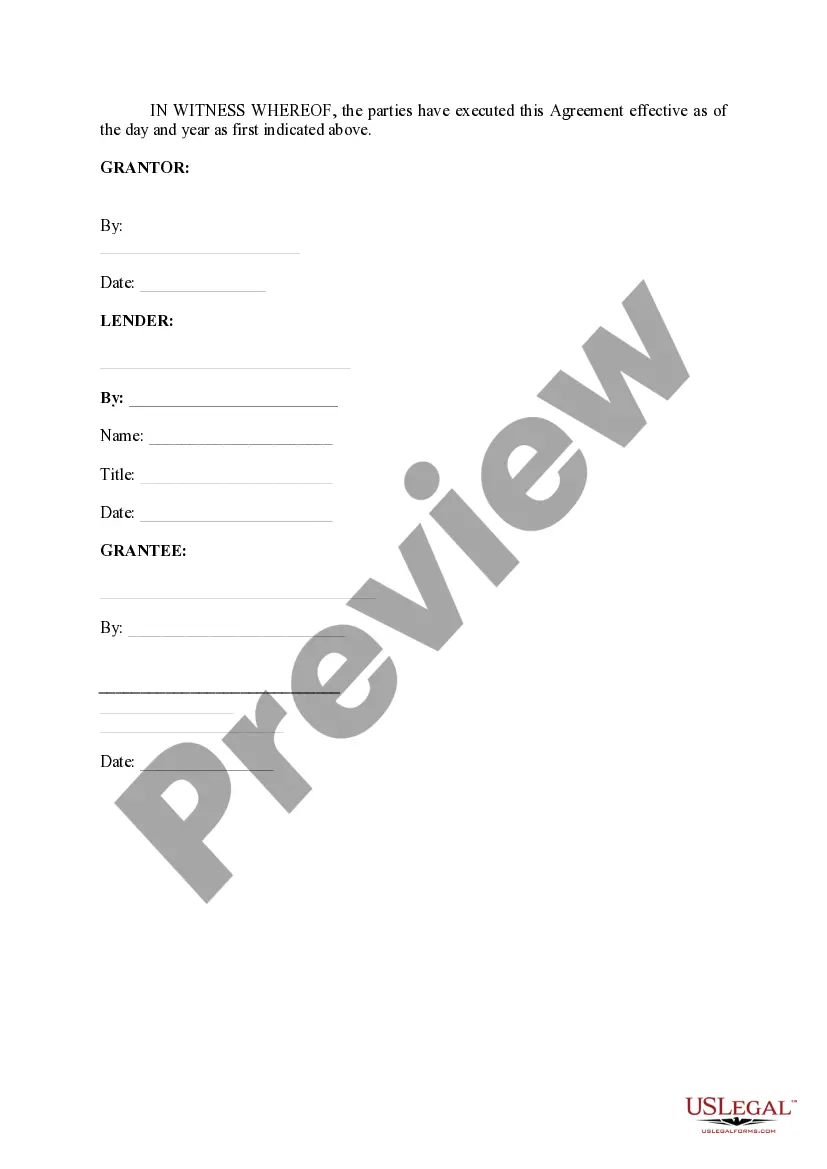
- Identification of the parties involved: Grantor (property owner), Grantee (tenant), and Lender (mortgage holder).
- Property description, including location and tax parcel identification number.
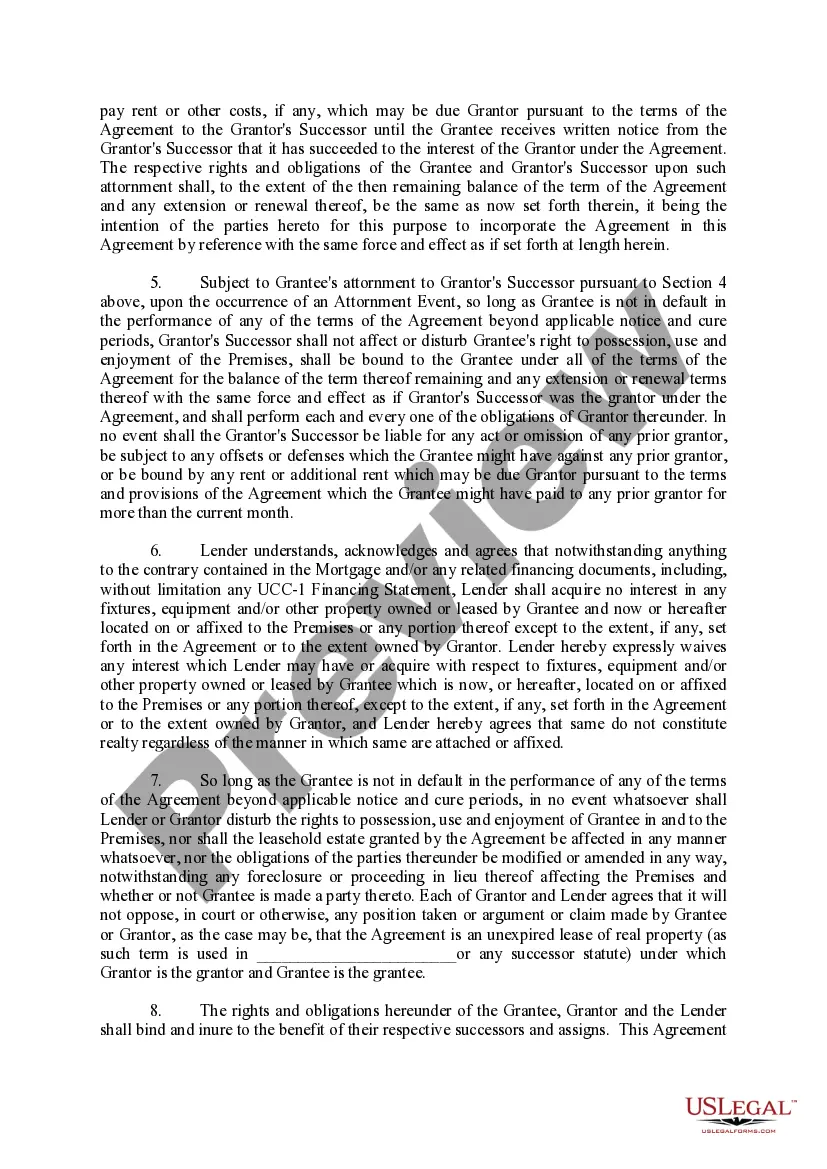
- Details outlining the conditions under which the tenant's rights are maintained in case of an Attornment Event.
- Understanding of the obligations of the Grantor's Successor in regard to the original agreement.
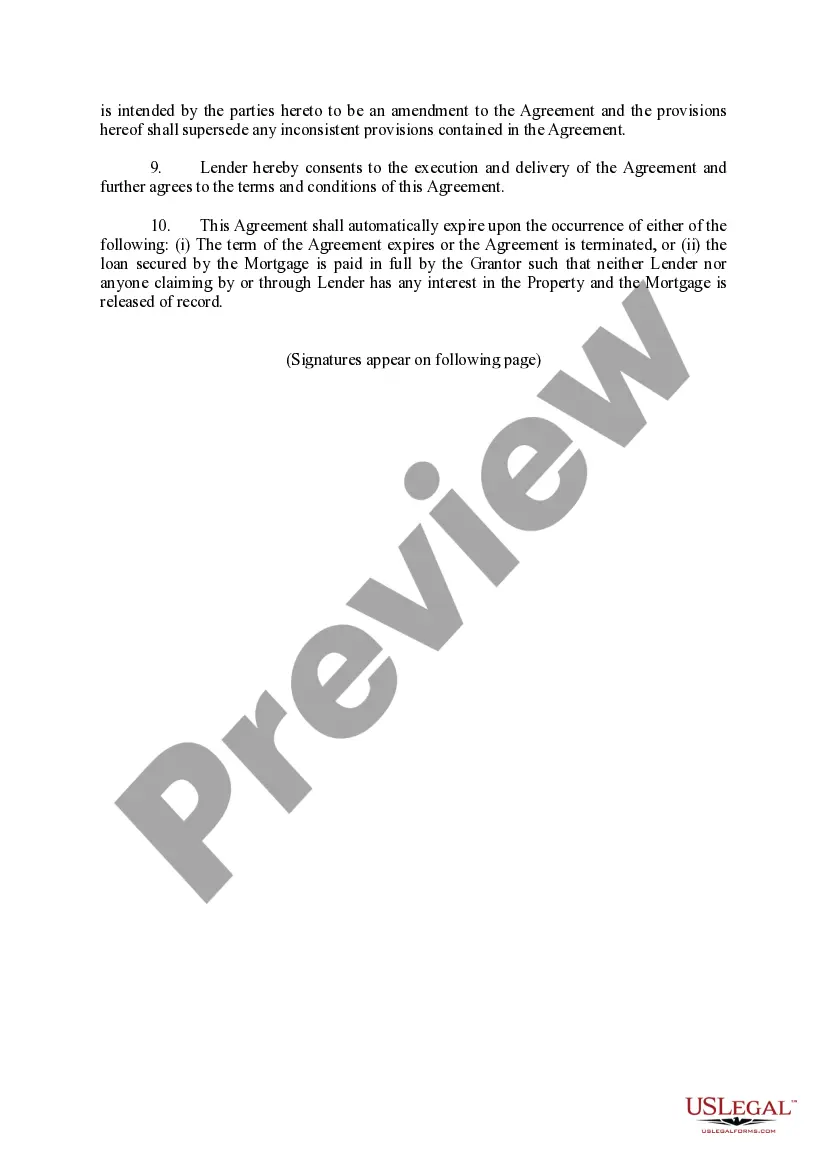
- Conditions for termination of the agreement.
When to use this form
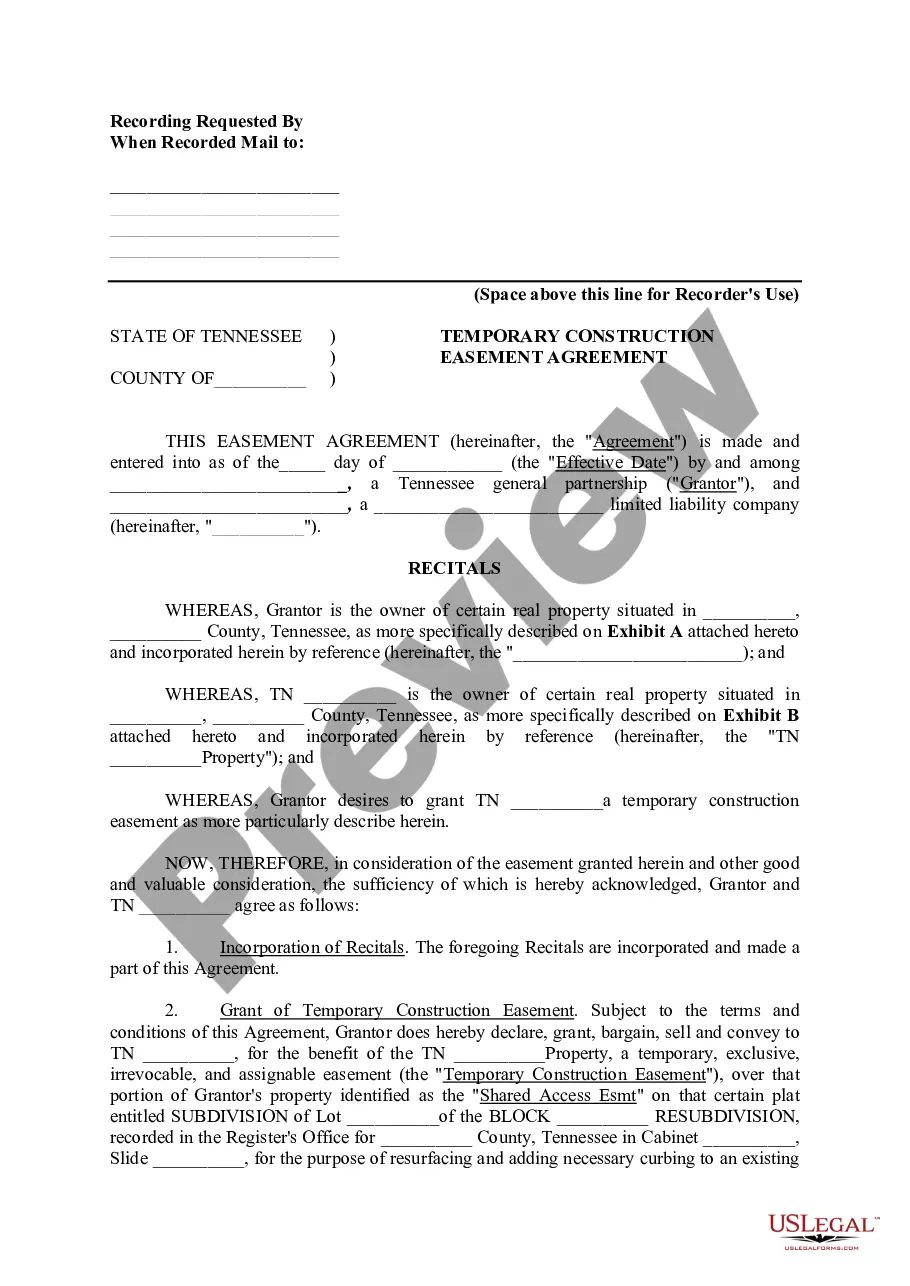
This agreement is typically used in real estate scenarios where a property owner enters into an Easement Agreement with a tenant while a mortgage encumbers the property. It is essential to establish the rights of the tenant, ensuring they can continue to use the property even if the lender takes possession due to a default on the mortgage. This form is crucial in protecting tenantsâ interests during foreclosure or property ownership changes.
Who needs this form
- Property owners (Grantors) who are entering into an Easement Agreement.
- Tenants (Grantees) who occupy or intend to occupy the property under such agreements.
- Lenders who hold the mortgage on the property and wish to clarify the rights and responsibilities of tenants in the event of a foreclosure.
Instructions for completing this form
- Identify all parties involved by entering their full legal names and addresses at the beginning of the document.
- Specify the property details, including the address and tax parcel identification number.
- Outline the terms of the original Easement Agreement to be referenced in the attornment provisions.
- Ensure all necessary dates are entered, including the date of the agreement and relevant dates for signatures.
- Gather required signatures from all parties and have the document notarized to validate the agreements.
Does this document require notarization?
Yes, this form must be notarized to be legally valid. US Legal Forms provides integrated online notarization services to facilitate this process, allowing users to have documents notarized through secure video calls at any time without needing to travel.
Get your form ready online
Our built-in tools help you complete, sign, share, and store your documents in one place.
Make edits, fill in missing information, and update formatting in US Legal Forms—just like you would in MS Word.
Download a copy, print it, send it by email, or mail it via USPS—whatever works best for your next step.
Sign and collect signatures with our SignNow integration. Send to multiple recipients, set reminders, and more. Go Premium to unlock E-Sign.
If this form requires notarization, complete it online through a secure video call—no need to meet a notary in person or wait for an appointment.
We protect your documents and personal data by following strict security and privacy standards.

Make edits, fill in missing information, and update formatting in US Legal Forms—just like you would in MS Word.

Download a copy, print it, send it by email, or mail it via USPS—whatever works best for your next step.

Sign and collect signatures with our SignNow integration. Send to multiple recipients, set reminders, and more. Go Premium to unlock E-Sign.

If this form requires notarization, complete it online through a secure video call—no need to meet a notary in person or wait for an appointment.

We protect your documents and personal data by following strict security and privacy standards.
Avoid these common issues
- Failing to accurately identify the parties involved can lead to disputes.
- Omitting specific property details, which may cause issues with enforceability.
- Not adequately detailing the terms of the Easement Agreement may result in misunderstandings.
- Forgetting to sign or notarize the document, which is necessary for legal validity.
Advantages of online completion
- Convenience of downloading and completing the form at your own pace.
- Editability to customize the form to fit specific agreements and requirements.
- Access to reliable legal templates drafted by licensed professionals, ensuring compliance with legal standards.
- Ability to store and manage forms digitally for future reference or updates.
Looking for another form?
Form popularity
FAQ
SNDA stands for Subordination, Non-disturbance and Attornment Agreement. You need an SNDA if you are a commercial tenant, a commercial landlord, or a lender taking a mortgage against commercial property. If you're a tenant, the SNDA protects you from being evicted if your landlord stops paying its mortgage loan.
An SNDA is an agreement among a commercial mortgage lender, its borrower (in its capacity as landlord), and the borrower's tenant, establishing the parties' legal rights should the landlord (borrower) default on the loan and the lender forecloses and becomes landlord to the tenant.
1 An attornment occurs when the title to an immovable property is transferred from the hands of one lessor to another. In such cases, the existing lessor will usually send a letter of attornment to the lessee notifying him of such sale and request him to make all further lease payments directly to the new lessor.
A nondisturbance clause is a provision in a mortgage contract that ensures that a rental agreement between the tenant and the landlord will continue under any circumstances.A nondisturbance clause ensures that a tenant will not be evicted in the event that the landlord goes bankrupt.
SNDA stands for Subordination, Non-disturbance and Attornment Agreement. You need an SNDA if you are a commercial tenant, a commercial landlord, or a lender taking a mortgage against commercial property. If you're a tenant, the SNDA protects you from being evicted if your landlord stops paying its mortgage loan.
An SNDA is an agreement entered into between a tenant and the lender of the landlord (and, ideally, the landlord) to establish the relationship between the tenant and lender (who would not otherwise have a direct relationship) and provide relative priorities between them.
In the case of commercial property changing hands, an attornment clause in a subordination, non-disturbance, and attornment (SNDA) agreement requires the tenant to acknowledge a new owner as their landlord and to continue paying rent regardless of whether the property changes hands through a normal sale or a
A lender typically wants to have an SNDA because of its subordination clause if, in the absence of such an agreement, the lease would be prior to the mortgage.Therefore, if a mortgage is senior to a lease, the foreclosure of the mortgage will terminate the lease unless there is an agreement that provides otherwise.
To transfer homage and service from one feudal lord to another. 2. to agree to continue as tenant under a new landlord. Derived forms. attornment (at02c8tornment)