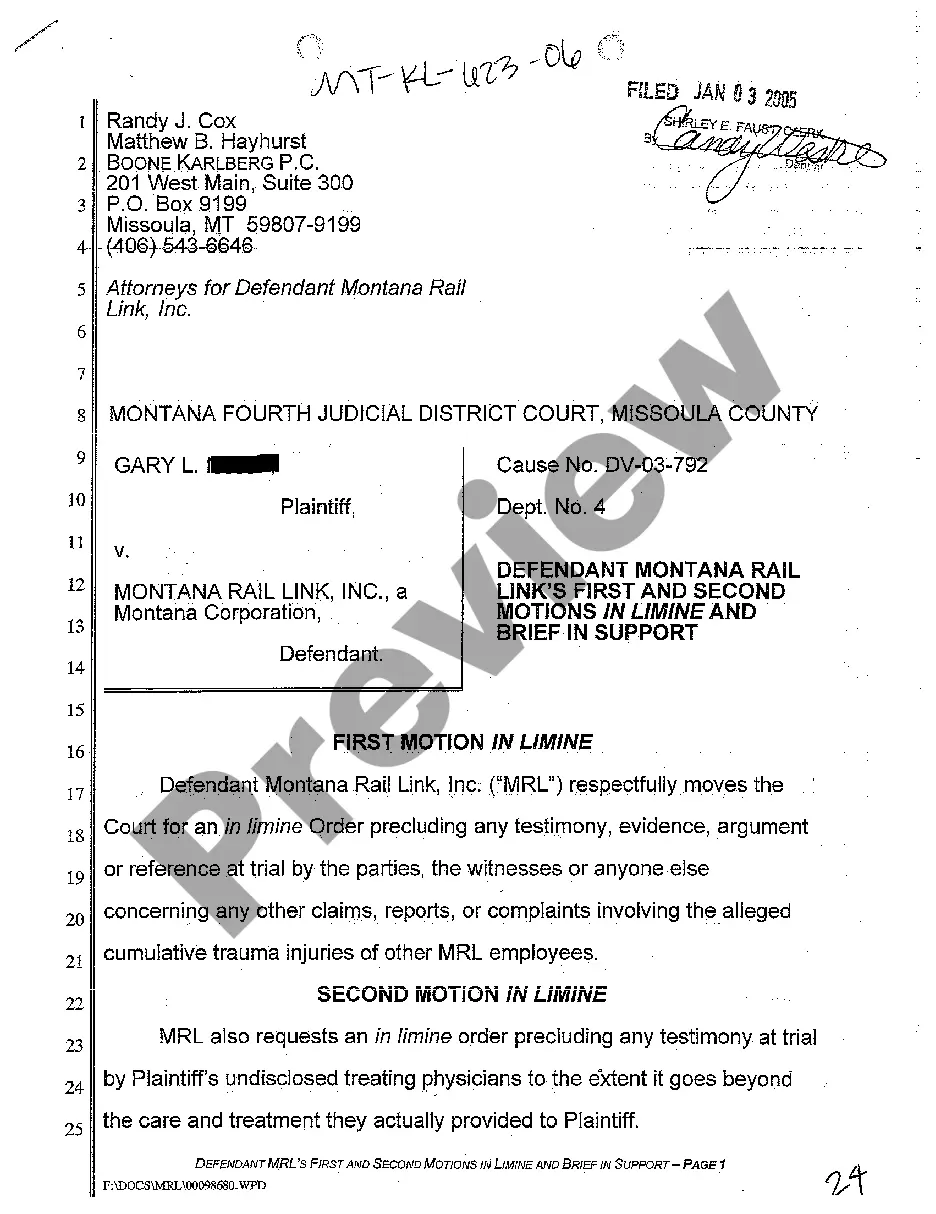
Montana Defendant's First and Second Motions in Limine and Brief in Support
Description
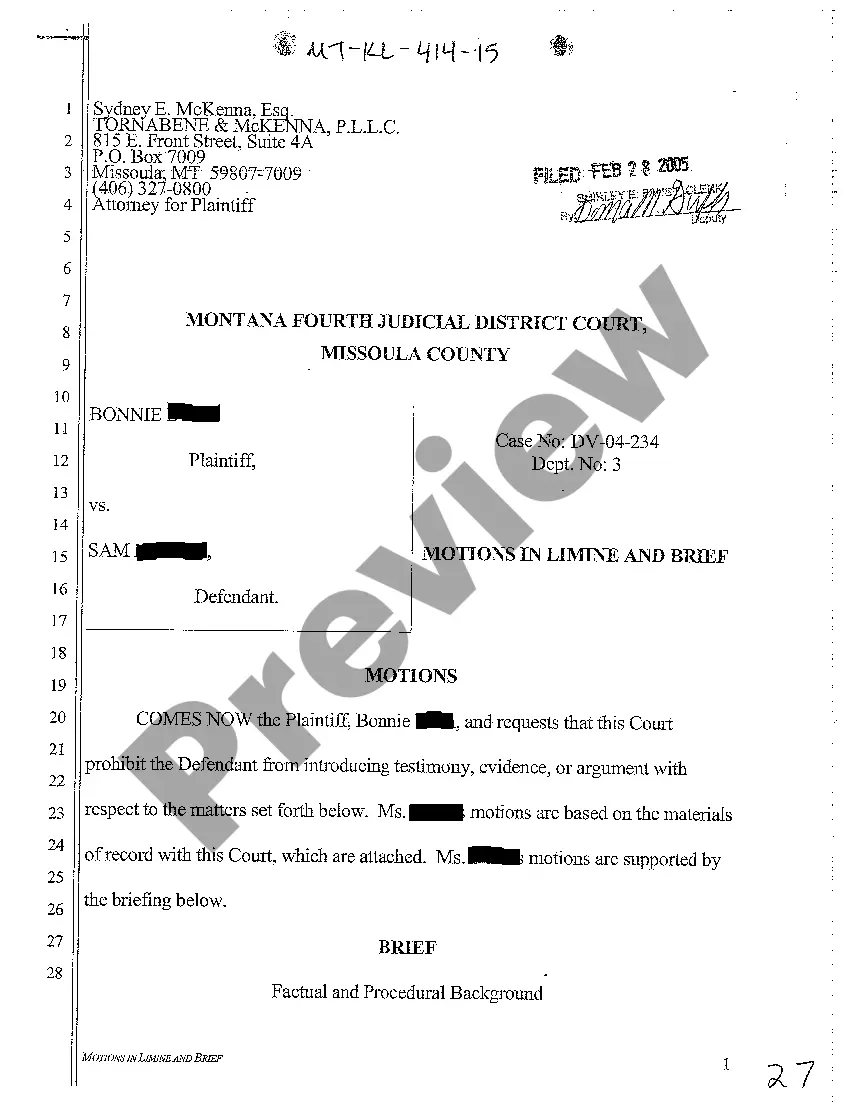
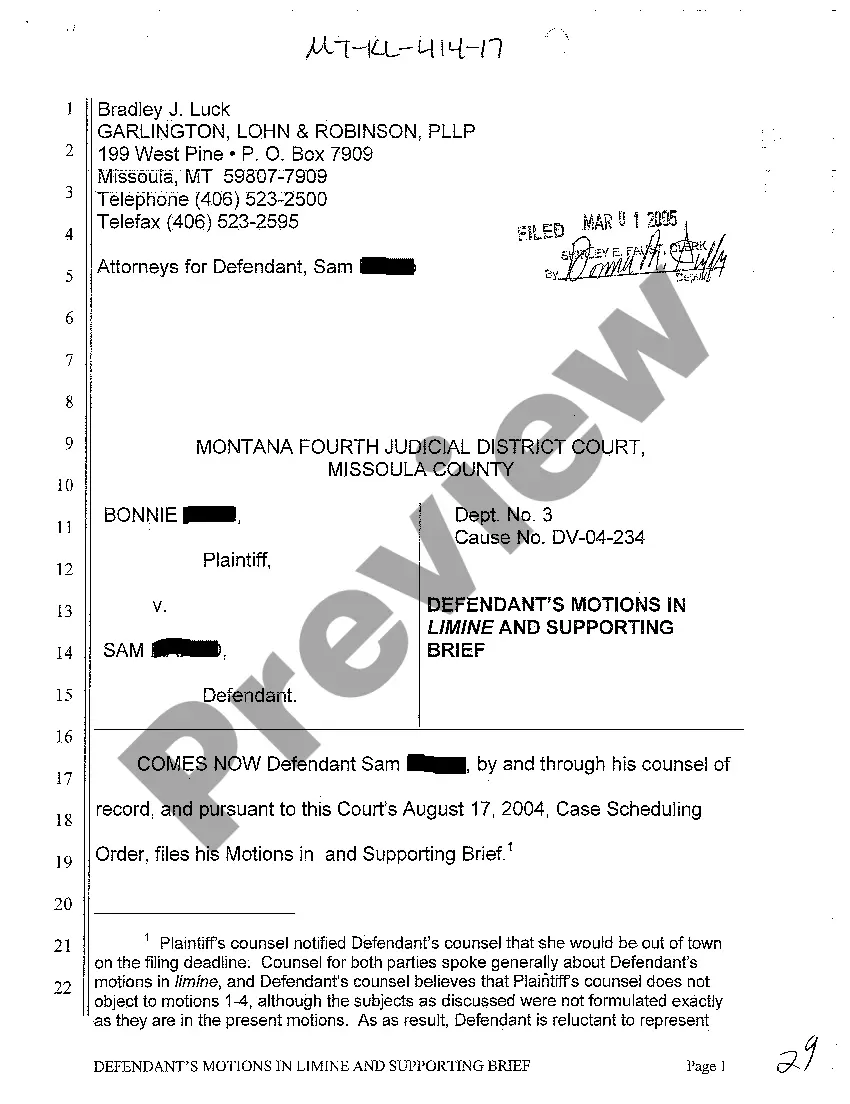
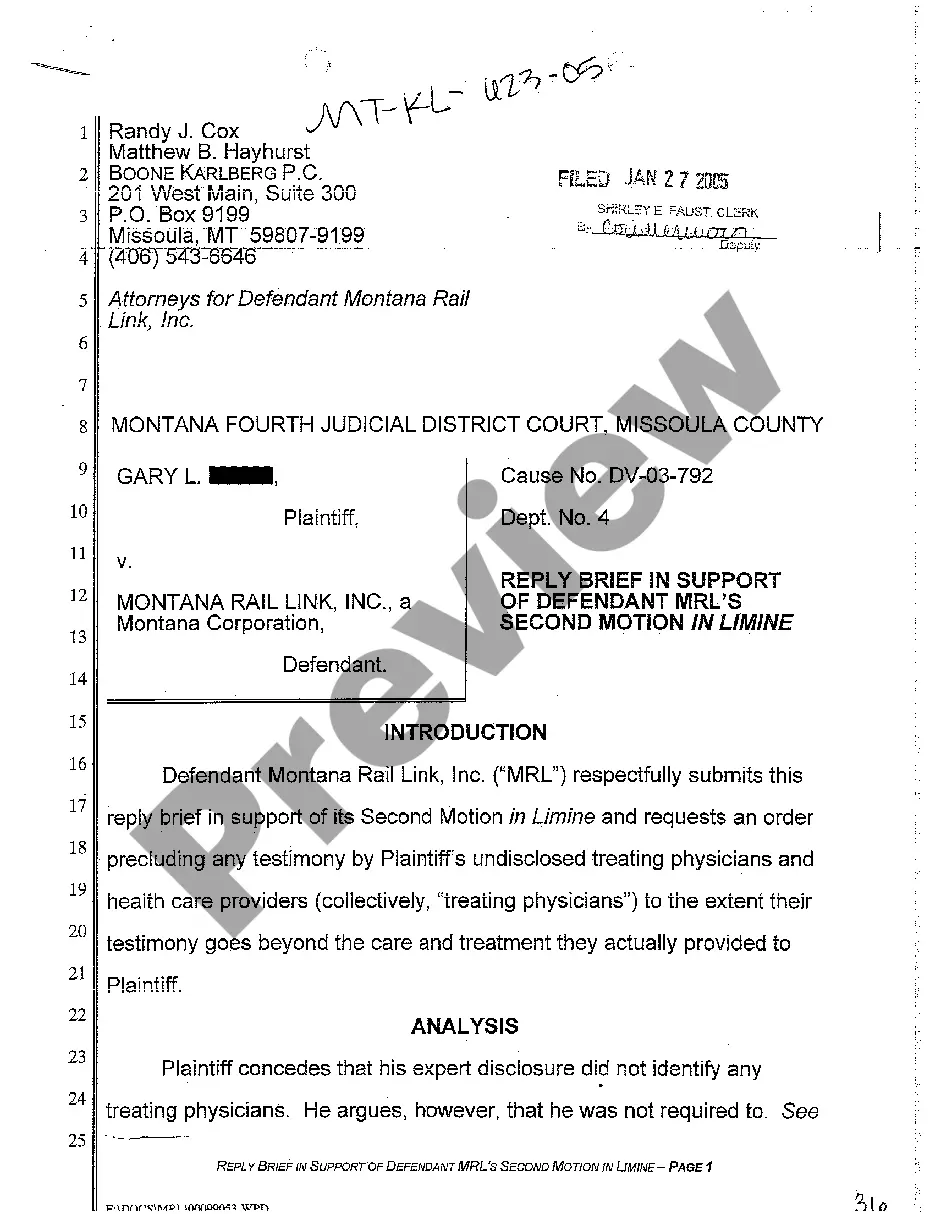
How to fill out Montana Defendant's First And Second Motions In Limine And Brief In Support?
Obtain a printable Montana Defendant's Initial and Secondary Motions in Limine and Brief in Support with just a few clicks from the most extensive collection of legal electronic documents.
Locate, download and print professionally prepared and authenticated samples on the US Legal Forms site. US Legal Forms has remained the leading supplier of affordable legal and tax forms for US citizens and residents online since 1997.
After you have downloaded your Montana Defendant's Initial and Secondary Motions in Limine and Brief in Support, you can complete it in any online editor or print it out and fill it in by hand. Utilize US Legal Forms to gain access to 85,000 professionally drafted, state-specific documents.
- Users with a subscription must Log In to their US Legal Forms account, retrieve the Montana Defendant's Initial and Secondary Motions in Limine and Brief in Support, and find it saved in the My documents section.
- Individuals without a subscription should follow these steps.
- Ensure your form complies with your state's regulations.
- If available, examine the form’s description for additional information.
- If provided, preview the form to learn more details.
- Once you are assured the template fulfills your needs, click Buy Now.
- Establish a personal account.
- Select a plan.
- Make payment using PayPal or credit card.
- Download the template in Word or PDF format.
Form popularity
FAQ
A motion in limine is a motion filed by a party to a lawsuit which asks the court for an order or ruling limiting or preventing certain evidence from being presented by the other side at the trial of the case.
At the motion to suppress hearing, both parties have the opportunity to present evidence and arguments in support of or in opposition to the motion. Testimony is taken from: The arresting officer about how the evidence was obtained by the officeri.e., plain view, consent by the defendant. The defendant.
In the United States, a motion to suppress is a request made by a criminal defendant in advance of a criminal trial asking the court to exclude certain evidence from the trial.A motion to exclude evidence that is based on rules of evidence, in advance of the trial, is more commonly called a motion in limine.
A pretrial motion asking that certain evidence be found inadmissible, and that it not be referred to or offered at trial.
Stated in the most general terms, a proper motion in limine is an evidentiary motion that seeks a determination as to whether to exclude (or admit) evidence before it is offered at trial.
There is also authority for the proposition that if a motion in limine is denied, the party opposing the evidence can be the first to offer the objectionable evidence without waiving the merits of the evidentiary objection on appeal.
A motion in limine is a powerful weapon for advocates that can alter the entire makeup of the case. This type of motion is a pretrial request of the court to rule on the admissibility of a certain piece of evidence.
Whereas the motion in limine is based on the trial court's inherent discretion to exclude prejudicial evidence, the motion to suppress is based on the court's duty to exclude evidence which has been im- properly Qbtained.