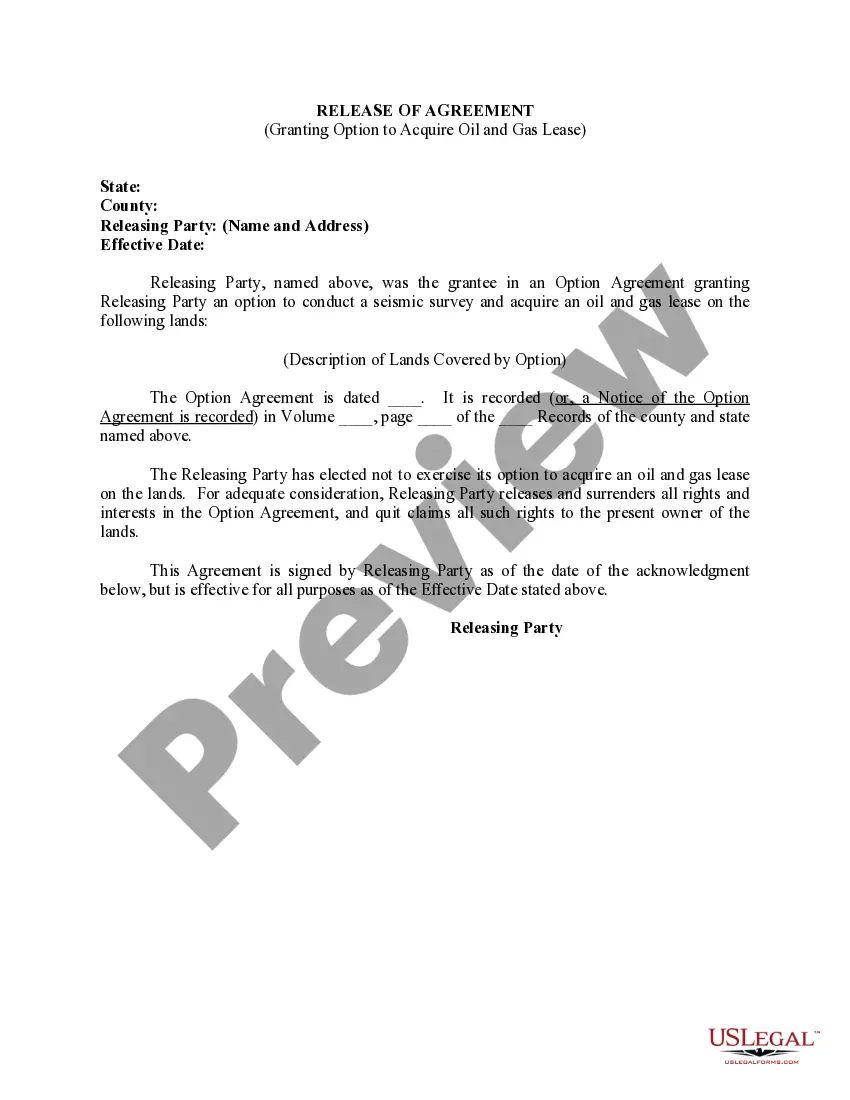
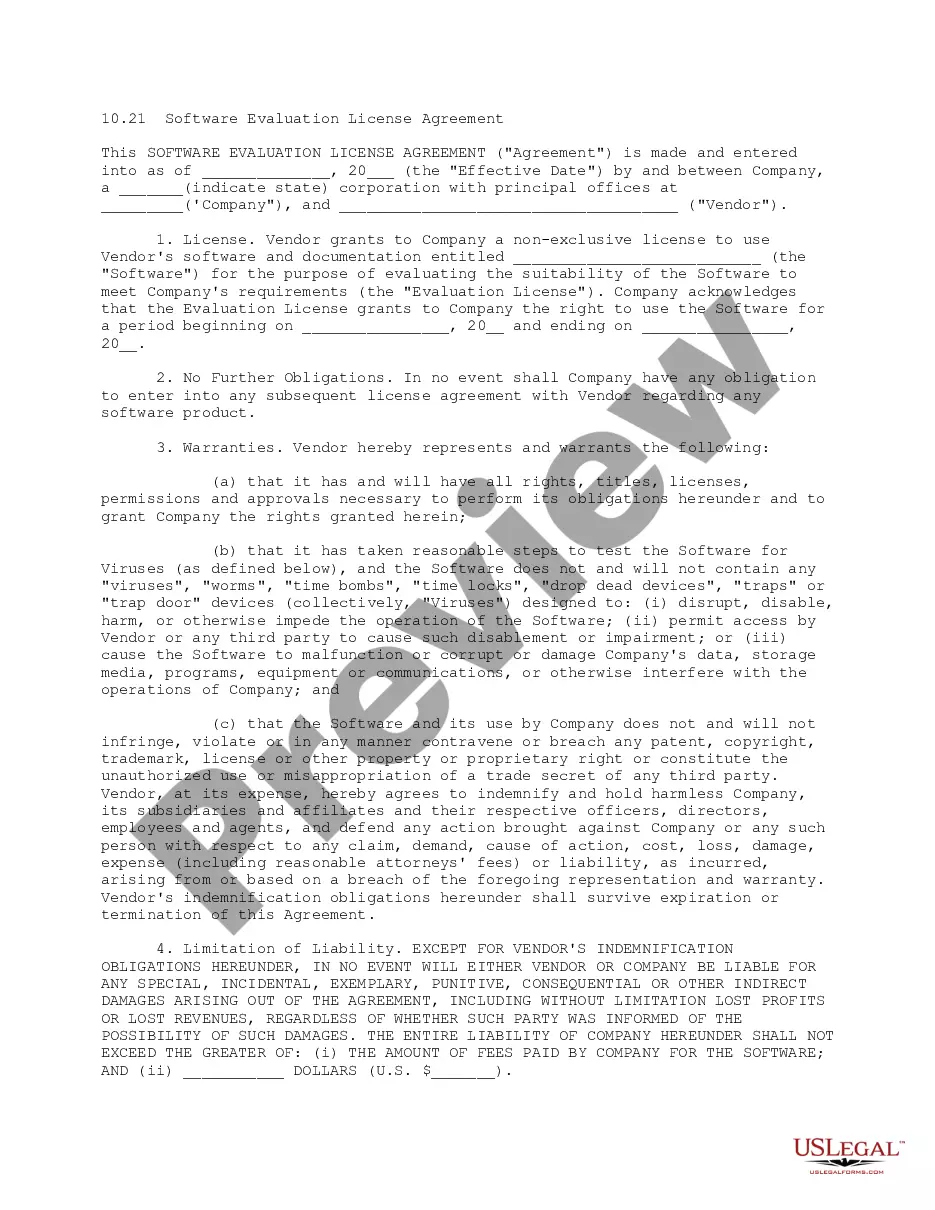
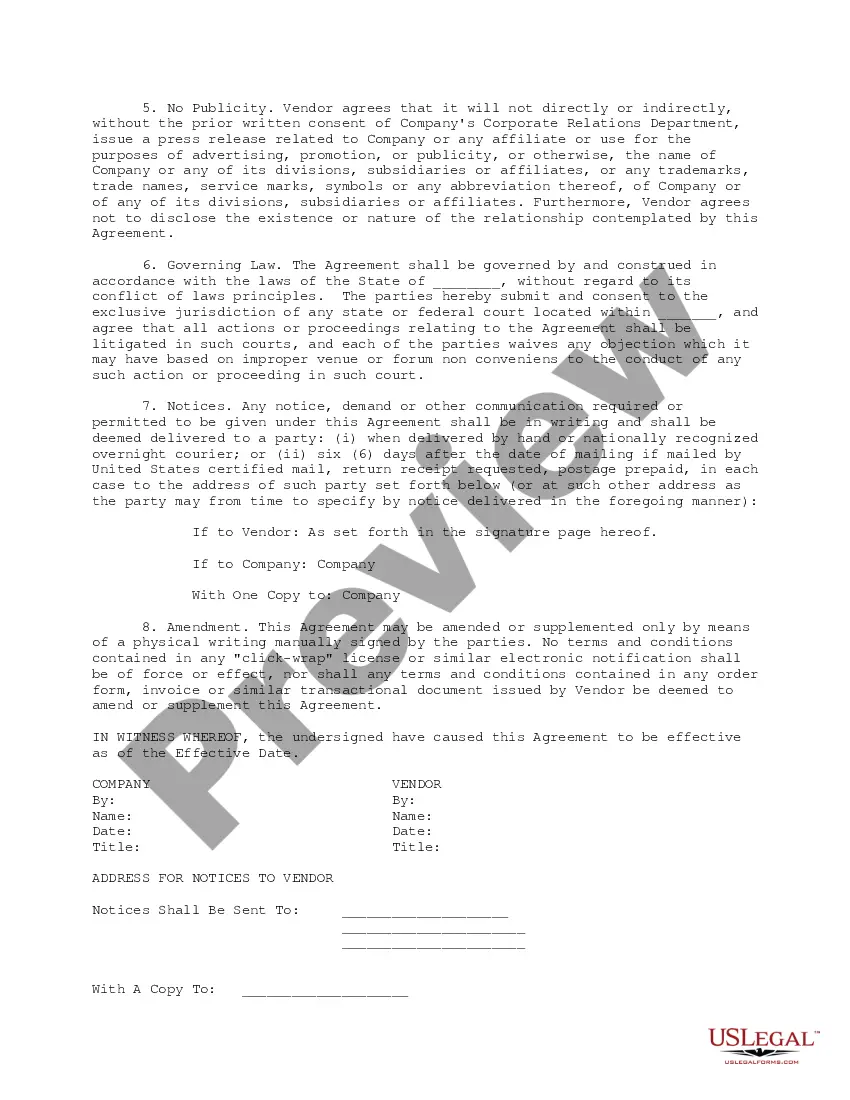
This form is a Software Evaluation License Agreement that grants to a company a non-exclusive license to use the vendor's software and documentation for the purpose of evaluating the suitability of the Software to meet company's requirements.
South Dakota Software Evaluation License Agreement
Instant download
Description
Free preview

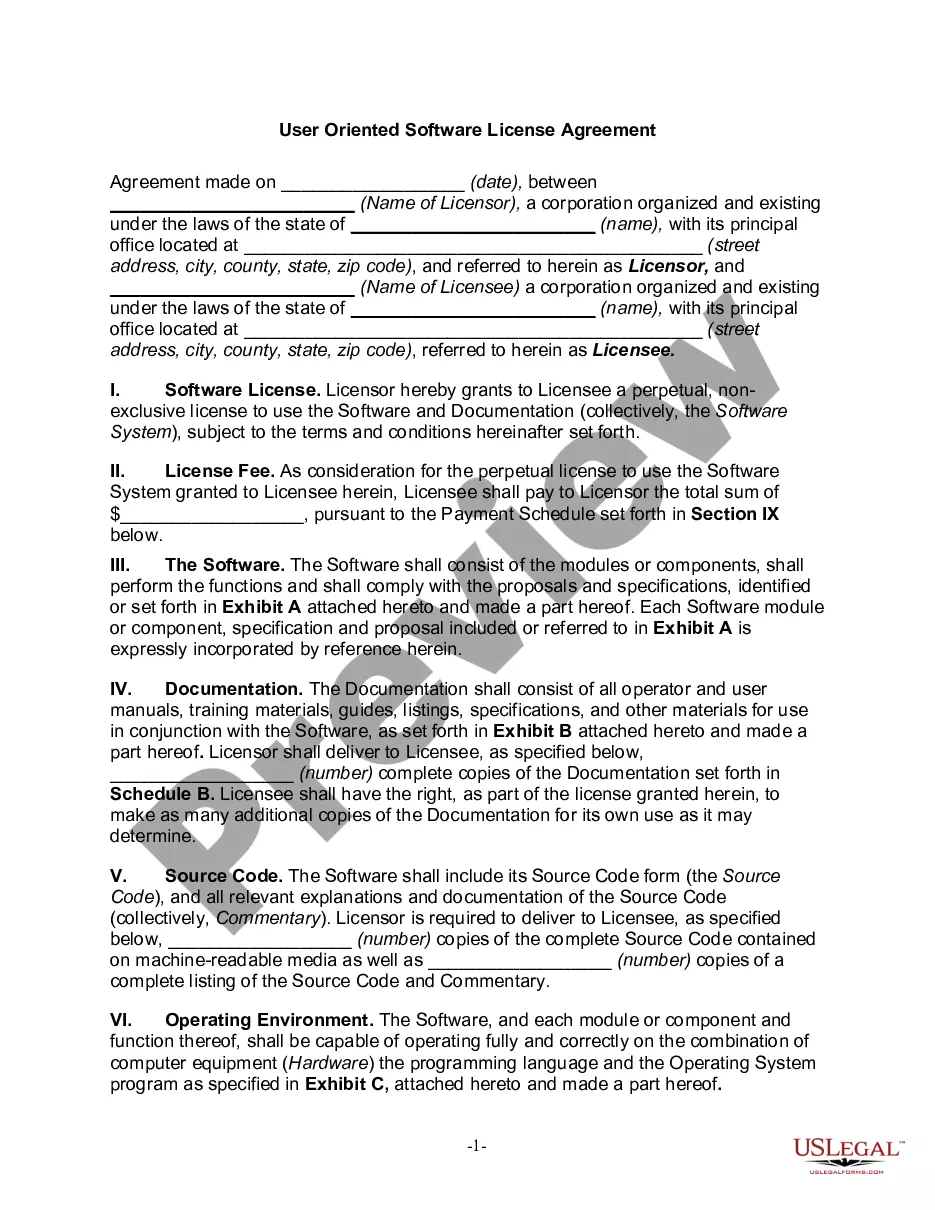
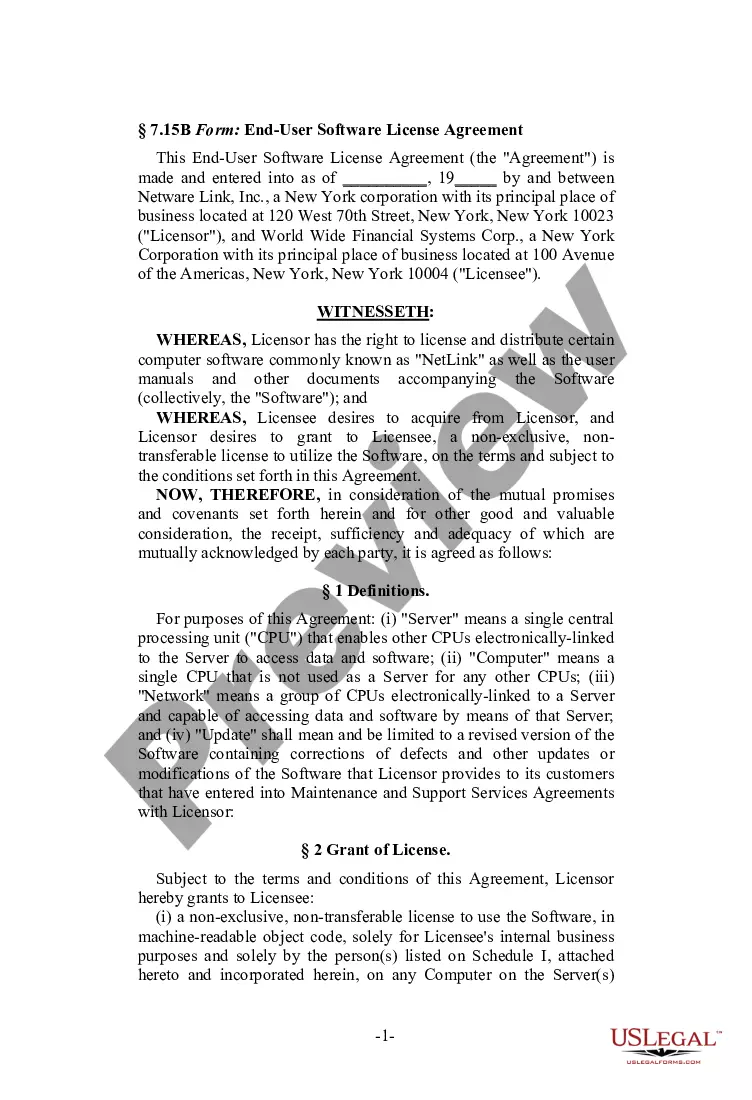
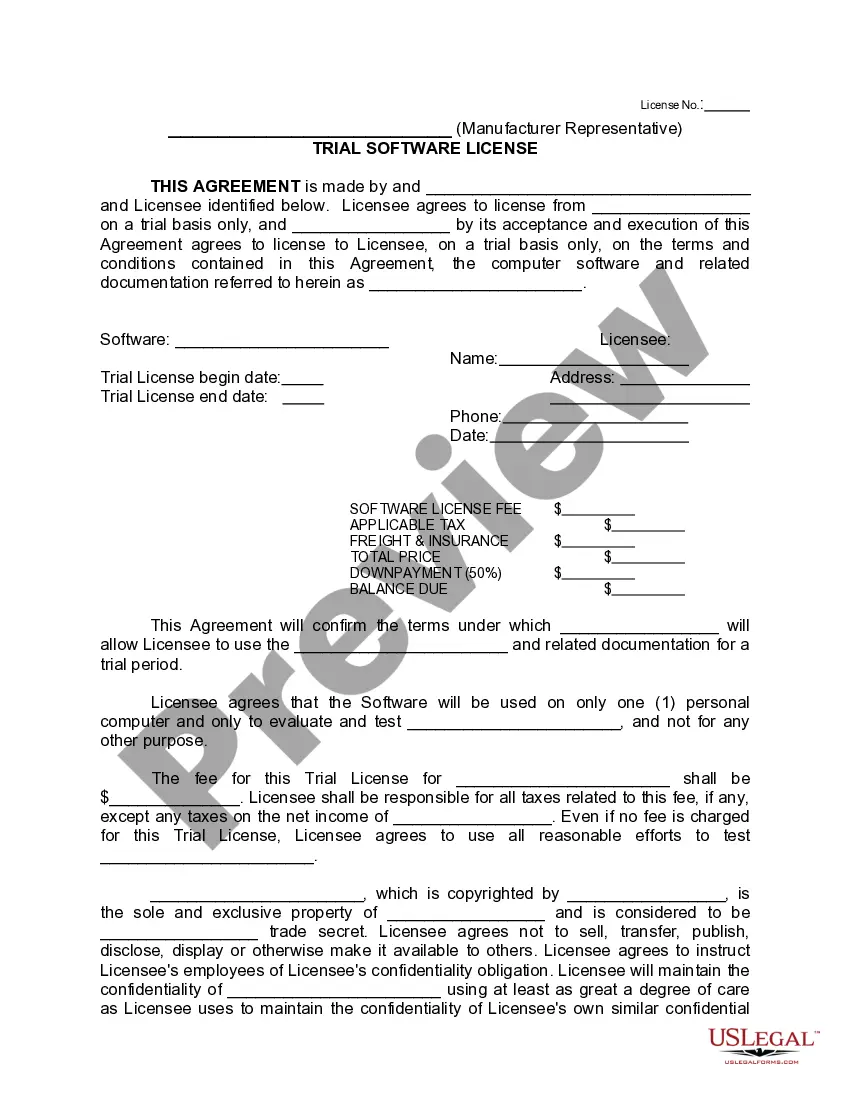
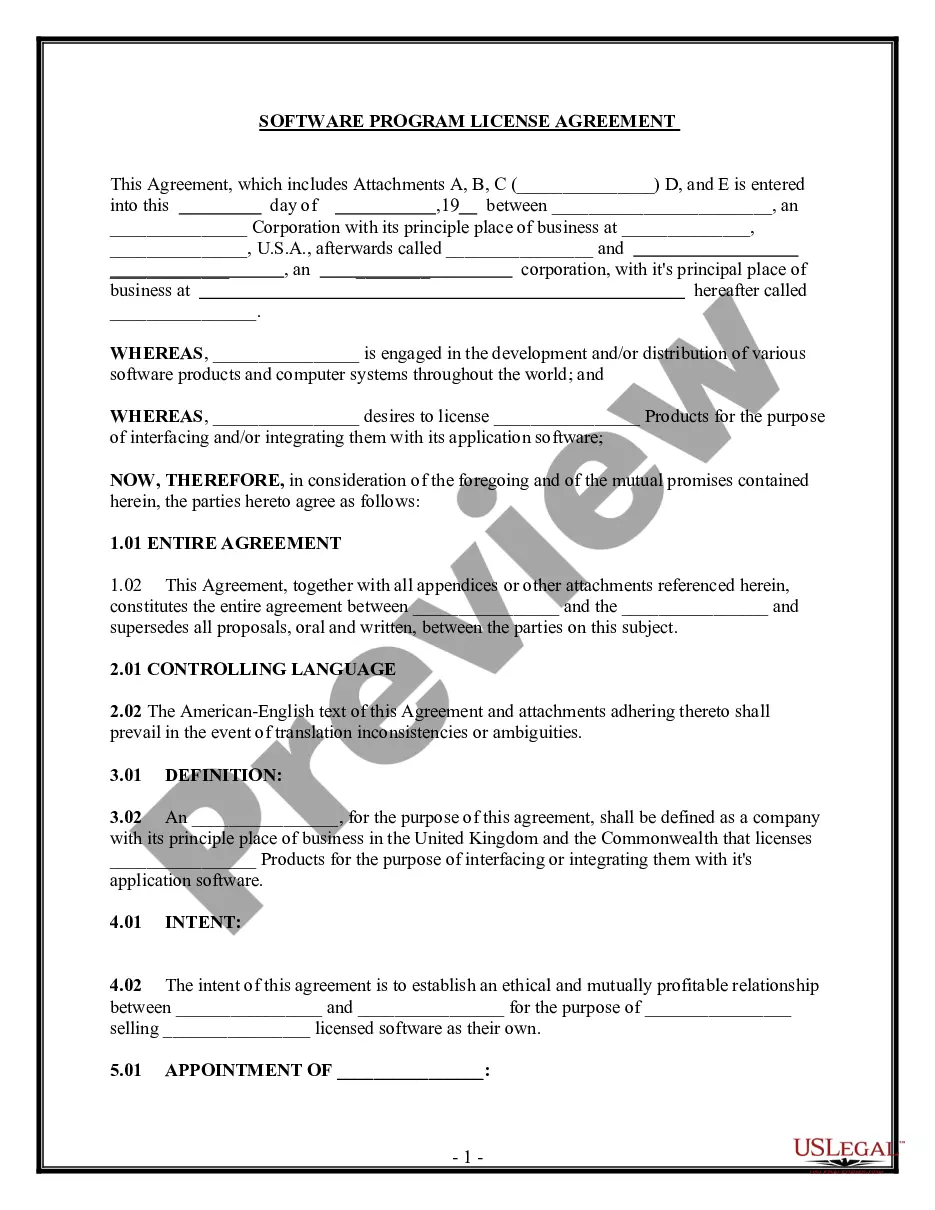
Get your form ready online
Our built-in tools help you complete, sign, share, and store your documents in one place.
Built-in online Word editor
Make edits, fill in missing information, and update formatting in US Legal Forms—just like you would in MS Word.
Export easily
Download a copy, print it, send it by email, or mail it via USPS—whatever works best for your next step.
E-sign your document
Sign and collect signatures with our SignNow integration. Send to multiple recipients, set reminders, and more. Go Premium to unlock E-Sign.
Notarize online 24/7
If this form requires notarization, complete it online through a secure video call—no need to meet a notary in person or wait for an appointment.
Store your document securely
We protect your documents and personal data by following strict security and privacy standards.

Make edits, fill in missing information, and update formatting in US Legal Forms—just like you would in MS Word.

Download a copy, print it, send it by email, or mail it via USPS—whatever works best for your next step.

Sign and collect signatures with our SignNow integration. Send to multiple recipients, set reminders, and more. Go Premium to unlock E-Sign.

If this form requires notarization, complete it online through a secure video call—no need to meet a notary in person or wait for an appointment.

We protect your documents and personal data by following strict security and privacy standards.
Looking for another form?
How to fill out Software Evaluation License Agreement?
If you wish to be thorough, download, or print legal document templates, utilize US Legal Forms, the most significant collection of legal forms, that can be located online.
Employ the site's straightforward and convenient search to obtain the documents you need.
Numerous templates for business and personal uses are categorized by groups and states, or keywords.
Step 4. Once you have found the form you need, click on the Buy now button. Choose the pricing plan you prefer and enter your details to register for an account.
Step 5. Complete the transaction. You can use your credit card or PayPal account to finalize the purchase.
- Utilize US Legal Forms to acquire the South Dakota Software Evaluation License Agreement in just a few clicks.
- If you are already a US Legal Forms user, Log In to your account and then click the Download button to obtain the South Dakota Software Evaluation License Agreement.
- You can also access forms you previously downloaded inside the My documents tab of your account.
- If you are using US Legal Forms for the first time, follow the instructions below.
- Step 1. Ensure you have selected the form for the correct city/state.
- Step 2. Use the Preview option to review the form's content. Don't forget to read the description.
- Step 3. If you are not satisfied with the form, use the Search field at the top of the screen to find other versions of the legal form template.
Form popularity
FAQ
The Sunshine law in South Dakota promotes transparency in government by ensuring that meetings and records of public bodies are accessible to the public. This law supports the public's right to know about the actions and decisions made by government officials. Understanding this law is essential when drafting contracts, such as the South Dakota Software Evaluation License Agreement, as it may influence how agreements are developed and disclosed. For comprehensive legal forms and guidance, consider using USLegalForms, which provides resources tailored for South Dakota.
In a South Dakota Software Evaluation License Agreement, several key clauses typically appear. These clauses often include licensing rights, limitations on use, confidentiality, and termination conditions. By clearly outlining the permissions granted to the user, these clauses help protect both the software creator and the user. Understanding these clauses is essential for ensuring compliance and making the most of your software evaluation.
The two main types of licensing agreements are exclusive and non-exclusive licenses. An exclusive license grants the user sole rights to the software, while a non-exclusive license allows multiple users access to the same software. Depending on your needs, you may find that a South Dakota Software Evaluation License Agreement offers the flexibility to choose the right option for your situation.
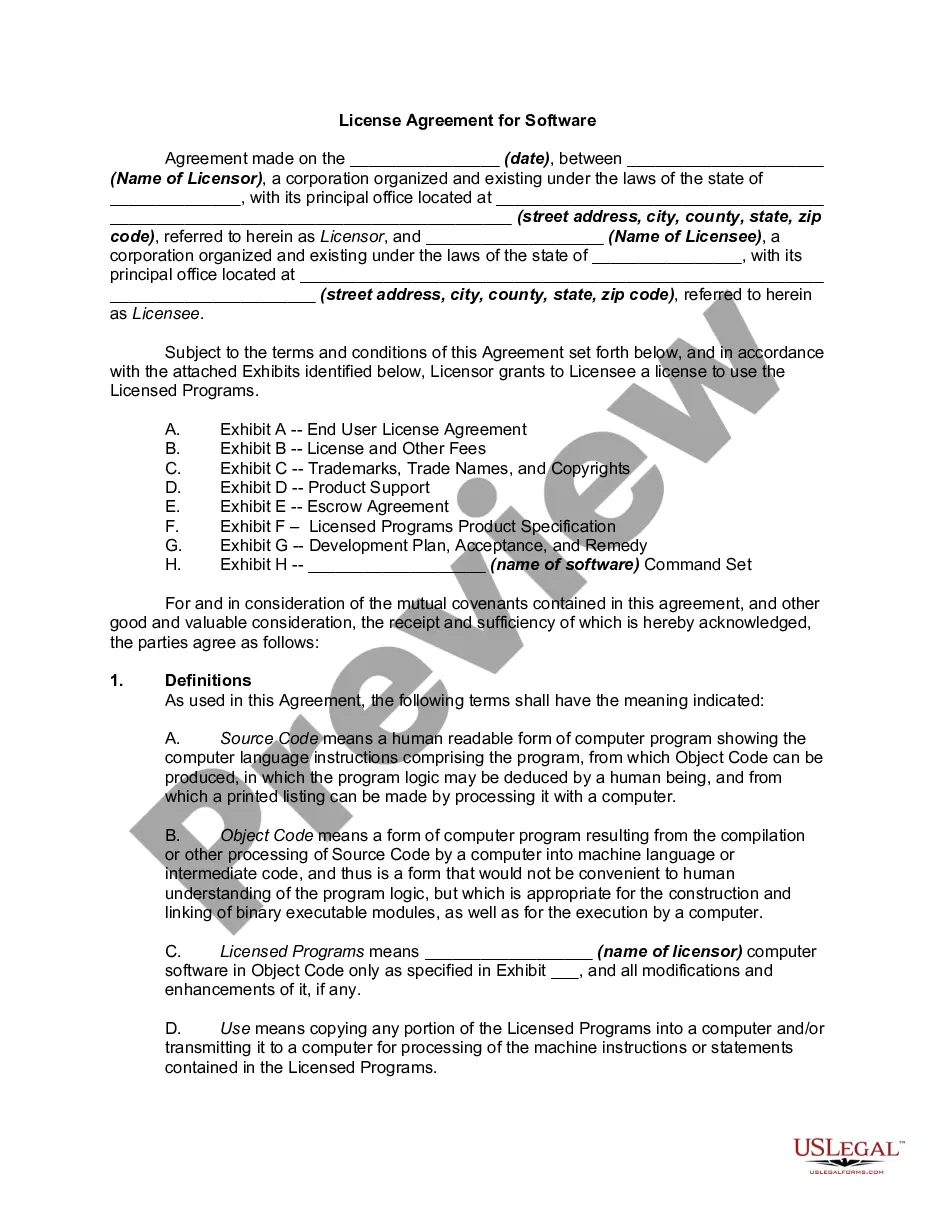
An evaluation license is a special permission granted to users to try software for a limited time without fully purchasing it. This license typically includes specific terms that outline how long you can use the software and what limitations apply. Understanding the terms of a South Dakota Software Evaluation License Agreement can help you maximize your evaluation period effectively.
Evaluation Agreement means the written agreement between Licensee and an End User that includes the Mandatory Terms and governs End User's evaluatory use, access to, or receipt of the Licensee Product, which will not, in any event permit the End User to use the product for longer than thirty (30) days without entering
A software license agreement should include the licensor's reservation of all its rights not specifically granted to the licensee and the licensee's acknowledgment of the licensor's ownership of the licensed software. Payment terms.
An agreement to evaluate off-the-shelf, unmodified software for a limited period and an option to enter into a definitive software license agreement, drafted with terms favorable to the licensor.
This agreement comes in the form of an Access Licence which legally grants the owner undertaking the work, access onto the neighbouring owner's land for a specified period of time subject to a number of considered conditions.
A software license is a legally binding agreement made between the owner or developer of a software program and the user, outlining how they can use and distribute the product.
Software licensing terms and conditions usually include fair use of the software, the limitations of liability, warranties and disclaimers. They also specify protections if the software or its use infringes on the intellectual property rights of others. Software licenses typically are proprietary, free or open source.