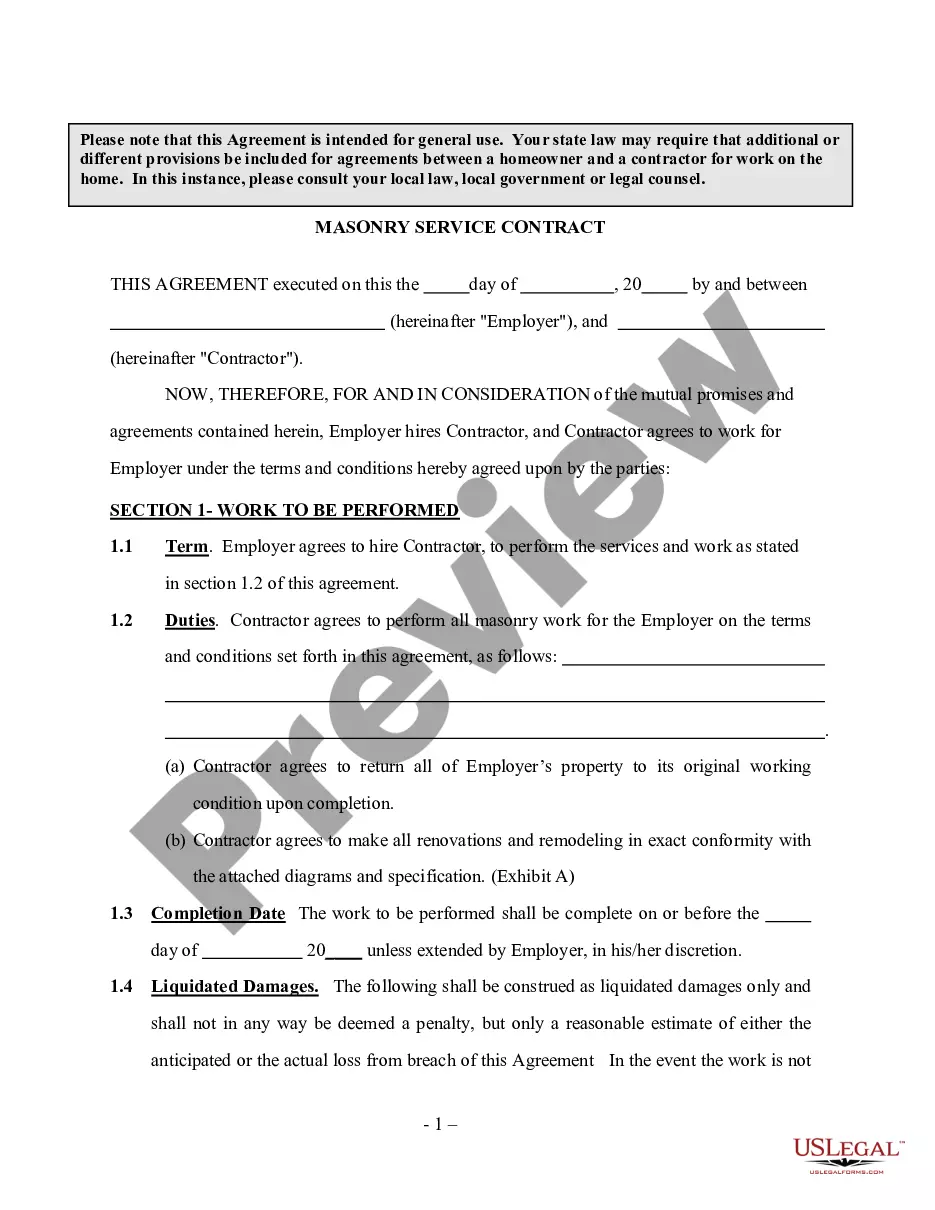
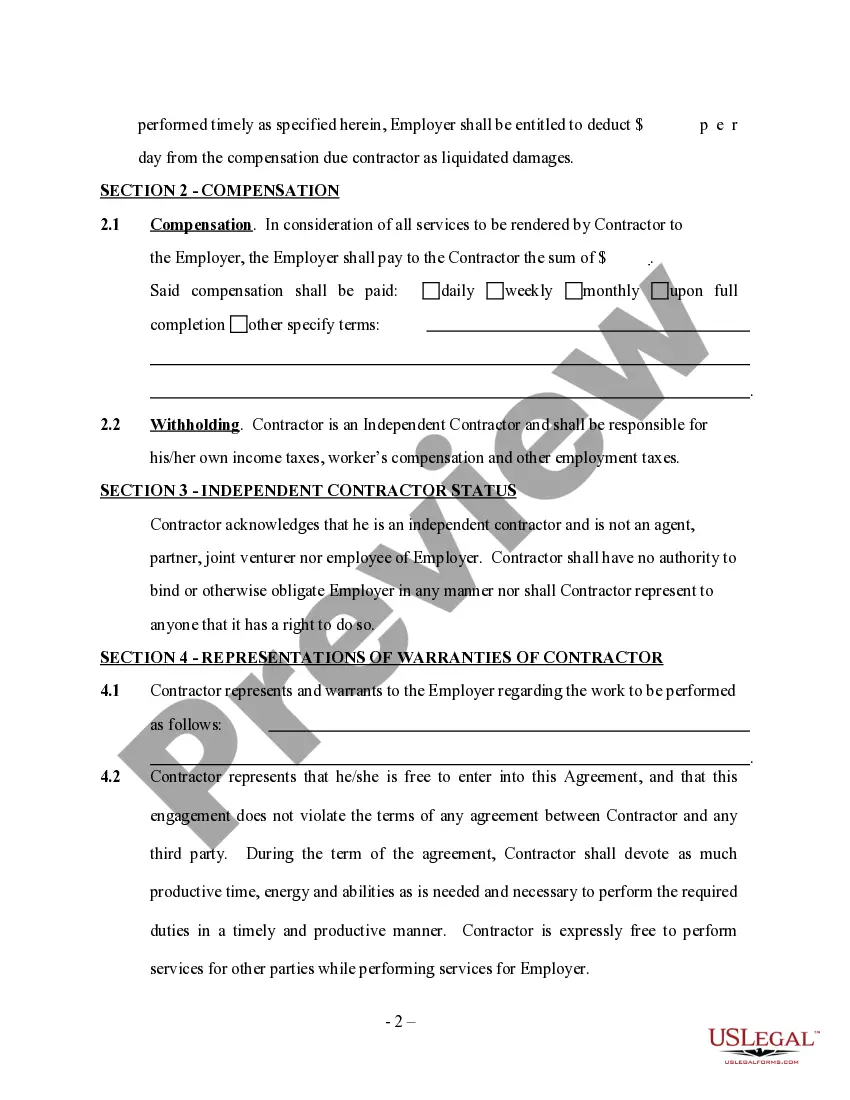
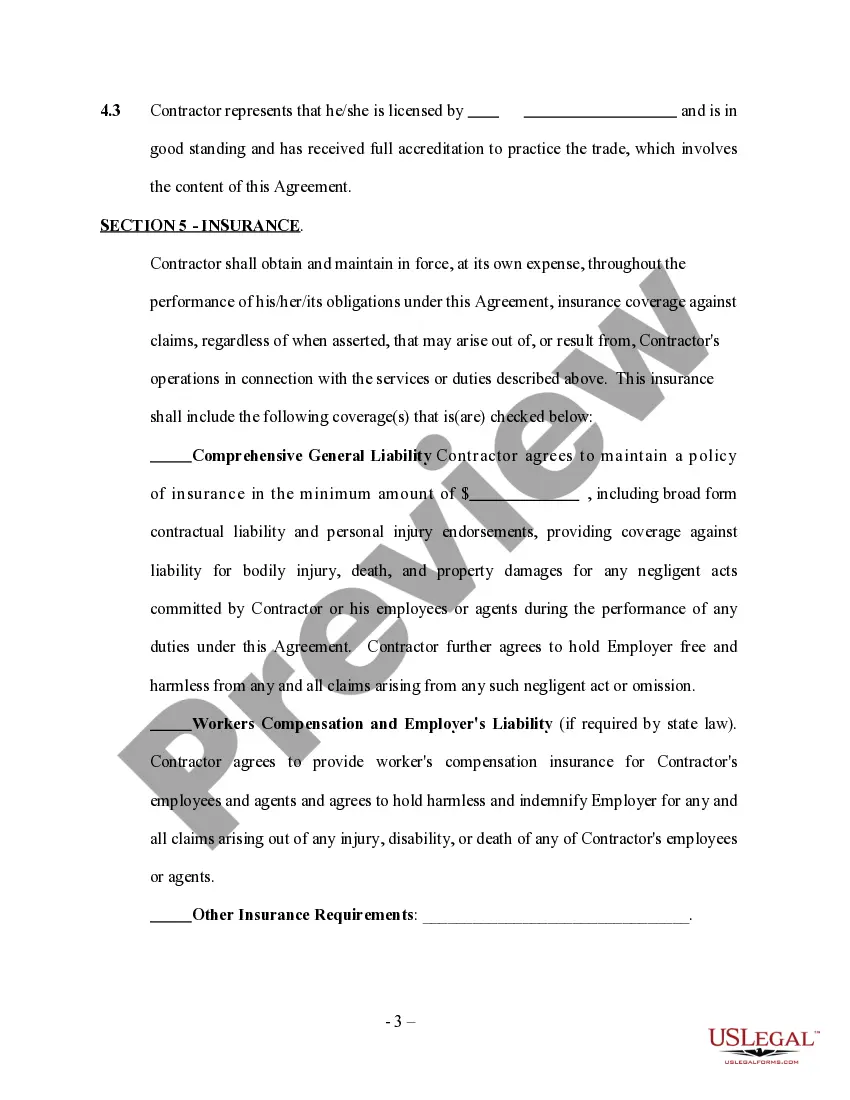
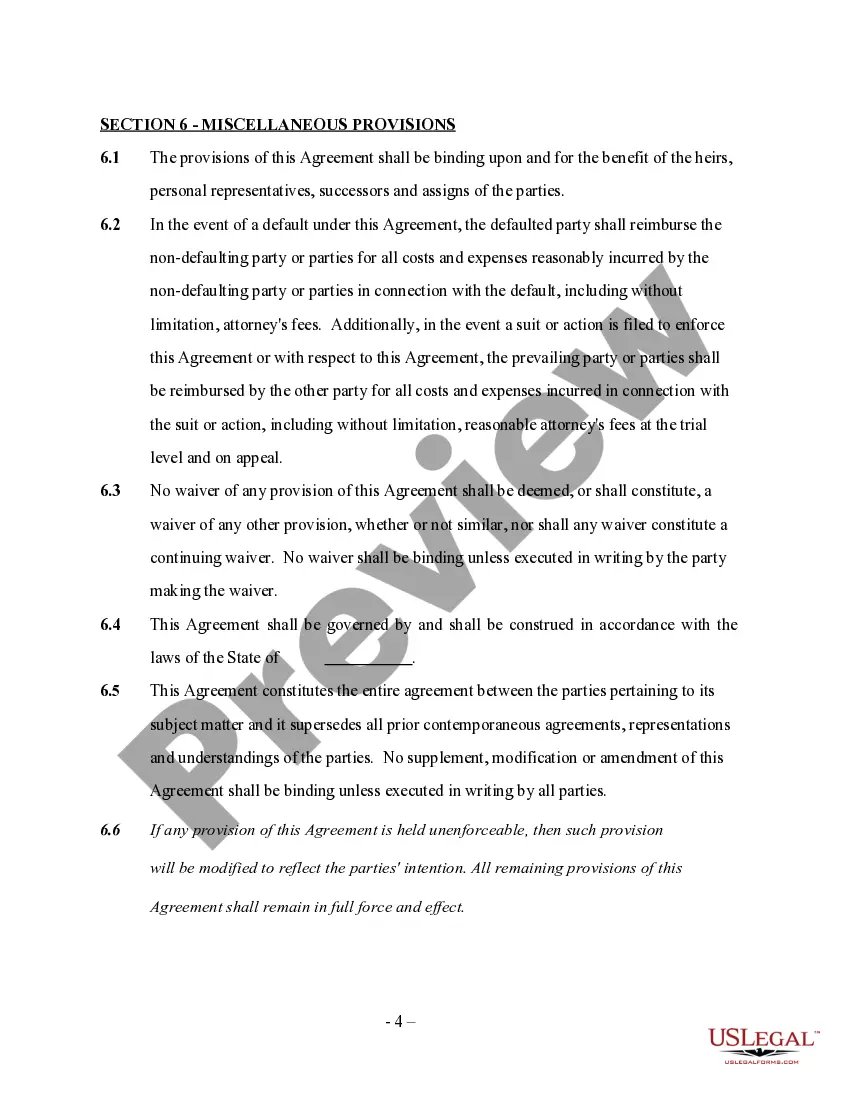
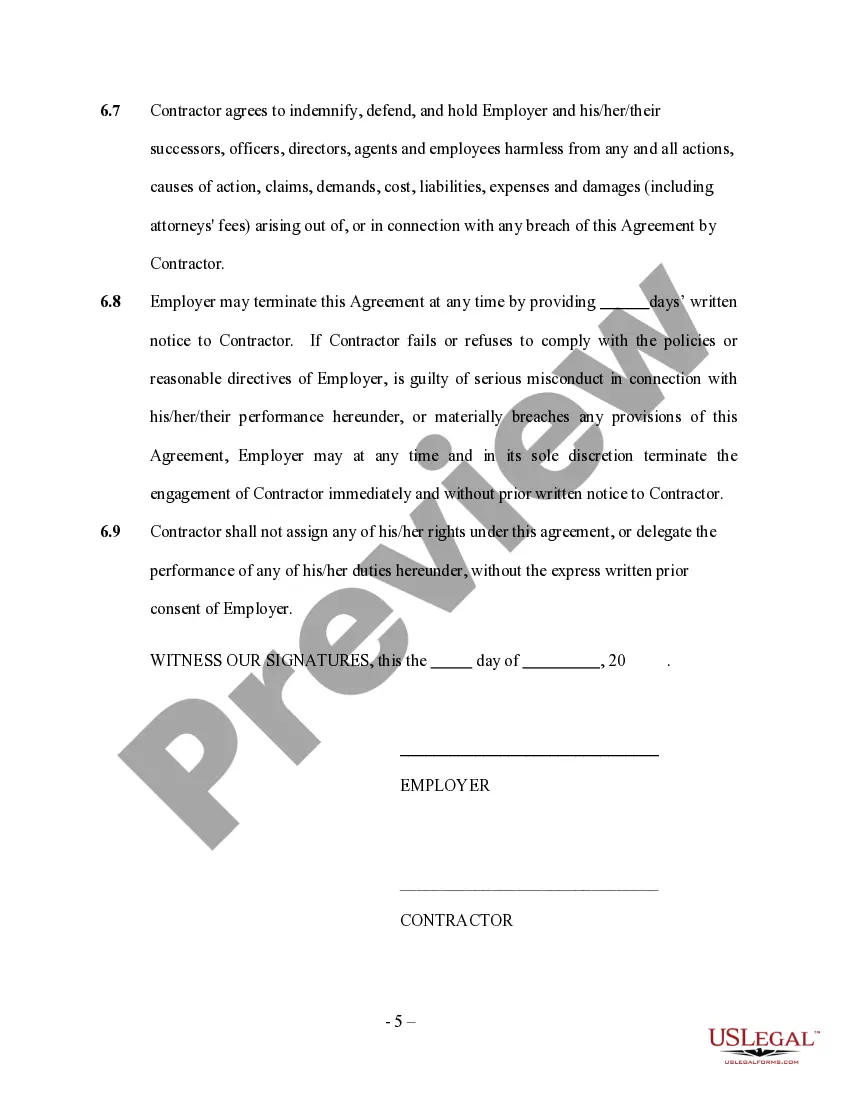
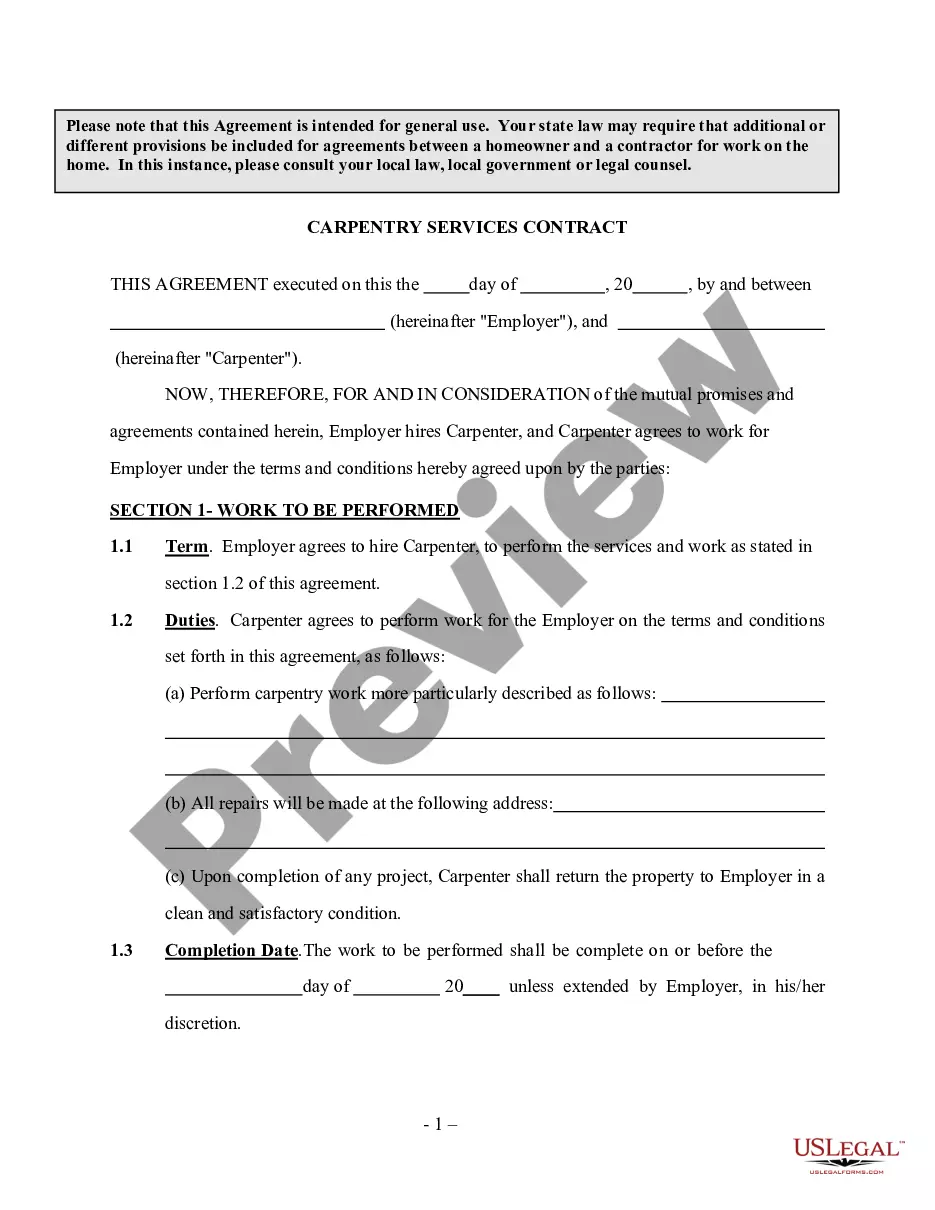
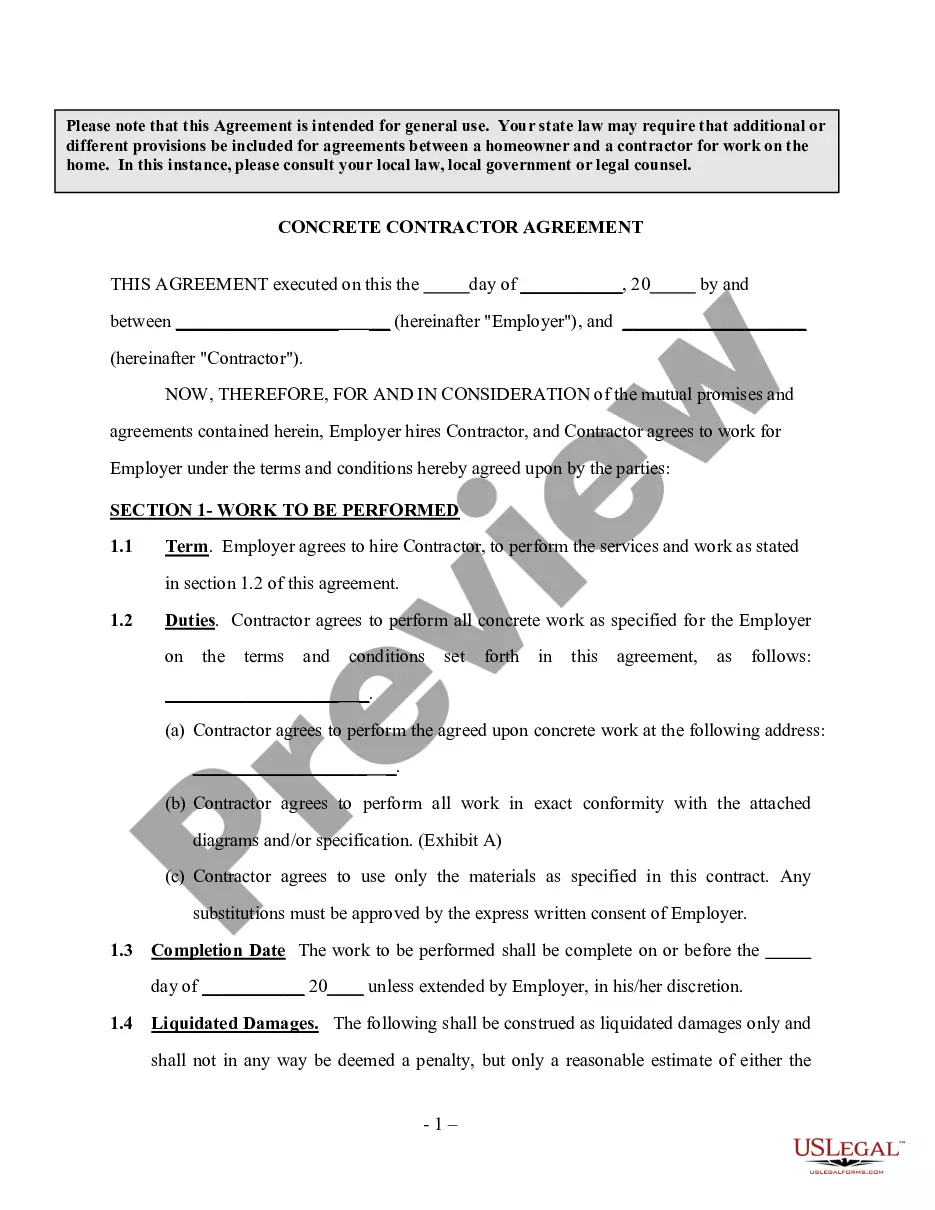
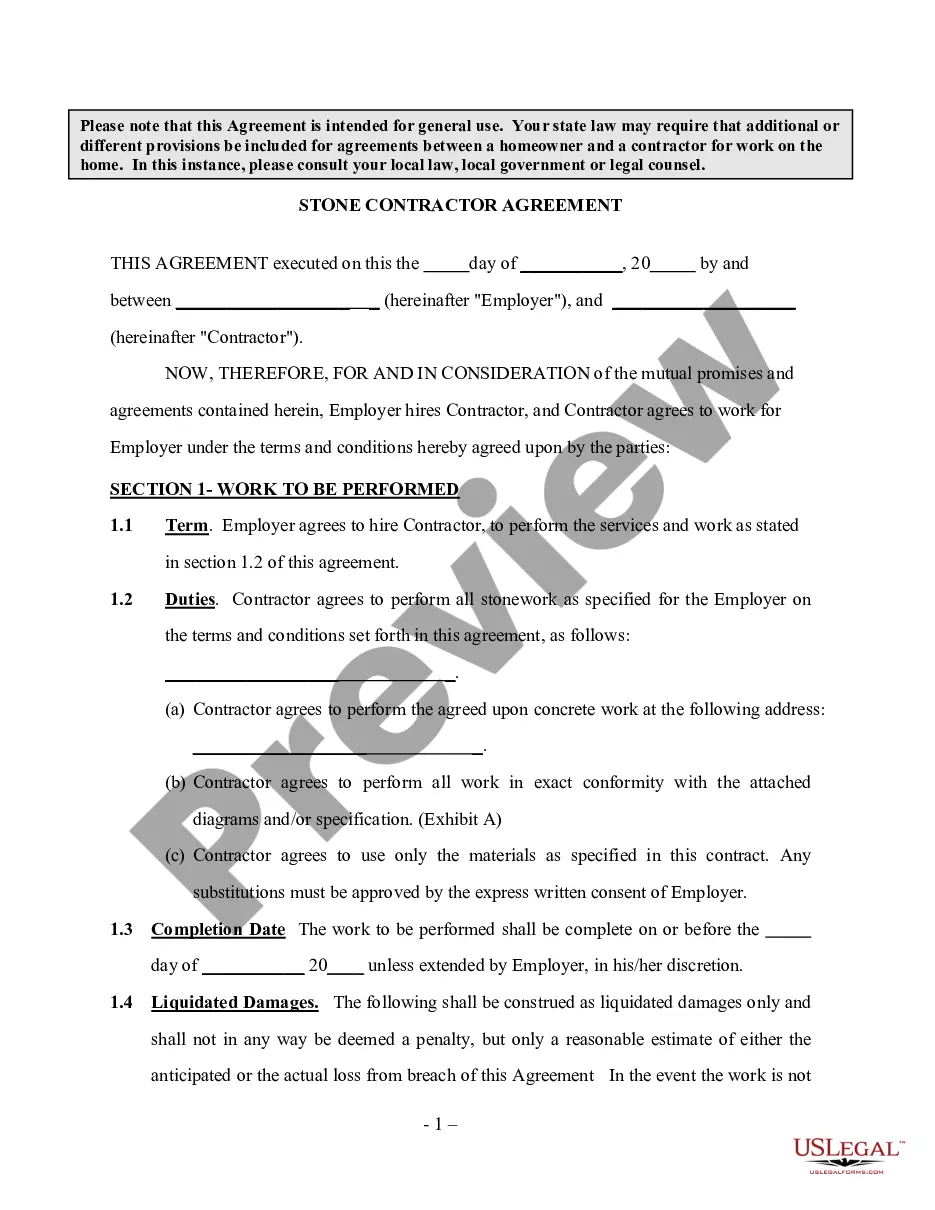
Employer contracts with an independent contractor to provide masonry services as specified and agreed upon in the contract.
South Dakota Masonry Services Contract - Self-Employed
State:
Multi-State
Control #:
US-INDC-103
Format:
Word;
Rich Text
Instant download
Description
Free preview
Get your form ready online
Our built-in tools help you complete, sign, share, and store your documents in one place.
Built-in online Word editor
Make edits, fill in missing information, and update formatting in US Legal Forms—just like you would in MS Word.
Export easily
Download a copy, print it, send it by email, or mail it via USPS—whatever works best for your next step.
E-sign your document
Sign and collect signatures with our SignNow integration. Send to multiple recipients, set reminders, and more. Go Premium to unlock E-Sign.
Notarize online 24/7
If this form requires notarization, complete it online through a secure video call—no need to meet a notary in person or wait for an appointment.
Store your document securely
We protect your documents and personal data by following strict security and privacy standards.

Make edits, fill in missing information, and update formatting in US Legal Forms—just like you would in MS Word.

Download a copy, print it, send it by email, or mail it via USPS—whatever works best for your next step.

Sign and collect signatures with our SignNow integration. Send to multiple recipients, set reminders, and more. Go Premium to unlock E-Sign.

If this form requires notarization, complete it online through a secure video call—no need to meet a notary in person or wait for an appointment.

We protect your documents and personal data by following strict security and privacy standards.
Looking for another form?




How to fill out Masonry Services Contract - Self-Employed?
If you require thorough, acquire, or printing sanctioned document templates, utilize US Legal Forms, the leading repository of legal forms, available online.
Employ the site’s user-friendly and efficient search to locate the documents you need.
Numerous templates for business and personal purposes are organized by categories and states, or keywords.
Step 3. If you are dissatisfied with the form, use the Search box at the top of the screen to find alternative versions of the legal form template.
Step 4. After identifying the document you want, select the Get now button. Choose your preferred payment plan and enter your details to register for an account.
- Use US Legal Forms to find the South Dakota Masonry Services Contract - Self-Employed in just a few clicks.
- If you are already a US Legal Forms user, Log In to your account and click the Obtain button to retrieve the South Dakota Masonry Services Contract - Self-Employed.
- You can also access forms you previously downloaded from the My documents tab of your account.
- If this is your first time using US Legal Forms, follow the steps below.
- Step 1. Ensure you have selected the document for the correct city/state.
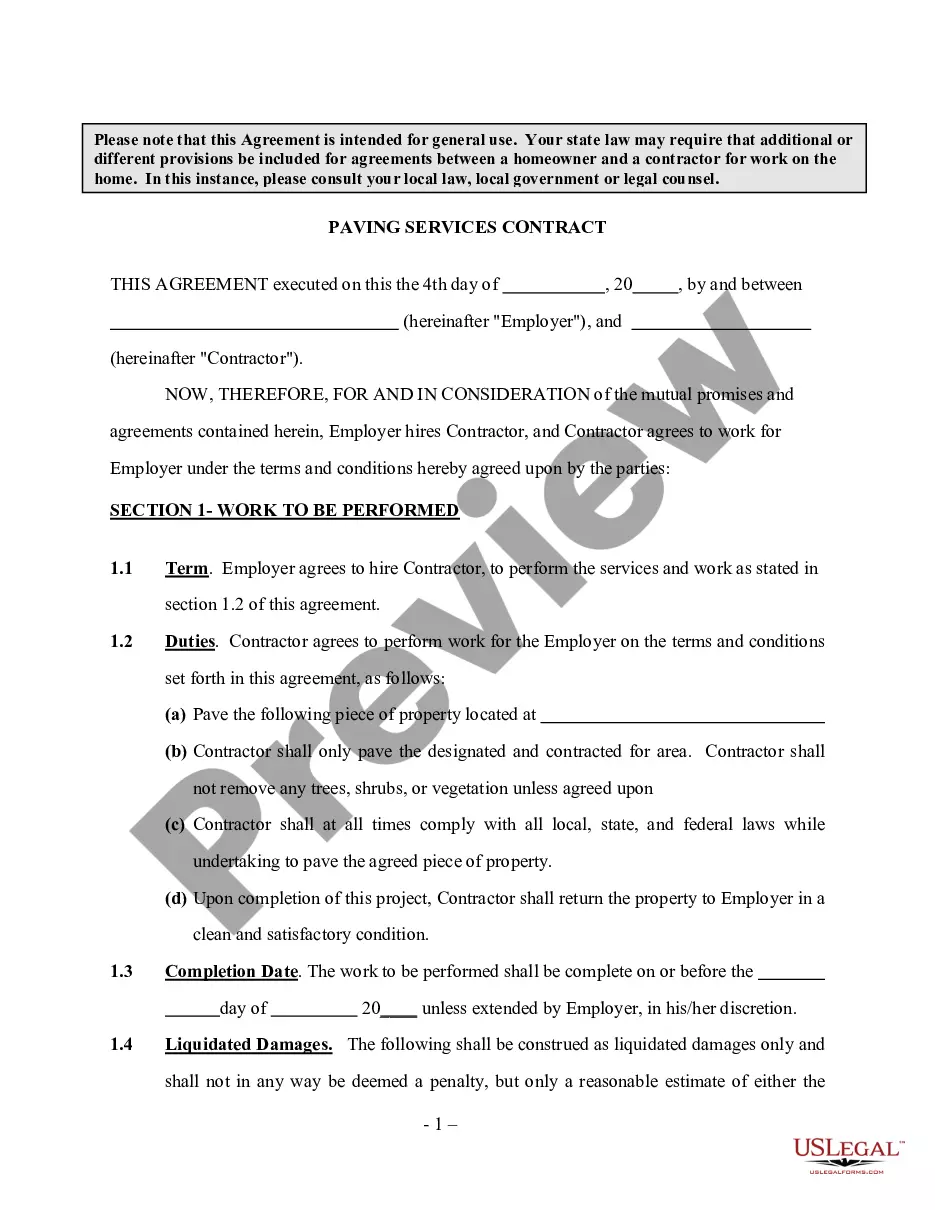
- Step 2. Utilize the Preview option to review the form’s content. Don’t forget to read the summary.
Form popularity
FAQ
Yes, you can operate as a contractor without a formal company in South Dakota. Many individuals begin their careers as self-employed contractors, directly engaging in projects like South Dakota Masonry Services Contract - Self-Employed. However, operating as a sole proprietor may expose you to personal liability risks. Therefore, while starting solo is possible, consider the long-term benefits of forming a business entity for protection and credibility.
Yes, obtaining a contractor license is often necessary in South Dakota, especially for specific types of work. This requirement helps ensure that all contractors meet safety and quality standards, which is crucial for projects like South Dakota Masonry Services Contract - Self-Employed. Each city may have its own regulations regarding licensing, so check local requirements to ensure compliance. This way, you can build trust with your clients and enhance your reputation.
No, you do not need an LLC to be a contractor in South Dakota. However, creating an LLC can provide additional benefits, such as limiting your personal liability and helping with business credibility. If you are taking on projects like South Dakota Masonry Services Contract - Self-Employed, establishing an LLC is often seen as a proactive measure to protect yourself. Therefore, while not required, an LLC may enhance your business structure.
In South Dakota, self-employment tax primarily consists of Social Security and Medicare taxes, which add up to a total rate of 15.3%. If you engage in South Dakota Masonry Services Contract - Self-Employed, you must diligently track your earnings to calculate this tax. This tax applies to your net earnings, so keeping detailed financial records will help ensure compliance and potentially maximize your deductions. Knowing your tax obligations can lead to better financial planning.
Yes, a general contractor can certainly perform work themselves in South Dakota. In fact, many general contractors start off as self-employed individuals, allowing them to take on South Dakota Masonry Services Contract - Self-Employed projects directly. This hands-on approach can lead to a deeper understanding of the artistry involved in masonry work, enhancing both personal skills and overall job quality. Just keep in mind the importance of complying with licensing regulations.
A contractor does not necessarily need an LLC to operate in South Dakota. However, forming an LLC can provide personal liability protection and separate your personal assets from your business. This separation is particularly beneficial for those offering South Dakota Masonry Services Contract - Self-Employed, as it shields you in case of legal issues arising from your work. Therefore, while it's not mandatory, an LLC can be a wise investment for independent contractors.
South Dakota typically does not tax most forms of professional services. However, there are exceptions, especially in sectors like construction, which includes South Dakota Masonry Services Contract - Self-Employed arrangements. It’s important to review South Dakota's taxation laws for clarity on your specific service situation. For seamless contract management and legal forms, consider using US Legal Forms to assist in navigating these complexities.
In South Dakota, not all services are taxable; however, some specific services do fall under sales tax regulations. Services related to construction, including those tied to a South Dakota Masonry Services Contract - Self-Employed, usually have unique tax implications. To navigate these details effectively, it is wise to review the state's taxation guidelines or seek expert advice. This understanding helps ensure compliance and proper financial planning.
In South Dakota, construction tax, often referred to as sales tax, applies to tangible personal property. When working under a South Dakota Masonry Services Contract - Self-Employed, be aware that materials and supplies used in construction may be taxable. However, labor provided for masonry services typically does not incur this tax. It's essential to consult local tax regulations or a tax professional for specific guidelines.
Writing a contract for a 1099 employee requires you to outline the scope of work, payment terms, and responsibilities. Clearly indicate that the individual is an independent contractor, not an employee, and address any tax obligations. Structuring your agreement with a South Dakota Masonry Services Contract - Self-Employed template from US Legal Forms can make this process straightforward and compliant.