An easement gives one party the right to go onto another party's property. That property may be owned by a private person, a business entity, or a group of owners. Utilities often get easements that allow them to run pipes or phone lines beneath private property. Easements may be obtained for access to another property, called "access and egress", use of spring water, entry to make repairs on a fence or slide area, drive cattle across and other uses. The easement is a real property interest, but separate from the legal title of the owner of the underlying land.
South Dakota Easement for Access to Property
State:
Multi-State
Control #:
US-00495
Format:
Word;
Rich Text
498 downloads
Description
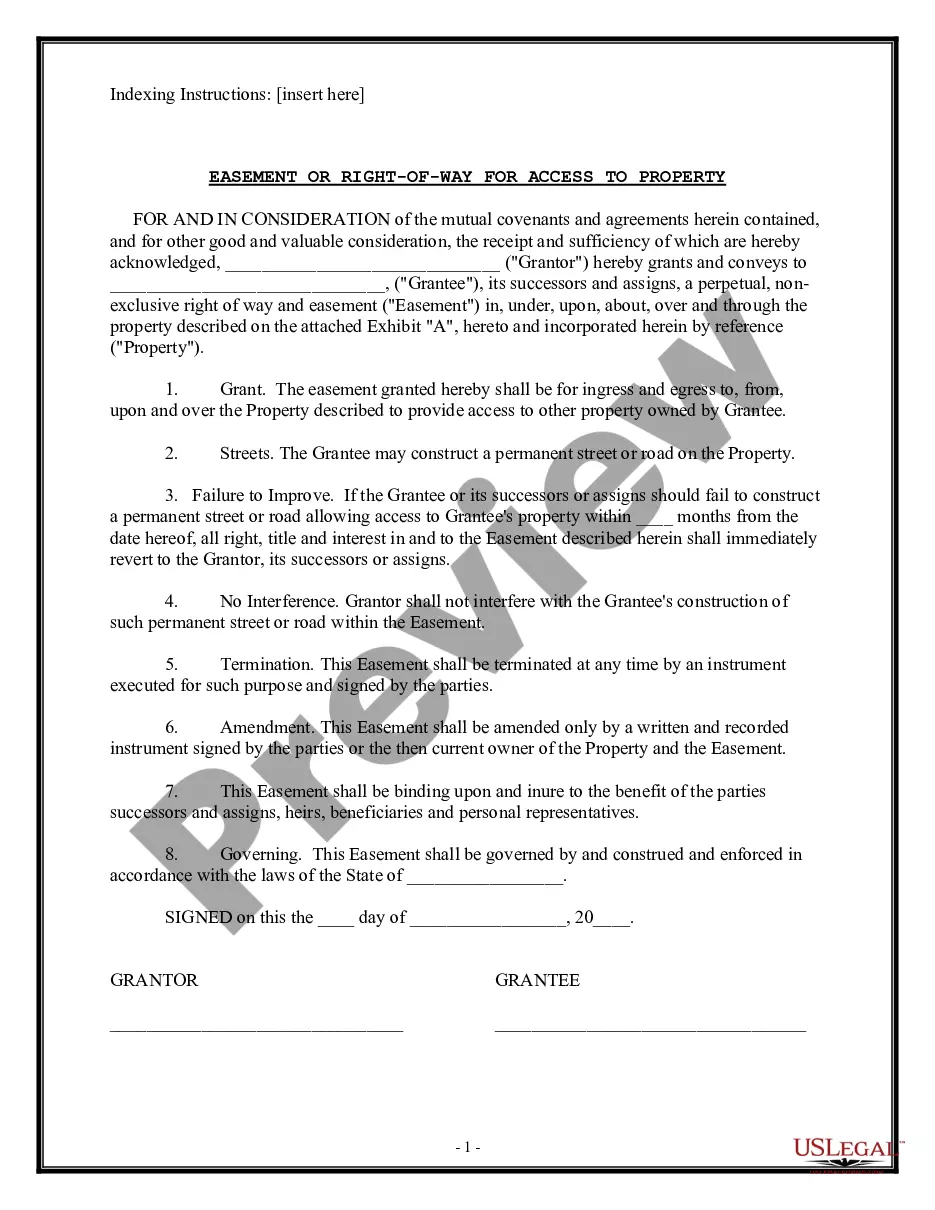
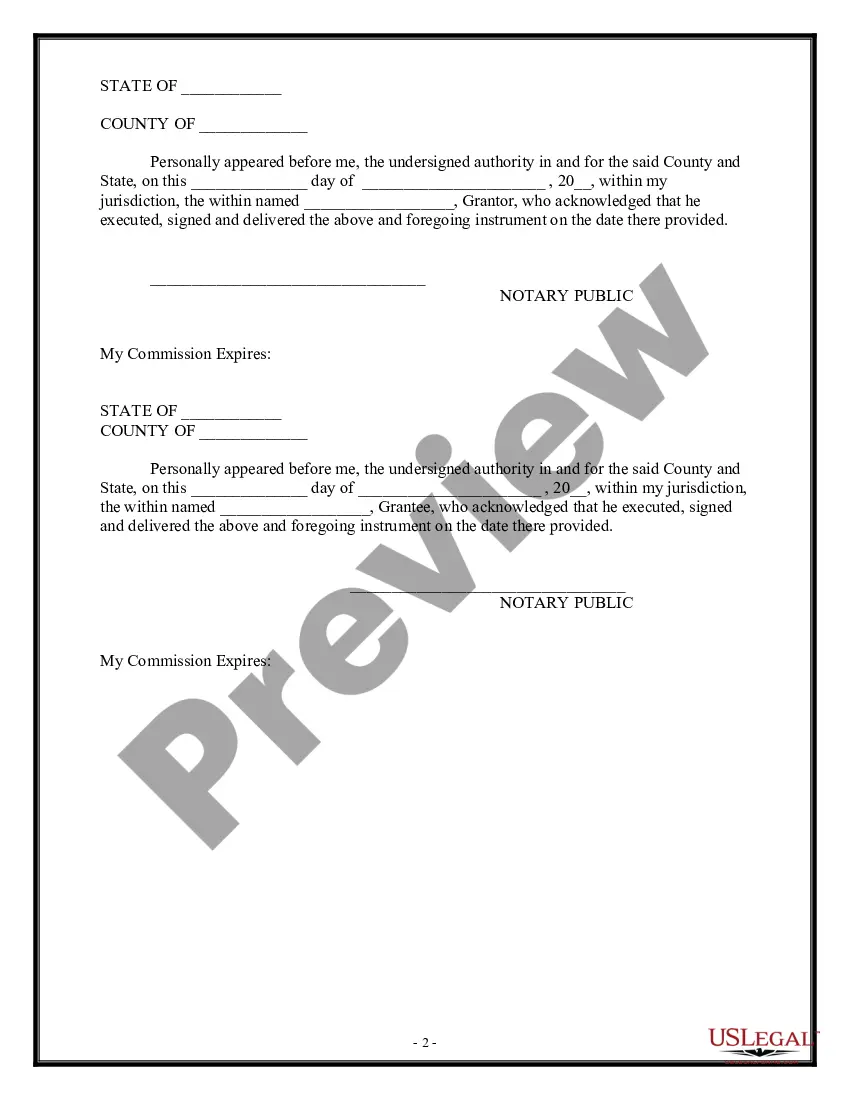
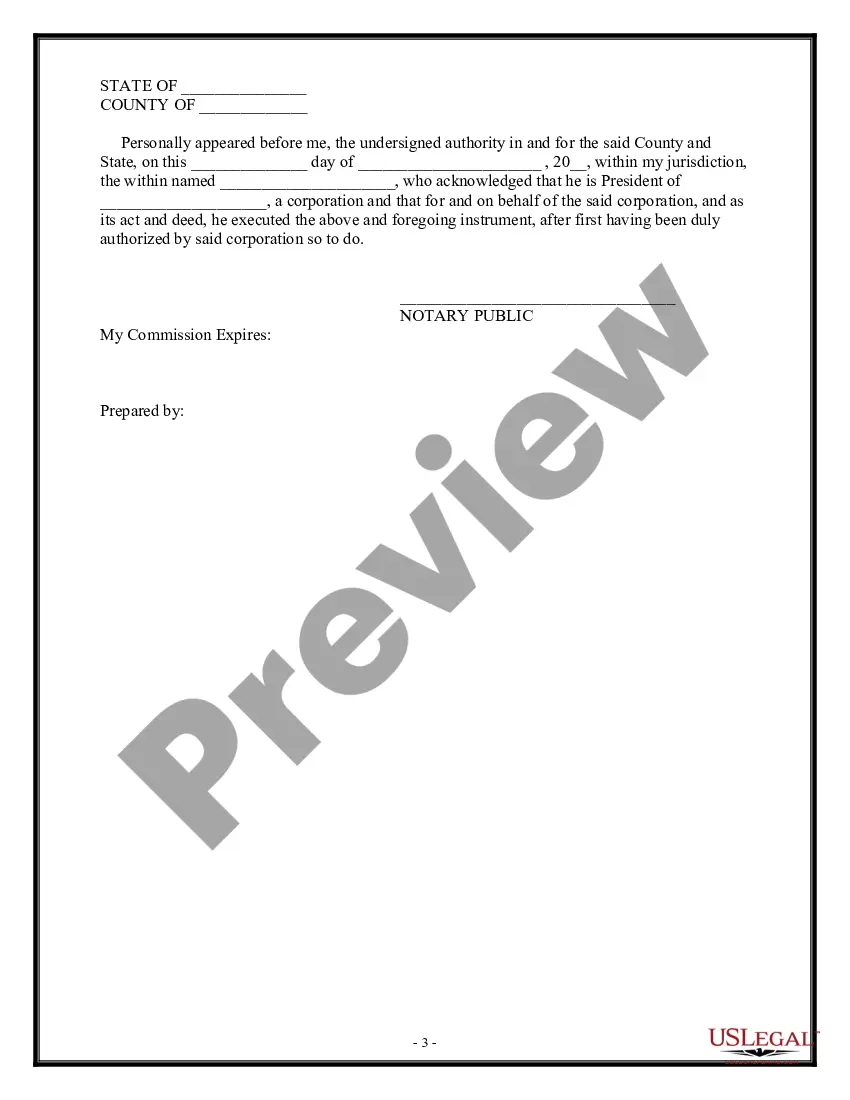
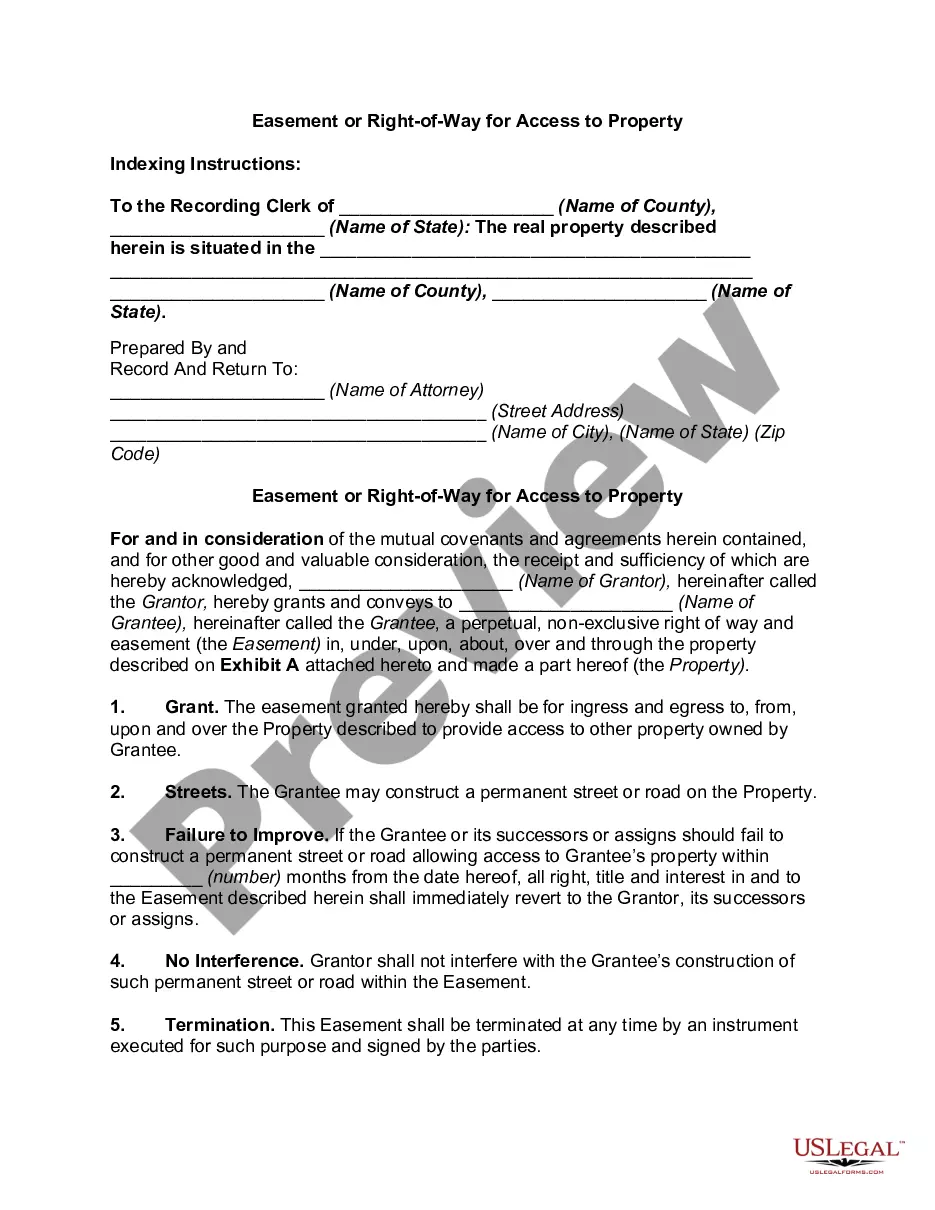
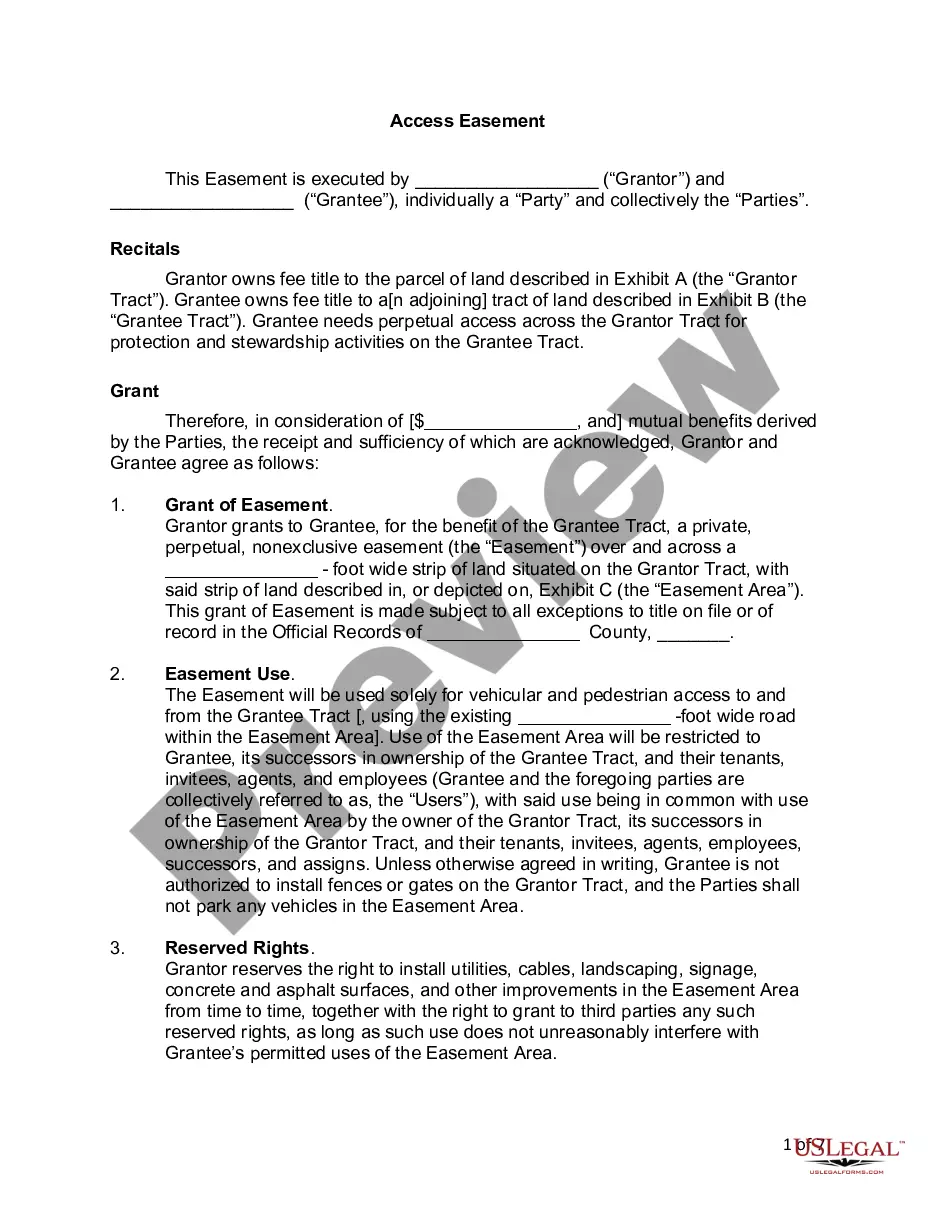
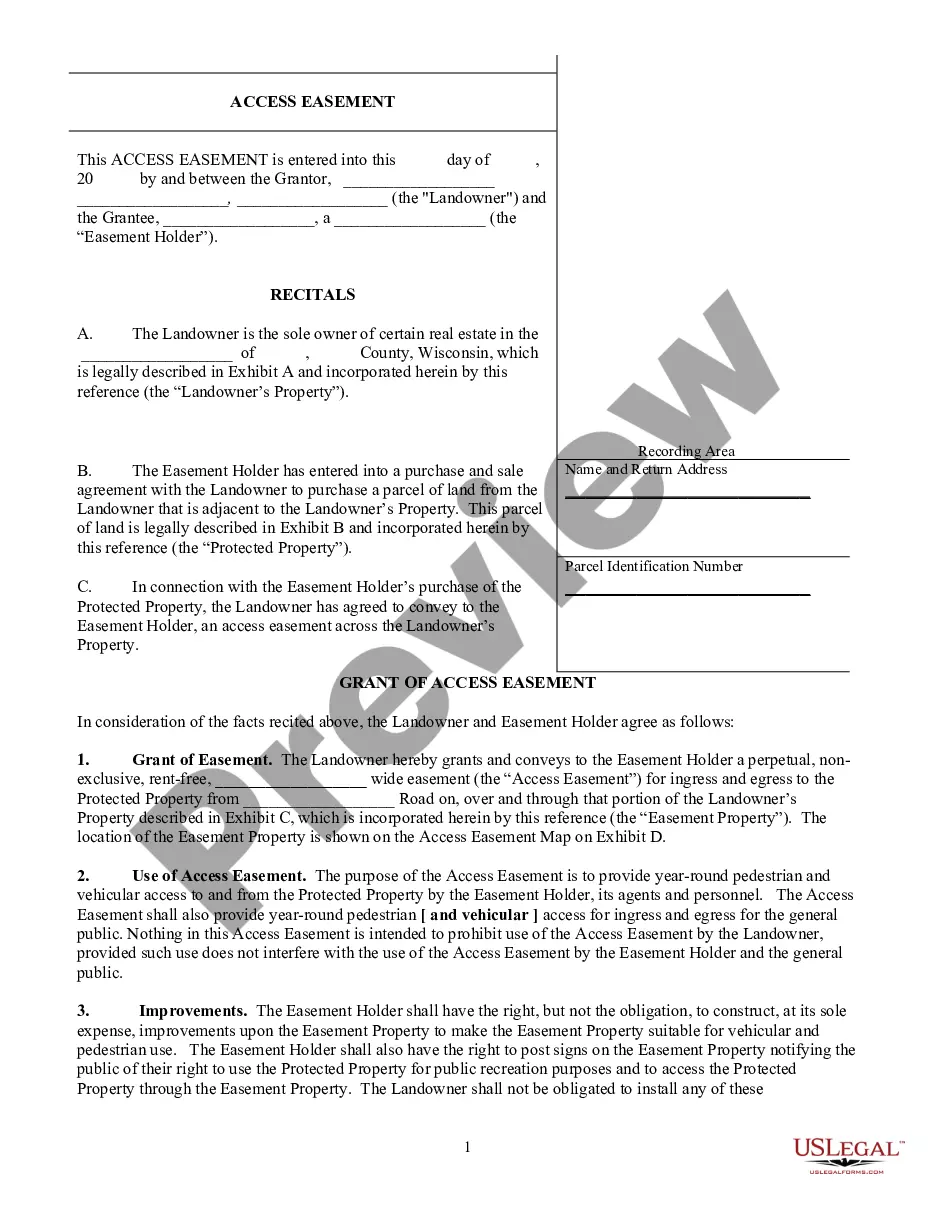
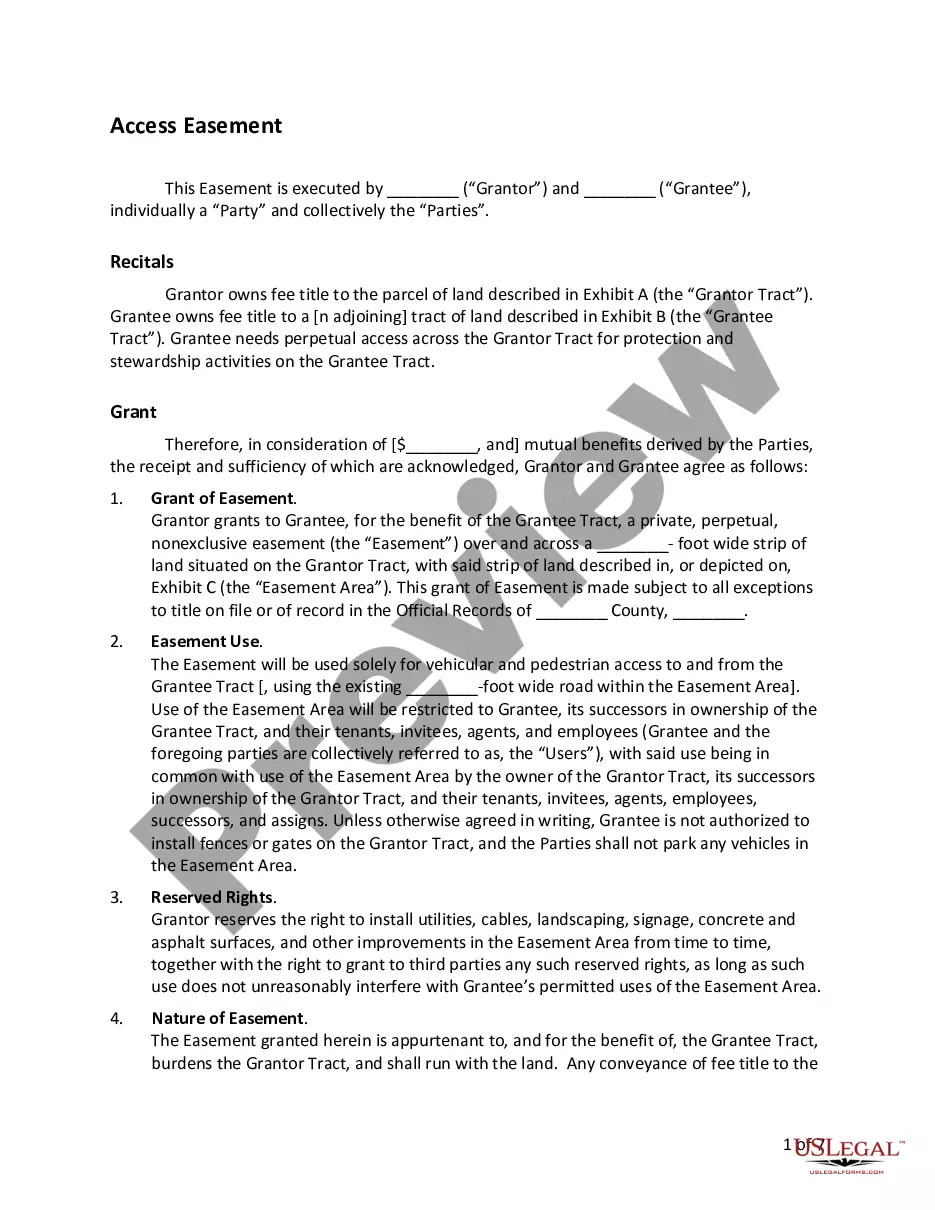
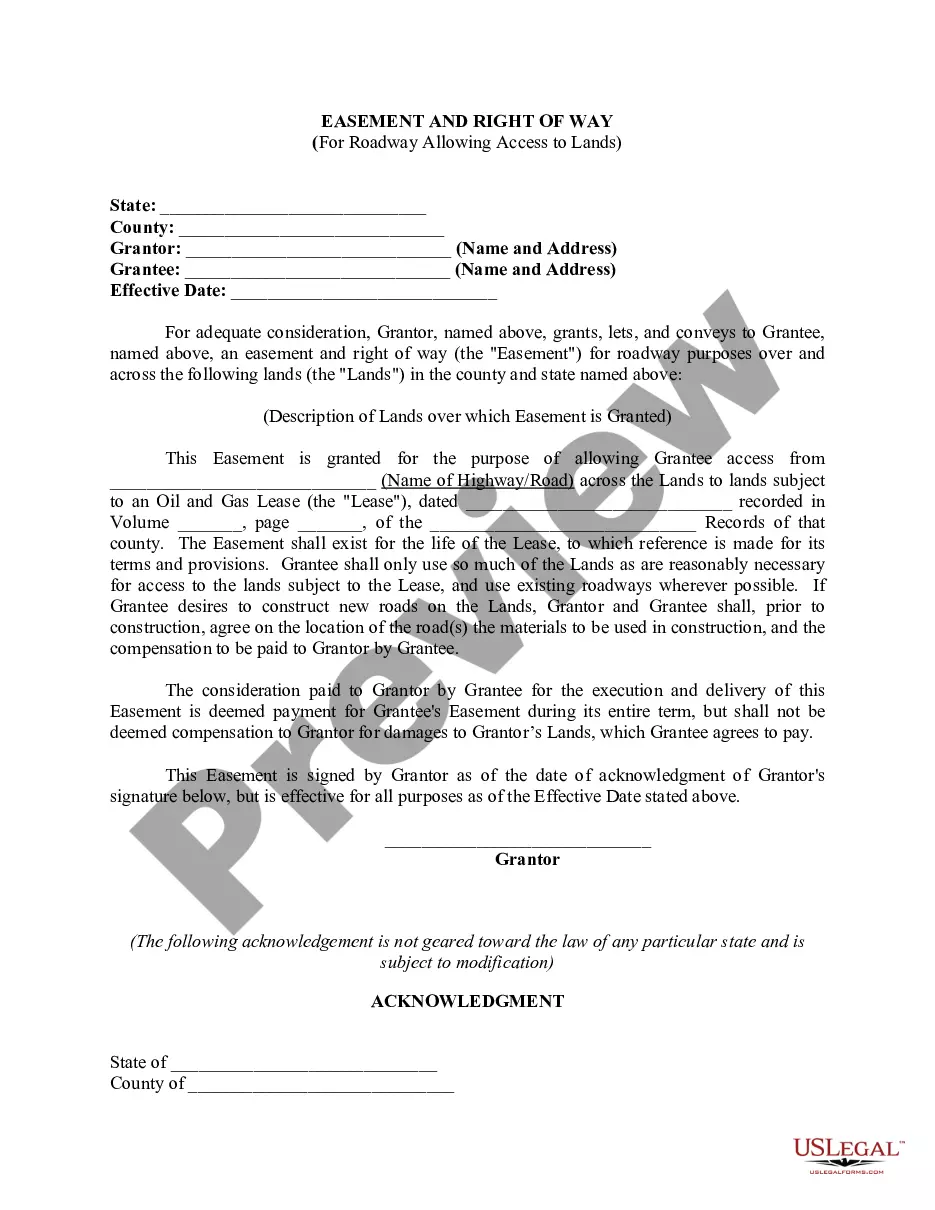
This form is an Easement or Right-of-Way for Access to Property. The form provides that an easement is granted for the ingress and egress to, from, upon, and over the property described in the agreement. The form also provides that the grantee may construct a permanent street or road on the property.
Free preview
Get your form ready online
Our built-in tools help you complete, sign, share, and store your documents in one place.
Built-in online Word editor
Make edits, fill in missing information, and update formatting in US Legal Forms—just like you would in MS Word.
Export easily
Download a copy, print it, send it by email, or mail it via USPS—whatever works best for your next step.
E-sign your document
Sign and collect signatures with our SignNow integration. Send to multiple recipients, set reminders, and more. Go Premium to unlock E-Sign.
Notarize online 24/7
If this form requires notarization, complete it online through a secure video call—no need to meet a notary in person or wait for an appointment.
Store your document securely
We protect your documents and personal data by following strict security and privacy standards.
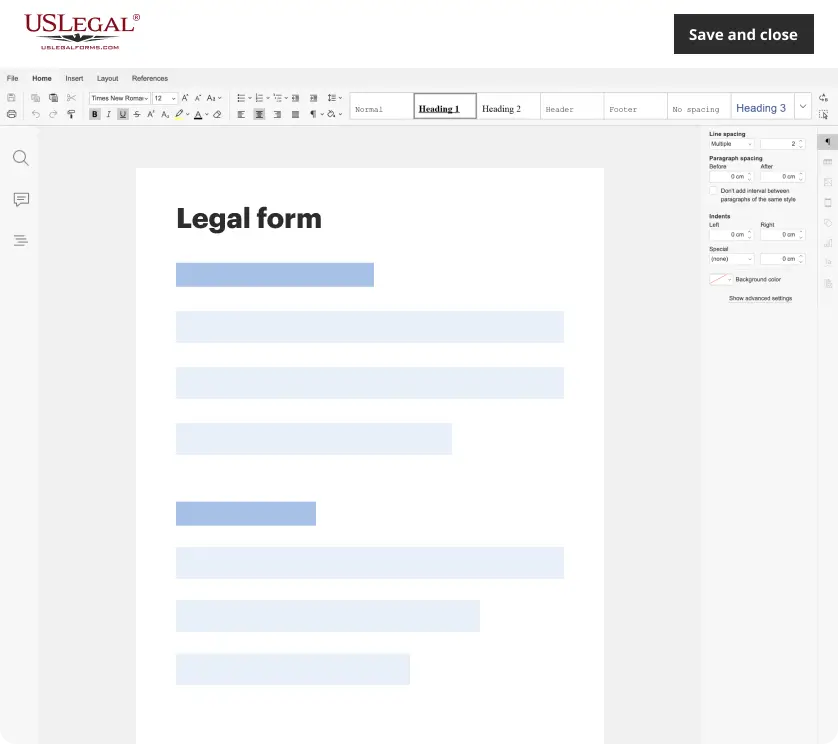
Make edits, fill in missing information, and update formatting in US Legal Forms—just like you would in MS Word.
Download a copy, print it, send it by email, or mail it via USPS—whatever works best for your next step.
Sign and collect signatures with our SignNow integration. Send to multiple recipients, set reminders, and more. Go Premium to unlock E-Sign.

If this form requires notarization, complete it online through a secure video call—no need to meet a notary in person or wait for an appointment.
We protect your documents and personal data by following strict security and privacy standards.
Looking for another form?

How to fill out Easement For Access To Property?
Are you currently in a situation where you require documents for both professional or personal purposes almost every day.
There are numerous legal document templates available online, but locating ones you can rely on is not easy.
US Legal Forms provides thousands of template options, such as the South Dakota Easement for Access to Property, that are designed to meet state and federal requirements.
Once you locate the correct template, click Get now.
Select the pricing plan you prefer, provide the necessary information to create your account, and pay for the transaction using your PayPal or credit card.
- If you are already acquainted with the US Legal Forms website and have your account, simply Log In.
- Then, you can download the South Dakota Easement for Access to Property template.
- If you do not have an account and wish to start using US Legal Forms, follow these steps.
- Find the template you need and ensure it is for the correct city/region.
- Utilize the Review button to examine the form.
- Check the summary to confirm that you have selected the right template.
- If the template is not what you're looking for, use the Search field to find the template that meets your needs and requirements.
Form popularity
FAQ
A private easement is an agreement between two property owners giving the owner of one property the right to use another's property for a specific purpose. For example, such an easement might be drawn up if a neighbor needs to run pipe under your property to get to their house. These may be freely granted or sold.
The majority of this land is located in the western half of the state. School lands are available to the public for hunting and fishing. These lands must be legally accessed; anyone crossing private land to access school land must have the permission of the private landowner.
Easements often transfer That means if the property is purchased or sold, the easement subsists. An easement in gross, on the other hand, is generally tied to a specific party or individual ? not the land.
Appurtenant or in gross In the US, an easement appurtenant is one that benefits the dominant estate and "runs with the land" and so generally transfers automatically when the dominant estate is transferred.
In South Dakota, riparian (adjacent) landowners own the land down to the Low Water Mark. Recreational users of water for public purposes however can use land located between the High and Low Water Mark via this right-of-way.
An easement is a limited right of use over the property of another. Easements may be established by grant or reservation and may be affirmative or negative, appurtenant or in gross, and express or implied. South Dakota law also recognizes easements by prescription.
You'll want to check if you're the easement user, known as the dominant property, or if you're the property owner who must allow your neighbor to use your property, known as the servient property. The servient property owner cannot block the use of the easement.
An easement is defined as the grant of a nonpossessory property interest that grants the easement holder permission to use another person's land.