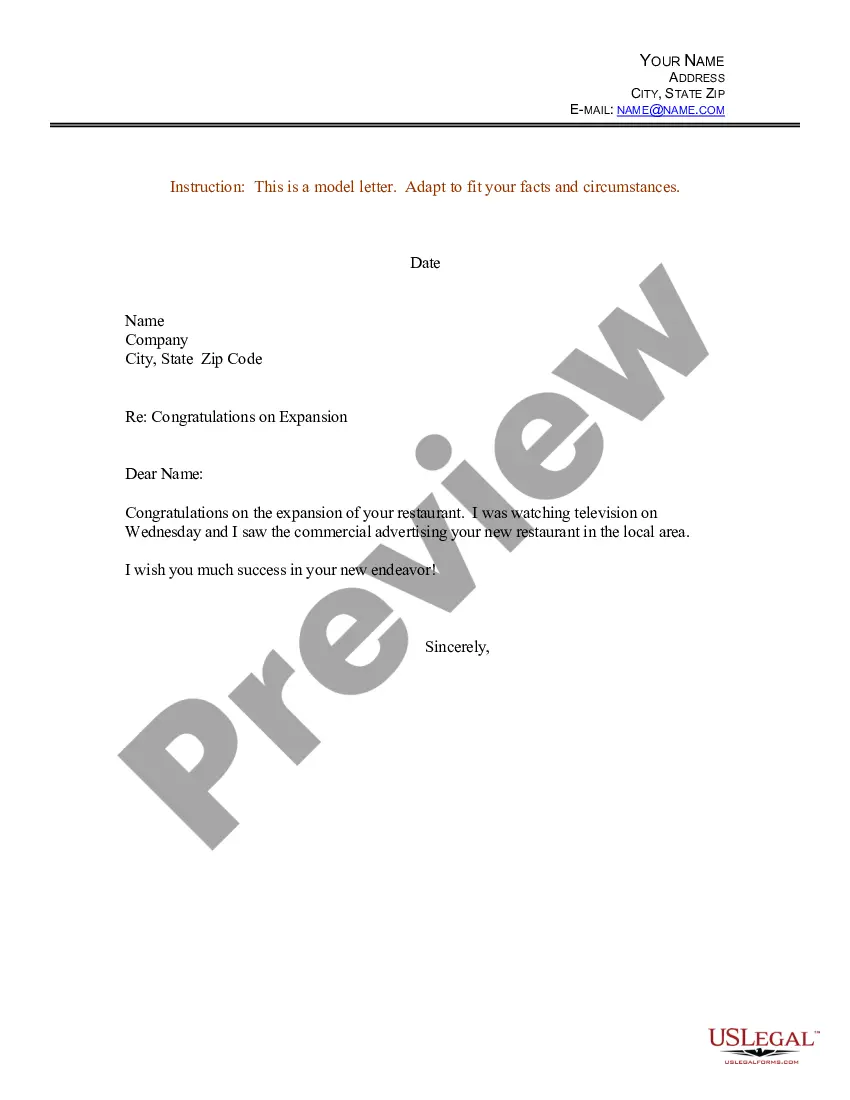
This form is a sample letter in Word format covering the subject matter of the title of the form.
South Dakota Sample Letter to Judge regarding Agreed Order
Instant download
Description

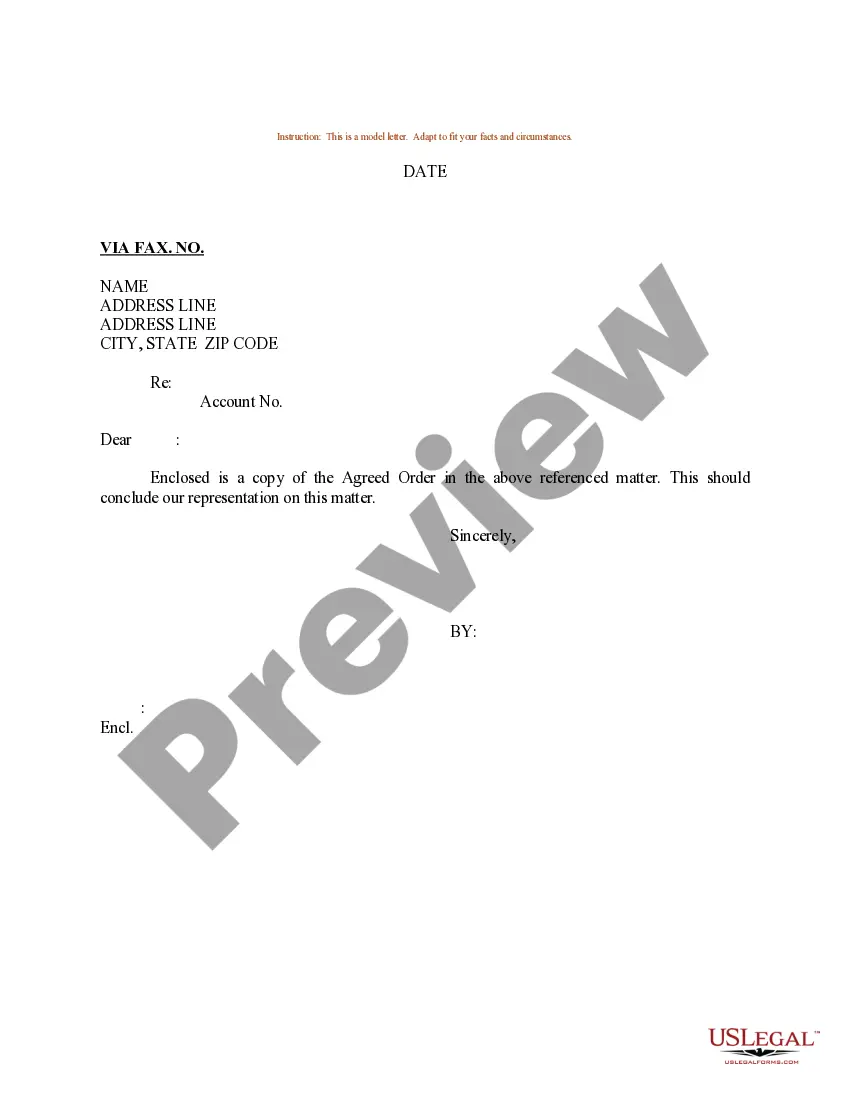

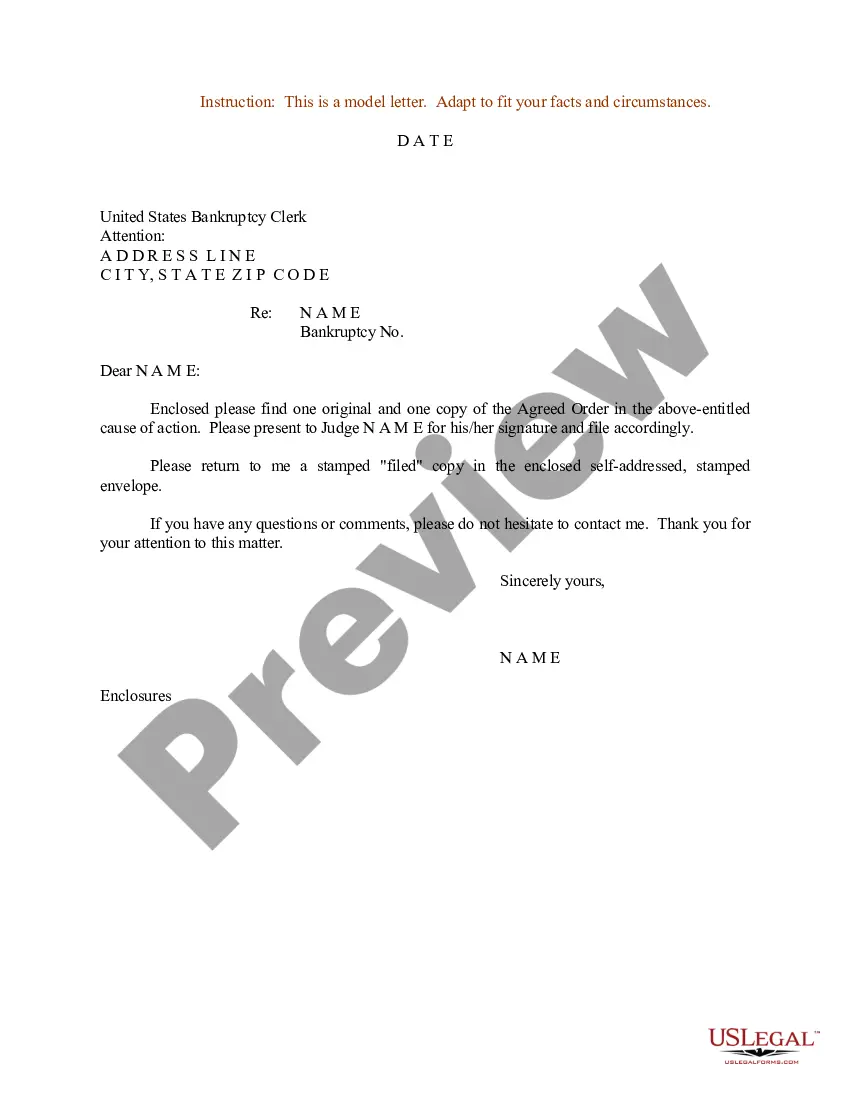
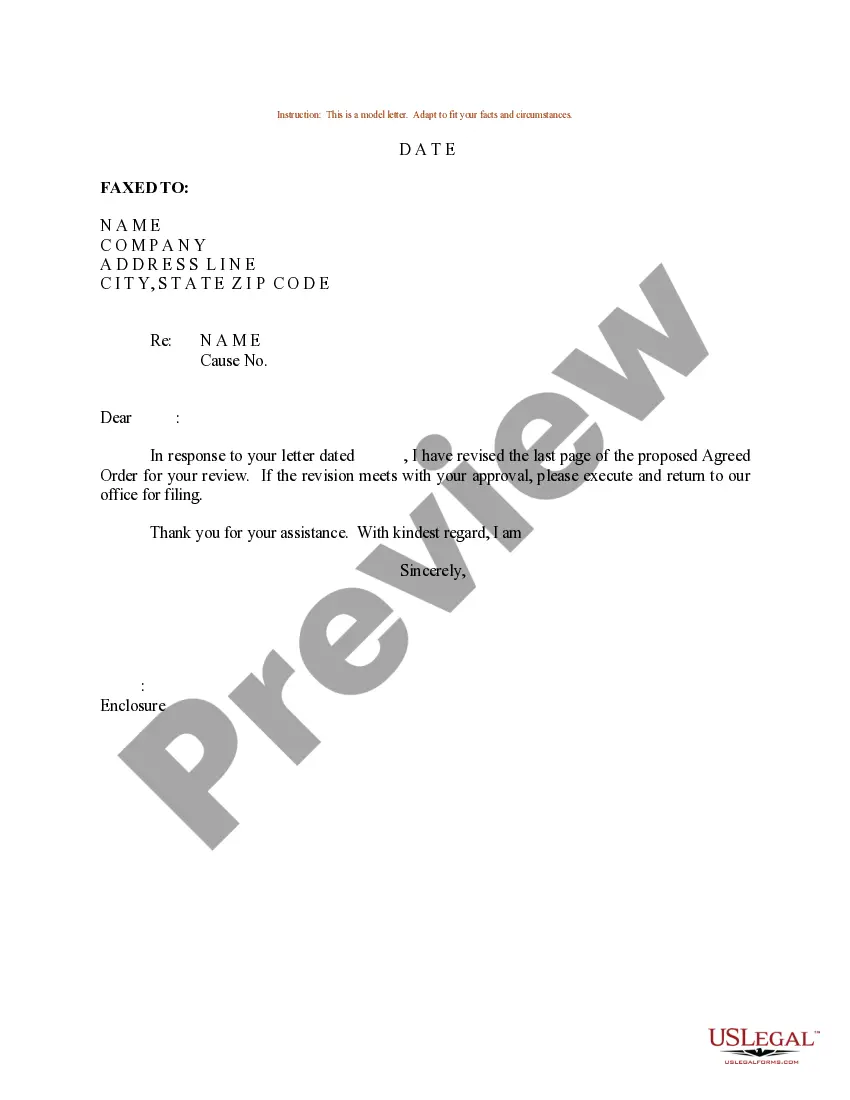
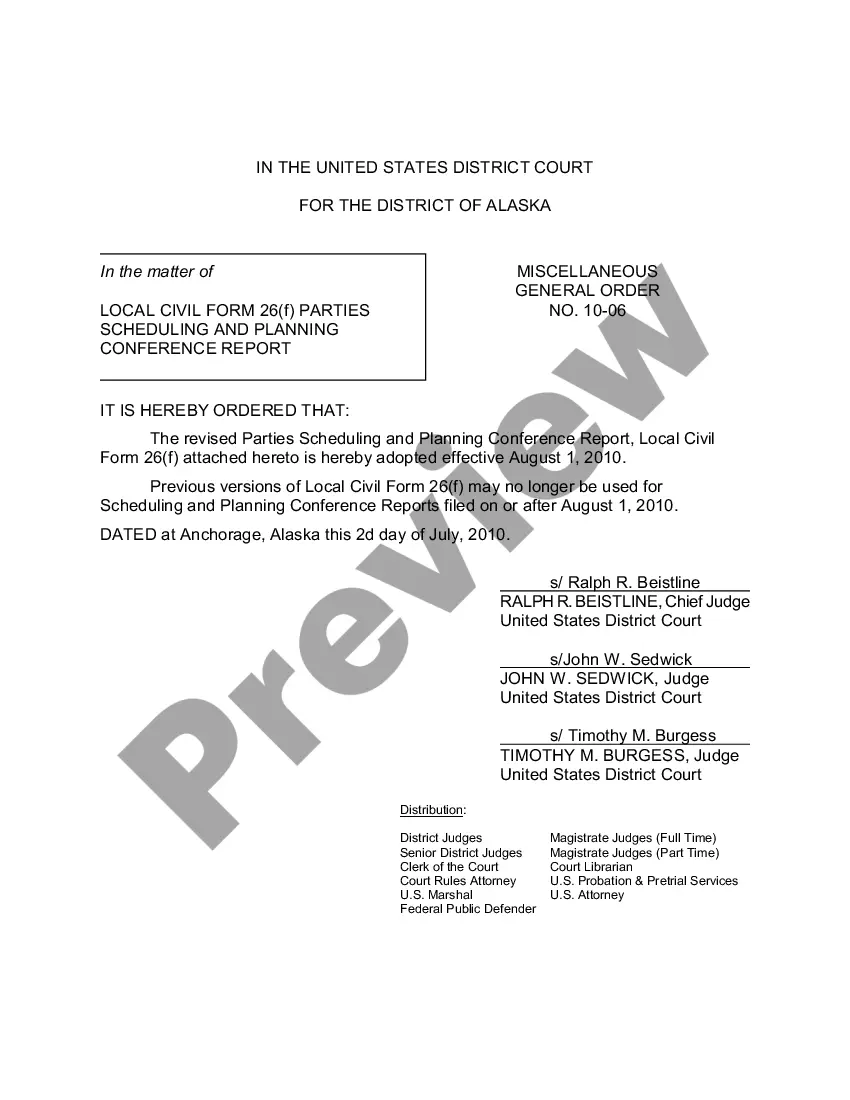
How to fill out Sample Letter To Judge Regarding Agreed Order?
US Legal Forms - one of the largest repositories of authentic templates in the United States - provides a range of legitimate document formats that you can download or create.
By utilizing the website, you can discover thousands of forms for commercial and personal purposes, organized by categories, states, or keywords. You can find the latest versions of forms such as the South Dakota Sample Letter to Judge regarding Agreed Order in a matter of minutes.
If you already have a subscription, Log In and download the South Dakota Sample Letter to Judge regarding Agreed Order from the US Legal Forms library. The Download button will be visible on each form you view. You can access all previously downloaded forms from the My documents section of your account.
Complete the transaction. Use your credit card or PayPal account to finalize the purchase.
Choose the format and download the document to your device. Make edits. Fill in, revise, and print and sign the downloaded South Dakota Sample Letter to Judge regarding Agreed Order. Every template you add to your account does not have an expiration date and is yours permanently. So, if you wish to download or create another copy, simply go to the My documents section and click on the form you need. Access the South Dakota Sample Letter to Judge regarding Agreed Order with US Legal Forms, the most comprehensive collection of legitimate document templates. Utilize thousands of professional and state-specific templates that meet your business or personal needs and requirements.
- Make sure you have selected the appropriate form for your area/region.
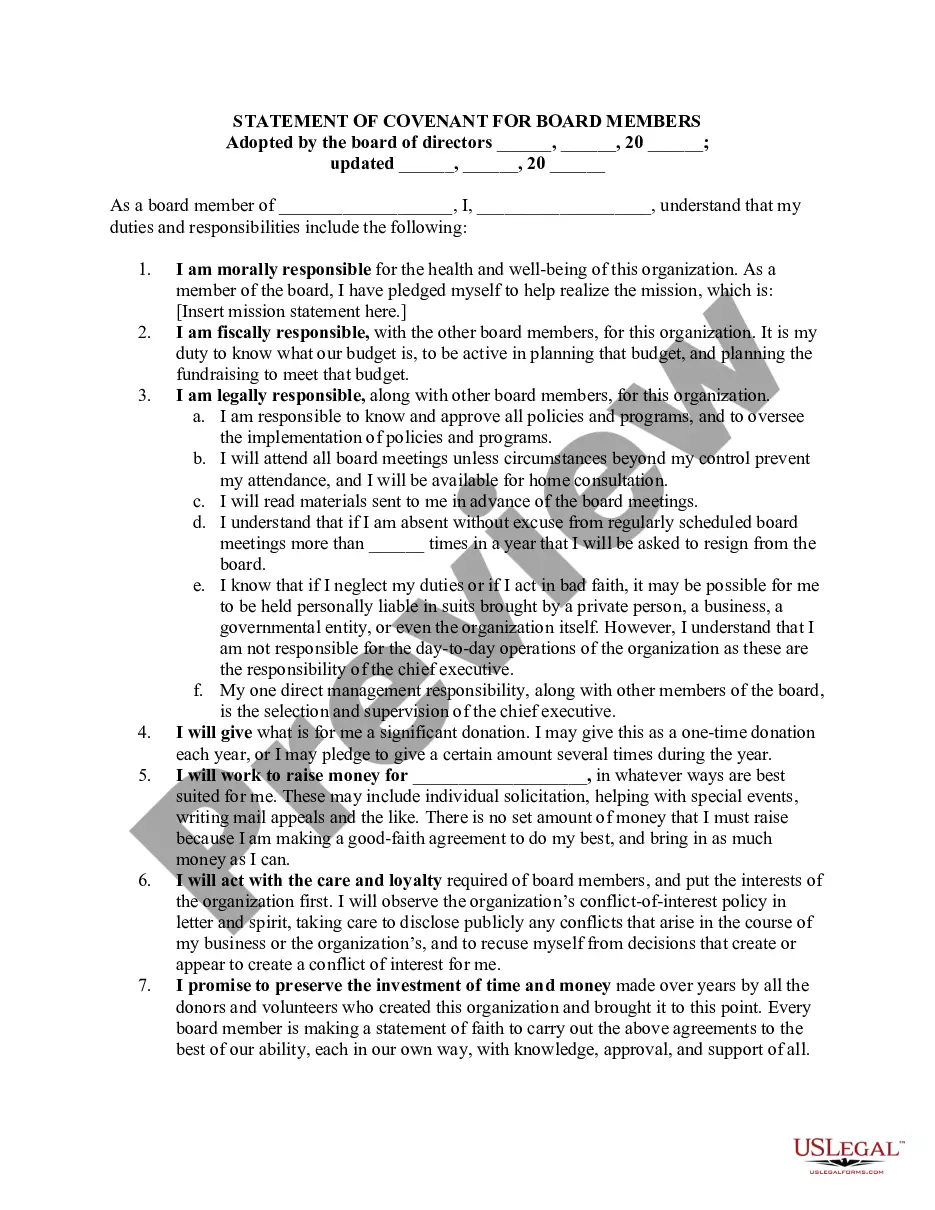
- Click the Preview button to review the document's content.
- Examine the form summary to confirm that you have chosen the correct document.
- If the form does not meet your requirements, utilize the Search field at the top of the page to find the one that does.
- Once you are satisfied with the document, confirm your choice by clicking the Purchase now button.
- Then, select your preferred payment plan and provide your information to register for an account.
Form popularity
FAQ
Writing a letter to the judge can be effective, as it allows you to present your perspective in a structured manner. When done correctly, it can influence the judge's understanding of your situation. Using resources like the South Dakota Sample Letter to Judge regarding Agreed Order can enhance your letter's effectiveness. However, remember that the judge's decision will ultimately rely on the facts and circumstances of your case.
Writing an impactful letter to a judge involves being clear, concise, and respectful. Begin with a strong opening that outlines your main points, and support your arguments with relevant facts and personal experiences. You may want to refer to the South Dakota Sample Letter to Judge regarding Agreed Order for effective structure and examples. Ending with a courteous closing can also leave a positive impression.
To write a letter to a judge regarding custody, start by clearly stating your purpose at the beginning of the letter. Include relevant details about your case, emphasizing your relationship with the child and your reasons for the request. It is helpful to reference the South Dakota Sample Letter to Judge regarding Agreed Order for format and content guidance. Always maintain a respectful tone, and proofread your letter before submission.
Writing a letter to the judge may provide additional context or clarify your position in your case. It can demonstrate your willingness to cooperate and adhere to court procedures. However, it's crucial to follow proper protocols and format. A South Dakota Sample Letter to Judge regarding Agreed Order can serve as a valuable resource, ensuring your letter is both effective and respectful.
Yes, you can write a letter to a judge regarding your case. Ensure that your letter is clear and concise, stating your purpose right away. Remember to focus on relevant details and avoid emotional language. Utilizing a South Dakota Sample Letter to Judge regarding Agreed Order can help you organize your thoughts and present your case effectively.
To properly start a letter to a judge, you should address them formally. Begin with 'Dear Judge Last Name' followed by a comma. It is essential to maintain a respectful tone throughout your letter. For your reference, a South Dakota Sample Letter to Judge regarding Agreed Order can guide you in structuring your letter effectively.
Status hearing ? A hearing in which the judge assesses the progress of the case or addresses problems the parties are having. Statute ? A statute is a formal written law. Federal statutes are found in the United Stated Code. South Dakota statutes are found in South Dakota Codified Laws.
A preliminary hearing is scheduled for all felony charges. The purpose of a preliminary is to ensure that the State has at least enough evidence, whether that evidence is tangible, circumstantial, or testimonial, that if found to be true could lead to a finding of guilt.
In general, a status hearing is simply a date for the judge to check in with the prosecutor, criminal defense attorney and the criminal defendant on how the case is going and whether it will be resolved without trial.
Arraignment or Initial Appearance: Charges are read and an initial plea is entered (not guilty you plan to hire a lawyer).