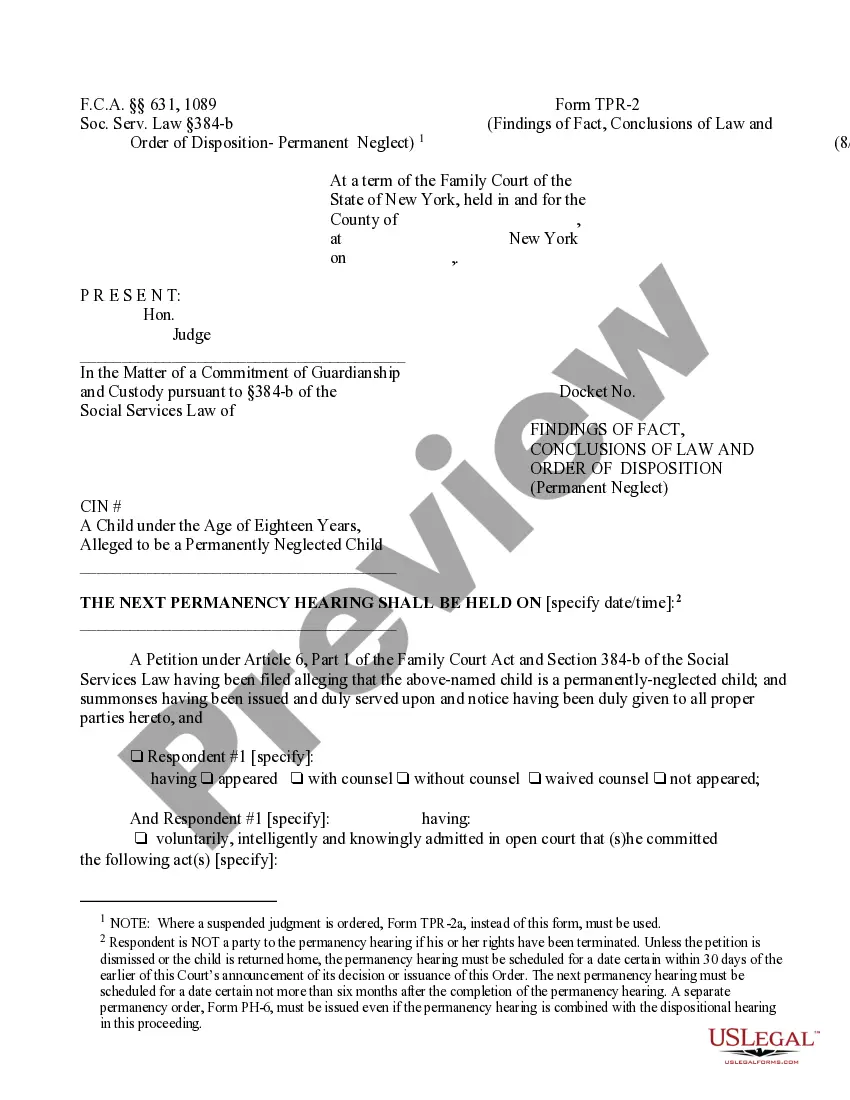
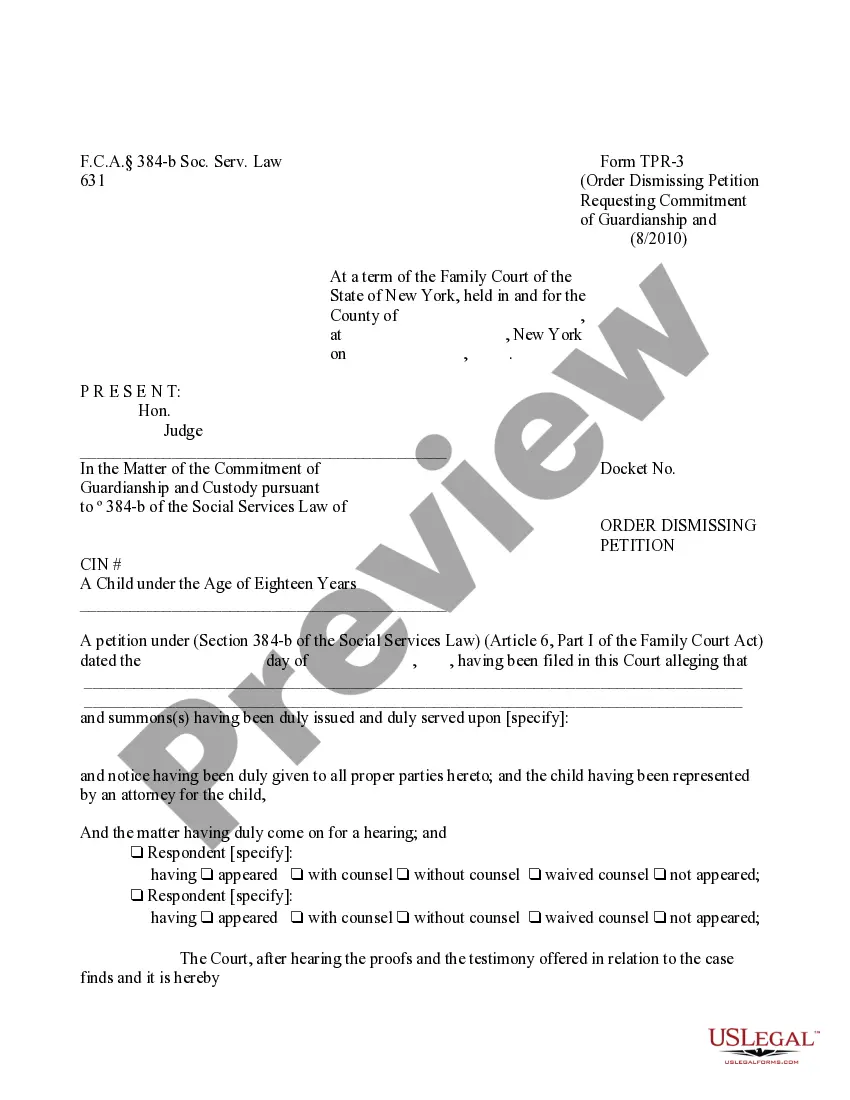
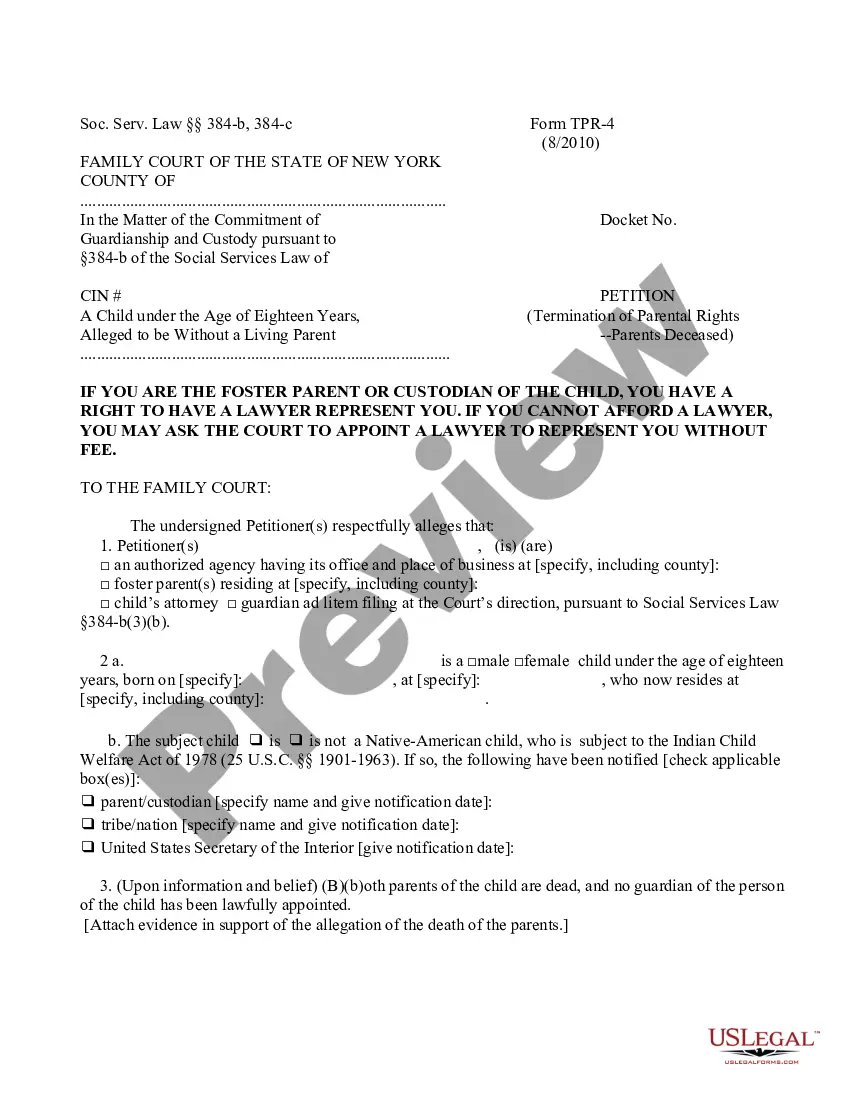
South Dakota Special Durable Power of Attorney for Bank Account Matters
What is this form?
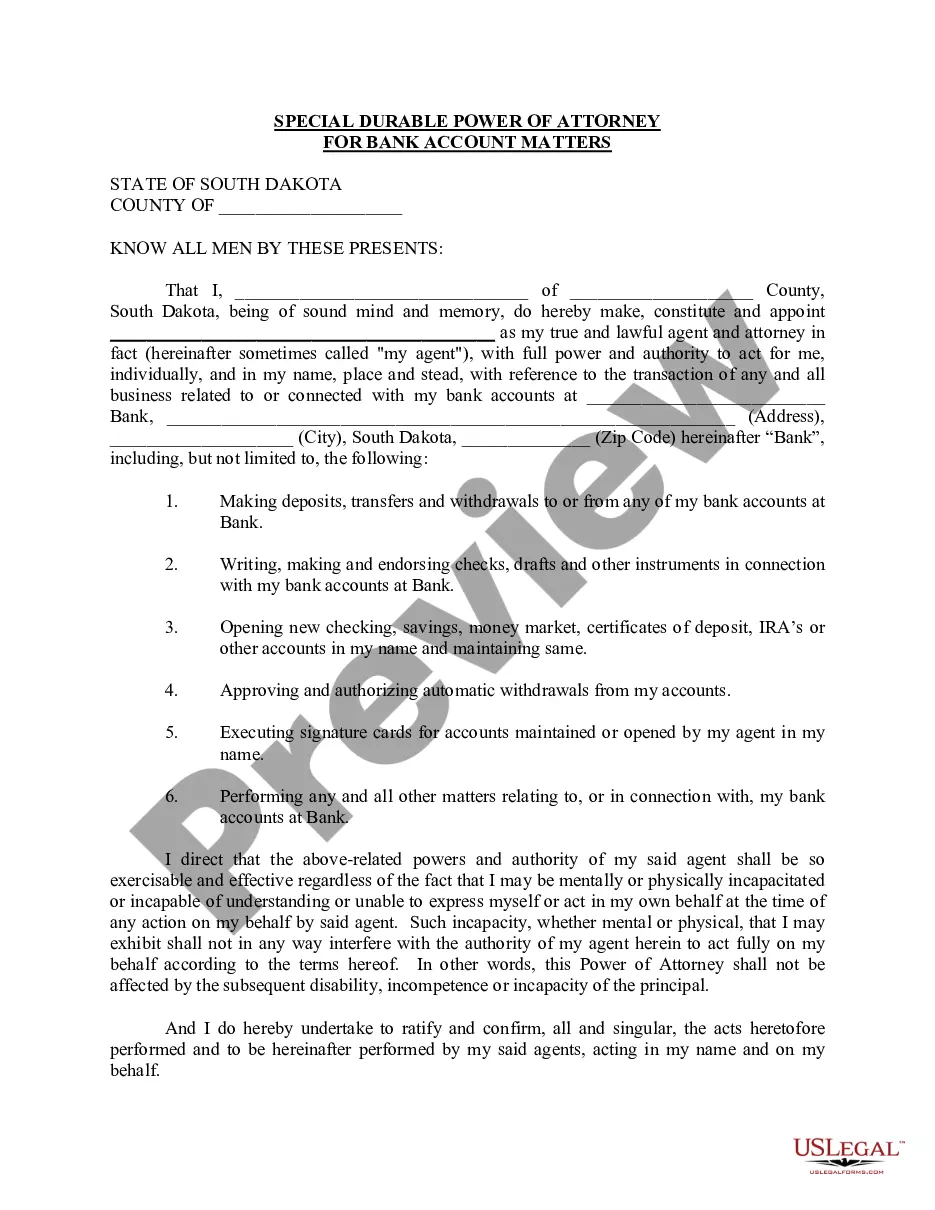
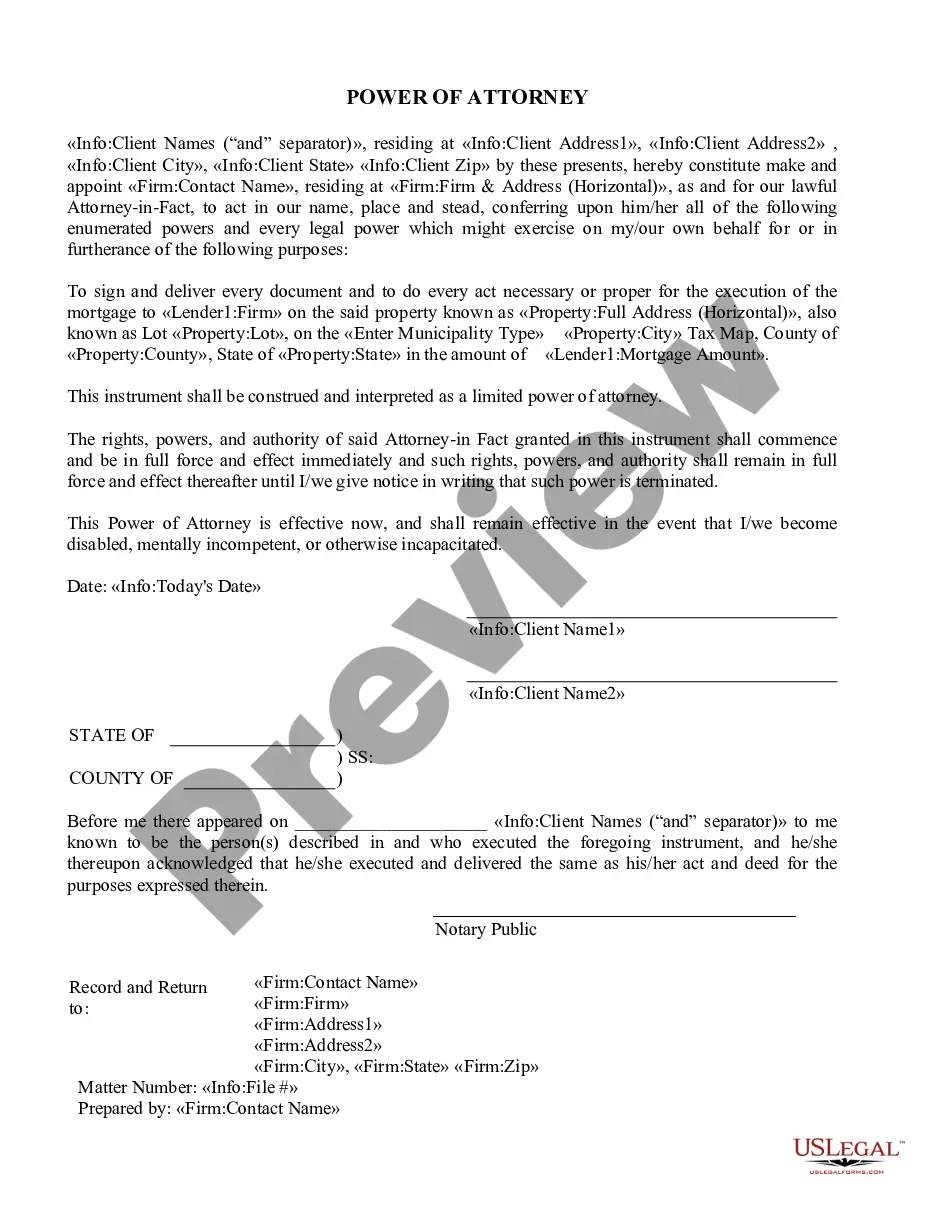
The Special Durable Power of Attorney for Bank Account Matters is a legal document that grants an agent the authority to manage specific banking activities on behalf of the principal. Unlike a general power of attorney, this form limits the agent's powers to handling tasks associated with bank accounts only. This includes making deposits, writing checks, and managing accounts, making it an essential tool for individuals who want to ensure their financial affairs continue smoothly when they are unable to manage them themselves.
Form components explained
- Principal's identification, including name and address.
- Agent's identification, specifying the person authorized to act on behalf of the principal.
- List of specific powers granted to the agent related to bank account management.
- Statement regarding the continuation of authority despite principal's incapacity.
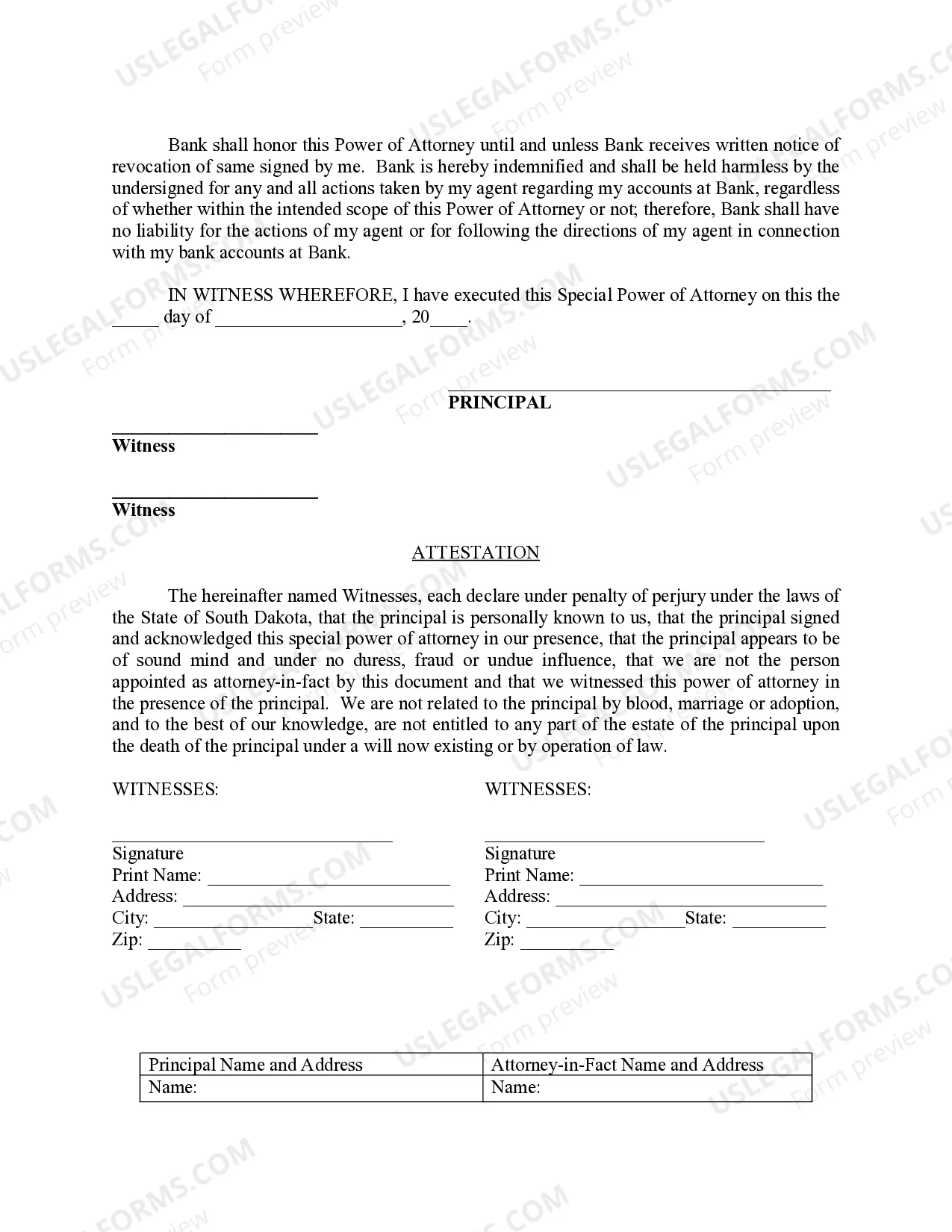
- Indemnification clause protecting the bank from liability for the agent's actions.
- Signature sections for the principal and witnesses to validate the document.

Situations where this form applies
This form is useful in various scenarios, such as when a principal is traveling, undergoing medical treatment, or otherwise incapacitated and cannot manage their banking matters. It helps ensure that financial obligations can still be met, allowing an assigned agent to act swiftly on behalf of the principal.
Intended users of this form
- Individuals who wish to appoint someone to manage their bank account matters.
- Those who want to limit their agent's authority to specific banking transactions.
- Principals concerned about ensuring temporary management of their financial affairs.
Instructions for completing this form
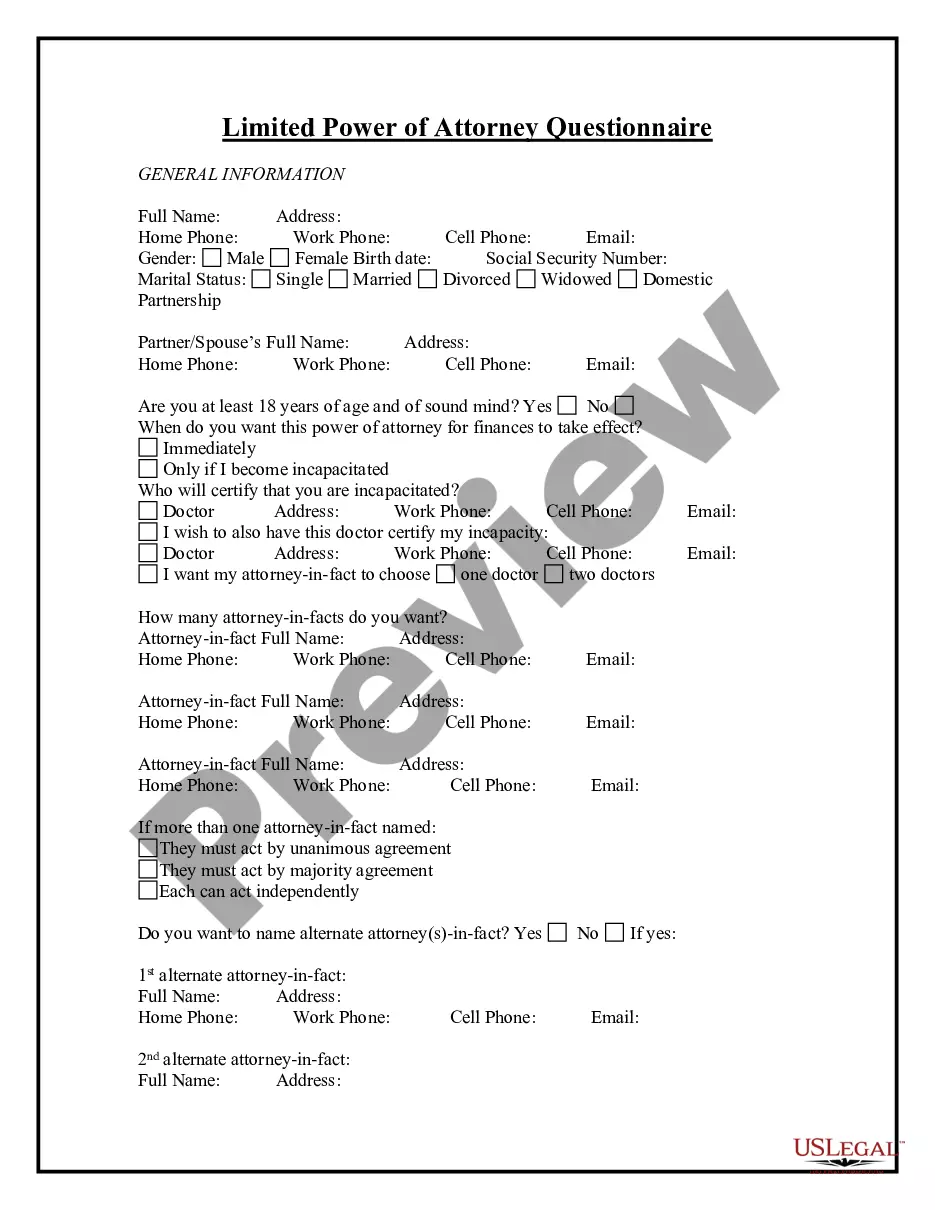
- Identify the principal by entering their full name and address.
- Designate the agent by specifying their name and address.
- List the specific banking powers granted to the agent.
- Include the name and address of the bank where the agent will operate.
- Have the principal sign and date the document in the presence of witnesses.
- Ensure the witnesses sign, confirming the principal's identity and sound mind at the time of signing.
Notarization guidance
Notarization is required for this form to take effect. Our online notarization service, powered by Notarize, lets you verify and sign documents remotely through an encrypted video session, available 24/7.
Get your form ready online
Our built-in tools help you complete, sign, share, and store your documents in one place.
Make edits, fill in missing information, and update formatting in US Legal Forms—just like you would in MS Word.
Download a copy, print it, send it by email, or mail it via USPS—whatever works best for your next step.
Sign and collect signatures with our SignNow integration. Send to multiple recipients, set reminders, and more. Go Premium to unlock E-Sign.
If this form requires notarization, complete it online through a secure video call—no need to meet a notary in person or wait for an appointment.
We protect your documents and personal data by following strict security and privacy standards.
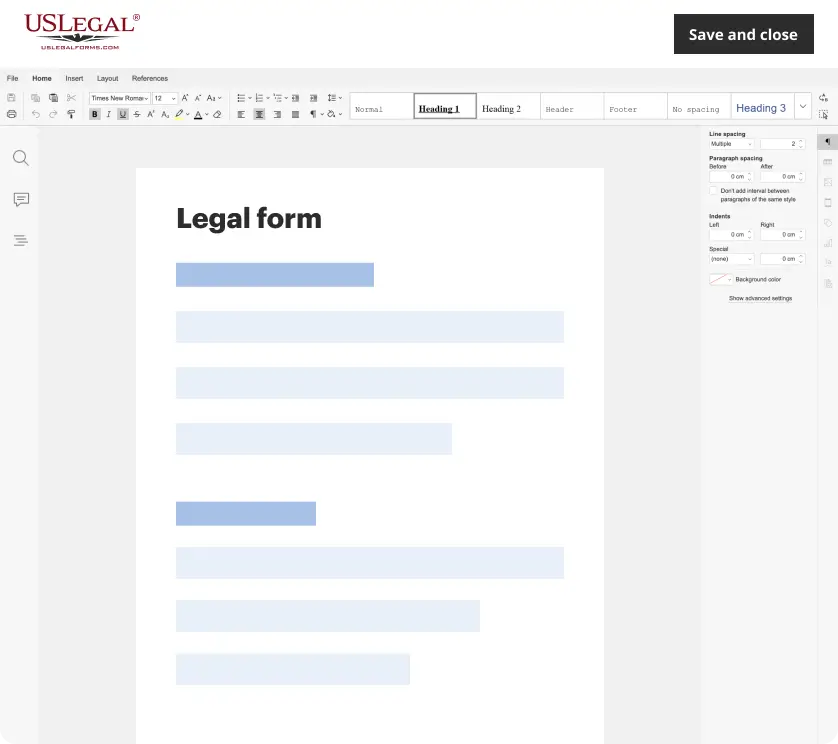
Make edits, fill in missing information, and update formatting in US Legal Forms—just like you would in MS Word.
Download a copy, print it, send it by email, or mail it via USPS—whatever works best for your next step.
Sign and collect signatures with our SignNow integration. Send to multiple recipients, set reminders, and more. Go Premium to unlock E-Sign.

If this form requires notarization, complete it online through a secure video call—no need to meet a notary in person or wait for an appointment.
We protect your documents and personal data by following strict security and privacy standards.
Typical mistakes to avoid
- Failing to clearly identify the agent and their powers.
- Not having the document signed in the presence of appropriate witnesses.
- Omitting details about the bank or account types related to the power granted.
- Using an outdated form that does not comply with current legal standards.
Benefits of completing this form online
- Convenience of downloading and filling out the form at your own pace.
- Editability to customize the document according to specific needs.
- Reliability with forms drafted by licensed attorneys to ensure legal compliance.
Looking for another form?
Form popularity
FAQ
Signing Requirements: No specific signing requirement; however, it is suggested that the document be notarized. Tax Power of Attorney (Form RV-071) Used when you wish to appoint another to take care of your tax issues in front of the tax authority, such as to obtain information and make filings, etc.
In many states, notarization is required by law to make the durable power of attorney valid. But even where law doesn't require it, custom usually does. A durable power of attorney that isn't notarized may not be accepted by people with whom your attorney-in-fact tries to deal.
You get power of attorney by having someone willingly and knowingly grant it to you in a signed legal document. He or she must be able to sufficiently comprehend what a POA document represents, understand the effects of signing it, and clearly communicate his or her intentions.
The court does not "look" for assets; however, it might be discovered by the other party. If you "forgot" about the account, it should be disclosed, and if it contains community property assets, it should be divided. if the account contains only separate property assets, then it can be confirmed to you.
When opening a bank account using a power of attorney, you will have to fill out forms with both your information as well as the information of the account holder. Provide the bank employee with the completed paperwork, your identification and the power of attorney. The bank will make a copy of the power of attorney.
A power of attorney (or POA) is a legal document that grants a person or organization the legal authority to act on another's behalf and make certain decisions for them.A power of attorney needs to be signed in front of a licensed notary public in order to be legally binding.
A power of attorney allows an agent to access the principal's bank accounts, either as a general power or a specific power. If the document grants an agent power over that account, they must provide a copy of the document along with appropriate identification to access the bank account.
Through the use of a valid Power of Attorney, an Agent can sign checks for the Principal, withdraw and deposit funds from the Principal's financial accounts, change or create beneficiary designations for financial assets, and perform many other financial transactions.
The POA retains access to any of the decedent's assets that name them as a joint owner or payable-on-death (POD) or transfer-on-death (TOD) beneficiary. Assets that commonly carry POD/TOD designations or can be jointly titled include life insurance proceeds, bank accounts, retirement accounts and brokerage accounts.