South Dakota Premarital Agreements Package
What this form package covers
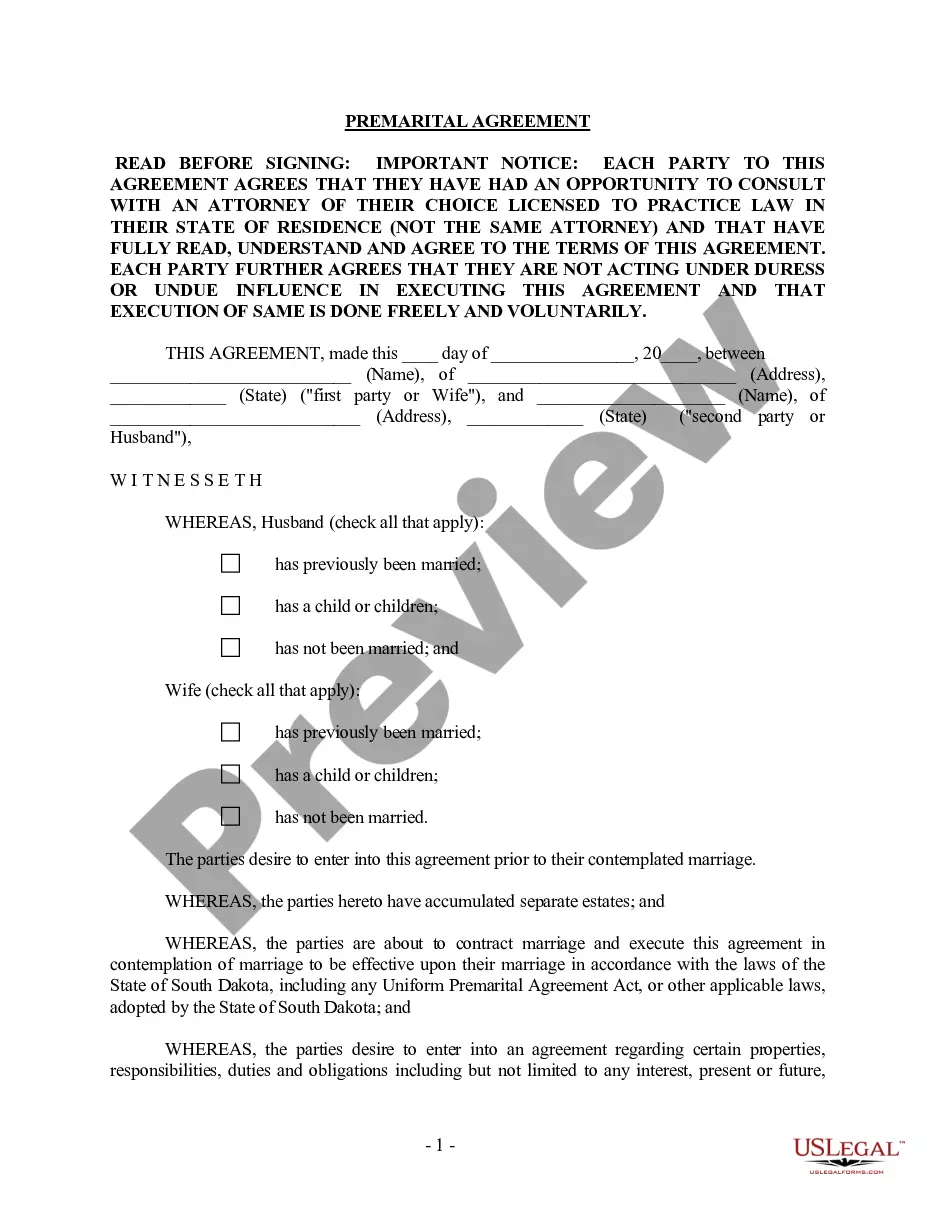
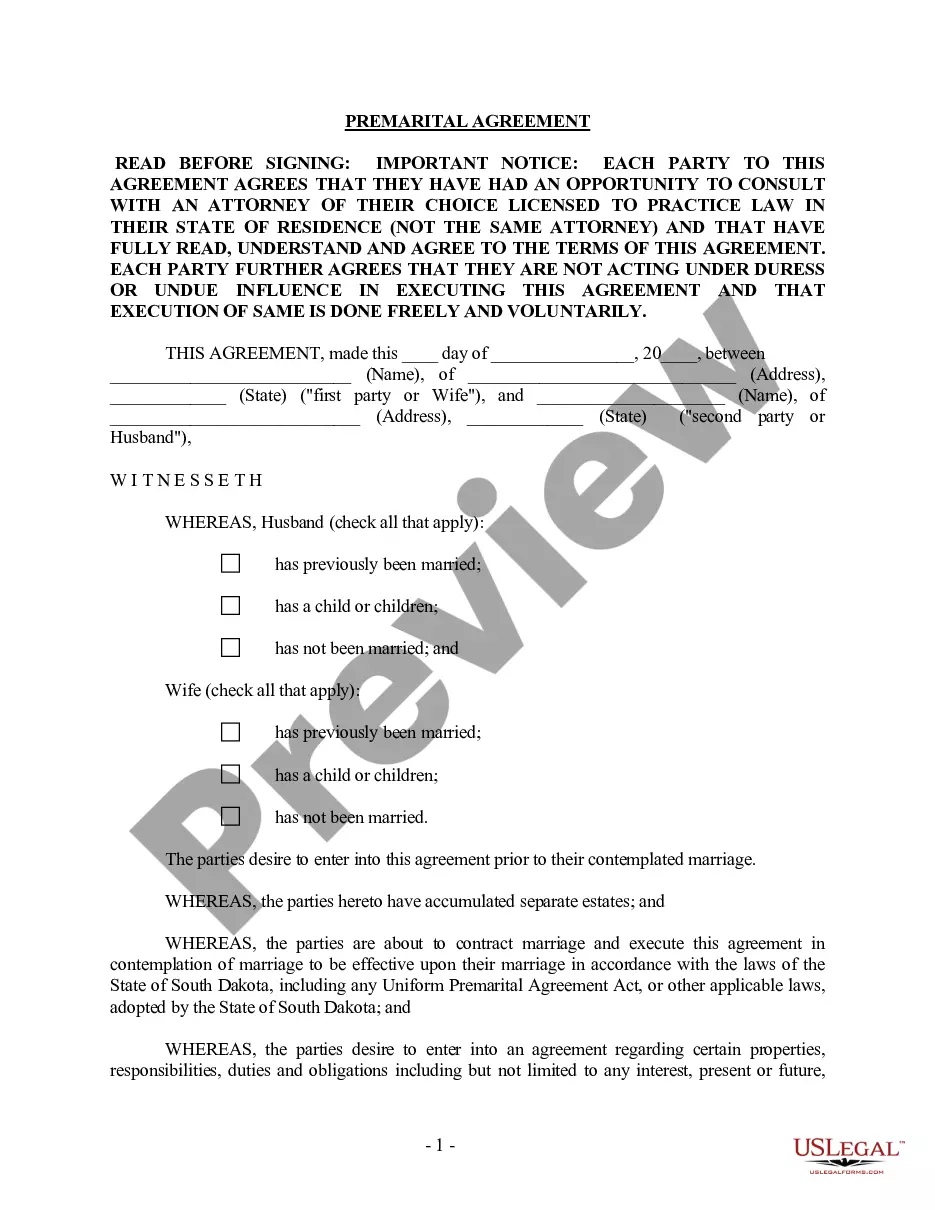
The South Dakota Premarital Agreements Package includes essential legal forms prepared by licensed attorneys. This package is specifically designed for individuals contemplating marriage, whether they have been married before or are first-time partners. It outlines provisions for asset and debt disclosure, addresses property rights during the marriage, and clarifies obligations of each party in the event of divorce or death, setting it apart from other legal form packages.
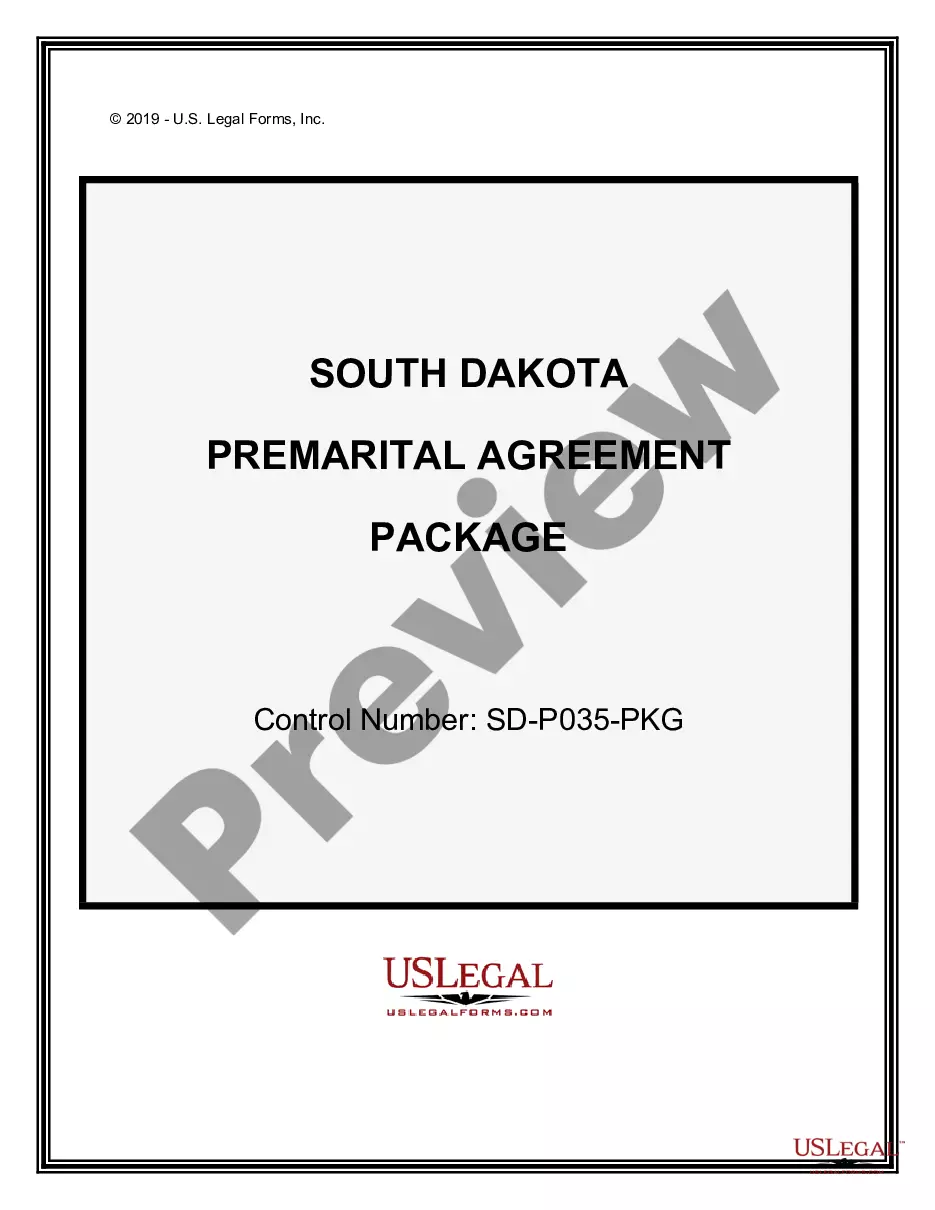
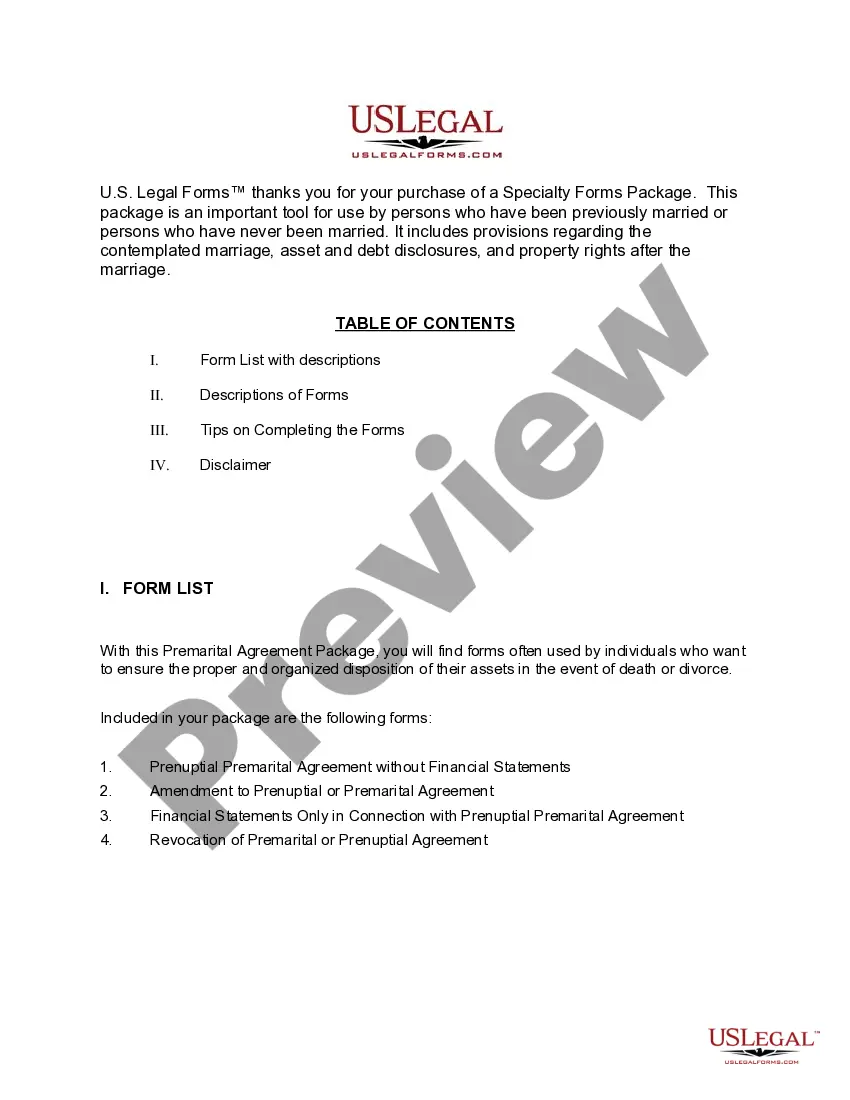
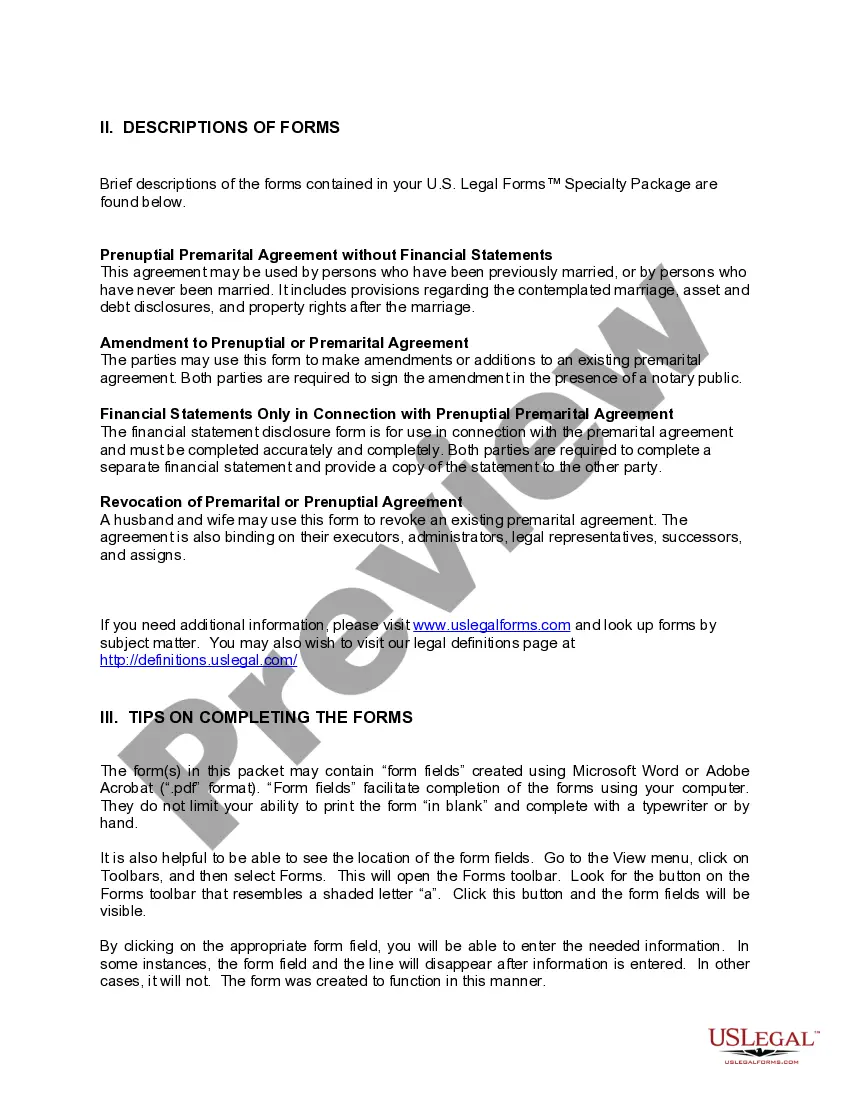
Documents contained in this package
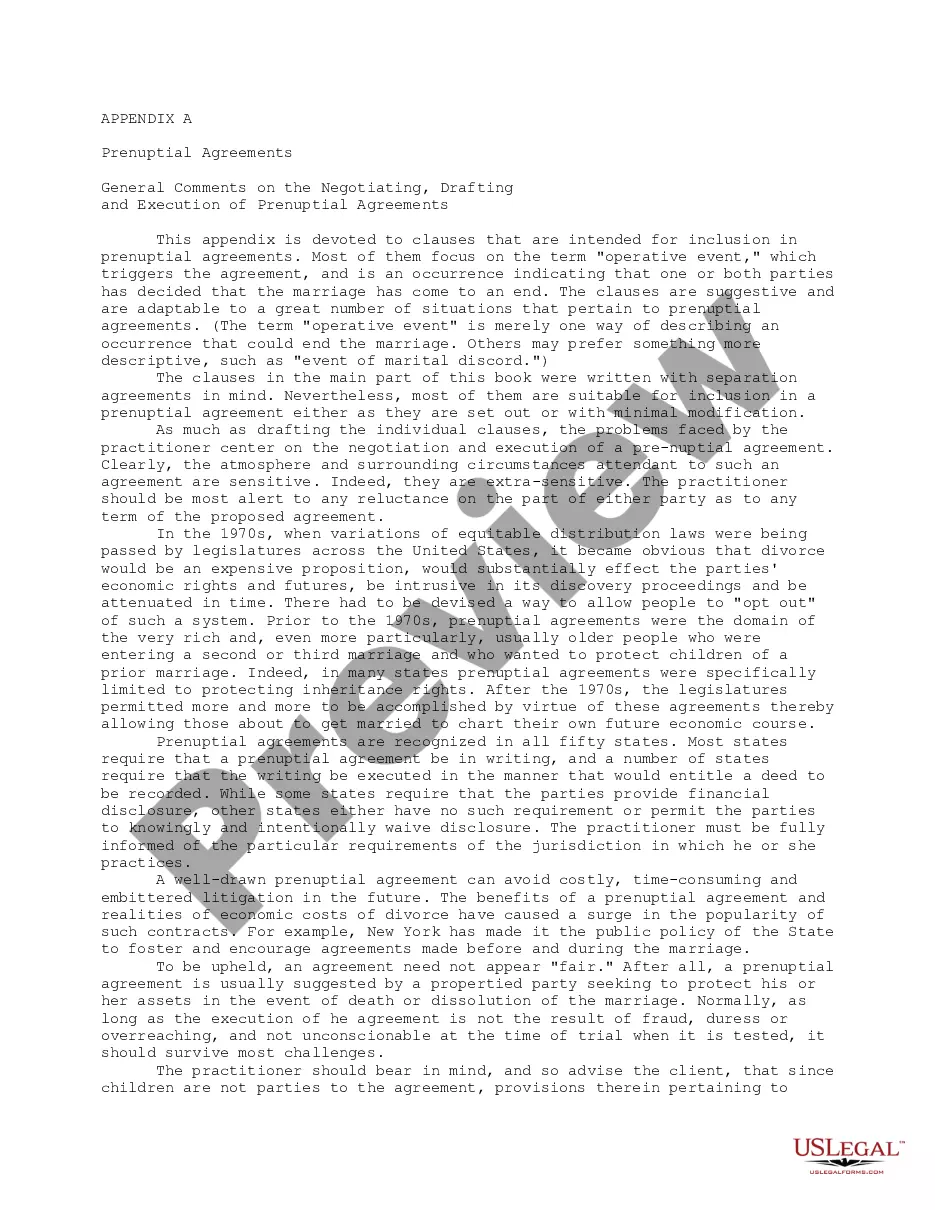
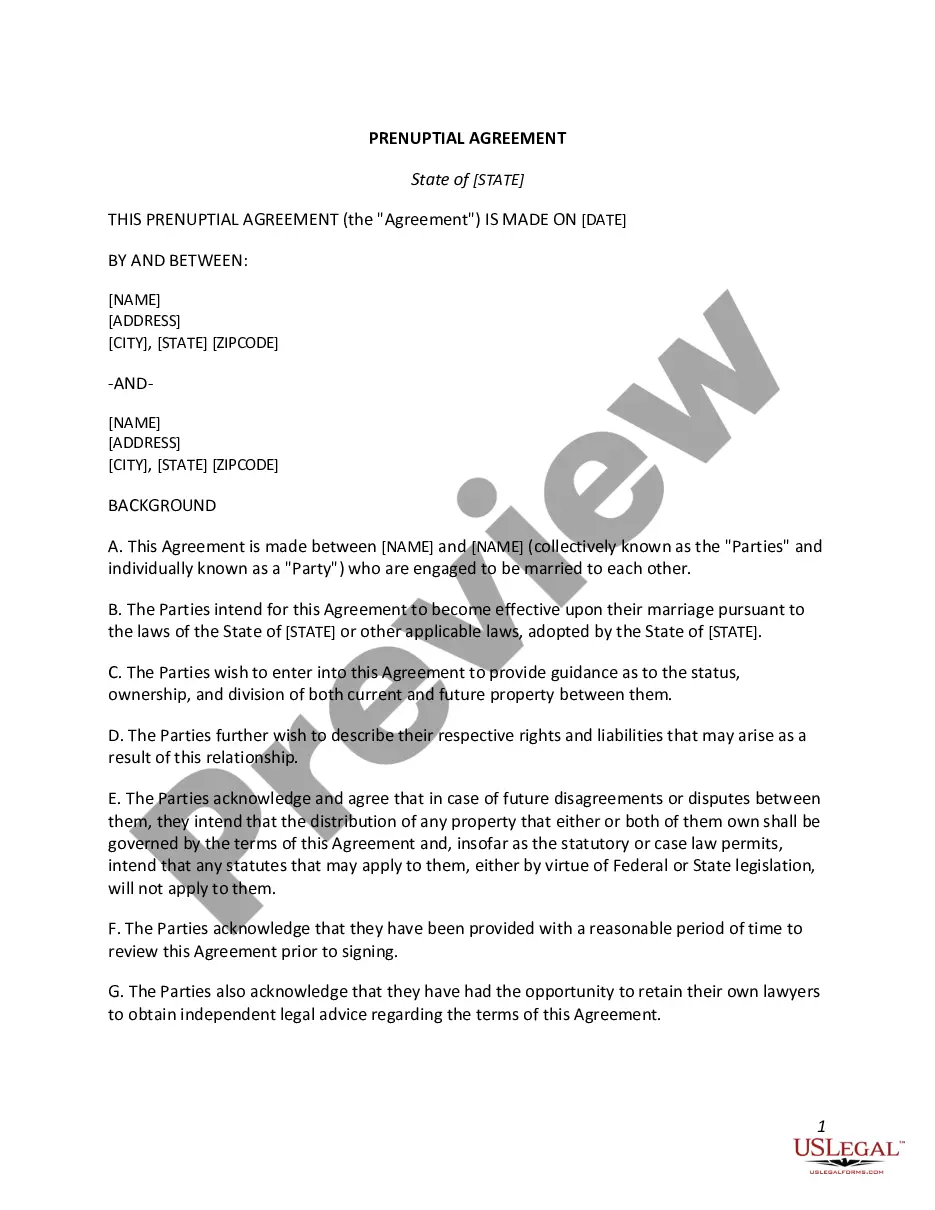
Situations where these forms applies
This form package is beneficial in various real-life scenarios, including:
- You are planning to marry and wish to outline financial rights and responsibilities before marriage.
- You or your partner have significant assets or debts that you want to protect.
- You want to avoid potential disputes regarding property division in case of divorce.
- You are remarrying and wish to safeguard family assets for your children or other heirs.
Who needs this form package
- Individuals who have been previously married and are entering a new marriage.
- First-time partners seeking to protect their assets and clarify financial responsibilities.
- Couples wanting to establish clear financial agreements before marriage.
- Those who wish to avoid costly litigation and ensure proper asset disposition through legal documentation.
Completing these forms step by step
- Review all included forms carefully to identify which ones apply to your situation.
- Enter the names and relevant information of both parties in the appropriate fields.
- Complete the Financial Statements if required, ensuring accuracy and honesty.
- Have both parties sign the Premarital Agreement in the presence of a notary public if indicated.
- Keep copies of all completed forms for personal records and future reference.
Do documents in this package require notarization?
Some included forms must be notarized to ensure validity. US Legal Forms provides secure online notarization powered by Notarize, allowing you to complete the process through a verified video call anytime.
Get your form ready online
Our built-in tools help you complete, sign, share, and store your documents in one place.
Make edits, fill in missing information, and update formatting in US Legal Forms—just like you would in MS Word.
Download a copy, print it, send it by email, or mail it via USPS—whatever works best for your next step.
Sign and collect signatures with our SignNow integration. Send to multiple recipients, set reminders, and more. Go Premium to unlock E-Sign.
If this form requires notarization, complete it online through a secure video call—no need to meet a notary in person or wait for an appointment.
We protect your documents and personal data by following strict security and privacy standards.

Make edits, fill in missing information, and update formatting in US Legal Forms—just like you would in MS Word.

Download a copy, print it, send it by email, or mail it via USPS—whatever works best for your next step.

Sign and collect signatures with our SignNow integration. Send to multiple recipients, set reminders, and more. Go Premium to unlock E-Sign.

If this form requires notarization, complete it online through a secure video call—no need to meet a notary in person or wait for an appointment.

We protect your documents and personal data by following strict security and privacy standards.
Common mistakes
- Failing to disclose all financial assets and liabilities accurately.
- Not having the agreement notarized when required.
- Leaving out necessary signatures or dates on the forms.
- Using outdated forms or not customizing the agreement to suit specific needs.
Benefits of using this package online
- Convenience: Download the forms anytime, anywhere, and complete them at your own pace.
- Editability: Easily modify the forms to fit your unique circumstances.
- Reliability: The forms are drafted by licensed attorneys, ensuring compliance with legal standards.
- Affordability: Save on attorney fees by using professionally prepared packages.
Legal use & context
- Prenuptial agreements are generally enforceable in South Dakota if they are entered into voluntarily and with full disclosure.
- It is advisable to have an attorney review the agreements to ensure they meet legal standards and adequately protect both parties.
Main things to remember
- The South Dakota Premarital Agreements Package provides essential documentation for couples before marriage.
- Understanding financial obligations and rights is crucial for protecting personal assets.
- Notarization may be required to ensure the agreement's validity.
Looking for another form?
Form popularity
FAQ
In the event of divorce, a prenup can protect a spouse from being liable for any debt the other spouse brought into the marriage.A prenup can also protect any income or assets you earn during the marriage, as well as unearned income from a bequest or a trust distribution.
Putting the Agreement in Writing. Identify the parties and the document. After titling the document something like Premarital Agreement, you want to identify the two parties by full, legal names and state that they are both willingly entering into the agreement. State the intent of marriage.
Saving and Spending Strategies A prenuptial agreement should address the couple's future financial plans, including investment and retirement strategies. It should also cover how much income is to be paid into joint and/or separate bank accounts, and whether or not their will be any specific spending allowances.
Be in writing. Be signed by both parties of their own free will. They cannot be under duress or be pressured into signing the prenup. Be presented with full disclosure. Be fair and reasonable. Be signed by both parties before a witness and a notary.
Identify and divide separate and marital assets. Identify and allocate separate and marital debts. Spousal support concerns. Special considerations if you have children from a previous marriage. Keep property in the family. Child custody, parenting time, and child support.
Despite the fact that a prenup is arranged before a marriage, you can still sign one after exchanging "I do's." This contract, known as a post-nuptial agreement, is drafted after marriage by those who are still married and either are contemplating separation or divorce or simply want to protect themselves from the
Just as a future asset can be protected by a prenup if adequately described, future income can also be treated as belonging to one partner but not both.
A good prenuptial agreement should be fair. It should be entered into between two consenting adults who know what they are doing. The agreement should be fair when it is signed and entered into, and also fair when it is be enforced, whether in the event of a divorce or death.