South Dakota Paternity Law and Procedure Handbook
About this form
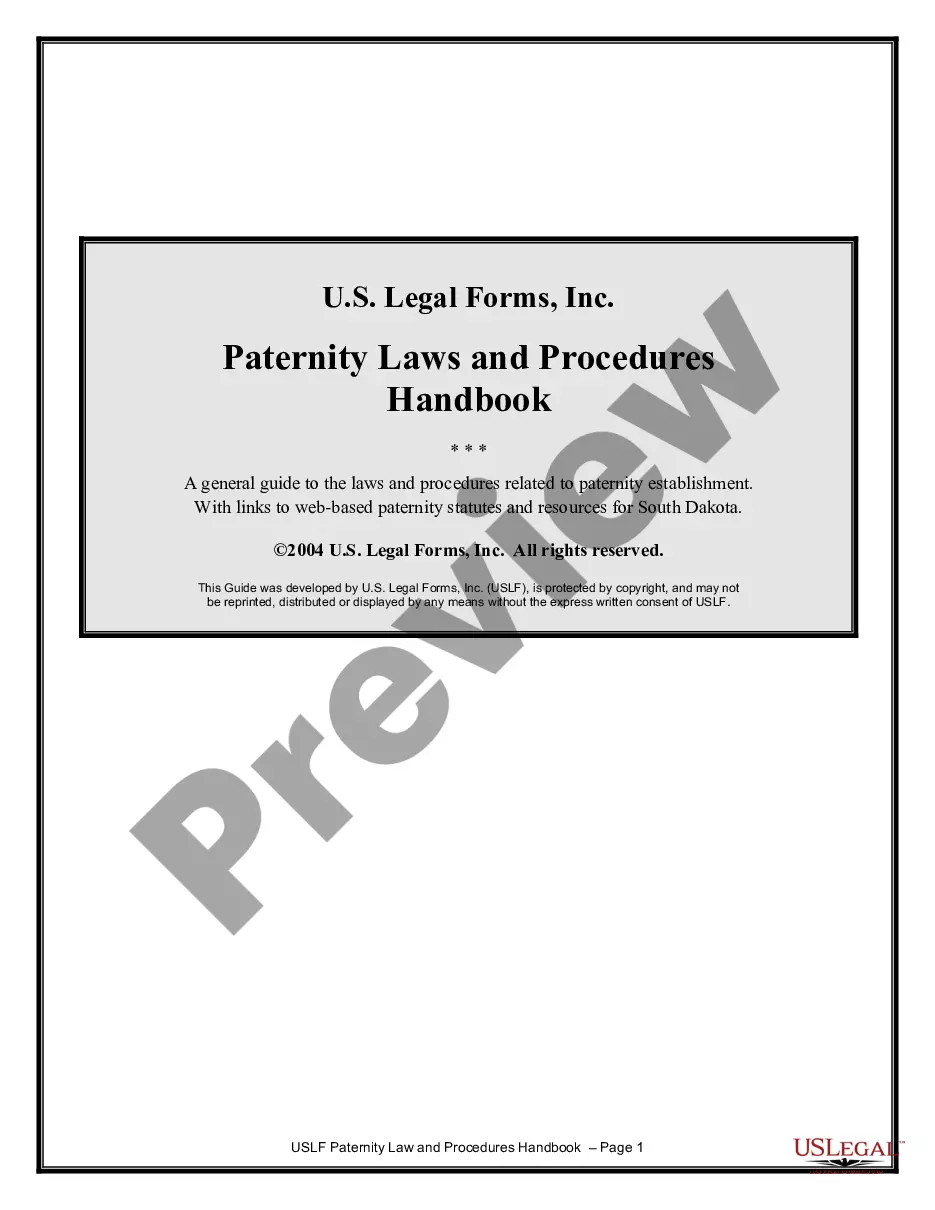
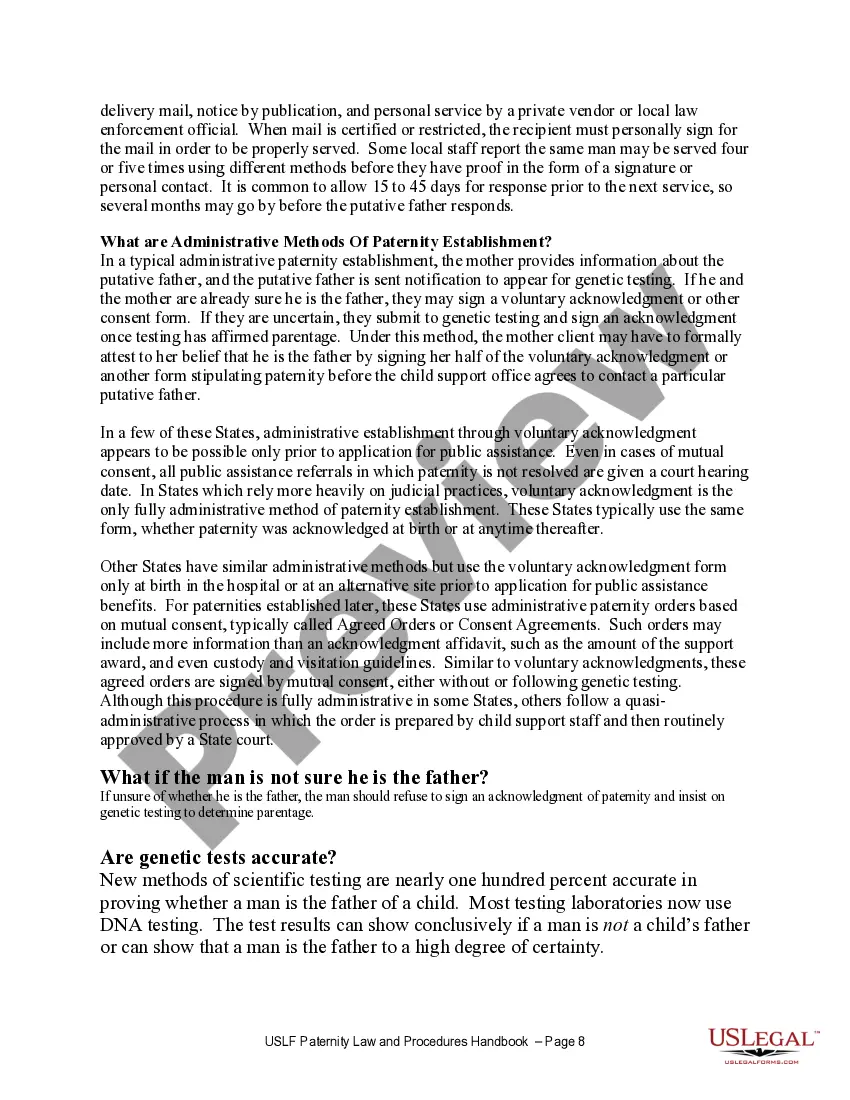
The Paternity Law and Procedure Handbook is a comprehensive guide designed to assist individuals in understanding the laws and procedures surrounding paternity establishment in the United States. This handbook is particularly beneficial for those navigating the complexities of establishing paternity, as it provides state-specific resources, legal summaries, and clear explanations of relevant laws. Unlike other legal forms, the handbook serves as both an informative and practical resource, supporting parents in ensuring their rights and responsibilities regarding child support and legal acknowledgment of paternity.
What’s included in this form
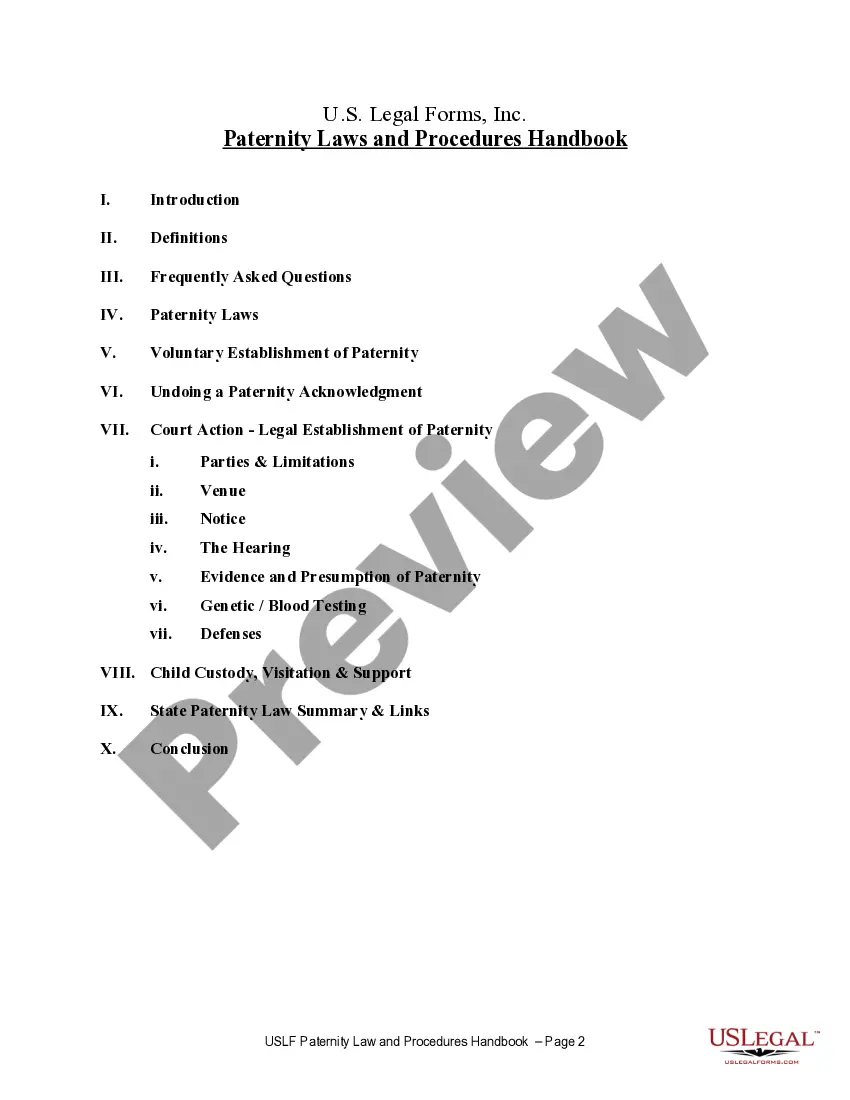
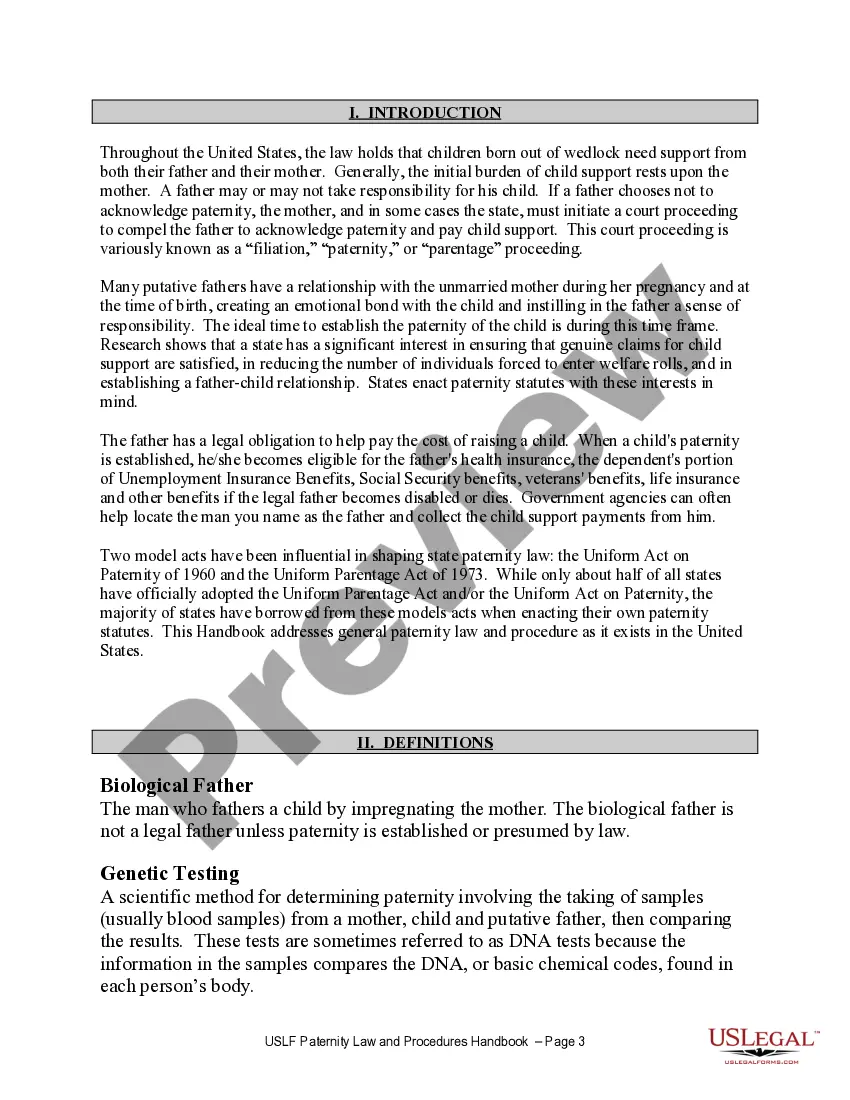
- Introduction to paternity laws across the U.S.
- Definitions of key terms related to paternity.
- Frequently asked questions addressing common concerns.
- Section on voluntary establishment of paternity.
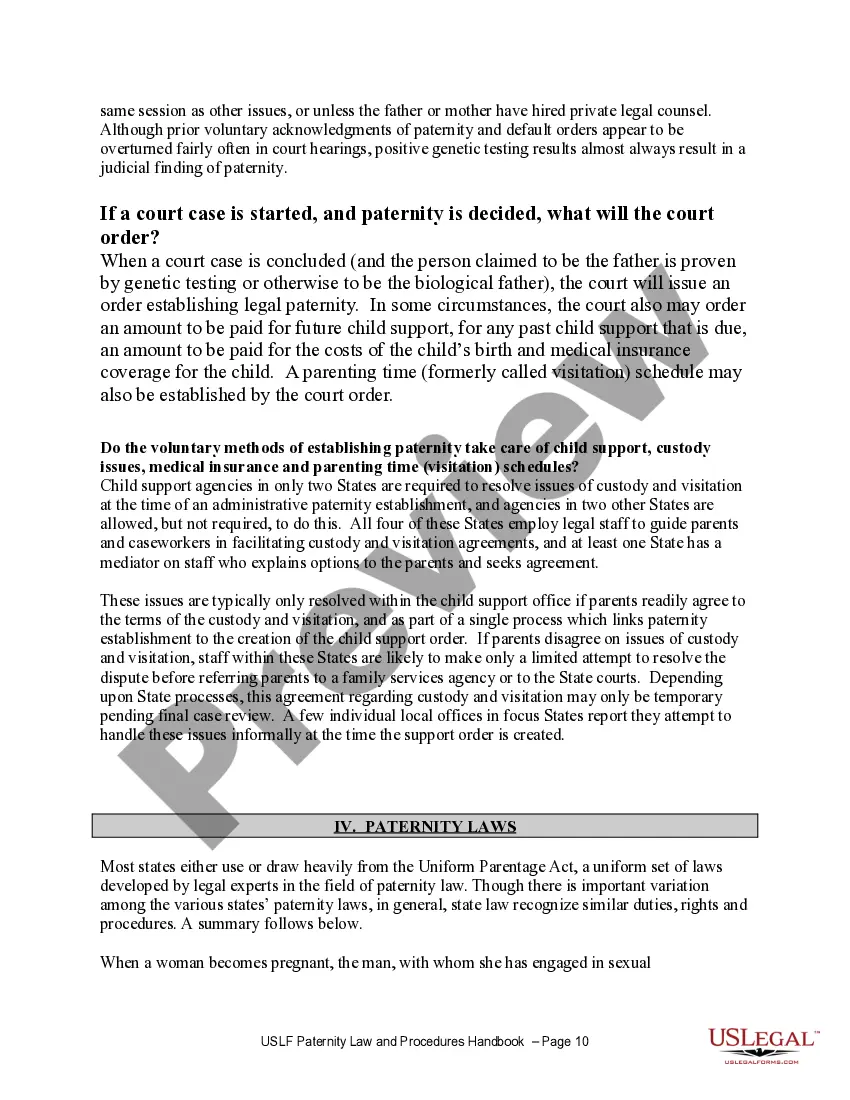
- Legal processes for court-ordered paternity establishment.
- State law summaries specific to paternity issues.





Situations where this form applies
This handbook is essential when individuals are facing situations such as the birth of a child out of wedlock, seeking to establish financial responsibilities for child support, or when there are disputes regarding paternity. It is also useful for those considering voluntary acknowledgment of a child's paternity or needing to understand the legal processes involved in court actions for paternity establishment.
Who can use this document
- Unmarried parents wishing to establish paternity.
- Individuals involved in child support cases.
- Putative fathers seeking to understand their rights and responsibilities.
- Legal professionals advising clients on paternity issues.
- Parents wanting to secure benefits for their child through legal acknowledgment of paternity.
How to complete this form
- Identify the parties involved, including the mother, putative father, and child.
- Review the definitions and key terms to ensure understanding of the related legal language.
- Determine the appropriate method of paternity establishment: voluntary acknowledgment or court action.
- Follow the outlined procedures specific to your state as detailed in the handbook.
- Gather necessary documentation, such as proof of relationship and any required forms, for submission.
Does this form need to be notarized?
This form does not typically require notarization to be legally valid. However, some jurisdictions or document types may still require it. US Legal Forms provides secure online notarization powered by Notarize, available 24/7 for added convenience.
Get your form ready online
Our built-in tools help you complete, sign, share, and store your documents in one place.
Make edits, fill in missing information, and update formatting in US Legal Forms—just like you would in MS Word.
Download a copy, print it, send it by email, or mail it via USPS—whatever works best for your next step.
Sign and collect signatures with our SignNow integration. Send to multiple recipients, set reminders, and more. Go Premium to unlock E-Sign.
If this form requires notarization, complete it online through a secure video call—no need to meet a notary in person or wait for an appointment.
We protect your documents and personal data by following strict security and privacy standards.

Make edits, fill in missing information, and update formatting in US Legal Forms—just like you would in MS Word.

Download a copy, print it, send it by email, or mail it via USPS—whatever works best for your next step.

Sign and collect signatures with our SignNow integration. Send to multiple recipients, set reminders, and more. Go Premium to unlock E-Sign.

If this form requires notarization, complete it online through a secure video call—no need to meet a notary in person or wait for an appointment.

We protect your documents and personal data by following strict security and privacy standards.
Mistakes to watch out for
- Failing to understand the difference between voluntary and judicial paternity establishment.
- Not contacting the necessary state agencies for support and resources.
- Ignoring time limits for establishing paternity after the child's birth.
- Signing acknowledgments without seeking genetic testing when unsure of paternity.
- Overlooking state-specific requirements that may affect paternity establishment.
Benefits of completing this form online
- Convenient access to essential legal information without the need for physical copies.
- Edit and customize forms based on state-specific requirements.
- Reliable content developed by licensed attorneys, ensuring legal accuracy and compliance.
- 24/7 access allows users to complete necessary steps at their own pace.
Legal use & context
- The handbook serves as a legal resource to understand paternity laws and obligations.
- It provides essential information for both parents navigating the paternity process.
- This guide can be used in conjunction with legal advice for specific situations.
Key takeaways
- Establishing paternity is crucial for securing the legal rights and responsibilities of both parents.
- There are multiple methods to establish paternity, each with its own legal implications.
- Genetic testing can provide definitive evidence in contested paternity cases.
- State laws vary significantly, making it essential to understand the local procedures.
Looking for another form?



Form popularity
FAQ
Establishing paternity ensures a father's legal rights and various rights and privileges for their children, such as rights to inheritance, father's medical and life insurance benefits, and Social Security and veterans' benefits, plus access to paternal family health history.
Birth certificate. If a birth certificate declares the father and he signs it, this is a legally binding qualification of paternity. DNA test. Court order.
If you would like to formally establish paternity, you should begin by asking the father of your child to voluntarily acknowledge paternity.The birth father can voluntarily acknowledge paternity in two ways: He can be present at the birth of your child and sign a Declaration of Paternity.
If a mother refuses to determine paternity for legal reasons, a court can order a paternity test be carried out. A mother has to give her consent for children to have a DNA test but the court can override any refusal if it considers it's in the child's best interest for the sample to be taken.
After paternity is legally established, barring additional legal action on the part of the father, the mother still retains sole legal and physical custody of a child. A father who wishes to gain child custody must ask the court for an order. Paternity isn't a guarantee that child custody will be granted.
Get on the birth certificate. Once your child is born, the easiest way to establish paternity is by getting your name on the birth certificate. Get an order through an administrative agency. Get a court order.
In South Dakota, doesn't the mother usually get custody of the child? In the State of South Dakota, the law does not discriminate or favor one parent over the other based on gender. Mothers and fathers are equally entitled to seek and be awarded custody of their child.