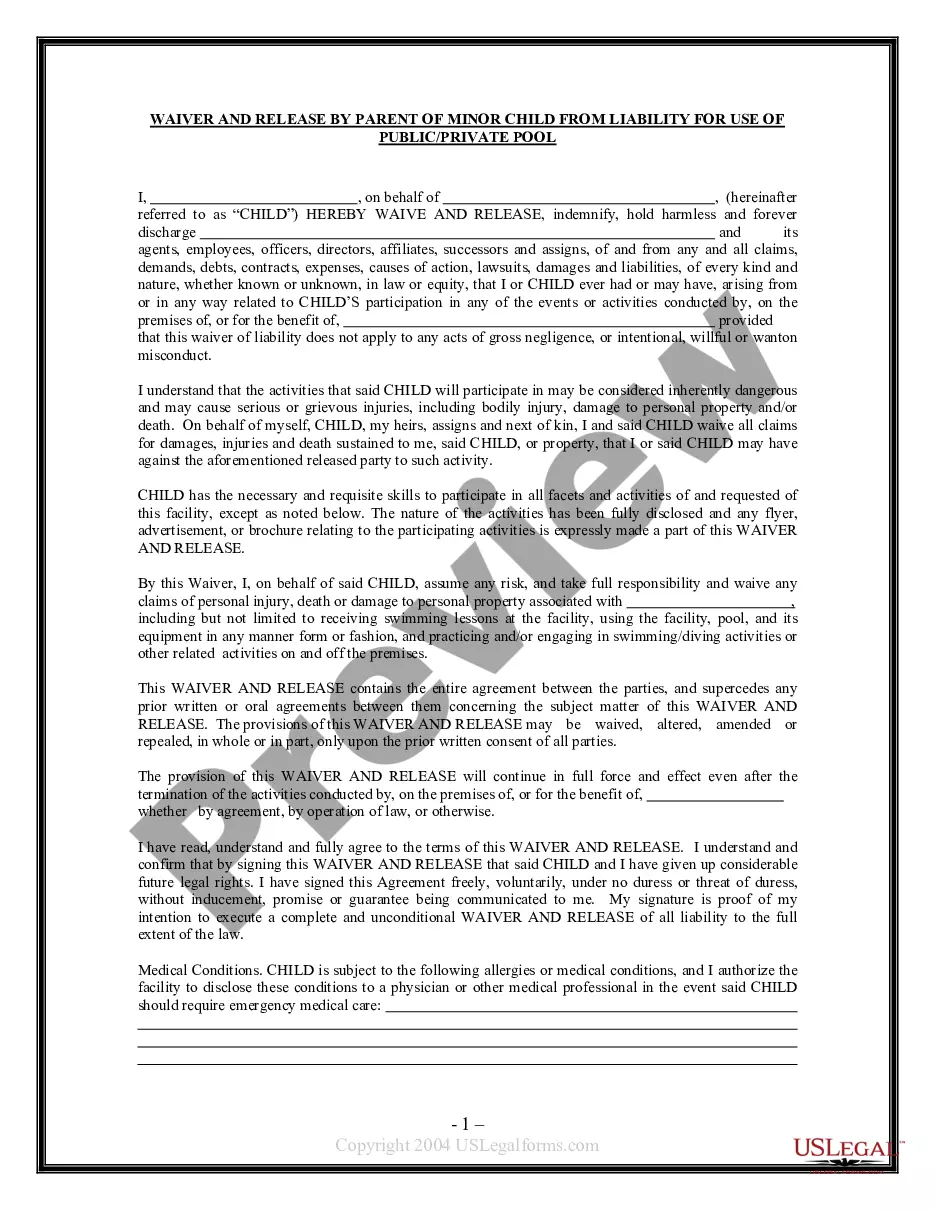
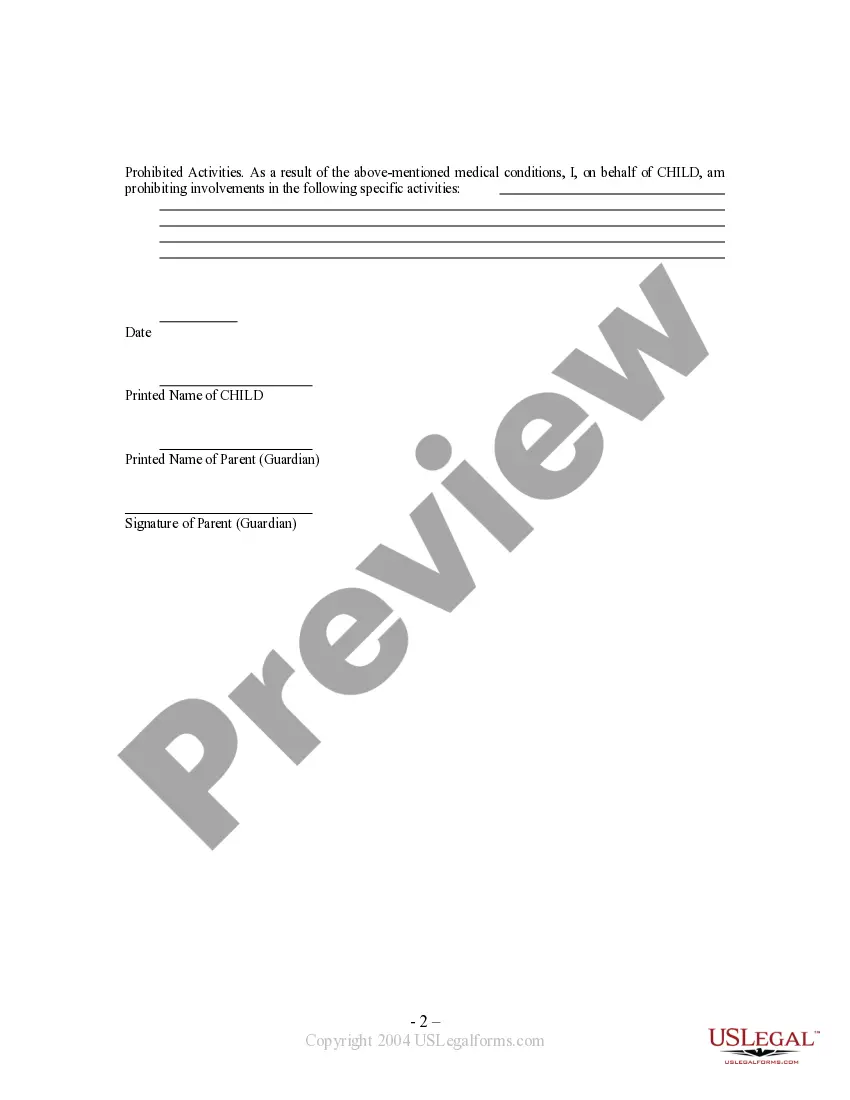
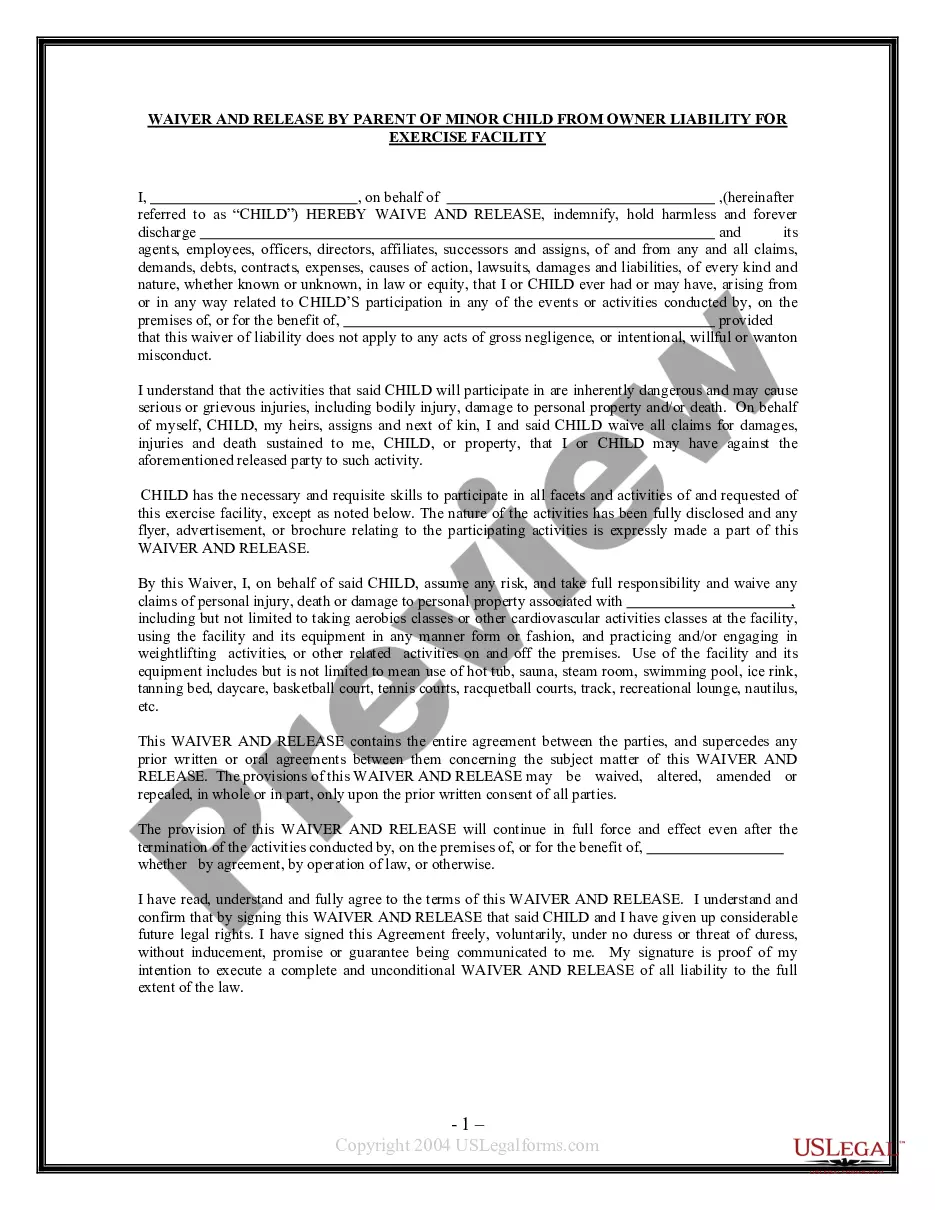
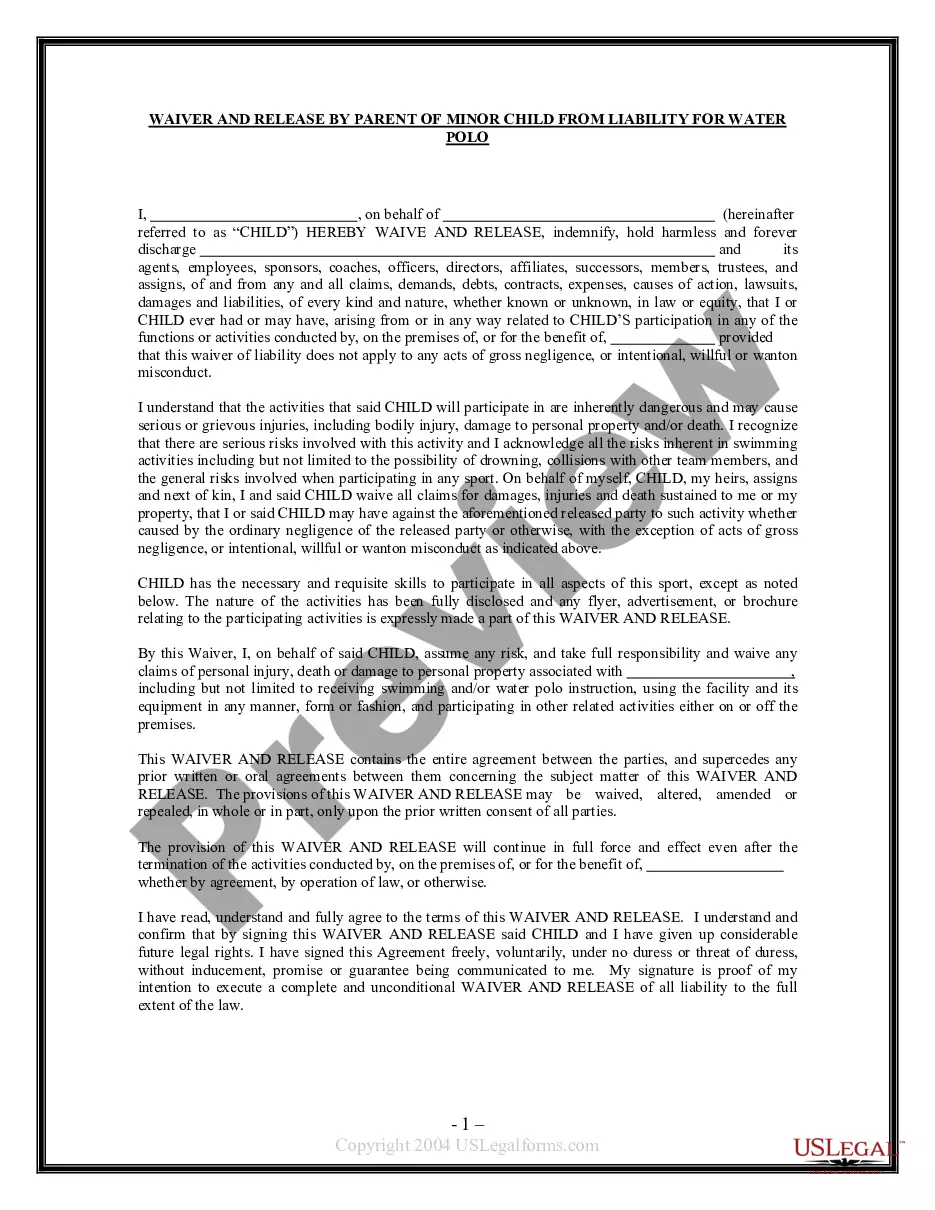
This form allows a parent or guardian to release an Public/Private Pool from liability for injuries which may be incurred by a minor child while on the premises, taking part in activities, etc.
South Carolina Waiver and Release From Liability For Minor Child for Pool
Category:
State:
Multi-State
Control #:
US-WAV-06M
Format:
Word;
Rich Text
Instant download
Description
Free preview

How to fill out Waiver And Release From Liability For Minor Child For Pool?
Are you currently in the situation where you require documents for either business or personal reasons almost every day.
There are numerous legal document templates available online, but locating ones you can trust is not simple.
US Legal Forms provides a wide array of form templates, such as the South Carolina Waiver and Release From Liability For Minor Child for Pool, that are designed to comply with state and federal regulations.
Once you find the correct form, simply click Buy now.
Select the pricing plan you want, enter the required information to set up your account, and complete the purchase using your PayPal or credit card.
- If you are already familiar with the US Legal Forms website and have an account, simply Log In.
- After that, you can download the South Carolina Waiver and Release From Liability For Minor Child for Pool template.
- If you do not have an account and wish to start using US Legal Forms, follow these instructions.
- Obtain the form you need and ensure it is for your correct city/state.
- Use the Preview option to review the form.
- Read the description to confirm you have selected the right form.
- If the form is not what you are looking for, utilize the Search field to find the form that fits your needs and requirements.
Form popularity
FAQ
In South Carolina, state law requires that pools have a barrier, such as a fence, to enhance safety and prevent accidental drownings. The fence must meet certain height and gate requirements to effectively restrict access to the pool area. Ensuring compliance with these regulations not only promotes safety but also reduces your liability risks. You can further safeguard your family by utilizing a South Carolina Waiver and Release From Liability For Minor Child for Pool, which addresses potential legal concerns.
Yes, you typically need a permit to install an above ground pool in South Carolina. Local regulations can vary, so it's essential to check with your city or county's planning department. Obtaining the necessary permits ensures compliance with safety standards and helps protect you from liability issues. Additionally, using a South Carolina Waiver and Release From Liability For Minor Child for Pool can provide extra protection when allowing children to use your pool.
To write a simple release of liability, begin with a clear title that indicates the document's purpose. Use straightforward language to outline the risks associated with the pool and specify that the parents release the owner from any liability. Including a statement about the South Carolina Waiver and Release From Liability For Minor Child for Pool will ensure that the waiver is relevant and enforceable under state law. This approach simplifies the process and protects everyone involved.
Yes, you can write your own liability waiver, but it’s vital to ensure that it meets all legal requirements. A South Carolina Waiver and Release From Liability For Minor Child for Pool should adhere to state laws and include specific terminology to be enforceable. If you're unsure, consider using a platform like uslegalforms to access templates and guidance that can help you create a legally sound document.
To write a release of liability waiver, start by identifying the parties involved, including the pool owner and the parents of the minor child. Clearly state the purpose of the waiver, which is to release the owner from liability for injuries sustained while using the pool. It’s essential to include specific language that pertains to the South Carolina Waiver and Release From Liability For Minor Child for Pool, as this adds legal weight and clarity to the document.
An example of a waiver of liability is a document that parents sign, releasing a pool owner from responsibility for any injuries their minor child may sustain while using the pool. Specifically, a South Carolina Waiver and Release From Liability For Minor Child for Pool can outline potential risks associated with swimming and clarify that the parents accept those risks. This type of waiver helps to protect pool owners legally and ensures that parents are aware of the potential dangers.
This may seem like a silly distinction to make, but lack of knowledge or willingness is actually one of the biggest reasons lawyers can completely toss out a waiver in a personal injury case.
Under California law, waivers of liability may not prevent people from suing for injuries resulting from gross negligence, recklessness, intentional torts or illegal acts.
A waiver is an exculpatory contract. That means it's used to excuse a party from responsibility when the other contracted party is injured by either known or unknown risks in a particular activity. This includes inherent risks and ordinary negligence.
In California, waivers of liability are generally enforceable so long as they have been drafted correctly, are explicit as to the scope of coverage, are legible and use high-visibility text, and do not illegally waive unknown or unrelated claims.