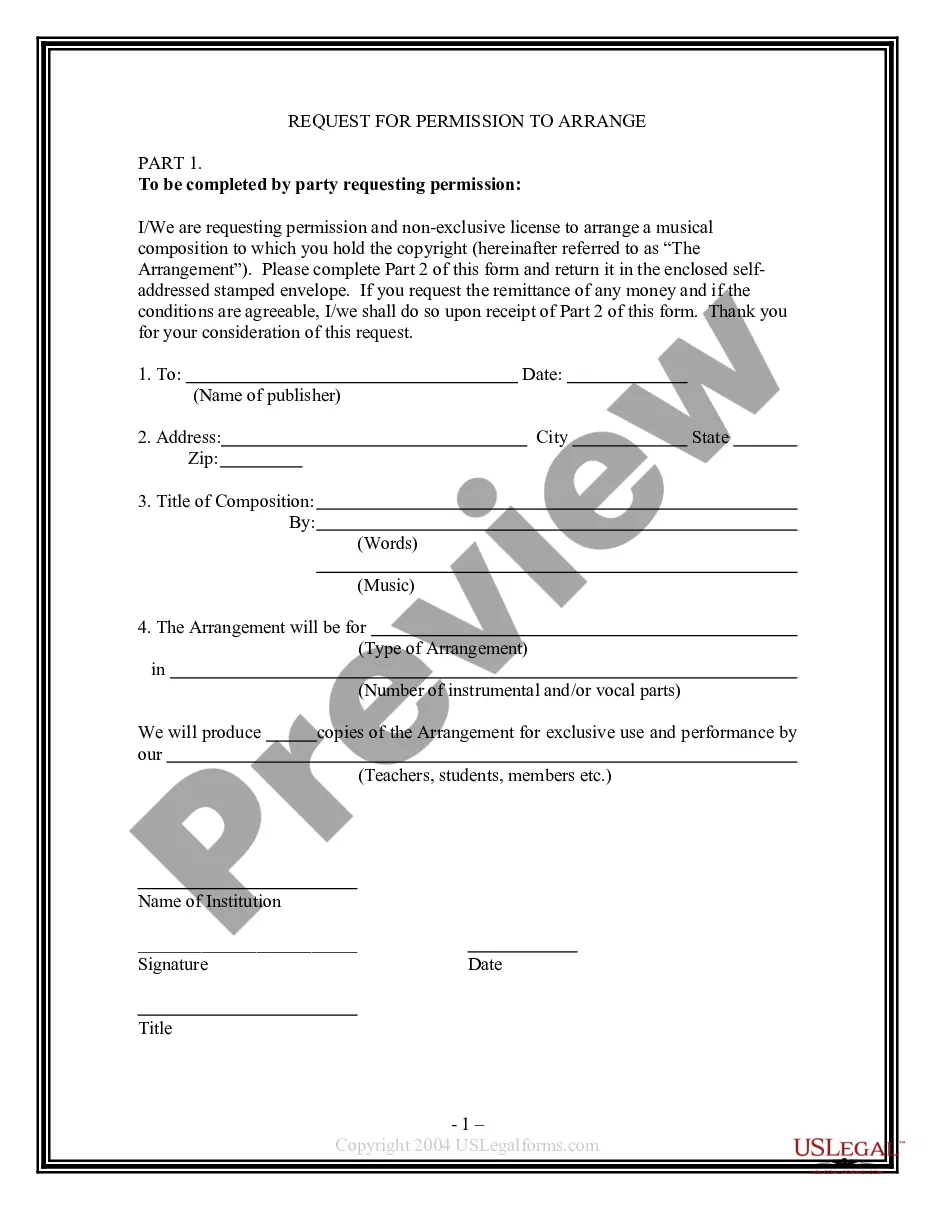
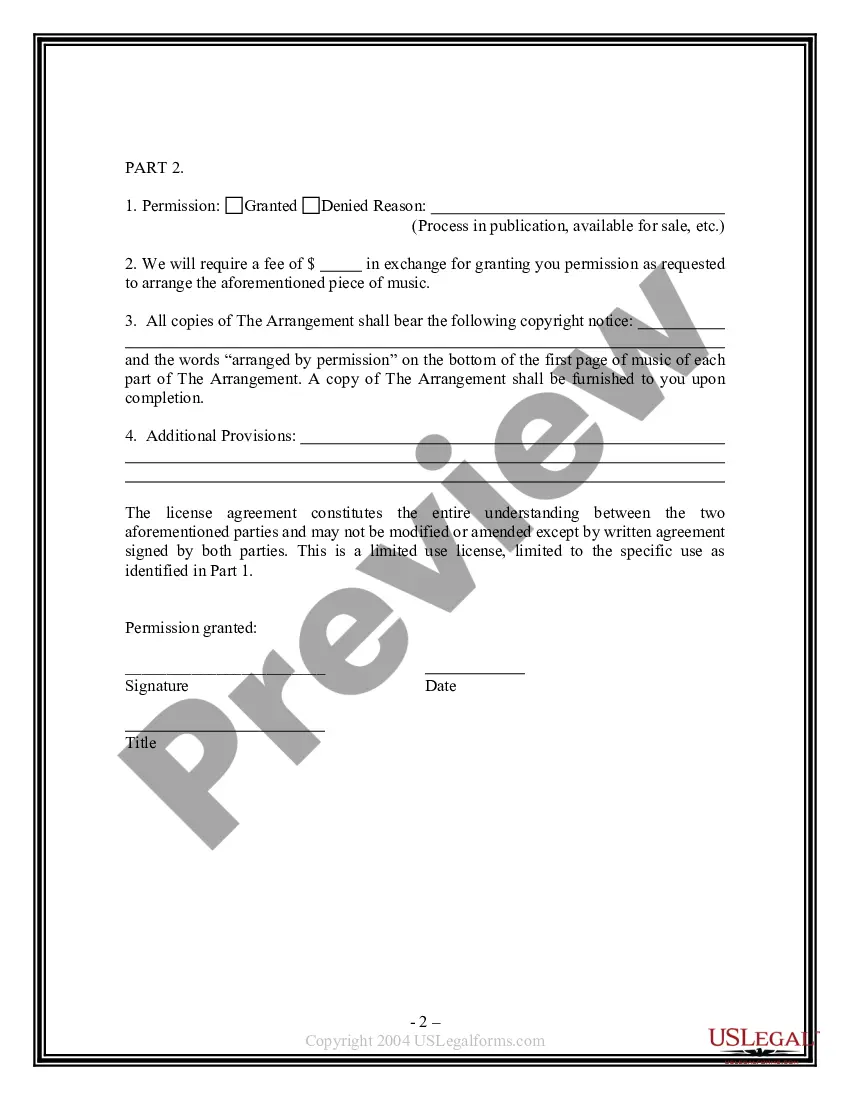
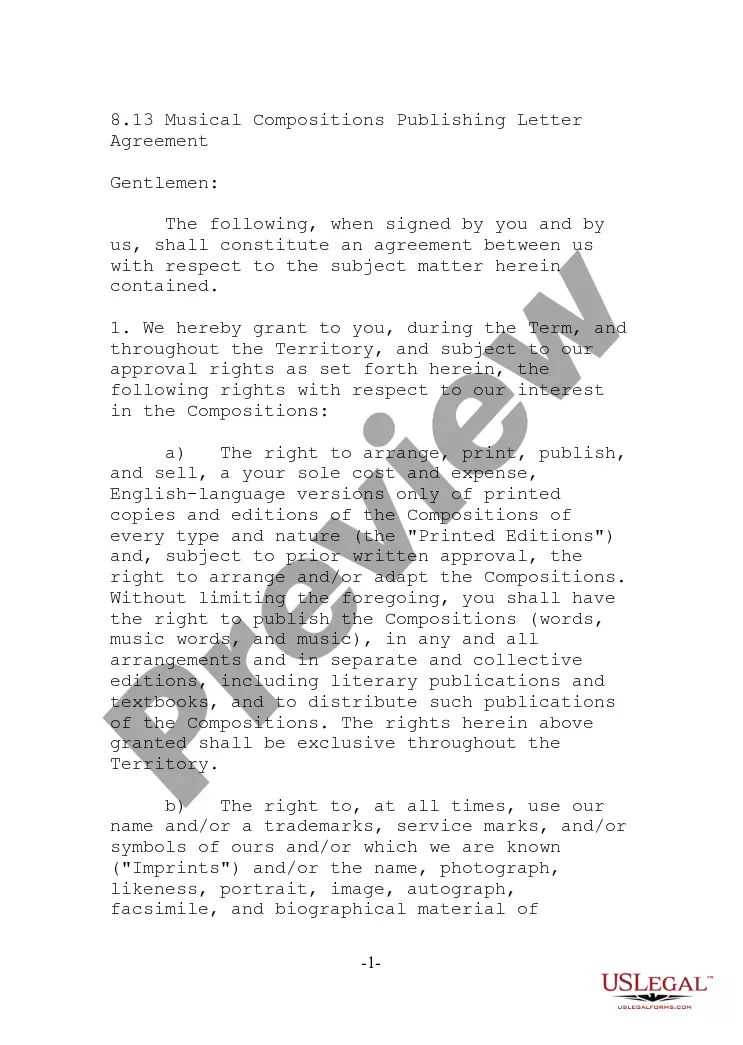
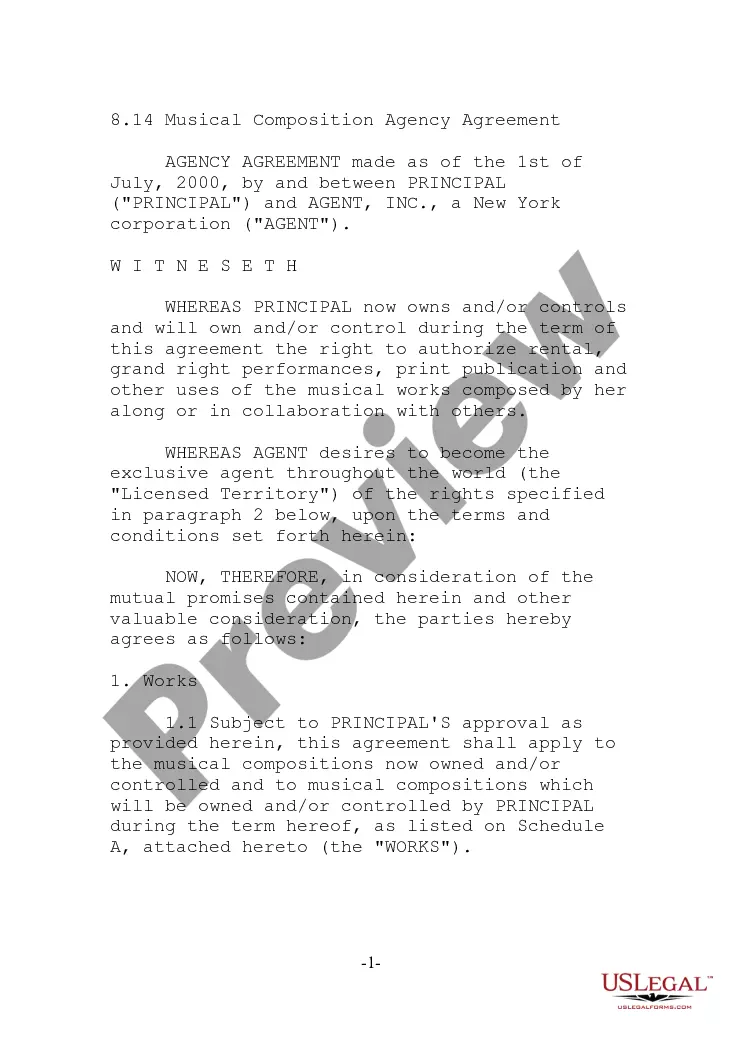
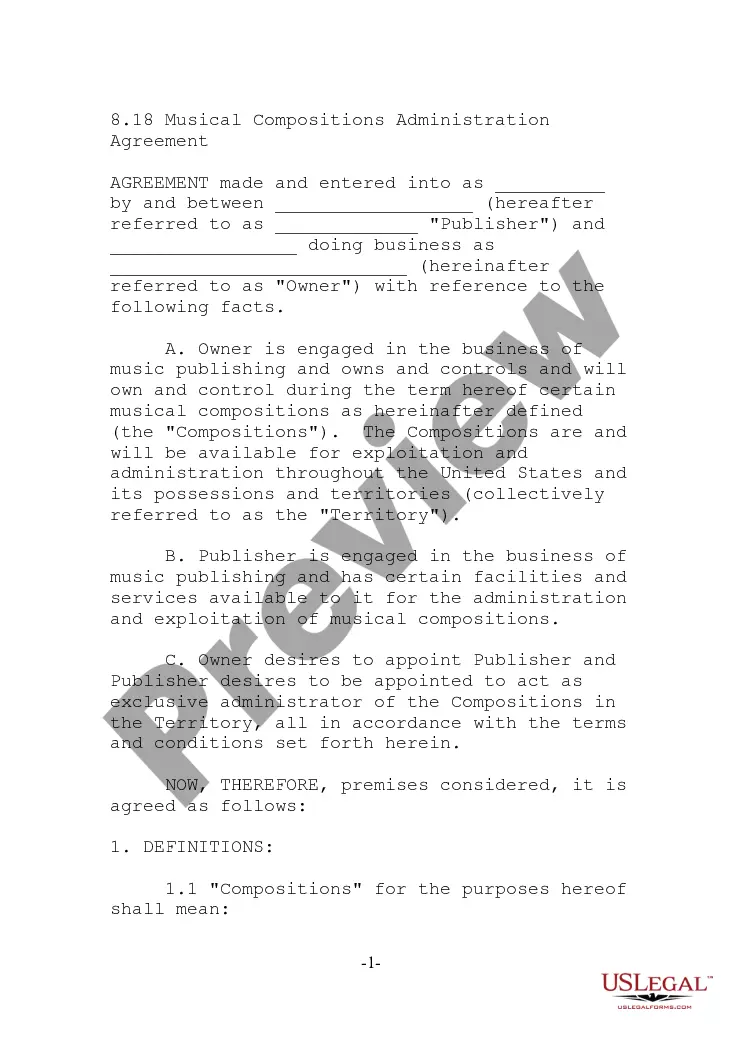
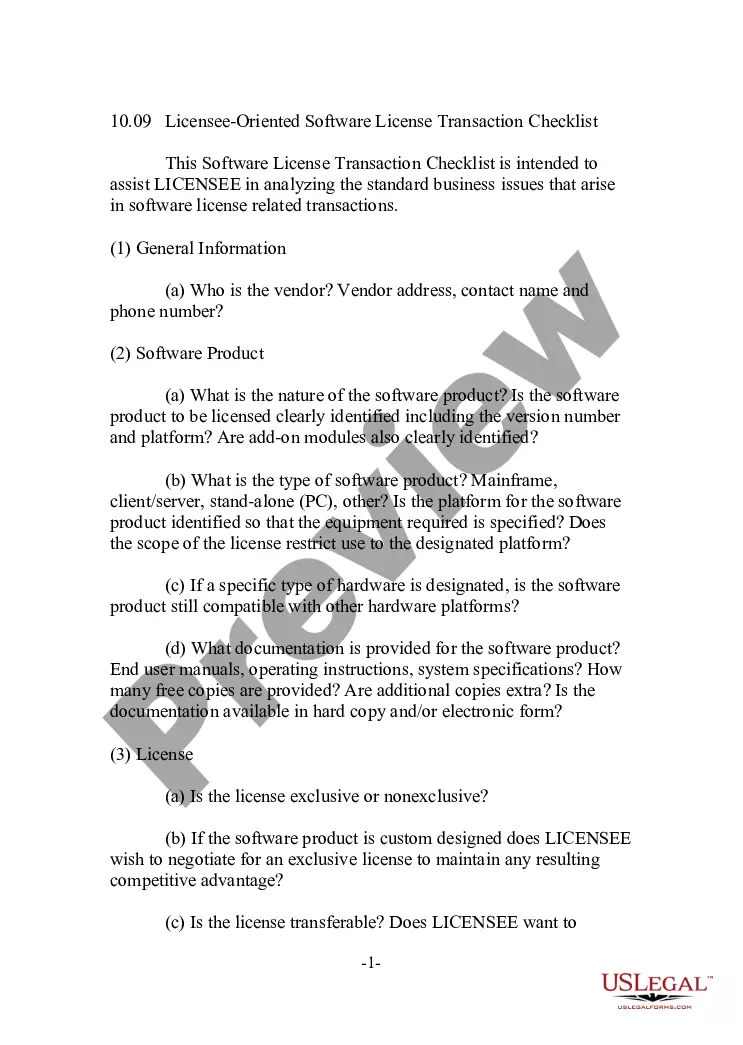
This is a form requesting permission to arrange a piece of music from a publisher. The first part of the form is to be completed by the party requesting permission, and the second part is to be filled out by the publisher or party granting permission.
South Carolina Request For Permission To Arrange a Musical Composition
State:
Multi-State
Control #:
US-PRM-11
Format:
Word;
Rich Text
Instant download
Description
Free preview
How to fill out Request For Permission To Arrange A Musical Composition?
It is feasible to spend several hours online trying to locate the legal document template that satisfies the federal and state requirements you need.
US Legal Forms offers a vast array of legal forms that are reviewed by professionals.
It is easy to access or create the South Carolina Request For Permission To Arrange a Musical Composition from your service.
If available, take advantage of the Preview button to review the document template as well. If you wish to find another version of your form, utilize the Lookup field to search for the template that meets your needs and requirements. Once you have found the template you desire, click Buy now to proceed. Choose the pricing plan you want, enter your credentials, and register for an account on US Legal Forms. Complete the transaction. You can use your credit card or PayPal account to pay for the legal form. Select the format of your document and download it to your device. Make modifications to your document if necessary. You can fill out, edit, sign, and print the South Carolina Request For Permission To Arrange a Musical Composition. Download and print a wide range of document templates using the US Legal Forms website, which provides the largest selection of legal forms. Utilize professional and state-specific templates to address your business or personal needs.
- If you already have a US Legal Forms account, you can Log In and then click the Download button.
- Next, you can fill out, modify, print, or sign the South Carolina Request For Permission To Arrange a Musical Composition.
- Every legal document template you obtain is yours for an extended period.
- To get another copy of the purchased form, go to the My documents tab and click the appropriate button.
- If you are using the US Legal Forms website for the first time, follow the simple instructions below.
- First, ensure that you have selected the correct document template for the area/town of your choice.
- Review the form description to confirm you have selected the correct form.
Form popularity
FAQ
Yes, you can arrange and perform a pop song, provided you have permission from the copyright owner. This often involves submitting a South Carolina Request For Permission To Arrange a Musical Composition to the rights holder. Once you receive approval, you can confidently showcase your arrangement in performances. Engaging with uslegalforms can simplify this process and help you navigate the necessary legal steps.
It is legal to make an arrangement of a song, but you must obtain permission from the copyright owner first. Without this permission, your arrangement could infringe on copyright laws. A South Carolina Request For Permission To Arrange a Musical Composition is a formal way to request this permission, ensuring that your creative work is compliant with legal standards. Always be proactive in securing your rights.
To get permission to arrange a piece of music, you should first identify the copyright owner. Typically, this is the publisher or the composer. After locating the right holder, you can submit a South Carolina Request For Permission To Arrange a Musical Composition. This formal request outlines your intentions and provides necessary details about your arrangement.
To copyright a musical arrangement, you must create a fixed version of your work, such as a sheet music or a recorded performance. This process involves applying for a copyright with the U.S. Copyright Office, where you will need to submit your arrangement along with the appropriate forms and fees. Additionally, if your arrangement is based on an existing composition, you may need a South Carolina Request For Permission To Arrange a Musical Composition from the original copyright holder. Using a platform like USLegalForms can simplify your application by providing the necessary documents and guidance.
In general, the permissions process involves a simple five-step procedure:Determine if permission is needed.Identify the owner.Identify the rights needed.Contact the owner and negotiate whether payment is required.Get your permission agreement in writing.
Base fee for an arrangement is $150. This includes a full musical score for up to two instruments. Each additional instrument is $50.
SEEKING PERSMISSION Once you've found the owner, publisher or administrator, you can visit the Music Publishers Association Copyright Resource Center and download the Request for Permission to Arrange form that can be filled out and sent to the song's publisher.
Arranging a copyrighted musical work requires the permission of the copyright owner.
General Requirements for CopyrightThe arrangement must be an original work. It must be fixed in a tangible medium of expression, such as on sheet music or a digital recording. It must be a musical work, including any accompanying words. It must not be an idea or concept.
Copyright protection exists in an arrangement the moment it is fixed in any tangible form, as by recording the arrangement or writing it in sheet music. As a copyright holder, the arranger has exclusive rights to reproduce, distribute and perform his arrangement.