Alabama Electrical Line Easement For Utility Lines
What is this form?
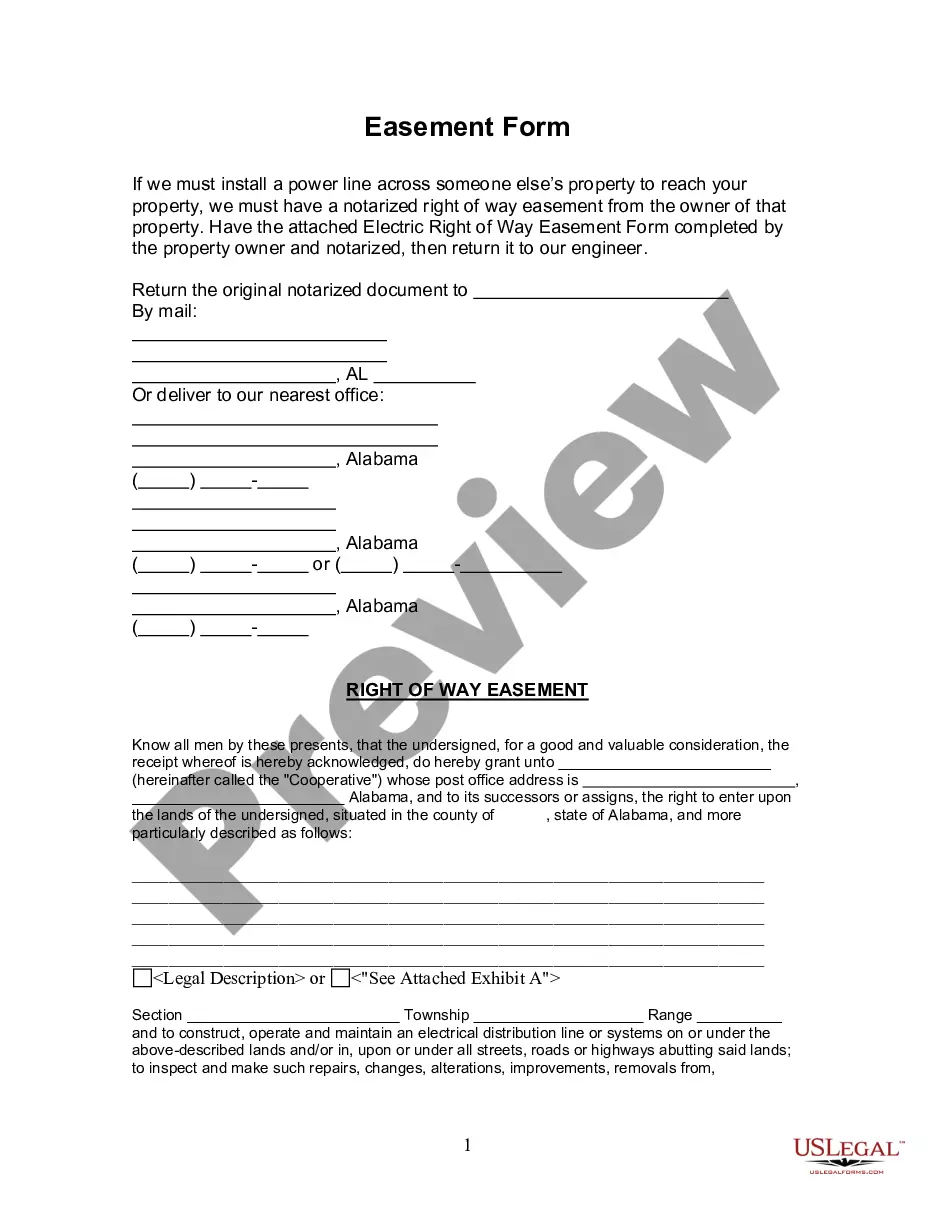
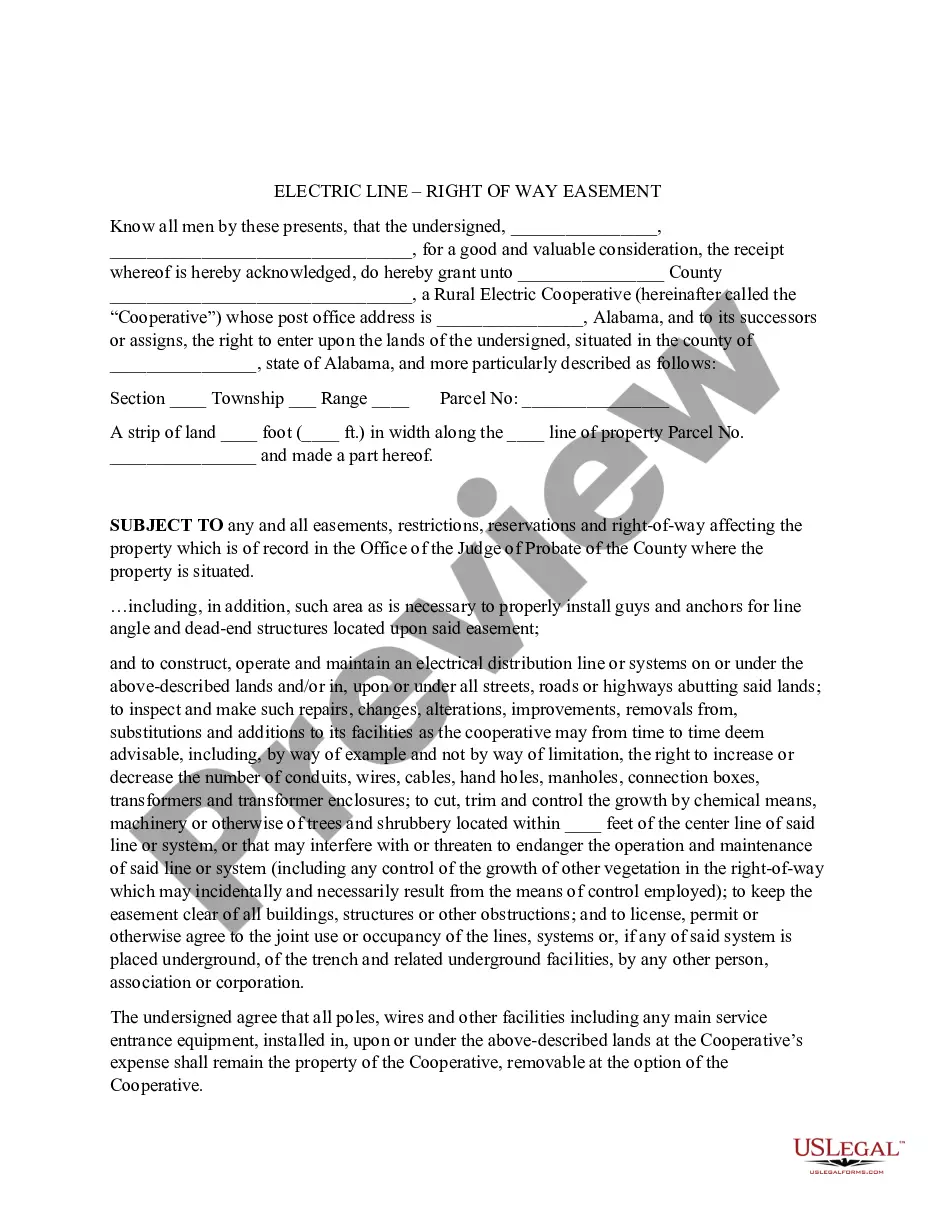
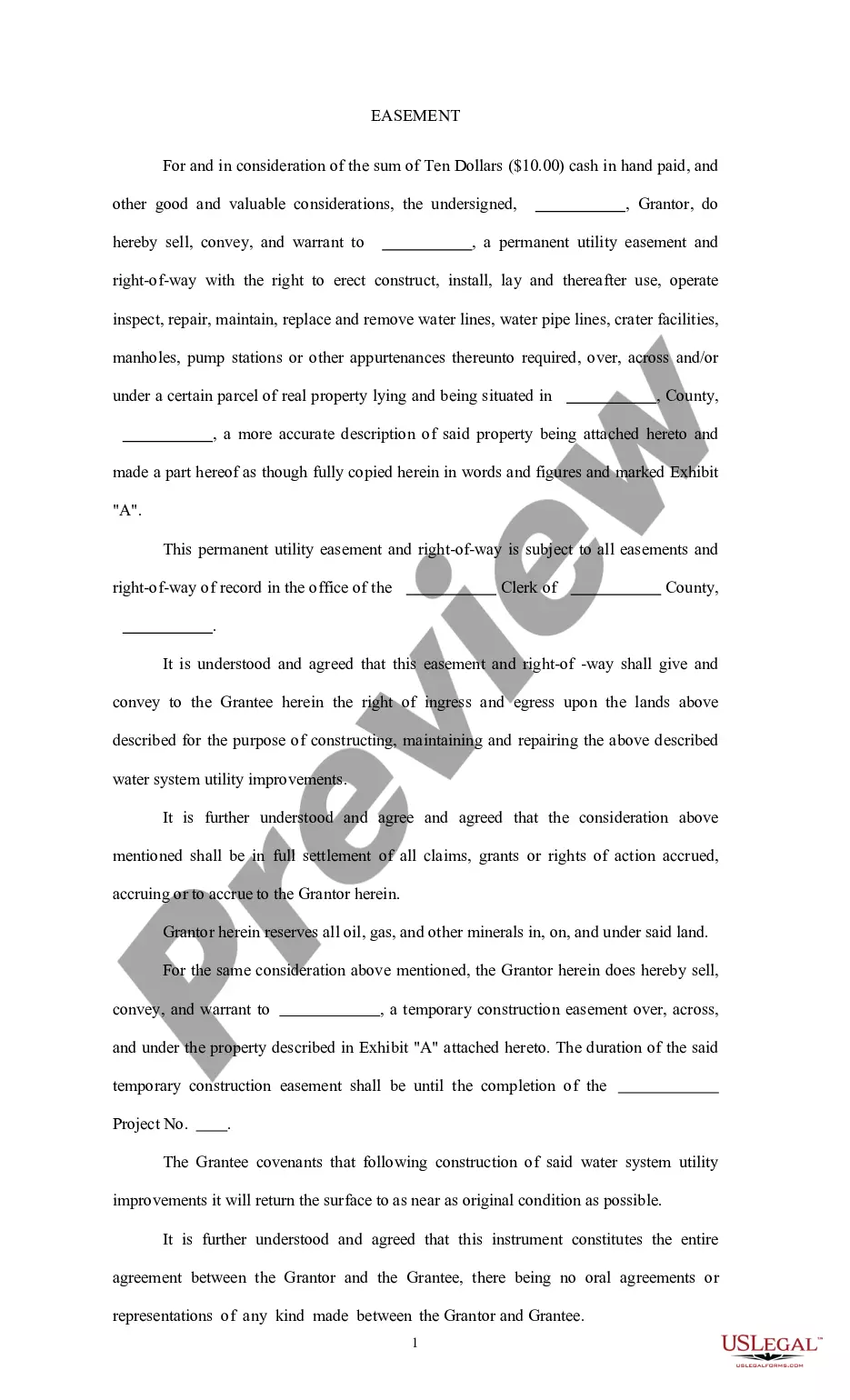
The Electrical Line Easement for Utility Lines is a legal document that allows a utility company to construct, operate, and maintain electrical utility lines on someone else's property. This form grants a right of way easement, distinguishing it from other types of easements by focusing specifically on electrical infrastructure. It ensures that the utility can access and manage its installations without infringing on property rights more than necessary.
Key parts of this document
- Identification of the utility company and property owner.
- Legal description of the property where the easement is granted.
- Details on the type of utility lines and related infrastructure.
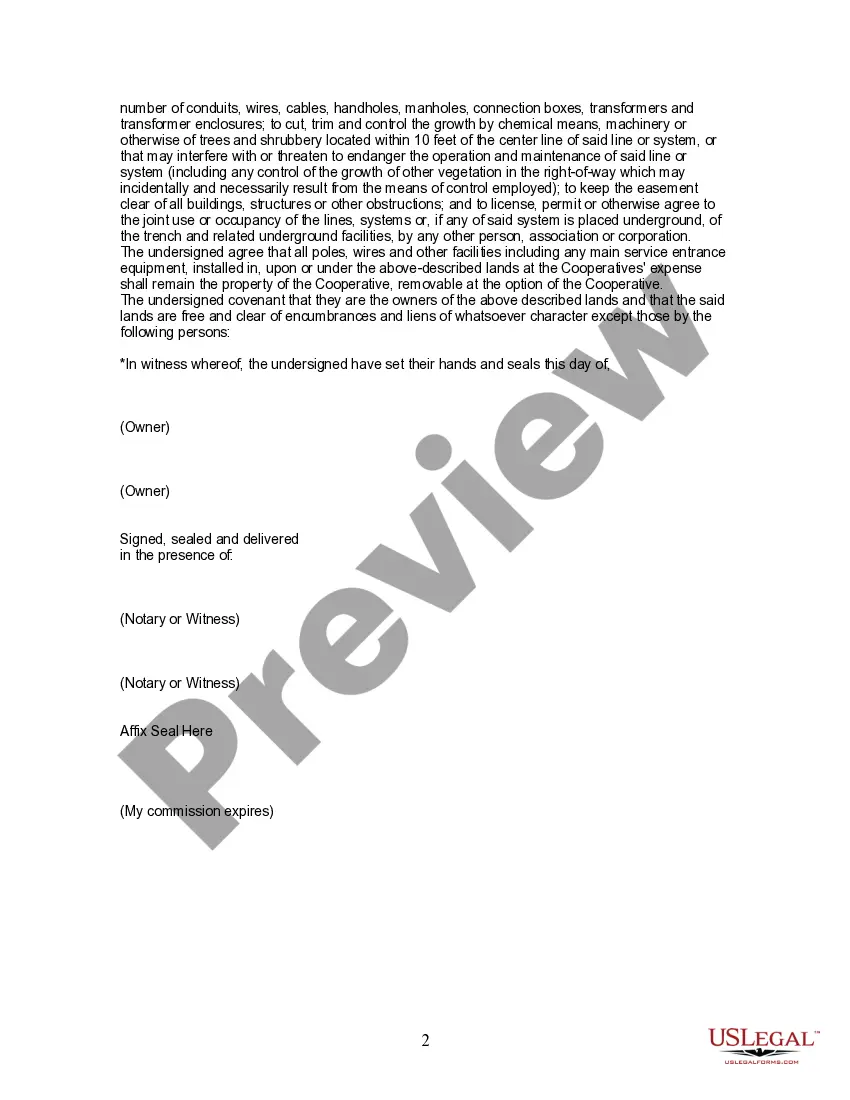
- Provisions for vegetation management and maintenance of the easement area.
- Signatures of both parties and acknowledgment before a notary public.
Common use cases
This form should be used when a utility company needs to install power lines across private property to provide service to your property. It is essential whenever access to land is needed for construction, operation, and maintenance of electrical utility lines. Additionally, it can be used when updating or repairing existing utility lines that run through someone else's land.
Who should use this form
- Utility companies needing to install or manage electrical lines.
- Property owners allowing utility easements on their land.
- Contractors or engineers overseeing electrical installation projects.
- Individuals seeking to understand their rights and responsibilities regarding utility easements.
Steps to complete this form
- Identify the parties involved: the utility company and the property owner.
- Enter the legal description of the property as stated in the deed.
- Specify the details of the utility lines and related equipment to be installed.
- Include provisions for the maintenance responsibilities concerning vegetation and access.
- Both parties should sign and date the form, then have it notarized to ensure validity.
Is notarization required?
Yes, this form must be notarized to be legally valid. Having it notarized ensures that the signatures are authentic and that the document meets legal requirements. US Legal Forms offers integrated online notarization, available 24/7 through secure video call, ensuring convenience and legal equivalence without the need to travel.
Get your form ready online
Our built-in tools help you complete, sign, share, and store your documents in one place.
Make edits, fill in missing information, and update formatting in US Legal Forms—just like you would in MS Word.
Download a copy, print it, send it by email, or mail it via USPS—whatever works best for your next step.
Sign and collect signatures with our SignNow integration. Send to multiple recipients, set reminders, and more. Go Premium to unlock E-Sign.
If this form requires notarization, complete it online through a secure video call—no need to meet a notary in person or wait for an appointment.
We protect your documents and personal data by following strict security and privacy standards.

Make edits, fill in missing information, and update formatting in US Legal Forms—just like you would in MS Word.

Download a copy, print it, send it by email, or mail it via USPS—whatever works best for your next step.

Sign and collect signatures with our SignNow integration. Send to multiple recipients, set reminders, and more. Go Premium to unlock E-Sign.

If this form requires notarization, complete it online through a secure video call—no need to meet a notary in person or wait for an appointment.

We protect your documents and personal data by following strict security and privacy standards.
Mistakes to watch out for
- Failing to include the complete legal description of the property.
- Not having the signatures witnessed or notarized properly.
- Leaving out essential details about the utility installations.
- Not clarifying maintenance responsibilities for the easement area.
Why use this form online
- Immediate access to legally vetted templates drafted by licensed attorneys.
- Convenience of completing the document from anywhere.
- Editable format allows for custom information to be included easily.
- Secure storage and easy retrieval of completed forms.
Looking for another form?
Form popularity
FAQ
It is a private right‑of‑way document that lets a utility company install, operate, and maintain electrical lines on someone else’s property in Alabama. It lists the utility and property owner IDs, the property's legal description, the lines and infrastructure, vegetation management provisions, and signatures with notary acknowledgment. Use it when a utility needs access across private property to provide service or to install, update, or repair lines.
It creates a right‑of‑way easement that authorizes a utility to install, operate, and maintain electrical lines on private property in Alabama. It lists the utility and property owner, the legal description, the lines and infrastructure, vegetation management provisions, and required signatures and notary acknowledgment. It is used when a utility needs access across private property to provide service.
No. This form creates a private right‑of‑way between a utility and a property owner on private land; it is not public property. It defines the easement area, describes the property, lists the lines and infrastructure, includes vegetation management provisions, and requires signatures with notary acknowledgment.
This form is used when the utility and property owner agree to grant an easement for electrical lines. It documents the parties’ identities, the property description, the type of lines, and maintenance provisions. If you do not want to grant an easement, you would not sign; seek advice from a licensed attorney for options.
The document identifies the easement area and includes vegetation management provisions. It does not by itself authorize building; any construction within the easement would be governed by the signed agreement and applicable rules. Review the terms and consult a lawyer before proceeding near or within the easement.
It is tailored to electrical utility lines and includes key components specific to line rights—identification of the utility and property owner, a legal description, the lines and infrastructure, vegetation management provisions, and signatures with notary acknowledgment—rather than a generic easement template.