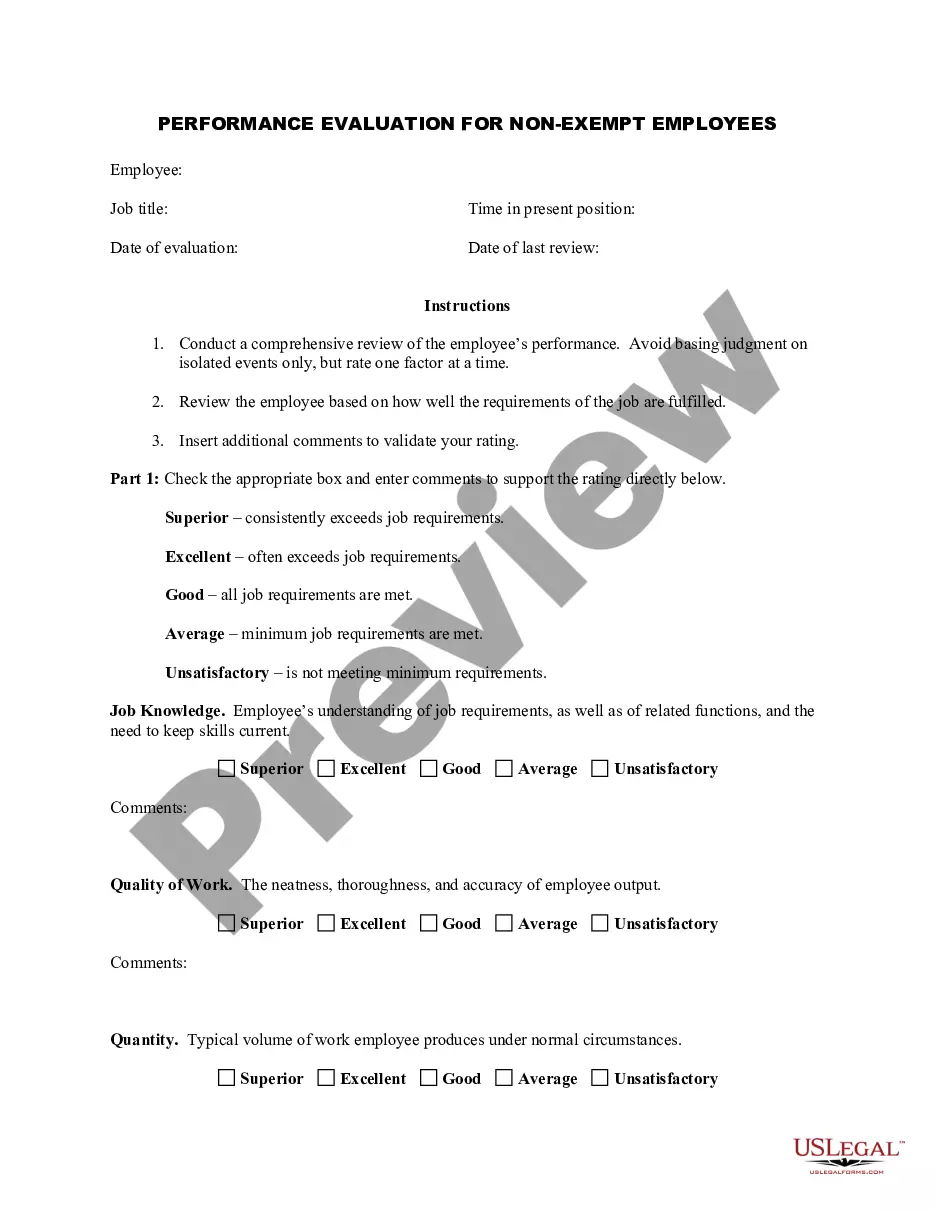
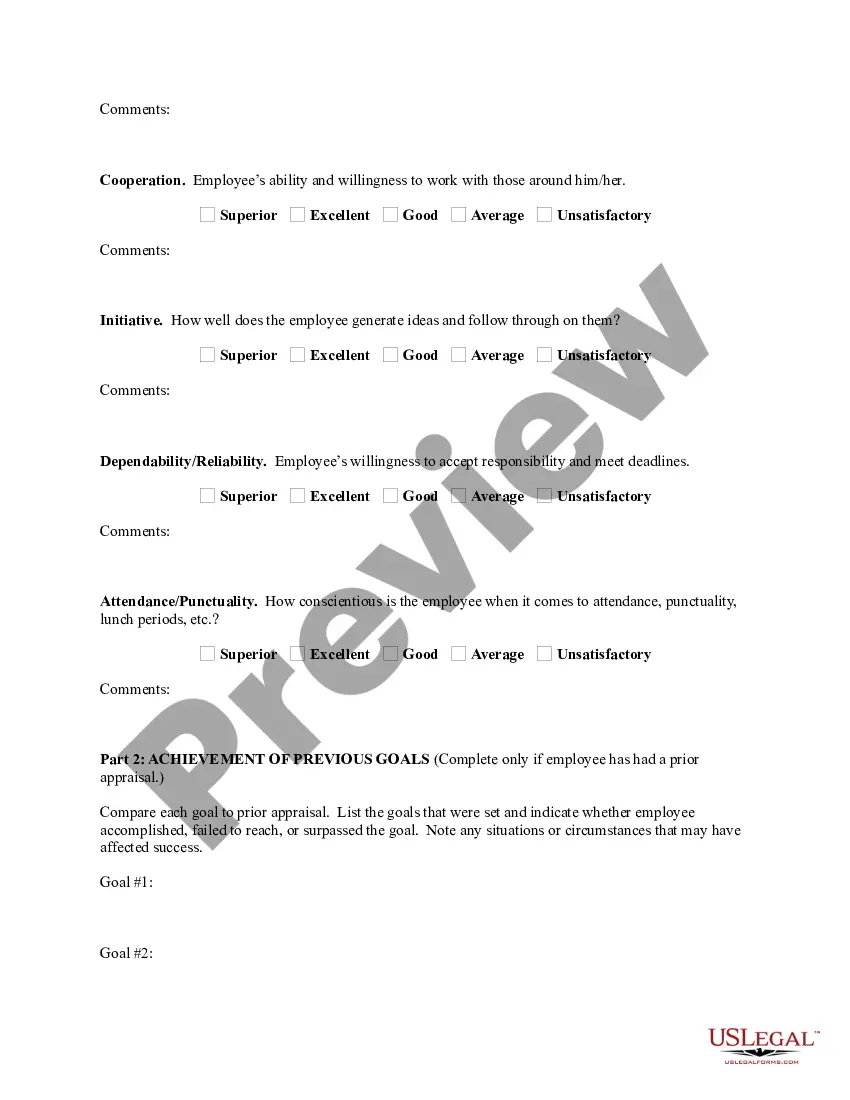
South Carolina Employee Evaluation Form for Psychologist
Description
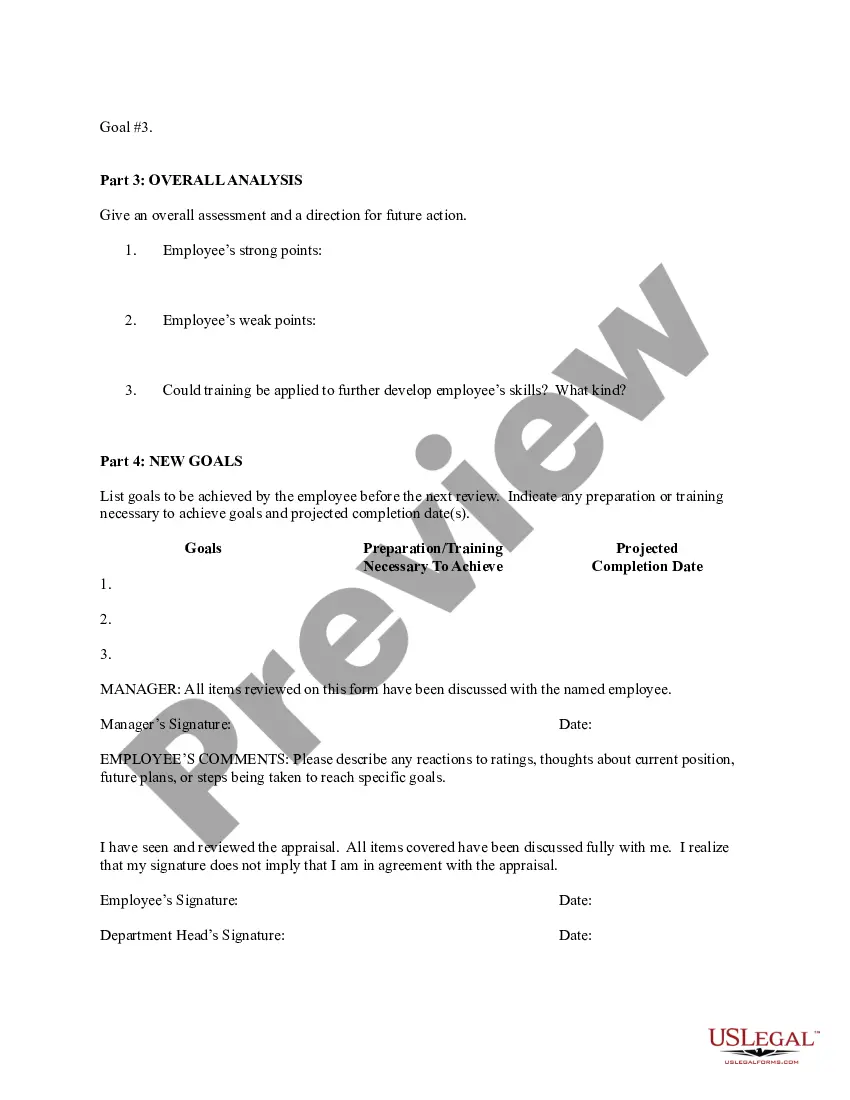
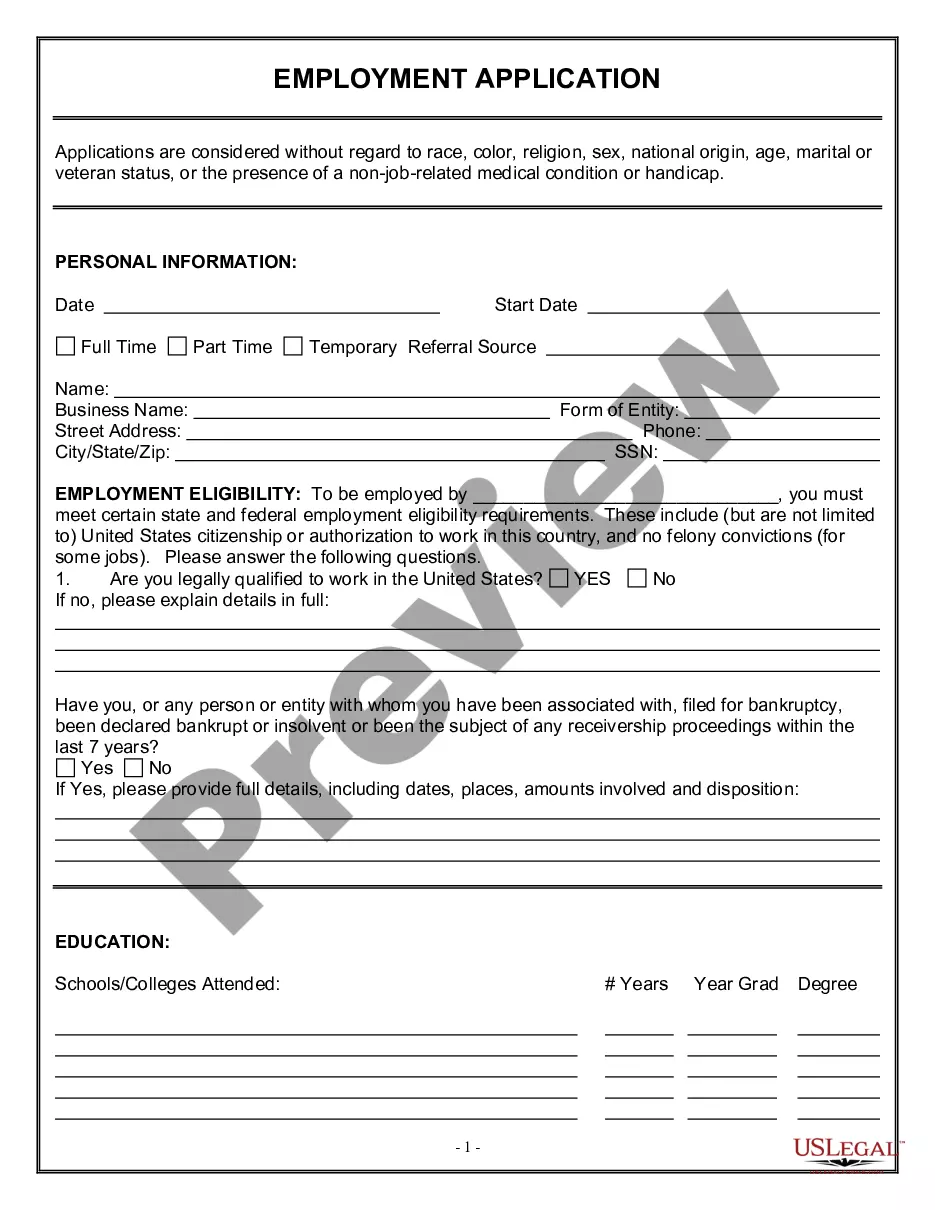
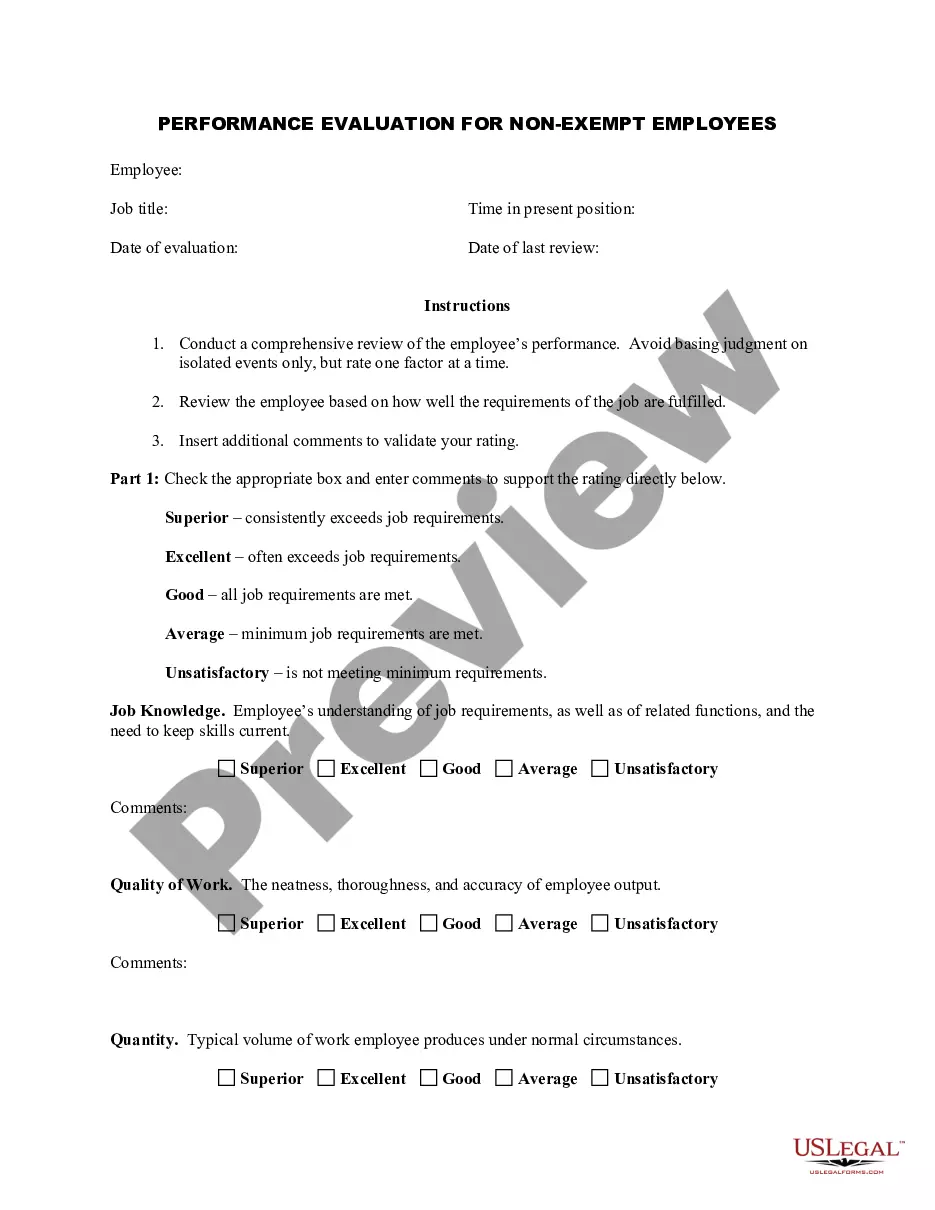
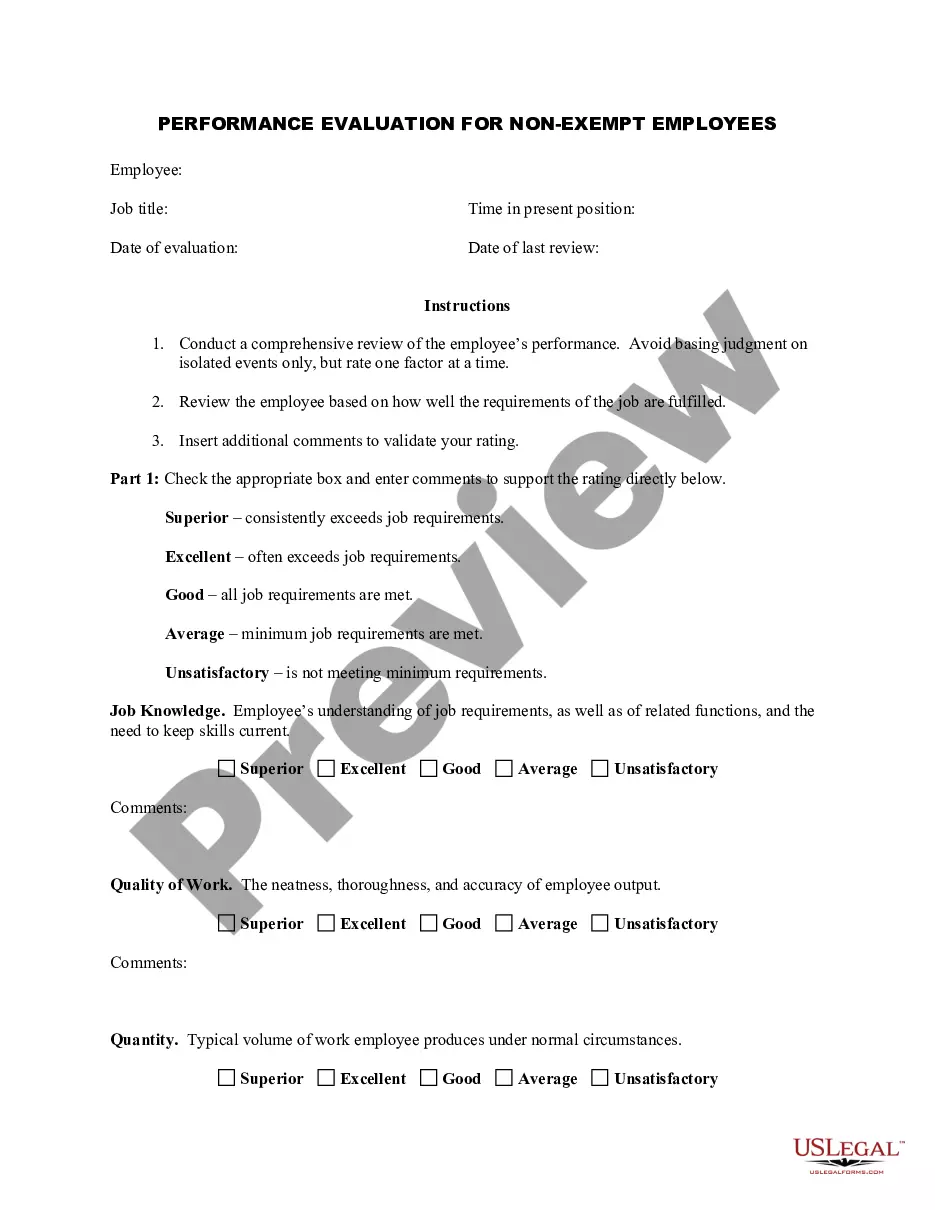
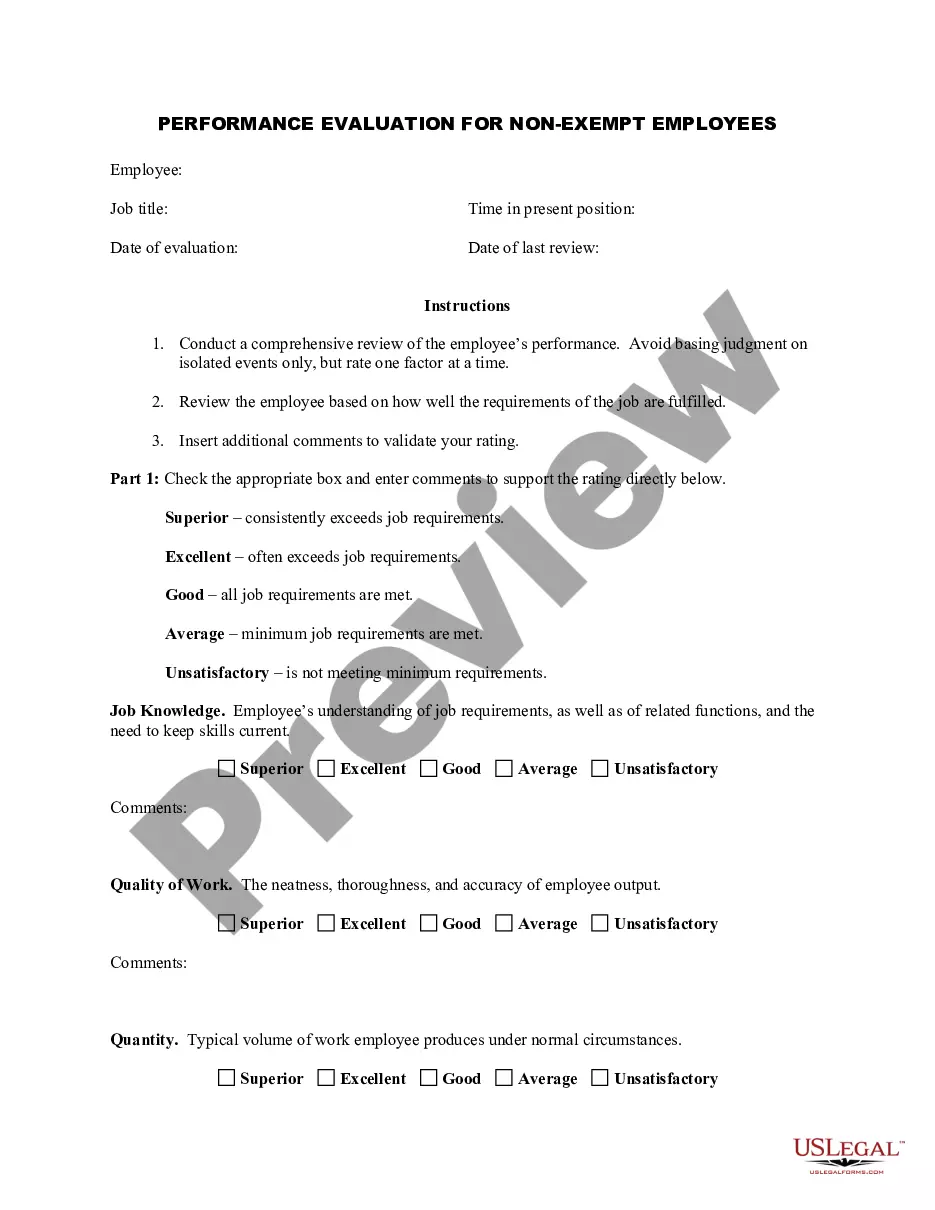
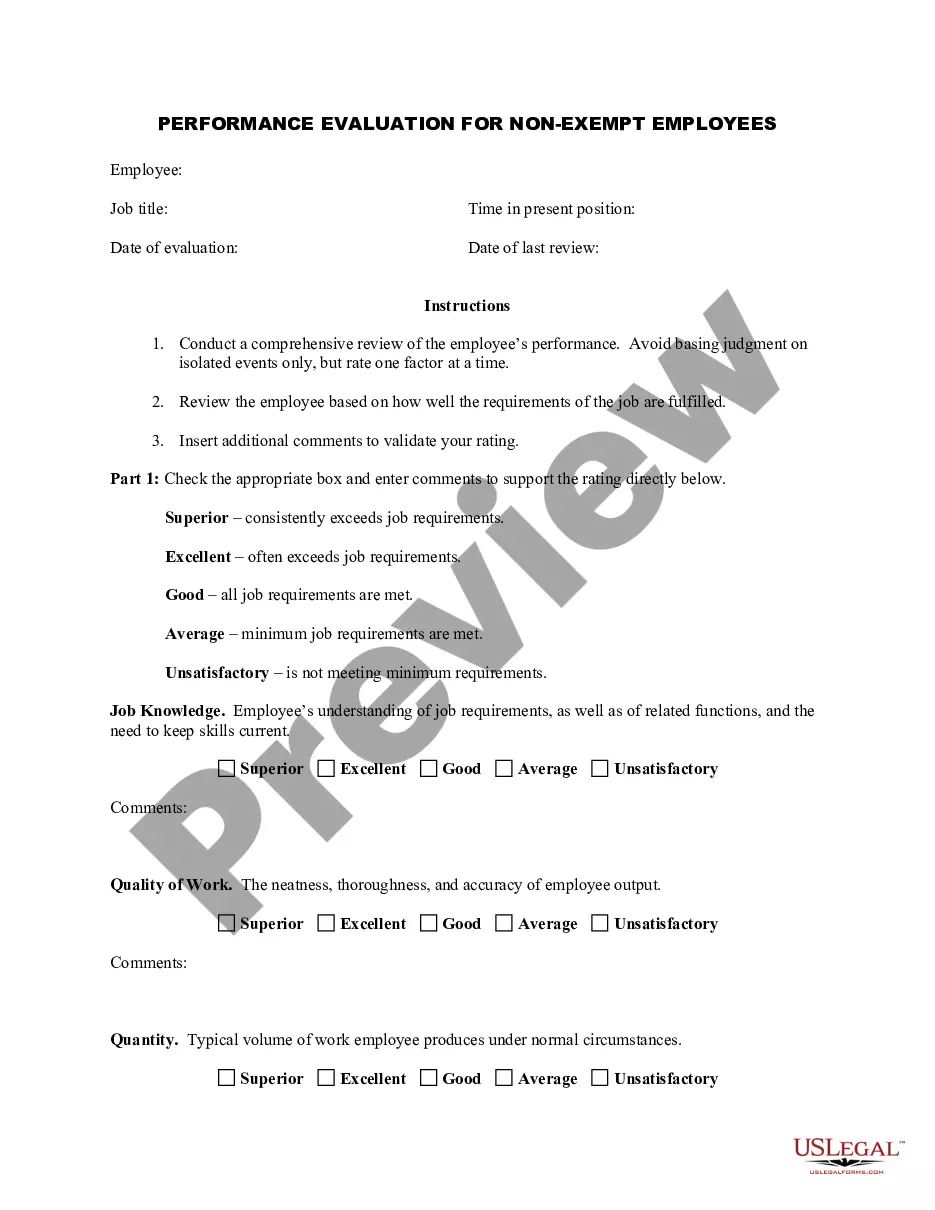
How to fill out Employee Evaluation Form For Psychologist?
US Legal Forms - one of the largest collections of legal documents available in the United States - offers a diverse array of legal document templates that you can download or print.
By using the website, you can access thousands of forms for business and personal needs, organized by categories, states, or keywords. You can find the most recent versions of forms such as the South Carolina Employee Evaluation Form for Psychologist instantly.
If you already have an account, Log In and download the South Carolina Employee Evaluation Form for Psychologist from the US Legal Forms repository. The Download button will appear on every form you view. You have access to all previously downloaded forms in the My documents section of your account.
Complete the payment process. Use your Visa, MasterCard, or PayPal account to finalize the transaction.
Select the format and download the form to your device. Make modifications. Fill out, edit, and print the downloaded South Carolina Employee Evaluation Form for Psychologist. Every template you added to your account has no expiration date and is yours permanently. Therefore, if you wish to download or print another copy, simply go to the My documents section and select the form you need. Access the South Carolina Employee Evaluation Form for Psychologist with US Legal Forms, the most extensive collection of legal document templates. Utilize thousands of professional and state-specific templates that fulfill your business or personal needs.
- Ensure you have selected the correct form for your locality.
- Click on the Review button to check the form's details.
- Look over the form information to confirm that you have chosen the right document.
- If the form does not meet your requirements, utilize the Search field at the top of the screen to find one that does.
- Once you are satisfied with the form, confirm your selection by clicking the Buy now button.
- Then, select your preferred payment method and provide your details to create an account.
Form popularity
FAQ
To become a psychological evaluator, one must obtain the appropriate educational qualifications, typically at least a master's degree in psychology. After completing the education, gaining practical experience through internships or supervised practice is essential. Ultimately, obtaining licensure in your state is necessary, often utilizing tools like the South Carolina Employee Evaluation Form for Psychologist during the evaluation process.
You should expect the psychologist to ask you different questions about your background, current lifestyle, previous work experience, education. The evaluator will definitely enquire about any problems or symptoms (of fatigue, depression, obsessions) that you may experience.
To start the process of getting a psychological evaluation, reach out to a medical professional, such as a family doctor, psychologist, or psychiatrist. You may be referred to another professional for the assessment if it is outside their specialty area.
Most psychological evaluations involve talking to the psychologist about yourself and symptoms such as anxiety and trouble sleeping in an interview, doing some questionnaires about yourself, and possibly some activities that look at how your brain is working. By the end, you should be given feedback.
A psychological assessment can include numerous components such as norm-referenced psychological tests, informal tests and surveys, interview information, school or medical records, medical evaluation and observational data. A psychologist determines what information to use based on the specific questions being asked.
Pre-employment testing typically includes an assessment of cognitive ability as well as a personality profile. Cognitive tests vary depending on the requirements of a particular position but might measure problem-solving skills, critical thinking and the ability to learn, digest, and apply new information.
Psychological Assessment Fees Psychological assessment is unique when compared to the costs of psychotherapy. The cost for psychological evaluation will vary depending on your needs. The cost of a full evaluation typically ranges from $1200 to $2800. All assessment services are billed at $225 per hour.
Psychological tests are not pass/fail. The tests merely show you where you rank among others your same age (or grade). It is impossible to fail a psychological test! They also give you great insight into your strengths and weaknesses!
Most psychological evaluations involve talking to the psychologist about yourself and symptoms such as anxiety and trouble sleeping in an interview, doing some questionnaires about yourself, and possibly some activities that look at how your brain is working. By the end, you should be given feedback.
Whenever you take a test, spend a little time evaluating what you did that worked well and how you might apply those skills again in the future.Start by Looking Over the Test. Tetra Images / Getty Images.Pace Yourself. moodboard / Getty Images.Don't Skip Around.Use the Process of Elimination.Read Each Question Carefully.