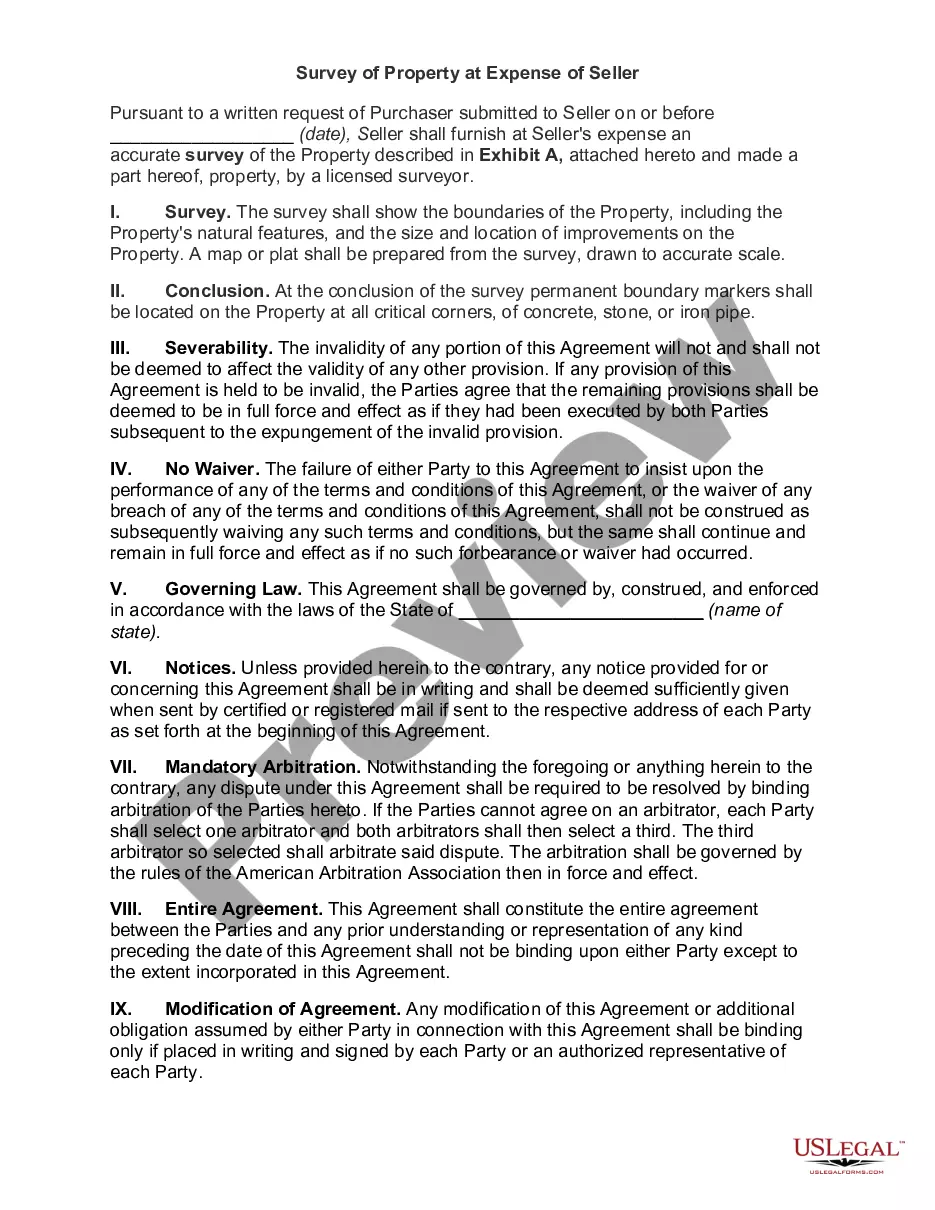
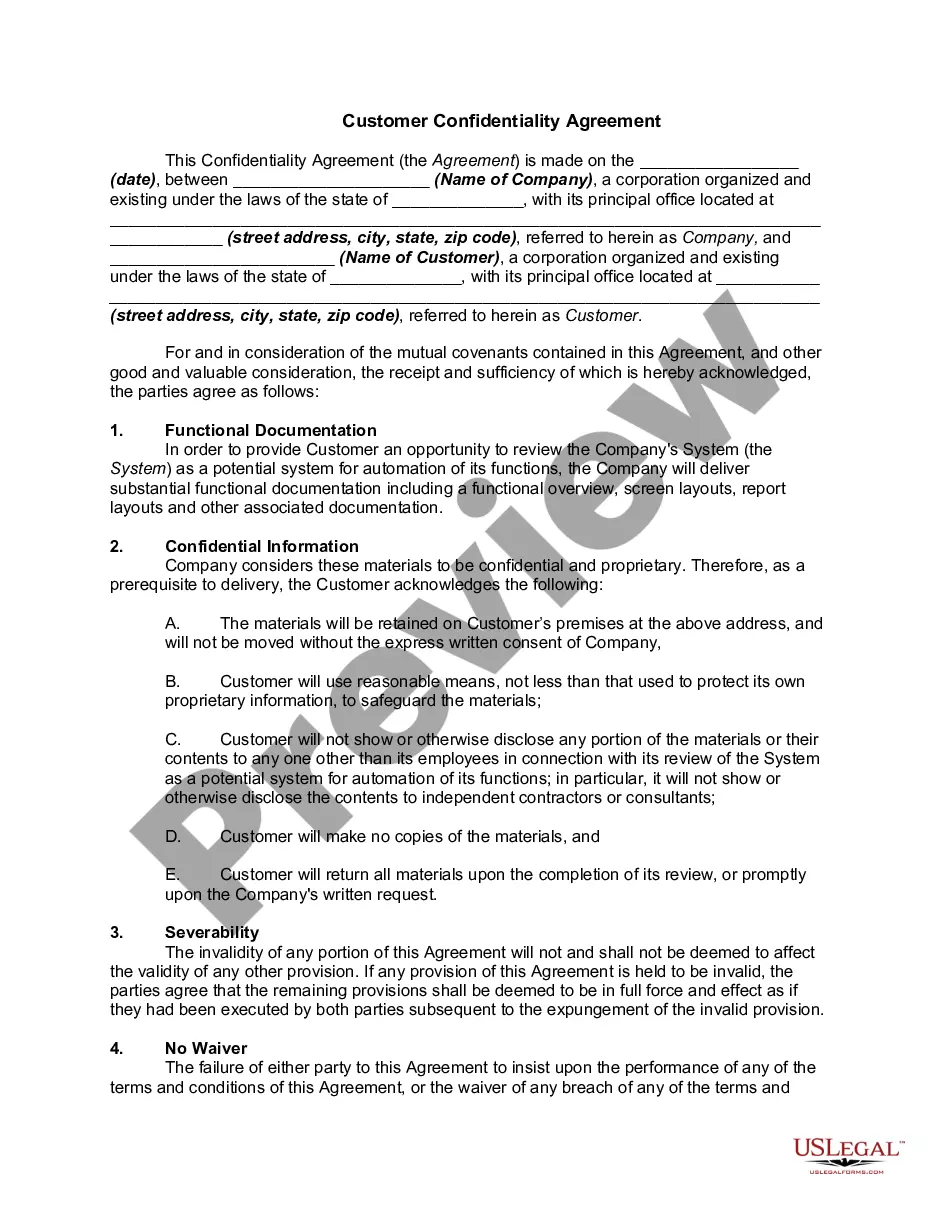
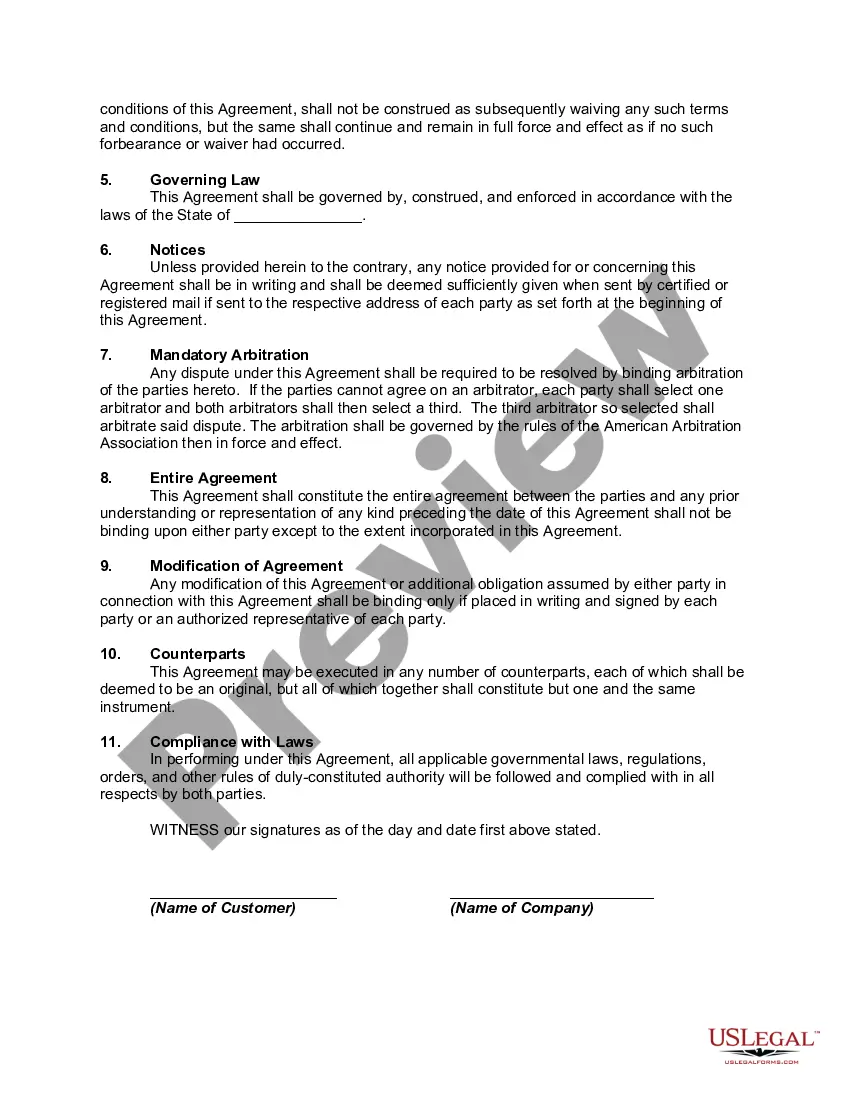
South Carolina Customer Confidentiality Agreement
Description
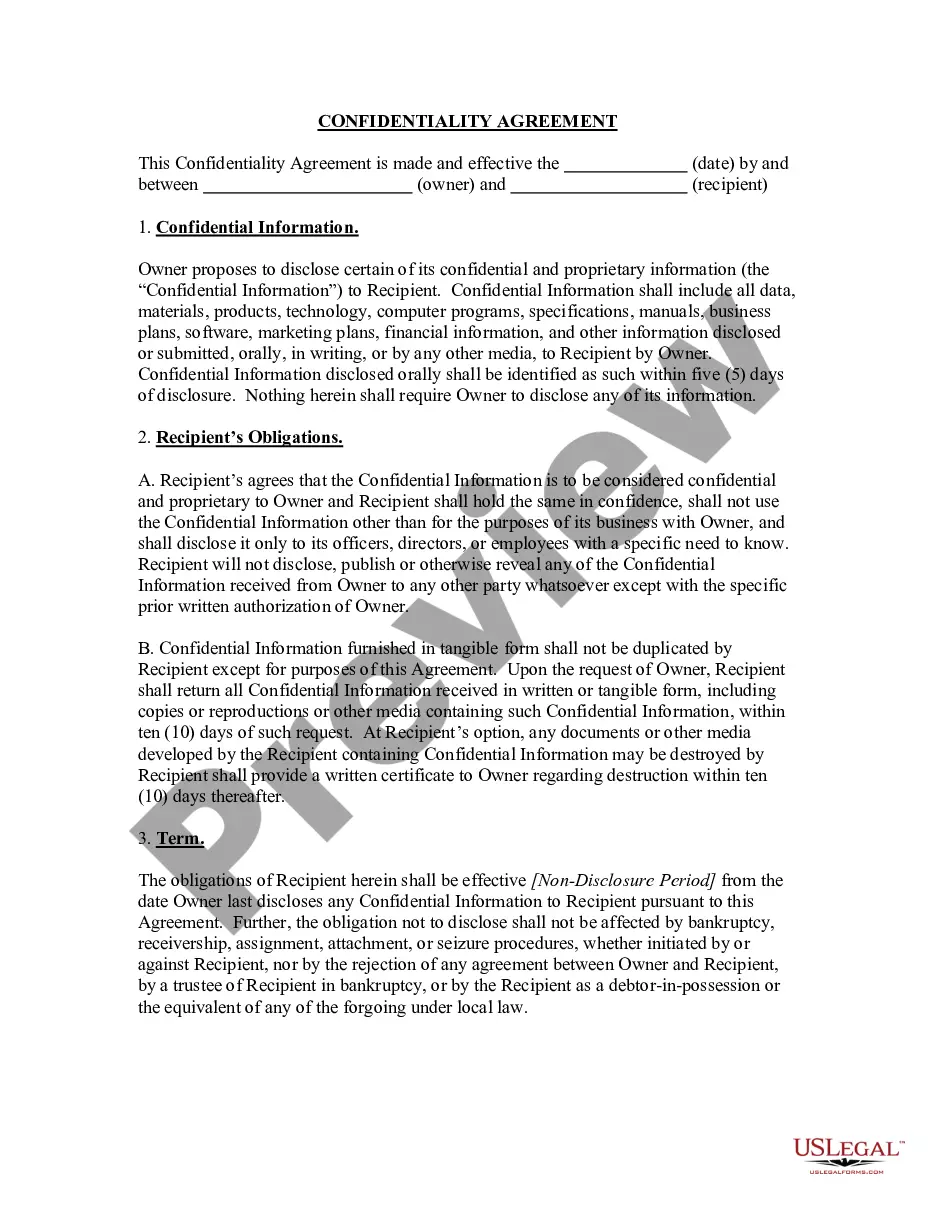
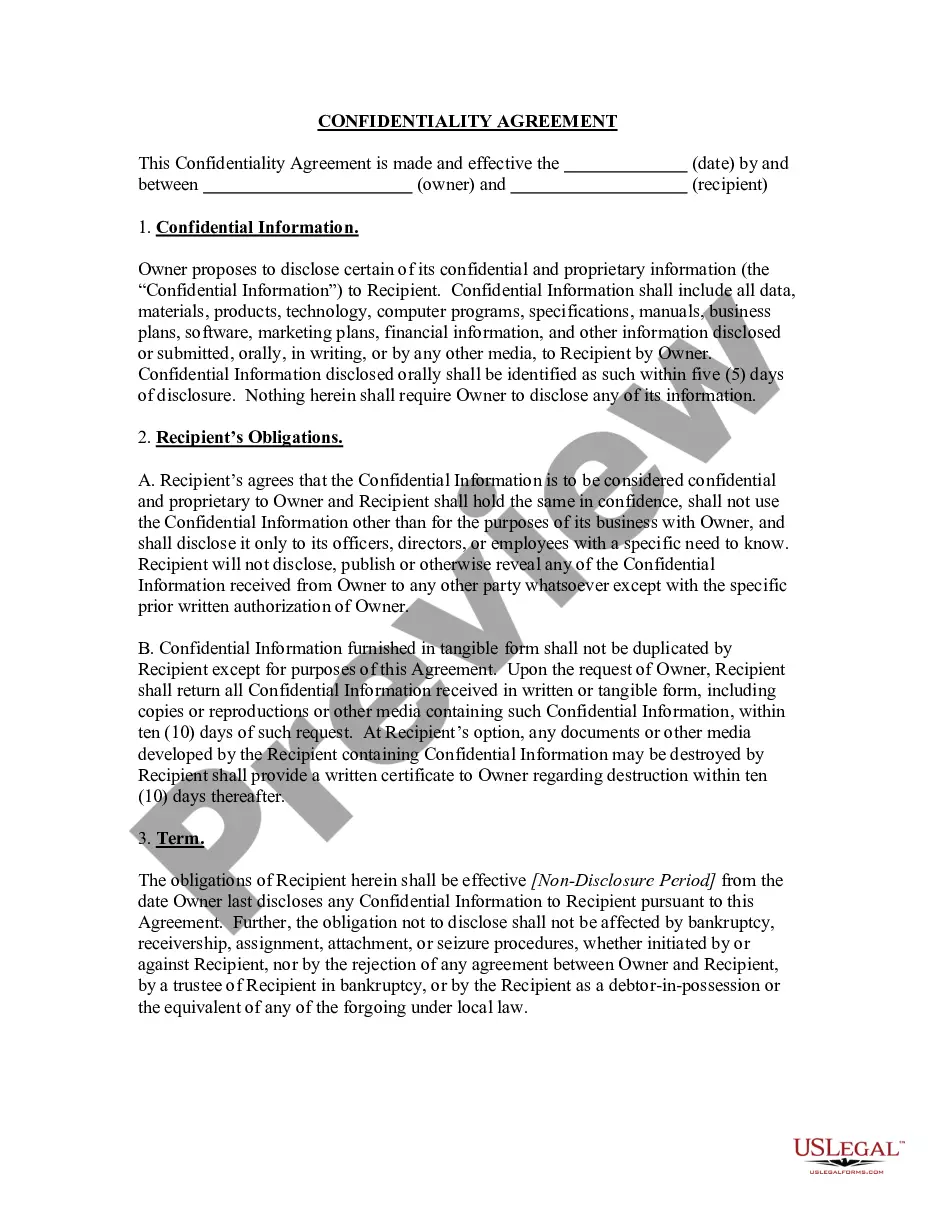
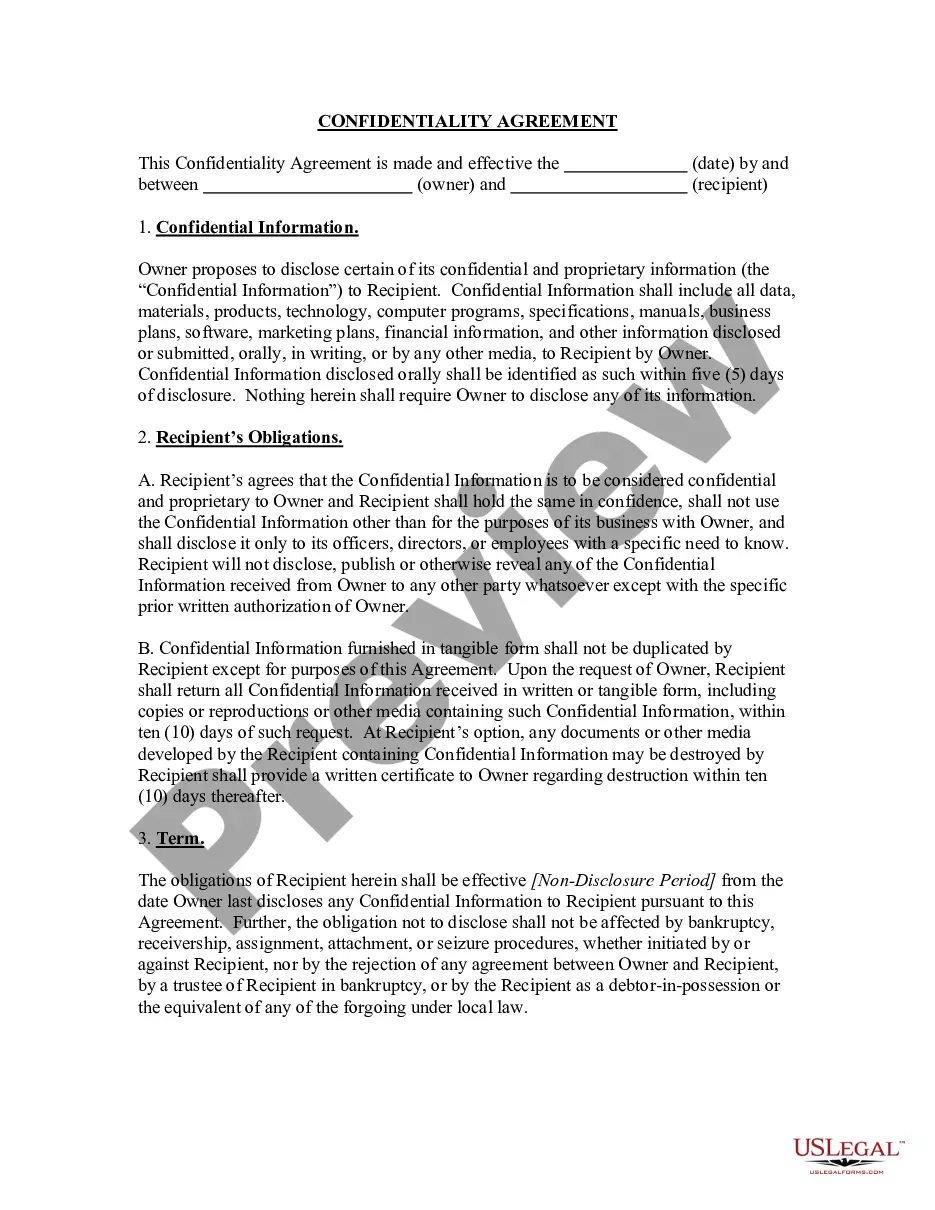
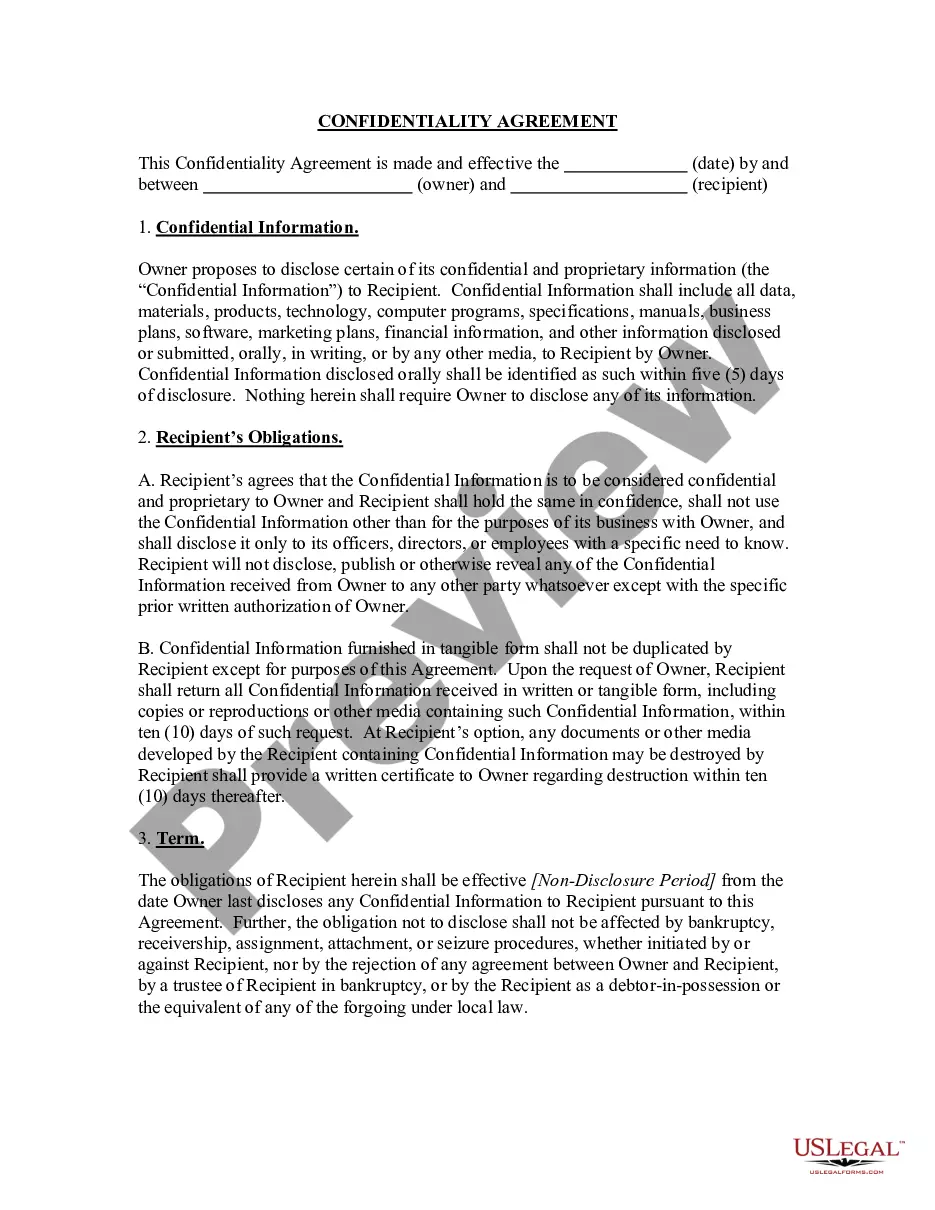
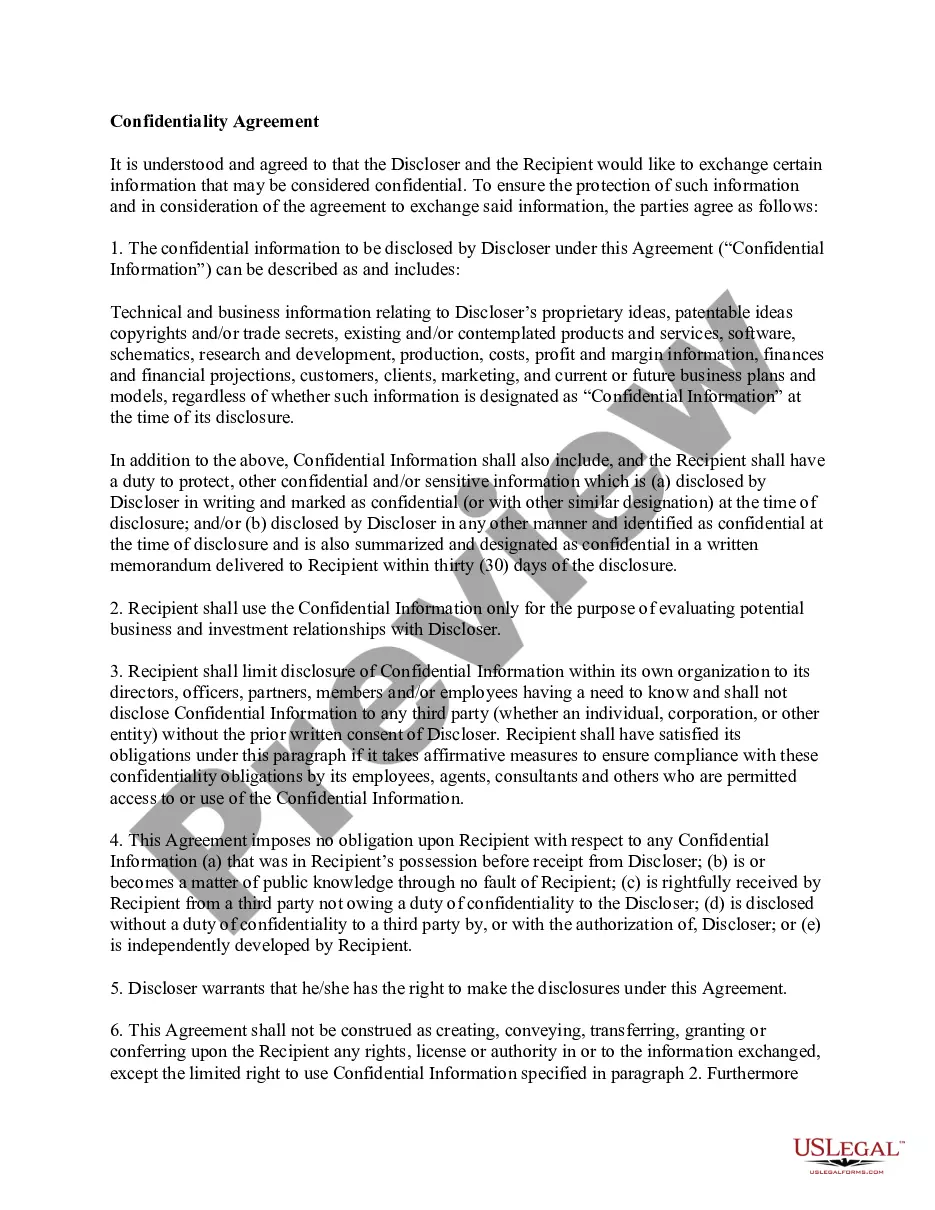
Get your form ready online
Our built-in tools help you complete, sign, share, and store your documents in one place.
Make edits, fill in missing information, and update formatting in US Legal Forms—just like you would in MS Word.
Download a copy, print it, send it by email, or mail it via USPS—whatever works best for your next step.
Sign and collect signatures with our SignNow integration. Send to multiple recipients, set reminders, and more. Go Premium to unlock E-Sign.
If this form requires notarization, complete it online through a secure video call—no need to meet a notary in person or wait for an appointment.
We protect your documents and personal data by following strict security and privacy standards.

Make edits, fill in missing information, and update formatting in US Legal Forms—just like you would in MS Word.

Download a copy, print it, send it by email, or mail it via USPS—whatever works best for your next step.

Sign and collect signatures with our SignNow integration. Send to multiple recipients, set reminders, and more. Go Premium to unlock E-Sign.

If this form requires notarization, complete it online through a secure video call—no need to meet a notary in person or wait for an appointment.

We protect your documents and personal data by following strict security and privacy standards.
Looking for another form?
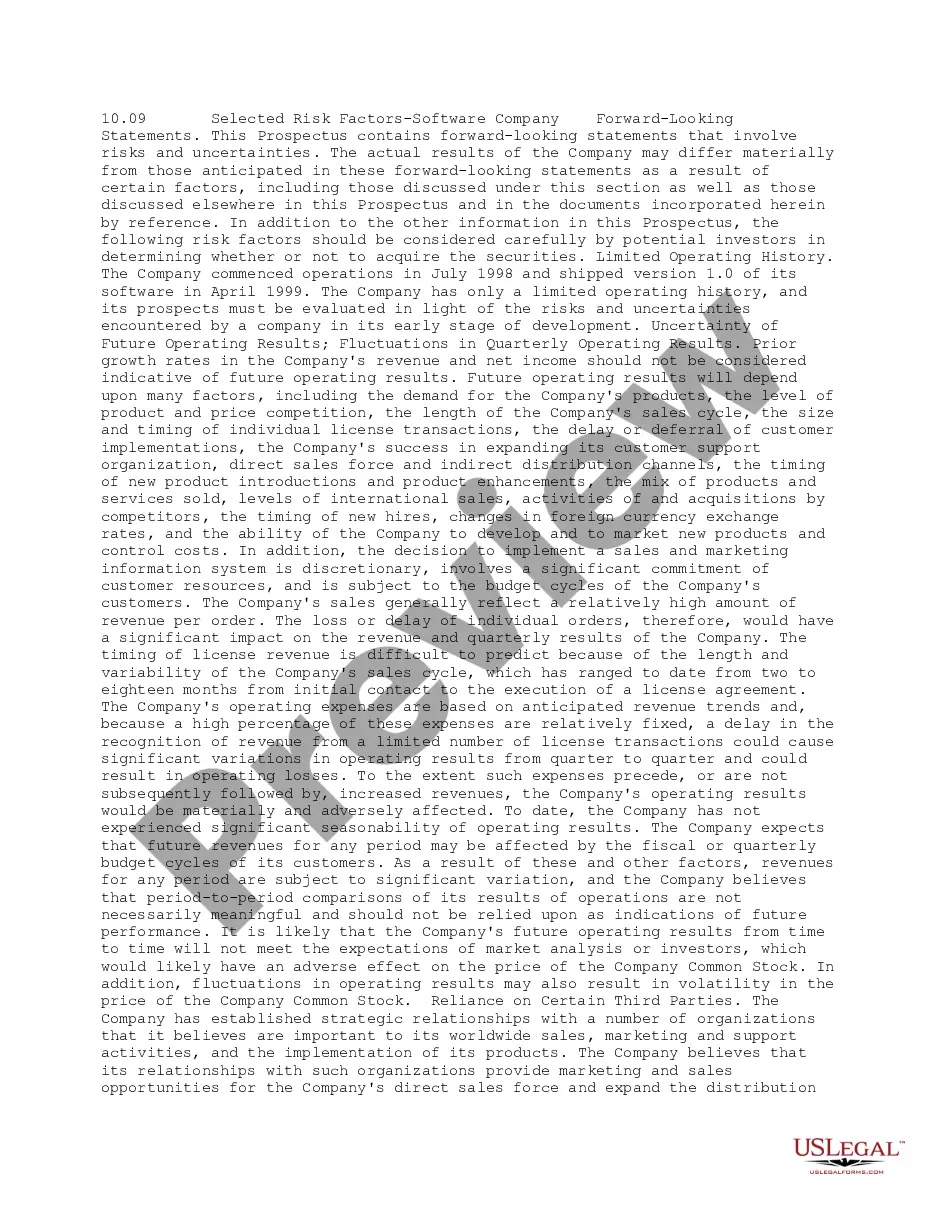

How to fill out Customer Confidentiality Agreement?
If you need to thorough, acquire, or create legal document templates, utilize US Legal Forms, the premier assortment of legal forms, that are accessible online.
Utilize the site’s user-friendly and efficient search to find the documents you require.
A range of templates for business and personal use are organized by categories and states, or keywords.
Each legal document template you receive is yours permanently. You can access every form you acquired in your account. Click on the My documents section and select a form to print or download again.
Compete and obtain, and print the South Carolina Customer Confidentiality Agreement with US Legal Forms. There are millions of professional and state-specific forms available for your business or personal needs.
- Use US Legal Forms to acquire the South Carolina Customer Confidentiality Agreement within a few clicks.
- If you are already a US Legal Forms customer, Log In to your account and click on the Download option to locate the South Carolina Customer Confidentiality Agreement.
- You can also access forms you previously obtained in the My documents tab of your account.
- If this is your first time using US Legal Forms, follow the instructions below.
- Step 1. Make sure you have selected the form for the correct city/state.
- Step 2. Use the Preview option to review the form’s details. Don’t forget to read the summary.
- Step 3. If you are unhappy with the form, utilize the Search box at the top of the screen to find other versions of the legal form template.
- Step 4. Once you have found the form you need, click on the Purchase now option. Choose the pricing plan you prefer and enter your information to register for an account.
- Step 5. Process the transaction. You can use your credit card or PayPal account to complete the transaction.
- Step 6. Select the format of the legal form and download it to your device.
- Step 7. Fill out, edit, and print or sign the South Carolina Customer Confidentiality Agreement.
Form popularity
FAQ
Creating a confidentiality agreement is a straightforward process. Start by clearly defining the parties involved and the information to be protected; this is vital for any South Carolina Customer Confidentiality Agreement. You can use online resources, like US Legal Forms, to access templates that simplify this task. Be sure to review the agreement carefully and customize it to suit your specific needs before signing.
Yes, you can create a non-disclosure agreement (NDA) without a lawyer. However, you should be careful to include all essential elements that make the South Carolina Customer Confidentiality Agreement legally binding. Using a reputable template or platform, like US Legal Forms, can guide you through the process and ensure your agreement meets state requirements. This approach allows you to protect your sensitive information effectively without incurring high legal fees.
In South Carolina, the NDA, or Non-Disclosure Agreement, is a legal framework that protects confidential information shared between parties. A South Carolina Customer Confidentiality Agreement is vital for businesses that wish to secure sensitive information, such as trade secrets or client lists. This agreement binds both parties legally, ensuring that the shared information remains confidential and only used for the specified purpose. To create an effective NDA, consider using platforms like uslegalforms, which provide ready-made templates tailored for South Carolina law.
Writing a simple confidentiality statement requires clarity and precision. In the context of a South Carolina Customer Confidentiality Agreement, you could express: 'All information shared is confidential and should not be disclosed to any third party without prior written consent.' This straightforward statement effectively communicates the obligation between parties, promoting understanding and trust.
An example of a confidentiality agreement could involve a software company entering into a South Carolina Customer Confidentiality Agreement with a client to protect their new product features. This agreement ensures that the client does not disclose any sensitive information about the software until a public release. Such agreements are essential for maintaining trust and security in business relationships.
Filling out a South Carolina Customer Confidentiality Agreement involves several key steps. Begin by including the names and addresses of all parties involved, then define the confidential information being protected. You should also state the duration the agreement will last and the consequences if the agreement is violated. Consider using templates available on platforms like ulegalforms to simplify the process.
To fill in a Non-Disclosure Agreement (NDA) as part of a South Carolina Customer Confidentiality Agreement, you first need to enter the names of the parties involved. Then, specify the confidential information in detail and define the terms of use. Ensure you include the signatures of both parties to make the agreement legally binding. Remember, platforms like ulegalforms offer useful tools for this process.
A good confidentiality statement in a South Carolina Customer Confidentiality Agreement outlines the specific information that is protected. For instance, it might state: 'The receiving party agrees to keep all proprietary information received from the disclosing party confidential.' This clarity helps set expectations regarding information sharing and privacy.
To write a simple South Carolina Customer Confidentiality Agreement, start by clearly identifying the parties involved. Next, outline the information considered confidential and specify how it should be handled. Lastly, include the duration of the confidentiality obligation and any consequences for breach. You can find templates on platforms like ulegalforms to help guide you.
A Customer Disclosure Agreement (CDA) and a Non-Disclosure Agreement (NDA) both serve to protect confidential information, but they differ in their focus. A CDA typically emphasizes customer-related disclosures, while an NDA is a broader term that can cover various types of confidential information. If you're considering either, a South Carolina Customer Confidentiality Agreement may serve your needs effectively, and resources from US Legal Forms can assist you in choosing the right document.