South Carolina Land Trust Agreement

State:
Multi-State
Control #:
US-02093BG
Format:
Word; 
Rich Text
Instant download

Description

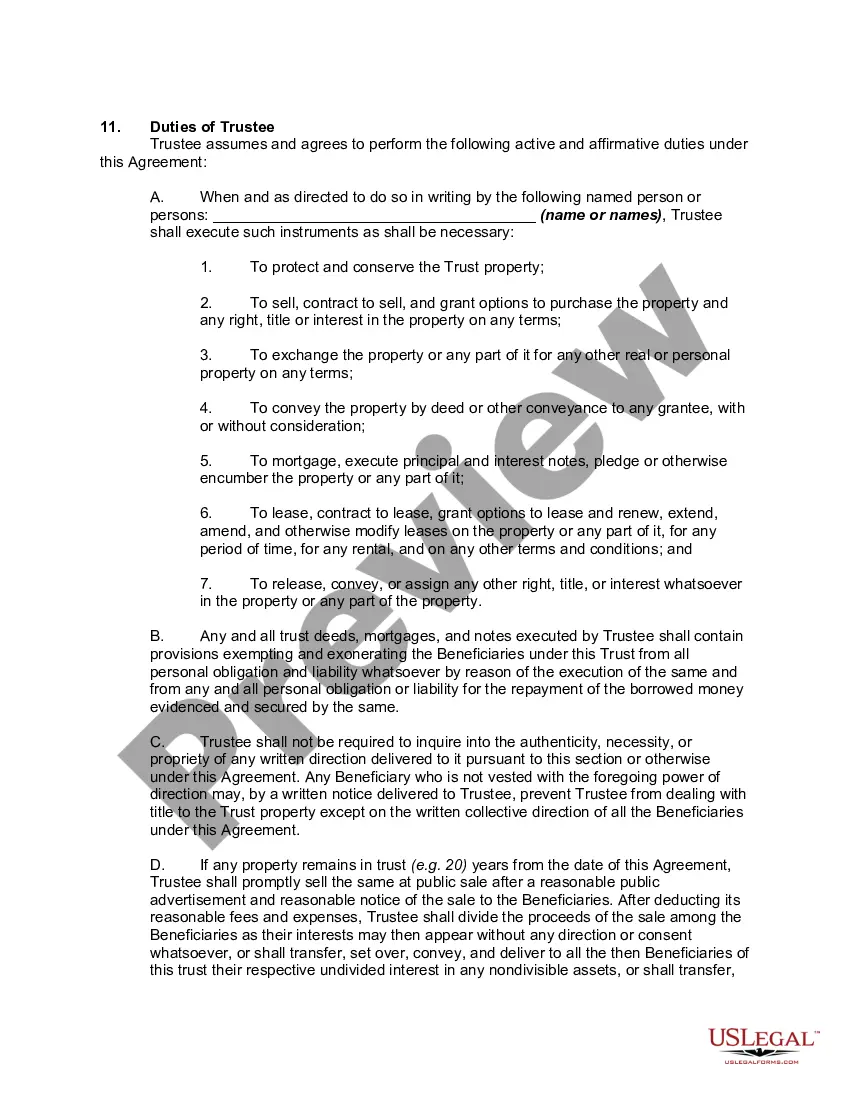
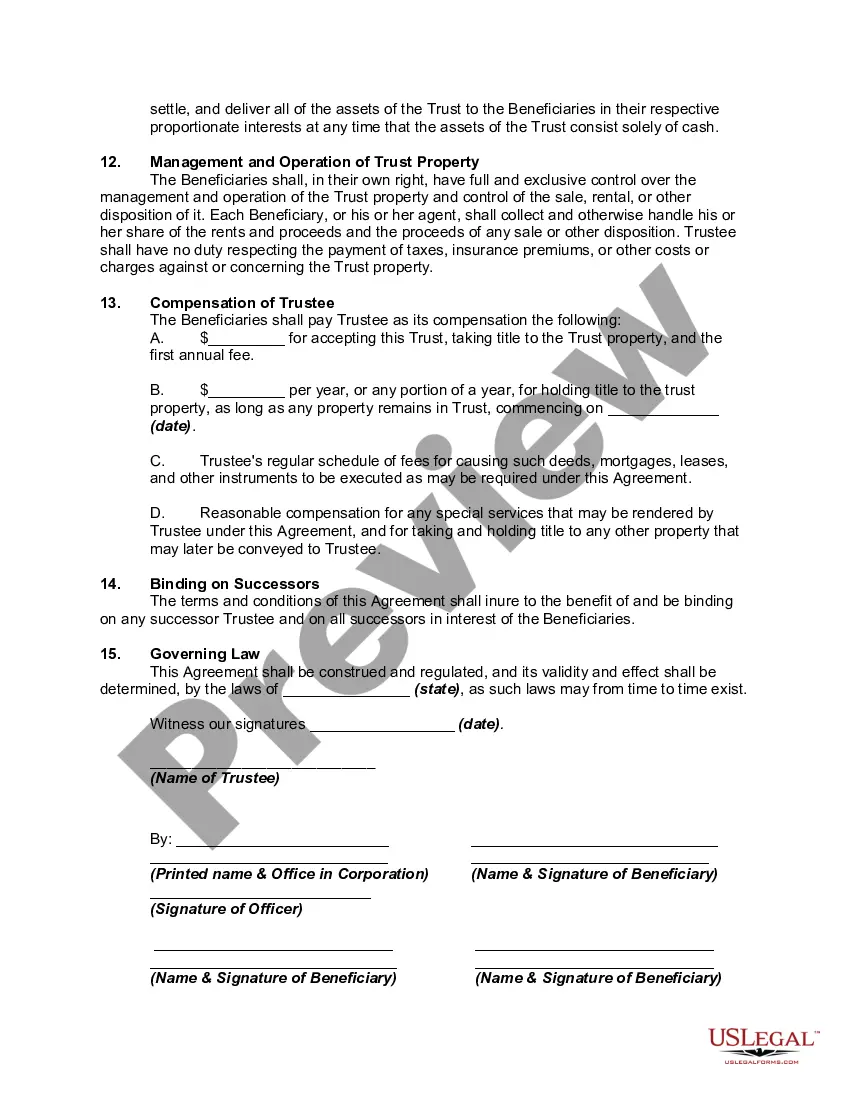
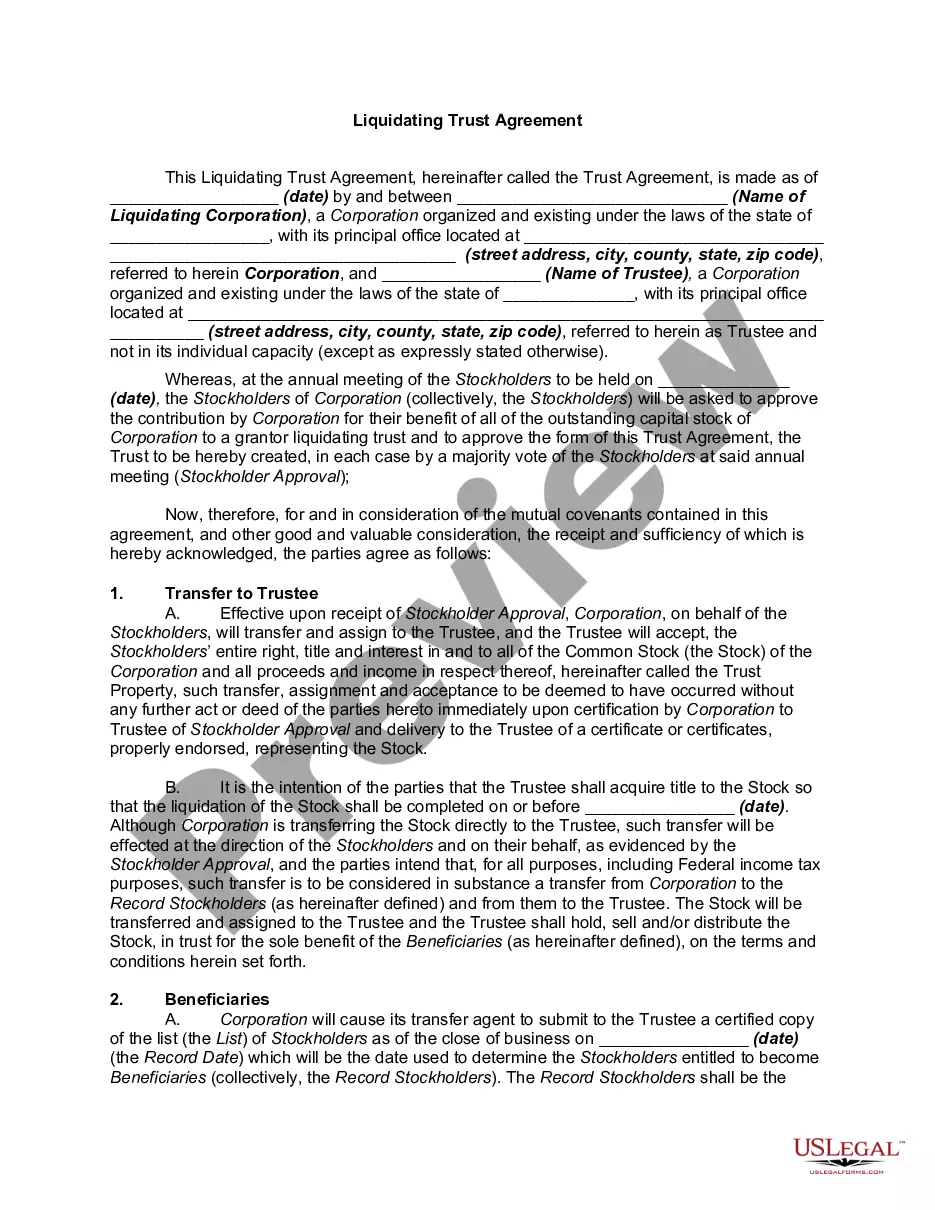
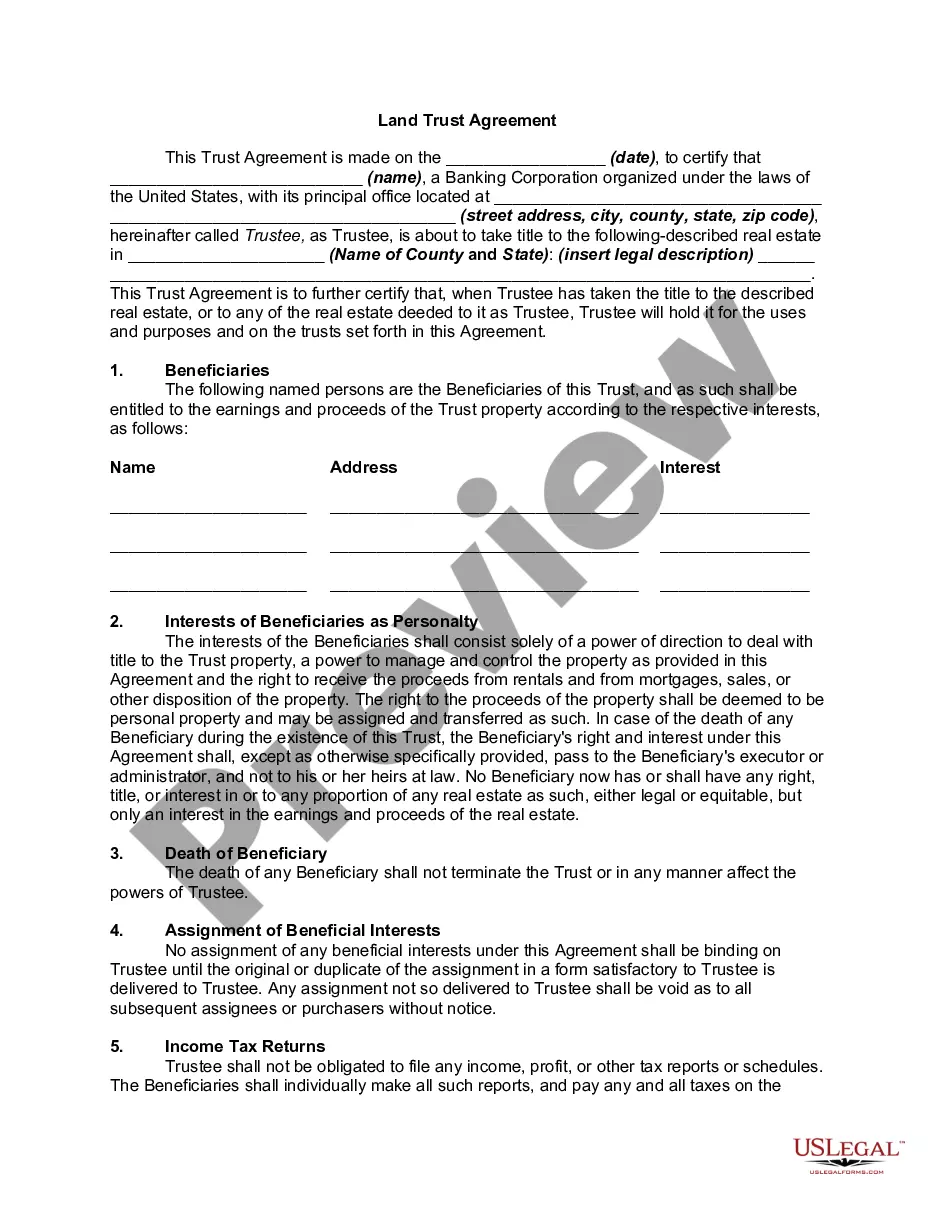
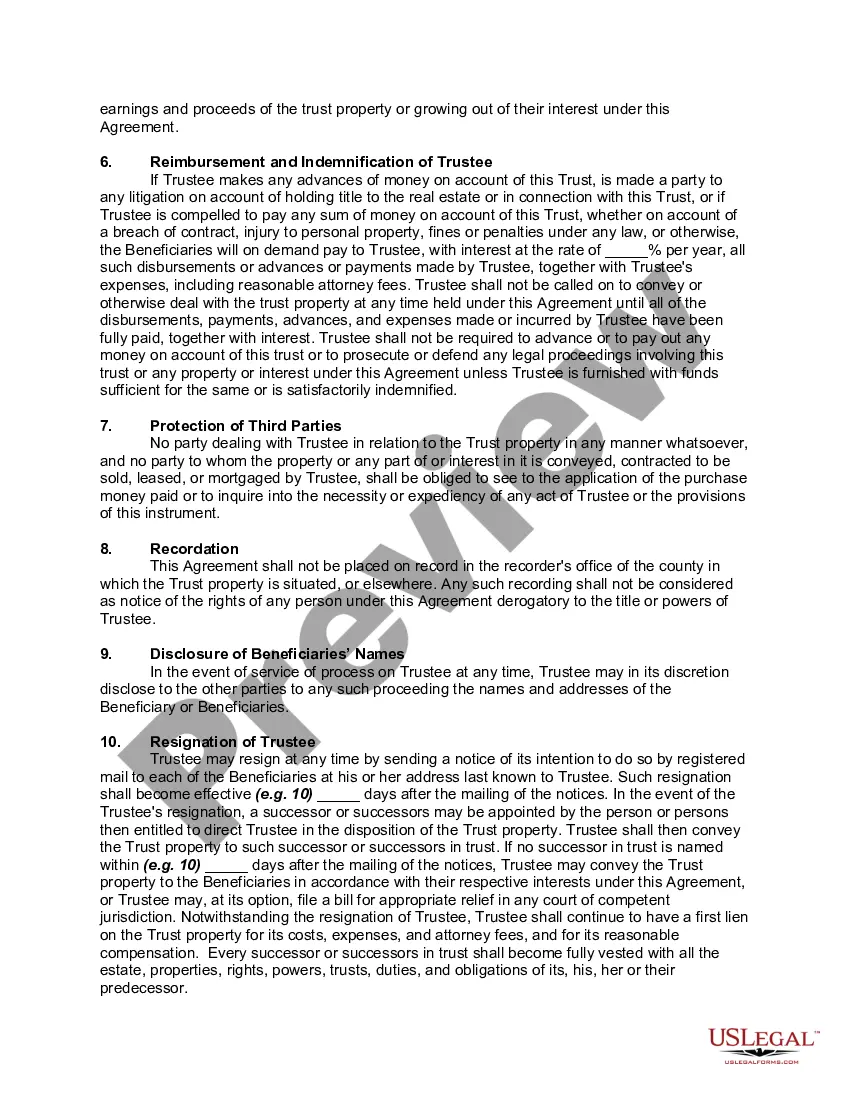
There are two basic instruments required to establish a land trust. One is a deed in trust conveying the real estate to a trustee. The other is a trust agreement defining the rights and duties of the trustee and the beneficiaries, which is mentioned in the deed of trust but is not recorded. The deed in trust should convey title to real property to a trustee and confer complete trust powers on the trustee so that the trustee can deal with third parties without reference to the trust agreement. Restrictions on the trustee's powers should be set forth in the trust agreement.


This form is a generic example that may be referred to when preparing such a form for your particular state. It is for illustrative purposes only. Local laws should be consulted to determine any specific requirements for such a form in a particular jurisdiction.
Free preview
  • Preview Land Trust Agreement
  • Preview Land Trust Agreement
  • Preview Land Trust Agreement
  • Preview Land Trust Agreement
  • Preview Land Trust Agreement

How to fill out Land Trust Agreement?

If you need to compile, obtain, or print legal document templates, utilize US Legal Forms, the largest variety of legal forms, accessible online.

Leverage the site's straightforward and user-friendly search to find the documents you need.

Many templates for business and personal purposes are categorized by type and state, or keywords.

Step 4. Once you have found the form you require, click on the Buy now button. Select the payment plan you prefer and enter your credentials to create an account.

Step 5. Complete the purchase. You can use your credit card or PayPal account to finalize the transaction.

  1. Utilize US Legal Forms to acquire the South Carolina Land Trust Agreement with just a few clicks.
  2. If you are already a US Legal Forms customer, Log In to your account and then click the Download button to retrieve the South Carolina Land Trust Agreement.
  3. You can also access forms you previously downloaded in the My documents section of your account.
  4. If you are using US Legal Forms for the first time, follow the steps below.
  5. Step 1. Ensure you have chosen the form for the appropriate city/state.
  6. Step 2. Use the Preview feature to review the form's details. Don’t forget to read the description.
  7. Step 3. If you are not satisfied with the form, use the Search area at the top of the page to find other versions of the legal document template.

Form popularity

FAQ

To write a trust agreement, start by gathering essential information about the trust's purpose, the trustor, beneficiaries, and any assets involved. Next, clearly outline the terms of the South Carolina Land Trust Agreement, including how assets will be managed and distributed. It is crucial to ensure that the document complies with South Carolina laws to avoid any legal issues. For a seamless process, consider using US Legal Forms, which provides templates and guidance tailored to South Carolina's specific requirements.

Placing land in a trust offers various benefits, including asset protection, estate planning, and tax advantages. For instance, a South Carolina Land Trust Agreement can help preserve family property, ensure privacy, and provide a clear plan for future generations. Furthermore, a trust simplifies the transfer of property upon death, avoiding potential probate complications. Overall, it is a strategic move for many property owners.

To file a trust in South Carolina, you typically need to draft a trust document that adheres to state laws. The South Carolina Land Trust Agreement is a great starting point, as it covers essential elements of trust management. Once the document is prepared and signed, if the trust holds real estate, you may also need to record it with the county. It's beneficial to use services like USLegalForms to ensure compliance with legal requirements.

A land trust in South Carolina is a legal arrangement where a trustee holds the title to a property for the benefit of the beneficiaries. This method provides privacy, financial security, and estate planning benefits. By using a South Carolina Land Trust Agreement, property owners can outline the terms of ownership clearly and protect their assets. It's an effective tool for many looking to manage their real estate holdings.

Generally, the tax responsibility for a land trust falls on the beneficiaries. The South Carolina Land Trust Agreement typically specifies how the income generated by the property will be taxed. Sometimes, the trust itself can be structured to be tax-exempt, but that depends on various factors. Consulting with a tax professional can provide clarity on your specific situation.

While a land trust provides privacy and protection, it also has some disadvantages. One key concern is that it may complicate financing and selling the property. Additionally, the South Carolina Land Trust Agreement can limit the owner's ability to control the property directly, which may deter some individuals. It is important to weigh these factors carefully before proceeding.

In South Carolina, a trust does not need to be recorded to be valid. However, if the trust holds real estate, you may want to record it for clarity and to prove ownership. The South Carolina Land Trust Agreement can be beneficial in these situations, as it outlines the terms and conditions clearly. You can rely on platforms like USLegalForms to help you create and manage your trust effectively.

In South Carolina, several types of assets are exempt from probate. A South Carolina Land Trust Agreement is one option that can help keep your assets private and out of probate. Other exempt assets include life insurance payouts and accounts with designated beneficiaries, providing an efficient way to manage your estate.

To avoid probate in South Carolina, consider creating a South Carolina Land Trust Agreement. This legal document allows you to manage your assets during your lifetime and ensures they pass directly to your beneficiaries upon your death. Additionally, naming beneficiaries on accounts and holding assets jointly can also help you sidestep the probate process.

In South Carolina, certain assets are classified as non-probate. Common examples include assets held in a South Carolina Land Trust Agreement, retirement accounts with designated beneficiaries, and life insurance policies. When these assets are correctly titled, they can bypass probate, simplifying your estate management.

Trusted and secure by over 3 million people of the world’s leading companies

South Carolina Land Trust Agreement