South Carolina Change of Beneficiary
Description

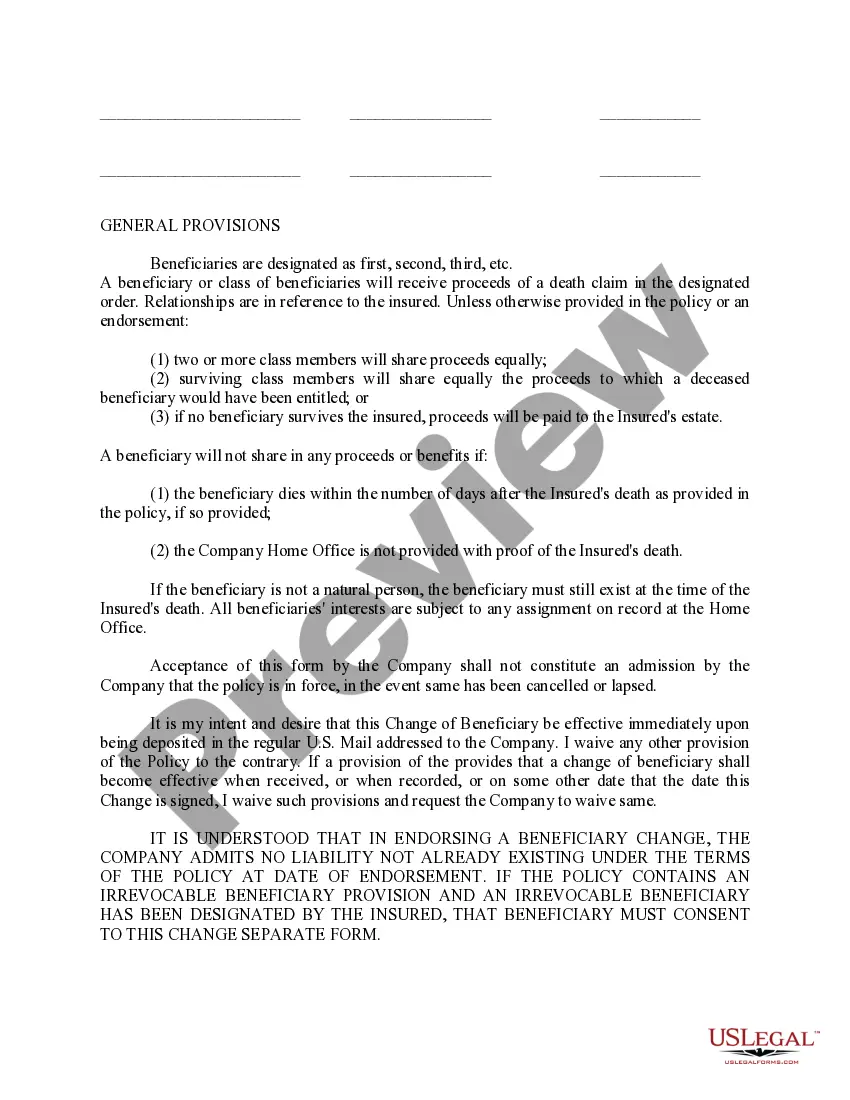



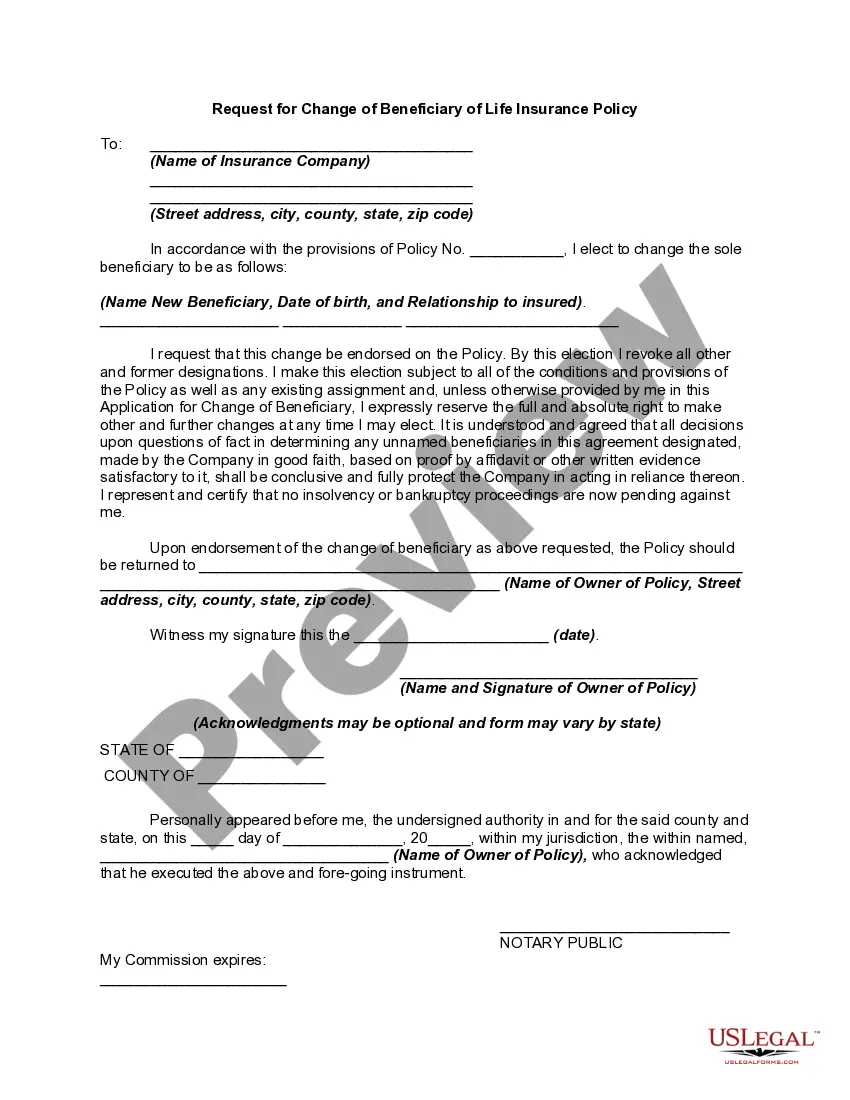
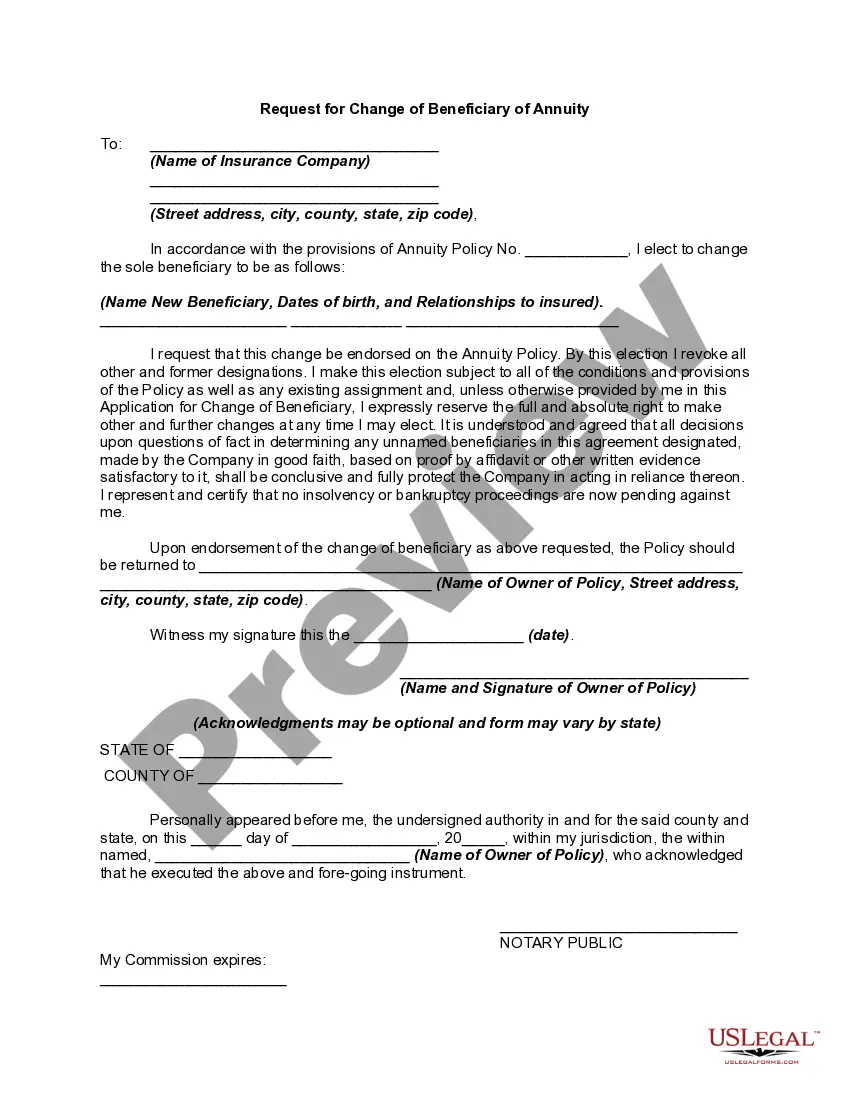
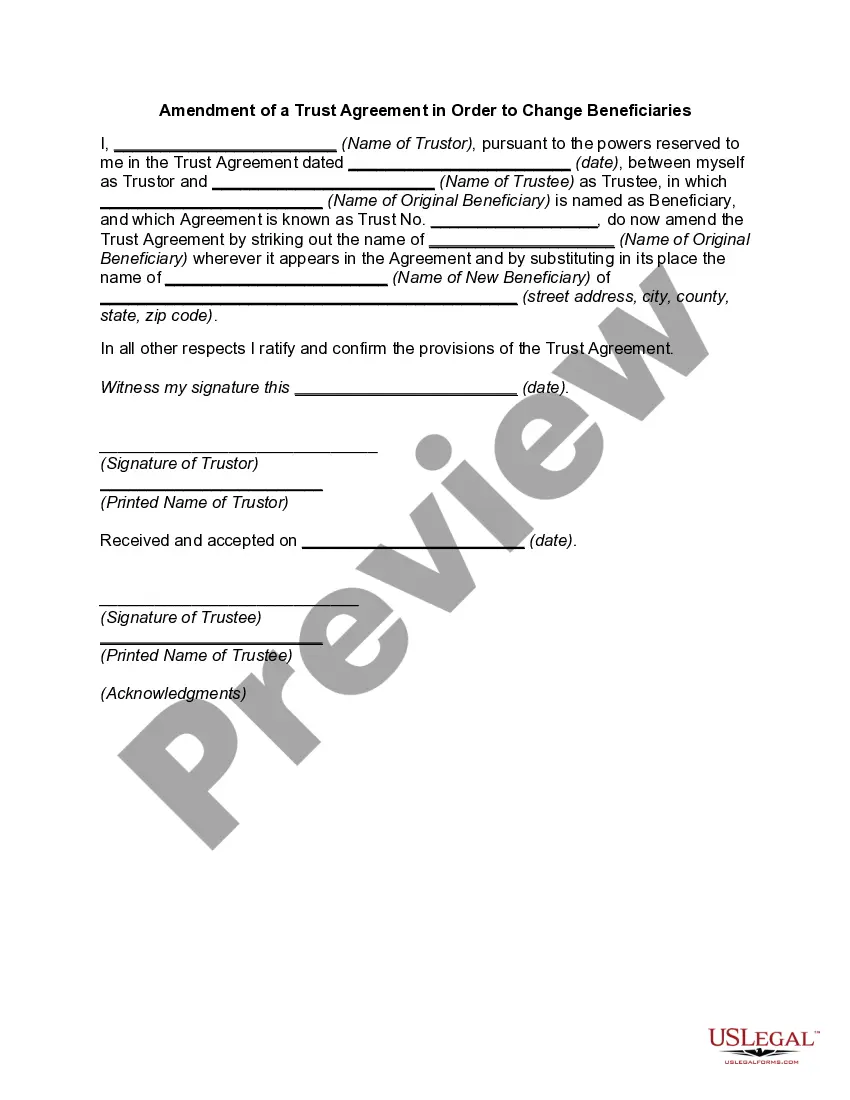

Get your form ready online
Our built-in tools help you complete, sign, share, and store your documents in one place.
Make edits, fill in missing information, and update formatting in US Legal Forms—just like you would in MS Word.
Download a copy, print it, send it by email, or mail it via USPS—whatever works best for your next step.
Sign and collect signatures with our SignNow integration. Send to multiple recipients, set reminders, and more. Go Premium to unlock E-Sign.
If this form requires notarization, complete it online through a secure video call—no need to meet a notary in person or wait for an appointment.
We protect your documents and personal data by following strict security and privacy standards.

Make edits, fill in missing information, and update formatting in US Legal Forms—just like you would in MS Word.

Download a copy, print it, send it by email, or mail it via USPS—whatever works best for your next step.

Sign and collect signatures with our SignNow integration. Send to multiple recipients, set reminders, and more. Go Premium to unlock E-Sign.

If this form requires notarization, complete it online through a secure video call—no need to meet a notary in person or wait for an appointment.

We protect your documents and personal data by following strict security and privacy standards.
Looking for another form?








How to fill out Change Of Beneficiary?
US Legal Forms - one of the largest collections of legal templates in the United States - offers a vast array of legal document designs that you can obtain or print. By using the website, you can discover thousands of forms for business and personal purposes, organized by categories, states, or keywords. You can access the latest versions of forms such as the South Carolina Change of Beneficiary in minutes.
If you already have a monthly subscription, Log In and download the South Carolina Change of Beneficiary from your US Legal Forms library. The Download button will appear on every document you view. You can access all previously downloaded forms in the My documents tab of your account.
If you are using US Legal Forms for the first time, here are simple instructions to get you started: Ensure you have selected the correct form for your city/state. Click the Preview button to review the form's content. Check the form summary to make sure you have chosen the right one. If the form does not meet your needs, use the Search field at the top of the screen to find one that does.
Access the South Carolina Change of Beneficiary with US Legal Forms, the most extensive library of legal document templates. Utilize thousands of professional and state-specific templates that meet your business or personal needs and requirements.
- If you are satisfied with the form, confirm your choice by clicking the Buy now button.
- Then, select the payment plan you prefer and provide your information to register for an account.
- Process the payment. Use your Visa or Mastercard or PayPal account to complete the transaction.
- Choose the format and download the form to your device.
- Edit. Fill in, modify, and print and sign the downloaded South Carolina Change of Beneficiary.
- Each template you save in your account has no expiration date and is yours indefinitely. So, if you wish to download or print another copy, simply visit the My documents section and click on the form you need.
Form popularity
FAQ
You can add or change a lump-sum beneficiary at any time. It's important to keep your beneficiary designation up to date.
It's important to name beneficiaries for life insurance policies and financial accounts to ensure that your assets pass quickly to your loved ones. It's even more important to review and update beneficiaries if you experience changes in your life to ensure that your assets end up in the right hands. ?
When you establish an IRA or 401(k), you complete a form to name your beneficiaries. Changes are made in the same way ? you complete a new beneficiary designation form. A will or trust does not override your beneficiary designation form. However, spouses may have special rights under federal or state law.
Can you change your beneficiary after you retire? That depends. If it's the beneficiary for your pension, in most cases the answer is no. If you choose a pension payment option that provides a lifetime benefit for a surviving beneficiary, you cannot change that beneficiary, even if they die before you do.
You can add or change a lump-sum beneficiary at any time. It's important to keep your beneficiary designation up to date.
Generally, you will need to fill out a change of beneficiary form which includes information such as the policyholder's name, the new beneficiary's name, and the reason for the change. You may also need to provide a copy of the policyholder's death certificate if the beneficiary is being changed due to their death.
The policy owner is the only person who can change the beneficiary designation in most cases. If you have an irrevocable beneficiary or live in a community property state you need approval to make policy changes. A power of attorney can give someone else the ability to change your beneficiaries.