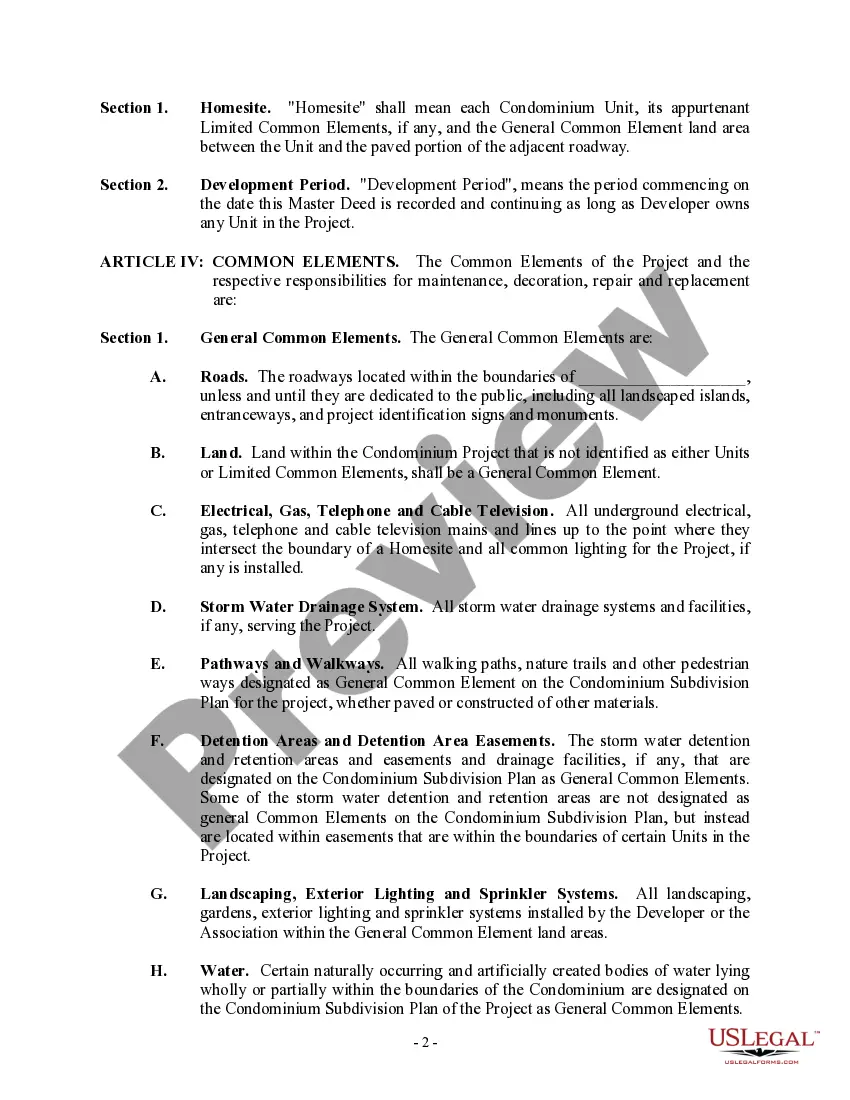
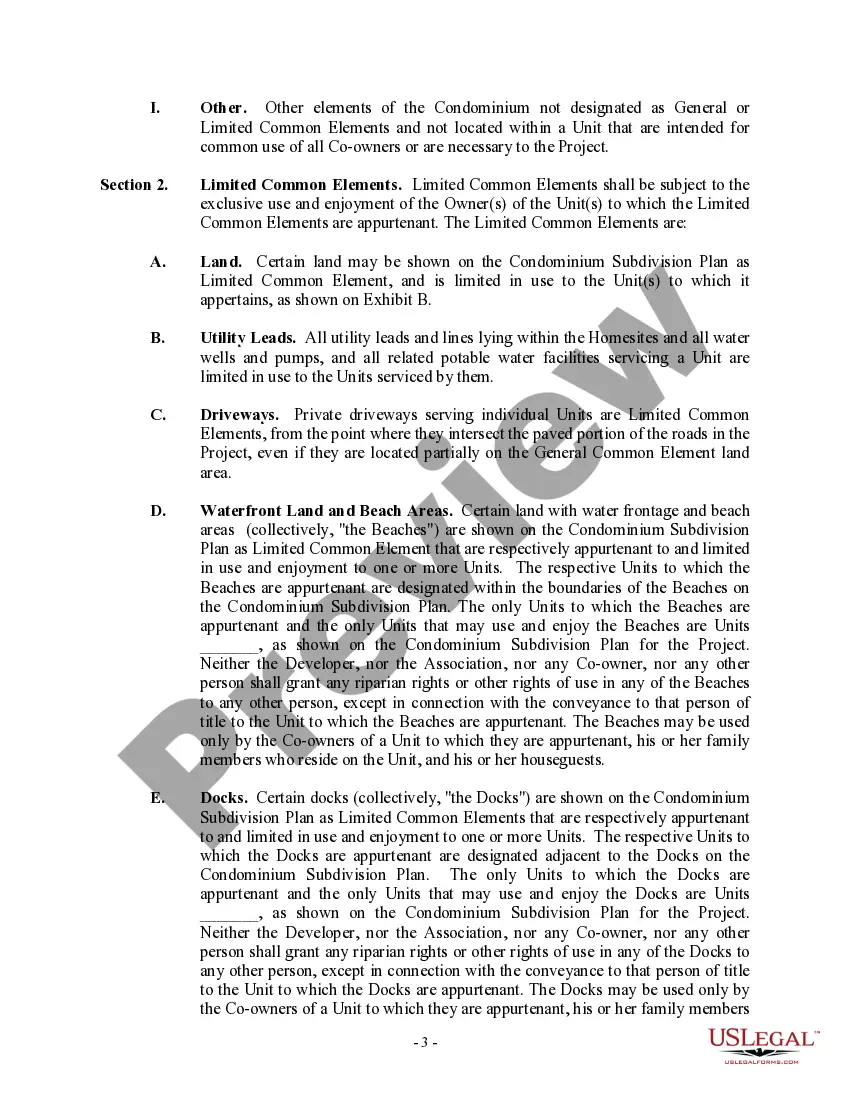
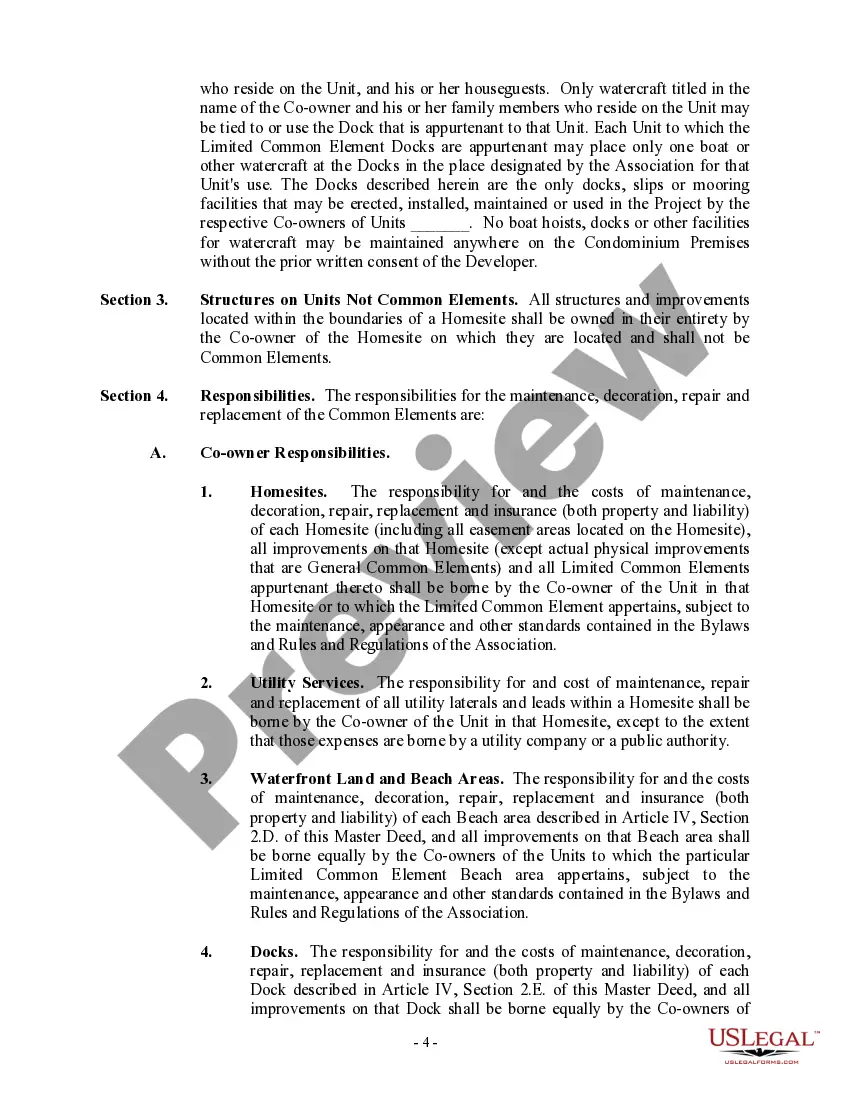
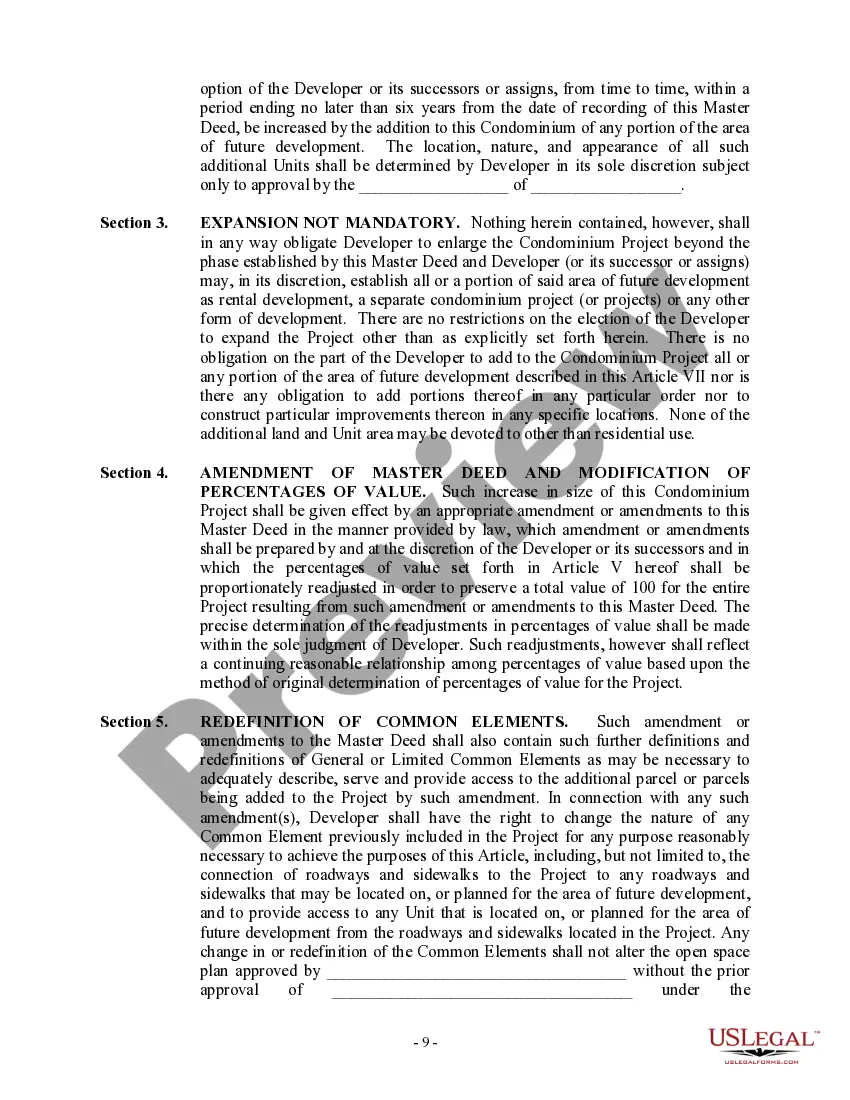
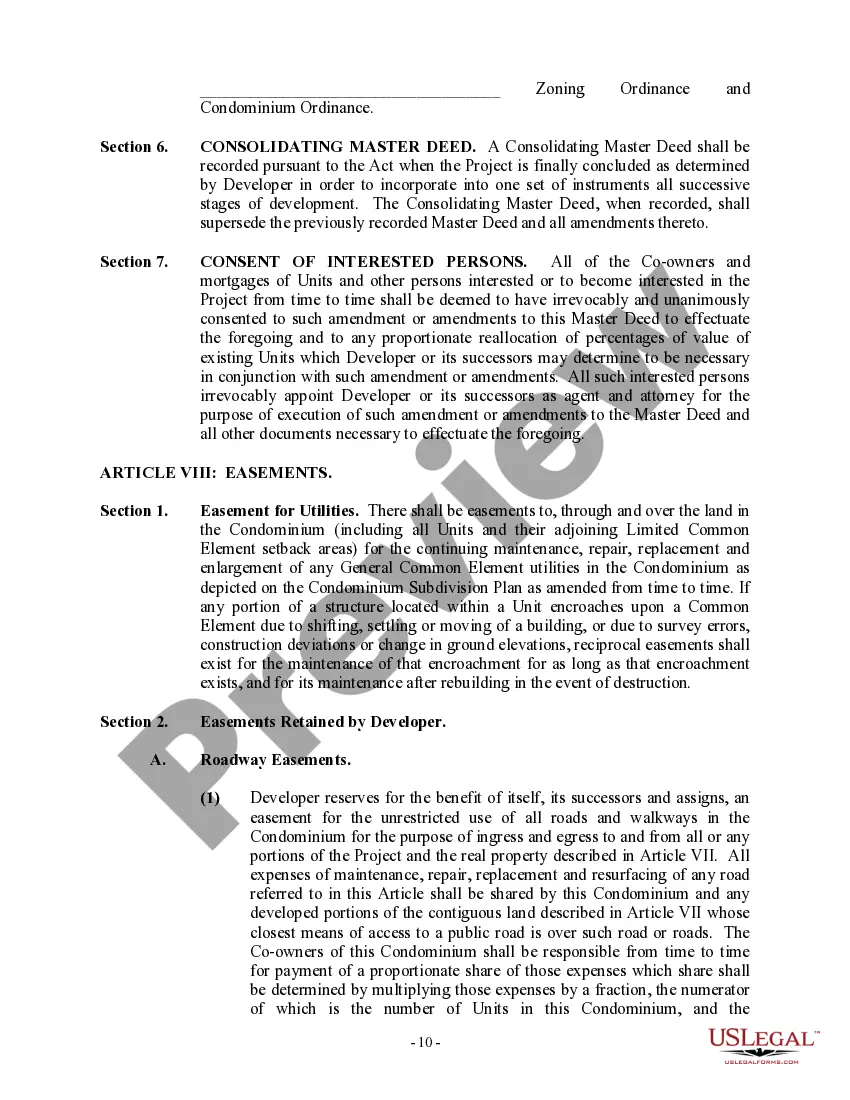
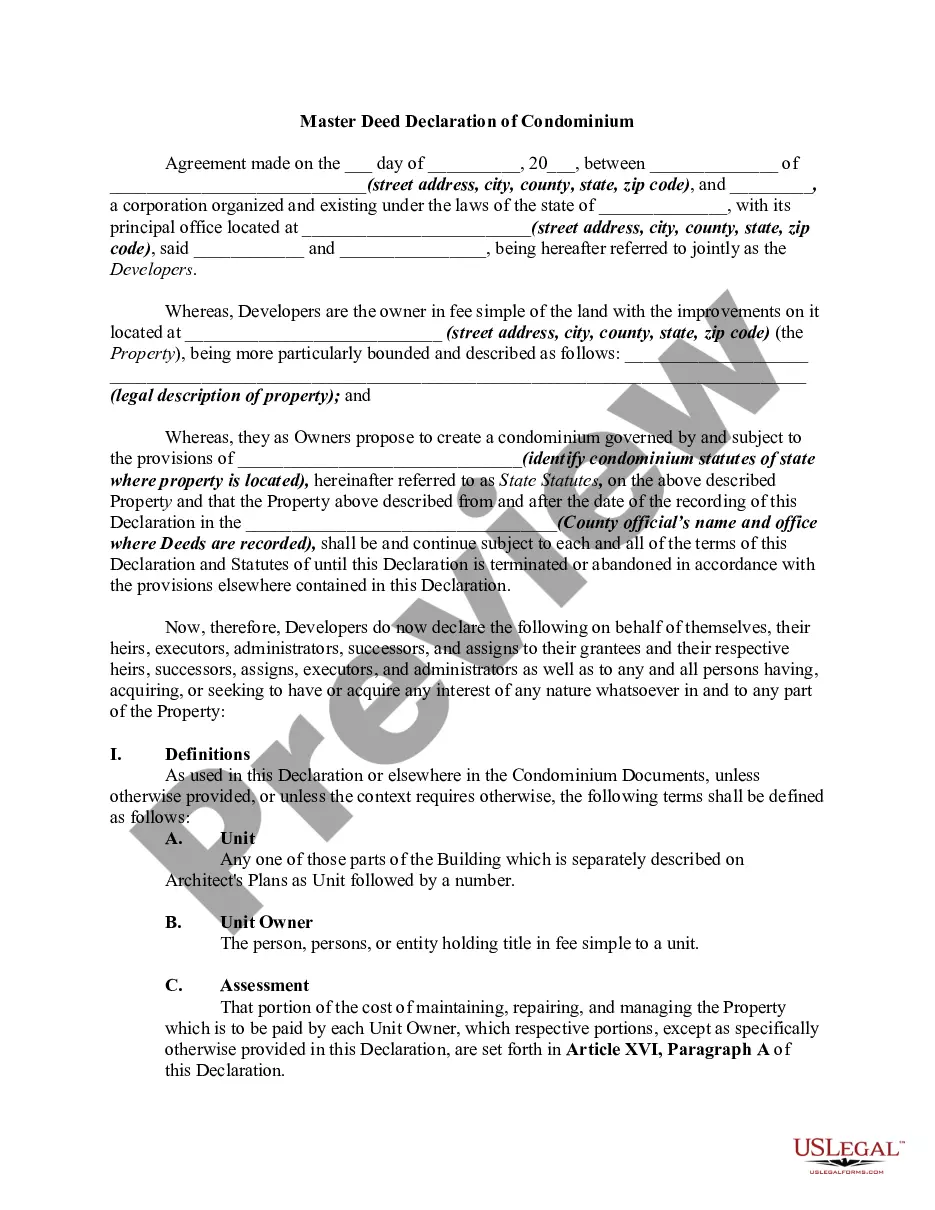
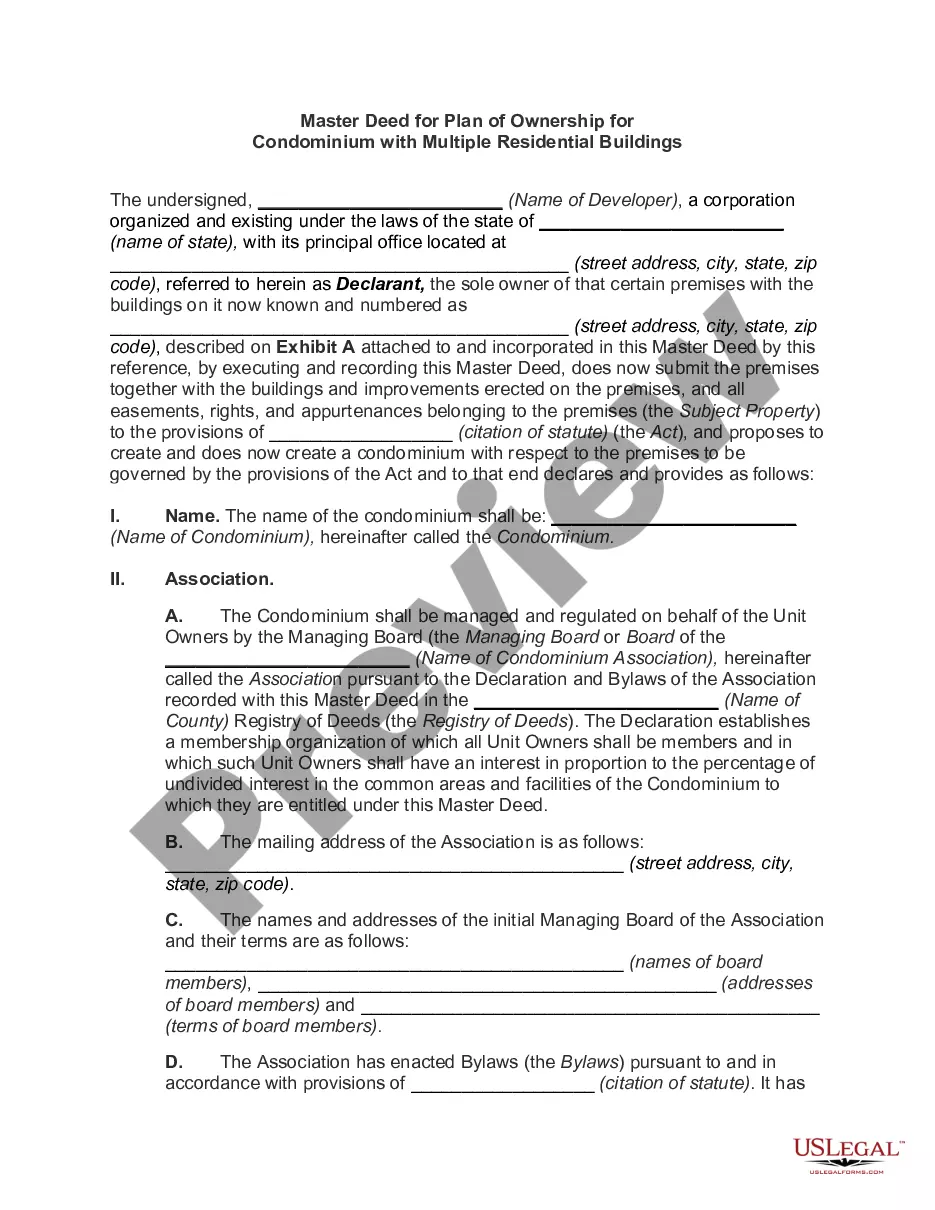
This form is a Master Deed. This Master Deed is executed by a developer pursuant to the provisions of the Condominium Act. The deed contains a legal description of the project and the responsibilities of the co-owner.
South Carolina Condominium Master Deed - Residential Condo Development
Instant download
Description
Free preview

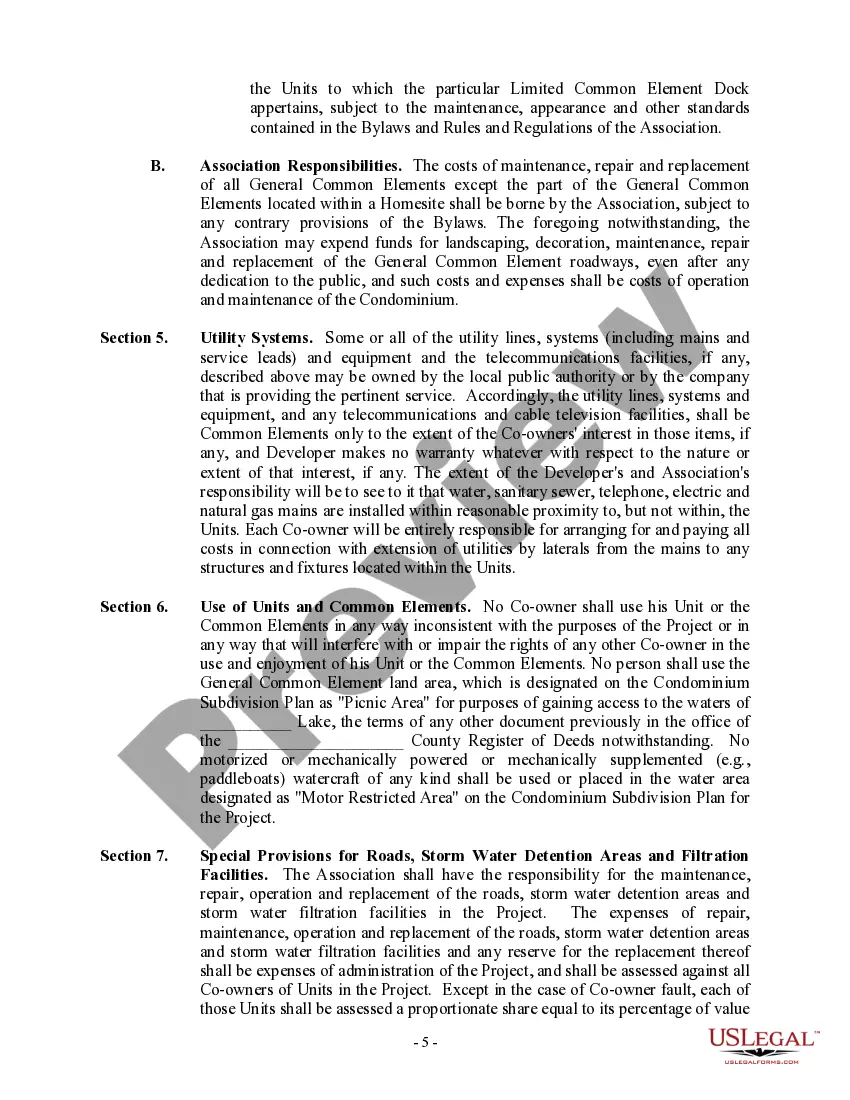
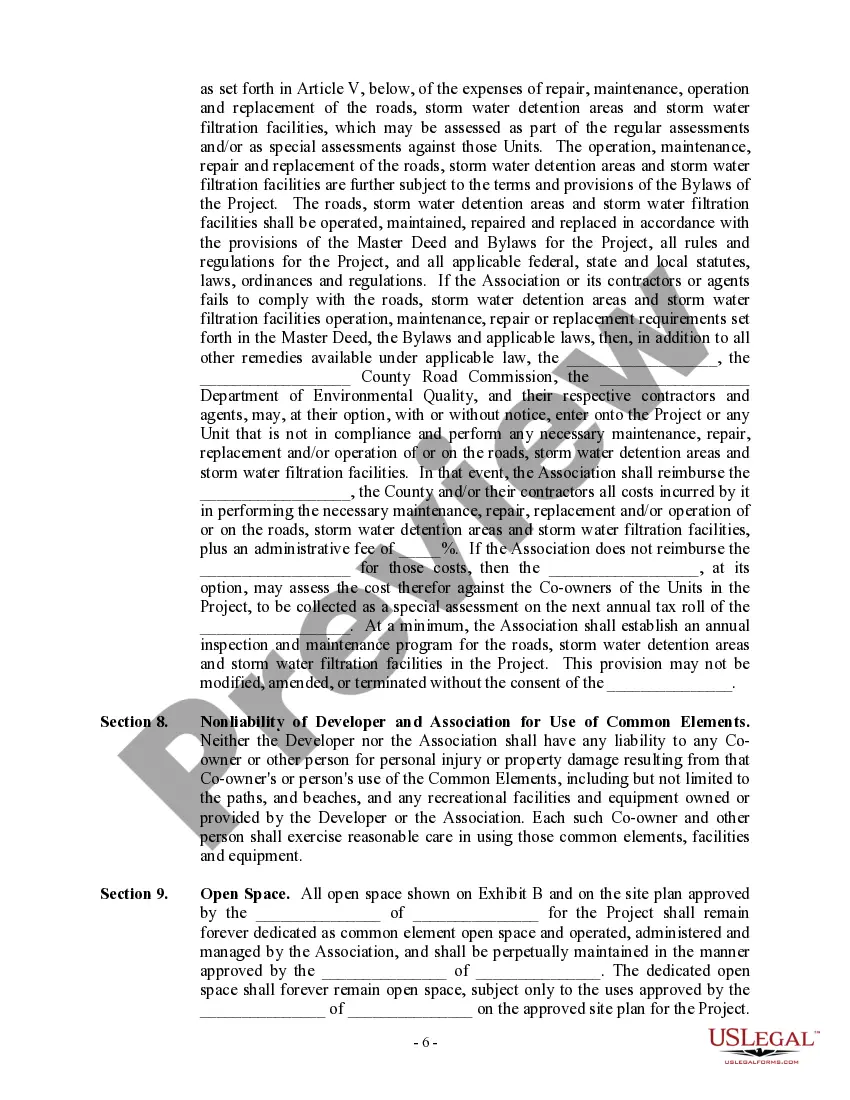
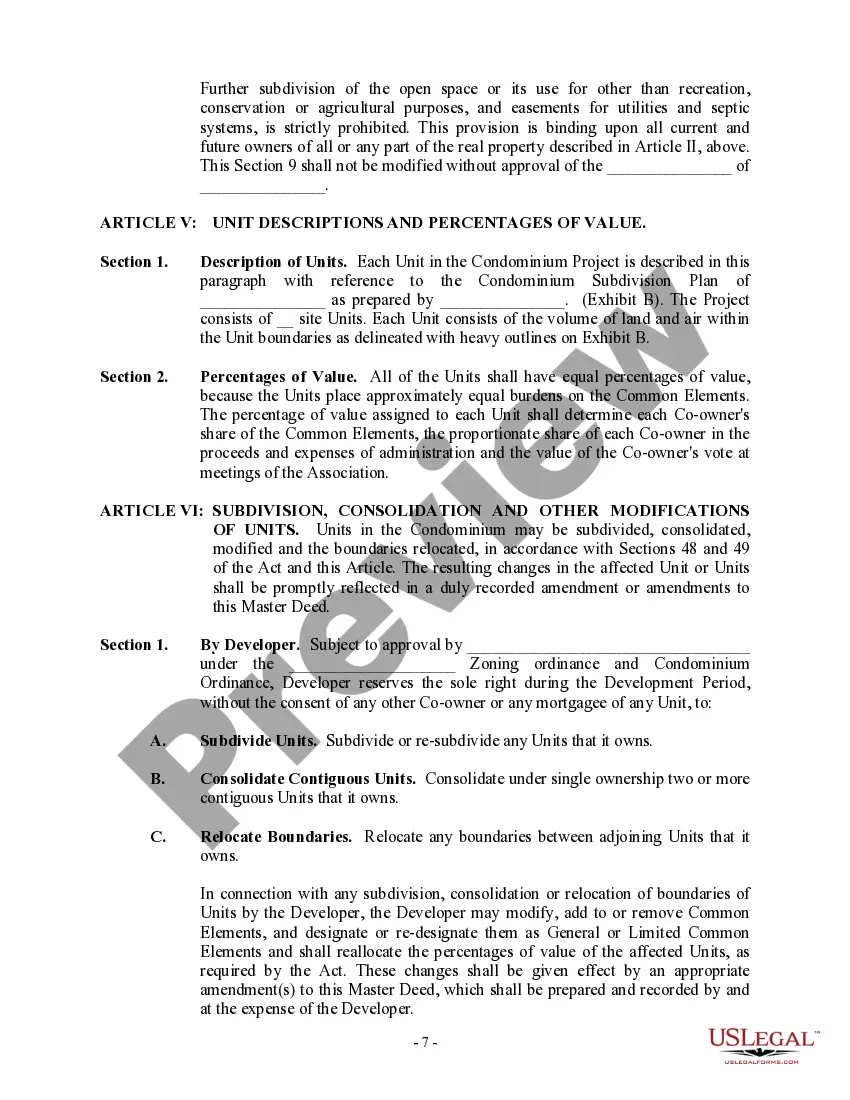
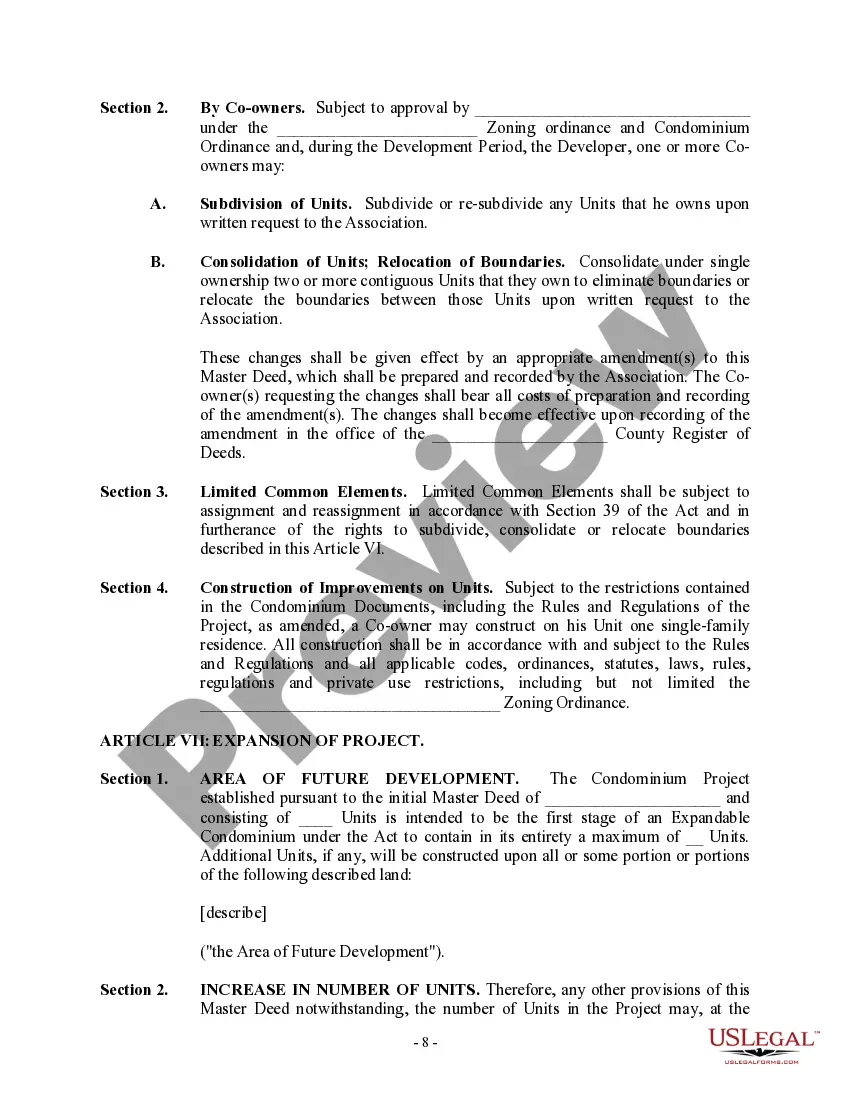


Get your form ready online
Our built-in tools help you complete, sign, share, and store your documents in one place.
Built-in online Word editor
Make edits, fill in missing information, and update formatting in US Legal Forms—just like you would in MS Word.
Export easily
Download a copy, print it, send it by email, or mail it via USPS—whatever works best for your next step.
E-sign your document
Sign and collect signatures with our SignNow integration. Send to multiple recipients, set reminders, and more. Go Premium to unlock E-Sign.
Notarize online 24/7
If this form requires notarization, complete it online through a secure video call—no need to meet a notary in person or wait for an appointment.
Store your document securely
We protect your documents and personal data by following strict security and privacy standards.

Make edits, fill in missing information, and update formatting in US Legal Forms—just like you would in MS Word.

Download a copy, print it, send it by email, or mail it via USPS—whatever works best for your next step.

Sign and collect signatures with our SignNow integration. Send to multiple recipients, set reminders, and more. Go Premium to unlock E-Sign.

If this form requires notarization, complete it online through a secure video call—no need to meet a notary in person or wait for an appointment.

We protect your documents and personal data by following strict security and privacy standards.
Looking for another form?



How to fill out Condominium Master Deed - Residential Condo Development?
US Legal Forms - one of the largest collections of legal documents in the United States - offers a range of legal document templates that you can download or print. By using the website, you can access thousands of forms for business and personal purposes, organized by categories, states, or keywords.
You can find the latest editions of forms like the South Carolina Condominium Master Deed - Residential Condo Development in just a few minutes. If you already have a subscription, Log In and download the South Carolina Condominium Master Deed - Residential Condo Development from the US Legal Forms library. The Download button will appear on every form you view. You can access all previously downloaded forms from the My documents section of your account.
If you are using US Legal Forms for the first time, here are some straightforward instructions to help you get started: Ensure you have selected the correct form for your city/state. Click the Review button to examine the form's contents. Check the form summary to confirm you have chosen the right document. If the form does not meet your requirements, use the Search field at the top of the screen to find one that does. If you are satisfied with the form, confirm your choice by clicking the Get now button. Then, choose your preferred pricing plan and provide your details to register for an account. Process the transaction. Use your Visa or Mastercard or PayPal account to complete the transaction. Select the format and download the form to your device. Make changes. Complete, modify, print, and sign the obtained South Carolina Condominium Master Deed - Residential Condo Development. Every document you added to your account has no expiration date and is yours permanently. Therefore, if you wish to download or print another copy, simply go to the My documents section and click on the form you need. Access the South Carolina Condominium Master Deed - Residential Condo Development with US Legal Forms, one of the most extensive collections of legal document templates. Utilize thousands of professional and state-specific templates that meet your business or personal needs and requirements.
The platform provides a user-friendly interface that allows easy navigation and search functionality, ensuring you can find the exact forms you need quickly and efficiently.
With a variety of options available, US Legal Forms caters to all your legal documentation requirements, making it an essential resource for individuals and businesses alike.
- US Legal Forms.
- legal documents.
- templates.
- business purposes.
- personal purposes.
- comprehensive collection.
Form popularity
FAQ
When heirs' property is created, the heirs own all the property together (in legal terms, they own the property as ?tenants in common?). In other words, they each own an interest in the undivided land rather than each heir owning an individual lot or piece of the land.
A Horizontal Property Regime (HPR) is a zoning policy which essentially allows for two new houses to be built on a piece of land that was previously zoned for just one house.
South Carolina Horizontal Property Act Section NameSection Number"Conversion of rental units to condominium ownership" defined§ 27-31-410Rights and duties of owners, landlords, and tenants when rental units are converted to condominiums; notices; offers; vacation; phased conversions§ 27-31-42034 more rows
The master deed or lease creating and establishing the horizontal property regime shall be executed by the owner or owners of the real property making up the regime and shall be recorded with the register of mesne conveyance or clerk of court of the county where such property is located.
A horizontal-property act is a law that governs the ownership and management of cooperatives and condominiums. It sets out the rights and responsibilities of owners, tenants, and management companies.
(a) An apartment owner shall have the exclusive ownership of his apartment and shall have a common right to a share, with the other co-owners, in the common elements of the property, equivalent to the percentage representing the value of the individual apartment, with relation to the value of the whole property.
This chapter may be cited as the `South Carolina Condominium Act'. Section 27-30-20. The purpose of this chapter is to recognize the condominium form of ownership of real property, and to establish procedures for the creation, sale, and operation of condominiums.