South Carolina Notice and Certificate of Assessment Lien
Overview of this form
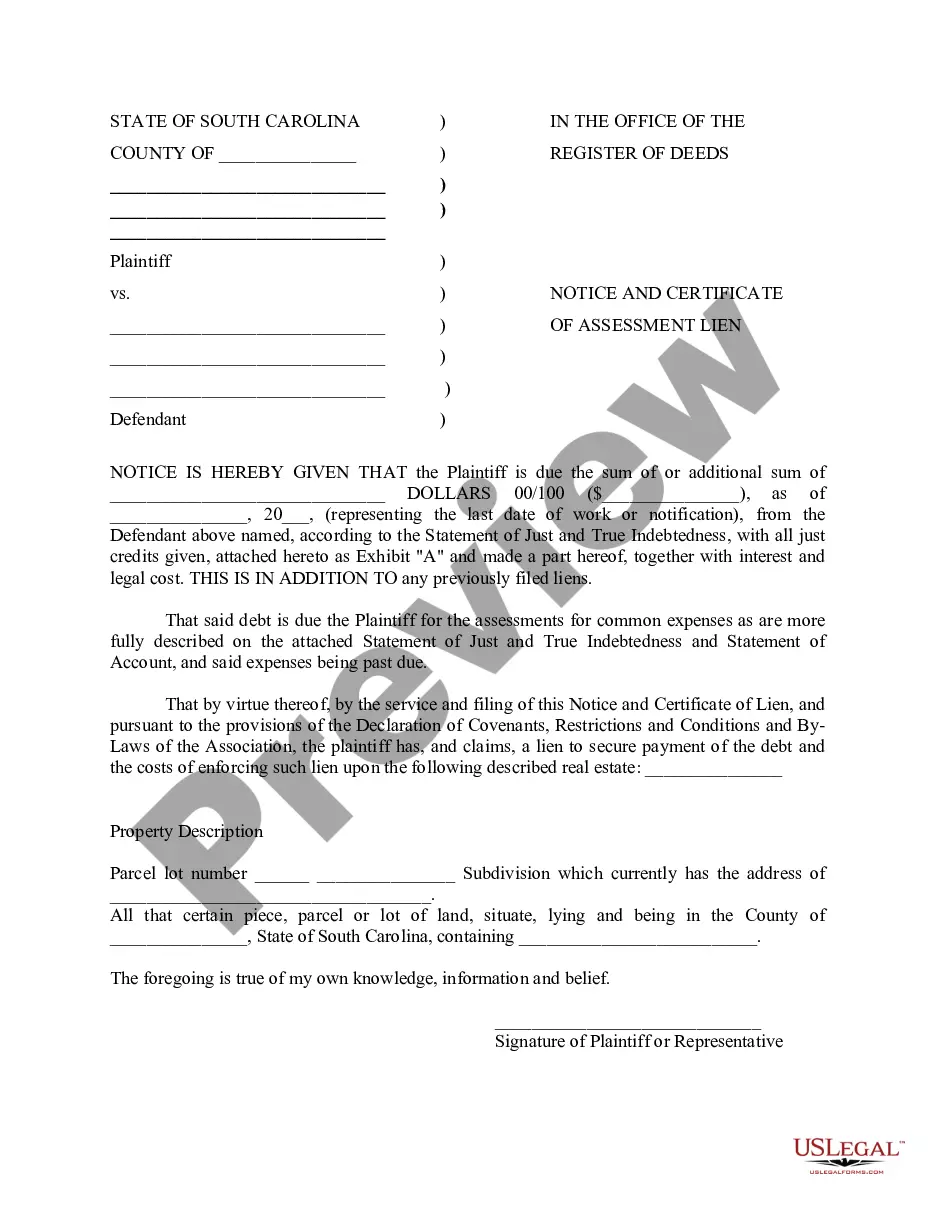
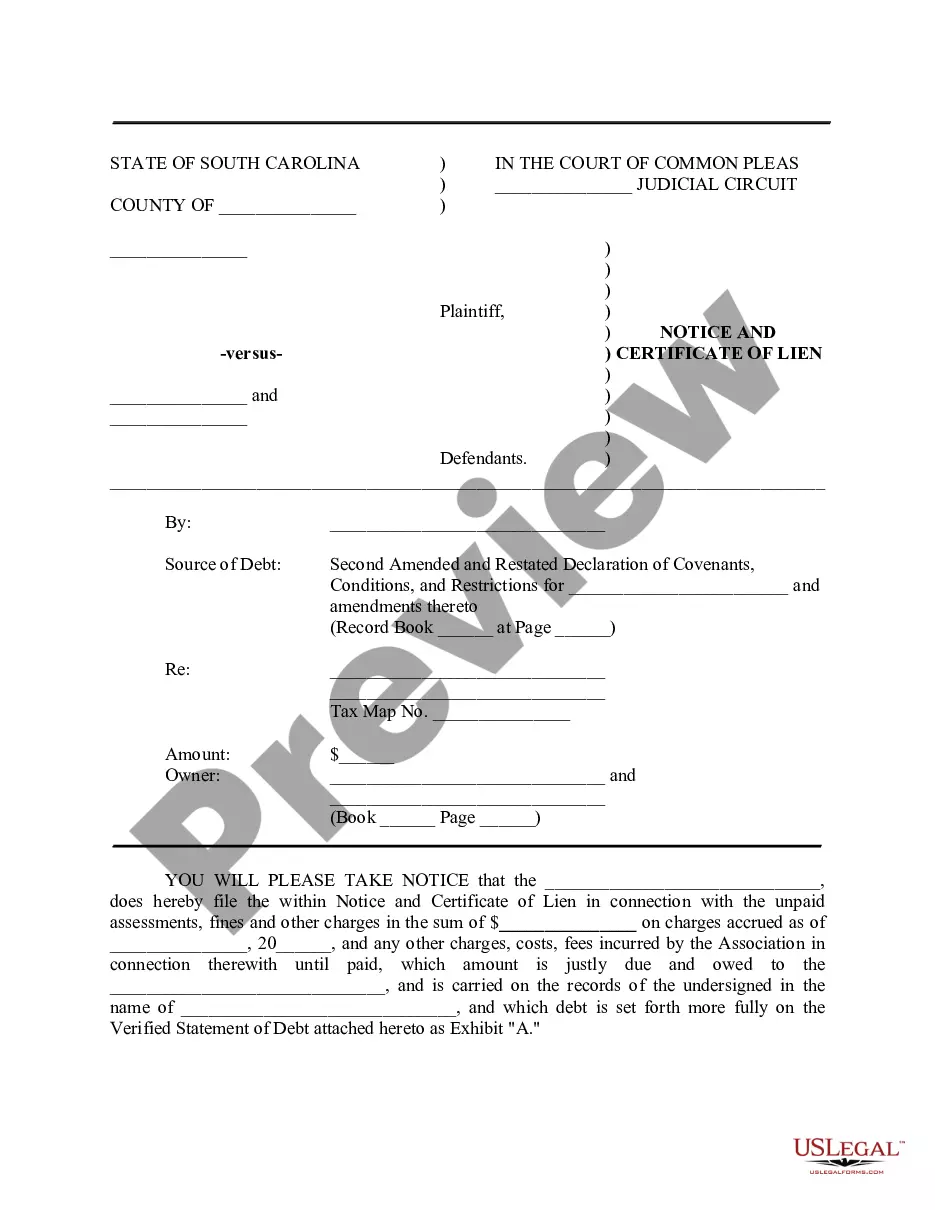
The Notice and Certificate of Assessment Lien is a legal document used by a homeowners' association (HOA) to secure payment of unpaid assessments from a homeowner. This form automatically attaches a lien to the homeowner's property, thereby providing legal backing to the HOA's claim when a member becomes delinquent on their dues. It serves to protect the financial interests of the association and differs from standard debt collection methods by establishing a legal claim against the property itself.
What’s included in this form
- Name and contact information of the plaintiff (the HOA).
- Name and contact information of the defendant (the homeowner).
- Specific amount owed and the date as of which the debt is calculated.
- Description of the property with an exact address and parcel lot number.
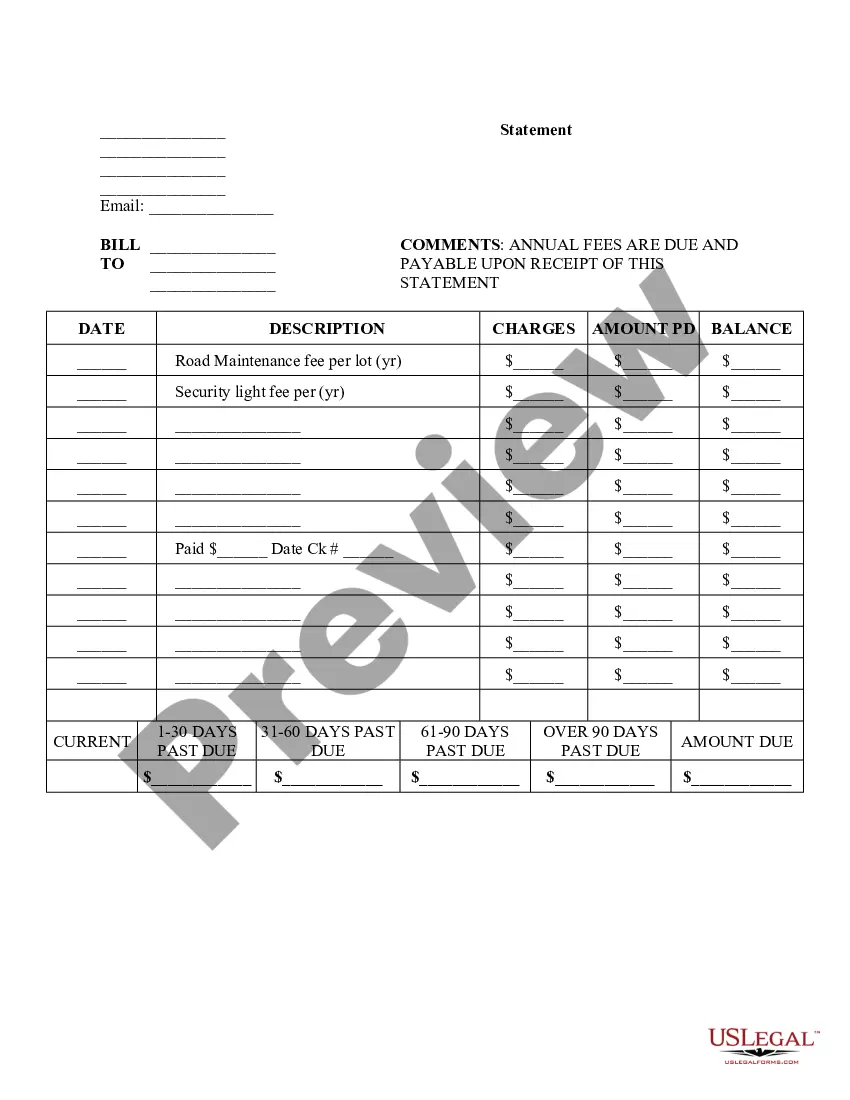
- Statement of the assessments due, including any related charges and interest.
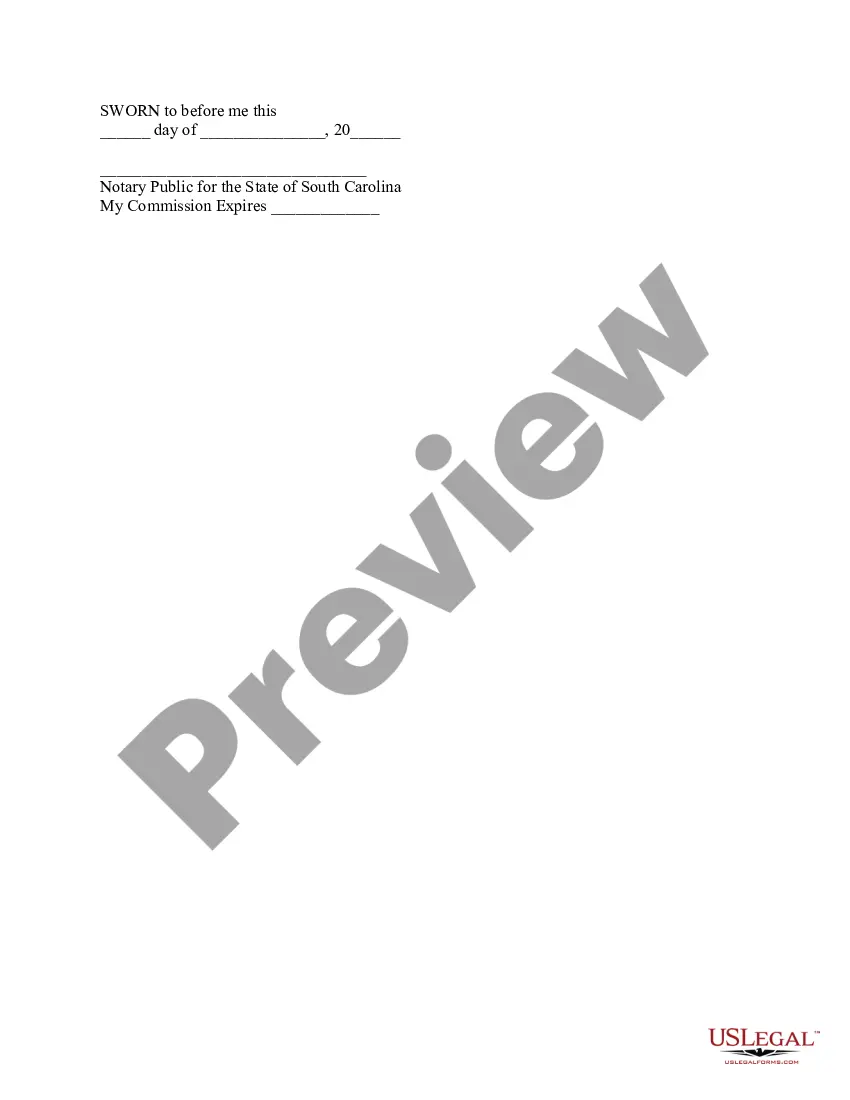
- Signature of the plaintiff or representative, along with notarization details.
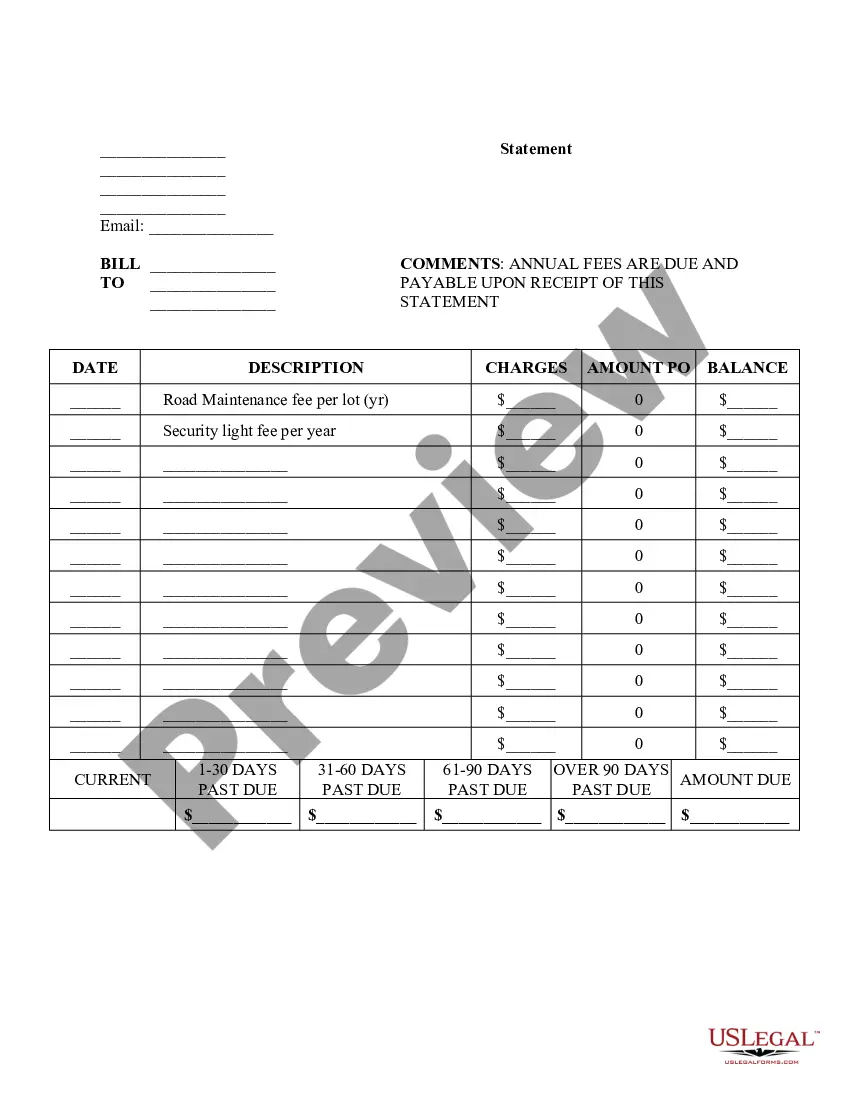
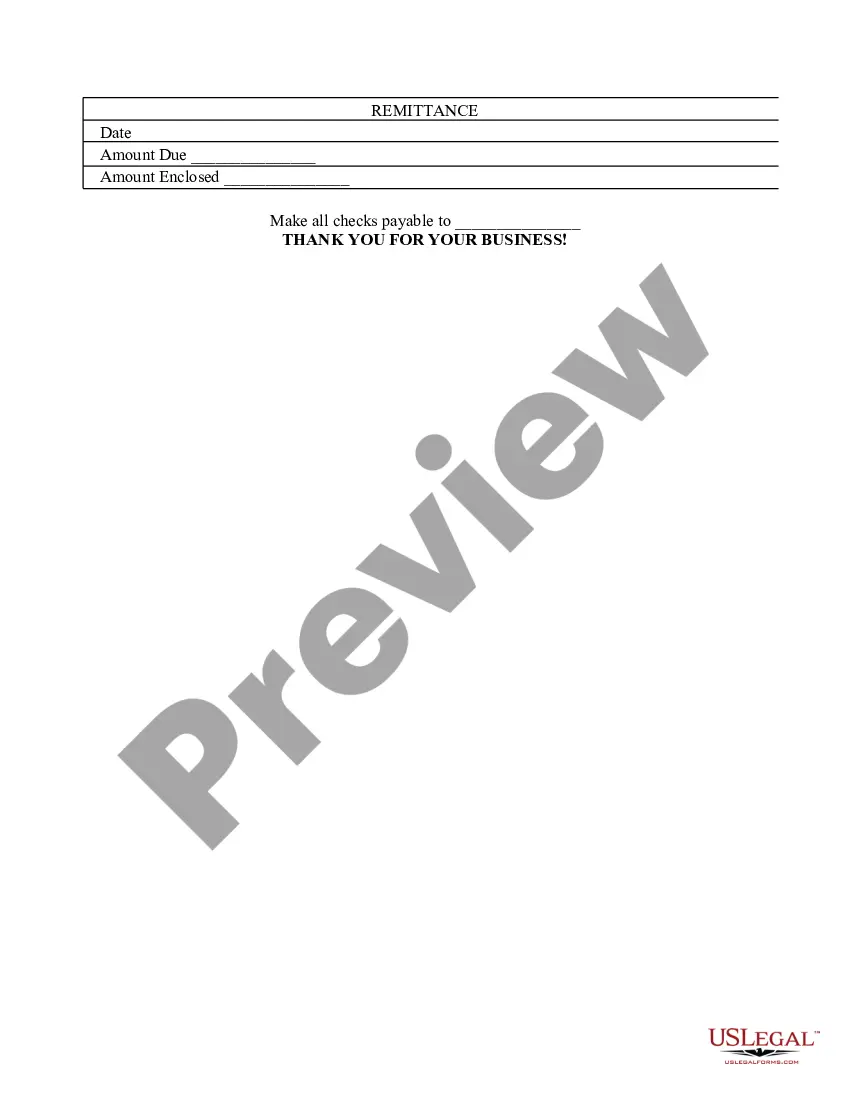
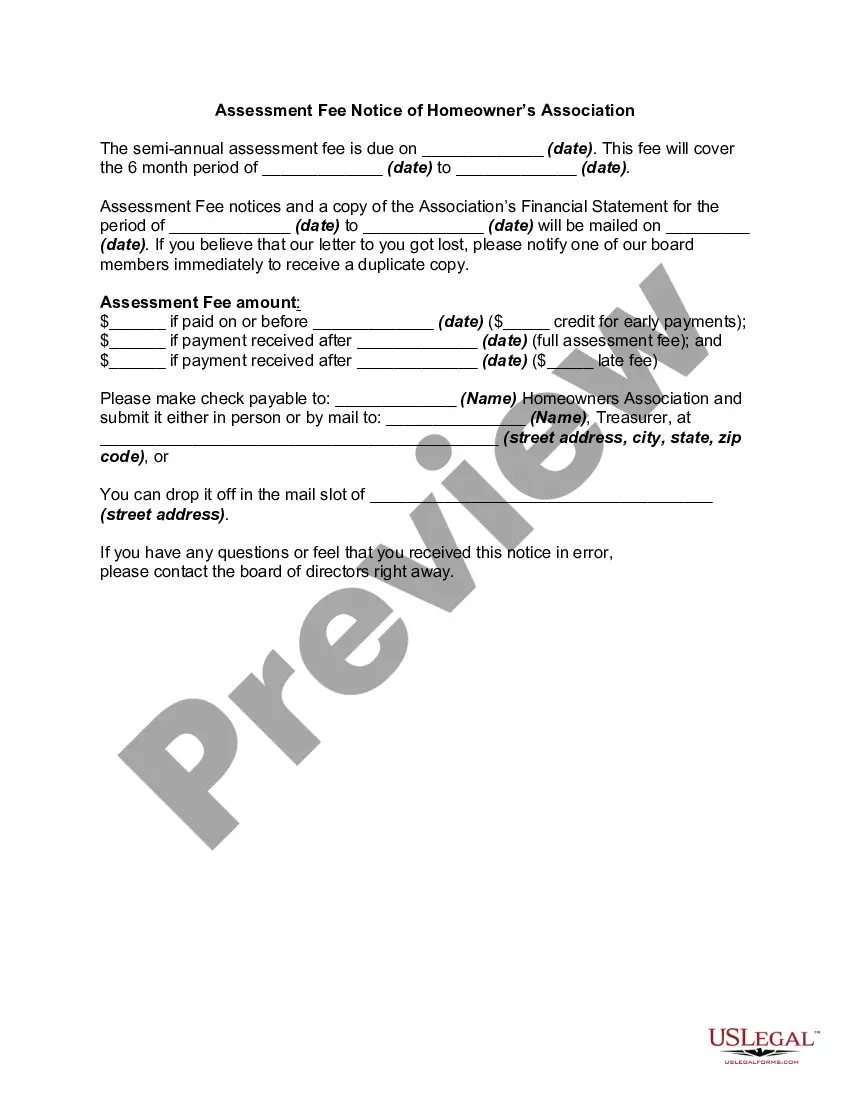
Common use cases
This form is needed when a homeowner fails to pay their HOA assessments, and the association wants to establish a lien on the property. Using this notice allows the HOA to formally notify the homeowner of the debt while securing their interests in the property against potential non-payment. It is particularly important to use this form before initiating any foreclosure actions or other collection processes.
Who this form is for
This form is intended for the following parties:
- Homeowners' associations looking to secure unpaid assessments.
- Property management companies representing an HOA.
- Homeowners who need to document dues owed to their HOA.
Instructions for completing this form
- Identify the plaintiff and defendant by filling in the names and contact details.
- Specify the amount owed, including the breakdown of assessments, with any applicable fees.
- Describe the property by entering the address and parcel lot number precisely.
- Sign the document to certify its accuracy and completeness.
- Have the document notarized according to state requirements.
Does this form need to be notarized?
Yes, this form must be notarized to be legally valid. Notarization affirms the authenticity of the signatures, thereby enhancing its enforceability. US Legal Forms provides integrated online notarization services that are available 24/7, allowing you to complete this requirement securely via video call, ensuring you do not have to travel for notarization.
Get your form ready online
Our built-in tools help you complete, sign, share, and store your documents in one place.
Make edits, fill in missing information, and update formatting in US Legal Forms—just like you would in MS Word.
Download a copy, print it, send it by email, or mail it via USPS—whatever works best for your next step.
Sign and collect signatures with our SignNow integration. Send to multiple recipients, set reminders, and more. Go Premium to unlock E-Sign.
If this form requires notarization, complete it online through a secure video call—no need to meet a notary in person or wait for an appointment.
We protect your documents and personal data by following strict security and privacy standards.

Make edits, fill in missing information, and update formatting in US Legal Forms—just like you would in MS Word.

Download a copy, print it, send it by email, or mail it via USPS—whatever works best for your next step.

Sign and collect signatures with our SignNow integration. Send to multiple recipients, set reminders, and more. Go Premium to unlock E-Sign.

If this form requires notarization, complete it online through a secure video call—no need to meet a notary in person or wait for an appointment.

We protect your documents and personal data by following strict security and privacy standards.
Common mistakes
- Failing to accurately specify the amounts owed, leading to potential disputes.
- Not including complete property descriptions, which may render the lien ineffective.
- Ignoring the notarization requirement, which could invalidate the form.
- Submitting the form without ensuring all relevant attachments, such as the Statement of Just and True Indebtedness, are included.
Why complete this form online
- Convenience of downloading the form from anywhere at any time.
- Editability allows for customizing the document to meet specific needs.
- Access to templates drafted by licensed attorneys ensuring legal accuracy.
- Time-saving process with straightforward instructions for completion.
Looking for another form?
Form popularity
FAQ
As a result, many seniors pay no South Carolina income tax. In addition, homeowners at age 65 are exempt from property tax on the first $50,000 of the value of their legal residence, once they apply for the Homestead Exemption at their local county auditor's office.
A lien secures the government's interest in your property when you don't pay your tax debt. A levy actually takes the property to pay the tax debt. If you don't pay or make arrangements to settle your tax debt, the IRS can levy, seize and sell any type of real or personal property that you own or have an interest in.
If this bill is not paid, state law requires the Treasurer's Office to send a suspension on your vehicle and/or driver's license for non-payment of taxes to the Department of Motor Vehicles. This suspension is lifted when the tax obligation on the vehicle is satisfied, however, the S.C.
According to Ted Thomas, an authority on tax lien certificates and tax deeds, 21 states and the District of Columbia are tax lien states: Alabama, Arizona, Colorado, Florida, Illinois, Indiana, Iowa, Kentucky, Maryland, Mississippi, Missouri, Montana, Nebraska, New Jersey, North Dakota, Ohio, Oklahoma, South Carolina,
As South Carolina is not a tax lien state, buyers purchase an interest in land, rather than a lien. Investors usually receive anywhere from 3% - 12% back in interest or receive the deed outright on the property. For those looking for ROI in a short time period, tax sales are certainly something to consider.
The winner of a tax lien certificate is typically the investor willing to accept the lowest interest rate.But that rarely happens: The taxes are generally paid before the redemption date. The interest rates make tax liens an attractive investment.
A lien is a legal claim against your property to secure payment of your tax debt, while a levy actually takes the property to satisfy the tax debt.When filed, the Notice of Federal Tax Lien is a public document that alerts other creditors that the IRS is asserting a secured claim against your assets.
In South Carolina, if you become delinquent in paying your property taxes, the late amounts become a lien on your home. The tax collector can then sell your home a tax sale to satisfy the lien.
A tax lien certificate is a certificate of claim against a property that has a lien placed upon it as a result of unpaid property taxes. 1feff Tax lien certificates are generally sold to investors through an auction process.