South Carolina THEFT FROM AN INTERSTATE SHIPMENT
Overview of this form
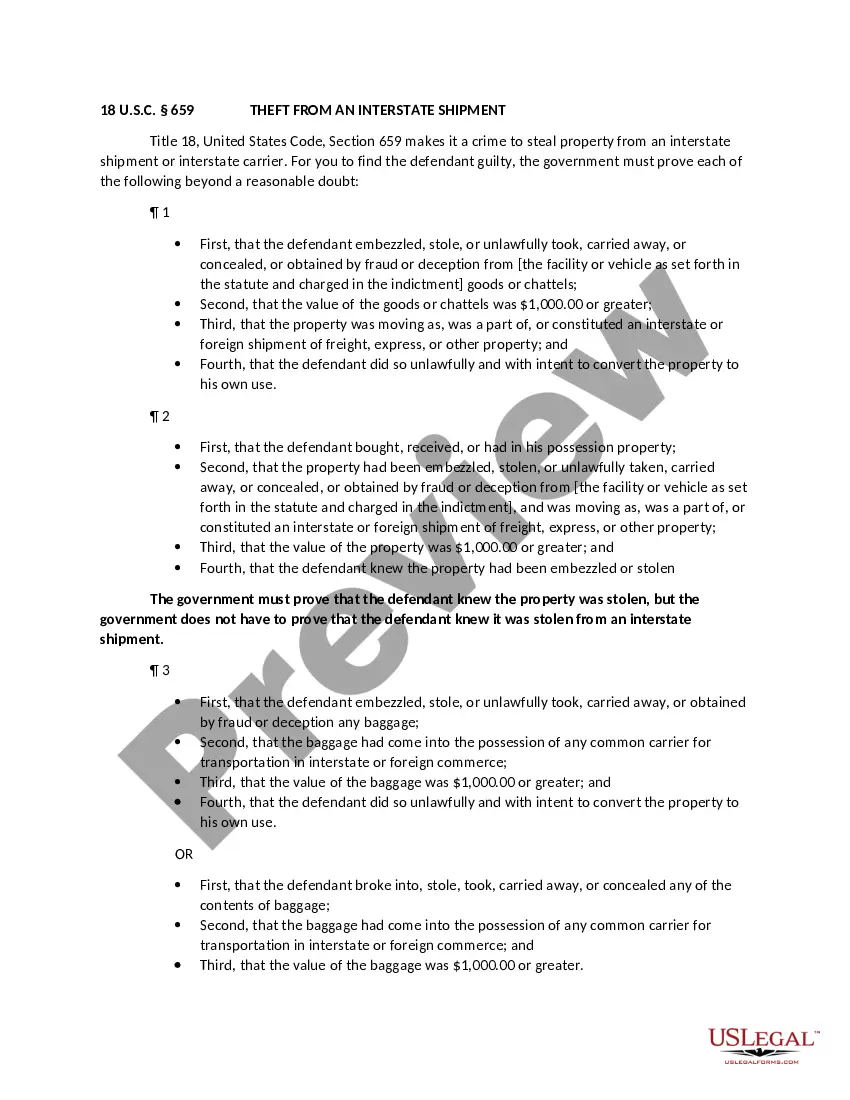
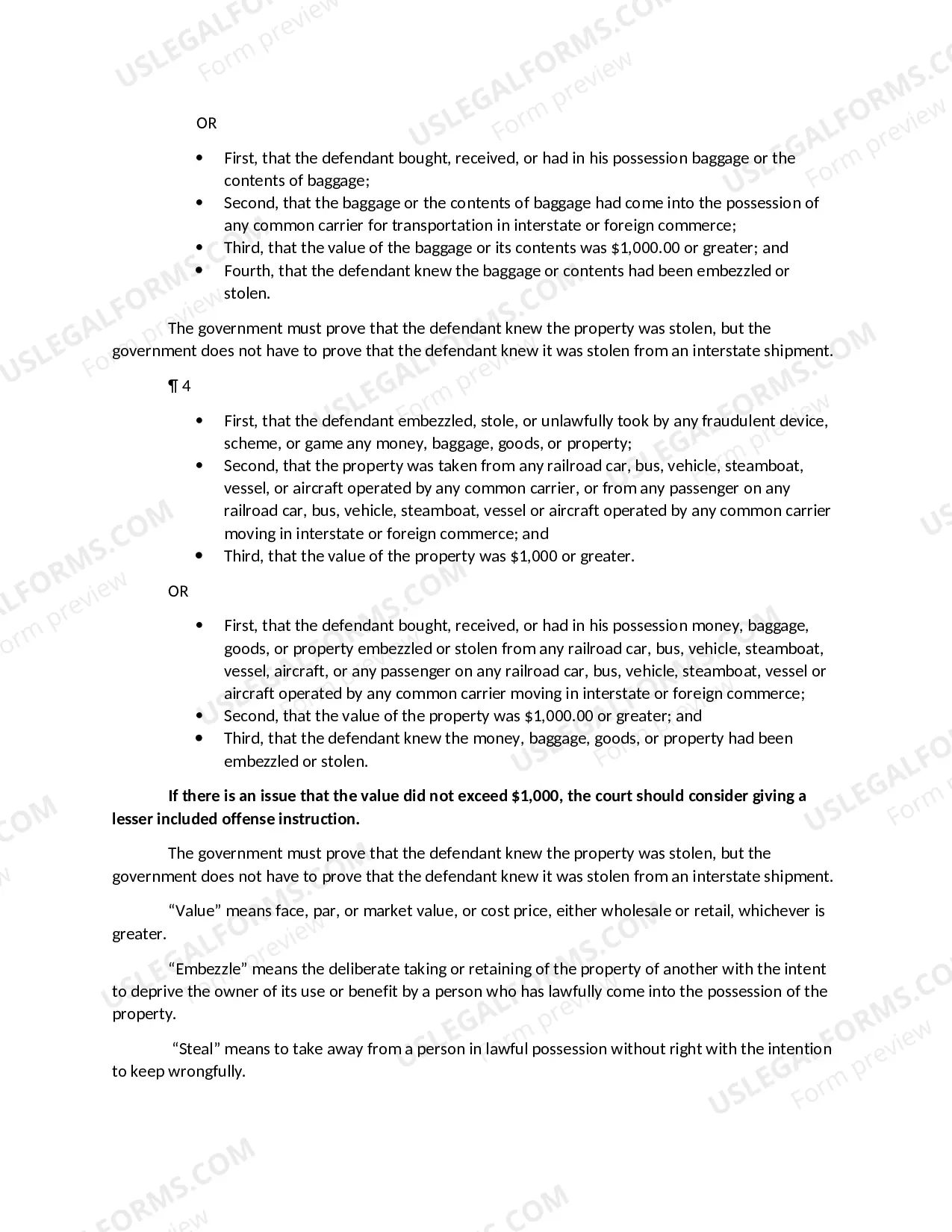
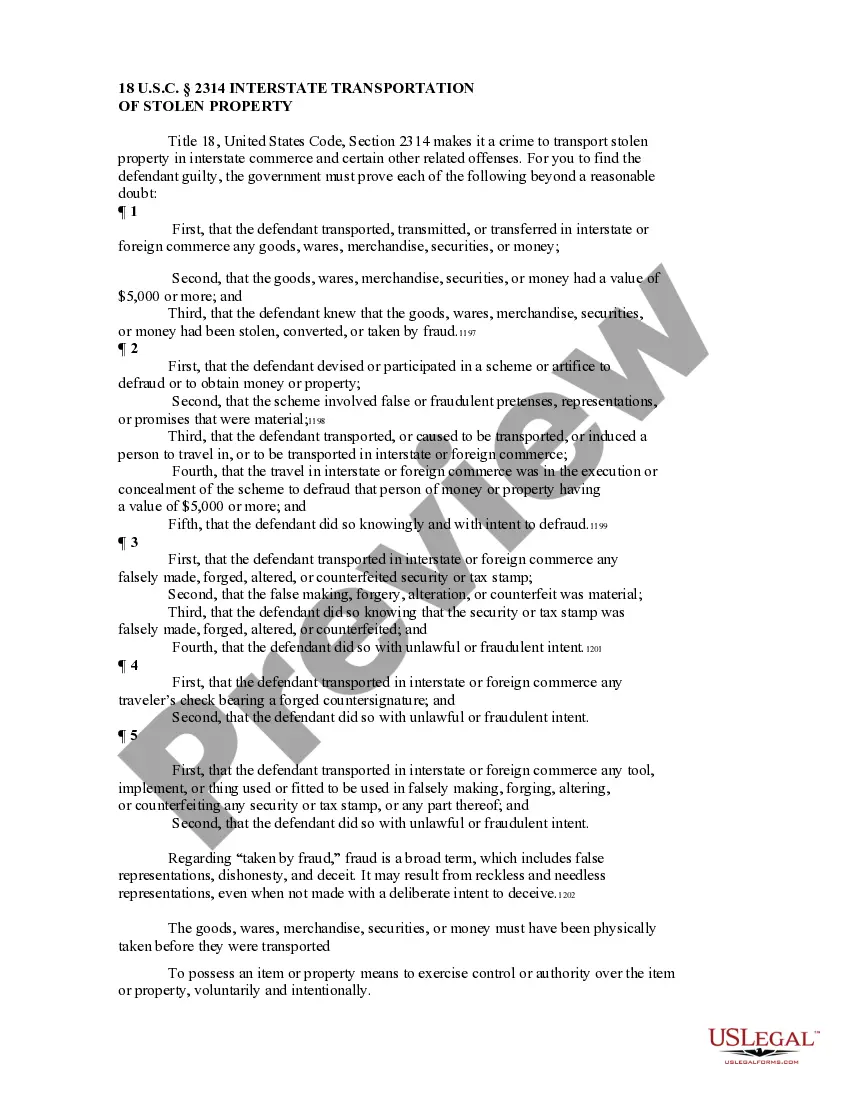
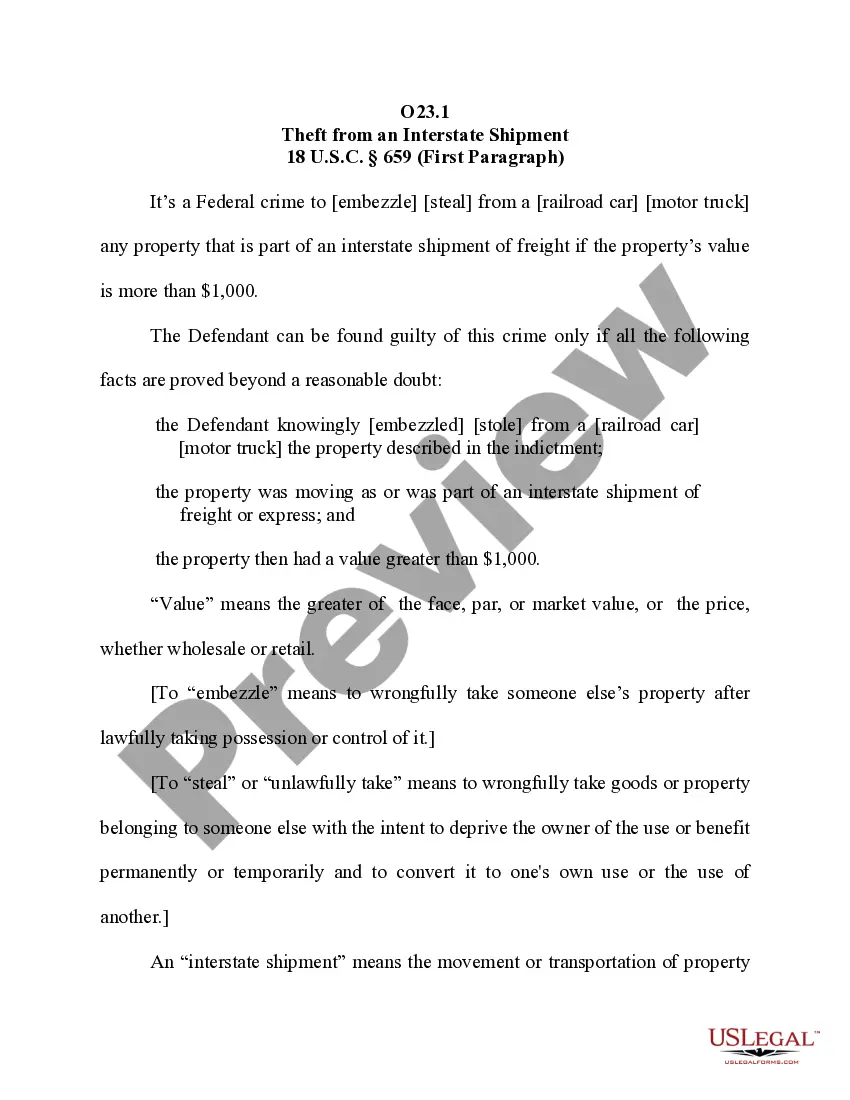
The Theft from an Interstate Shipment form provides the official pattern jury instructions for handling federal criminal cases related to stealing property from interstate shipments or carriers. This form differs from similar legal documents as it specifically outlines the legal requirements and definitions relevant to theft in interstate commerce under federal law. It is essential for legal professionals and defendants involved in such cases to understand the detailed stipulations presented in this form.
Form components explained
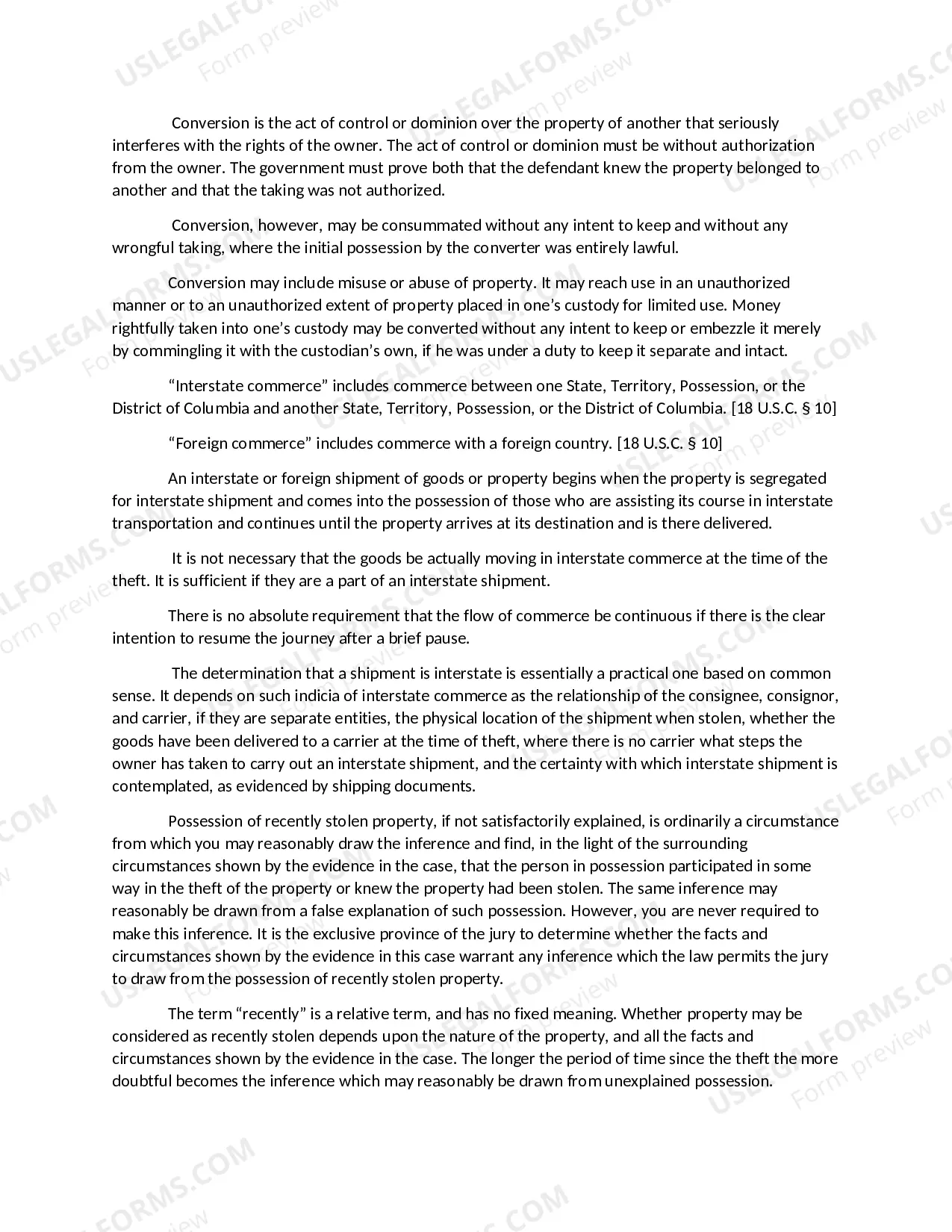
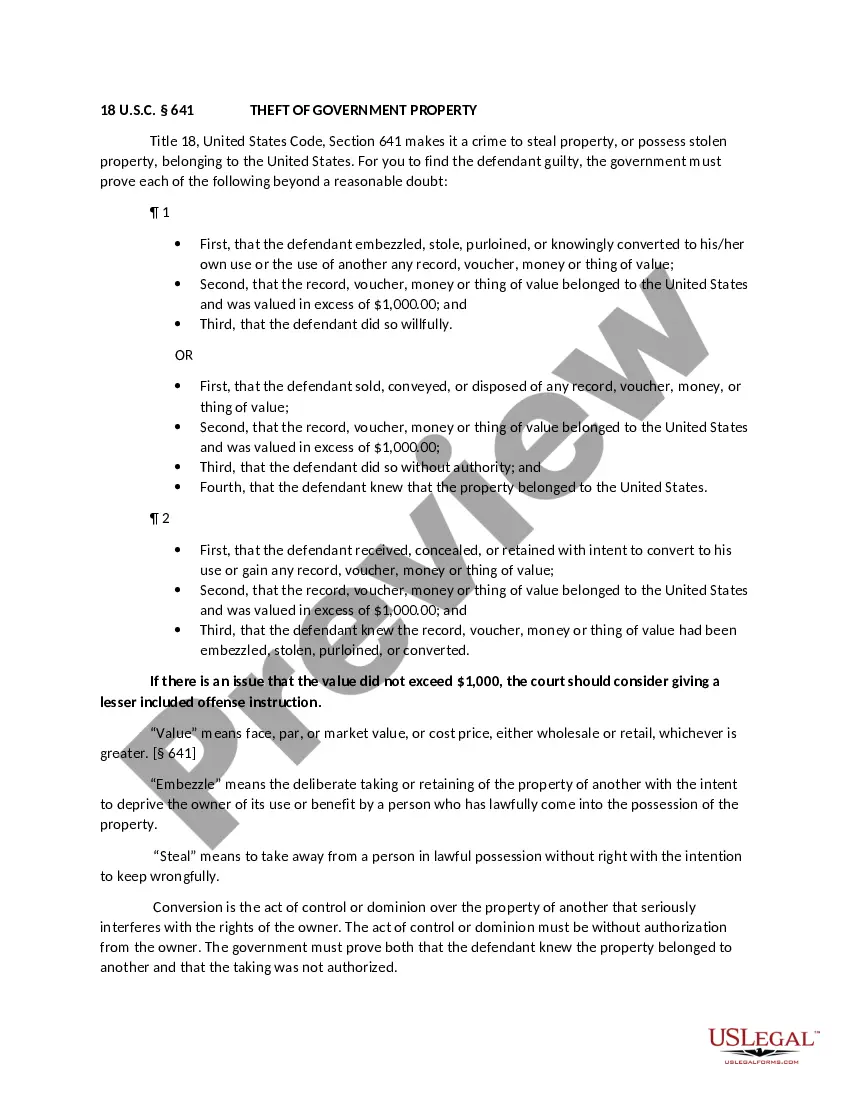
- Definitions of key terms such as embezzlement, theft, and conversion.
- Criteria the government must prove to establish the crime occurred.
- Details on what constitutes interstate commerce and foreign commerce.
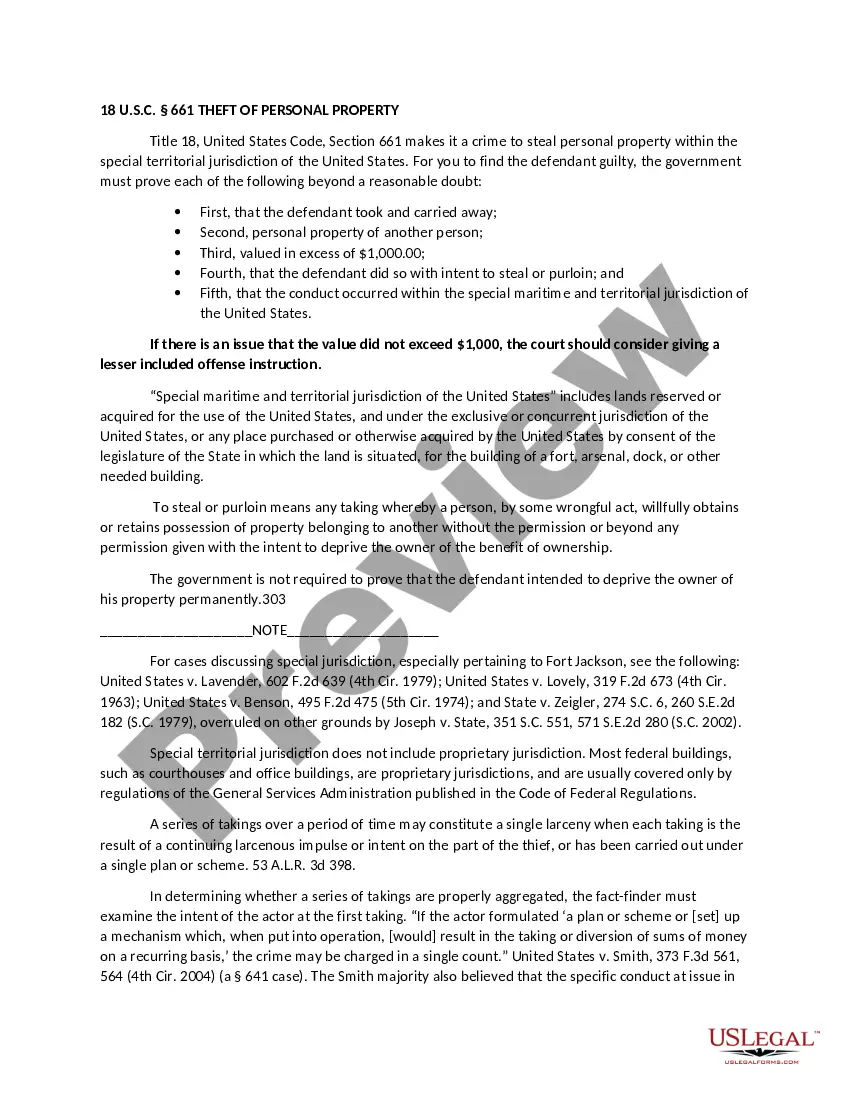
- Guidelines on the valuation of stolen goods and property.
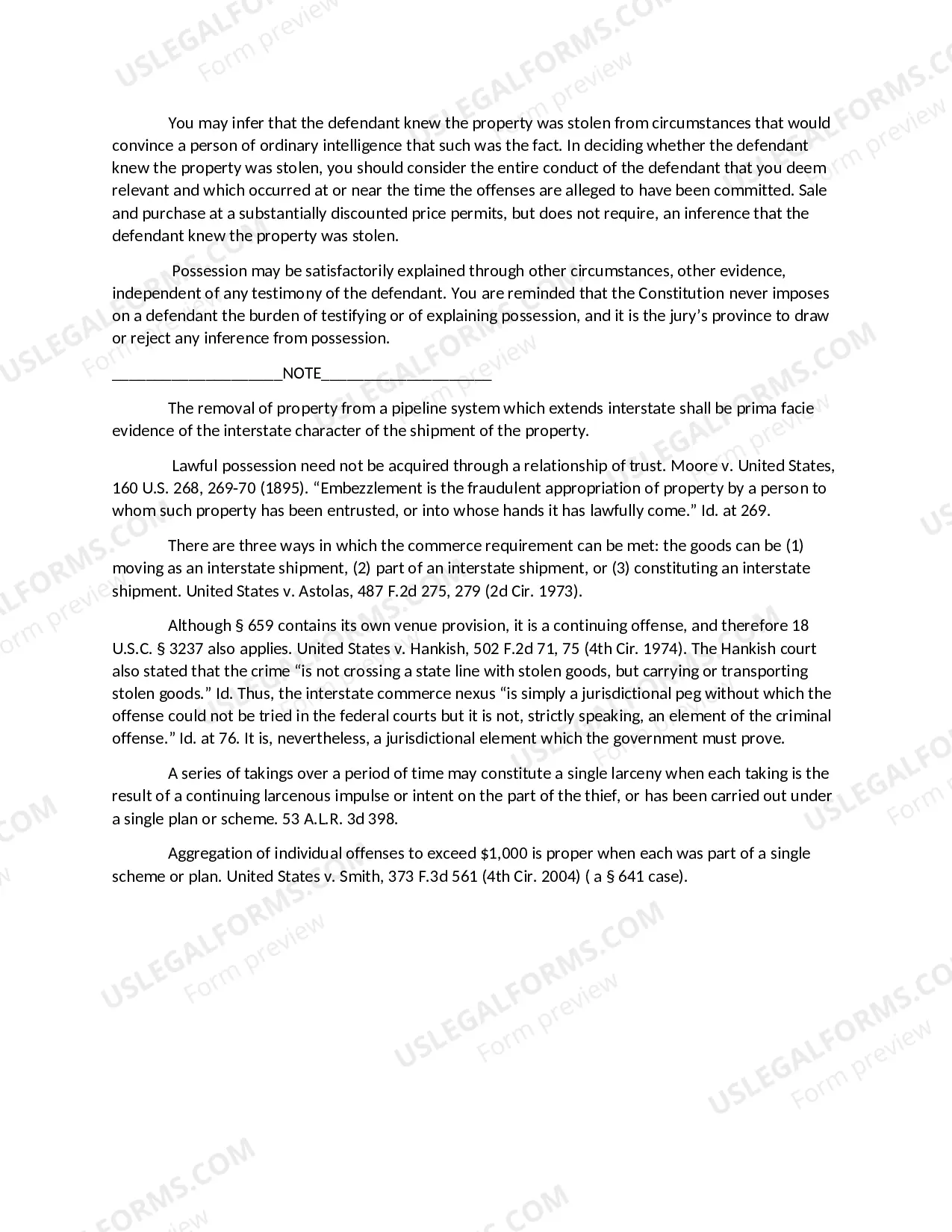
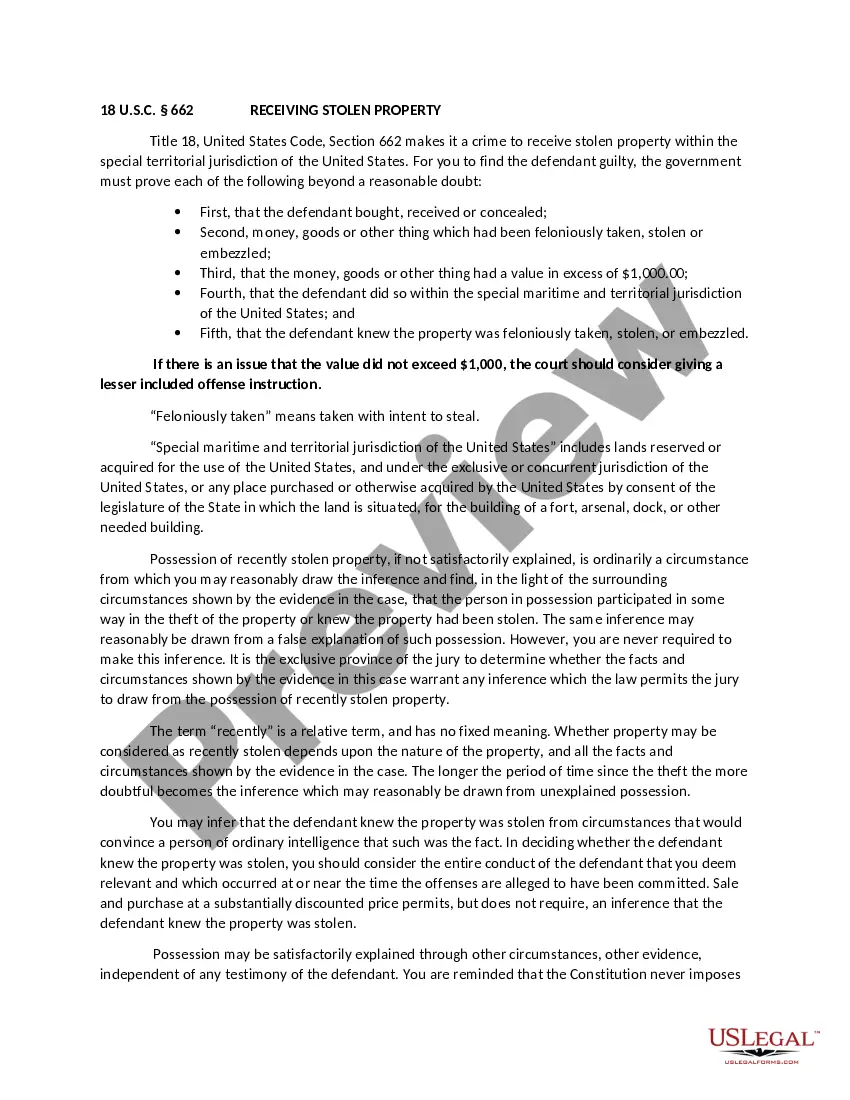
- Information on the legal implications of possession of stolen property.
When to use this form
This form should be used in federal court cases where an individual is accused of theft from an interstate shipment. It is applicable when evidence indicates that the property stolen was part of an interstate or foreign shipment, or when the defendant is implicated in related illicit activities involving embezzled goods or property.
Who this form is for
- Legal professionals representing defendants in theft cases.
- Individuals facing charges of theft from interstate shipments.
- Jurors who need to understand the legal standards for these cases.
- Law enforcement personnel involved in investigations of theft from interstate commerce.
How to complete this form
- Review the legal terminology and ensure understanding of key definitions.
- Outline the specific charges brought against the defendant in relation to theft.
- Gather evidence to support the value of the property involved, ensuring it meets the $1,000 threshold.
- Document the circumstances showings of interstate commerce pertaining to the property.
- Prepare to present the information in a clear manner during jury instructions or court proceedings.
Does this form need to be notarized?
Notarization is generally not required for this form. However, certain states or situations might demand it. You can complete notarization online through US Legal Forms, powered by Notarize, using a verified video call available anytime.
Get your form ready online
Our built-in tools help you complete, sign, share, and store your documents in one place.
Make edits, fill in missing information, and update formatting in US Legal Forms—just like you would in MS Word.
Download a copy, print it, send it by email, or mail it via USPS—whatever works best for your next step.
Sign and collect signatures with our SignNow integration. Send to multiple recipients, set reminders, and more. Go Premium to unlock E-Sign.
If this form requires notarization, complete it online through a secure video call—no need to meet a notary in person or wait for an appointment.
We protect your documents and personal data by following strict security and privacy standards.

Make edits, fill in missing information, and update formatting in US Legal Forms—just like you would in MS Word.

Download a copy, print it, send it by email, or mail it via USPS—whatever works best for your next step.

Sign and collect signatures with our SignNow integration. Send to multiple recipients, set reminders, and more. Go Premium to unlock E-Sign.

If this form requires notarization, complete it online through a secure video call—no need to meet a notary in person or wait for an appointment.

We protect your documents and personal data by following strict security and privacy standards.
Typical mistakes to avoid
- Failing to accurately establish the value of the property involved.
- Neglecting to differentiate between state and federal jurisdictional issues.
- Overlooking key definitions that may affect the interpretation of the charges.
- Assuming that theft requires proof of the defendant's knowledge regarding the interstate nature of the shipment.
Why use this form online
- Convenient access to professionally drafted legal templates.
- Ability to edit the document to fit specific case requirements.
- Immediate download for quick use in legal proceedings.
- Reliability through documents created by licensed attorneys.
Legal use & context
- This form is used exclusively within the jurisdiction of federal criminal law.
- The offenses described can result in significant legal consequences, including fines and imprisonment.
- The government bears the burden of proof to establish all elements of the crime beyond a reasonable doubt.
Looking for another form?
Form popularity
FAQ
(A) It is unlawful for a person to buy, receive, or possess stolen goods, chattels, or other property if the person knows or has reason to believe the goods, chattels, or property is stolen. A person is guilty of this offense whether or not anyone is convicted of the property theft.
(A) It is unlawful for a person to buy, receive, or possess stolen goods, chattels, or other property if the person knows or has reason to believe the goods, chattels, or property is stolen. A person is guilty of this offense whether or not anyone is convicted of the property theft.
As you can see, Class A felonies are the most serious crimes in South Carolina's classification system. Class A felonies primarily include serious violent offenses such as voluntary manslaughter, attempted murder, first-degree criminal sexual conduct, and carjacking resulting in great bodily injury.
A person commits grand larceny, a felony, when the value of the stolen property is over $2,000. South Carolina divides grand larceny into two categories, depending on the value of the taken property. Class F felony.
Penalties for Larceny in South Carolina The crime of petit larceny in South Carolina is a misdemeanor punishable by a maximum period of incarceration of 30 days in the county jail and/or a one thousand dollar fine.
It prohibits the theft or fraudulent acquisition of goods that are part of an interstate or international shipment, whether from the carrier or a holding area, and also the wilful buying, selling or possession of goods obtained in this way.
Shoplifting Felonies Merchandise value falls between $2,000 and $10,000 ? This is a felony offense punishable by 5 years in jail and a maximum fine of $1,000. Merchandise value exceeds $10,000 ? This is a felony offense punishable by up to 10 years in jail and possible fines.
If the item taken has a value greater than $2,000, the crime is defined and grand larceny in South Carolina. Grand larceny is a felony criminal charge. If the item taken has a value less than $2,000, the crime is defined as petit larceny in SC. Petit larceny is punishable as a misdemeanor offense.