South Carolina CONSPIRACY
About this form
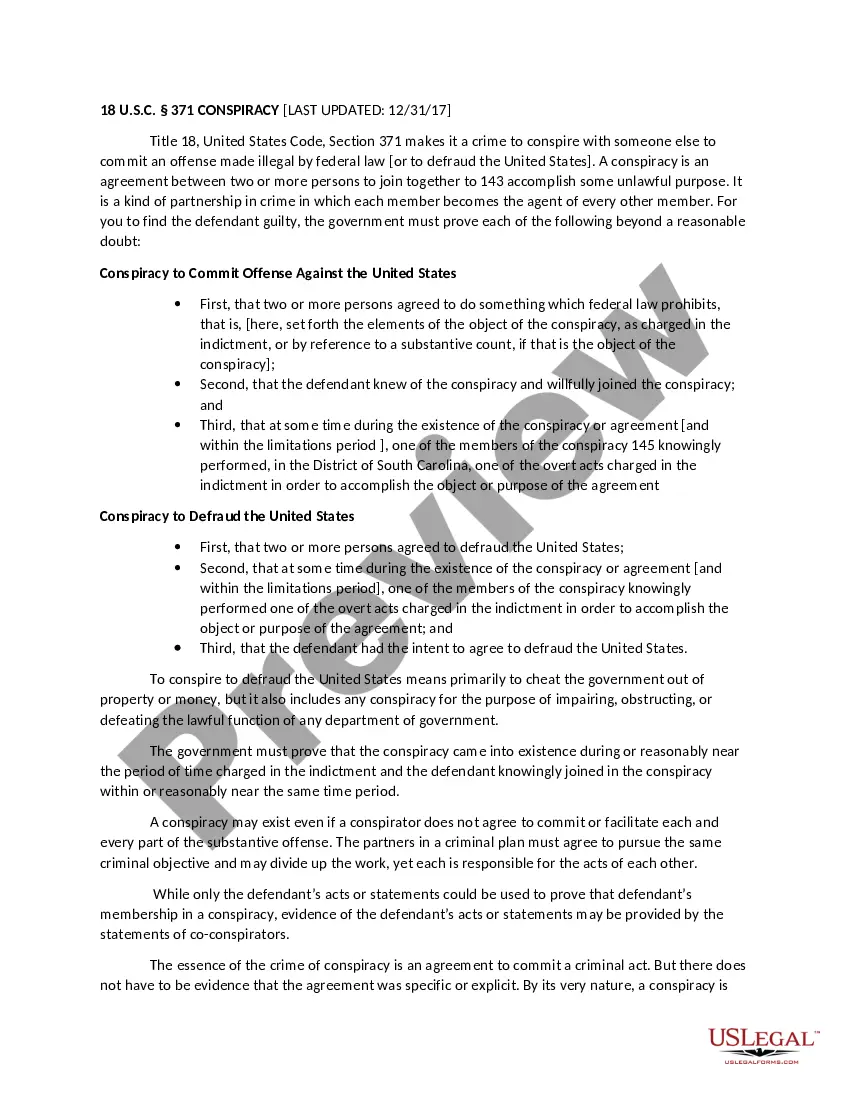
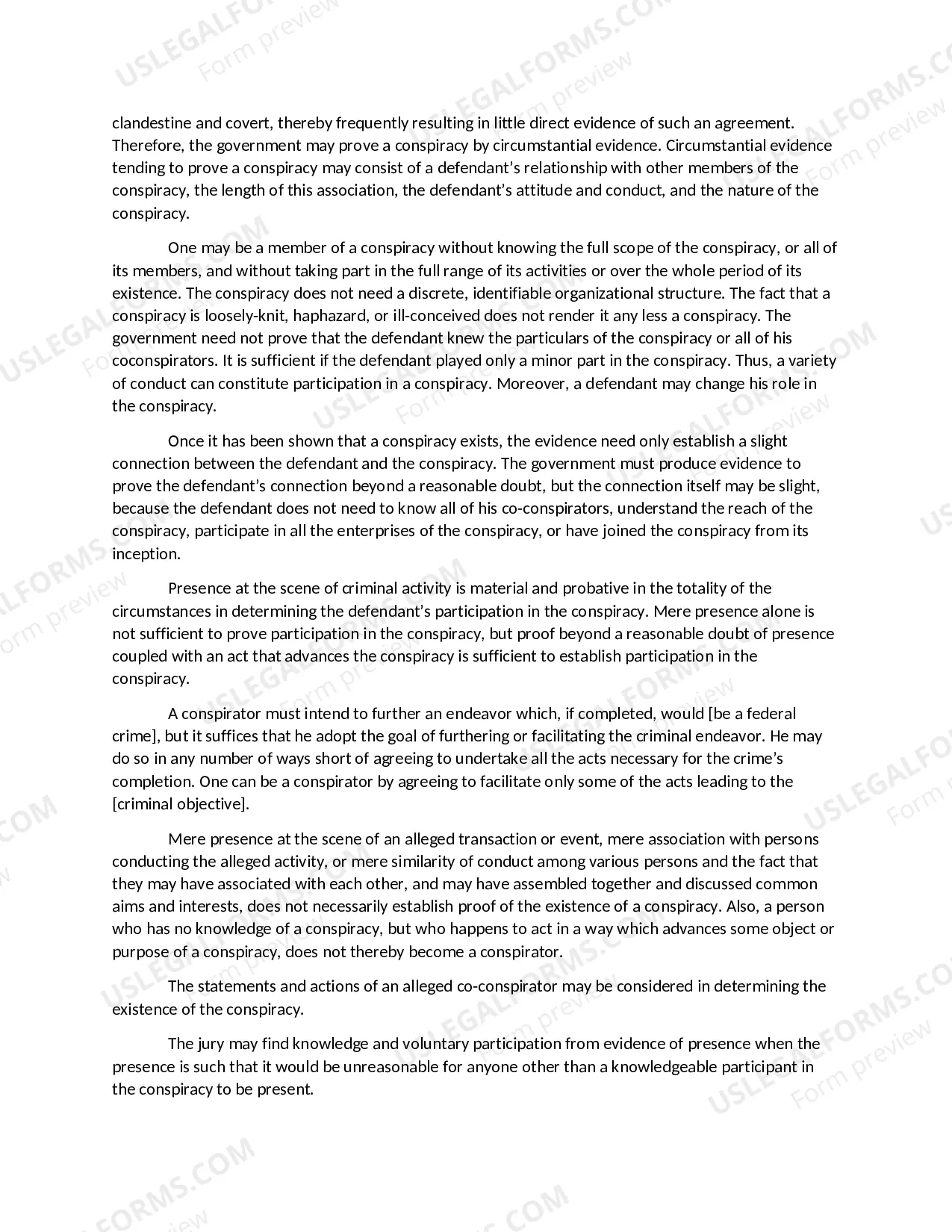
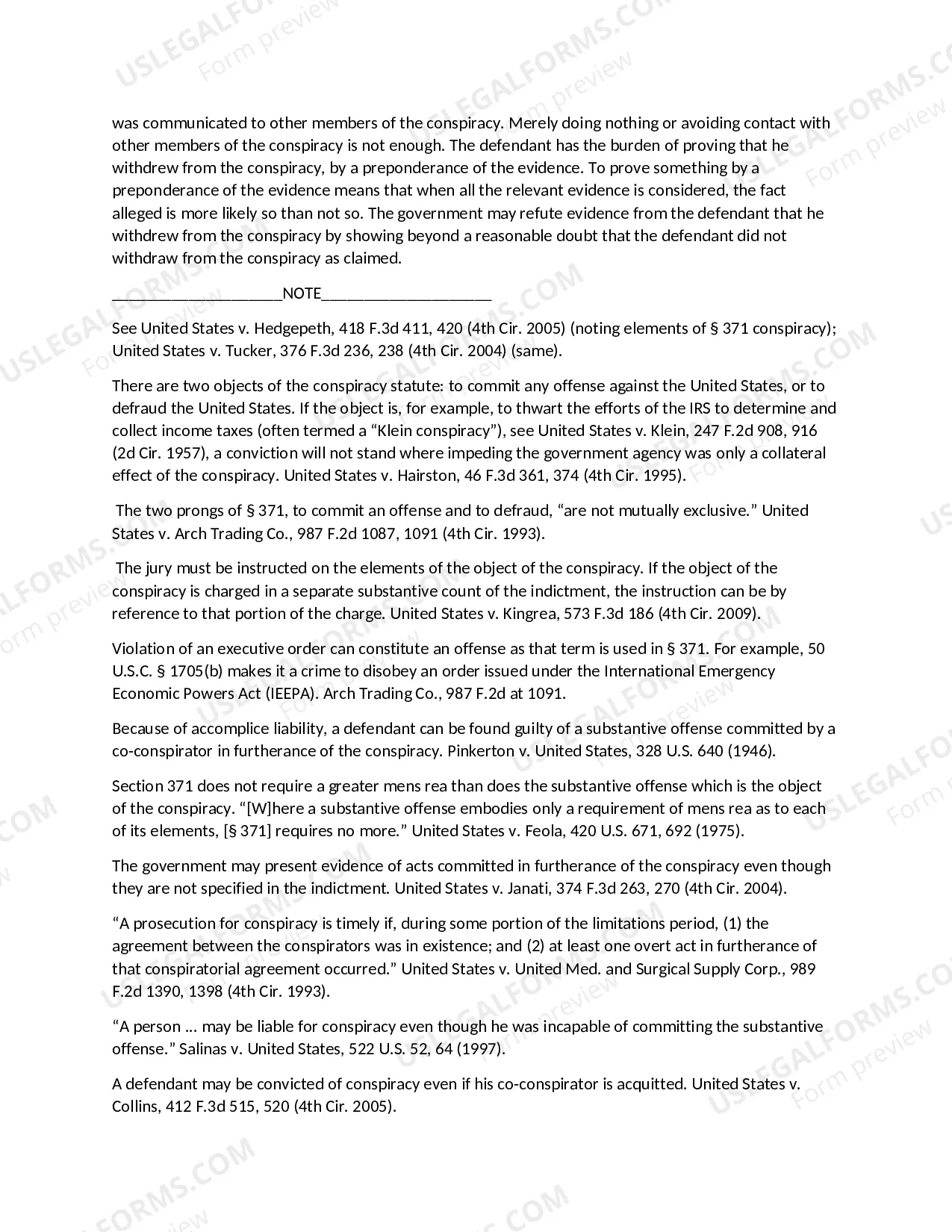
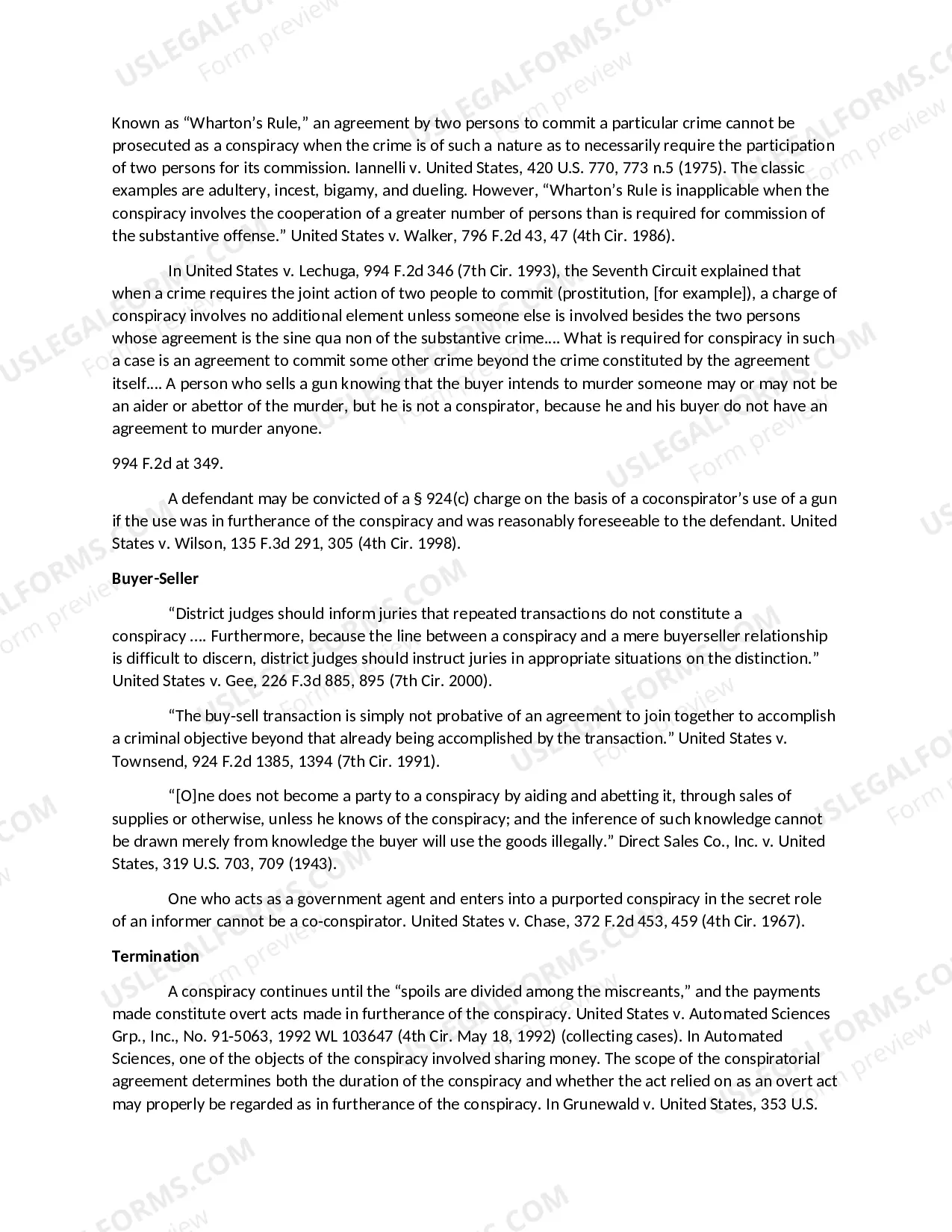
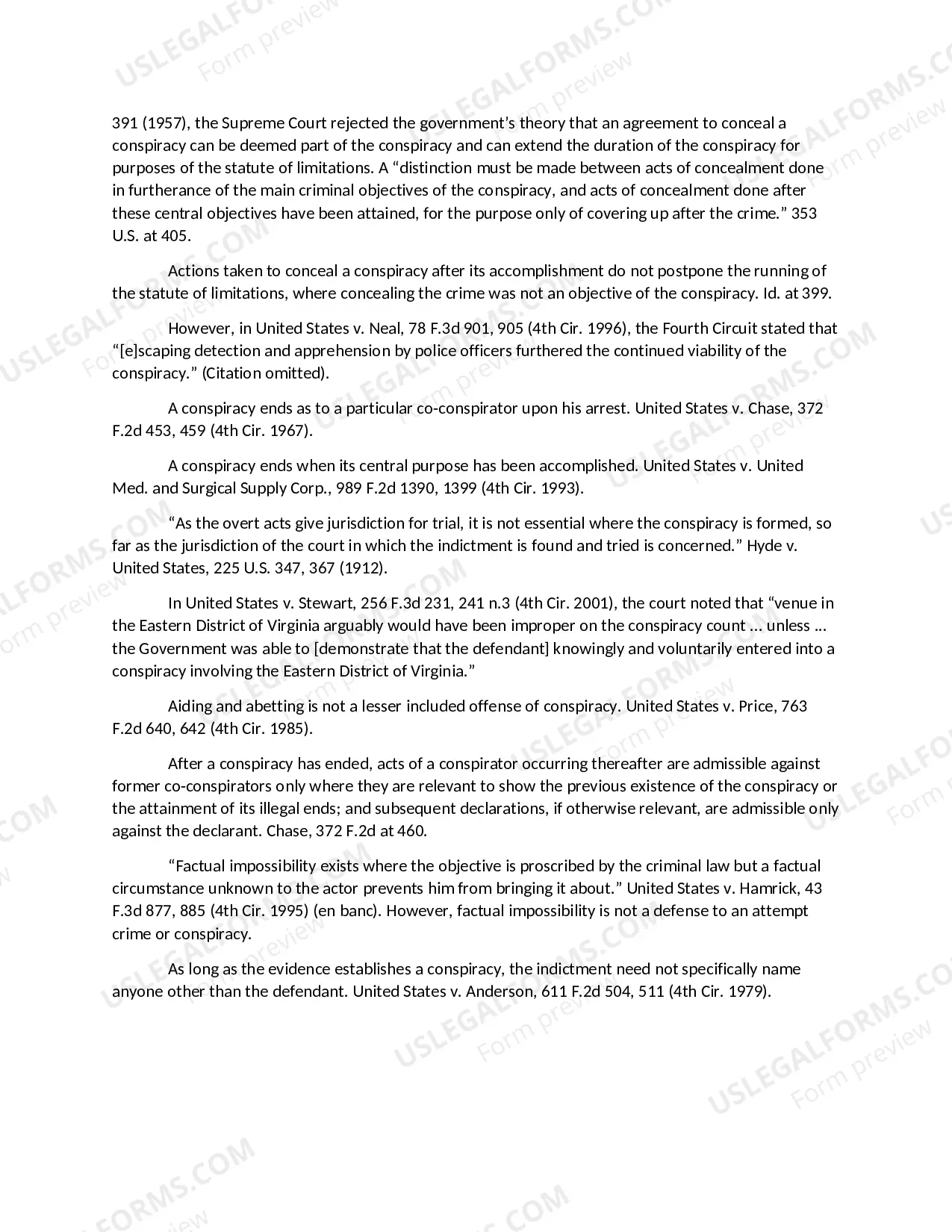
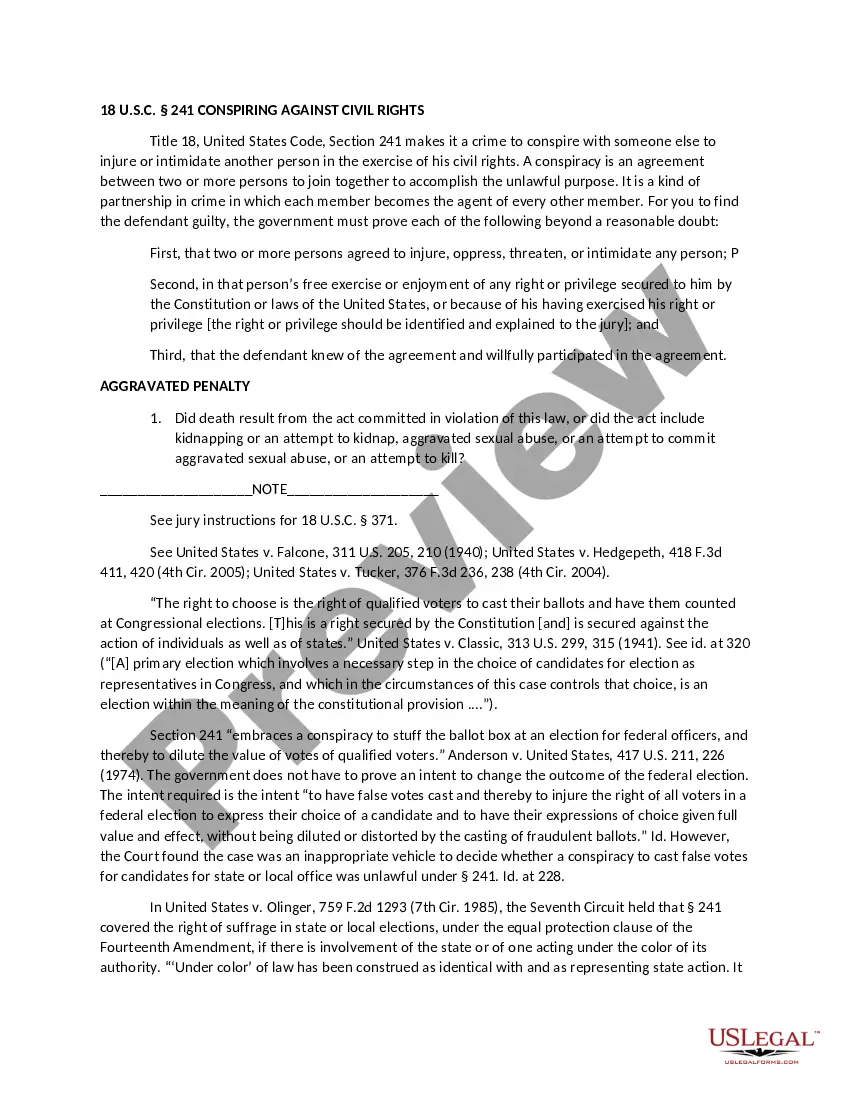
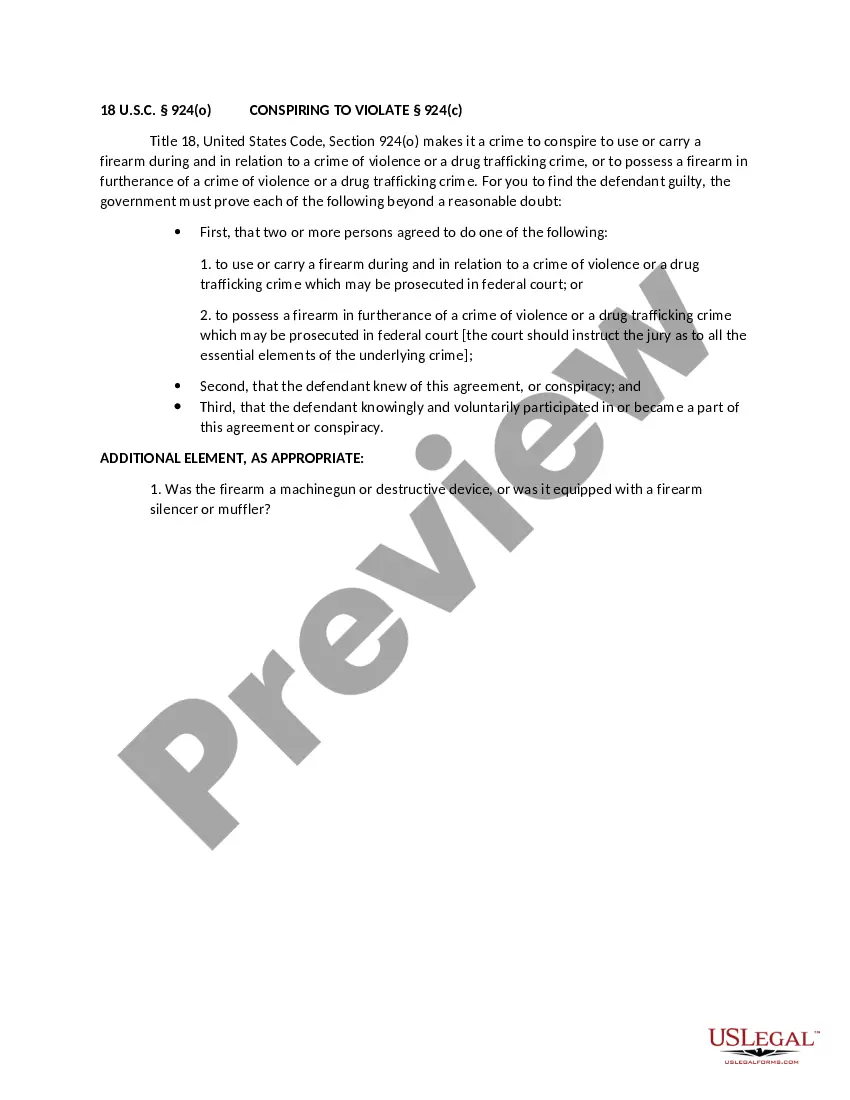
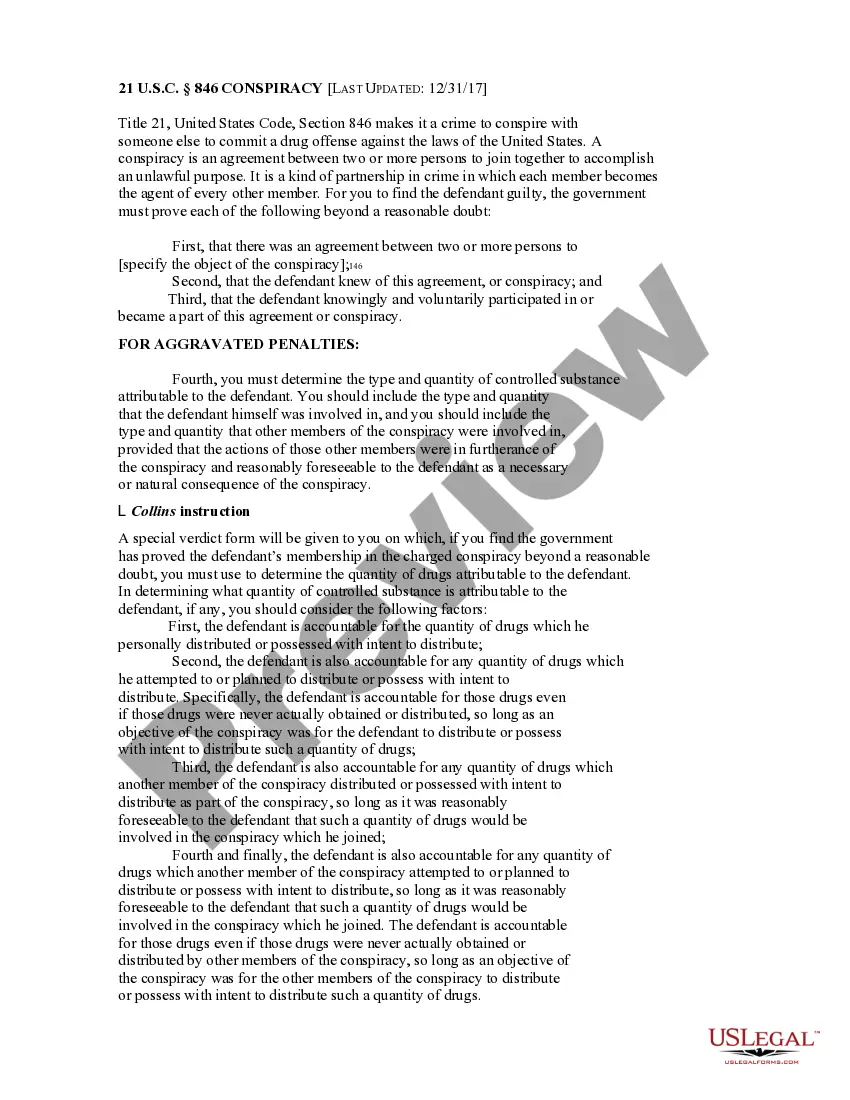
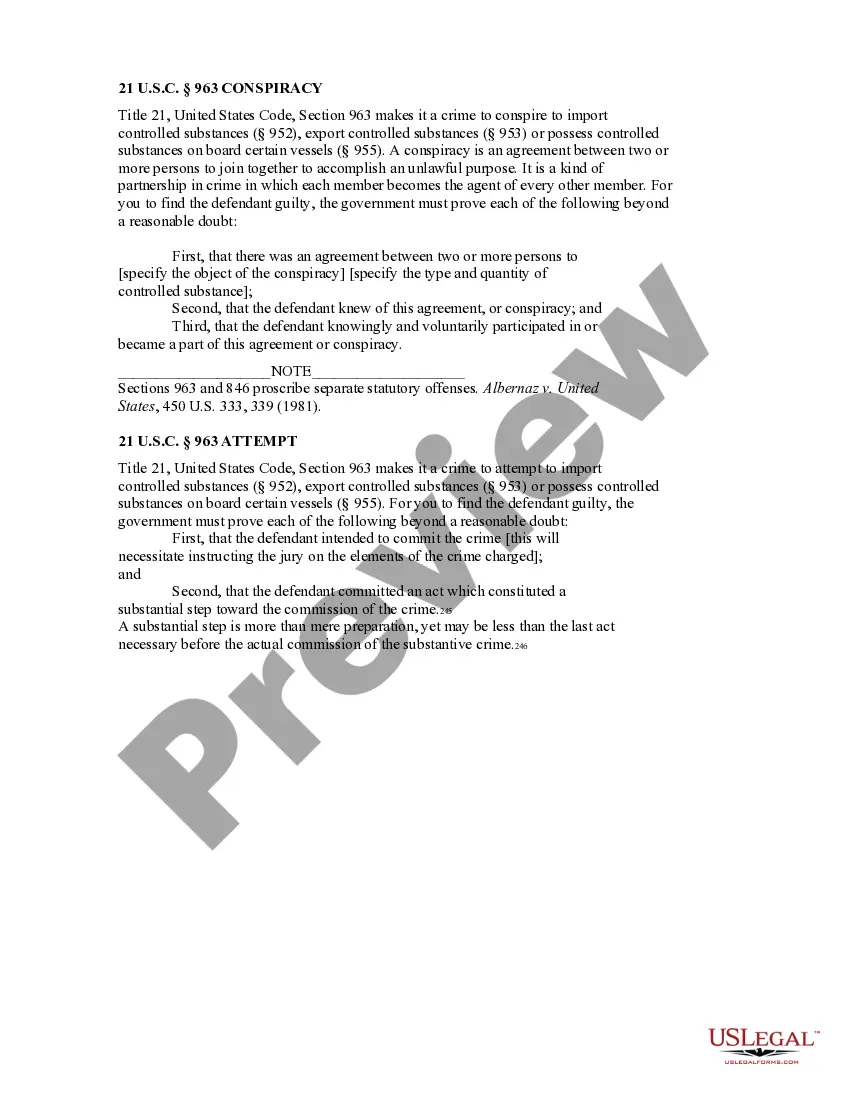
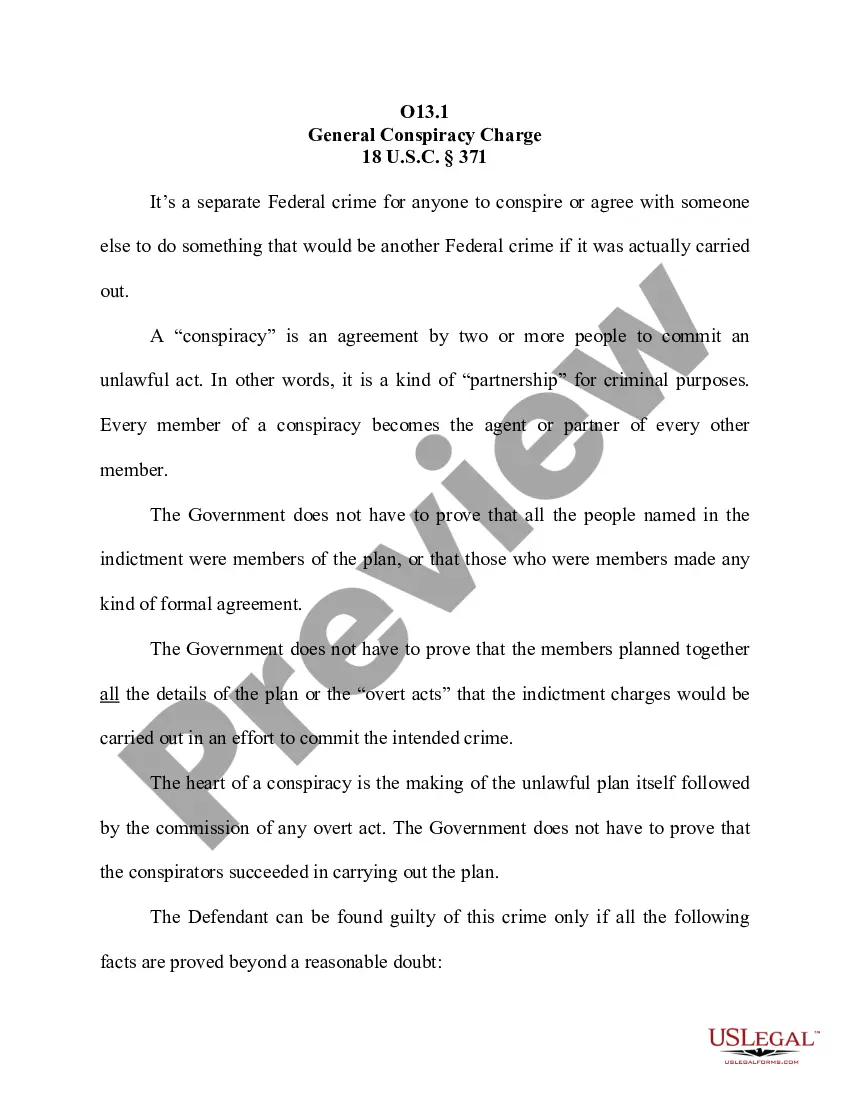
This form is the official pattern jury instructions for criminal cases related to conspiracy in the Federal District Court of South Carolina. It outlines the legal definition of conspiracy, the requirements for a charge, and the standards of proof needed to convict an individual of conspiracy under Title 18, United States Code, Section 371. This form serves as a guide for jurors to understand the elements involved in assessing charges of conspiracy and helps differentiate it from other criminal actions, reflecting its unique legal context.
Key components of this form
- Description of conspiracy as an agreement to commit an unlawful act.
- Requirements for establishing conspiracy to commit an offense against the United States.
- Criteria for conspiracy to defraud the United States.
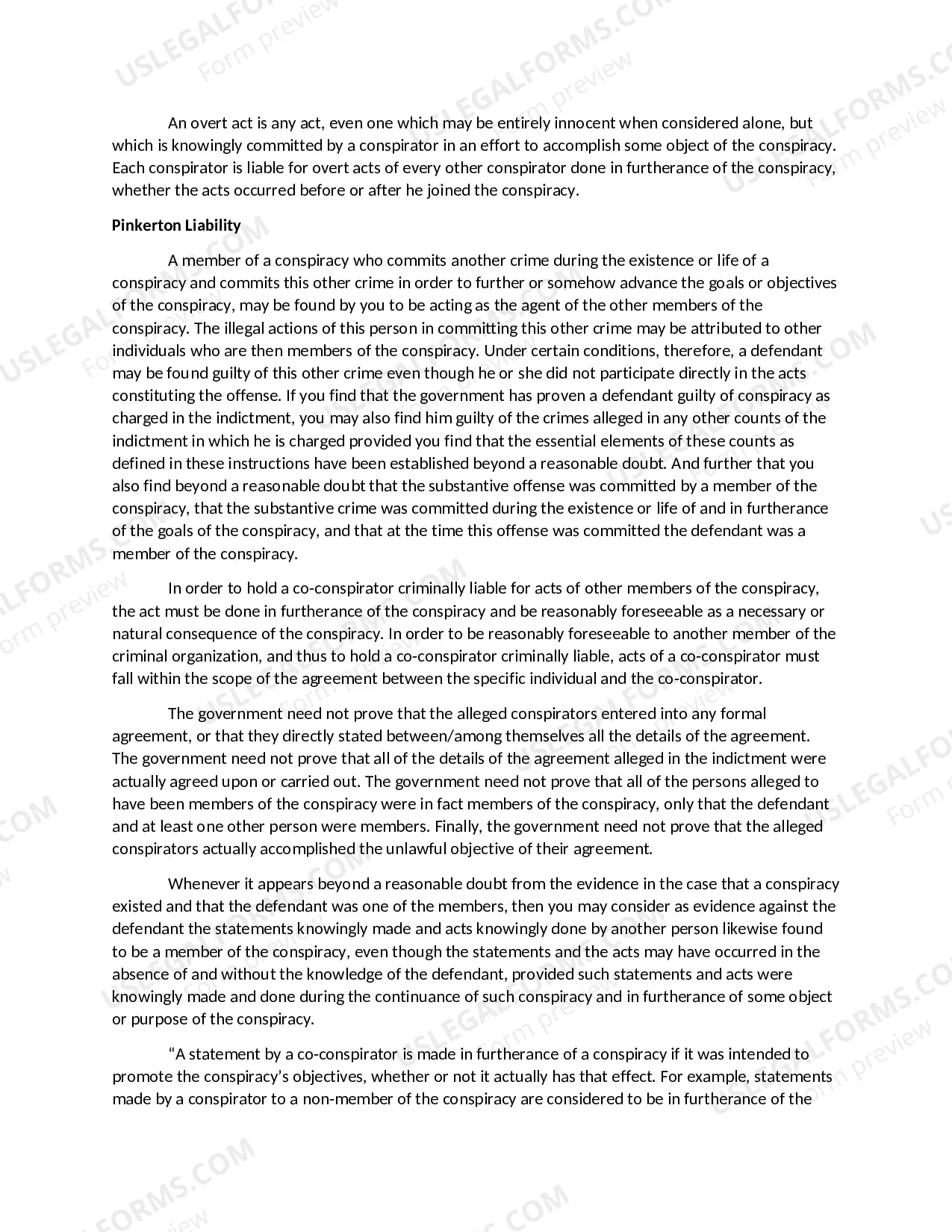
- Guidelines on overt acts in furtherance of the conspiracy.
- Explanation of the concept of Pinkerton liability.
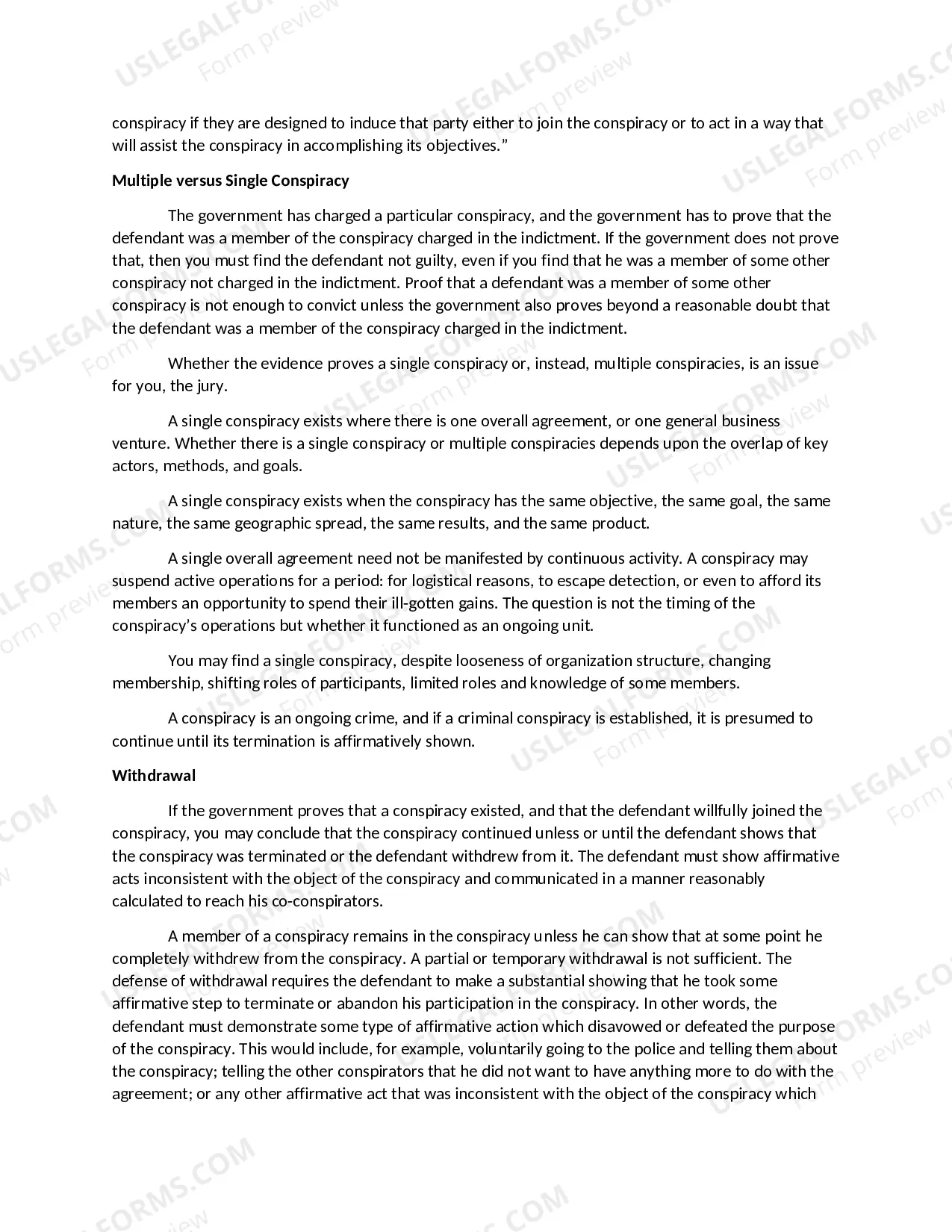
- Clarification on withdrawal from a conspiracy and its implications.
Situations where this form applies
This form should be used during jury deliberations in criminal cases where a defendant faces conspiracy charges. It is applicable when the prosecution must establish that two or more individuals agreed to commit an illegal act or defraud the government. It provides jurors with the necessary instructions on how to evaluate evidence and determine guilt beyond a reasonable doubt.
Intended users of this form
- Jurors involved in criminal cases with allegations of conspiracy.
- Judges needing to instruct jurors on conspiracy charges.
- Prosecutors outlining the legal framework of conspiracy during trials.
Instructions for completing this form
- Review the elements of conspiracy provided in the instruction.
- Ensure the prosecution has established each element beyond a reasonable doubt.
- Evaluate evidence for overt acts performed by any member of the conspiracy.
- Determine whether the defendant knowingly joined the conspiracy.
- Consider statements made by co-conspirators in the context of the conspiracy.
Notarization requirements for this form
This form does not typically require notarization unless specified by local law. Users should verify specific requirements in their jurisdiction to ensure compliance.
Get your form ready online
Our built-in tools help you complete, sign, share, and store your documents in one place.
Make edits, fill in missing information, and update formatting in US Legal Forms—just like you would in MS Word.
Download a copy, print it, send it by email, or mail it via USPS—whatever works best for your next step.
Sign and collect signatures with our SignNow integration. Send to multiple recipients, set reminders, and more. Go Premium to unlock E-Sign.
If this form requires notarization, complete it online through a secure video call—no need to meet a notary in person or wait for an appointment.
We protect your documents and personal data by following strict security and privacy standards.

Make edits, fill in missing information, and update formatting in US Legal Forms—just like you would in MS Word.

Download a copy, print it, send it by email, or mail it via USPS—whatever works best for your next step.

Sign and collect signatures with our SignNow integration. Send to multiple recipients, set reminders, and more. Go Premium to unlock E-Sign.

If this form requires notarization, complete it online through a secure video call—no need to meet a notary in person or wait for an appointment.

We protect your documents and personal data by following strict security and privacy standards.
Common mistakes to avoid
- Failing to distinguish between mere presence at a scene of crime and actual participation in a conspiracy.
- Assuming that all conspirators must agree on every detail of the plan.
- Overlooking the implications of overt acts that may seem innocuous on their own.
- Neglecting to consider the timing of when a conspiracy existed regarding the limitations period.
Why use this form online
- Convenient access to standardized legal instructions drafted by licensed attorneys.
- Editability allows for tailoring to specific cases or jury needs.
- Reliable formatting ensures adherence to legal standards in federal courts.
Legal use & context
- This form is used in federal cases where conspiracy is alleged and must conform to federal guidelines.
- Understanding this form is crucial for jurors to make informed decisions on complex conspiracy charges.
- The legal framework is grounded in established precedents and federal statutes.
Summary of main points
- The Conspiracy form provides the legal framework for understanding conspiracy charges.
- Key elements include agreement, knowledge, and overt acts committed in support of the conspiracy.
- It is designed specifically for the Federal District Court of South Carolina.
- Careful completion of this form can help elucidate criminal intent and participation among defendants.
Looking for another form?
Form popularity
FAQ
It is unlawful for a person to assault or intimidate a citizen, discharge a citizen from employment or occupation, or eject a citizen from a rented house, land, or other property because of political opinions or the exercise of political rights and privileges guaranteed to every citizen by the Constitution and laws of
Chapter 17 - OFFENSES AGAINST PUBLIC POLICY. Section 16-17-490 - Contributing to delinquency of a minor.
Invasion of privacy occurs when someone unlawfully enters or intrudes onto another person's property, thereby violating that person's reasonable expectation of privacy. In South Carolina, the criminal offense of invasion of privacy encompasses three distinct actions: trespassing, peeping, and eavesdropping.
Under South Carolina Code Annotated 16-17-530, the crime of public disorderly conduct is defined as behavior that is outside the bounds of behavior expected of citizens in public areas.
Section 16-17-725 - Making false complaint to law enforcement officer; giving false information to rescue squad or fire department; misrepresenting identity to law enforcement officer during traffic stop or to avoid arrest or criminal charge.
Title 16 - Crimes and Offenses. CHAPTER 5 - OFFENSES AGAINST CIVIL RIGHTS. SECTION 16-5-50. Penalty for hindering officers or rescuing prisoners.
The term "peeping tom", as used in this section, is defined as a person who peeps through windows, doors, or other like places, on or about the premises of another, for the purpose of spying upon or invading the privacy of the persons spied upon and any other conduct of a similar nature, that tends to invade the