Service Level Agreement for IT Services
What this document covers
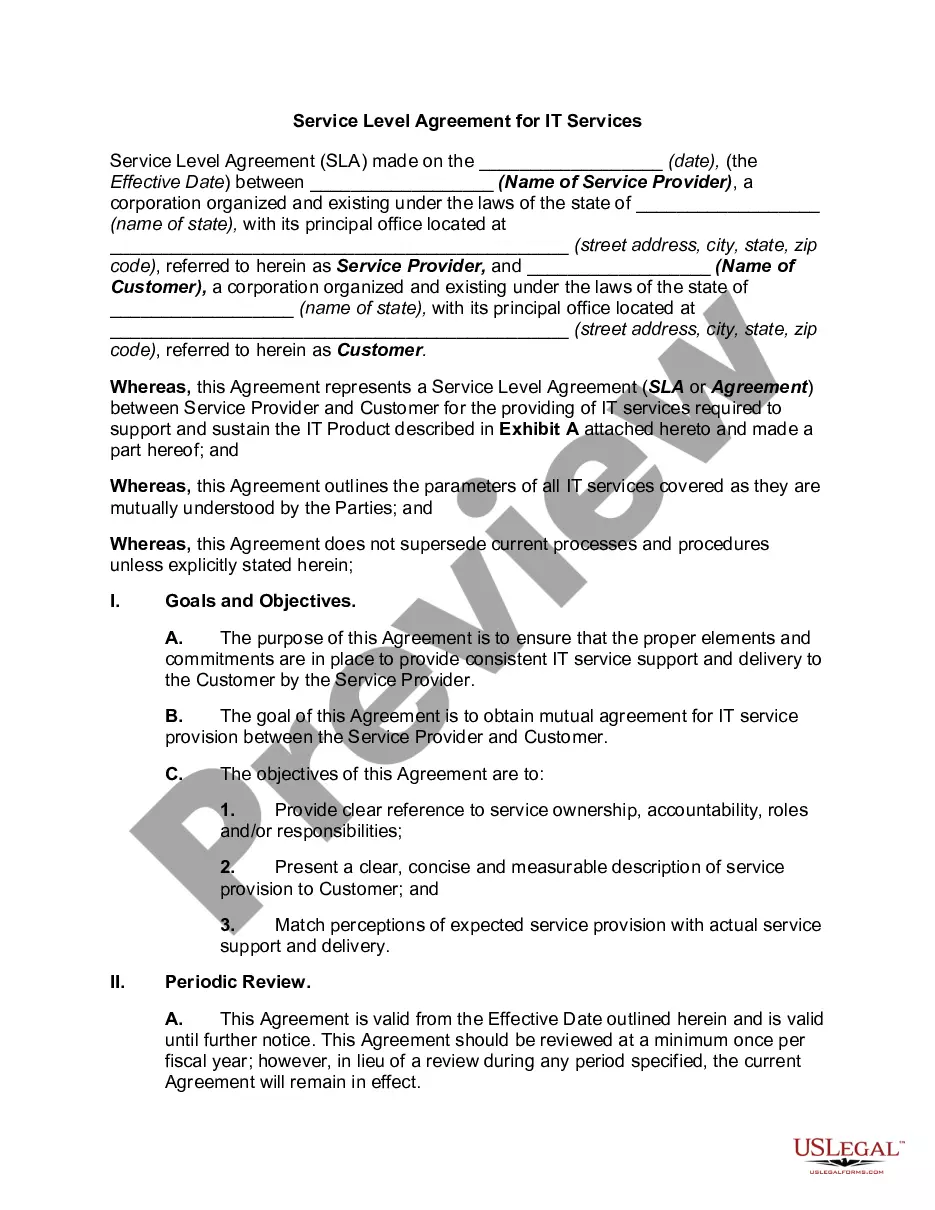
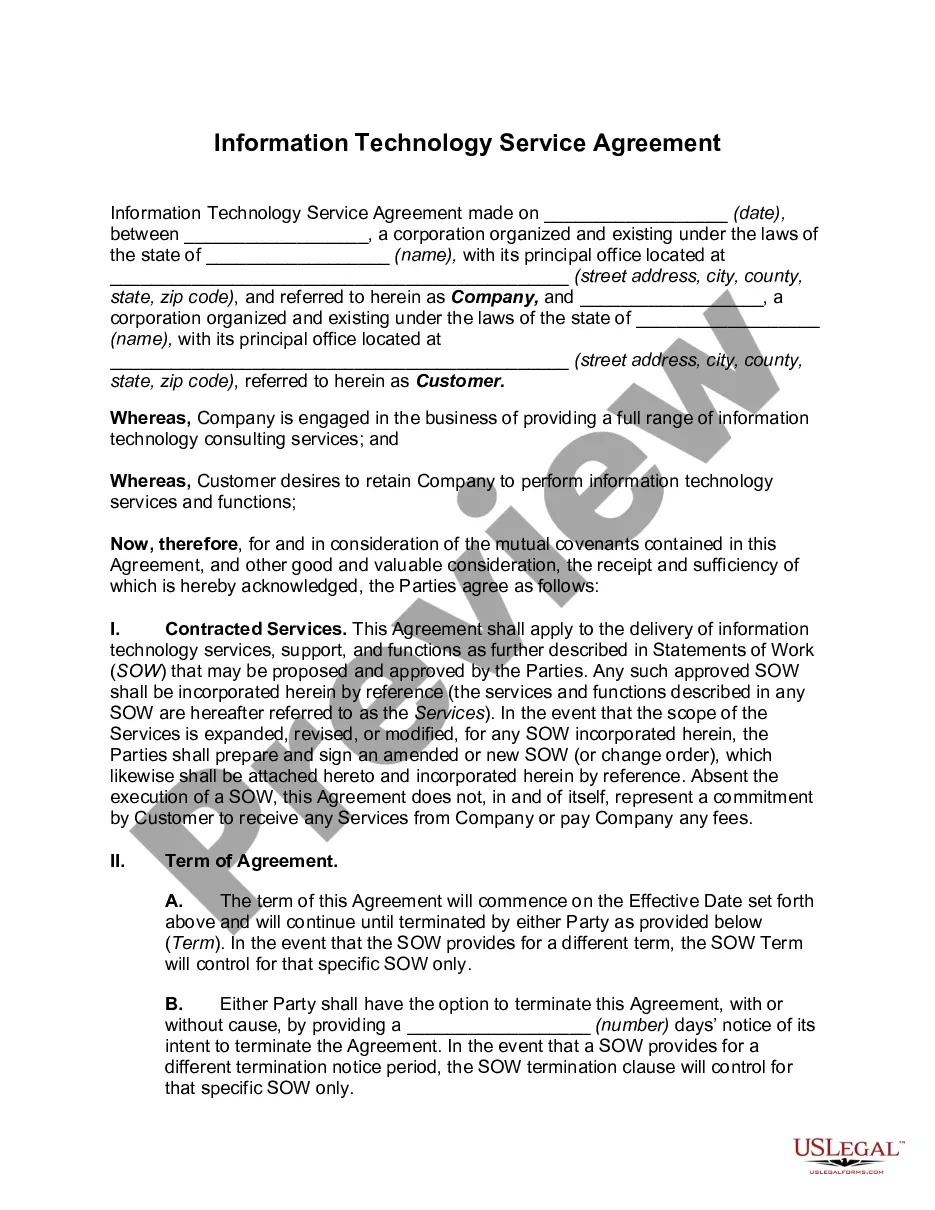
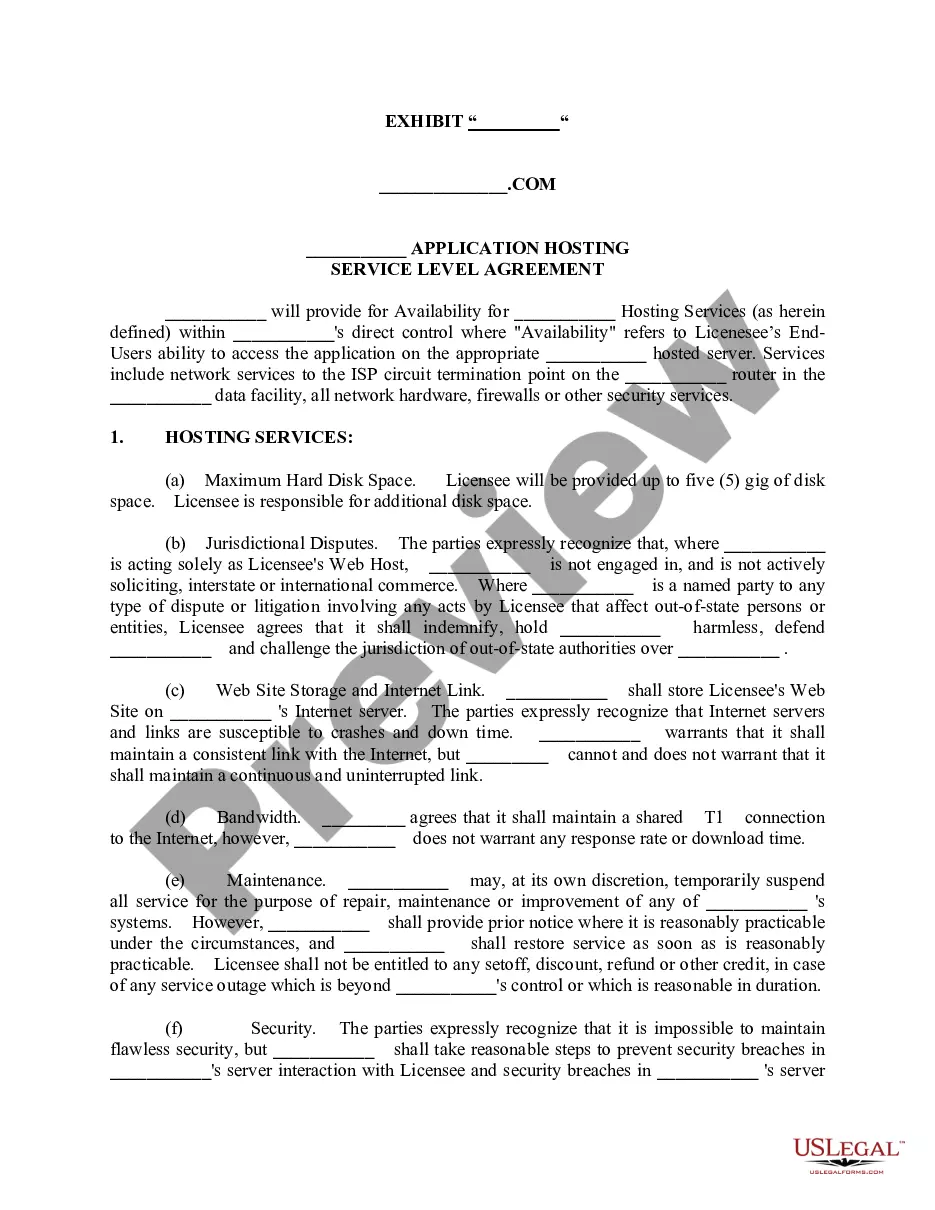
A Service Level Agreement (SLA) for IT Services is a formal document that outlines the expectations between a service provider and a client regarding the delivery of IT services. This agreement details the quality, availability, and responsibilities expected from both parties, distinguishing it from less formal agreements by establishing measurable metrics and potential penalties should those metrics not be achieved.
Form components explained
- Identification of the Service Provider and Customer, including contact details.
- Goals and objectives of the IT services provided.
- Periodic review guidelines for maintaining the effectiveness of the agreement.
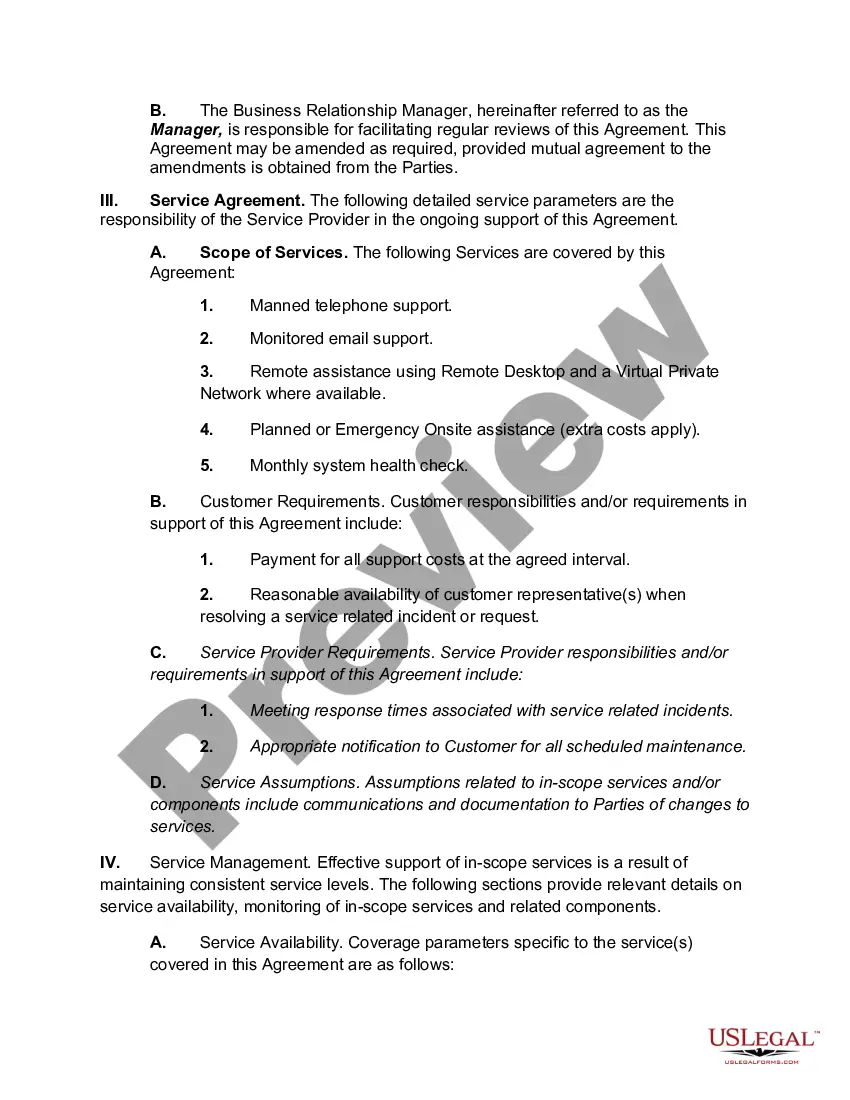
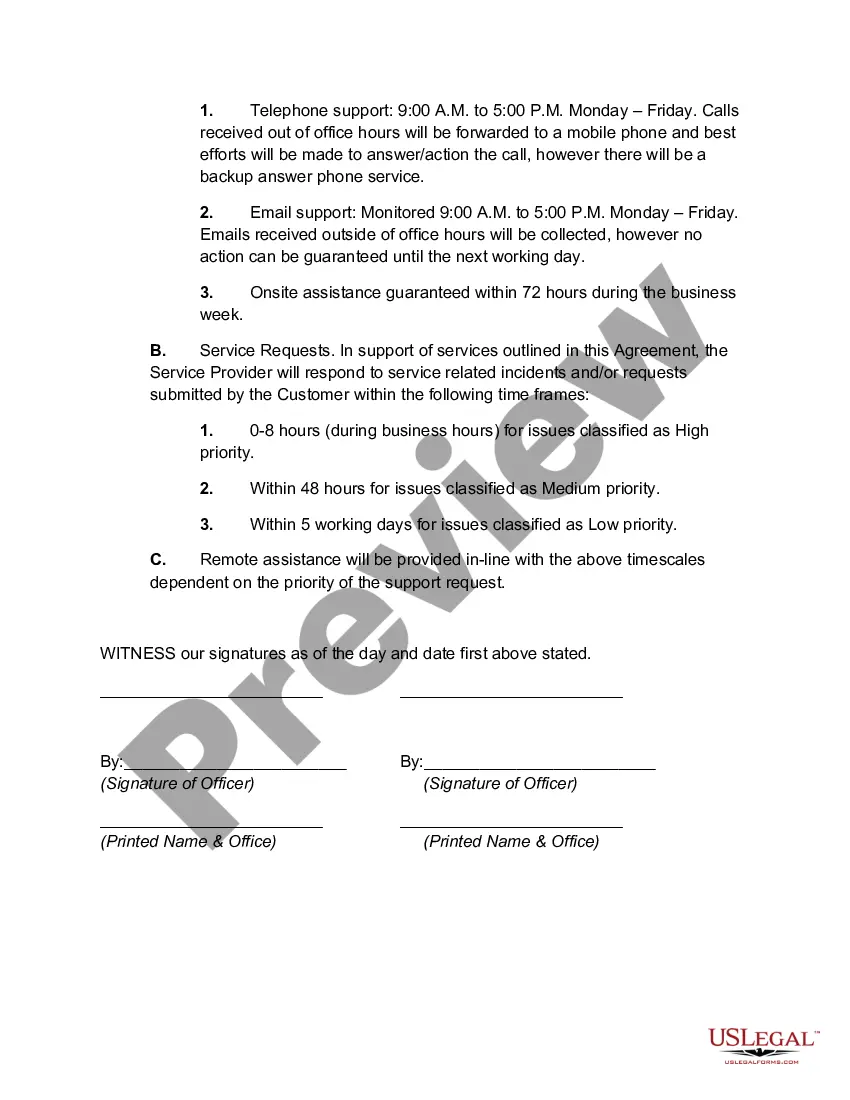
- Detailed definition of services covered, including support channels and response times.
- Customer and Service Provider responsibilities to ensure accountability.
Common use cases
This form is essential when an organization seeks to clearly define the IT services it requires from a vendor. It is typically used in scenarios where ongoing IT support is needed, such as software or hardware management, technical support, or help desk services, ensuring that both parties agree to the terms of service delivery and performance standards.
Who this form is for
- Businesses engaging an IT service provider for the first time.
- Organizations looking to formalize their IT service support with existing vendors.
- IT managers or decision-makers responsible for overseeing IT operations.
- Firms aiming to ensure service quality and accountability from their IT vendor.
How to prepare this document
- Identify the parties by entering the names and contact information of both the Service Provider and Customer.
- Specify the effective date when the agreement comes into force.
- Outline the scope of services to be provided, including support channels and response times.
- Detail the commitments and responsibilities expected from both the Service Provider and Customer.
- Include a signature section with printed names and titles to finalize the agreement.
Notarization requirements for this form
This form usually doesn’t need to be notarized. However, local laws or specific transactions may require it. Our online notarization service, powered by Notarize, lets you complete it remotely through a secure video session, available 24/7.
Get your form ready online
Our built-in tools help you complete, sign, share, and store your documents in one place.
Make edits, fill in missing information, and update formatting in US Legal Forms—just like you would in MS Word.
Download a copy, print it, send it by email, or mail it via USPS—whatever works best for your next step.
Sign and collect signatures with our SignNow integration. Send to multiple recipients, set reminders, and more. Go Premium to unlock E-Sign.
If this form requires notarization, complete it online through a secure video call—no need to meet a notary in person or wait for an appointment.
We protect your documents and personal data by following strict security and privacy standards.

Make edits, fill in missing information, and update formatting in US Legal Forms—just like you would in MS Word.

Download a copy, print it, send it by email, or mail it via USPS—whatever works best for your next step.

Sign and collect signatures with our SignNow integration. Send to multiple recipients, set reminders, and more. Go Premium to unlock E-Sign.

If this form requires notarization, complete it online through a secure video call—no need to meet a notary in person or wait for an appointment.

We protect your documents and personal data by following strict security and privacy standards.
Typical mistakes to avoid
- Failing to review and update the SLA regularly to reflect changes in service requirements.
- Vague descriptions of service levels or responsibilities, leading to misunderstandings.
- Not defining acceptable response times for support requests.
- Neglecting to include termination clauses or review procedures.
Benefits of using this form online
- Easy access to an attorney-drafted template tailored for IT services.
- Conveniently fill out and download the form from anywhere.
- Ability to easily modify the form to fit specific business needs.
- Quick turnaround time for completing and implementing the agreement.
What to keep in mind
- A Service Level Agreement for IT Services provides clarity on service expectations between a provider and a client.
- Regular review of the SLA helps ensure it remains up-to-date and relevant.
- Clearly defined roles and responsibilities can prevent disputes and enhance service quality.
Looking for another form?



Form popularity
FAQ
Service-based SLA: An agreement for all customers using the services being delivered by the service provider. For example: A mobile service provider offers a routine service to all the customers and offers certain maintenance as a part of an offer with the universal charging.
The SLA should include not only a description of the services to be provided and their expected service levels, but also metrics by which the services are measured, the duties and responsibilities of each party, the remedies or penalties for breach, and a protocol for adding and removing metrics.
ITIL focuses on three types of options for structuring SLA: Service-based, Customer-based, and Multi-level or Hierarchical SLAs. Many different factors will need to be considered when deciding which SLA structure is most appropriate for an organization to use.
A service level agreement (SLA) is an agreement between an IT Service provider and a customer.There are three types of service level agreements that can be documented. Before defining ITIL service level requirements and agreeing on the service levels through SLA, the most appropriate SLA structure must be designed.
What's in an SLA? The SLA should include not only a description of the services to be provided and their expected service levels, but also metrics by which the services are measured, the duties and responsibilities of each party, the remedies or penalties for breach, and a protocol for adding and removing metrics.
Customer-based SLA. This type of agreement is used for individual customers and comprises all relevant services that a client may need, while leveraging only one contract. Service-based SLA. This SLA is a contract that includes one identical type of service for all of its customers. Multi-level SLA.
A Service Level Agreement (SLA) is a service-based commitment between Information Technology Services (the service provider) and the customer procuring the technology service. Each SLA includes: A description of the service. Service term and costs.
A service level agreement (SLA) is an agreement between an IT Service provider and a customer. For instance, you are a customer of a bank and the bank provides services to you.That is an example of a service level agreement and it is part of service level management.