Minnesota Flat Fee Agreement - Single Court Appearance
Overview of this form
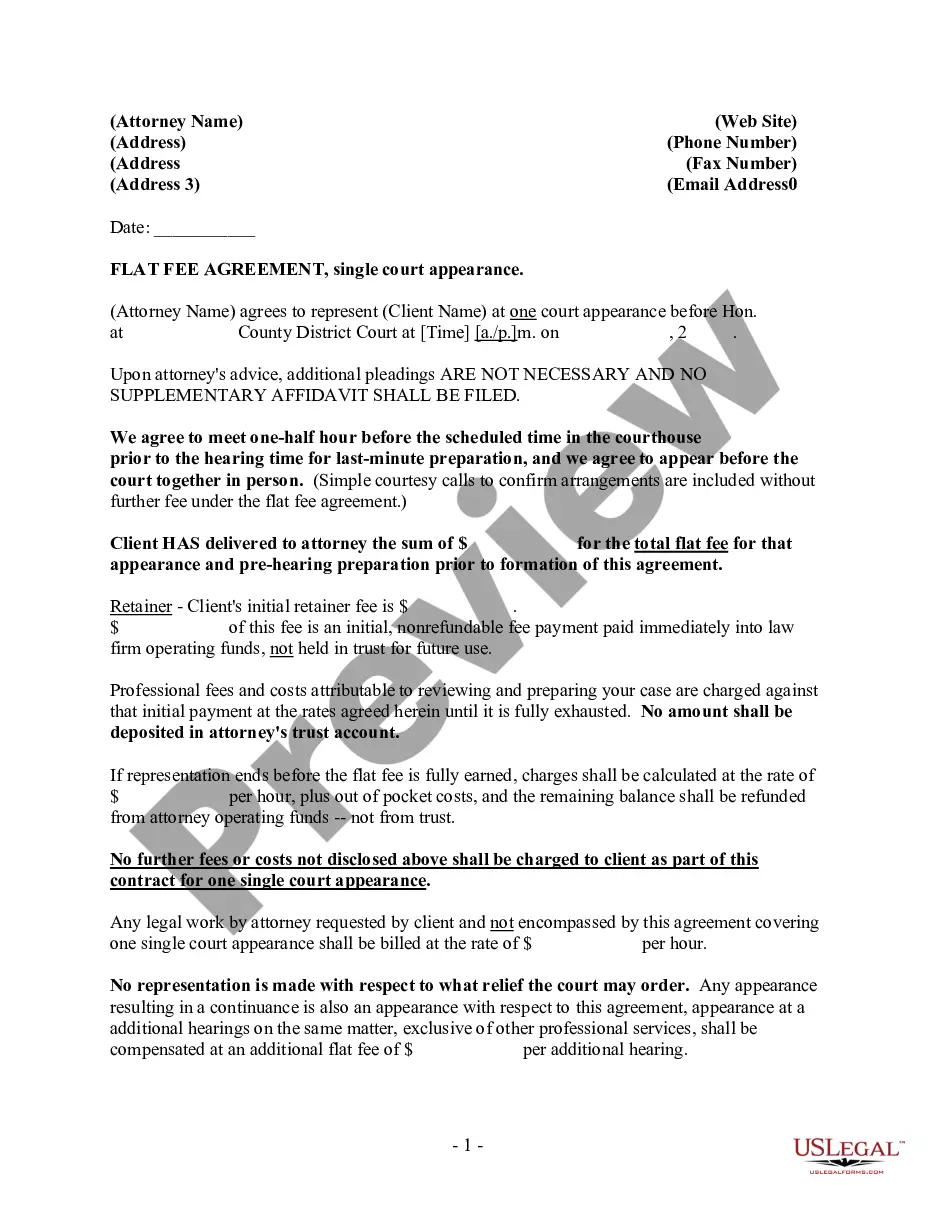
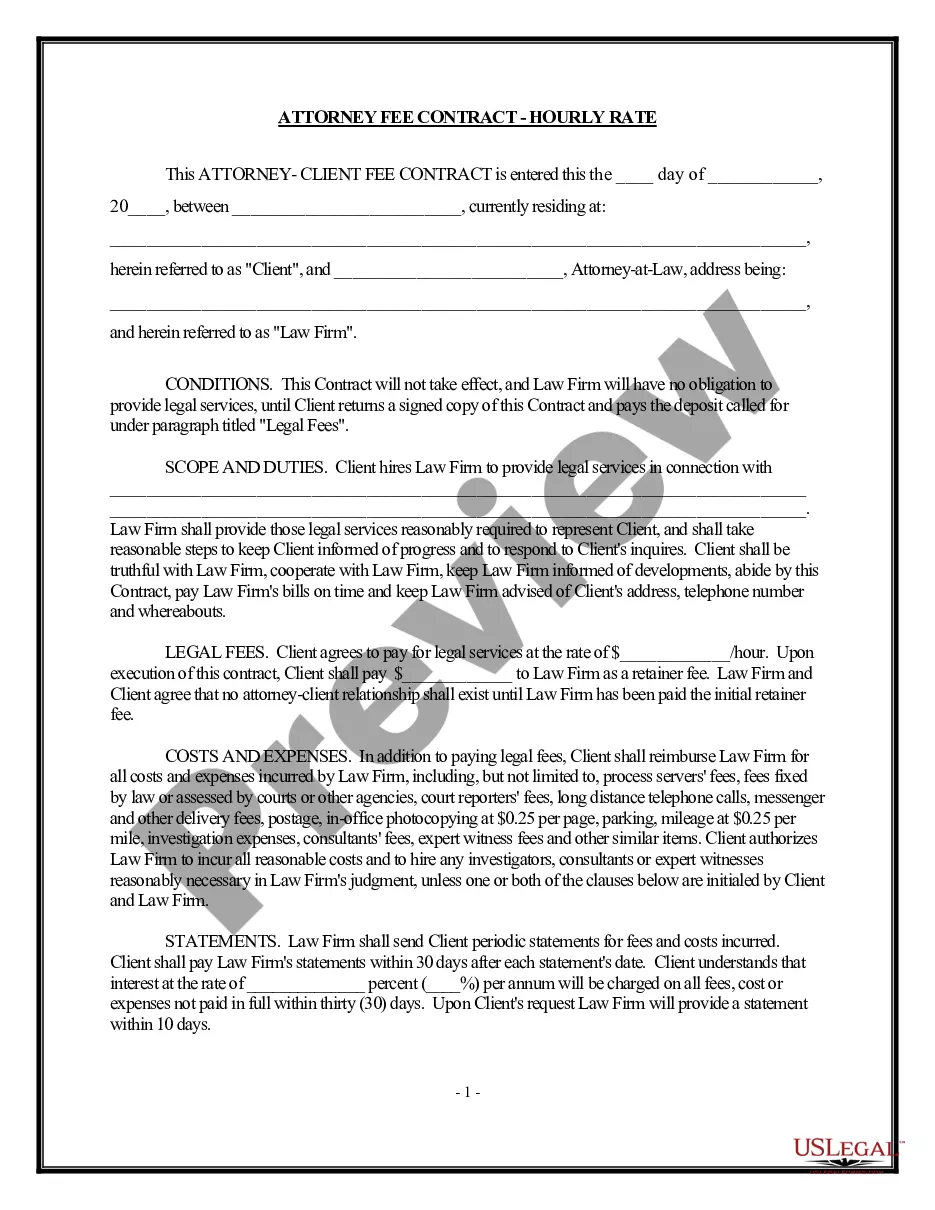
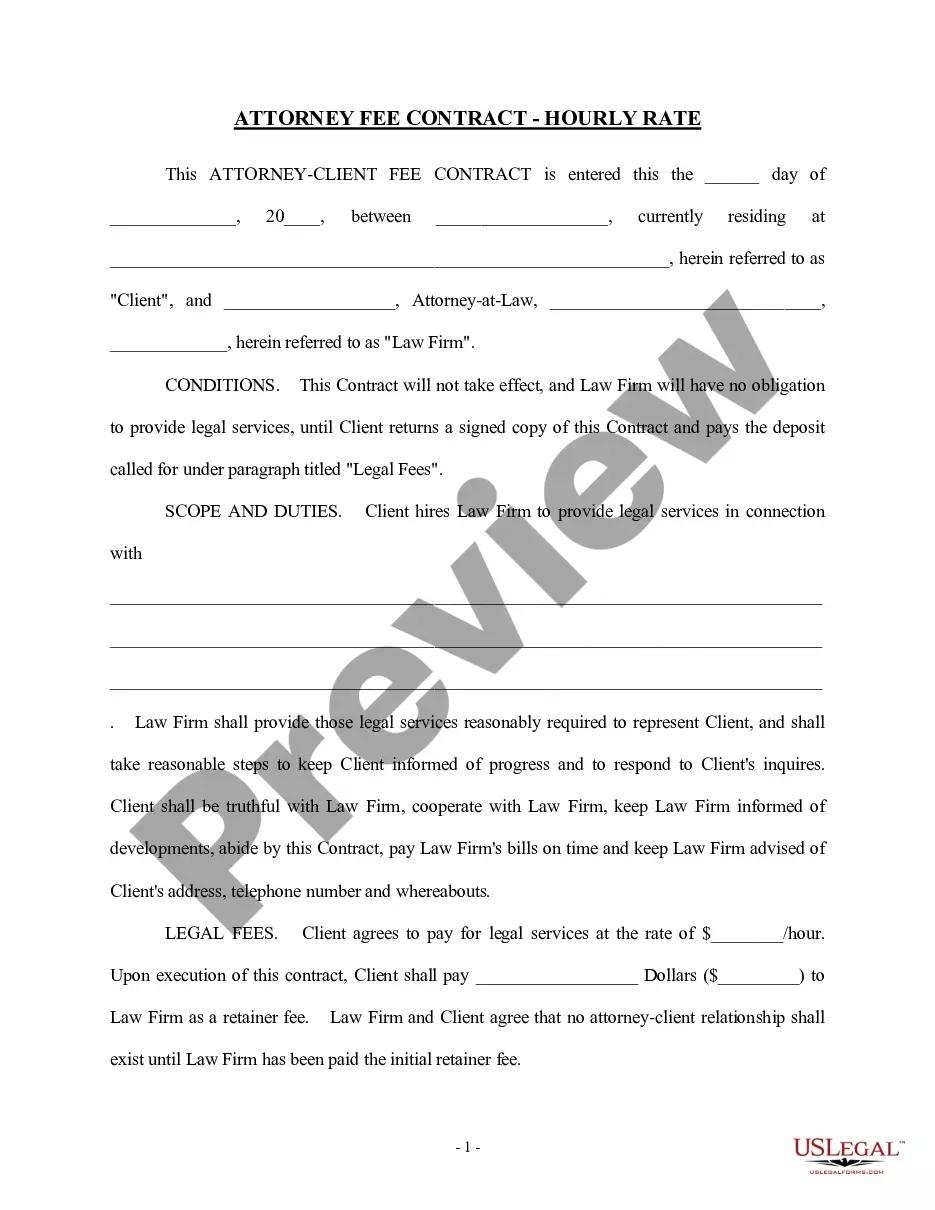
The Flat Fee Agreement for a single court appearance is a legal document that establishes a fixed fee arrangement between a client and an attorney. This form is specifically designed for situations where the attorney is engaged for just one court appearance, including any necessary pre-hearing preparation. By clearly defining payment structures and expectations, it helps both parties understand their rights and obligations, differing from other types of fee agreements that may involve hourly rates or multiple court appearances.
Form components explained
- Details of the total flat fee and retainer required for the court appearance.
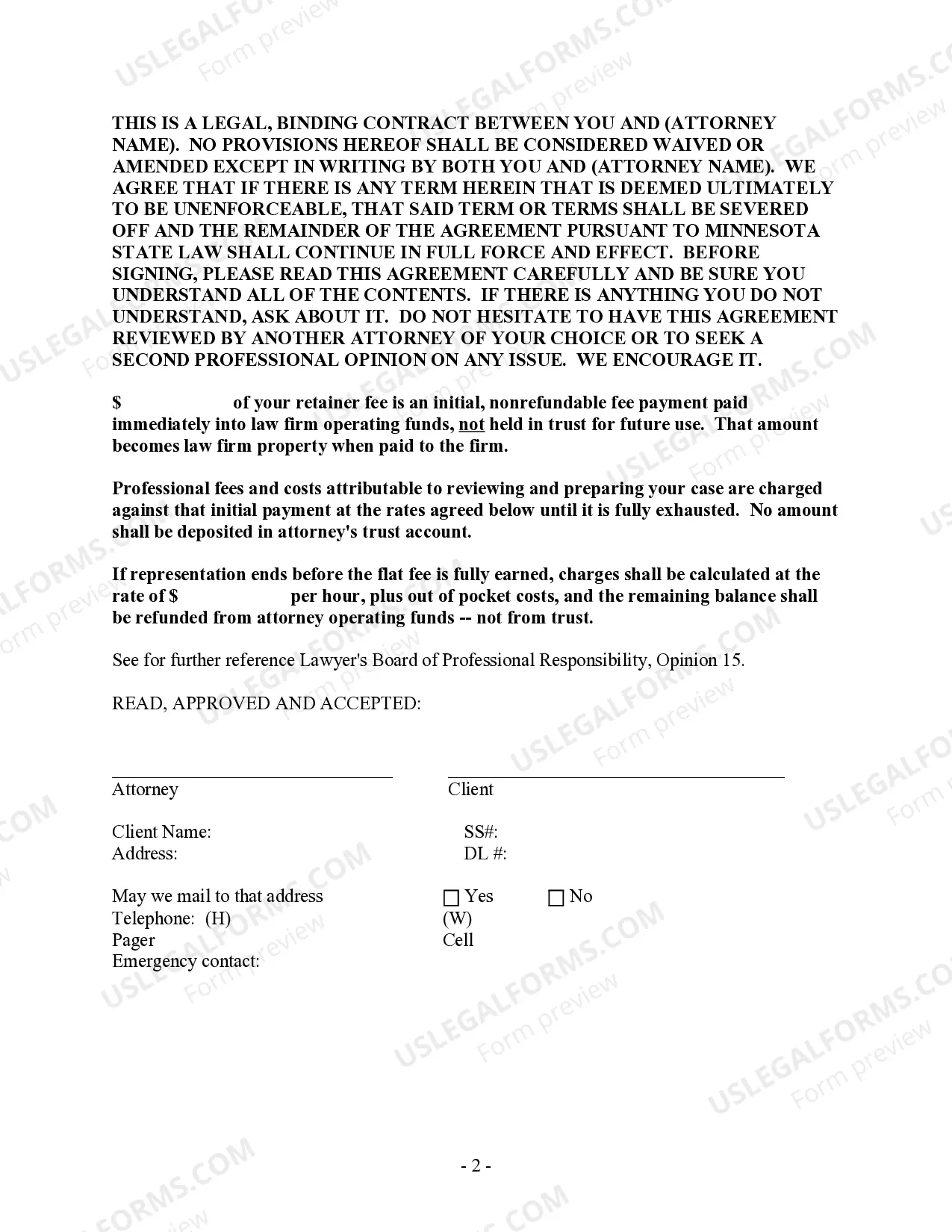
- It specifies whether the retainer is refundable and under what circumstances.
- Outlines additional charges for any legal work requested by the client outside this agreement.
- Indicates that any appearance resulting in a continuance is considered an appearance under this agreement.
- Clarifies that any unearned flat fees will be refunded according to specific terms.

Situations where this form applies
This Flat Fee Agreement is ideal for clients who require legal representation for a single scheduled court appearance. It is particularly useful in situations such as small claims court, traffic violations, or minor civil disputes. This form provides a transparent fee structure that both the client and attorney can agree upon before legal proceedings begin, ensuring clarity and reducing potential disputes over payments later on.
Who this form is for
- Clients who need legal representation for one court appearance.
- Individuals seeking to understand their costs upfront in legal matters.
- Those who prefer to avoid hourly billing and want a clear agreement on fees.
- Clients in need of an attorney who can effectively manage a specific case without ongoing representation.
How to complete this form
- Enter the attorney's name and contact information, including phone number and email address.
- Fill in the date of the agreement and the total flat fee amount for the court appearance.
- Specify the retainer amount and detail any nonrefundable fees.
- Clearly state the hourly rate for any additional services that might be requested outside the scope of this agreement.
- Both the attorney and client must sign and date the form to affirm their agreement to the terms outlined.
Notarization guidance
This form does not typically require notarization unless specified by local law. However, it is advisable to verify specific state requirements that may apply to your agreement.
Get your form ready online
Our built-in tools help you complete, sign, share, and store your documents in one place.
Make edits, fill in missing information, and update formatting in US Legal Forms—just like you would in MS Word.
Download a copy, print it, send it by email, or mail it via USPS—whatever works best for your next step.
Sign and collect signatures with our SignNow integration. Send to multiple recipients, set reminders, and more. Go Premium to unlock E-Sign.
If this form requires notarization, complete it online through a secure video call—no need to meet a notary in person or wait for an appointment.
We protect your documents and personal data by following strict security and privacy standards.

Make edits, fill in missing information, and update formatting in US Legal Forms—just like you would in MS Word.

Download a copy, print it, send it by email, or mail it via USPS—whatever works best for your next step.

Sign and collect signatures with our SignNow integration. Send to multiple recipients, set reminders, and more. Go Premium to unlock E-Sign.

If this form requires notarization, complete it online through a secure video call—no need to meet a notary in person or wait for an appointment.

We protect your documents and personal data by following strict security and privacy standards.
Common mistakes to avoid
- Failing to specify the total flat fee or retainer amount accurately.
- Not understanding the implications of the nonrefundable fee or refund policies.
- Neglecting to clarify the terms for additional hearings or legal work requested afterward.
- Forgetting to sign and date the agreement, which can invalidate the contract.
Why use this form online
- Convenience of downloading and filling out the form from anywhere.
- Access to legally vetted templates crafted by licensed attorneys.
- Ability to customize the form according to specific legal situations and requirements.
- Secure storage and easy retrieval of legal documents.
Quick recap
- The Flat Fee Agreement is designed for clients needing representation for a single court appearance.
- Clear terms regarding compensation help prevent misunderstandings about legal fees.
- Always read the agreement carefully before signing to ensure all terms are understood.
Looking for another form?
Form popularity
FAQ
Rule 5.01 of the Minnesota Rules of Civil Procedure outlines the requirements for serving documents in a legal case. This rule ensures that all parties involved receive necessary documents in a timely manner. Proper service helps maintain fairness in legal proceedings. If you need assistance with document service, consider the Minnesota Flat Fee Agreement - Single Court Appearance for a clear and structured approach.
Rule 52.02 of the Minnesota Rules of Civil Procedure pertains to findings of fact and conclusions of law. This rule requires the court to make these findings when a decision is made after a trial that is not solely based on a jury verdict. Understanding this rule can be beneficial in legal situations. Utilizing a Minnesota Flat Fee Agreement - Single Court Appearance can help you navigate complex legal proceedings effectively.
In Minnesota, you typically have 21 days to respond to a complaint after being served. This timeline is crucial, as failing to answer may result in a default judgment against you. It’s important to act promptly and seek legal advice if needed. A Minnesota Flat Fee Agreement - Single Court Appearance can streamline this process and provide you with the necessary support.
In Minnesota, you may have the option to refuse jury duty under certain circumstances, such as financial hardship or personal obligations. However, you must provide valid reasons and documentation to be excused. If you fail to comply with the jury duty summons, you could face penalties. To navigate these situations effectively, consider exploring the Minnesota Flat Fee Agreement - Single Court Appearance for legal guidance.
The average hourly rate for lawyers in the U.S. typically ranges from $200 to $300. This figure can change based on various factors, including geographical location and legal field. For more predictable expenses, many clients opt for a Minnesota Flat Fee Agreement - Single Court Appearance, which simplifies budgeting for legal services.
Whether $400 an hour is expensive depends largely on the lawyer's expertise and the nature of the legal issue. In metropolitan areas or for specialized legal services, this rate might be standard. For those seeking predictable costs, a Minnesota Flat Fee Agreement - Single Court Appearance could be a more budget-friendly option.
Rule 1.5 in Minnesota pertains to the reasonableness of attorney fees. It outlines factors that determine whether a fee is fair, including the complexity of the case, the skill required, and the outcome obtained. Understanding Rule 1.5 is essential when entering into a Minnesota Flat Fee Agreement - Single Court Appearance, as it helps clarify what you can expect in terms of legal costs. US Legal Forms offers resources that can guide you through the process of establishing an agreement that aligns with these standards.
The rule of practice 521 in Minnesota governs the requirements for filing and serving motions in civil cases. It establishes specific guidelines to ensure that motions are properly presented and that all parties receive adequate notice. Familiarizing yourself with Rule 521 is important, especially when considering a Minnesota Flat Fee Agreement - Single Court Appearance, as it helps streamline the legal process and ensures compliance with procedural norms. Consider using US Legal Forms to access templates that can assist you in meeting these requirements.
Rule 68 in Minnesota allows a party to make an offer of settlement before trial. If the opposing party rejects the offer and fails to obtain a more favorable judgment, they may be responsible for the reasonable costs incurred, including attorney fees. This rule encourages parties to settle disputes outside of court and can be especially useful in the context of a Minnesota Flat Fee Agreement - Single Court Appearance. By understanding Rule 68, you can better navigate your legal options and potentially save on expenses.