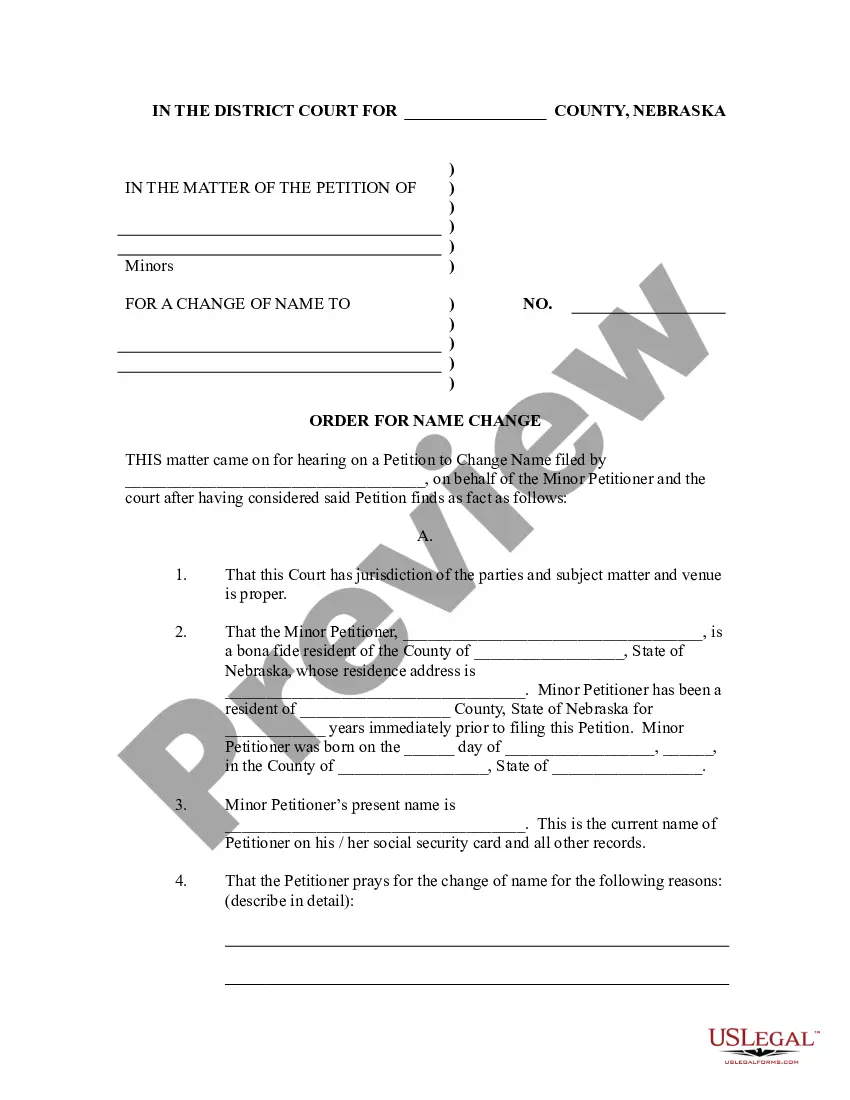
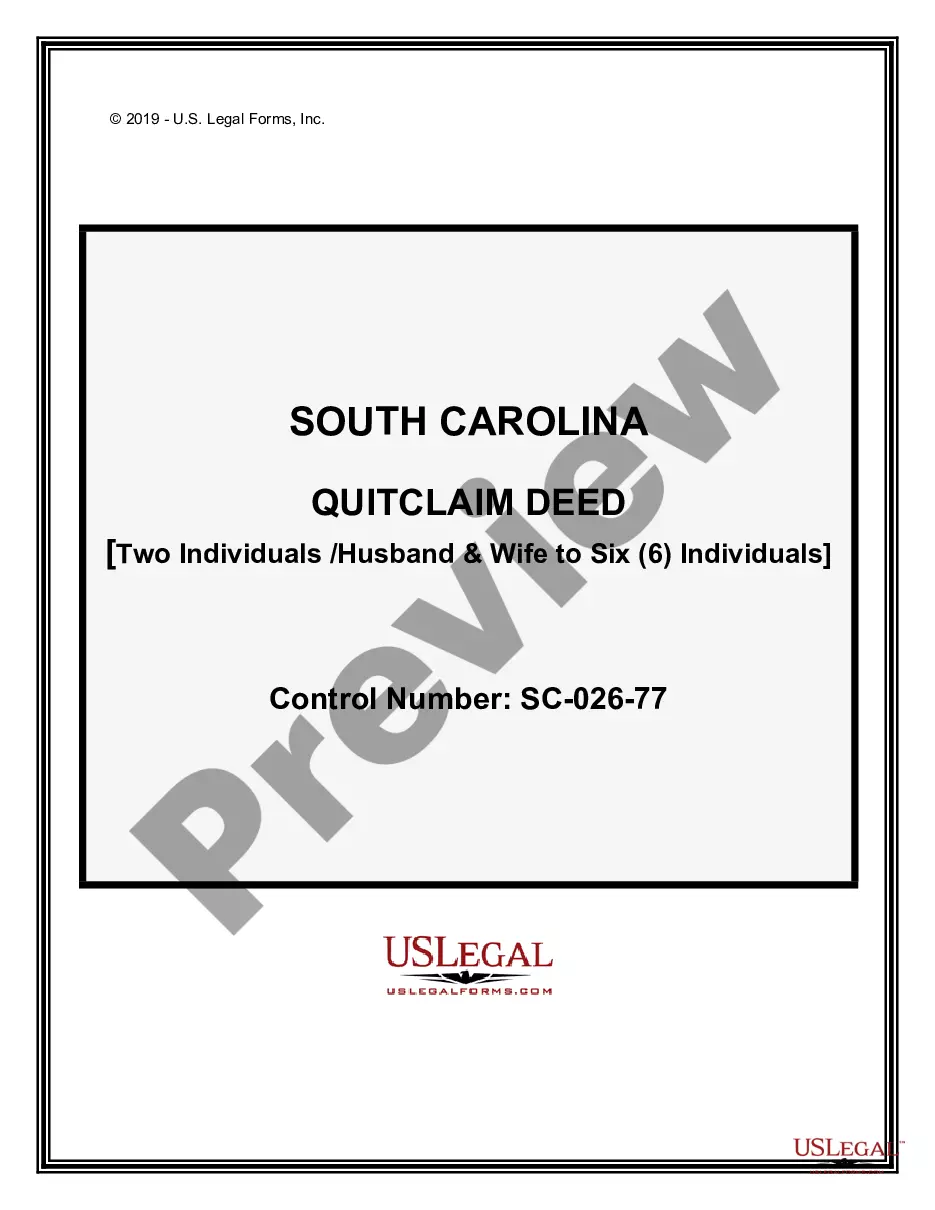
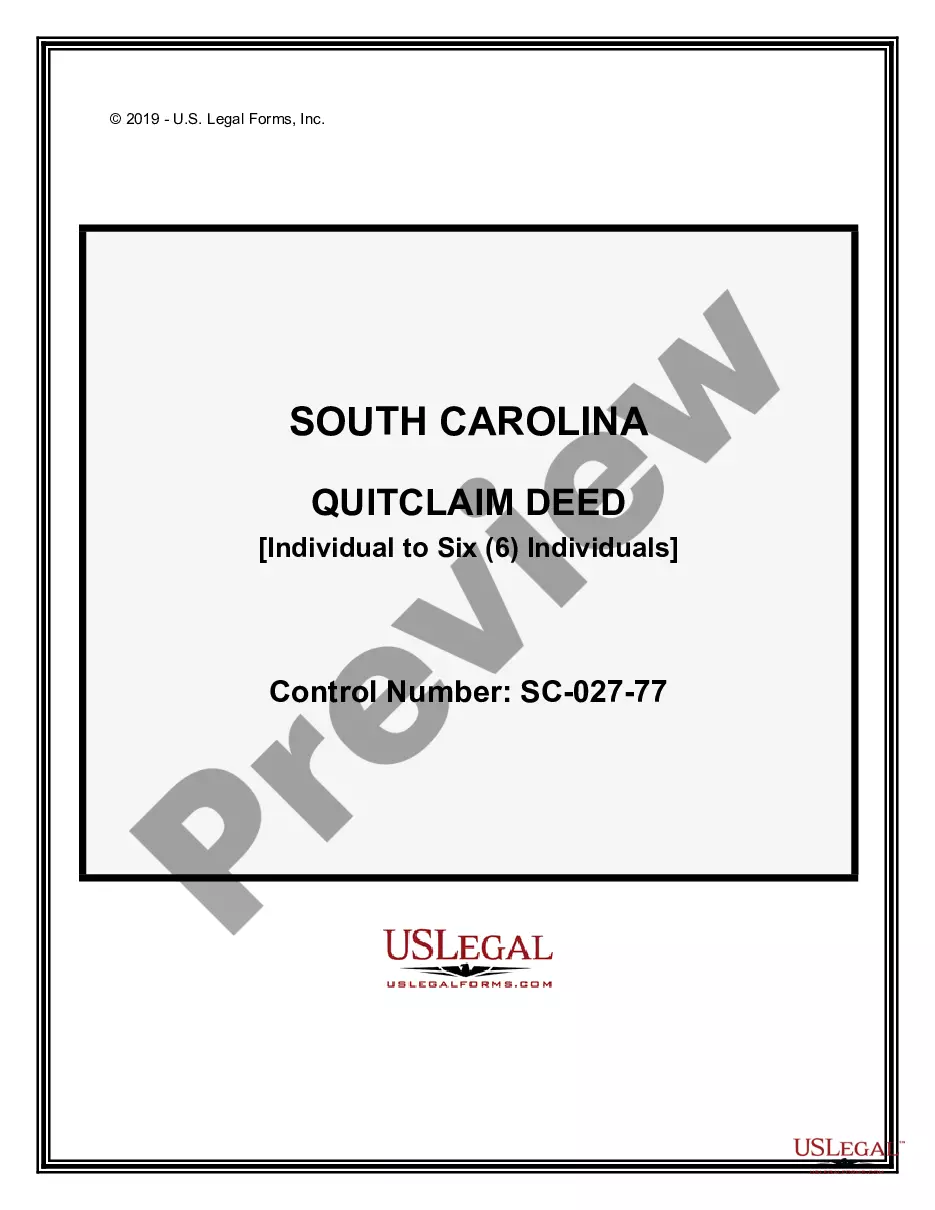
South Carolina Quitclaim Deed from a Husband and Wife or Two Individuals to Six Individuals
About this form
The Quitclaim Deed from a Husband and Wife or Two Individuals to Six Individuals is a legal document that allows two individuals, typically a married couple, to convey their interest in a piece of property to six recipients. This form provides a straightforward method of transferring property ownership without making any warranties regarding the title. Unlike other types of deeds, the quitclaim deed does not guarantee that the grantors hold valid title to the property, making it essential to understand the implications before using it.
Main sections of this form
- Grantees: Clearly identifies the six individuals receiving the property.
- Grantors: Details the current owners who are transferring their interest.
- Property Description: Provides a legal description of the property being conveyed.
- Execution Date: Specifies when the deed is legally effective.
- Signatures: Requires original signatures of the grantors and witnesses.
- Notarization: Includes the requirement for notarization to finalize the document.





When this form is needed
This form is typically used when a husband and wife, or two individuals, wish to transfer property to multiple owners without ensuring title validity. Common scenarios may involve family property gifts, estate planning, or simplifying ownership distribution among siblings or friends. It is a suitable option when the grantors do not want to deal with the responsibilities of ensuring clear title or when the transfer is purely nominal.
Who should use this form
- Married couples looking to transfer property directly to multiple individuals.
- Individuals who are part of a joint ownership arrangement seeking to redefine ownership structure.
- Families wanting to reallocate property ownership among relatives without a formal sale.
- Anyone needing a simple, no-warranty property transfer for non-commercial purposes.
Completing this form step by step
- Identify the grantors: The husband and wife should fill in their full names and relationship.
- Specify the grantees: Enter the names and any necessary details of the six individuals receiving the property.
- Describe the property: Provide a detailed legal description of the property being transferred.
- Obtain signatures: Have the grantors and required witnesses sign the document in blue ink.
- Include notarization: Ensure the document is signed by a licensed notary public.
- File with the local office: Submit the completed deed to the Register of Deeds for recording.
Notarization guidance
Yes, this form must be notarized to be legally valid. Notarization ensures that the identities of the grantors are verified and that the execution of the deed complies with legal standards. U.S. Legal Forms offers integrated online notarization services, making it easy to complete the notarization process securely.
Get your form ready online
Our built-in tools help you complete, sign, share, and store your documents in one place.
Make edits, fill in missing information, and update formatting in US Legal Forms—just like you would in MS Word.
Download a copy, print it, send it by email, or mail it via USPS—whatever works best for your next step.
Sign and collect signatures with our SignNow integration. Send to multiple recipients, set reminders, and more. Go Premium to unlock E-Sign.
If this form requires notarization, complete it online through a secure video call—no need to meet a notary in person or wait for an appointment.
We protect your documents and personal data by following strict security and privacy standards.

Make edits, fill in missing information, and update formatting in US Legal Forms—just like you would in MS Word.

Download a copy, print it, send it by email, or mail it via USPS—whatever works best for your next step.

Sign and collect signatures with our SignNow integration. Send to multiple recipients, set reminders, and more. Go Premium to unlock E-Sign.

If this form requires notarization, complete it online through a secure video call—no need to meet a notary in person or wait for an appointment.

We protect your documents and personal data by following strict security and privacy standards.
Mistakes to watch out for
- Using incorrect names or spellings for grantors and grantees.
- Failing to include the required legal description of the property.
- Not obtaining original signatures or notarization.
- Omitting necessary witness signatures.
Why complete this form online
- Convenience: Easily complete the form from home without the need for in-person appointments.
- Editability: Make adjustments to the form as needed before finalizing the details.
- Reliability: Access to professionally drafted templates ensures compliance with relevant laws.
Quick recap
- A Quitclaim Deed transfers property ownership without guaranteeing title.
- Required for transactions involving multiple parties, like family transfers.
- Strongly advise notarization after execution for legal validity.
- Follow state-specific guidelines to ensure proper filing and acceptance.
Looking for another form?
Form popularity
FAQ
In states like California and Florida, the spouses may use a quitclaim deed to transfer the property without warranting title. Other stateslike Texasrecognize a similar type of deed called a deed without warranty.
A person who signs a quitclaim deed to transfer property they do not own results in no title at all being transferred since there is no actual ownership interest. The quitclaim deed only transfers the type of title you own.
In California, all property bought during the marriage with income that was earned during the marriage is deemed "community property." The law implies that both spouses own this property equally, regardless of which name is on the title deed.
It's often easier to qualify for a joint mortgage, because both spouses can contribute income and assets to the application. However, if one spouse can qualify for a mortgage based on his own income and credit, the mortgage does not need to be in both spouses' names unless you live in a community property state.
It is also crucial that a spouse know about the loan, even if he or she is not on the mortgage. In general, the spouse must sign a deed of trust, the Truth in Lending and Right to Cancel documents. By signing these documents, they are simply acknowledging the existence of the mortgage.
Adding someone to your house deed requires the filing of a legal form known as a quitclaim deed. When executed and notarized, the quitclaim deed legally overrides the current deed to your home. By filing the quitclaim deed, you can add someone to the title of your home, in effect transferring a share of ownership.
If you sign a quitclaim deed to release yourself from ownership of the property or a claim to the title, then that doesn't mean you are no longer held accountable for the mortgage payment.Otherwise, you may be held responsible for unpaid payments despite no longer having a claim to the title.
In order to transfer ownership of the marital home pursuant to a divorce, one spouse is going to need to sign a quitclaim deed, interspousal transfer deed, or a grant deed, in order to convey the title to the property.
Laws § 27-7-20. Recording All forms must be filed at the County Recorders of Deeds. Signing (A§ 30-5-30) A quit claim deed in South Carolina is required to be authorized by a notary public and two (2) subscribing witnesses.