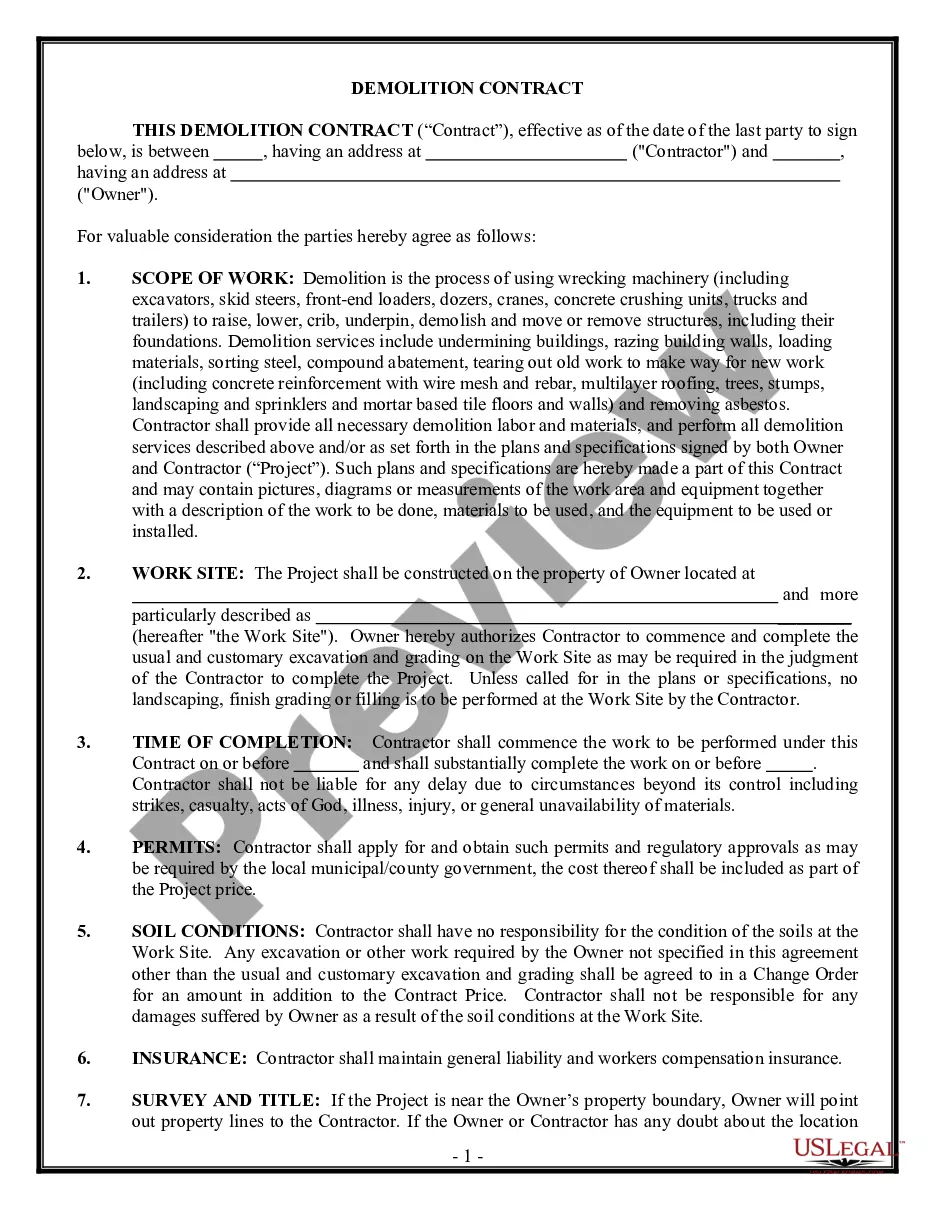
South Carolina Siding Contract for Contractor
What this document covers
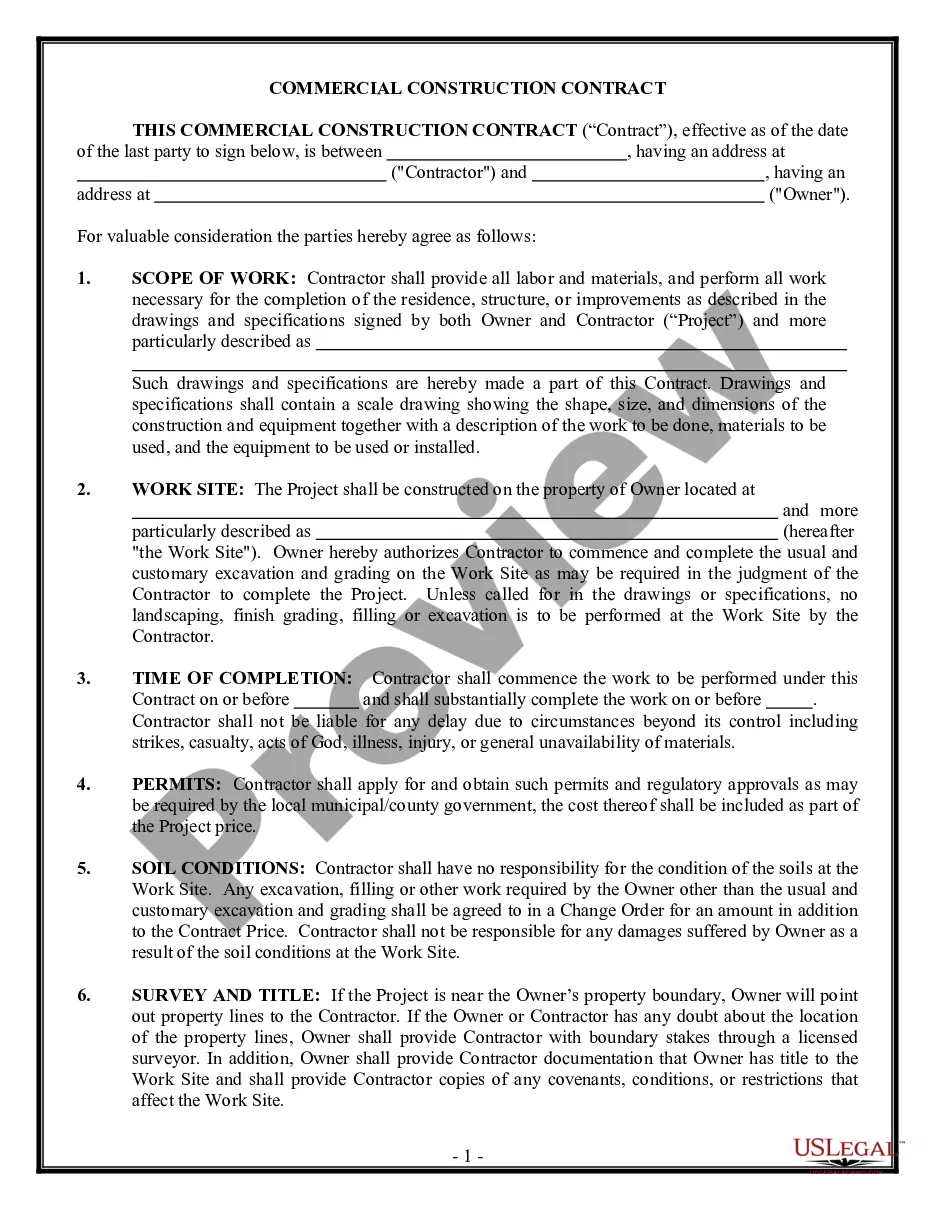
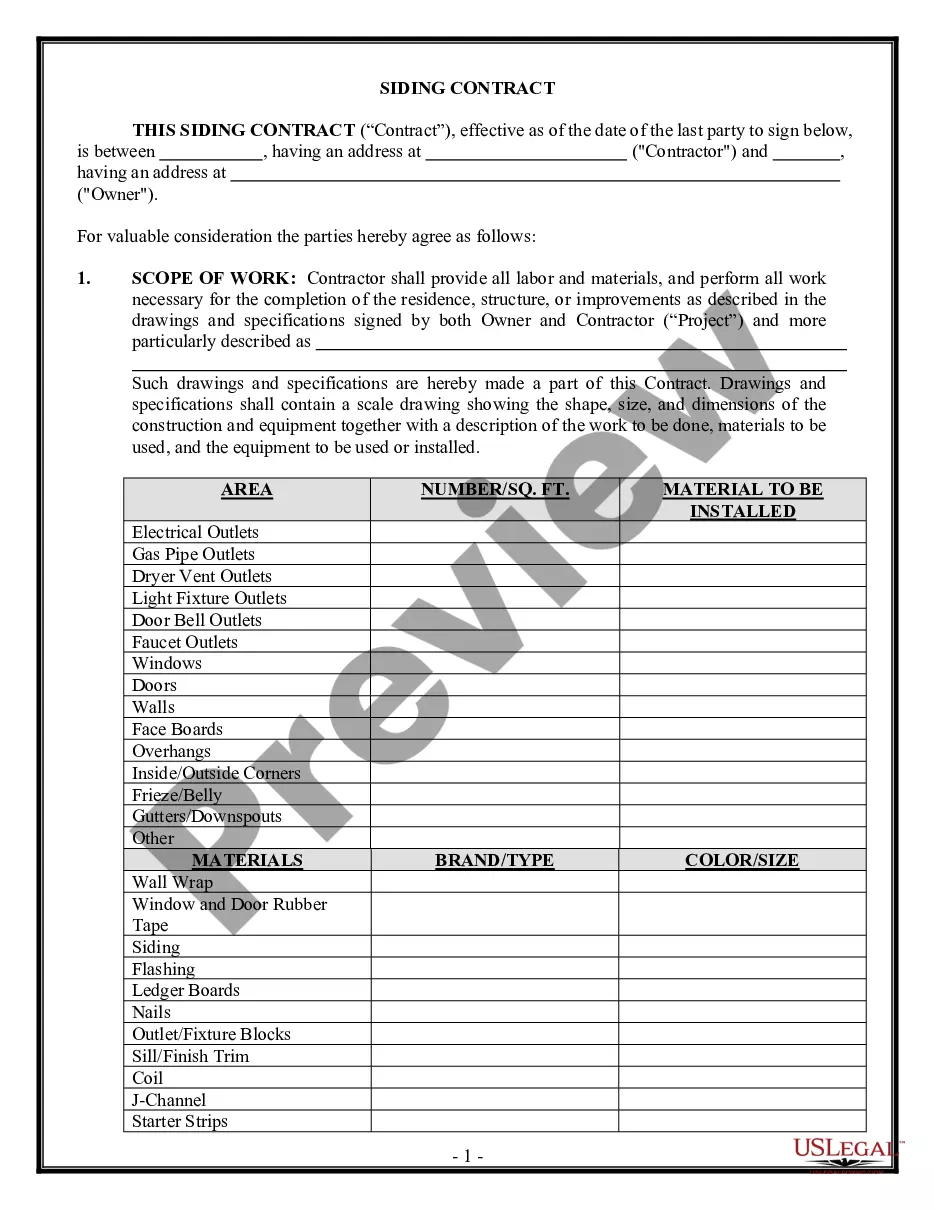
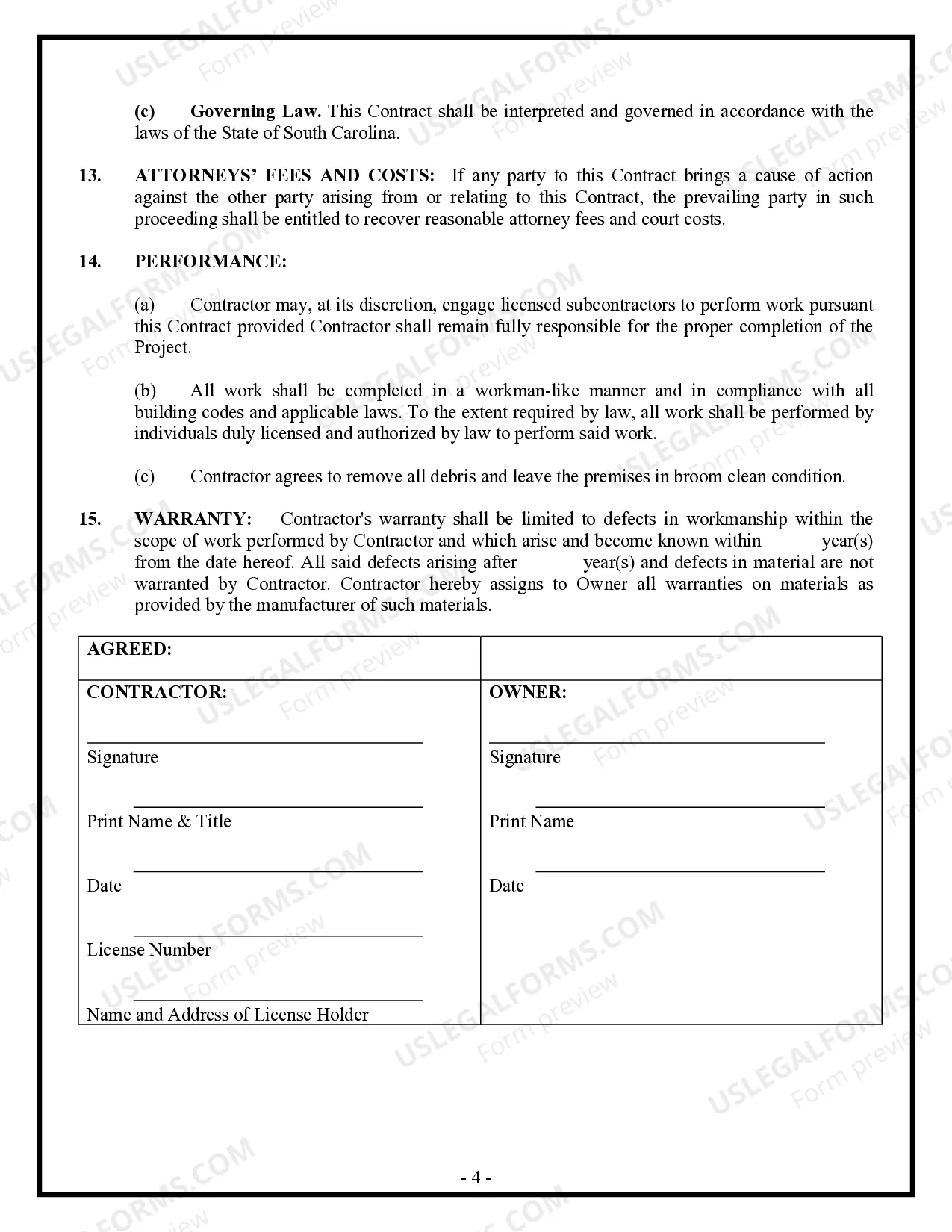
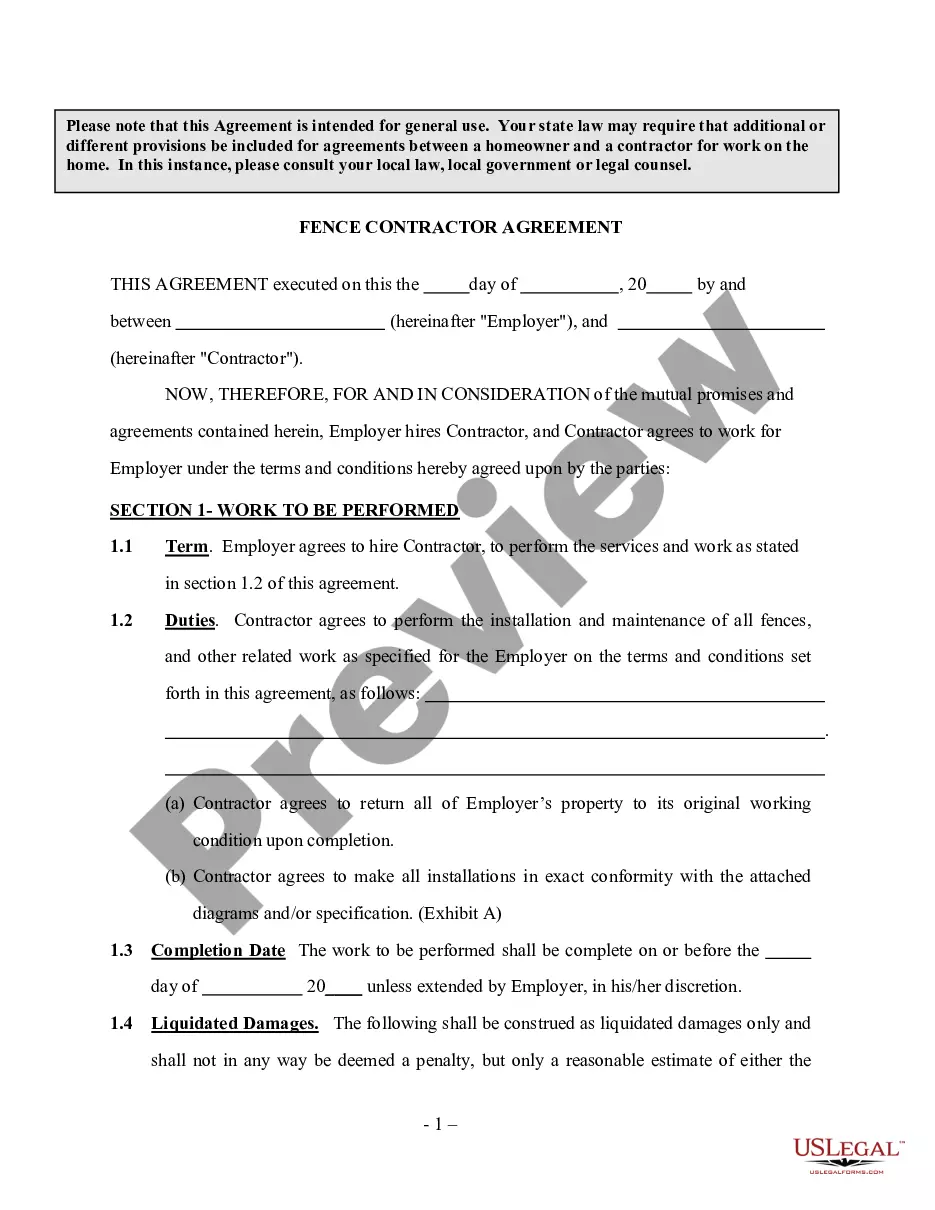
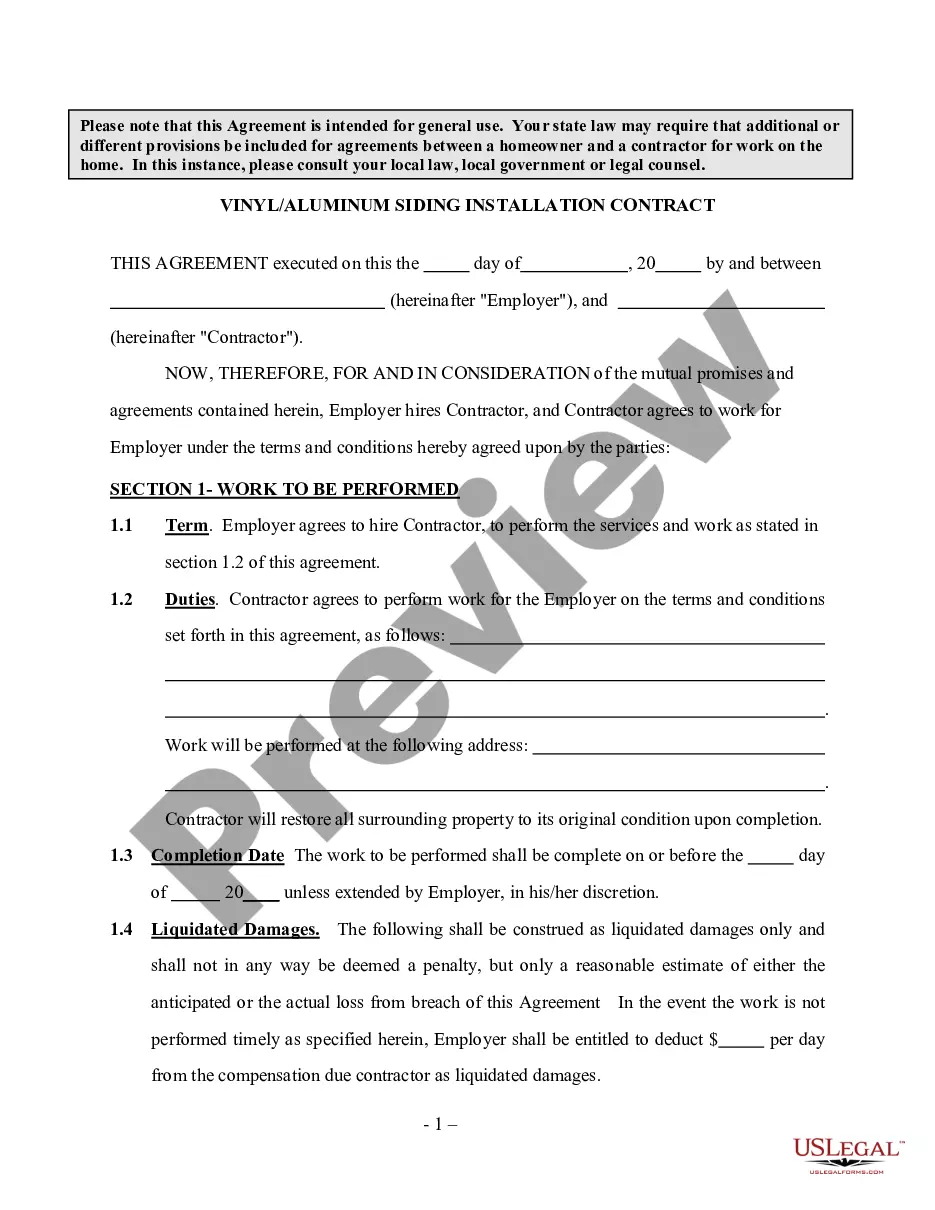
The Siding Contract for Contractor is a legal document that formalizes the agreement between siding contractors and property owners. It can be tailored to either a cost plus or fixed fee arrangement and ensures clarity in work scope, payment terms, and project responsibilities. Unlike generic service contracts, this form includes specific elements tailored to siding installation projects and is compliant with South Carolina laws.
Form components explained
- Project details, including area number and materials to be installed.
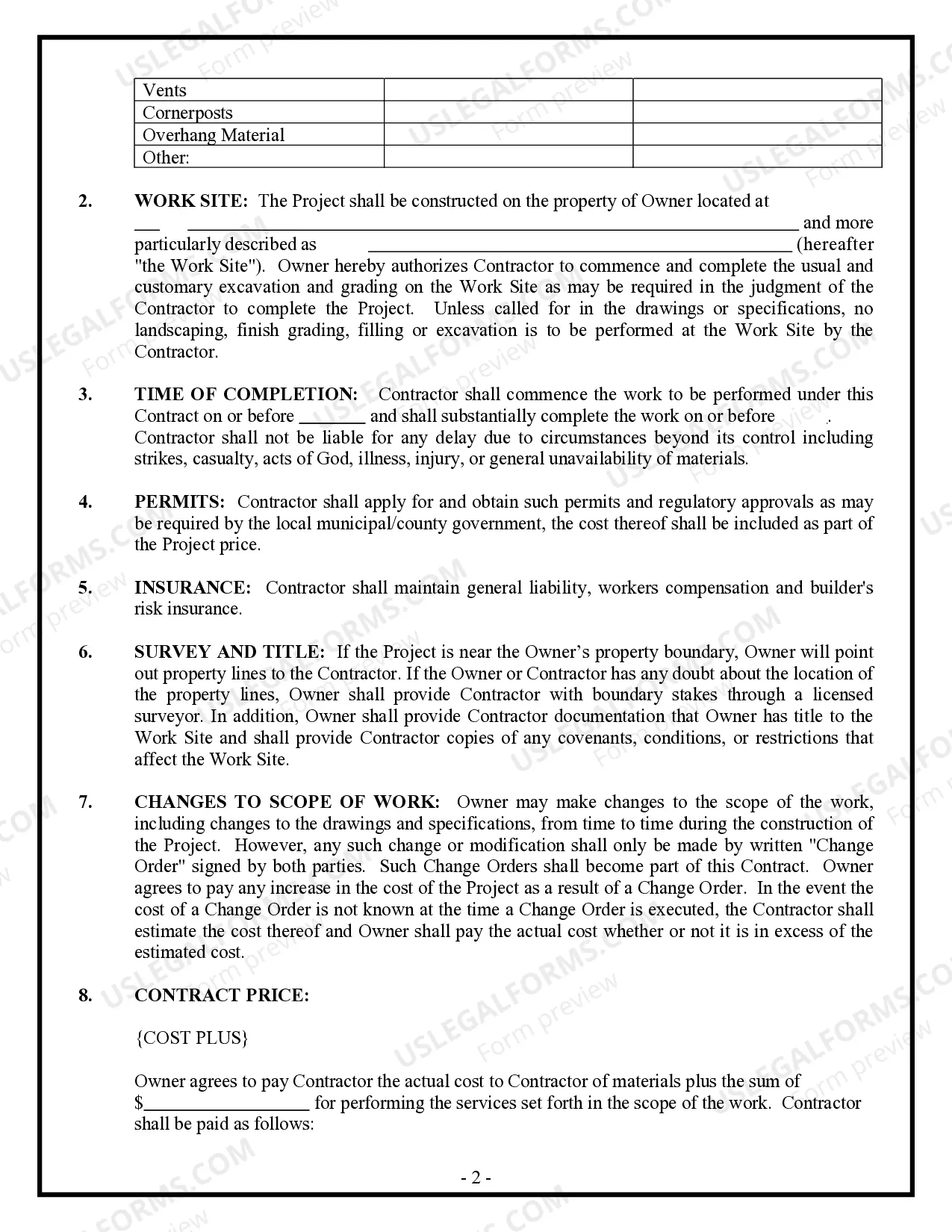
- Contractor obligations regarding permits and insurance coverage.
- Procedures for modifying the scope of work through written change orders.
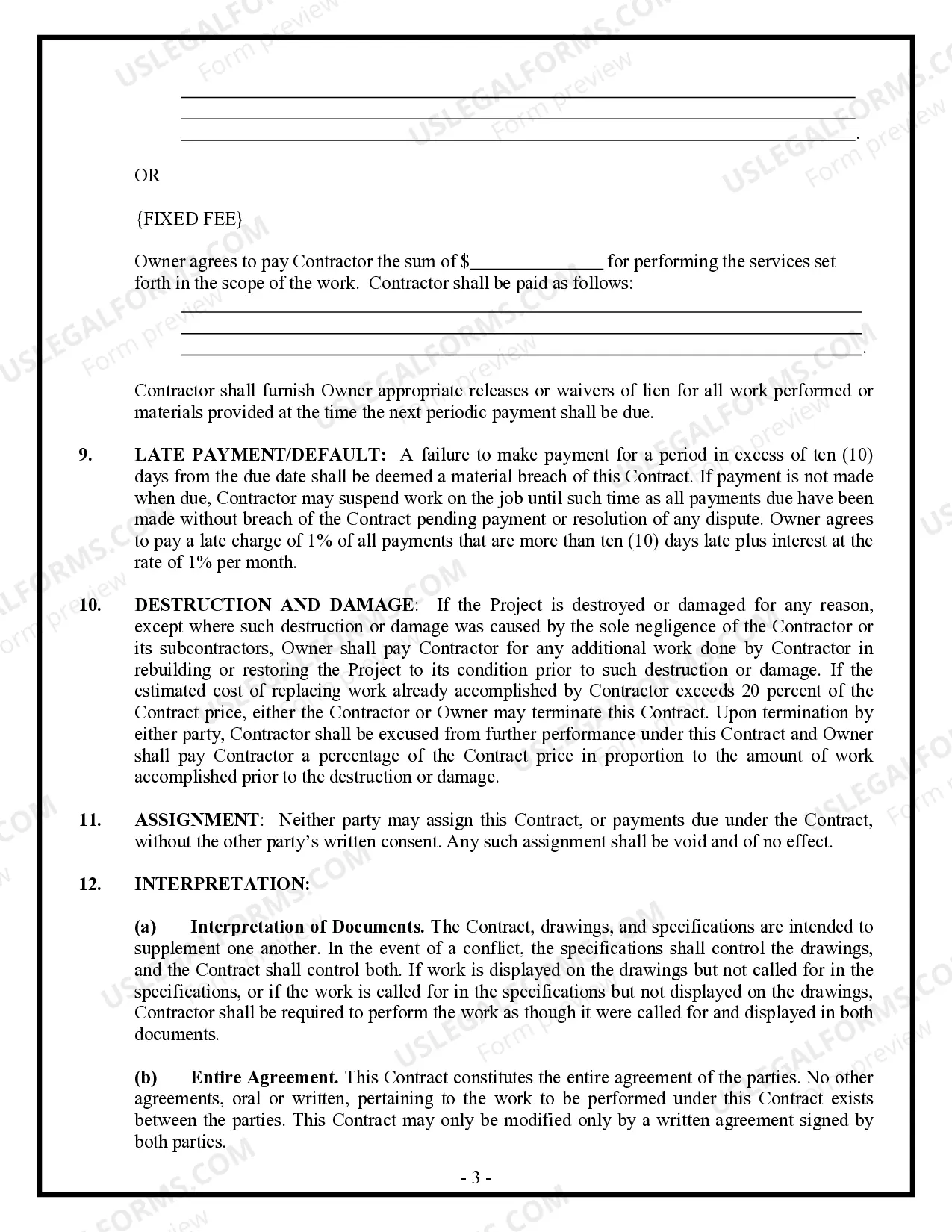
- Provisions regarding project damage, destruction, and assignments.
- Governing law stipulating adherence to South Carolina regulations.
When this form is needed
This form should be used when a property owner hires a siding contractor for installation or repair work on their property. It is essential when the parties need to clarify their roles, responsibilities, and payment arrangements. This contract is valuable for projects that may require changes during the work or for ensuring that adequate insurance and permits are in place.
Who this form is for
- Property owners looking to install or replace siding.
- Siding contractors providing installation or repair services.
- Individuals involved in home renovation projects requiring clear contractual agreements.
- Parties seeking to establish a legally binding agreement with defined scope and terms.
Steps to complete this form
- Identify the parties: Provide the full names and contact information of the property owner and the contractor.
- Specify project details: Fill in the area number, materials to be installed, and any relevant work site information.
- Outline payment terms: Decide whether the project will follow a cost plus or fixed fee payment arrangement.
- Review insurance and permits: Ensure both parties understand their obligations regarding necessary permits and insurance coverage.
- Include change order provisions: Detail how changes to the project will be handled and documented.
Does this document require notarization?
In most cases, this form does not require notarization. However, some jurisdictions or signing circumstances might. US Legal Forms offers online notarization powered by Notarize, accessible 24/7 for a quick, remote process.
Get your form ready online
Our built-in tools help you complete, sign, share, and store your documents in one place.
Make edits, fill in missing information, and update formatting in US Legal Forms—just like you would in MS Word.
Download a copy, print it, send it by email, or mail it via USPS—whatever works best for your next step.
Sign and collect signatures with our SignNow integration. Send to multiple recipients, set reminders, and more. Go Premium to unlock E-Sign.
If this form requires notarization, complete it online through a secure video call—no need to meet a notary in person or wait for an appointment.
We protect your documents and personal data by following strict security and privacy standards.

Make edits, fill in missing information, and update formatting in US Legal Forms—just like you would in MS Word.

Download a copy, print it, send it by email, or mail it via USPS—whatever works best for your next step.

Sign and collect signatures with our SignNow integration. Send to multiple recipients, set reminders, and more. Go Premium to unlock E-Sign.

If this form requires notarization, complete it online through a secure video call—no need to meet a notary in person or wait for an appointment.

We protect your documents and personal data by following strict security and privacy standards.
Mistakes to watch out for
- Failing to specify the materials and work scope, leading to misunderstandings.
- Neglecting to document changes through signed change orders.
- Overlooking the need for permits or insurance details, which can lead to legal issues.
- Not clearly defining payment terms and responsibilities, causing disputes during the project.
Benefits of completing this form online
- Convenience of accessing and downloading the form from anywhere.
- Editability allows users to customize the document to fit specific project needs.
- Reliability of using a form drafted by licensed attorneys to ensure legal compliance.
- Quick turnaround time to get started on your siding project without delays.
Legal use & context
- The contract legally binds both parties and serves as proof of the agreement terms.
- It provides a framework for addressing disputes related to the project.
- Contains provisions that help protect the rights of both the contractor and the property owner.
Looking for another form?




Form popularity
FAQ
A certified contractor passed the state licensing examination. Certified contractors can work anywhere within the state in which they are licensed. A registered contractor is registered by a local county or municipality and receives a certificate of competency from the Electrical Contractors' Licensing Board.
FILE A WRITTEN APPLICATION. First things first! SUBMIT A CERTIFIED CHECK. SUBMIT AN AFFIDAVIT. PASS THE EXAM. PAY THE LICENSE FEE.
File Residential Home Builders License Application. Submit a $100 application processing fee. Submit an affidavit of eligibility. Submit proof of at least one year of relevant work experience within the past five years. Pass PSI exam.
A handyman, under the classification of Residential Specialty Contractor, does not need a license to work in South Carolina. However, you will need to register with the South Carolina Department of Labor, Licensing and Regulation.
SC Regulation 117-314.2 states: Building materials when purchased by builders, contractors, or landowners for use in adding to, repairing or altering real property are subject to either the sales or use tax at the time of purchase by such builder, contractor, or landowner.
Per South Carolina state law, a general handyman does not need a license to perform basic repair and maintenance tasks for homeowners. However, one does need to register with the South Carolina Department of Labor, Licensing and Regulation.
In South Carolina, the South Carolina Department of Labor, Licensing and Regulations is responsible for the licensing of all contractors. General, mechanical, specialty and manufactured housing contractors must be licensed in order to work in the state.