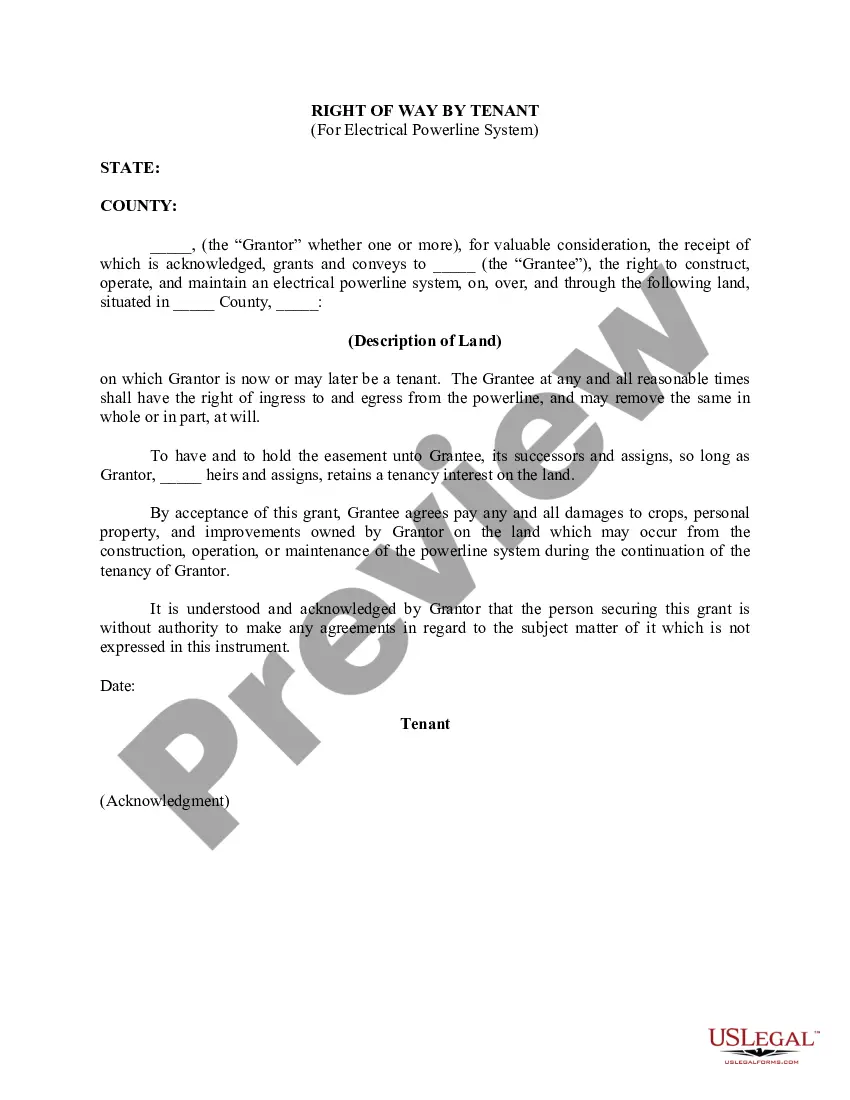
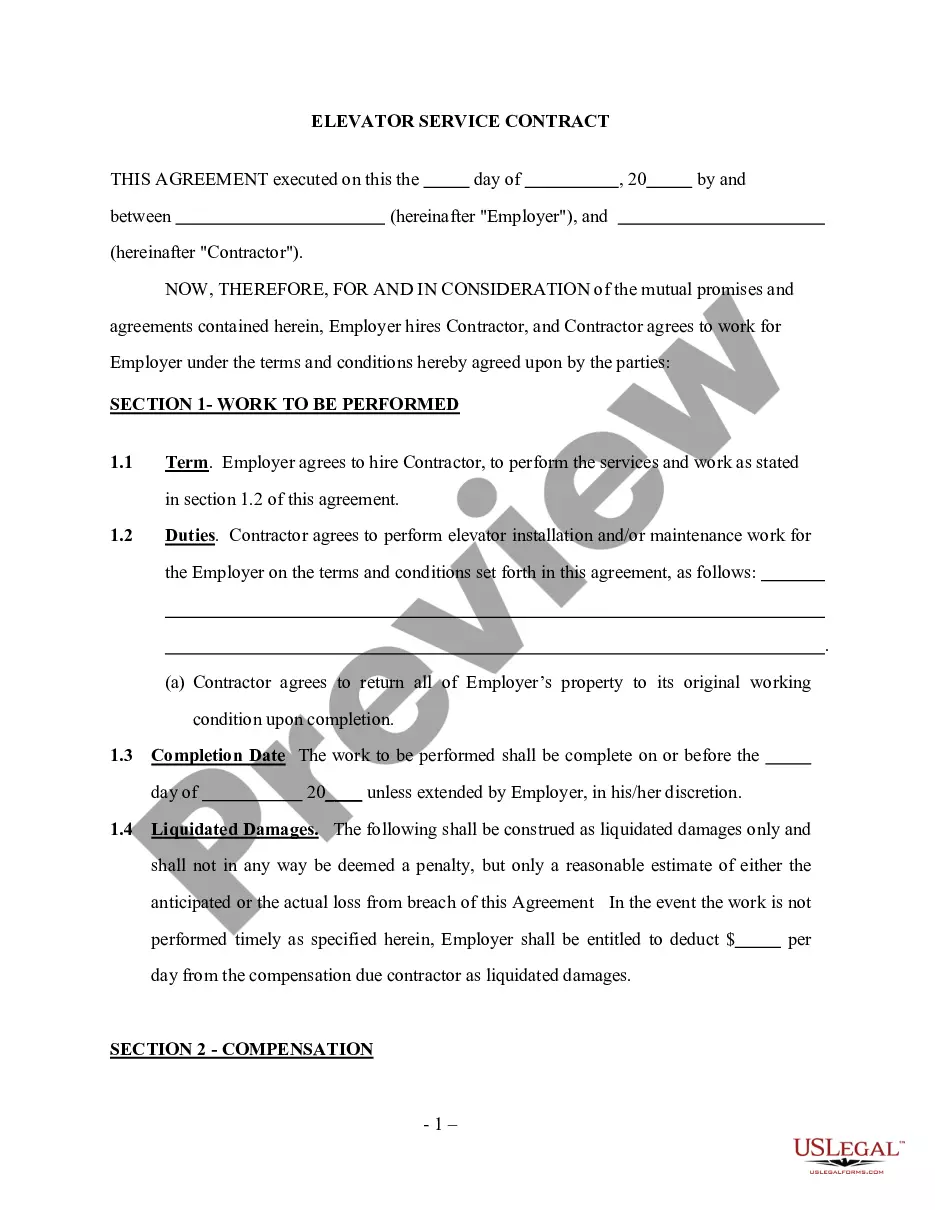
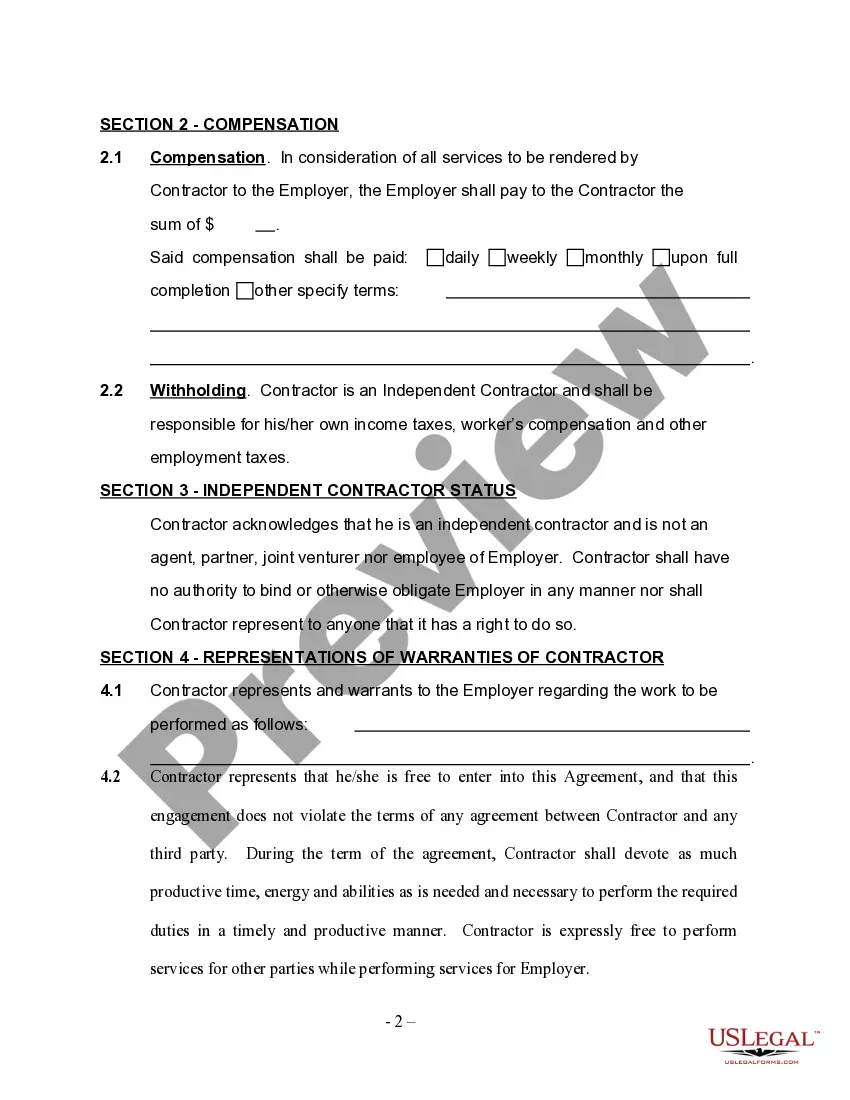
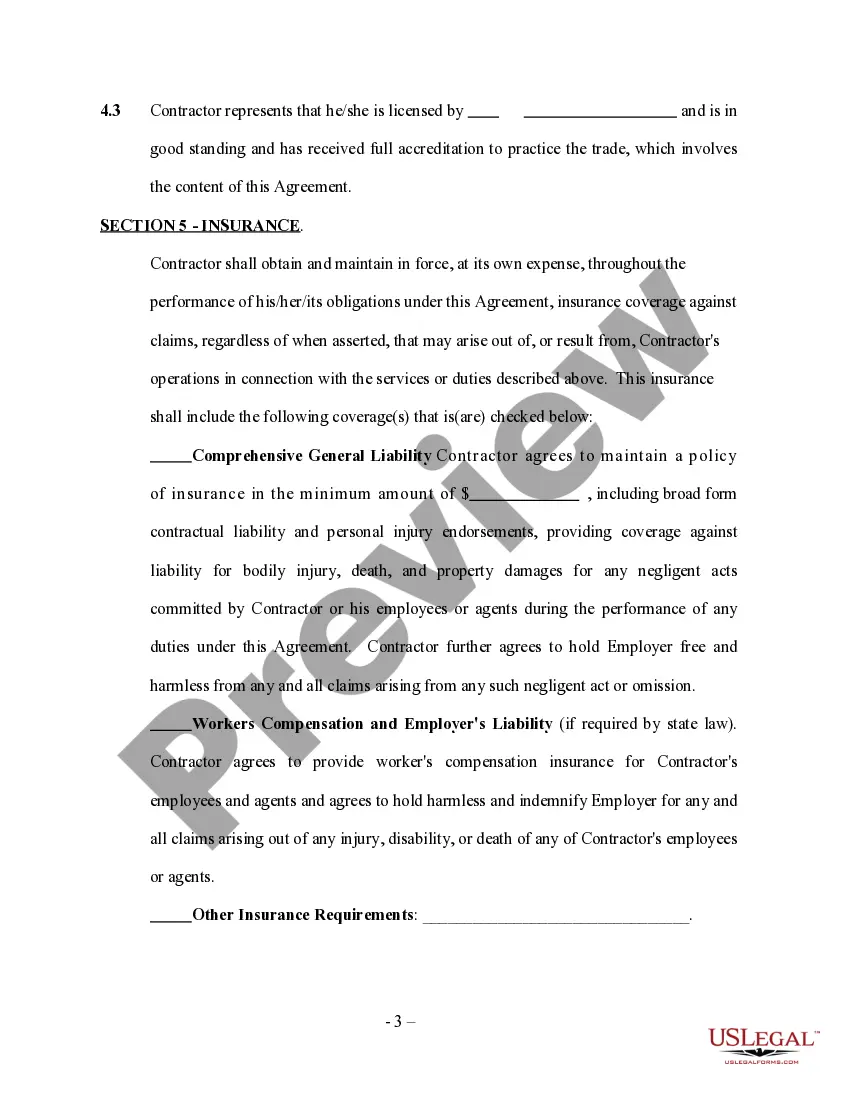
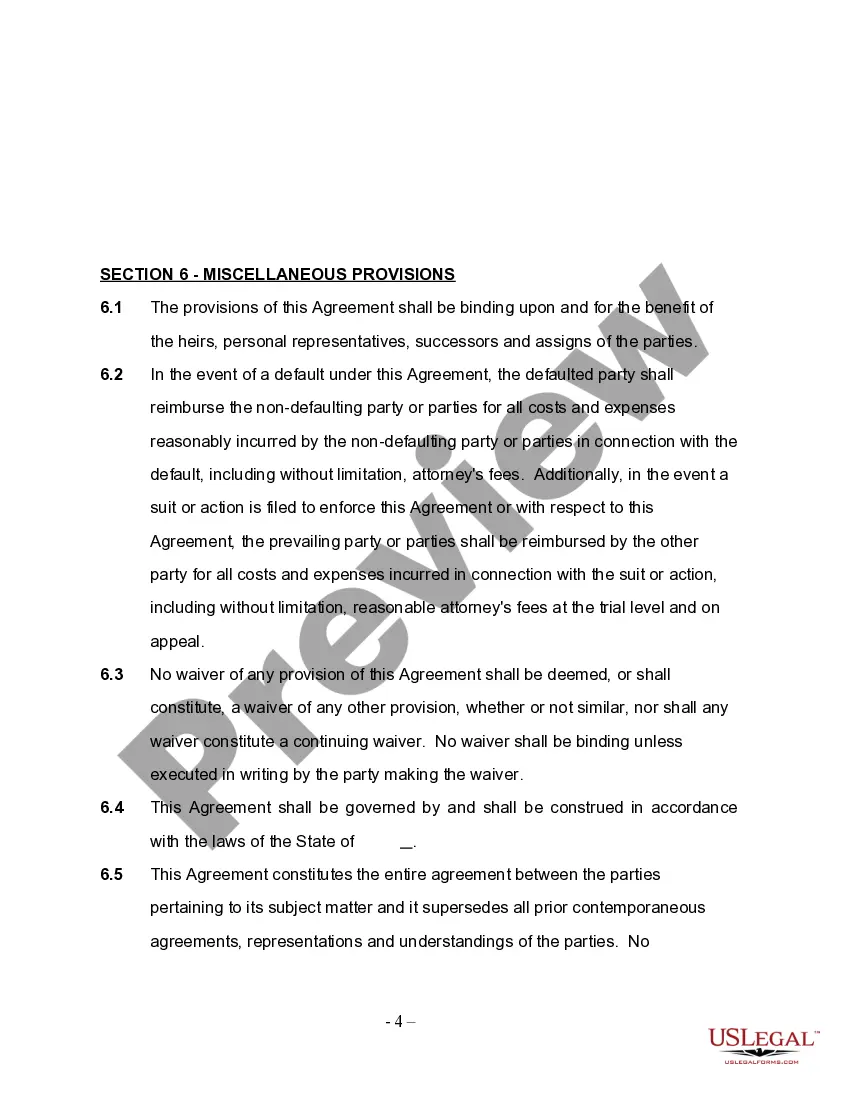
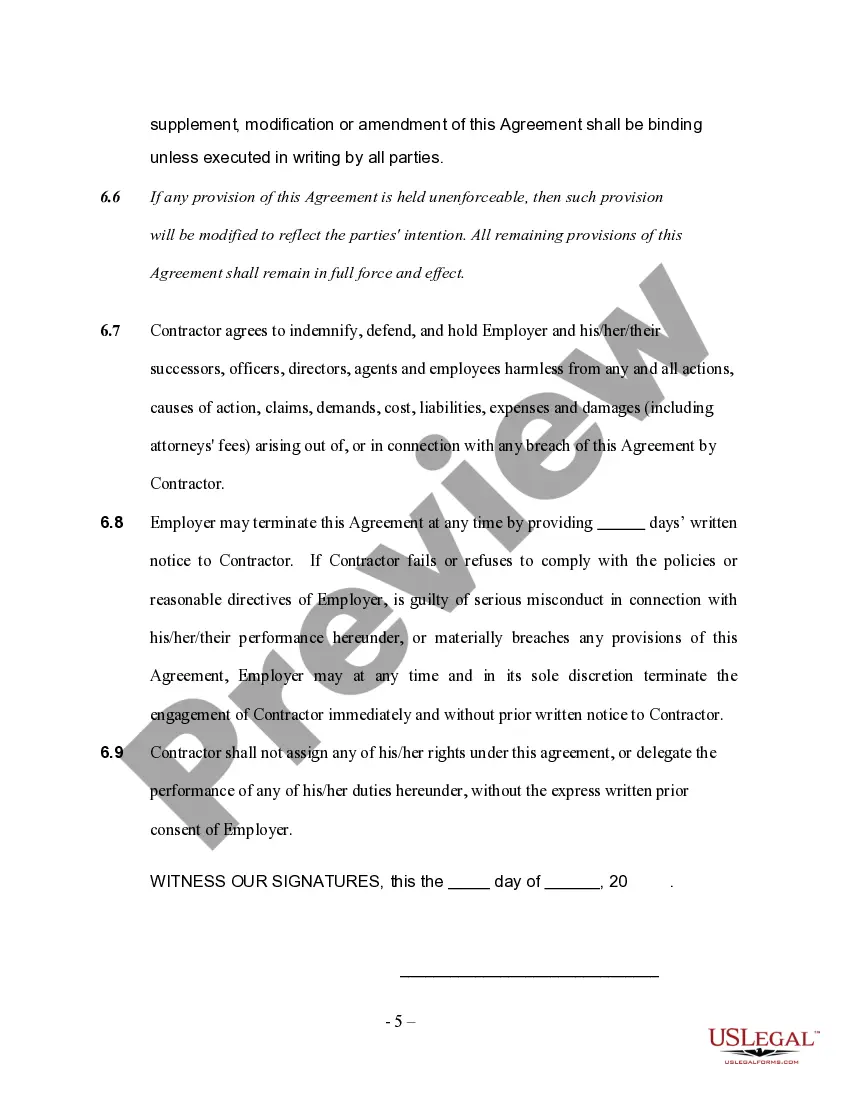
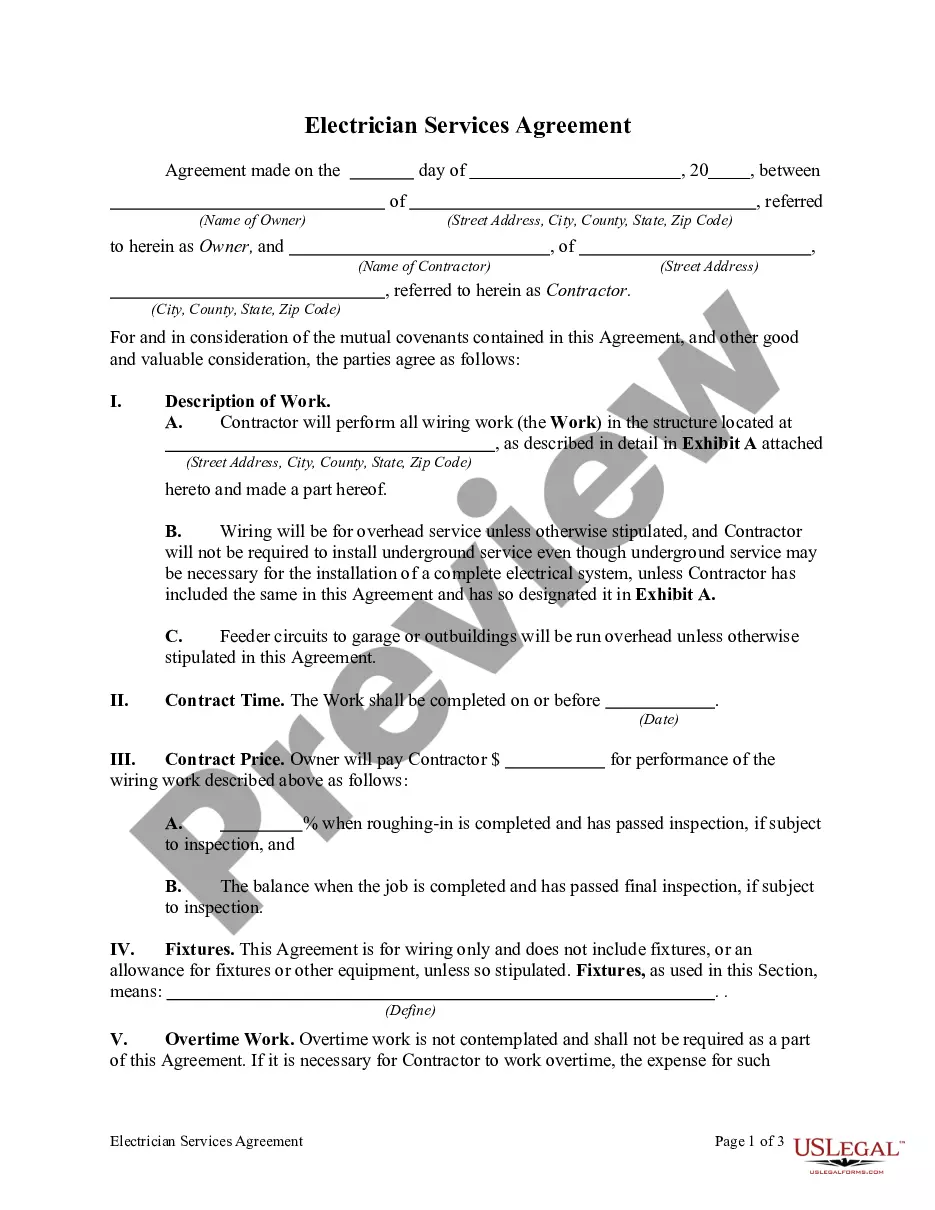
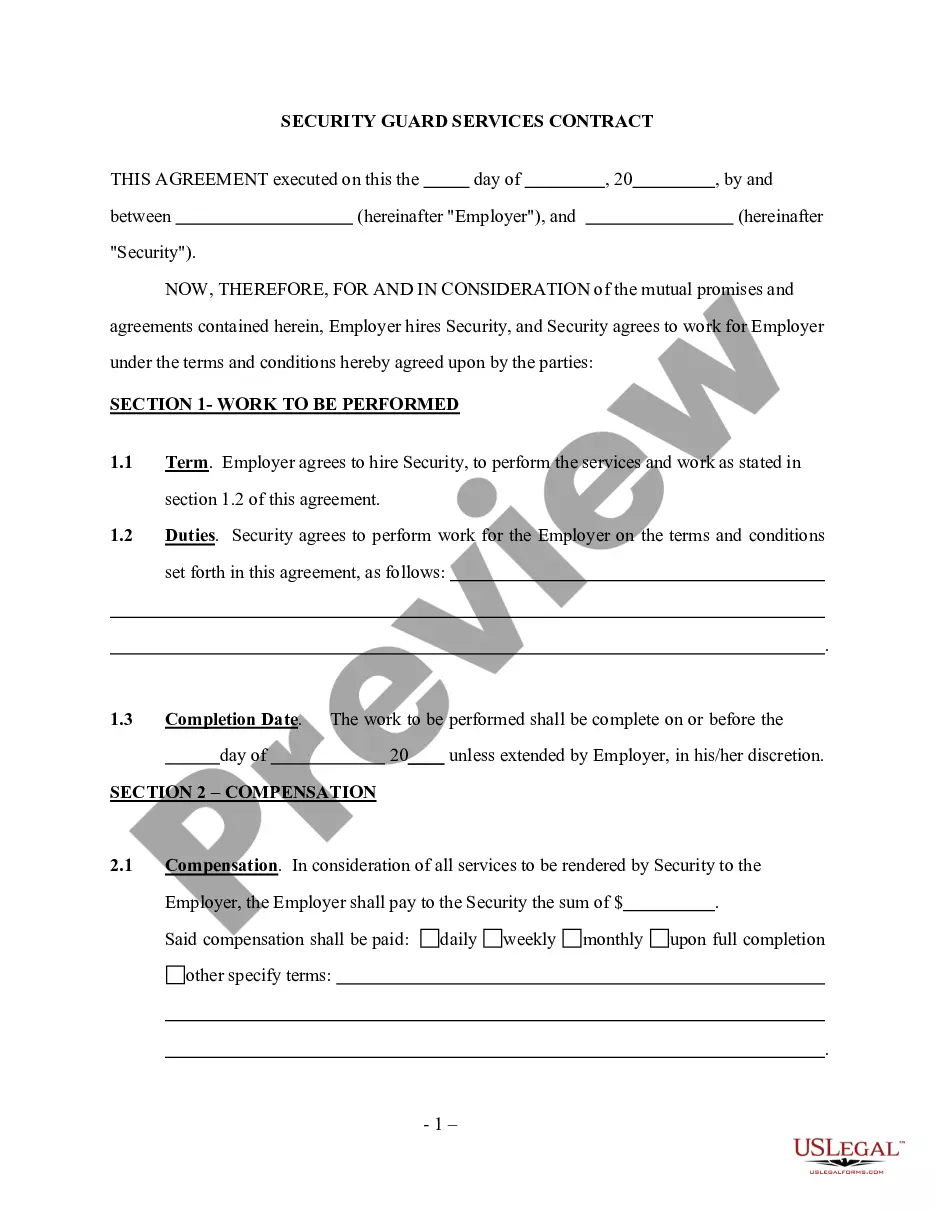
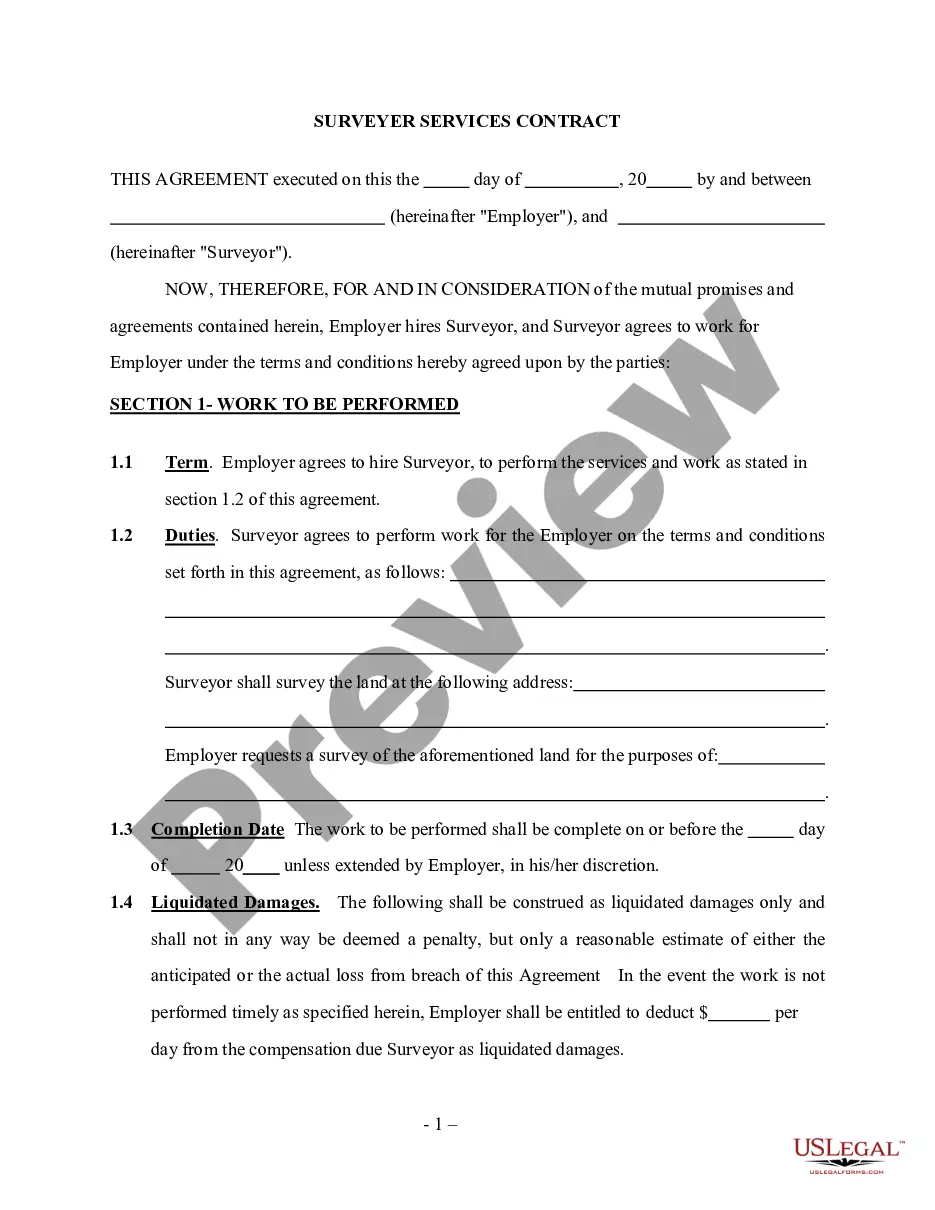
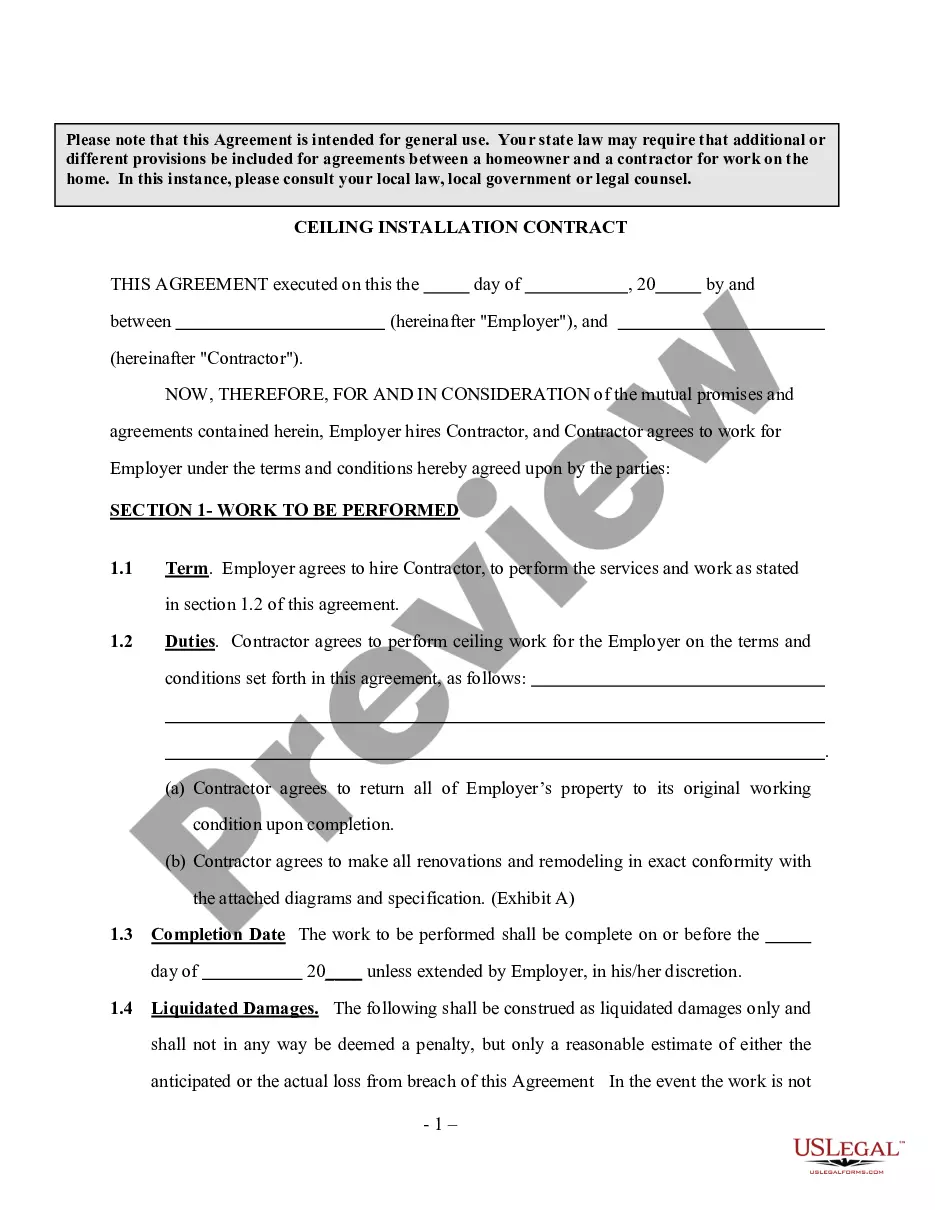
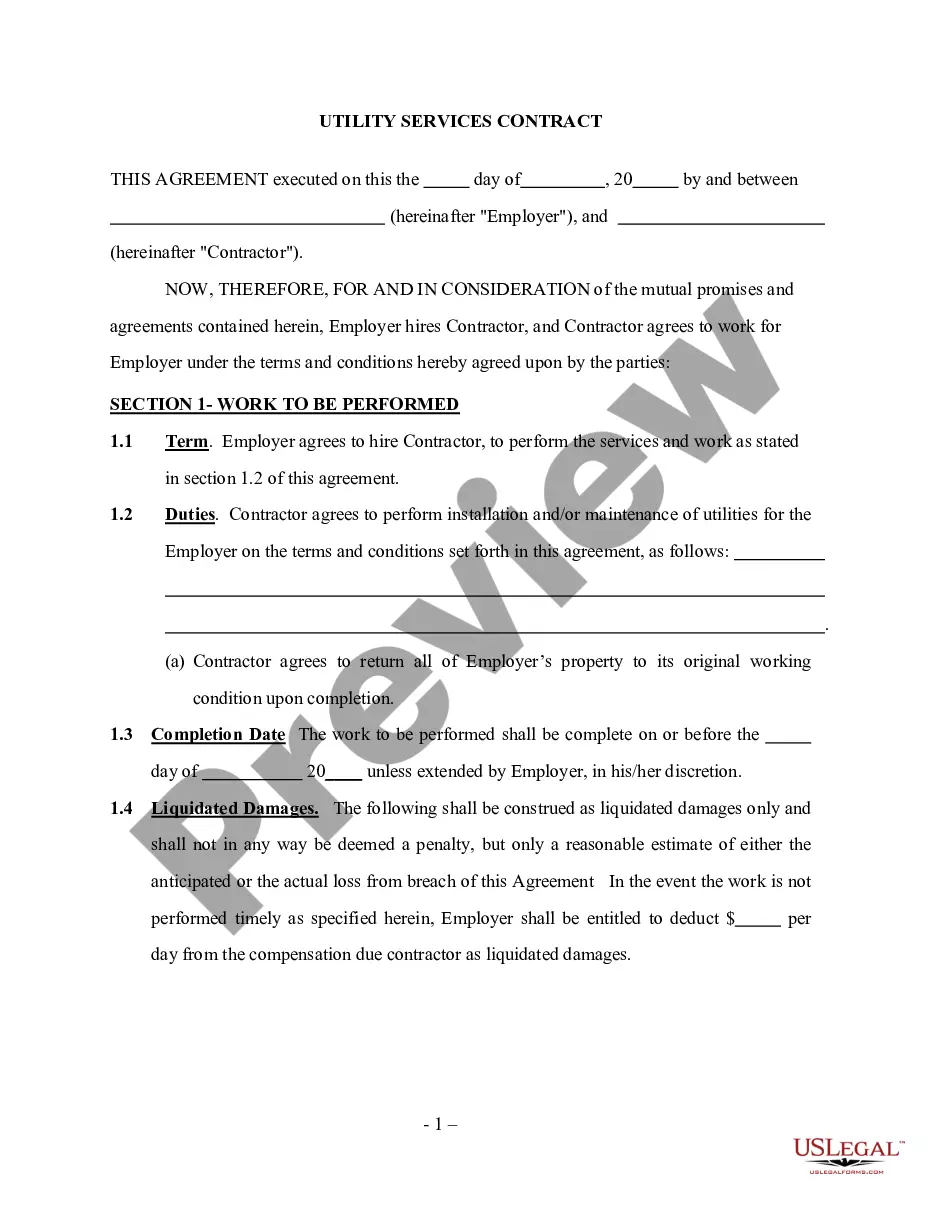
Employer contracts with an independent contractor to install and service an elevator as specified and agreed upon in the contract.
Rhode Island Self-Employed Elevator Services Contract
State:
Multi-State
Control #:
US-INDC-93
Format:
Word;
Rich Text
Instant download
Description
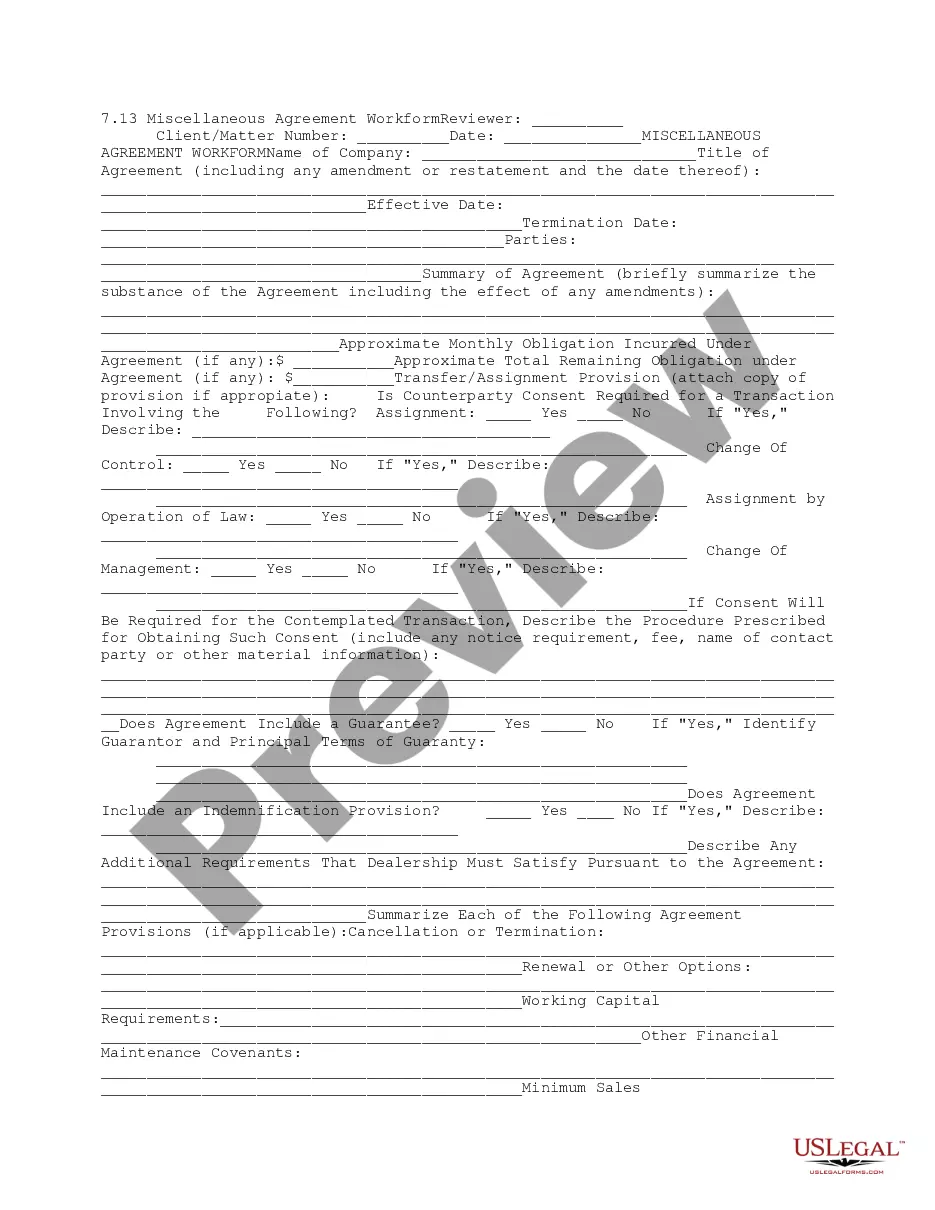
Free preview

Get your form ready online
Our built-in tools help you complete, sign, share, and store your documents in one place.
Built-in online Word editor
Make edits, fill in missing information, and update formatting in US Legal Forms—just like you would in MS Word.
Export easily
Download a copy, print it, send it by email, or mail it via USPS—whatever works best for your next step.
E-sign your document
Sign and collect signatures with our SignNow integration. Send to multiple recipients, set reminders, and more. Go Premium to unlock E-Sign.
Notarize online 24/7
If this form requires notarization, complete it online through a secure video call—no need to meet a notary in person or wait for an appointment.
Store your document securely
We protect your documents and personal data by following strict security and privacy standards.

Make edits, fill in missing information, and update formatting in US Legal Forms—just like you would in MS Word.

Download a copy, print it, send it by email, or mail it via USPS—whatever works best for your next step.

Sign and collect signatures with our SignNow integration. Send to multiple recipients, set reminders, and more. Go Premium to unlock E-Sign.

If this form requires notarization, complete it online through a secure video call—no need to meet a notary in person or wait for an appointment.

We protect your documents and personal data by following strict security and privacy standards.
Looking for another form?

How to fill out Self-Employed Elevator Services Contract?
Are you currently in a position where you need documents for both business or personal reasons almost every day.
There are numerous legal document templates available online, but finding ones you can trust is not easy.
US Legal Forms offers a vast array of form templates, such as the Rhode Island Self-Employed Elevator Services Contract, that are designed to comply with state and federal regulations.
Once you find the right form, click Get now.
Choose the pricing plan you want, complete the required information to create your account, and pay for your order using your PayPal or credit card.
- If you are already familiar with the US Legal Forms website and have an account, simply Log In.
- After that, you can download the Rhode Island Self-Employed Elevator Services Contract template.
- If you do not have an account and wish to start using US Legal Forms, follow these steps.
- Find the form you need and ensure it is for the correct city/region.
- Use the Review button to examine the form.
- Check the summary to confirm you have selected the correct form.
- If the form is not what you are looking for, use the Search field to find the form that meets your needs.
Form popularity
FAQ
In Rhode Island, the mechanics lien law protects contractors, subcontractors, and suppliers who provide labor or materials for construction projects. If you are involved in a Rhode Island Self-Employed Elevator Services Contract and do not receive payment, you can file a mechanics lien against the property to secure your right to payment. This legal tool allows you to claim an interest in the property until you receive what you are owed. For further assistance, consider using US Legal Forms to access templates and resources tailored to Rhode Island's specific requirements.
Yes, independent contractors in Rhode Island must register their business with the state. This registration is important for legal compliance and may include obtaining specific licenses, depending on your services. By ensuring proper registration, you can confidently operate under a Rhode Island Self-Employed Elevator Services Contract and avoid potential legal issues.
In Rhode Island, elevators must be inspected at least once every 12 months to ensure safety and compliance with regulations. Regular inspections are crucial for maintaining the operational integrity of your elevator services. As an independent contractor, adhering to these standards will help you maintain a reliable reputation in your Rhode Island Self-Employed Elevator Services Contract.
Choosing between an LLC and being an independent contractor depends on your business goals. An LLC offers personal liability protection and can provide tax benefits, while an independent contractor operates without the formal structure of an LLC. If you are considering a Rhode Island Self-Employed Elevator Services Contract, think about which structure aligns best with your business needs.
To become an independent contractor in Rhode Island, start by registering your business and obtaining the necessary licenses. It is also important to understand the tax implications of your new status. By using a Rhode Island Self-Employed Elevator Services Contract, you can formalize your agreements and ensure you meet all legal requirements for your elevator services.
To qualify as an independent contractor, you must demonstrate that you operate your own business, provide services to clients, and have control over how you complete your work. In the case of a Rhode Island Self-Employed Elevator Services Contract, this includes maintaining your own tools, setting your schedule, and managing your client relationships. Additionally, you'll need to comply with state laws and regulations.
Yes, Rhode Island requires a contractor license for various construction-related activities, including elevator services. To legally operate as an independent contractor in this field, you must obtain the appropriate licenses, ensuring compliance with state regulations. This is essential for your Rhode Island Self-Employed Elevator Services Contract.
When you act as your own contractor, you are referred to as a self-employed contractor. In the context of a Rhode Island Self-Employed Elevator Services Contract, this means you manage your own projects, make decisions, and handle all aspects of your work without needing to hire an external contractor.