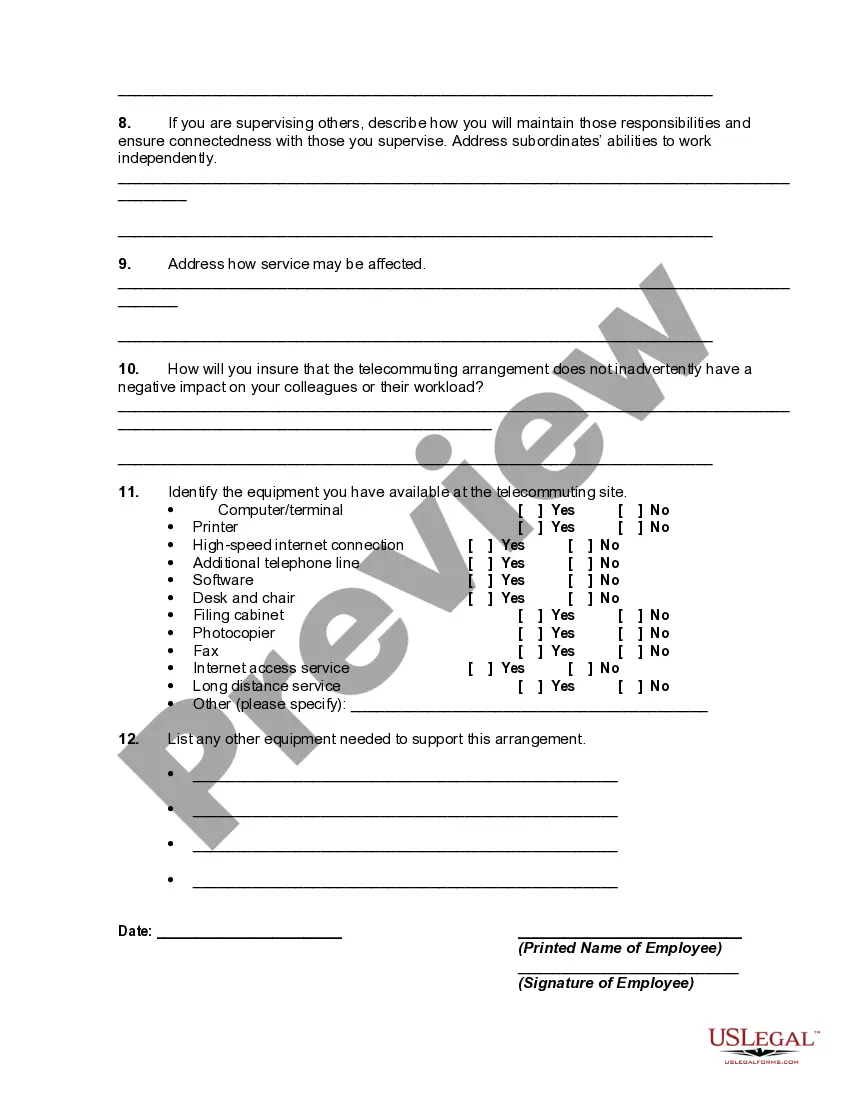
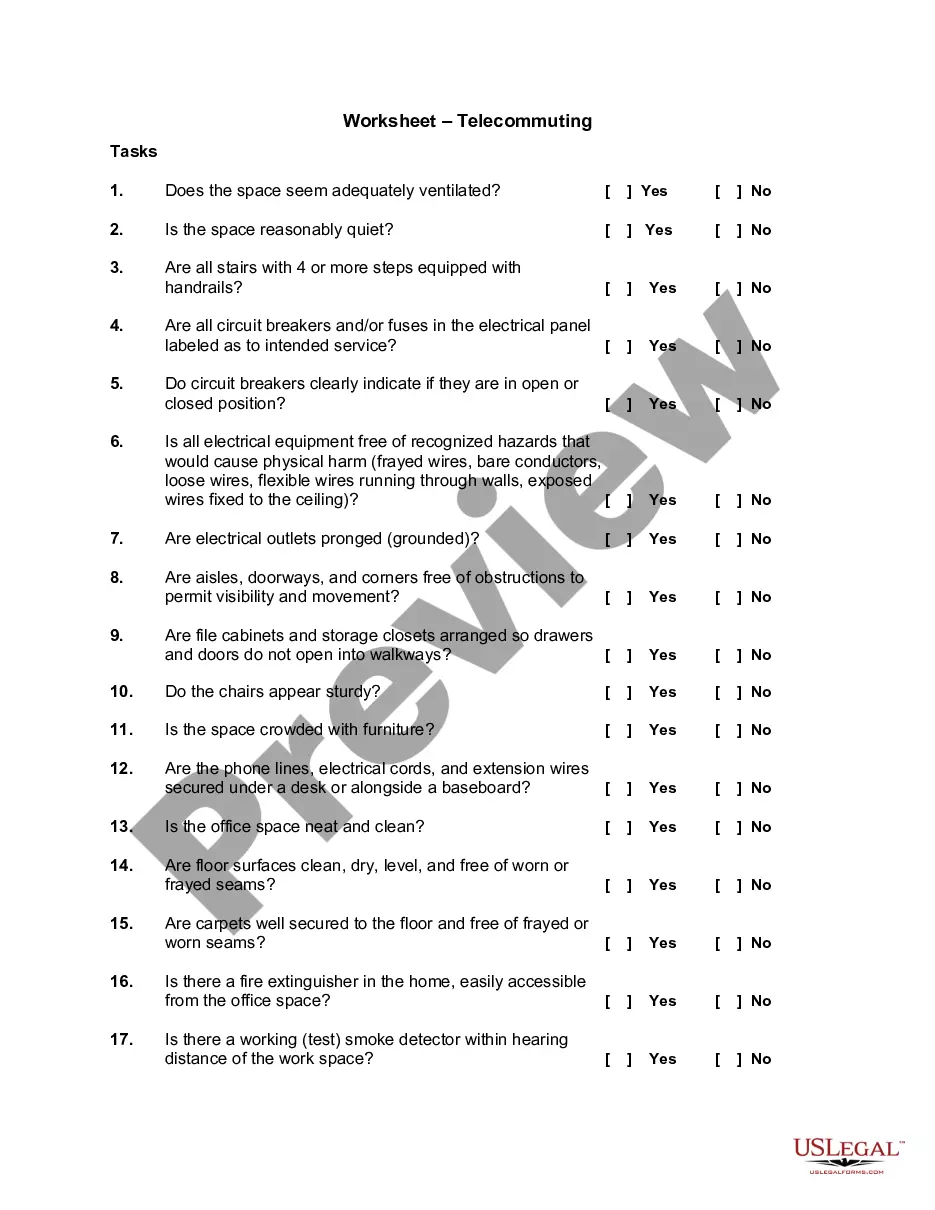
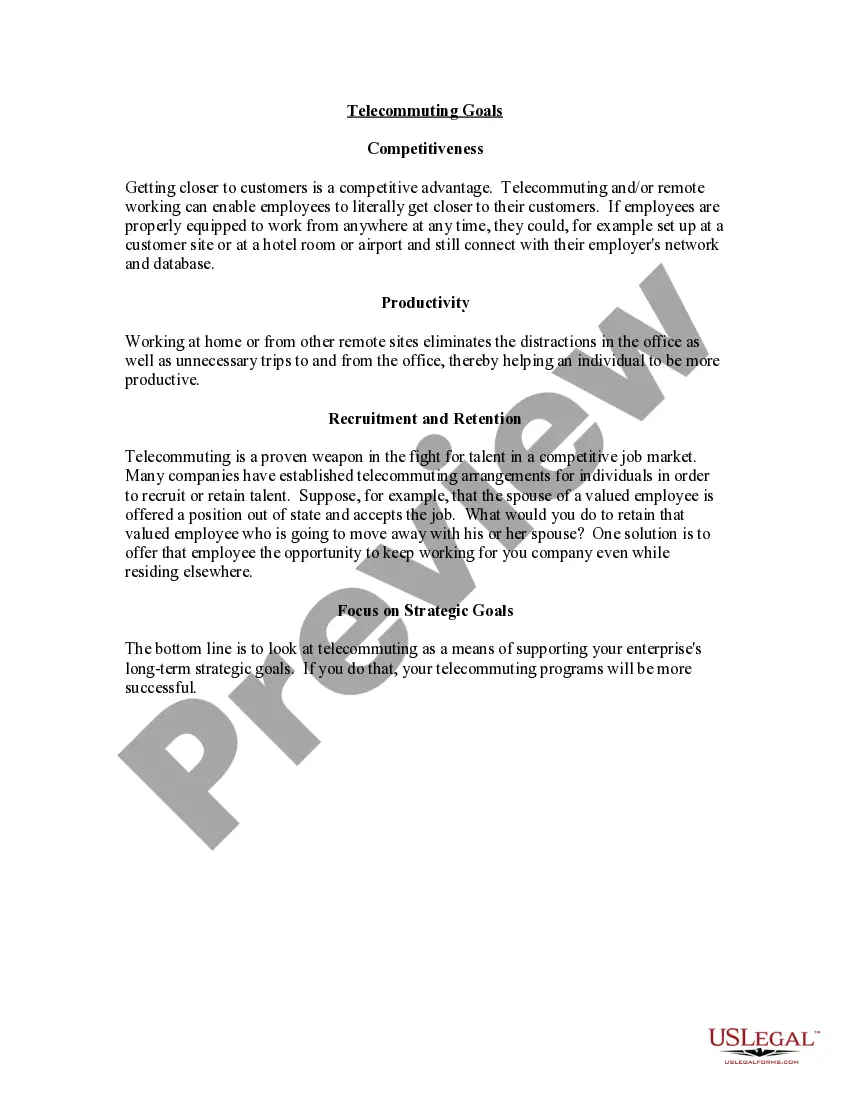
Rhode Island Telecommuting Worksheet
Description

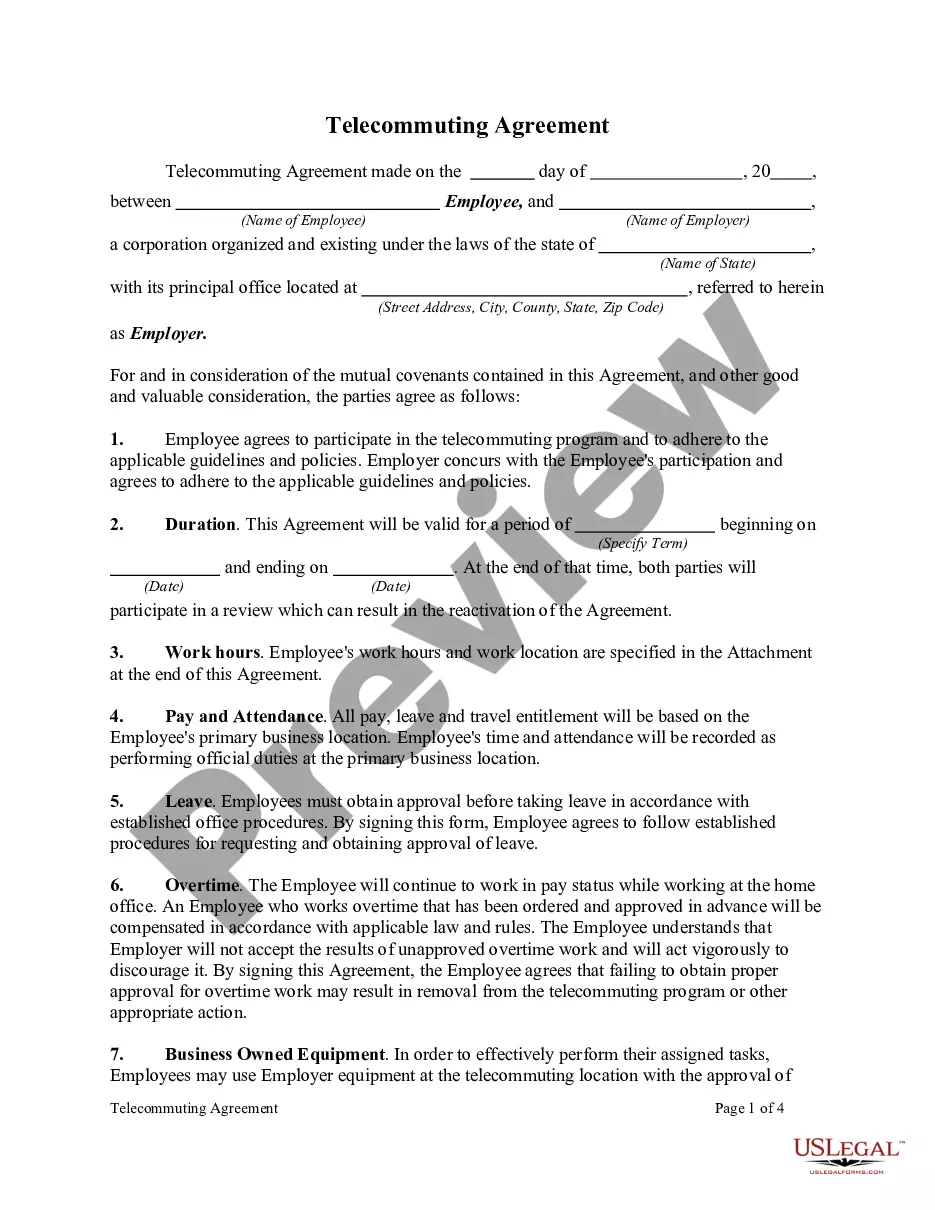
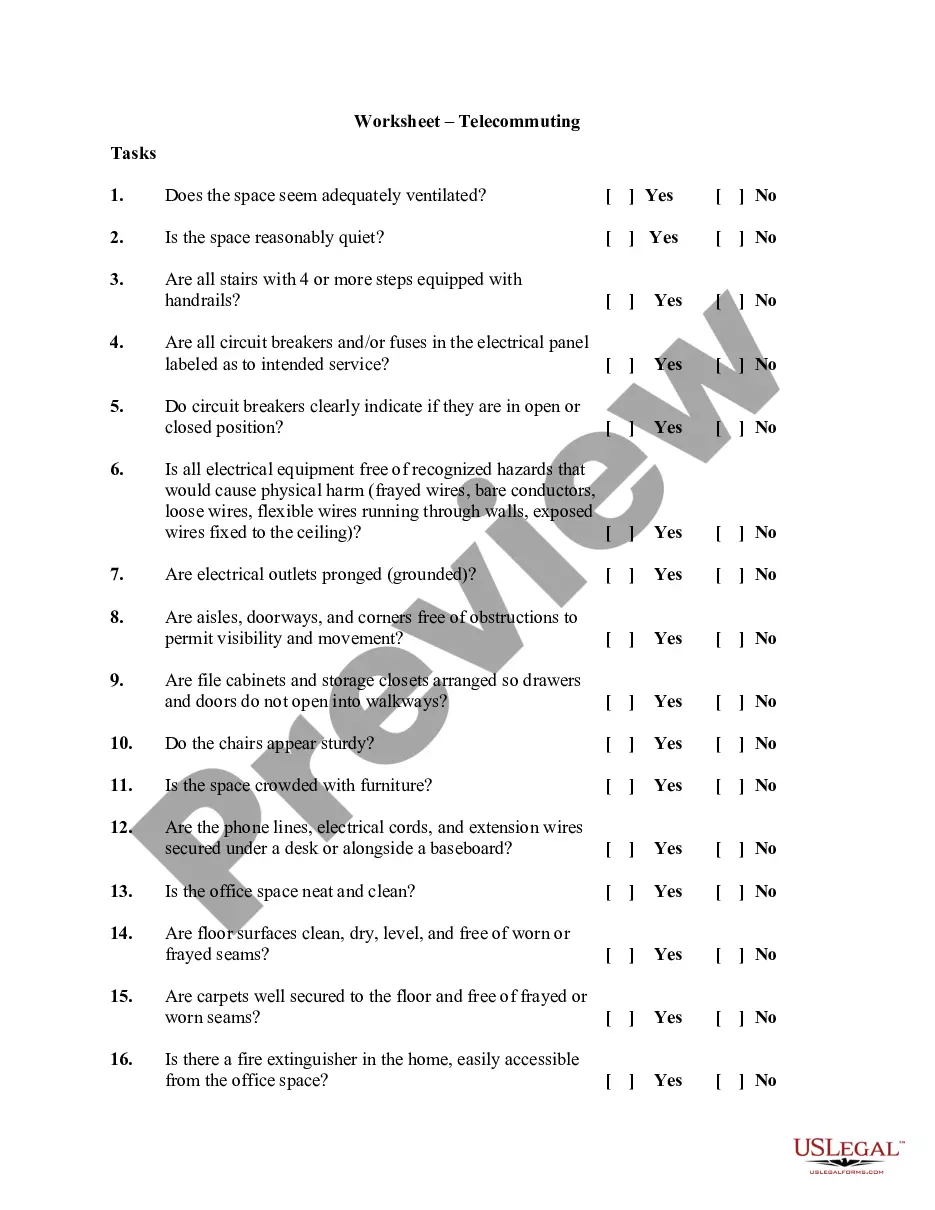

Get your form ready online
Our built-in tools help you complete, sign, share, and store your documents in one place.
Make edits, fill in missing information, and update formatting in US Legal Forms—just like you would in MS Word.
Download a copy, print it, send it by email, or mail it via USPS—whatever works best for your next step.
Sign and collect signatures with our SignNow integration. Send to multiple recipients, set reminders, and more. Go Premium to unlock E-Sign.
If this form requires notarization, complete it online through a secure video call—no need to meet a notary in person or wait for an appointment.
We protect your documents and personal data by following strict security and privacy standards.

Make edits, fill in missing information, and update formatting in US Legal Forms—just like you would in MS Word.

Download a copy, print it, send it by email, or mail it via USPS—whatever works best for your next step.

Sign and collect signatures with our SignNow integration. Send to multiple recipients, set reminders, and more. Go Premium to unlock E-Sign.

If this form requires notarization, complete it online through a secure video call—no need to meet a notary in person or wait for an appointment.

We protect your documents and personal data by following strict security and privacy standards.
Looking for another form?



How to fill out Telecommuting Worksheet?
You have the capability to spend time online searching for the legal document template that meets the state and federal requirements you need.
US Legal Forms offers a multitude of legal forms that have been reviewed by professionals.
You can readily obtain or print the Rhode Island Telecommuting Worksheet from this service.
If available, utilize the Review option to browse through the document template as well.
- If you already possess a US Legal Forms account, you can Log In and click the Download button.
- After that, you can complete, modify, print, or sign the Rhode Island Telecommuting Worksheet.
- Each legal document template you acquire is yours permanently.
- To retrieve another copy of a purchased form, navigate to the My documents section and click the appropriate option.
- If you are accessing the US Legal Forms website for the first time, follow the simple instructions below.
- First, make sure you have selected the correct document template for the county/city you choose.
- Check the form description to confirm you have selected the right form.
Form popularity
FAQ
Yes, you can file your income tax return online with ease. Utilizing tools like the Rhode Island Telecommuting Worksheet on platforms such as USLegalForms can streamline your filing process. Ensure you have all relevant documents ready for a smooth submission.
If your home office is used exclusively and regularly for your self-employment, you may be able to deduct a portion of your home-related expenses, such as mortgage interest, property taxes, homeowners insurance, and utilities.
When you live in one state and work in another, the state where you work usually gets to tax you and will withhold the appropriate amount from your paycheck each week. In this situation, you will have to pay out of state taxes. At the end of the year, you will file two returns.
Additionally, Rhode Island, Massachusetts, and Connecticut will not require employers located outside of their state to withhold additional income taxes. Employees living in one state and working in another will not be required to additional home state withholdings while working remotely.
A necessary expense is anything required for the performance of an employees' job. This depends on the work performed, but reasonable reimbursable expenses will likely include: internet services, mobile data usage, laptop computers or tablets, and equipment such as copiers and printers.
They may work remotely on a temporary basis, such as while traveling, or they might be a permanent remote worker. Telecommuting, also called telework, can mean that the employee might be working on-site some of the time. However, they also might never come into the office.
If you're among the employed Americans who were allowed to work remotely during the pandemic last year, count your blessings. But if you worked from a state other than the one where your employer is based, you may have to pay up for that privilege come tax time.
Eligible telework expenses means expenses incurred during the taxable year pursuant to a telework agreement, in an amount up to $1,200 for each participating employee, that enable a participating employee to begin to telework, which expenses are not otherwise the subject of a deduction from income claimed by the
Work from home (WFH) tax deductions are business expenses that can be subtracted from revenue, which can help you lower your tax bill. But these deductions almost exclusively apply to those who own their own businesses or have some sort of self-employment income, such as freelancers and gig workers.
In general, if you're working remotely you'll only have to file and pay income taxes in the state where you live. However, in some cases, you may be required to file tax returns in two different states. This depends on your particular situation, the company you work for, and the tax laws of the states involved.