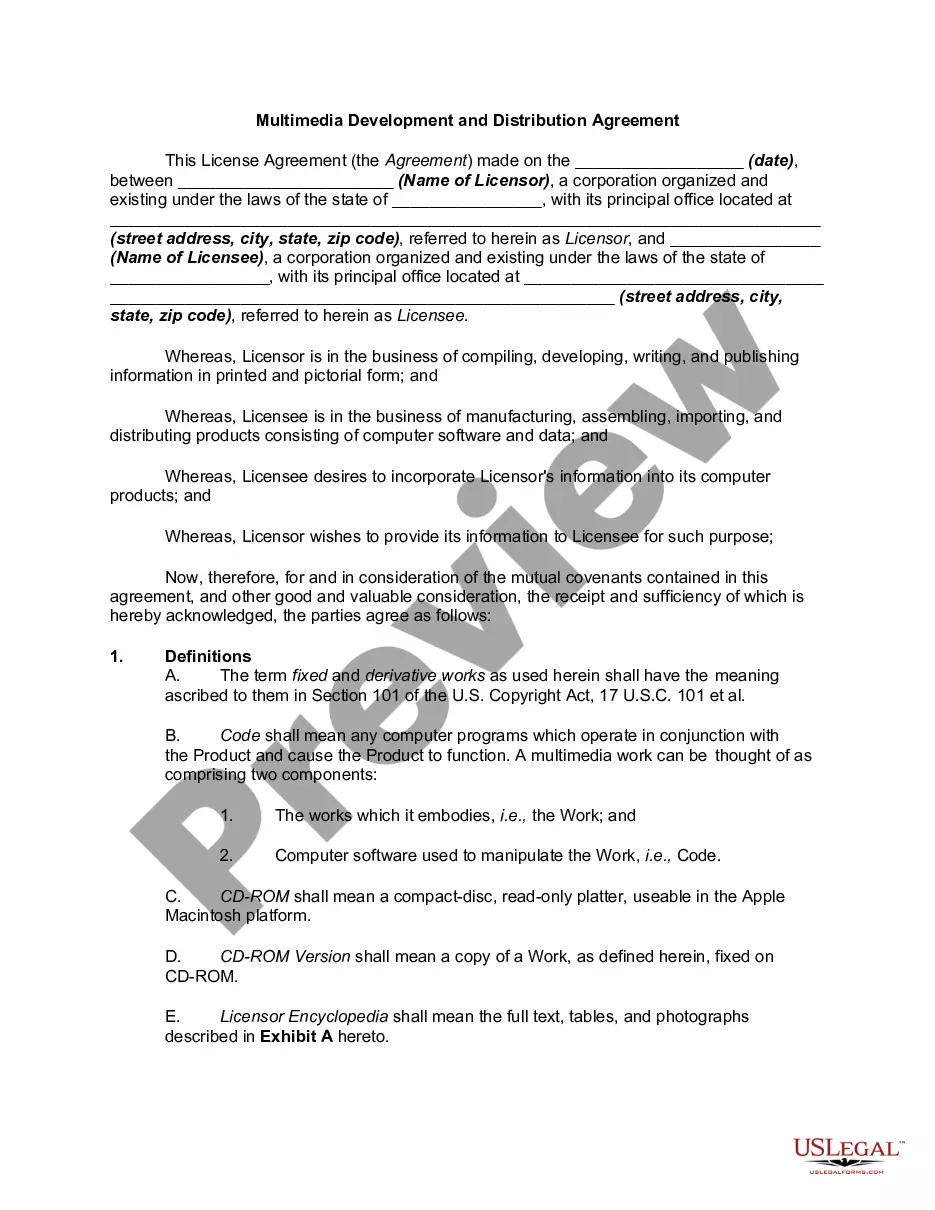
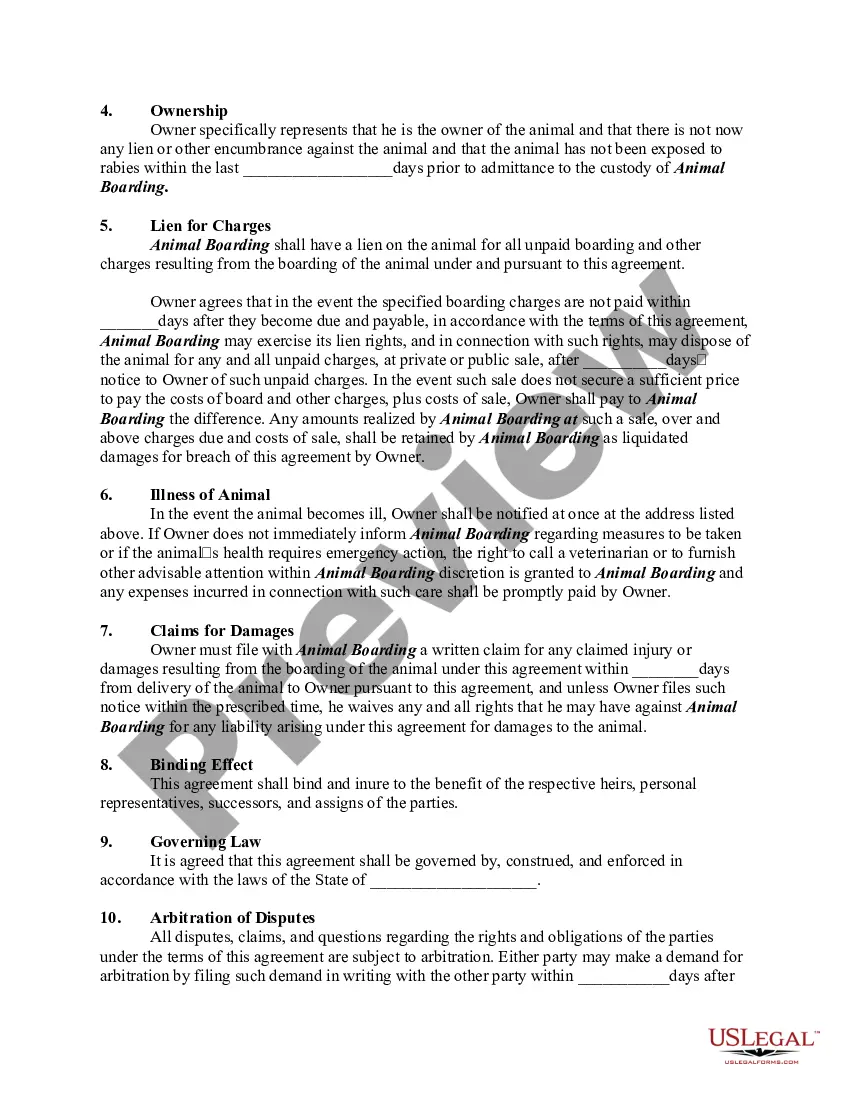
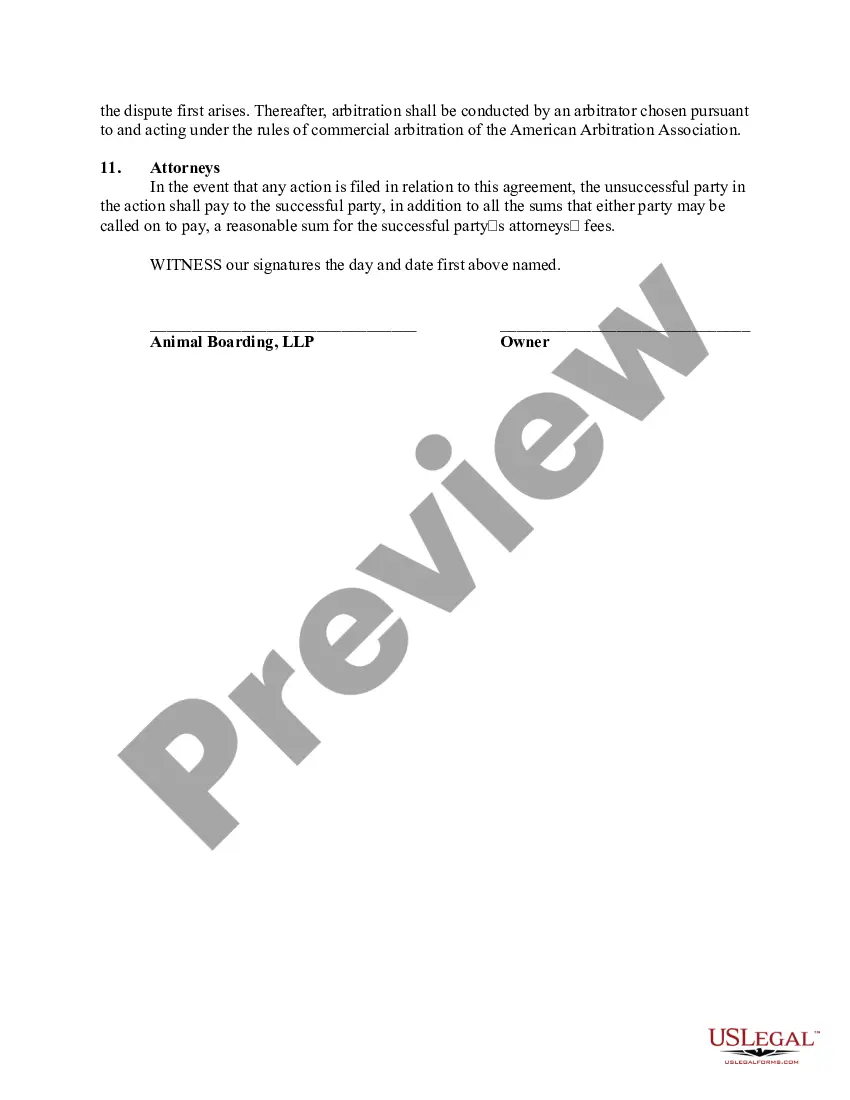
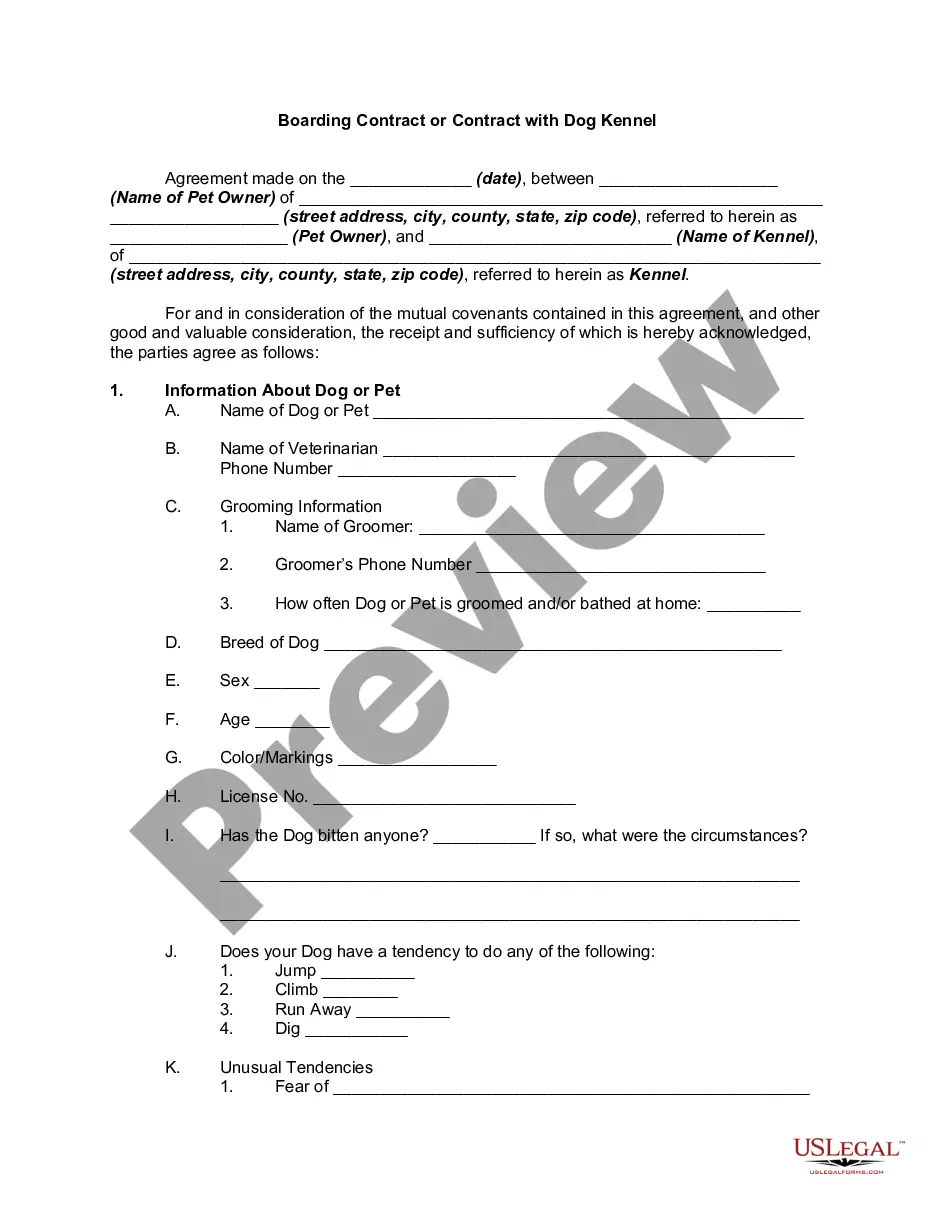
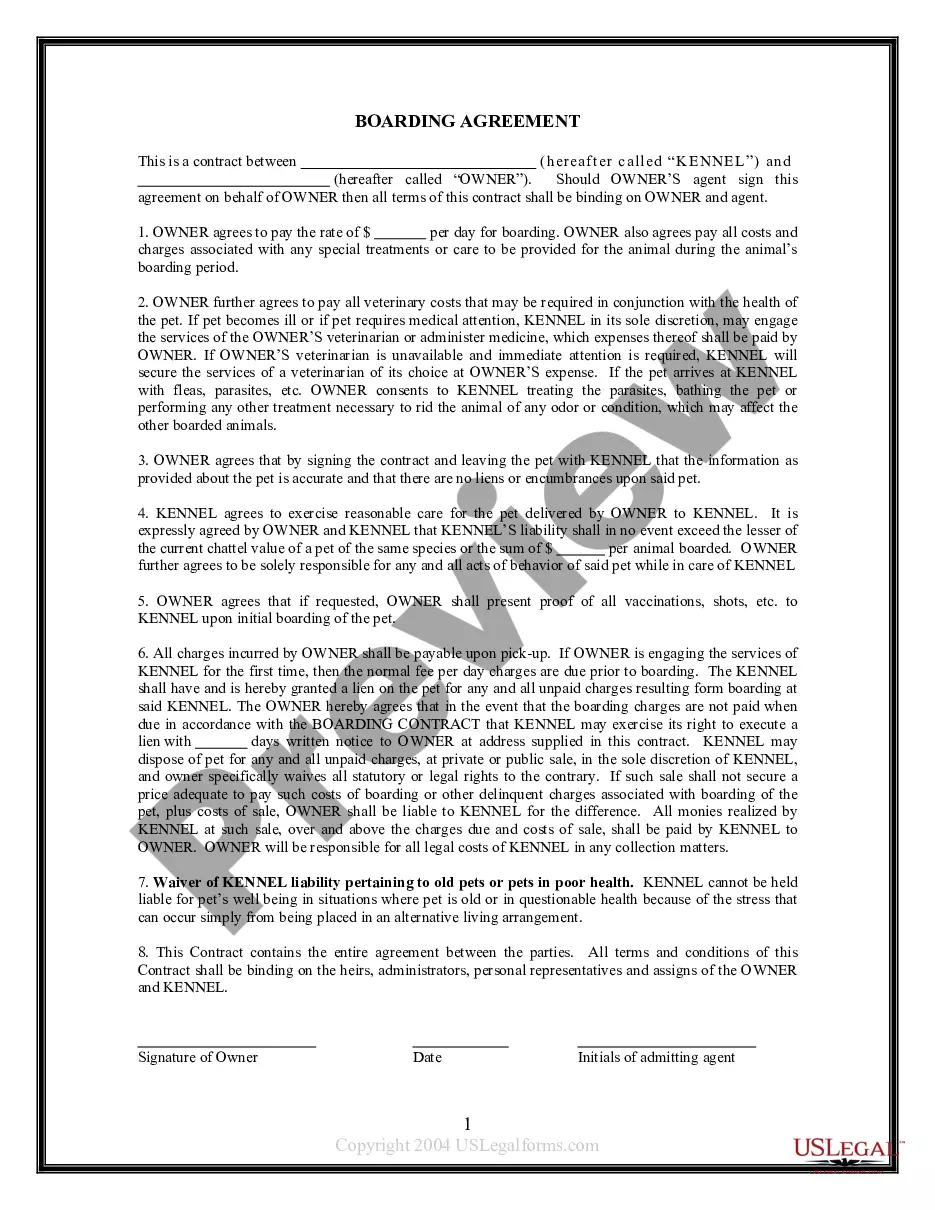
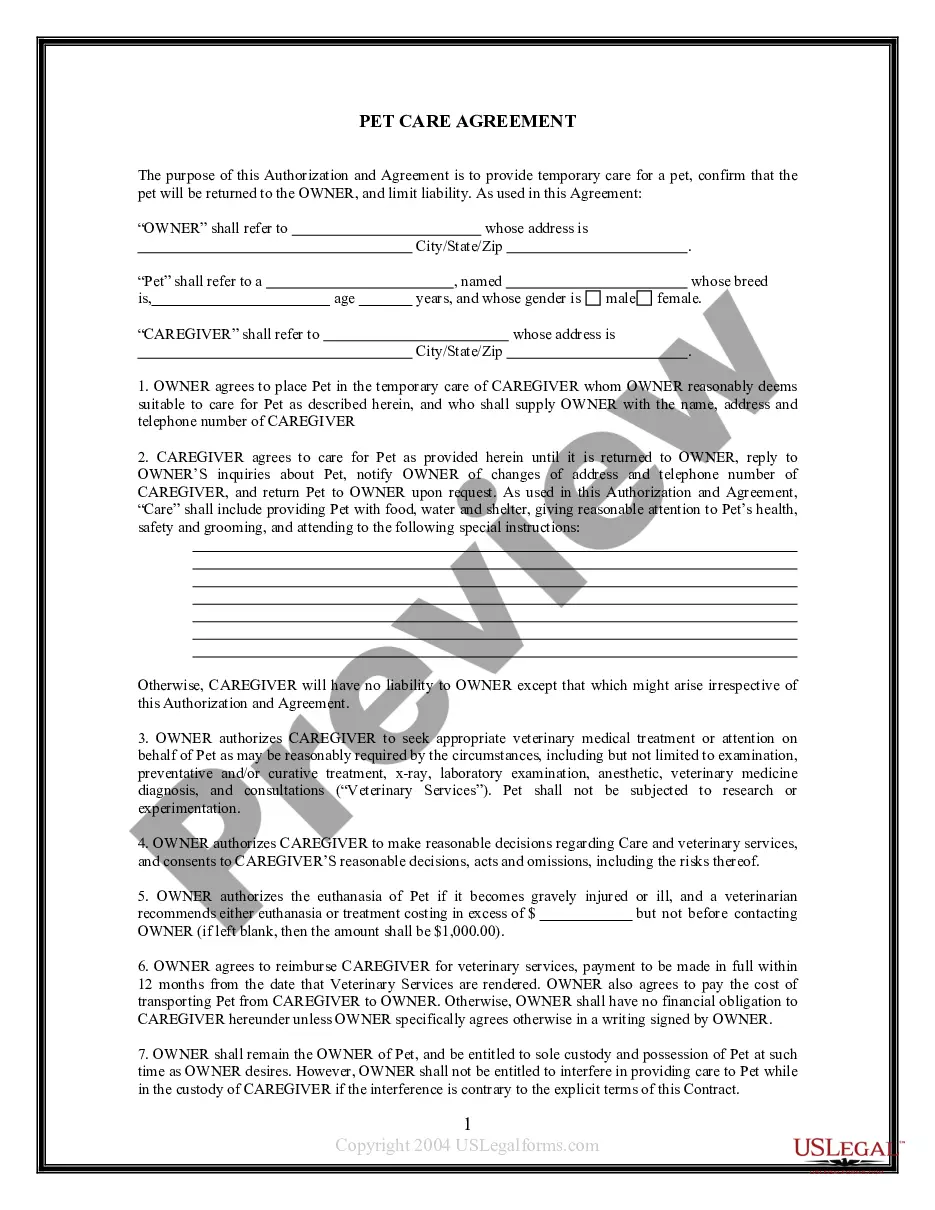
Rhode Island Agreement to Board Animals - Boarding
Description
Get your form ready online
Our built-in tools help you complete, sign, share, and store your documents in one place.
Make edits, fill in missing information, and update formatting in US Legal Forms—just like you would in MS Word.
Download a copy, print it, send it by email, or mail it via USPS—whatever works best for your next step.
Sign and collect signatures with our SignNow integration. Send to multiple recipients, set reminders, and more. Go Premium to unlock E-Sign.
If this form requires notarization, complete it online through a secure video call—no need to meet a notary in person or wait for an appointment.
We protect your documents and personal data by following strict security and privacy standards.

Make edits, fill in missing information, and update formatting in US Legal Forms—just like you would in MS Word.

Download a copy, print it, send it by email, or mail it via USPS—whatever works best for your next step.

Sign and collect signatures with our SignNow integration. Send to multiple recipients, set reminders, and more. Go Premium to unlock E-Sign.

If this form requires notarization, complete it online through a secure video call—no need to meet a notary in person or wait for an appointment.

We protect your documents and personal data by following strict security and privacy standards.
Looking for another form?
How to fill out Agreement To Board Animals - Boarding?
Finding the appropriate legal document template can be a challenge.
Certainly, there are many templates available online, but how do you locate the legal form you require.
Utilize the US Legal Forms website. This service offers an extensive collection of templates, including the Rhode Island Agreement to Board Animals - Boarding, suitable for both business and personal needs.
You can view the form using the Preview button and read the form description to confirm it is right for you.
- All documents are verified by experts and comply with federal and state regulations.
- If you are already a registered user, Log In to your account and click the Download button to get the Rhode Island Agreement to Board Animals - Boarding.
- Use your account to browse the legal forms you have previously purchased.
- Access the My documents tab of your account and obtain another copy of the documents you need.
- If you are a new user of US Legal Forms, here are simple steps for you to follow.
- First, ensure you have selected the correct form for your city/area.
Form popularity
FAQ
Starting a pet boarding business requires a clear business plan, suitable facilities, and essential permits. Familiarize yourself with the Rhode Island Agreement to Board Animals - Boarding, which outlines the legal requirements for boarding pets. Additionally, you will need insurance, a marketing strategy, and a strong commitment to the care and safety of the animals. By following these steps, you can build a solid foundation for your business.
Pet boarding can be a profitable venture if approached strategically. The demand for quality boarding services continues to rise, especially as more people consider their pets as family members. By utilizing a Rhode Island Agreement to Board Animals - Boarding, you can ensure that your business complies with local laws and builds trust with clients. Proper marketing and excellent customer service are also key factors in driving profitability.
In Rhode Island, the number of dogs you can own often depends on local regulations, but generally, there is no statewide limit on the number of dogs you can have. However, if you plan to board animals using the Rhode Island Agreement to Board Animals - Boarding, you should check with your local law to ensure compliance. Many municipalities have their own regulations regarding pet ownership, so it’s wise to verify before adding to your furry family.
Yes, South Carolina requires dog licenses for pet ownership, which typically helps local governments track vaccinations and protect public health. While this is specific to South Carolina, understanding similar regulations is important if you're considering a Rhode Island Agreement to Board Animals - Boarding. Familiarizing yourself with regional laws will help your boarding business operate smoothly.
Yes, boarding dogs in your home usually requires a license, depending on local regulations in Rhode Island. This requirement helps ensure that animals receive proper care and safety during their stay. Implementing a Rhode Island Agreement to Board Animals - Boarding can clarify the responsibilities and expectations for both you and the pet owner.
In Rhode Island, boarding dogs typically requires obtaining a kennel license or a boarding license that complies with local regulations. It's advisable to check with your local animal control or governing agency for specifics. Drafting a Rhode Island Agreement to Board Animals - Boarding will help you ensure compliance while establishing clear expectations with pet owners.
Starting a dog boarding business requires a business plan, a suitable location, and compliance with local regulations. Additionally, a Rhode Island Agreement to Board Animals - Boarding is essential for outlining the terms of service and responsibilities. Lastly, ensure you have the right supplies and staff training to provide excellent care.
Starting an animal boarding facility involves several steps, including acquiring necessary permits, creating a facility that meets health and safety standards, and drafting a Rhode Island Agreement to Board Animals - Boarding. This agreement will protect your interests and inform pet owners about their responsibilities while their animals are in your care.
To set up a small animal boarding business, you will need to develop a business plan, secure the necessary licenses, and find an appropriate location. Additionally, obtaining a Rhode Island Agreement to Board Animals - Boarding can clarify your legal responsibilities. You should also consider how you will market your services to attract clients.
Rhode Island animal law encompasses the regulations governing the treatment and care of animals, including those related to boarding facilities. Key aspects include ensuring humane treatment, maintaining health standards, and following licensing requirements. Understanding the Rhode Island Agreement to Board Animals - Boarding will help you comply with these laws while protecting both your pet and your business.