Rhode Island Affidavit and Memorandum of Trust
About this form
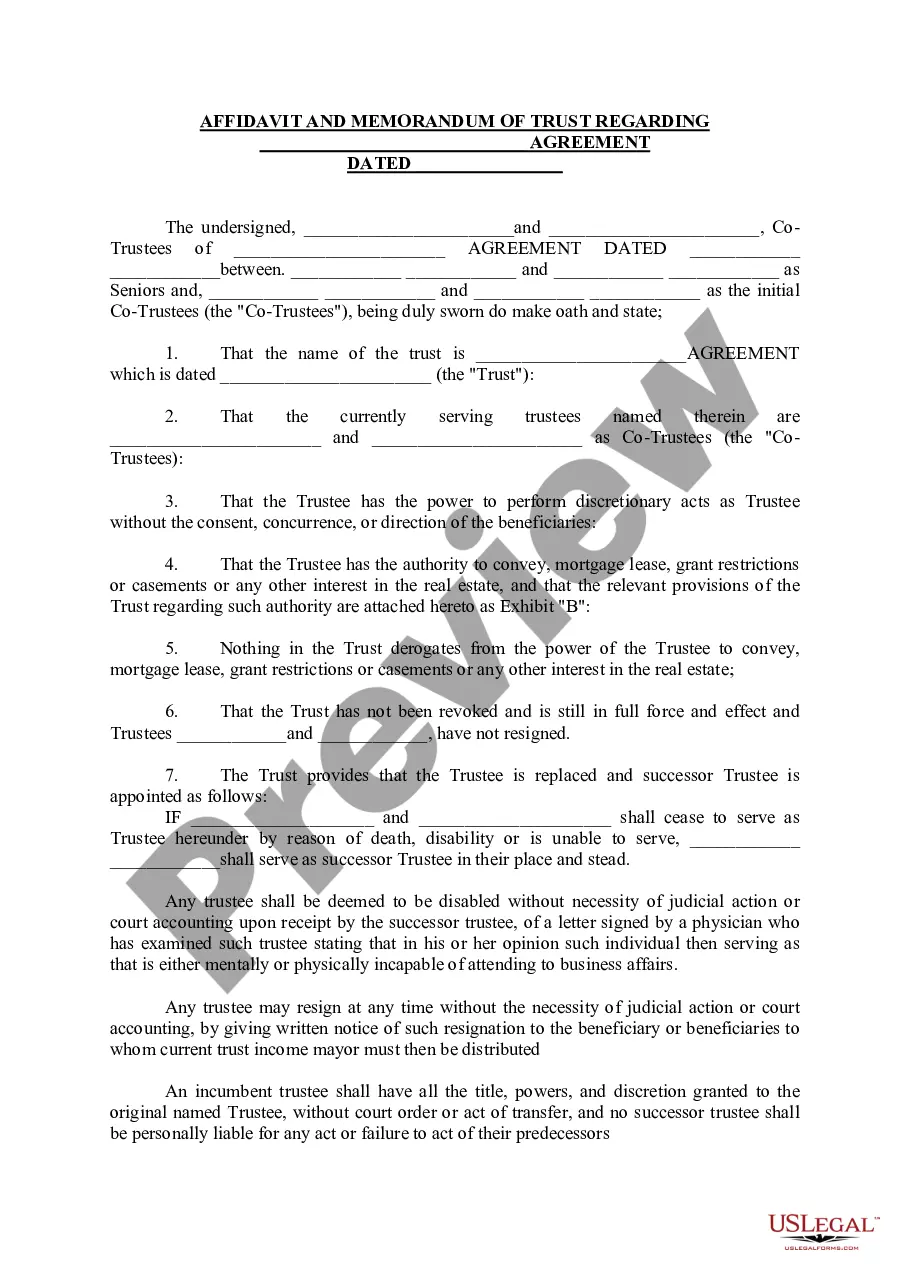
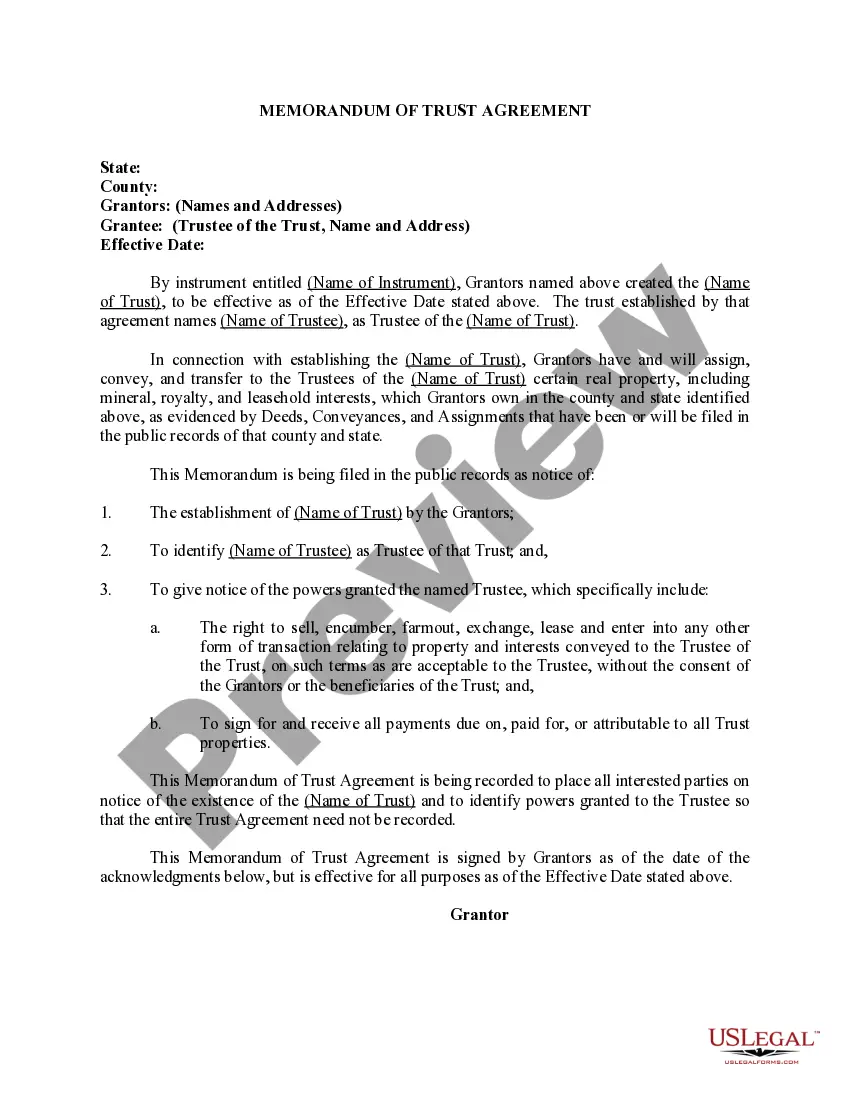
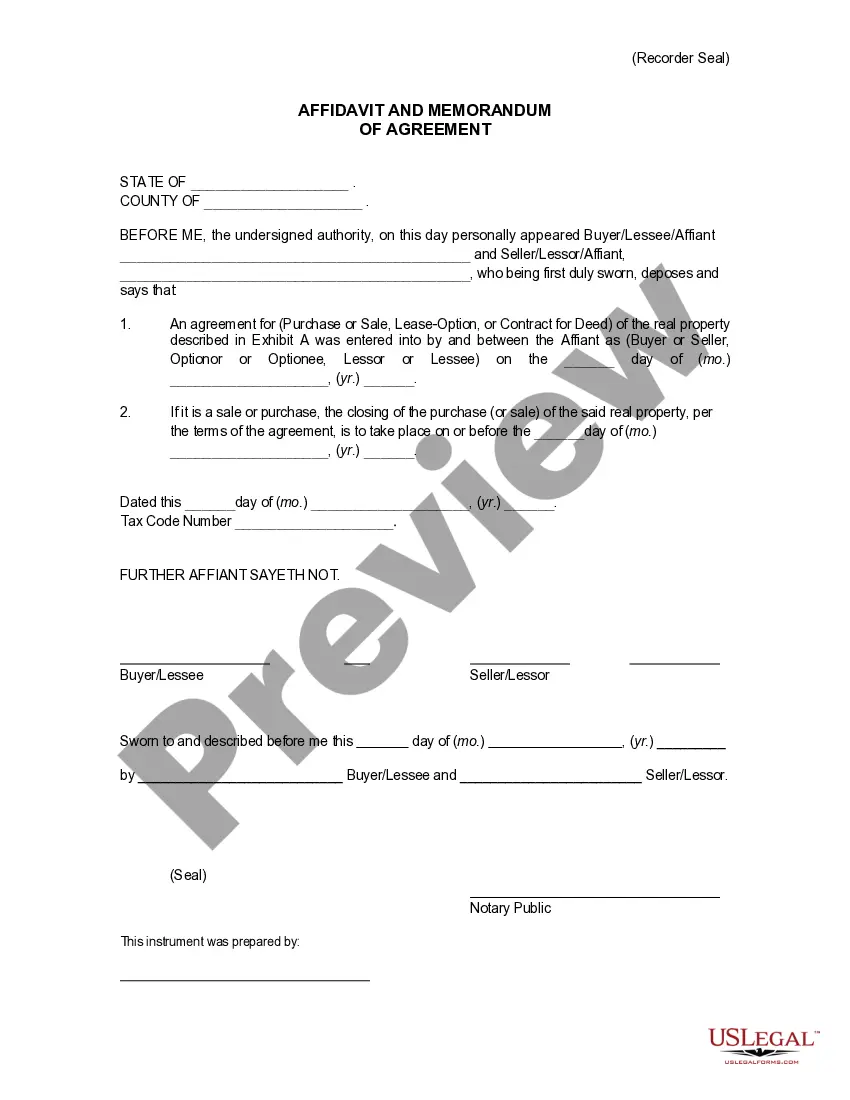
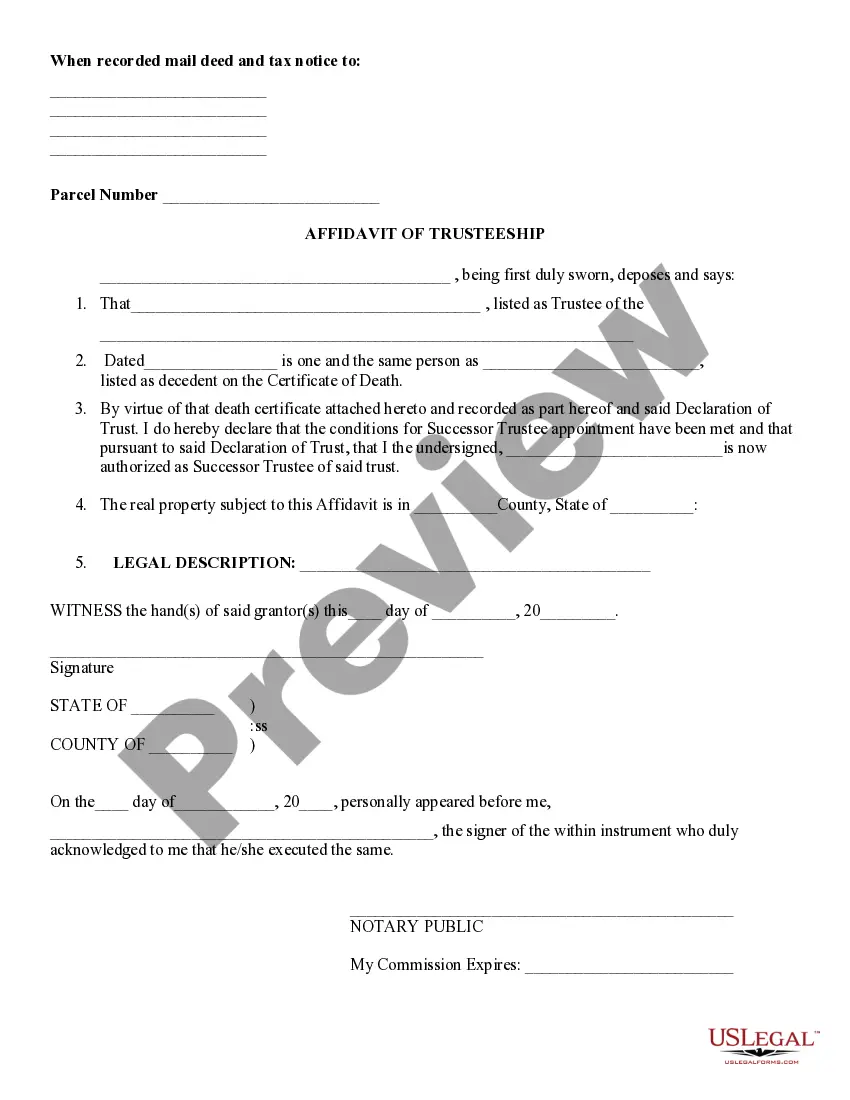
The Affidavit and Memorandum of Trust is a legal document that formalizes the appointment of a successor trustee within a trust. It allows a trustee to ensure continuity in the management of the trust even in the event of their incapacity, resignation, or death. This form provides a clear statement of the trustâs status, the powers of the trustee, and the process for appointing a successor, differing from other trust-related forms which may not include such formal succession provisions.
What’s included in this form
- Identification of the trust and the parties involved.
- Clarification of the trustees' powers and duties.
- Process for appointing a successor trustee.
- Conditions under which a trustee can be deemed disabled.
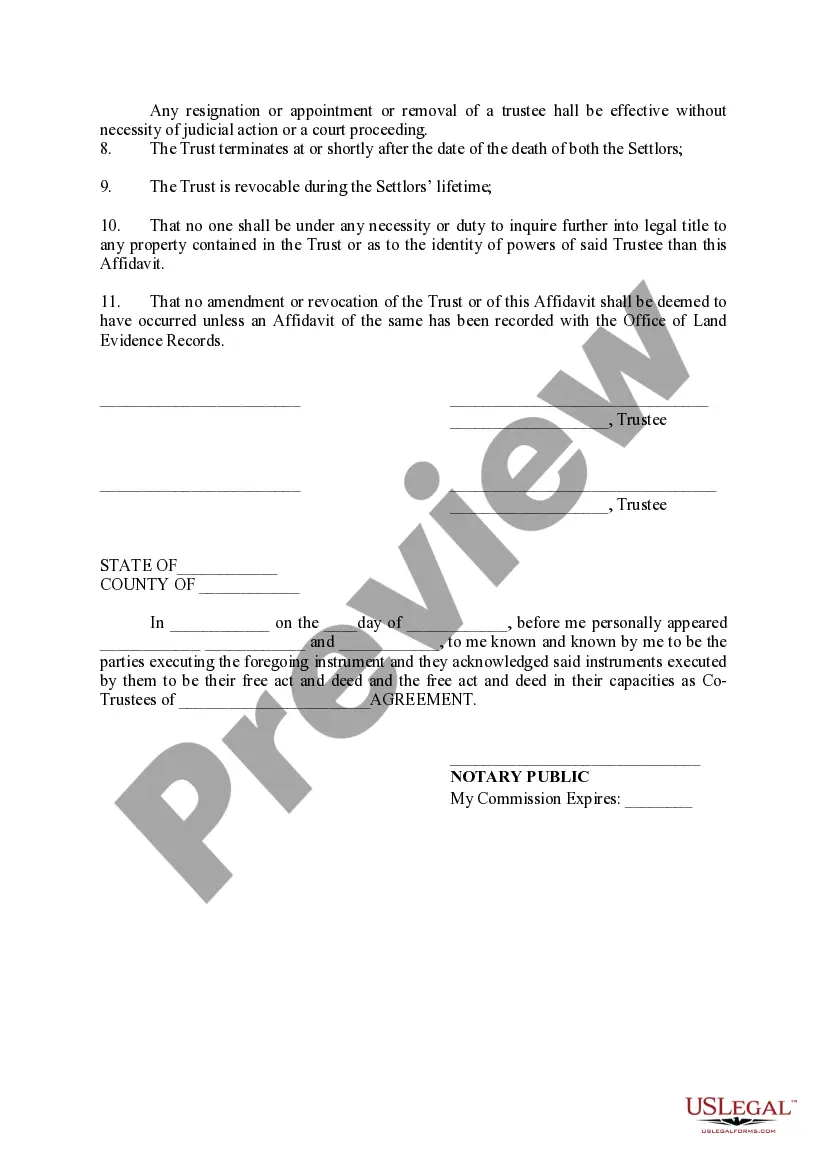
- Statement on the revocability and termination of the trust.
- Notarization requirement to validate the affidavit.
When to use this form
This form is used when a trustor wants to designate a successor trustee for a trust they have established. It is particularly important if the current trustee may become incapacitated or if there is a possibility of their resignation. Utilizing this form ensures that trust management continues smoothly, preventing potential legal issues in the future.
Intended users of this form
- Trustors who are establishing a trust and wish to outline the succession of trustees.
- Current trustees who want to ensure their successor is appointed in advance.
- Beneficiaries of a trust who need to understand who will manage the trust after the current trustee.
- Legal professionals assisting clients with trust management issues.
Instructions for completing this form
- Identify the name and date of the trust agreement.
- List the names of the currently serving co-trustees.
- Specify the mechanisms by which a successor trustee is appointed.
- Include any conditions for a trustee's disability and resignation.
- Sign the affidavit in front of a notary public to ensure its legal validity.
Does this form need to be notarized?
Yes, this form must be notarized to be legally valid. Notarization helps verify the identities of those involved and ensures that the document carries legal weight. US Legal Forms offers integrated online notarization services for your convenience, allowing you to complete the process securely and efficiently from anywhere.
Get your form ready online
Our built-in tools help you complete, sign, share, and store your documents in one place.
Make edits, fill in missing information, and update formatting in US Legal Forms—just like you would in MS Word.
Download a copy, print it, send it by email, or mail it via USPS—whatever works best for your next step.
Sign and collect signatures with our SignNow integration. Send to multiple recipients, set reminders, and more. Go Premium to unlock E-Sign.
If this form requires notarization, complete it online through a secure video call—no need to meet a notary in person or wait for an appointment.
We protect your documents and personal data by following strict security and privacy standards.

Make edits, fill in missing information, and update formatting in US Legal Forms—just like you would in MS Word.

Download a copy, print it, send it by email, or mail it via USPS—whatever works best for your next step.

Sign and collect signatures with our SignNow integration. Send to multiple recipients, set reminders, and more. Go Premium to unlock E-Sign.

If this form requires notarization, complete it online through a secure video call—no need to meet a notary in person or wait for an appointment.

We protect your documents and personal data by following strict security and privacy standards.
Avoid these common issues
- Failing to properly identify the trust and trustees involved.
- Not specifying the successor trusteeâs appointment process clearly.
- Neglecting to have the affidavit notarized, if required.
- Using outdated forms that do not comply with current state laws.
Advantages of online completion
- Immediate access to professionally drafted legal documents.
- Easy modifications according to your trustâs specific needs.
- Secure download options ensure privacy and compliance.
- Convenient access to legal forms anytime, without the need for in-person visits.
Looking for another form?

Form popularity
FAQ
A declaration of trust under U.S. law is a document or an oral statement appointing a trustee to oversee assets being held for the benefit of one or more other individuals. These assets are held in a trust.The declaration of trust is sometimes referred to as a nominee declaration.
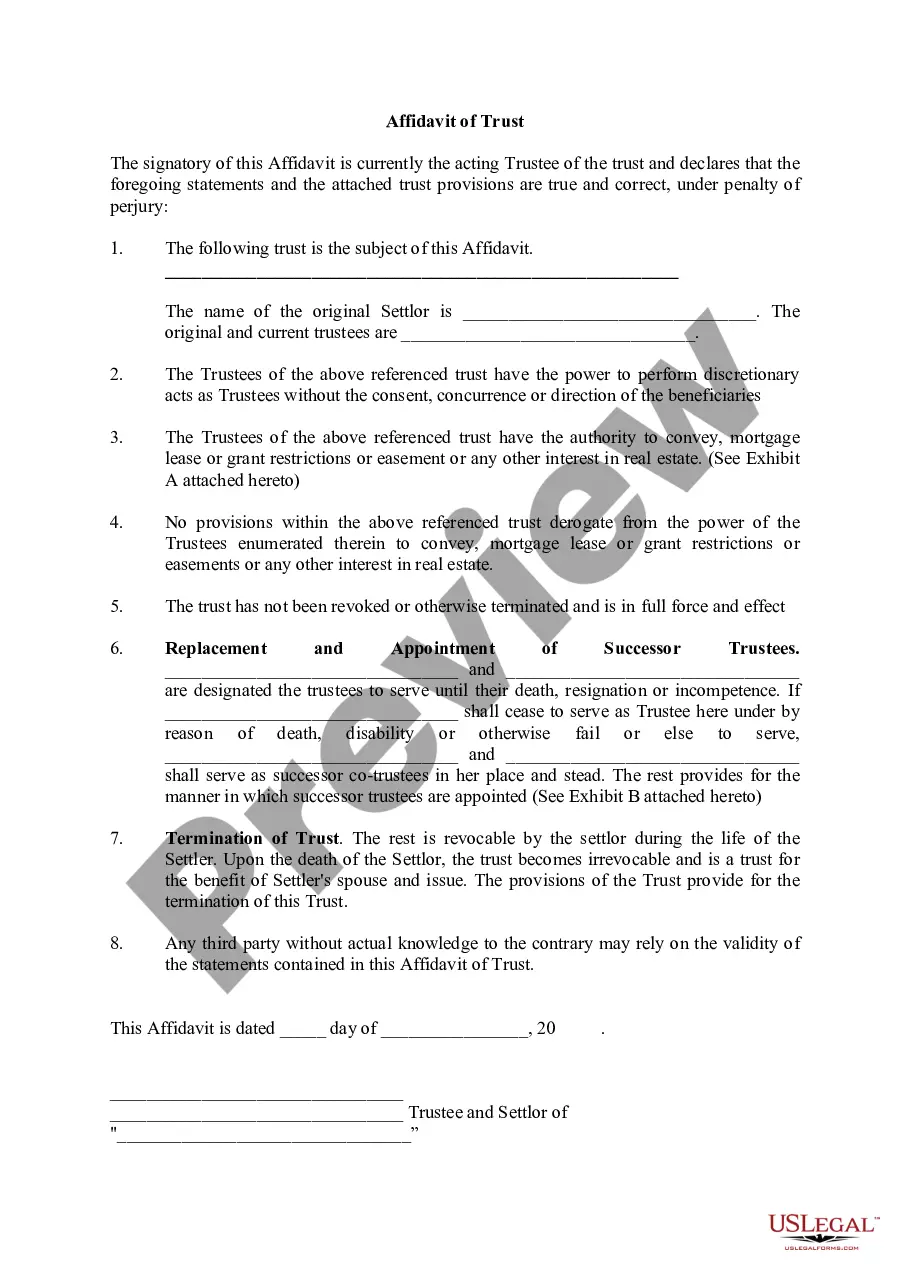
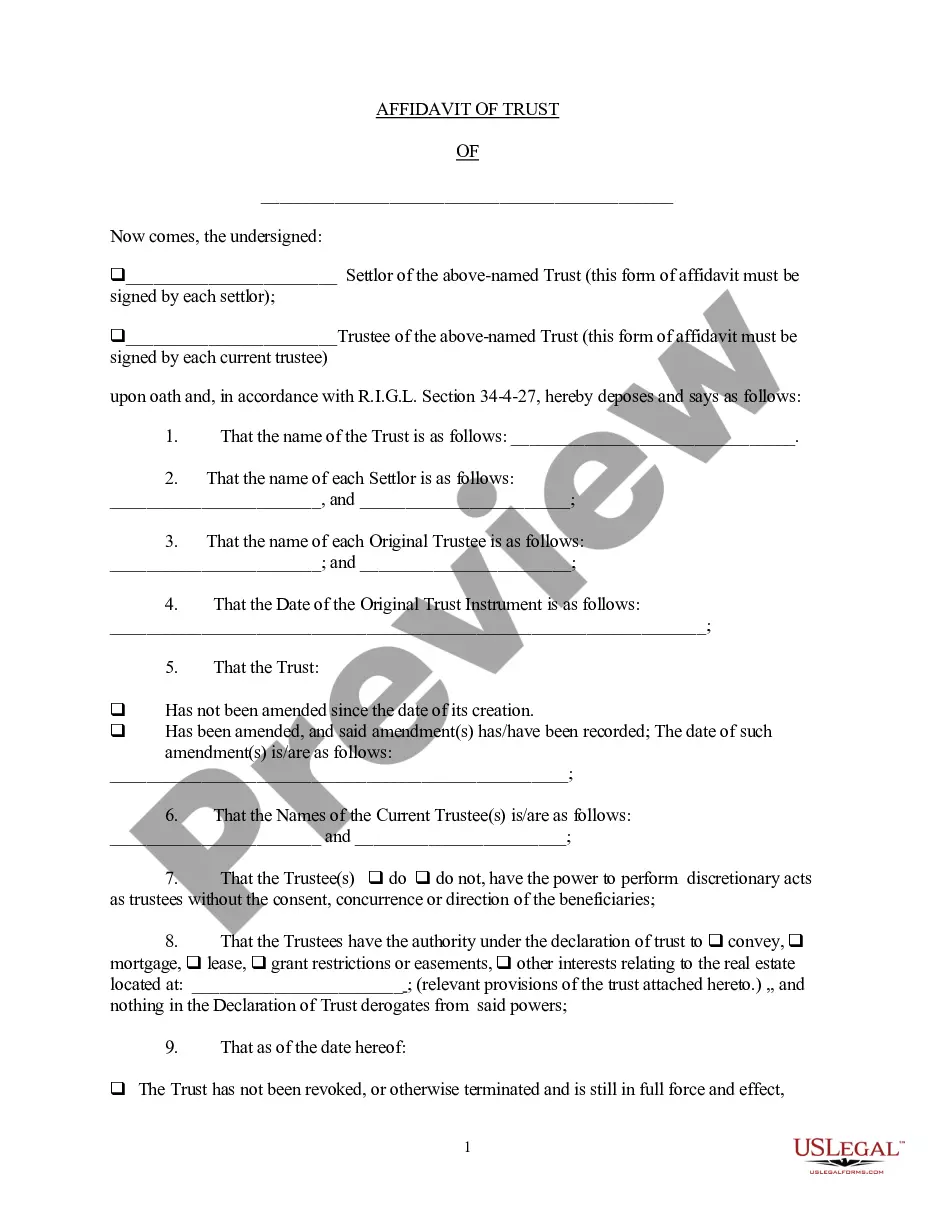
A: An affidavit of trust and a certificate of trust are essentially the same thing. At least they serve the same functions. Simply put, an affidavit of trust is an abbreviated version of the trust agreement that provides general information about the terms of the trust.
A Memorandum of Trust is a synopsis of a trust that is used when transferring real property into a trust.A Certification of Trust is used in place of the actual trust to open up an account on behalf of a trust at a financial institution.
Revocable Trusts.Irrevocable Trusts.Testamentary Trusts.Understanding the 3 primary types of trusts - The Des Moines Register\nwww.desmoinesregister.com > money > business > columnists > 2015/08/31
If you have a trust in Michigan, state law provides that you can register the trust. Registering a Michigan trust is not required (except for certain charitable trusts, as discussed below). Even for non-charitable trusts, there are good reasons that a trust should be registered.
A Certificate of Trust is recorded in the Official Records of the county in which any trust real property is located. It aids in clearing title to the property. Generally, where the trust owns no real property, there is no need to record a Certificate...
A trust document isn't required to be filed. If you are transferring real estate into a trust, a deed will need oo be filed at the county recorder's office.The declaration will detail the terms and conditions of the living trust, including who will serve as the Trustee.
A certification of trust (or "trust certificate") is a short document signed by the trustee that simply states the trust's essential terms and certifies the trust's authority without revealing private details of the trust that aren't relevant to the pending transaction.