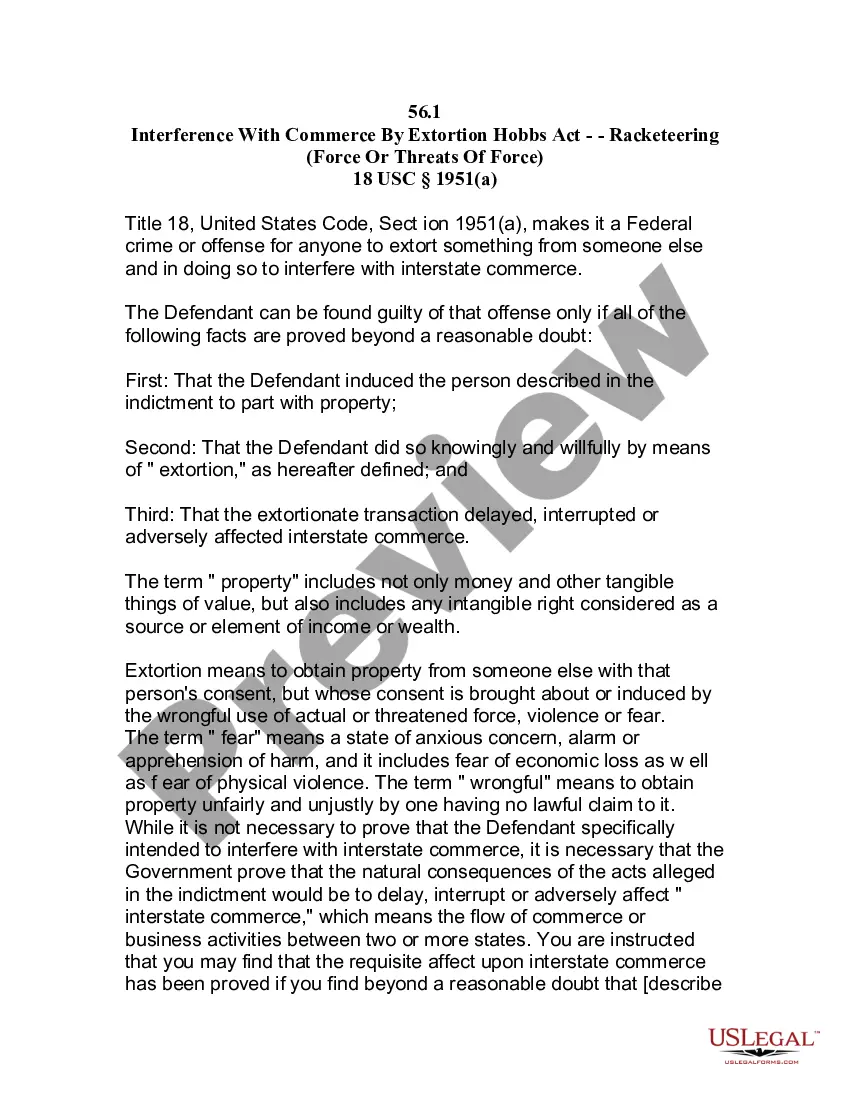
Puerto Rico Employee Evaluation Form for Psychologist
Description
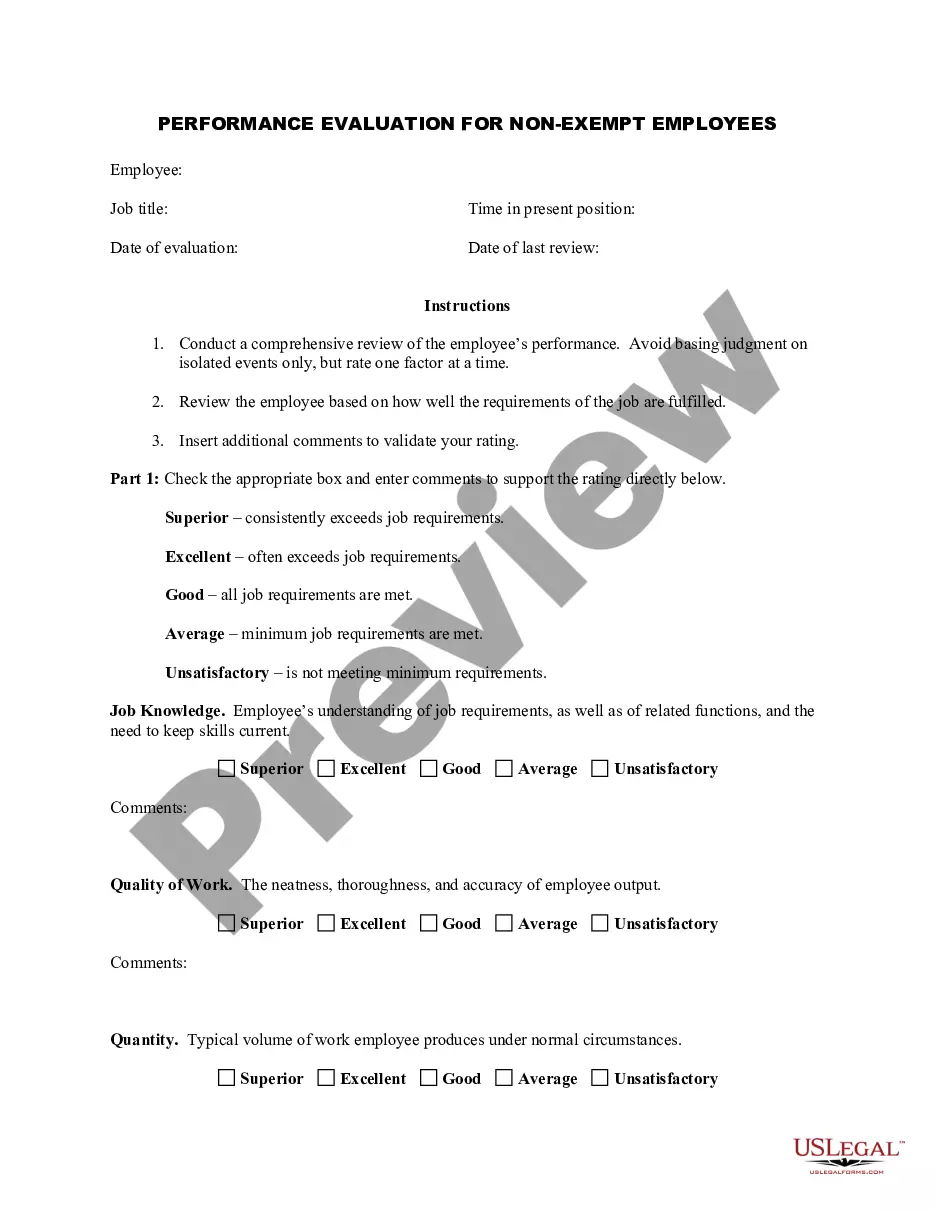
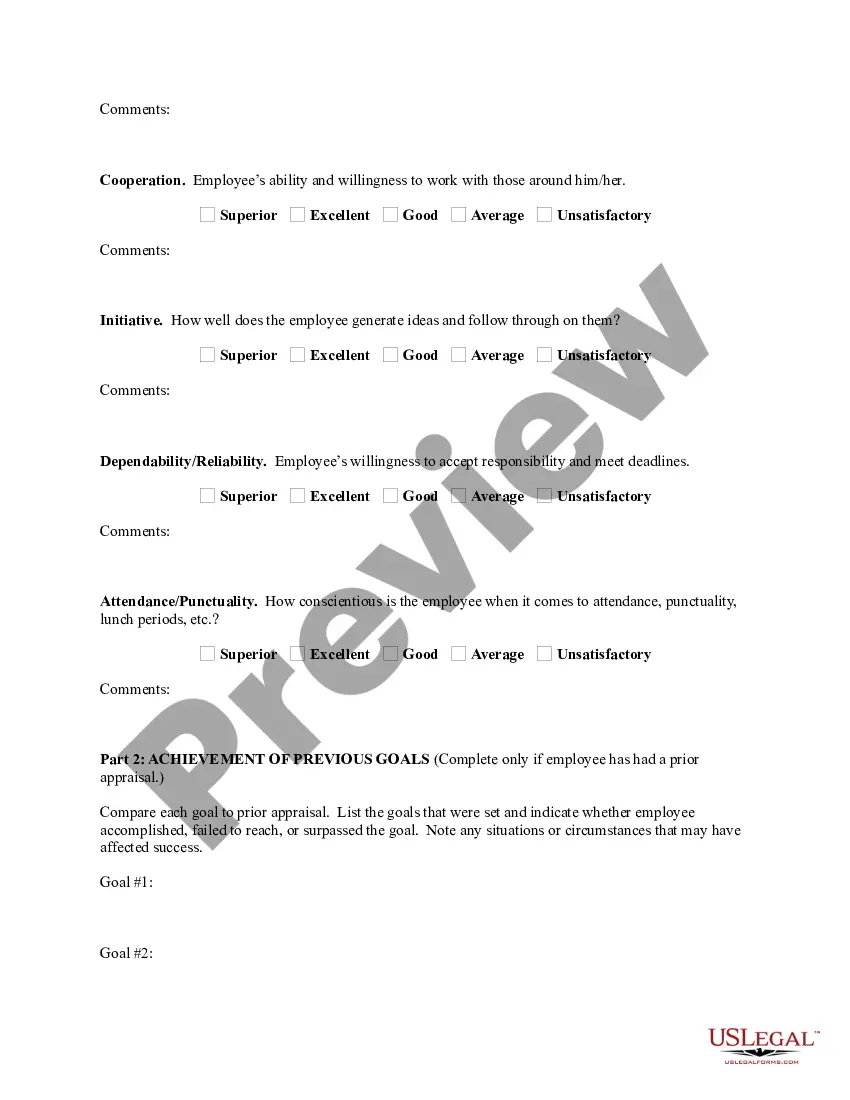
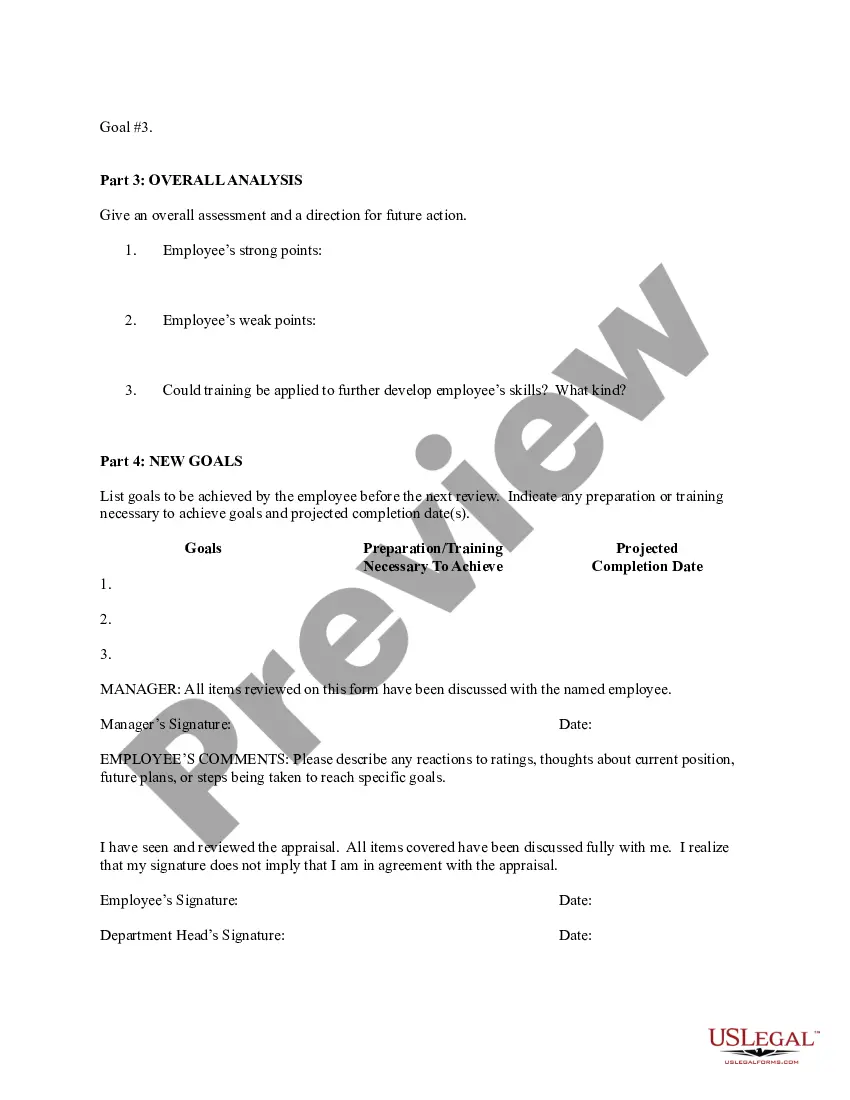
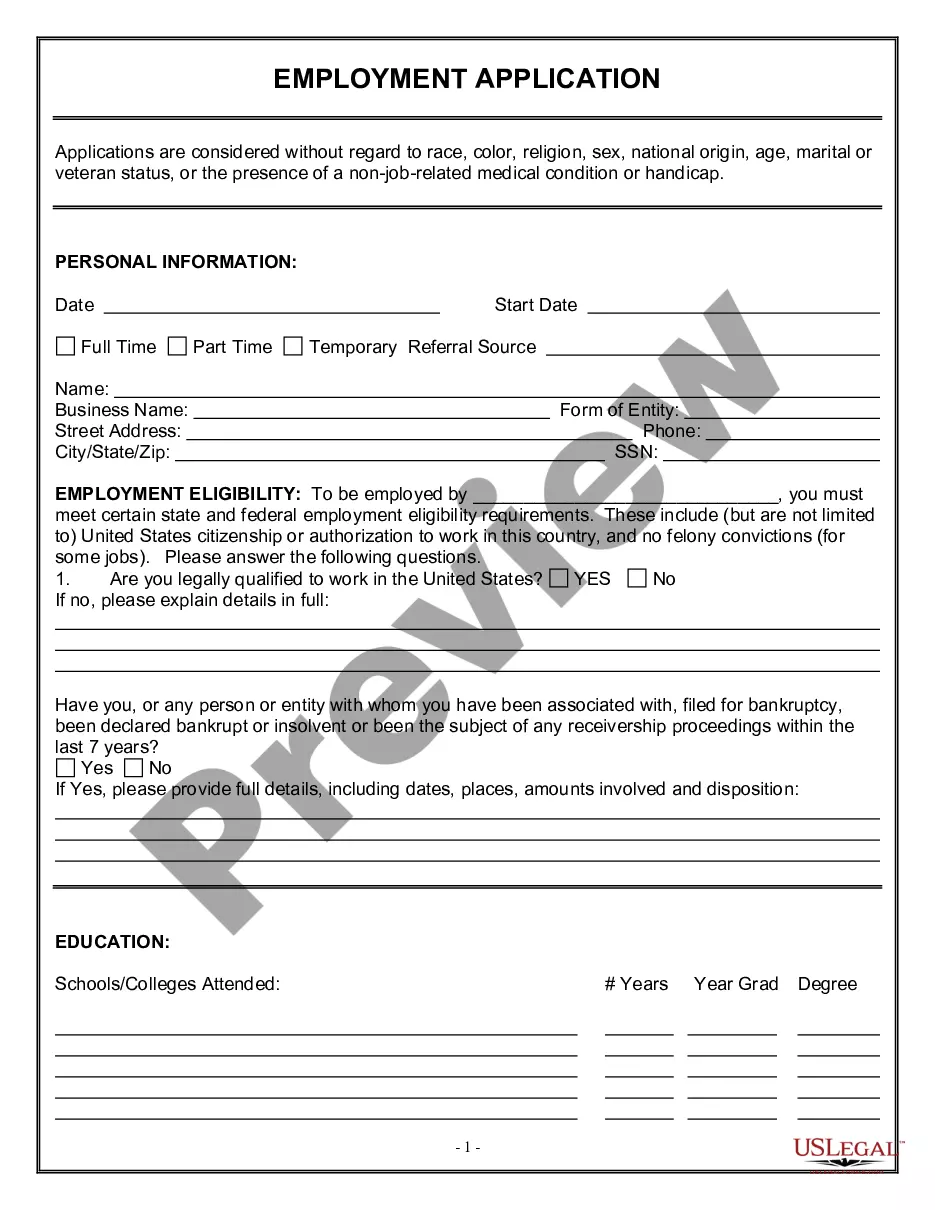
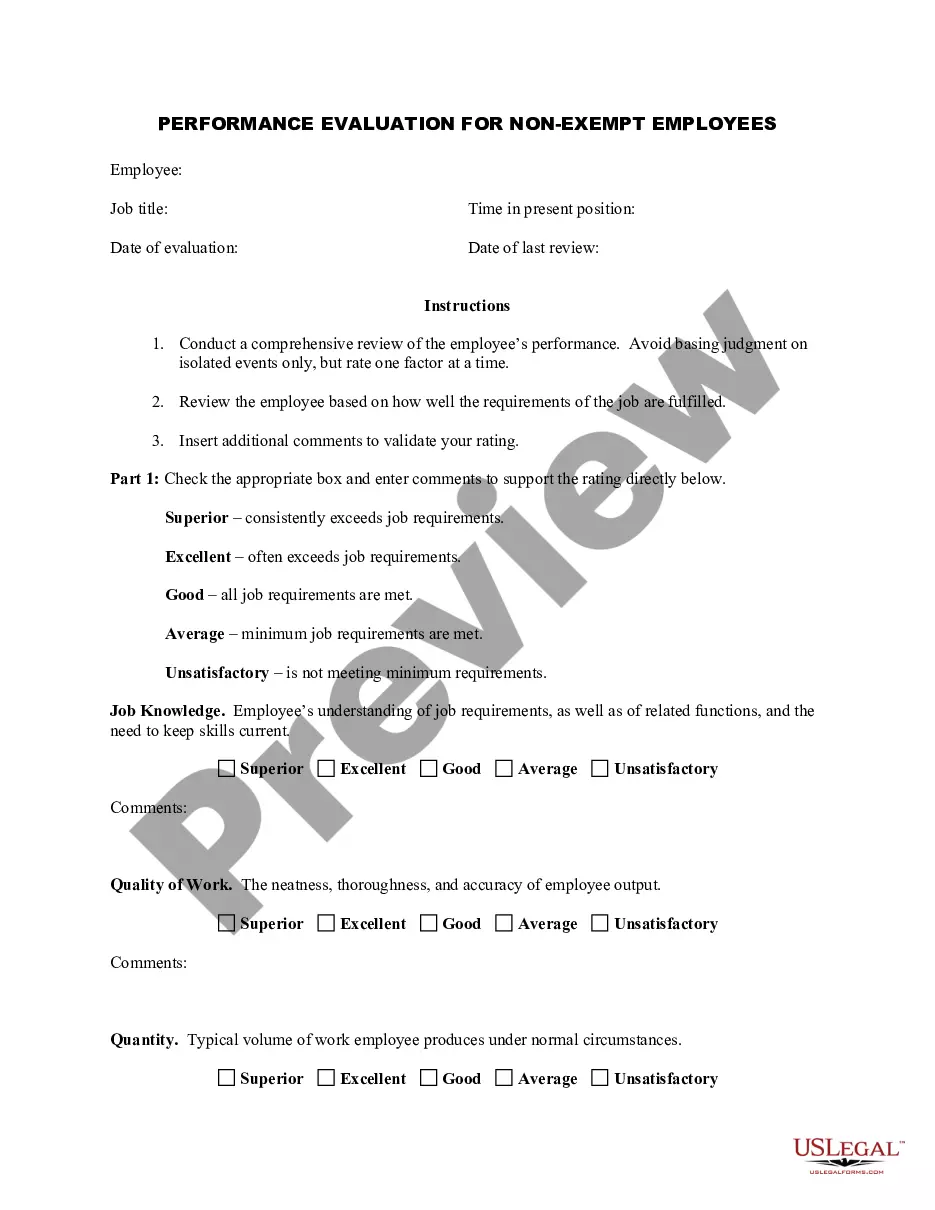
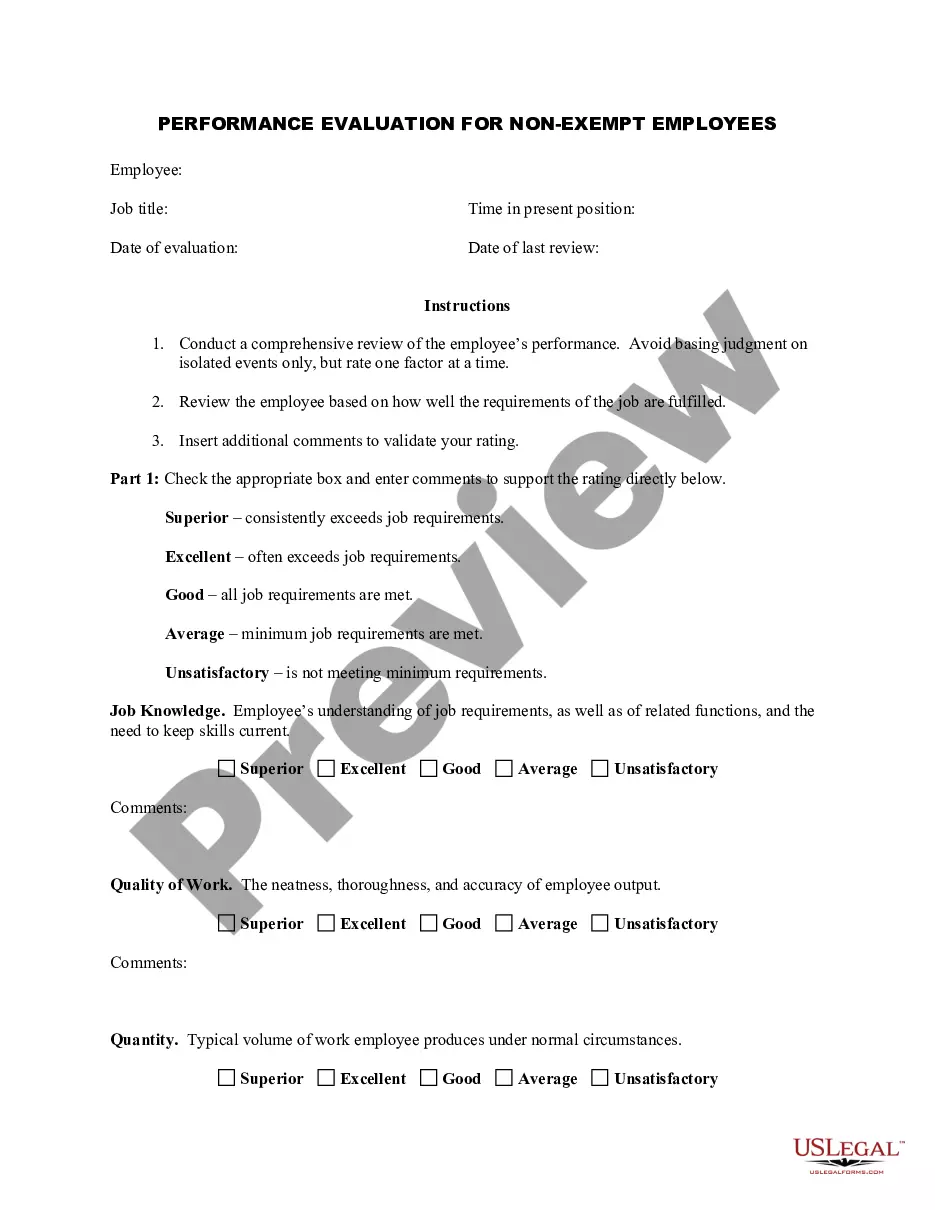
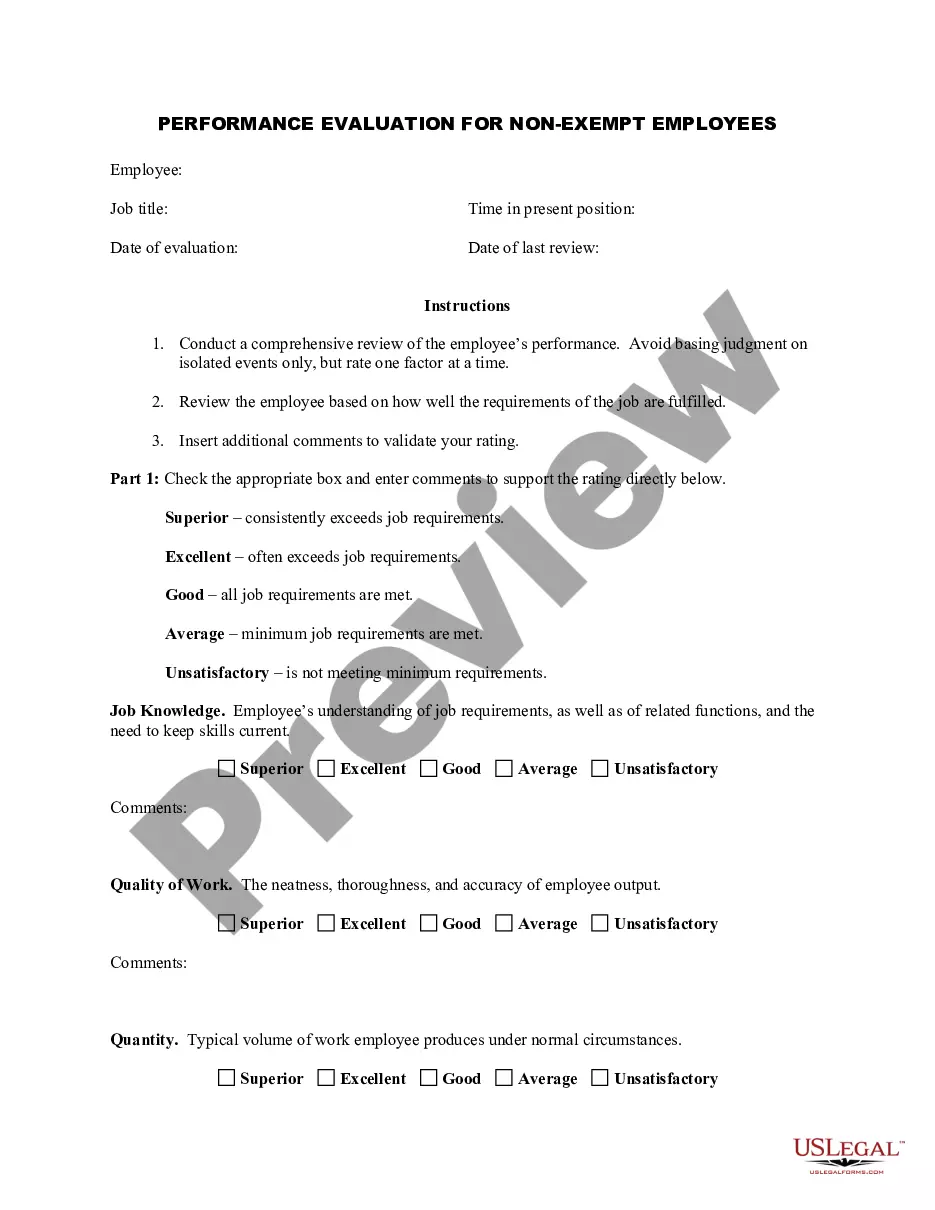
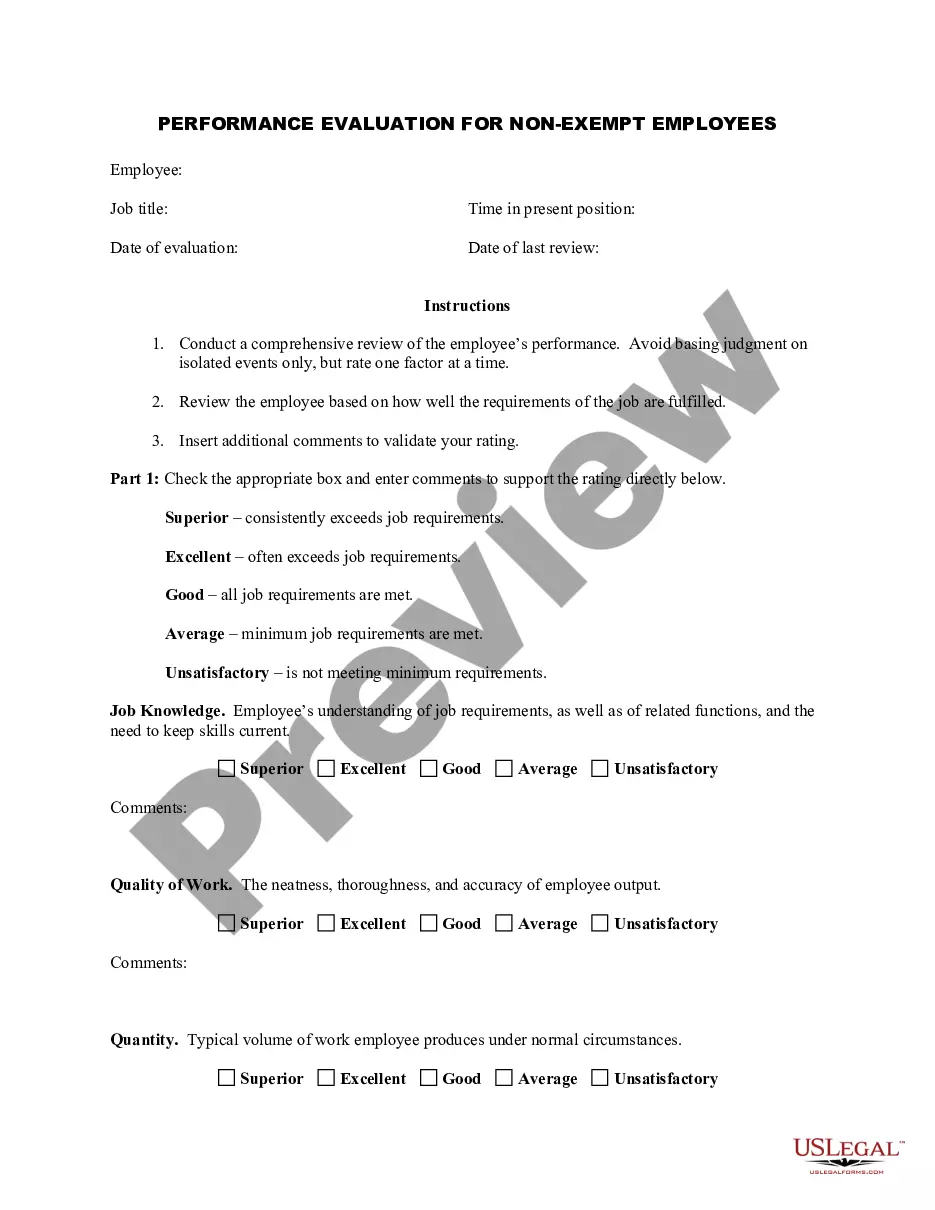
Get your form ready online
Our built-in tools help you complete, sign, share, and store your documents in one place.
Make edits, fill in missing information, and update formatting in US Legal Forms—just like you would in MS Word.
Download a copy, print it, send it by email, or mail it via USPS—whatever works best for your next step.
Sign and collect signatures with our SignNow integration. Send to multiple recipients, set reminders, and more. Go Premium to unlock E-Sign.
If this form requires notarization, complete it online through a secure video call—no need to meet a notary in person or wait for an appointment.
We protect your documents and personal data by following strict security and privacy standards.

Make edits, fill in missing information, and update formatting in US Legal Forms—just like you would in MS Word.

Download a copy, print it, send it by email, or mail it via USPS—whatever works best for your next step.

Sign and collect signatures with our SignNow integration. Send to multiple recipients, set reminders, and more. Go Premium to unlock E-Sign.

If this form requires notarization, complete it online through a secure video call—no need to meet a notary in person or wait for an appointment.

We protect your documents and personal data by following strict security and privacy standards.
Looking for another form?

How to fill out Employee Evaluation Form For Psychologist?
US Legal Forms - one of the largest collections of legal documents in the USA - offers a variety of legal file formats that you can download or print.
By utilizing the site, you can access thousands of forms for business and personal purposes, categorized by types, states, or keywords. You can find the most recent forms, such as the Puerto Rico Employee Evaluation Form for Psychologist, in just moments.
If you are an existing subscriber, Log In to download the Puerto Rico Employee Evaluation Form for Psychologist from the US Legal Forms library. The Download button will appear on each form you review. You can view all previously downloaded forms in the My documents section of your account.
Choose the format and download the form to your device.
Make modifications. Complete, edit, print, and sign the downloaded Puerto Rico Employee Evaluation Form for Psychologist. Every template you add to your account has no expiration date and belongs to you permanently. Therefore, if you want to download or print another copy, simply go to the My documents section and click on the form you need.
- If this is your first time using US Legal Forms, here are some simple steps to get started.
- Ensure you have selected the correct form for your location/region. Click on the Preview button to review the form's details.
- Review the outline of the form to confirm that you have chosen the right one.
- If the form does not meet your needs, use the Search field at the top of the page to find one that does.
- Once you are satisfied with the form, confirm your choice by clicking the Acquire now button. Then, select the pricing plan that works for you and enter your details to create an account.
- Process the transaction. Use your credit card or PayPal account to complete the purchase.
Form popularity
FAQ
To become a psychological evaluator, you typically need to earn a doctoral degree in psychology and obtain licensure in your state. This process often includes completing supervised hours in clinical practice. Afterward, you can specialize in areas such as employee evaluation, equipping you to utilize tools like the Puerto Rico Employee Evaluation Form for Psychologist effectively.
On the job, clinical psychologists: Identify psychological, emotional or behavioral issues. Diagnose psychological, emotional or behavioral disorders. Develop and implement treatment plans and therapeutic processes.
Common employment settings for psychologists include: Mental health clinics. Hospitals and physician offices. Private clinics.
Occupational psychologists focus on how people behave at work in order to increase their productivity, job satisfaction and the overall effectiveness of an organisation or business.
Some psychologists work alone, with patients and clients coming to the psychologist's office. Others are involved in health care teams and typically work in hospitals, medical schools, outpatient clinics, nursing homes, pain clinics, rehabilitation facilities, and community health and mental health centers.
The terms therapist and counselor can be used interchangeably in many cases. While psychologists tend to have more advanced education and training, this does not mean they're superior to therapists or counselors. Overall, therapists and psychologists help you achieve your individual therapy goals.
Clinical psychologists assess, diagnose and treat individuals experiencing psychological distress and mental illness. They also perform psychotherapy and develop treatment plans. Clinical psychologists often work in hospitals, mental health clinics, and private practice.
The majority (81%) of school psychologists work in public school settings. Other primary places of employment are private schools, community agencies, hospitals and clinics, and universities.
The most common work setting for clinical psychologists is private practice.
Since the field of psychology is diverse and multifaceted, rising professionals are open to pursue a number of different career options. They might become clinical psychologists working in private practice, school psychologists helping students or research professionals working in academia or government.