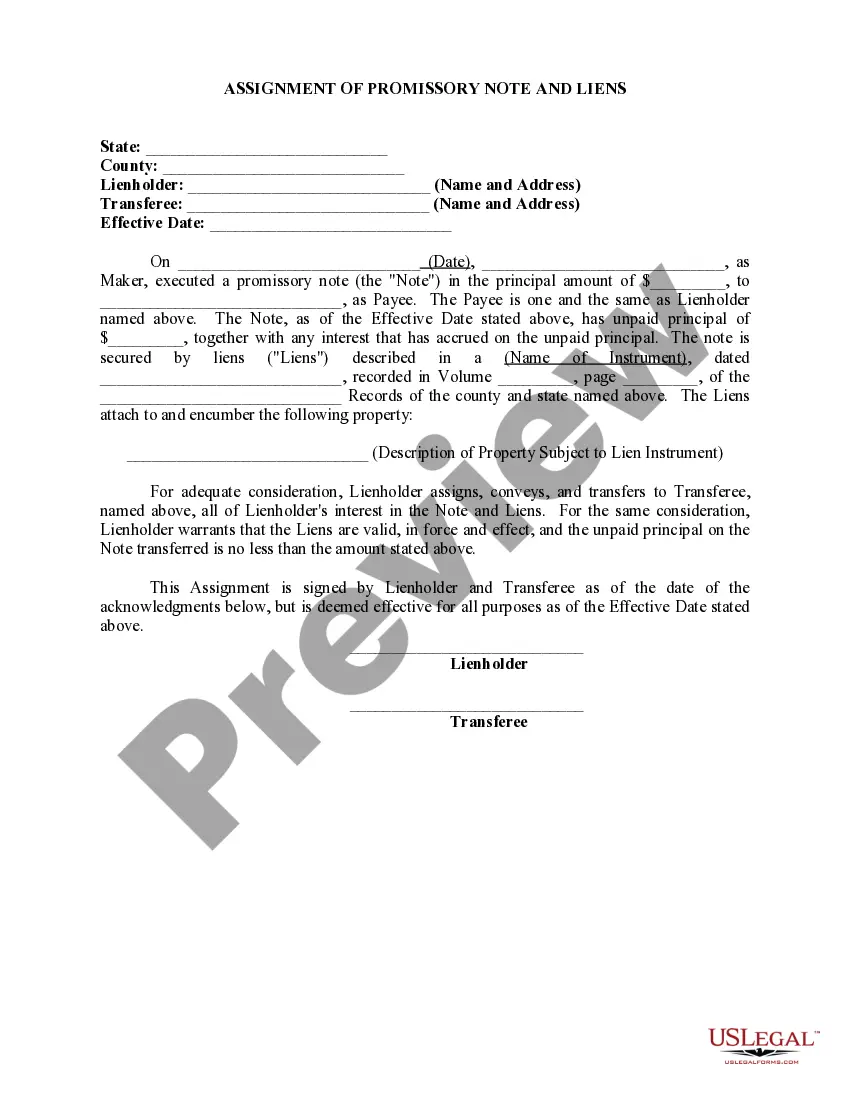
Sample Letter to State Tax Commission concerning Decedent's Estate
About this form
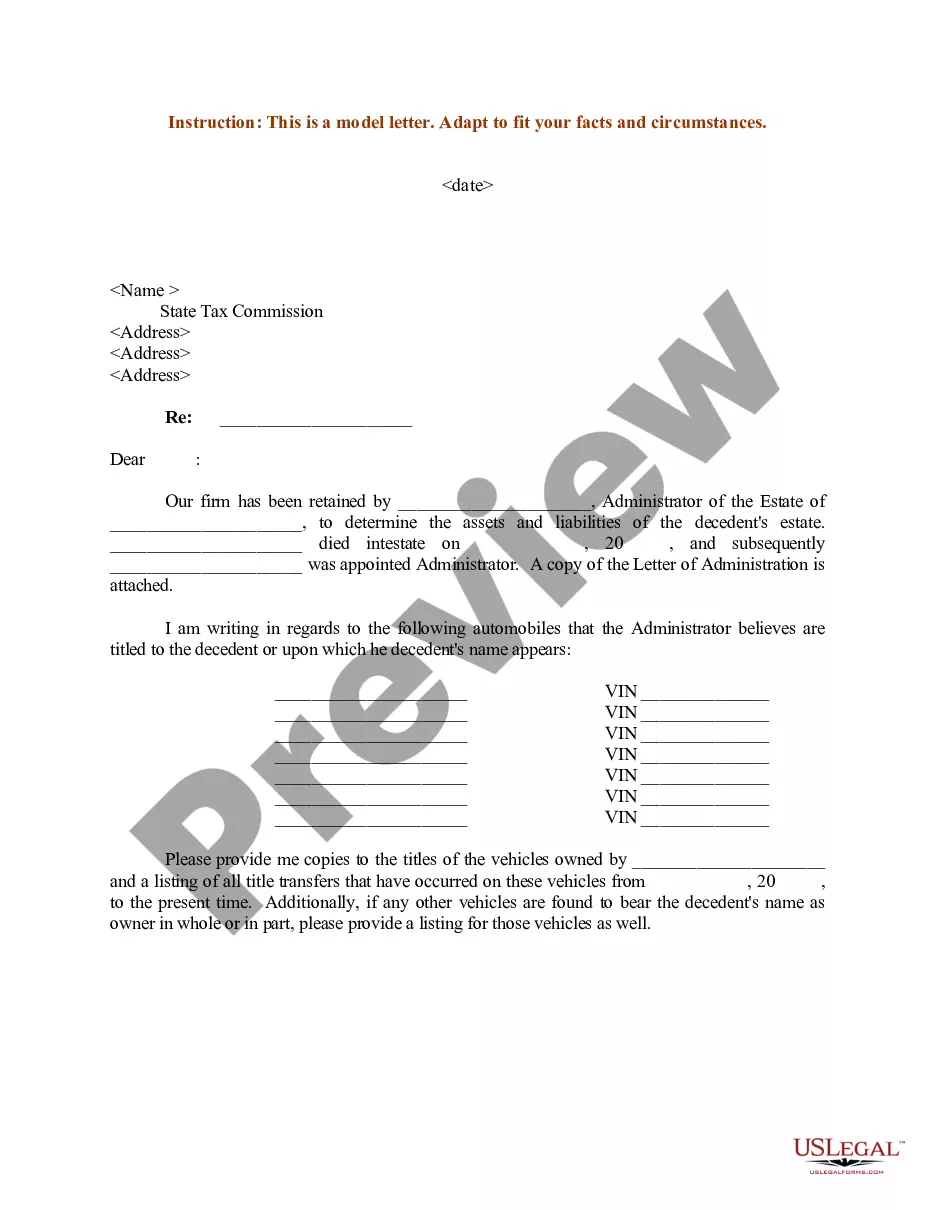
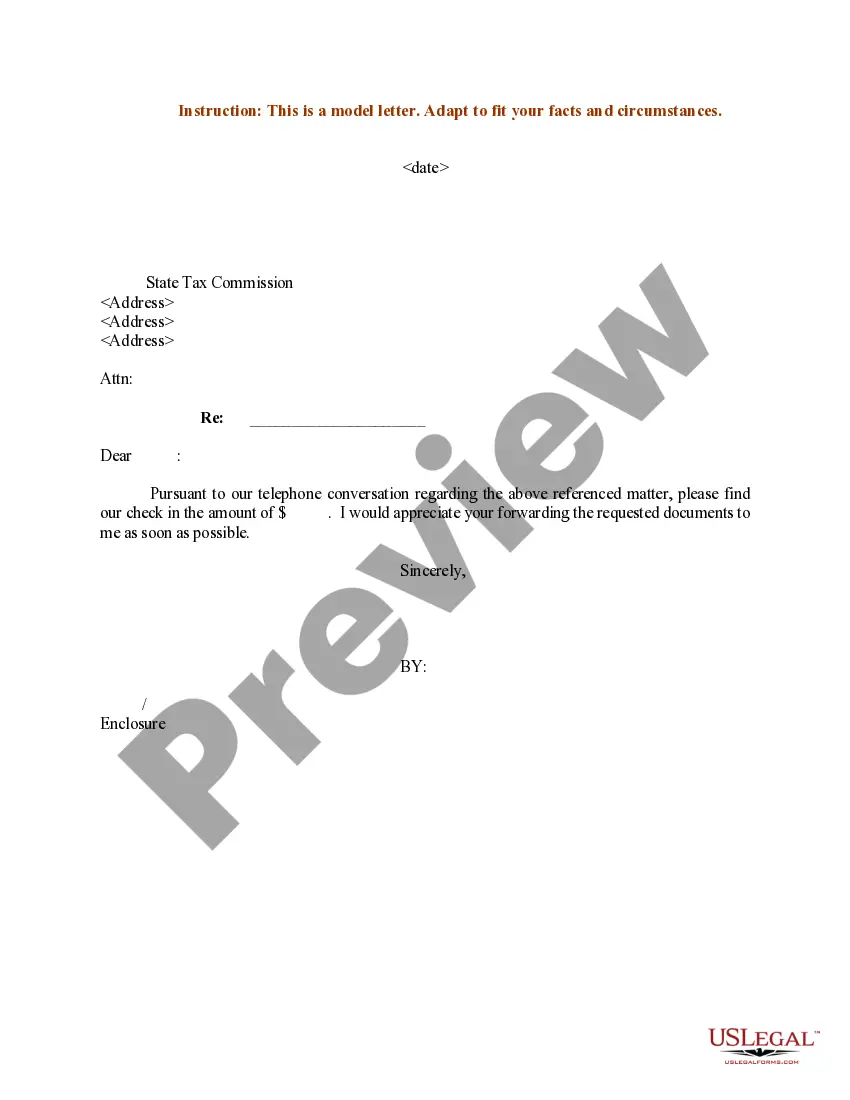
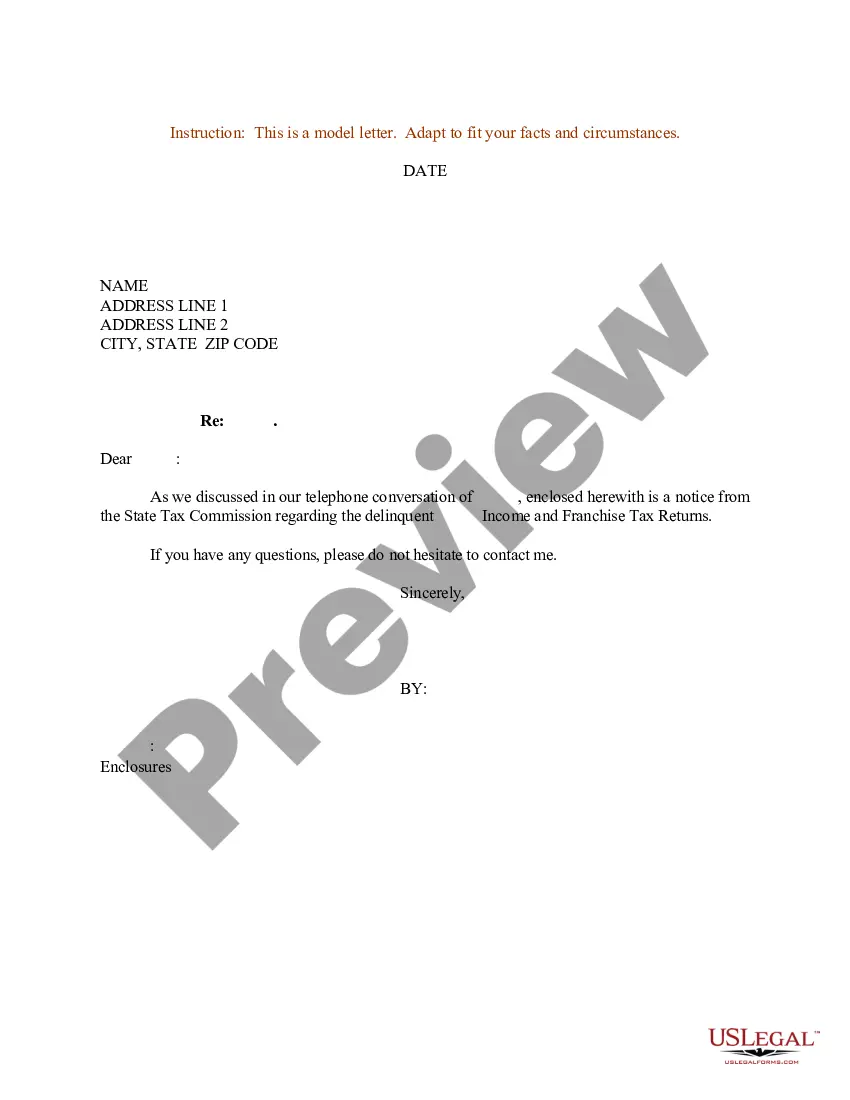
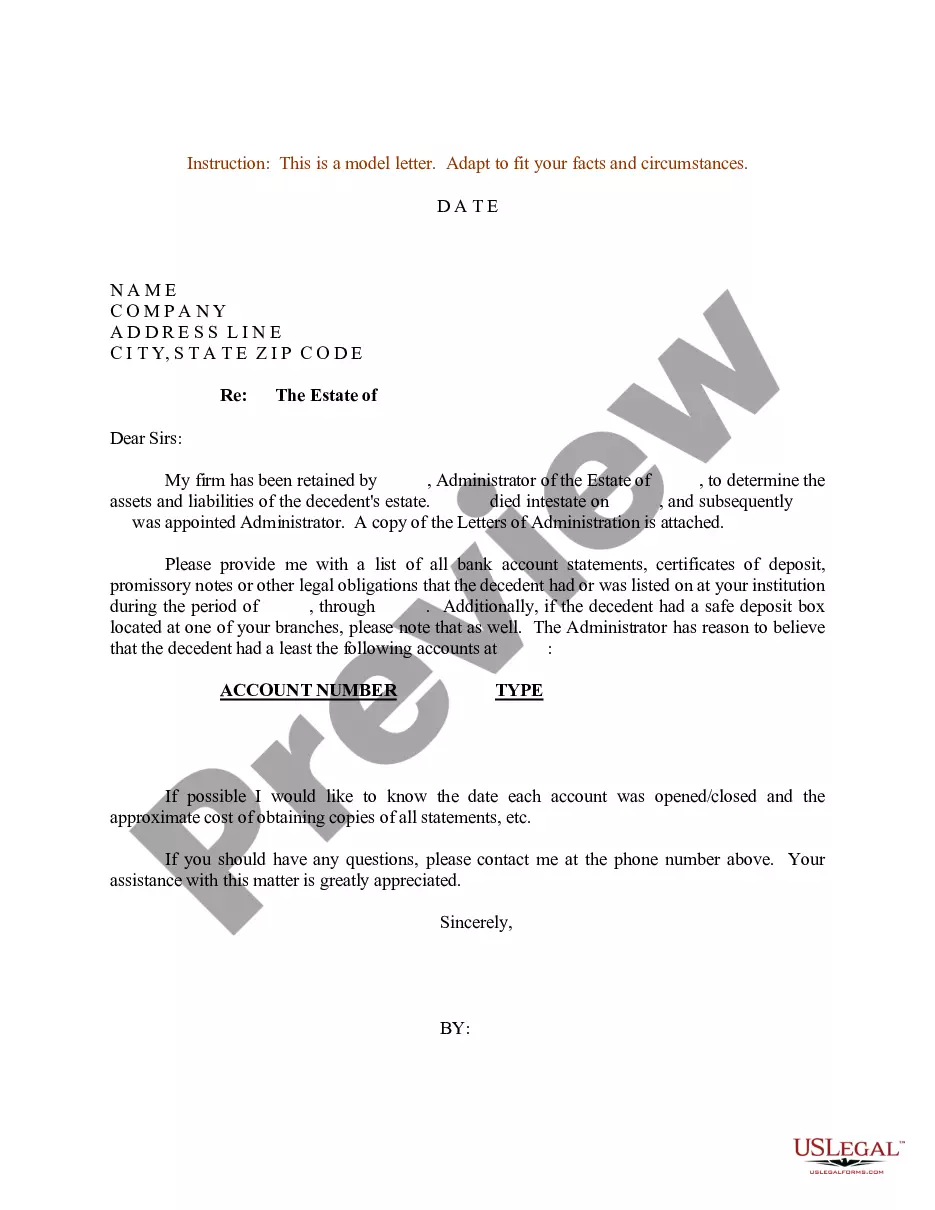
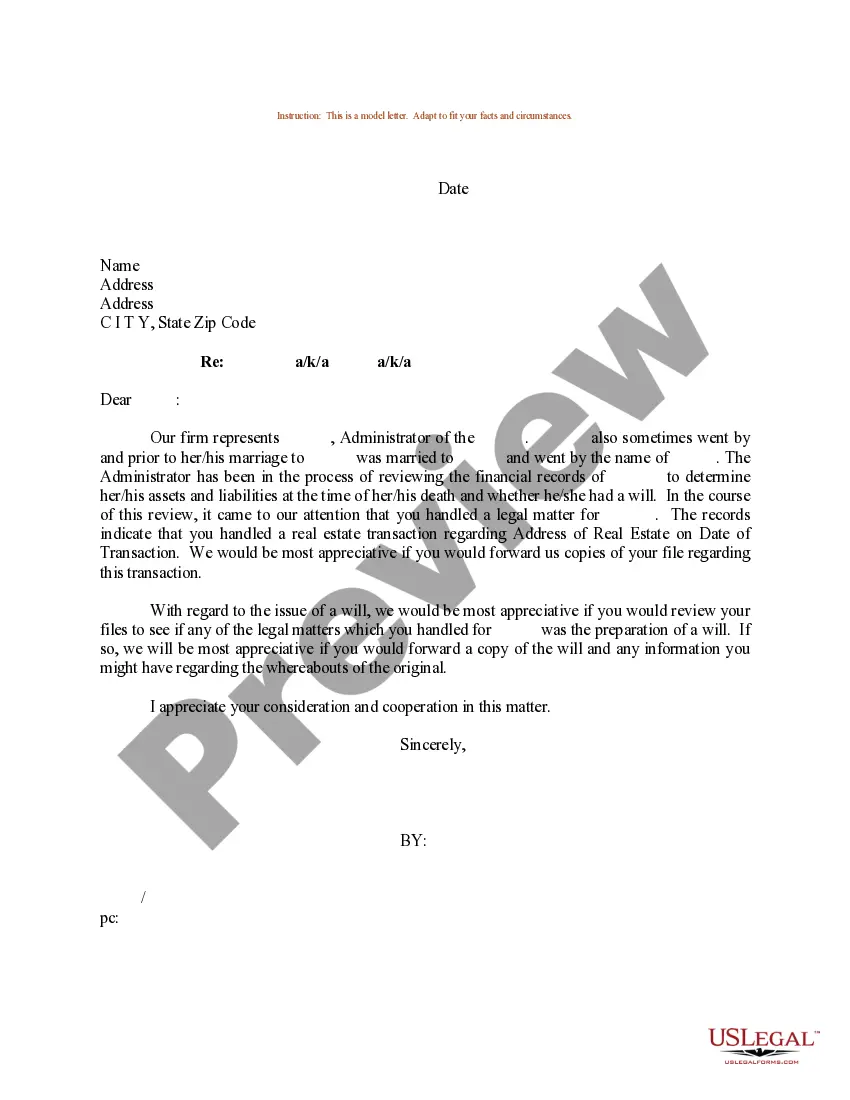
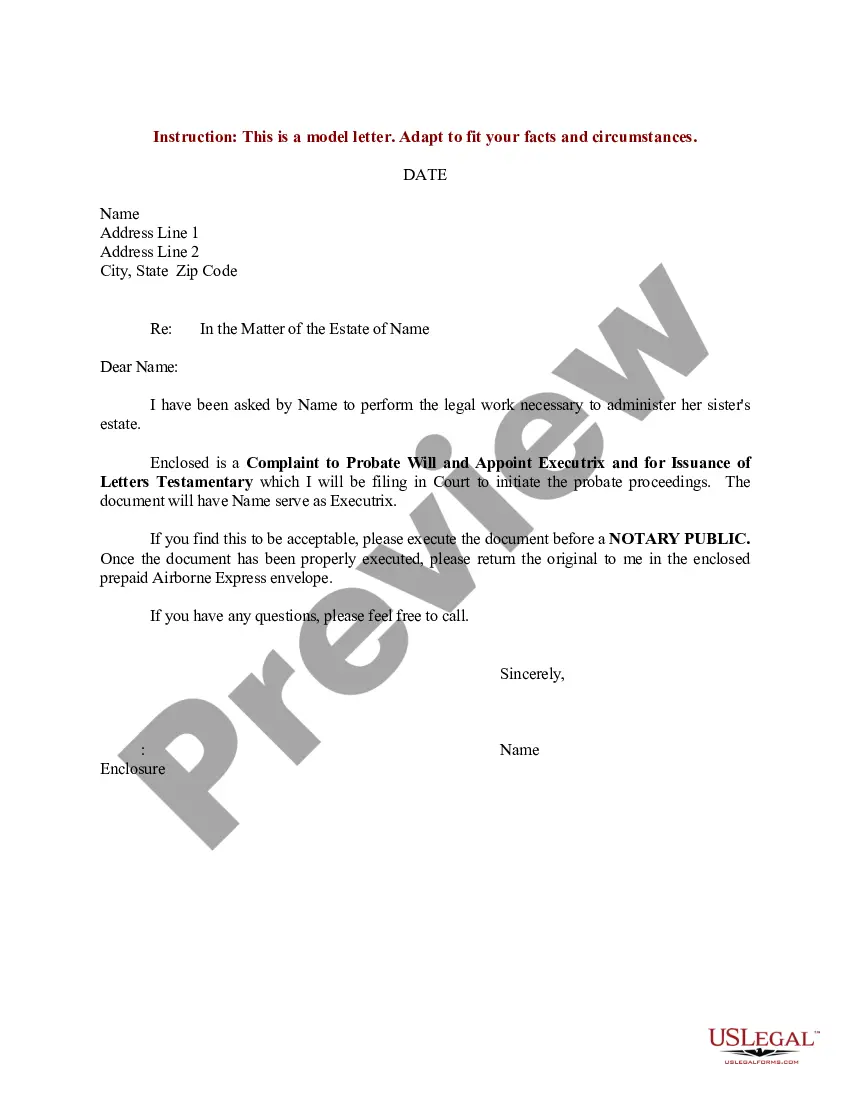
The Sample Letter to State Tax Commission concerning Decedent's Estate is a template designed to assist administrators in communicating with the state tax authority regarding vehicles titled in the name of a deceased individual. This form serves to provide the necessary information about the decedent's vehicles and is an essential document in the estate settlement process. Unlike other estate documents that deal with assets in general, this letter focuses specifically on automobiles, making it a targeted tool for handling vehicle-related matters in a decedent's estate.
What’s included in this form
- Identification of the decedent, including name and title of the administrator.
- A list of automobiles believed to be titled to the decedent.
- Vehicle Identification Numbers (VIN) for each vehicle.
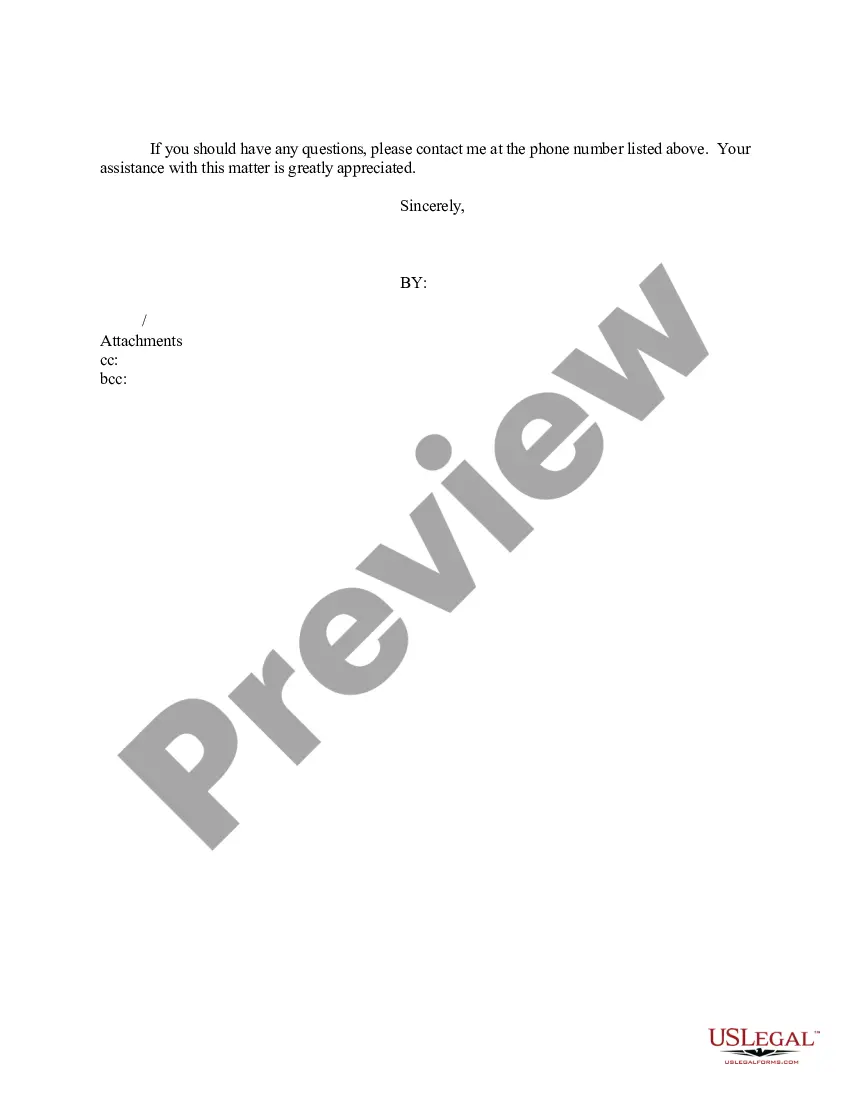
- Signature lines for the administrator to confirm the accuracy of the information.
Situations where this form applies
This form should be used when an administrator or executor of a decedent's estate needs to inform the state tax commission about vehicles that are part of the estate. It is often required to handle the transfer of title or if taxes are owed on the vehicles. This communication is important for ensuring that all estate assets are accounted for during the probate process.
Who needs this form
This form is intended for:
- Administrators or executors of an estate.
- Individuals responsible for settling a decedent's estate.
- Anyone needing to communicate with the state tax commission regarding a deceased person's vehicles.
Instructions for completing this form
- Identify the decedent by entering their full name at the start of the letter.
- List each vehicle believed to be titled in the decedent's name, along with the respective VINs.
- Ensure all details are accurate to avoid delays or issues with the state tax commission.
- Sign the letter as the administrator to verify the information provided.
- Send the completed letter to the state commission via the appropriate method.
Does this form need to be notarized?
This form usually doesn’t need to be notarized. However, local laws or specific transactions may require it. Our online notarization service, powered by Notarize, lets you complete it remotely through a secure video session, available 24/7.
Get your form ready online
Our built-in tools help you complete, sign, share, and store your documents in one place.
Make edits, fill in missing information, and update formatting in US Legal Forms—just like you would in MS Word.
Download a copy, print it, send it by email, or mail it via USPS—whatever works best for your next step.
Sign and collect signatures with our SignNow integration. Send to multiple recipients, set reminders, and more. Go Premium to unlock E-Sign.
If this form requires notarization, complete it online through a secure video call—no need to meet a notary in person or wait for an appointment.
We protect your documents and personal data by following strict security and privacy standards.

Make edits, fill in missing information, and update formatting in US Legal Forms—just like you would in MS Word.

Download a copy, print it, send it by email, or mail it via USPS—whatever works best for your next step.

Sign and collect signatures with our SignNow integration. Send to multiple recipients, set reminders, and more. Go Premium to unlock E-Sign.

If this form requires notarization, complete it online through a secure video call—no need to meet a notary in person or wait for an appointment.

We protect your documents and personal data by following strict security and privacy standards.
Avoid these common issues
- Failing to include all vehicles that are part of the estate.
- Incorrectly entering the VINs, which can lead to discrepancies.
- Not providing sufficient proof of authority as the administrator.
- Omitting required signatures or sending the letter without a signature.
Why use this form online
- Convenience of immediate download for quick use.
- Editability allows for easy customization to fit specific needs.
- Reliability, as the form is drafted by licensed attorneys.
Summary of main points
- The form assists in addressing vehicle titles in a decedent's estate.
- Provide accurate vehicle information to avoid processing delays.
- Understand local requirements to ensure compliance when using the form.
Looking for another form?
Form popularity
FAQ
Keep the letter brief and straightforward as it is a legal document. Confirm the situation whereby probate has been granted. Was it written in the will? Clearly outline the obligations of the recipient so they know what is required of them. Sign the letter to make it legally binding.
A grant of probate is issued to the executor/s named in the will, whereas a grant of letters of administration is issued to the next of kin of someone who died without a will.This document will allow whoever is dealing with the estate to close bank accounts, cash in investments and sell or transfer property.
Application fees for probate are £155 if you apply through a solicitor and A£215 if you're taking the DIY option. Estates worth less than A£5,000 pay no fee. Additional copies of the probate form can be ordered for A£1.50 each.
Identify persons the executor should notify of your death. Include family members, close friends and business associates, including your attorney. Provide contact information for each person, as well as any final message or instructions to be given. Describe your important estate documents and their exact location.
Probate or applying for Letters Probate is the process whereby the Court confirms that a Will is the valid last Will of a person. When the executor files for a grant of probate, he swears that the Will filed with the court is the last Will of the deceased person and that he knows of no later Will.
To apply for probate or letters of administration by post, you'll need to fill in a number of forms. You'll need PA1P if the person left a will and PA1A if they didn't. These forms ask for details about the person who died, their surviving relatives and, the personal representative.
Keep the letter brief and straightforward as it is a legal document. Confirm the situation whereby probate has been granted. Was it written in the will? Clearly outline the obligations of the recipient so they know what is required of them. Sign the letter to make it legally binding.
Give the letter a personal touch and address each of your heirs and beneficiaries personally. Tell them any last wishes you may have or any hopes you have for their future. Write as clearly as possible. Use specific details and avoid using shorthand.
Letters of Administration are granted by a Surrogate Court or probate registry to appoint appropriate people to deal with a deceased person's estate where property will pass under Intestacy Rules or where there are no executors living (and willing and able to act) having been validly appointed under the deceased's will