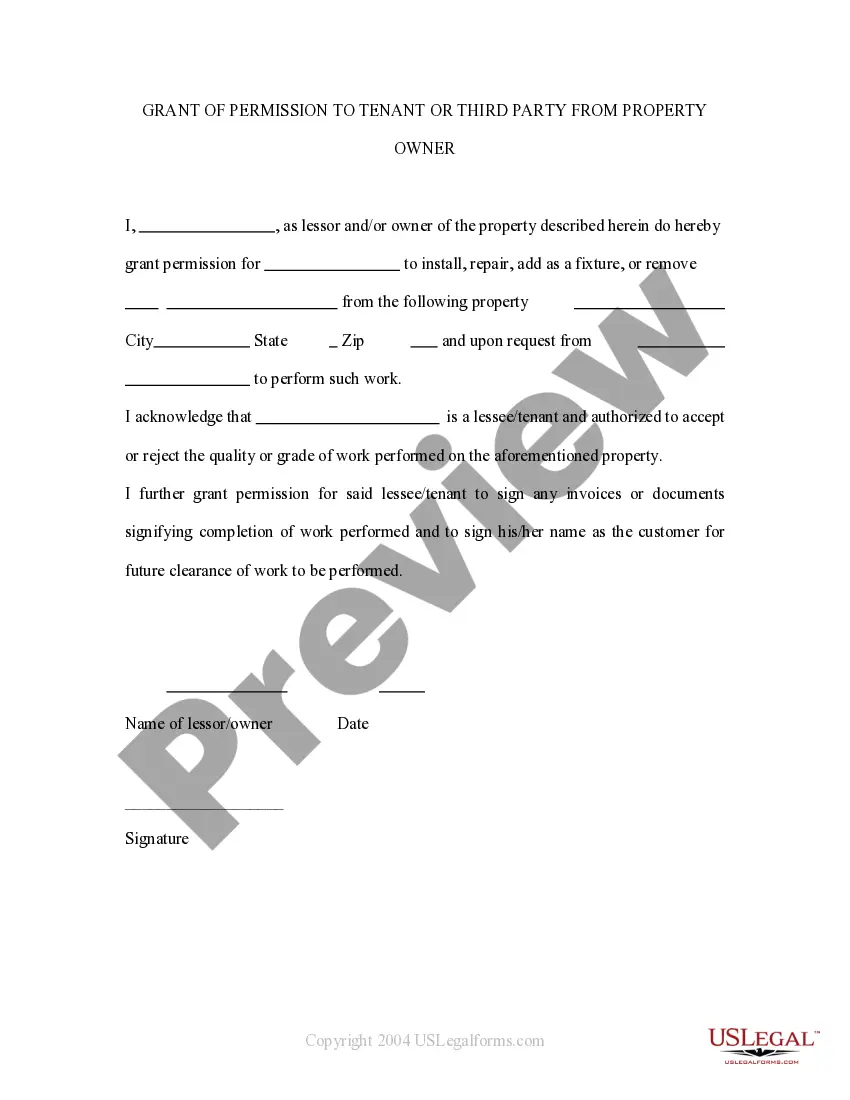
This is a grant of permission by a property owner to a third party to make repairs or install a fixture or cable television etc. on the property where the tenant lives
Pennsylvania Grant Of Permission To Tenant Or Third Party From Property Owner
Category:
State:
Multi-State
Control #:
US-PRM-30
Format:
Word;
Rich Text
Instant download
Description
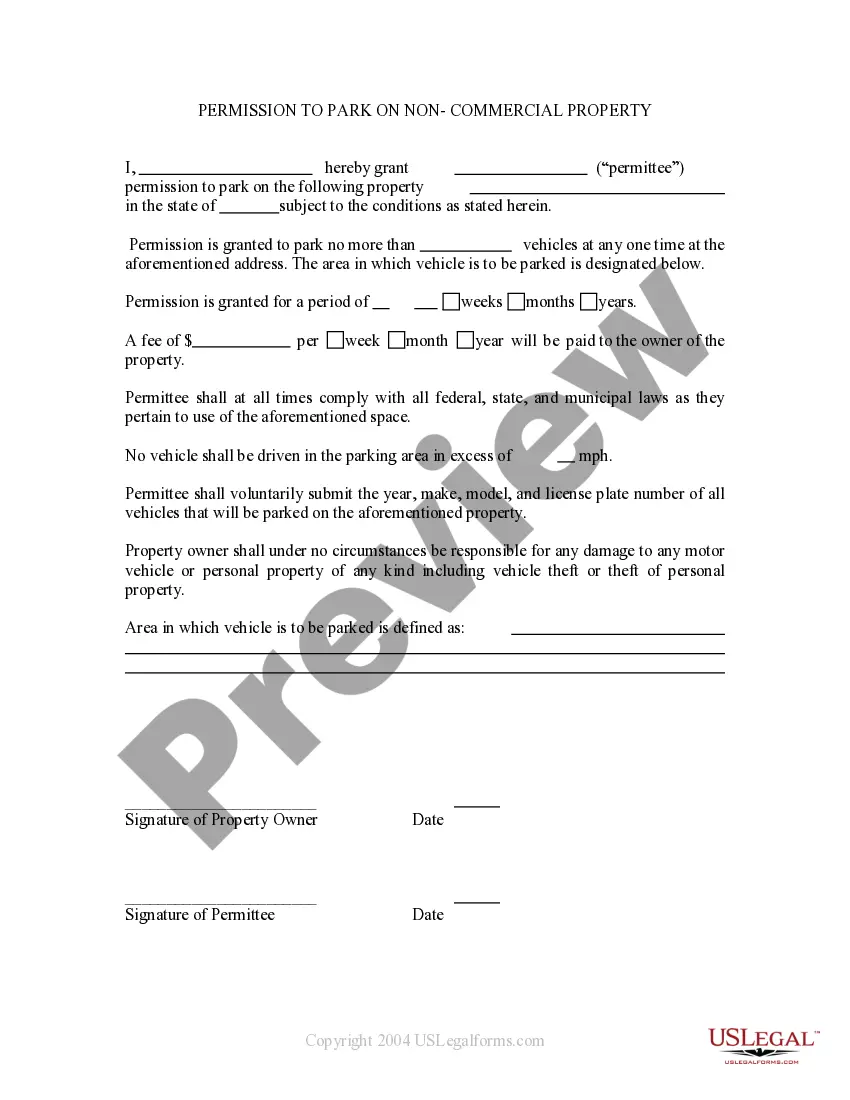

How to fill out Grant Of Permission To Tenant Or Third Party From Property Owner?
Locating the appropriate authorized document template can be challenging. Naturally, there are numerous web templates accessible online, but how can you acquire the legal form you desire? Utilize the US Legal Forms website. The service offers thousands of templates, including the Pennsylvania Grant Of Permission To Tenant Or Third Party From Property Owner, which can be utilized for business and personal purposes. All of the forms are verified by professionals and meet federal and state requirements.
If you are already registered, Log In to your account and click the Download button to obtain the Pennsylvania Grant Of Permission To Tenant Or Third Party From Property Owner. Use your account to review the legal forms you have previously ordered. Go to the My documents section of your account and retrieve another copy of the document you need.
If you are a new user of US Legal Forms, here are simple steps for you to follow: First, ensure you have selected the correct form for your region/area. You can preview the form using the Review button and examine the form details to confirm it is suitable for you. If the form does not meet your expectations, use the Search field to locate the appropriate form. Once you are confident the form is correct, click the Get now button to acquire the form. Choose the pricing plan you desire and enter the required information. Create your account and pay for the transaction using your PayPal account or credit card. Select the format and download the legal document template to your device. Complete, modify, print, and sign the acquired Pennsylvania Grant Of Permission To Tenant Or Third Party From Property Owner.
Take advantage of this resource to streamline your legal documentation process.
- US Legal Forms is the largest collection of legal forms where you can find various document templates.
- Utilize the service to download professionally crafted documents that comply with state regulations.
- Access numerous templates for different legal needs.
- Easily manage your legal documents online.
- Ensure compliance with local laws with verified forms.
- Conveniently retrieve previously downloaded forms from your account.
Form popularity
FAQ
Generally, someone can stay in a property for up to 30 days before they may be legally classified as a tenant in Pennsylvania. After this period, they could gain tenant rights, which may complicate the property owner's ability to remove them without following proper legal procedures. Utilizing a Pennsylvania Grant Of Permission To Tenant Or Third Party From Property Owner can provide much-needed clarity in these situations. US Legal Forms can assist you with the right documents to protect your interests as a property owner.
In Pennsylvania, the transition from guest to tenant usually occurs when someone stays in a rental property for more than 30 days. This can create a legal obligation for both the guest and the property owner. To ensure compliance, a Pennsylvania Grant Of Permission To Tenant Or Third Party From Property Owner can help clarify roles and responsibilities. For easy access to the necessary forms, US Legal Forms offers a comprehensive platform to guide you through the process.
In Pennsylvania, a guest can become a tenant if they stay for an extended period, typically more than 30 days. This time frame may vary based on specific circumstances and local laws. Understanding the guidelines for a Pennsylvania Grant Of Permission To Tenant Or Third Party From Property Owner is essential to avoid any legal complications. If you need assistance navigating these regulations, consider using US Legal Forms for clear, reliable documentation.
Yes, a tenant can refuse entry to a landlord in Pennsylvania unless the landlord has a valid reason outlined in the lease agreement or in the event of an emergency. Having a Pennsylvania grant of permission to tenant or third party from property owner helps clarify the conditions under which entry is allowed. Tenants should communicate openly with their landlords to avoid conflicts. Understanding your rights as a tenant will empower you to manage these situations effectively.
Section 501 of the Landlord and Tenant Act of 1951 outlines the obligations and rights of landlords and tenants in Pennsylvania. This section is crucial for understanding tenant protections and landlord responsibilities, particularly in situations involving a Pennsylvania grant of permission to tenant or third party from property owner. It helps ensure that both parties adhere to fair practices. Familiarizing yourself with this section can prevent misunderstandings and legal issues.
In Pennsylvania, it is generally illegal for a landlord to enter a rental property without permission from the tenant, except in emergencies. A Pennsylvania grant of permission to tenant or third party from property owner establishes the terms under which a landlord may enter. If a landlord violates this, tenants may have legal grounds to challenge the entry. Always refer to your lease agreement for specifics on entry rights.
Yes, a landlord can grant a license instead of a traditional tenancy agreement to rent out property. This can be beneficial in situations where the landlord wants to retain greater control over the property. A Pennsylvania grant of permission to tenant or third party from property owner allows for flexibility while still setting clear terms. It's important to outline the specific rights and limitations within the license to avoid future disputes.
Indeed, a Power of Attorney must be notarized in Pennsylvania to ensure its validity. Notarization serves to confirm that the document is executed willingly and reflects your true intentions. If you wish to facilitate a Pennsylvania Grant of Permission to Tenant or Third Party from Property Owner, having a notarized POA is an essential requirement to consider.
The new Power of Attorney law in Pennsylvania, which came into effect in 2015, introduced significant changes to improve clarity and protect individuals. This law mandates that a POA must include specific language and a statutory form to ensure that the principal understands the powers being granted. If you are exploring a Pennsylvania Grant of Permission to Tenant or Third Party from Property Owner, staying informed about this law is crucial.
To grant someone power of attorney in Pennsylvania, you need to complete a written document stating your intentions. This document must clearly specify the powers you are granting and be signed in the presence of a notary. If you are looking to empower a tenant or third party, using platforms like uslegalforms can simplify this process and ensure compliance with Pennsylvania laws.