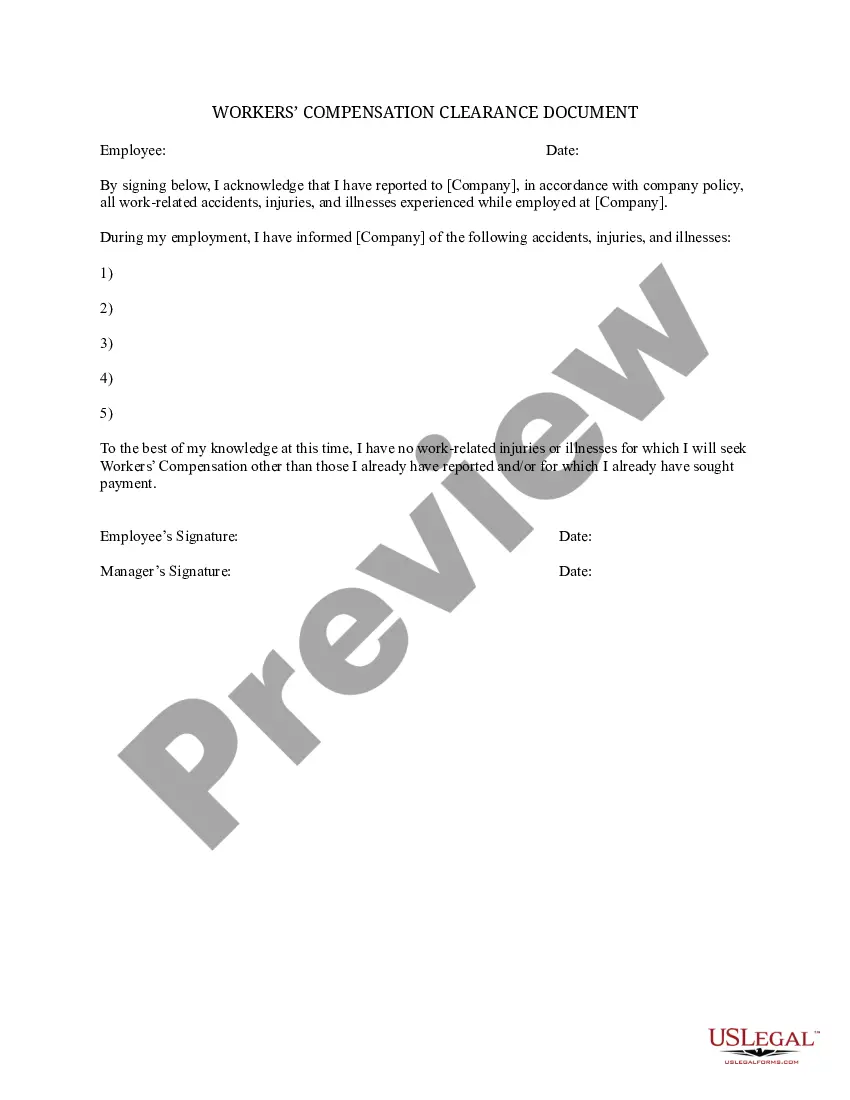
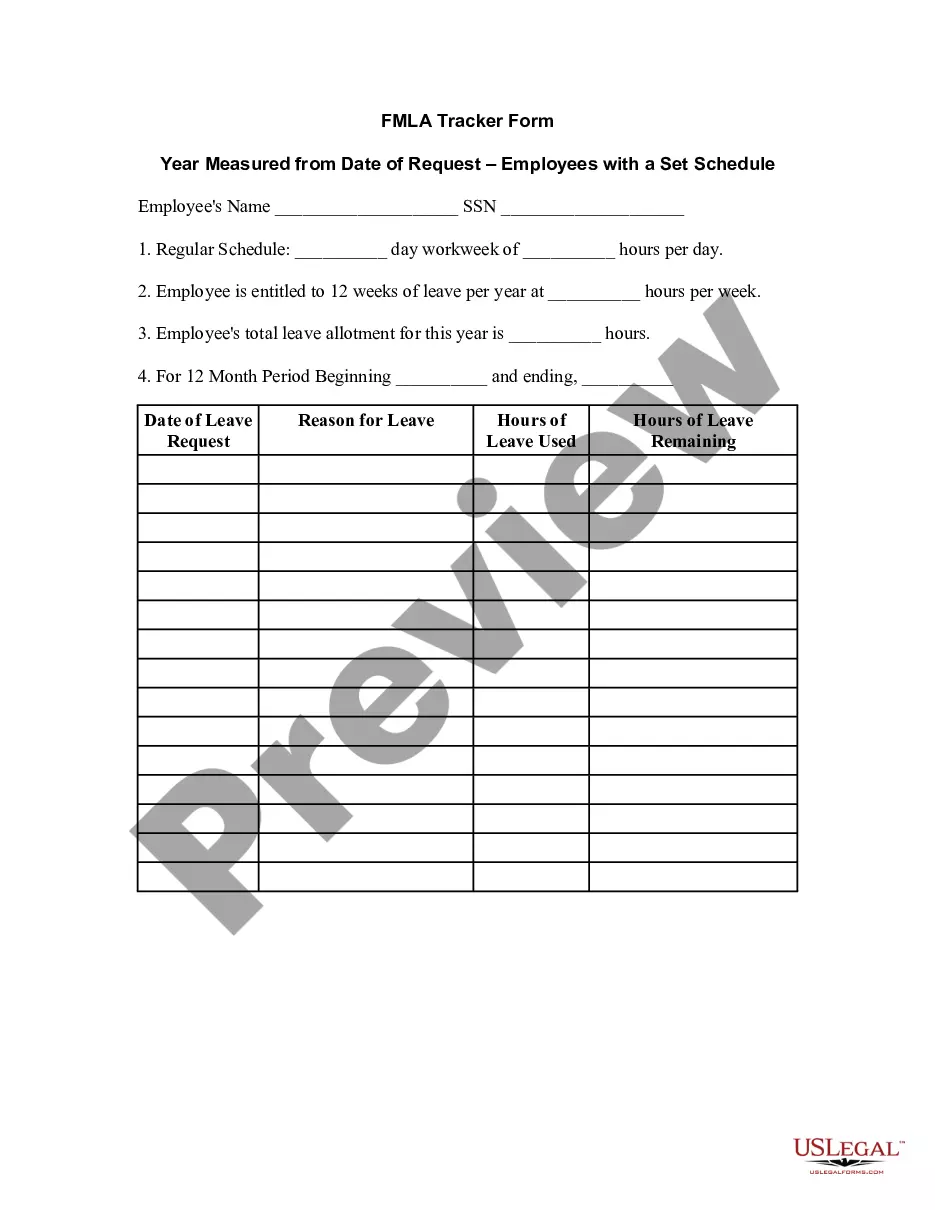
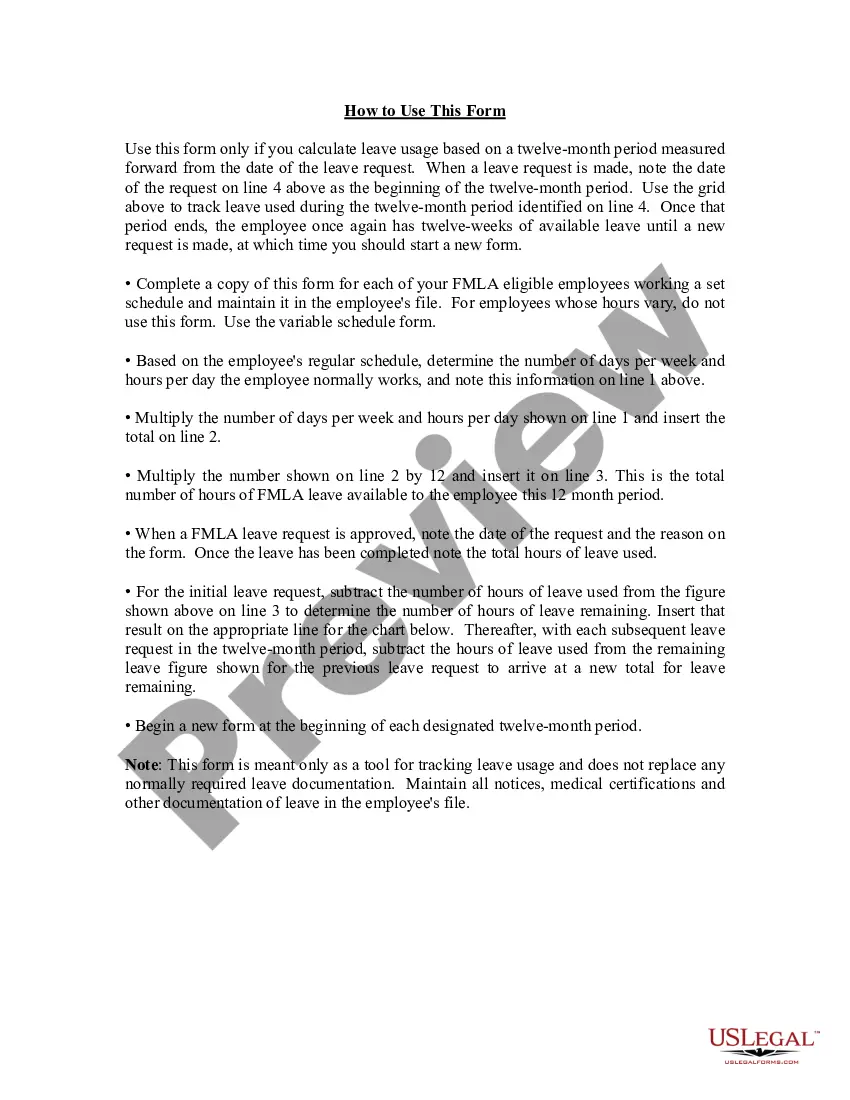
Pennsylvania FMLA Tracker Form - Year Measured from Date of Request - Employees with Set Schedule
Description
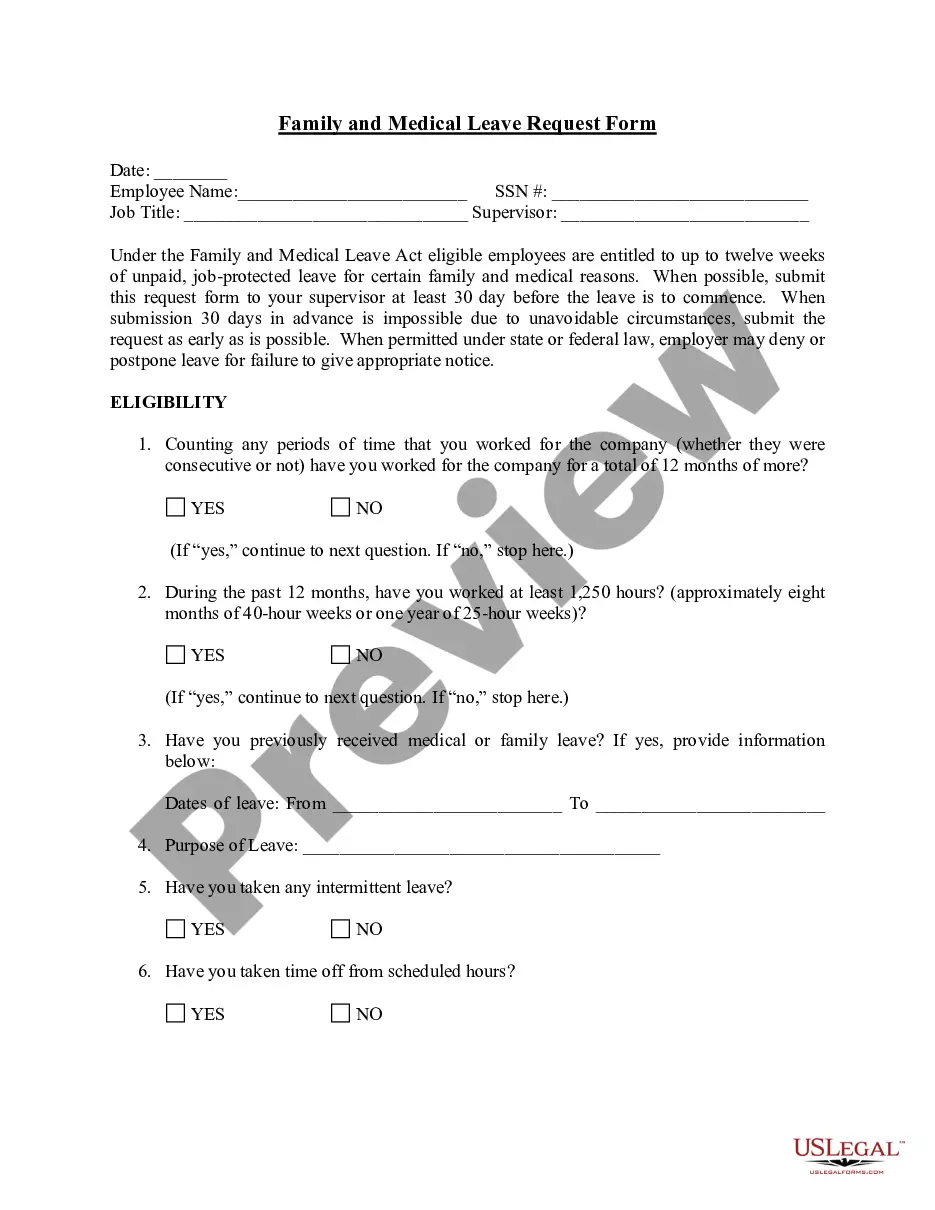
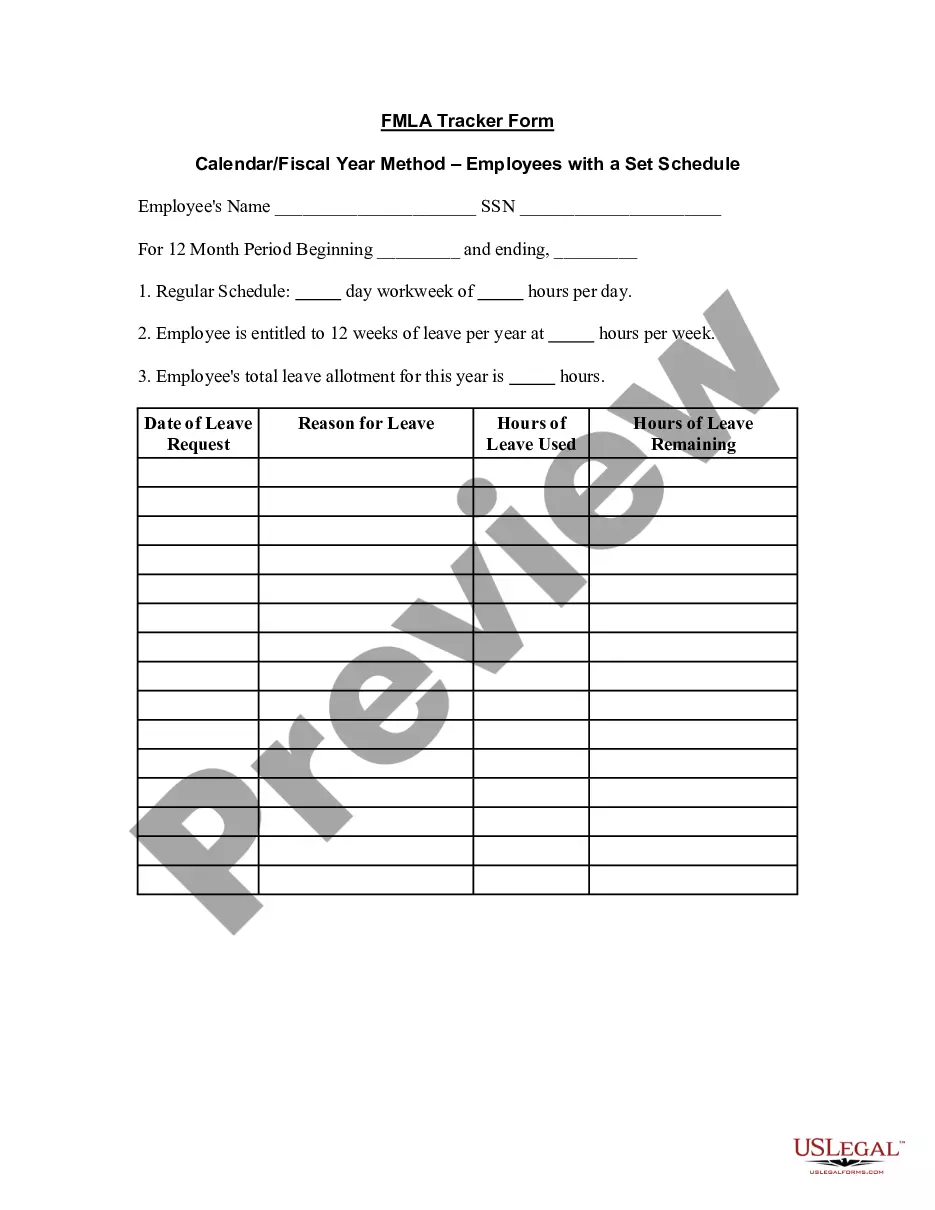
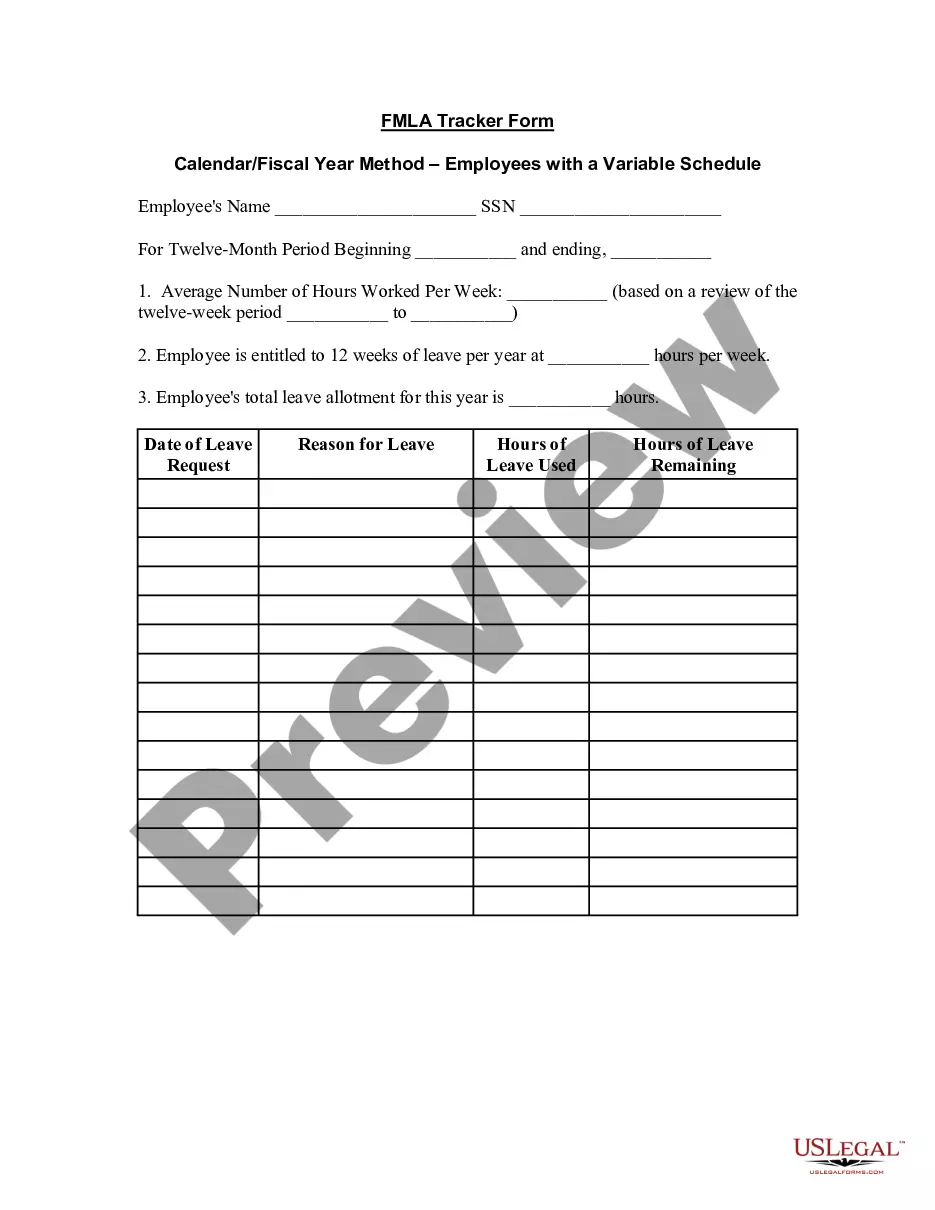
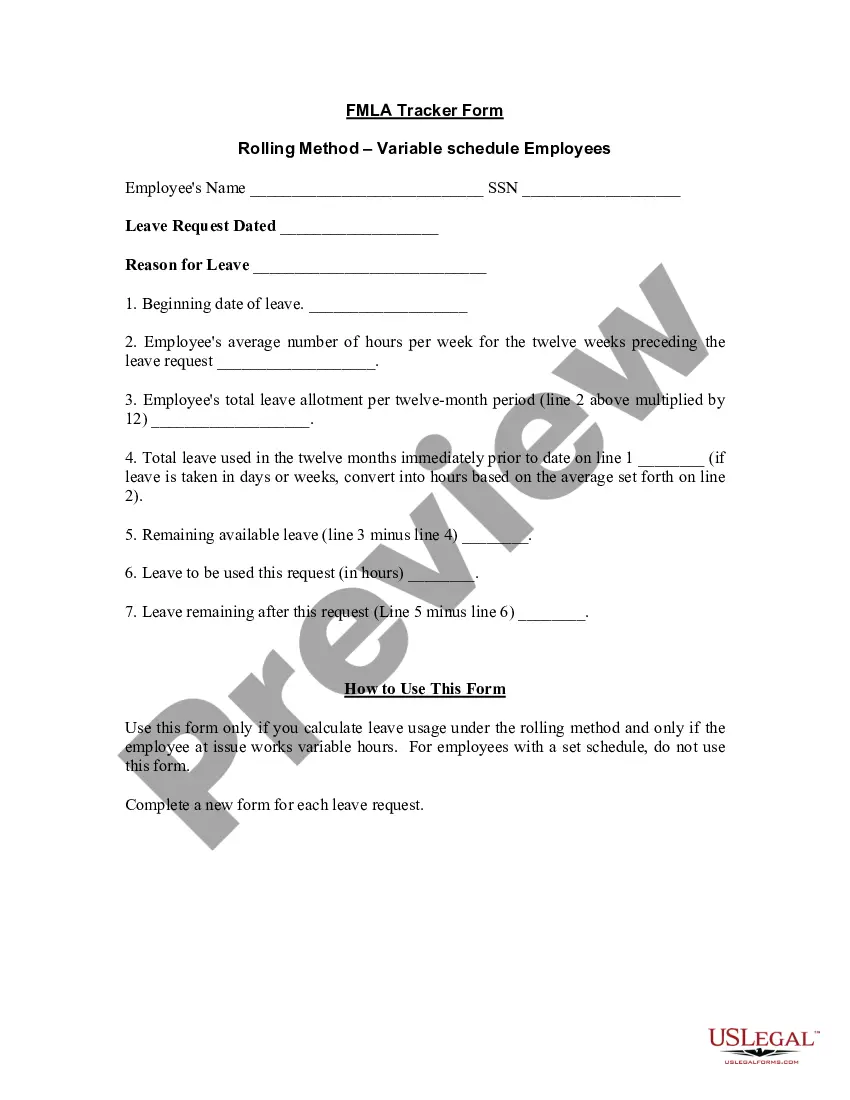
Get your form ready online
Our built-in tools help you complete, sign, share, and store your documents in one place.
Make edits, fill in missing information, and update formatting in US Legal Forms—just like you would in MS Word.
Download a copy, print it, send it by email, or mail it via USPS—whatever works best for your next step.
Sign and collect signatures with our SignNow integration. Send to multiple recipients, set reminders, and more. Go Premium to unlock E-Sign.
If this form requires notarization, complete it online through a secure video call—no need to meet a notary in person or wait for an appointment.
We protect your documents and personal data by following strict security and privacy standards.

Make edits, fill in missing information, and update formatting in US Legal Forms—just like you would in MS Word.

Download a copy, print it, send it by email, or mail it via USPS—whatever works best for your next step.

Sign and collect signatures with our SignNow integration. Send to multiple recipients, set reminders, and more. Go Premium to unlock E-Sign.

If this form requires notarization, complete it online through a secure video call—no need to meet a notary in person or wait for an appointment.

We protect your documents and personal data by following strict security and privacy standards.
Looking for another form?

How to fill out FMLA Tracker Form - Year Measured From Date Of Request - Employees With Set Schedule?
Are you currently in a situation where you require documents for either business or personal purposes almost every day.
There are numerous legal document templates available online, but finding reliable ones can be challenging.
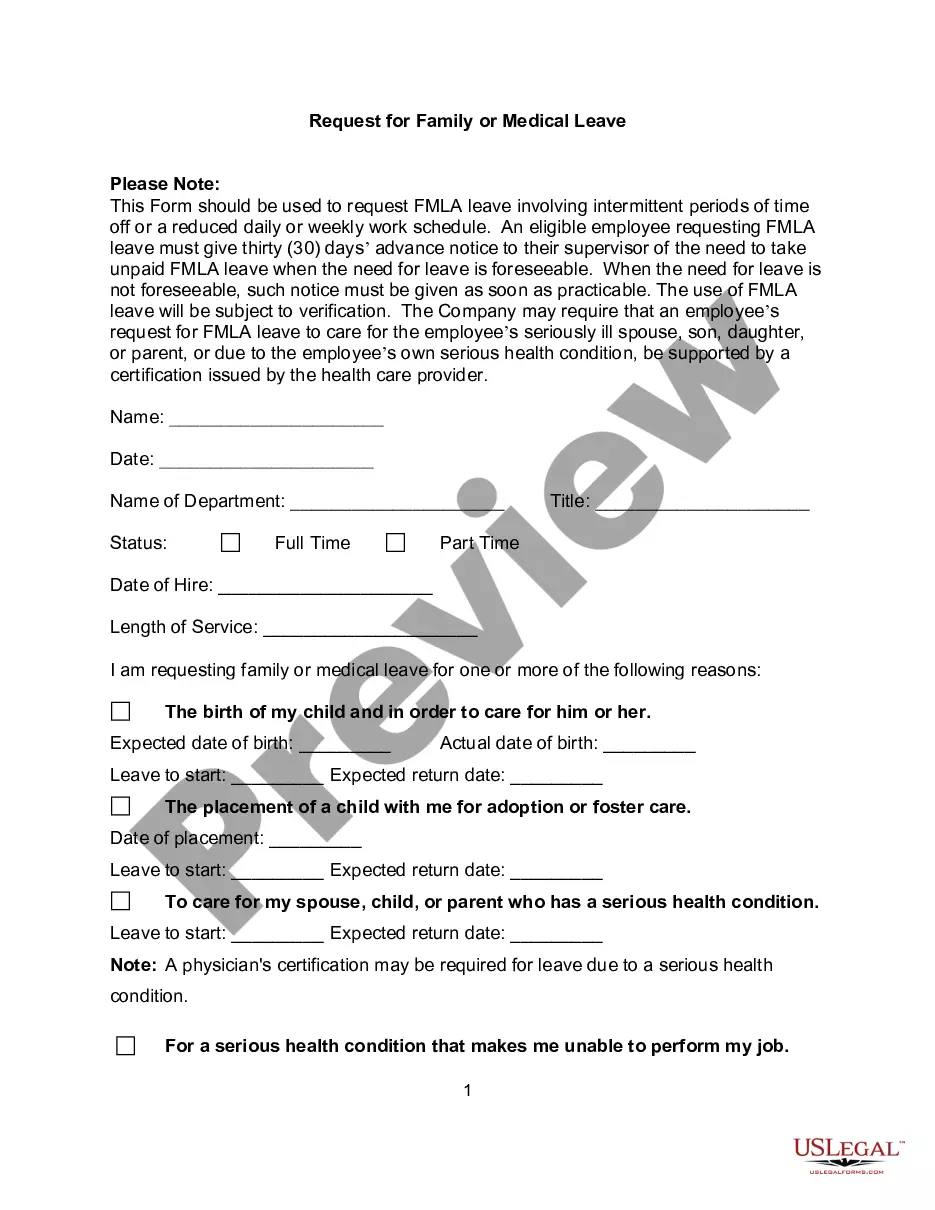
US Legal Forms offers a vast collection of form templates, such as the Pennsylvania FMLA Tracker Form - Year Measured from Date of Request - Employees with Set Schedule, which are designed to comply with state and federal requirements.
You can locate all the form templates you have purchased in the My documents menu.
You can access an additional copy of the Pennsylvania FMLA Tracker Form - Year Measured from Date of Request - Employees with Set Schedule at any time if needed. Just click on the necessary form to download or print the document template.
- If you are already familiar with the US Legal Forms website and have an account, simply Log In.
- After that, you can download the Pennsylvania FMLA Tracker Form - Year Measured from Date of Request - Employees with Set Schedule template.
- If you do not have an account and wish to start using US Legal Forms, follow these steps.
- Select the form you need and ensure it aligns with the appropriate city/region.
- Use the Review option to examine the form.
- Read the description to confirm that you have chosen the correct form.
- If the form is not what you're looking for, use the Lookup field to find the form that suits your needs and requirements.
- Once you find the right form, click on Get now.
- Choose the pricing plan you prefer, complete the required information to create your account, and purchase the order with your PayPal or Visa or Mastercard.
- Select a convenient file format and download your copy.
Form popularity
FAQ
Using this method, the employer will look back over the last 12 months from the date of the request, add all FMLA time the employee has used during the previous 12 months and subtract that total from the employee's 12-week leave allotment.
Under the ''rolling'' 12-month period, each time an employee takes FMLA leave, the remaining leave entitlement would be the balance of the 12 weeks which has not been used during the immediately preceding 12 months. 2022
Under the ''rolling'' 12-month period, each time an employee takes FMLA leave, the remaining leave entitlement would be the balance of the 12 weeks which has not been used during the immediately preceding 12 months. Example 1: Michael requests three weeks of FMLA leave to begin on July 31st.
The amount of FMLA leave taken is divided by the number of hours the employee would have worked if the employee had not taken leave of any kind (including FMLA leave) to determine the proportion of the FMLA workweek used.
For example, an employer considers Thanksgiving a holiday and is closed on that day, and none of its employees work. One of its employees is taking 12 weeks of unpaid FMLA leave the last 12 weeks of the calendar year. The employer would count Thanksgiving Day as FMLA leave for that employee.
One of the easiest methods by which an employer can track FMLA leave is to place all employees on a calendar year track. This means that each employee can take 12 weeks of FMLA leave anytime between January and December, and the calculations reset on January 1 of each year.
An employee's 12-week FMLA leave can be calculated using the calendar year, any fixed 12-month year, the first day of FMLA leave or a rolling period.