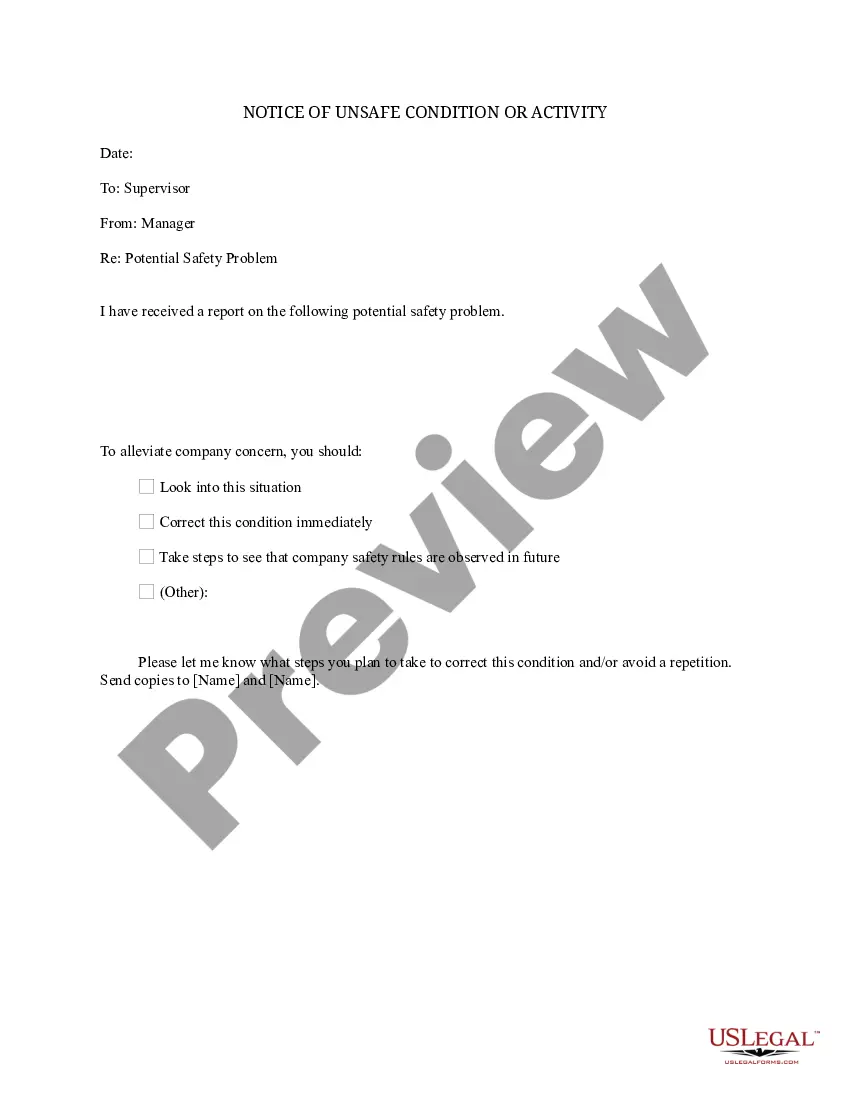
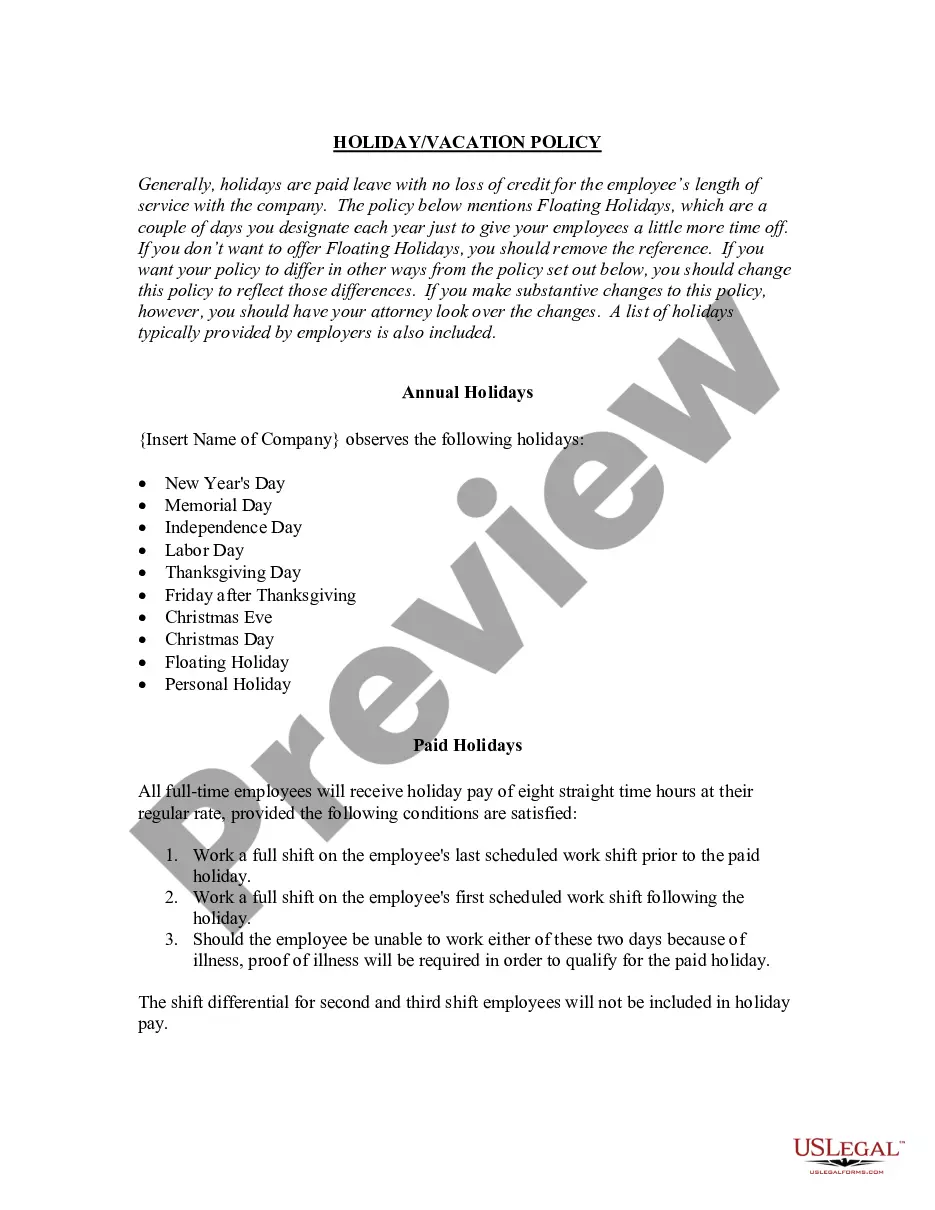
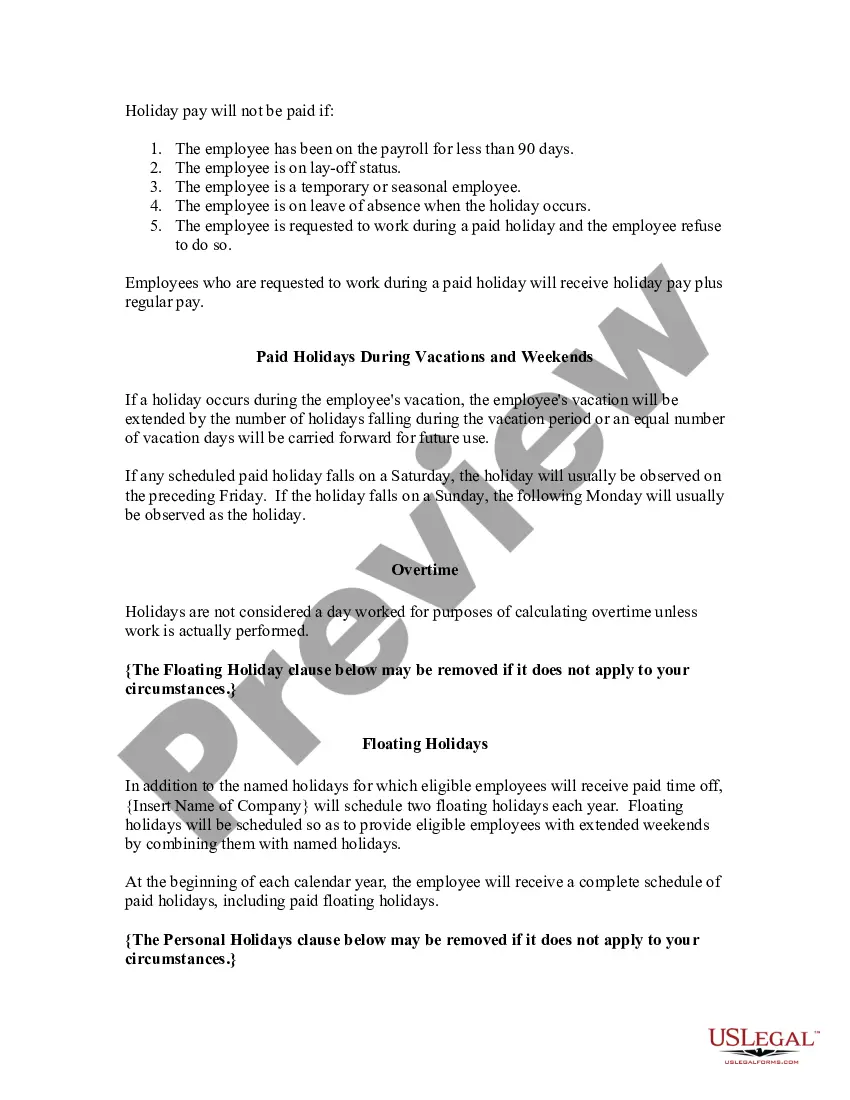
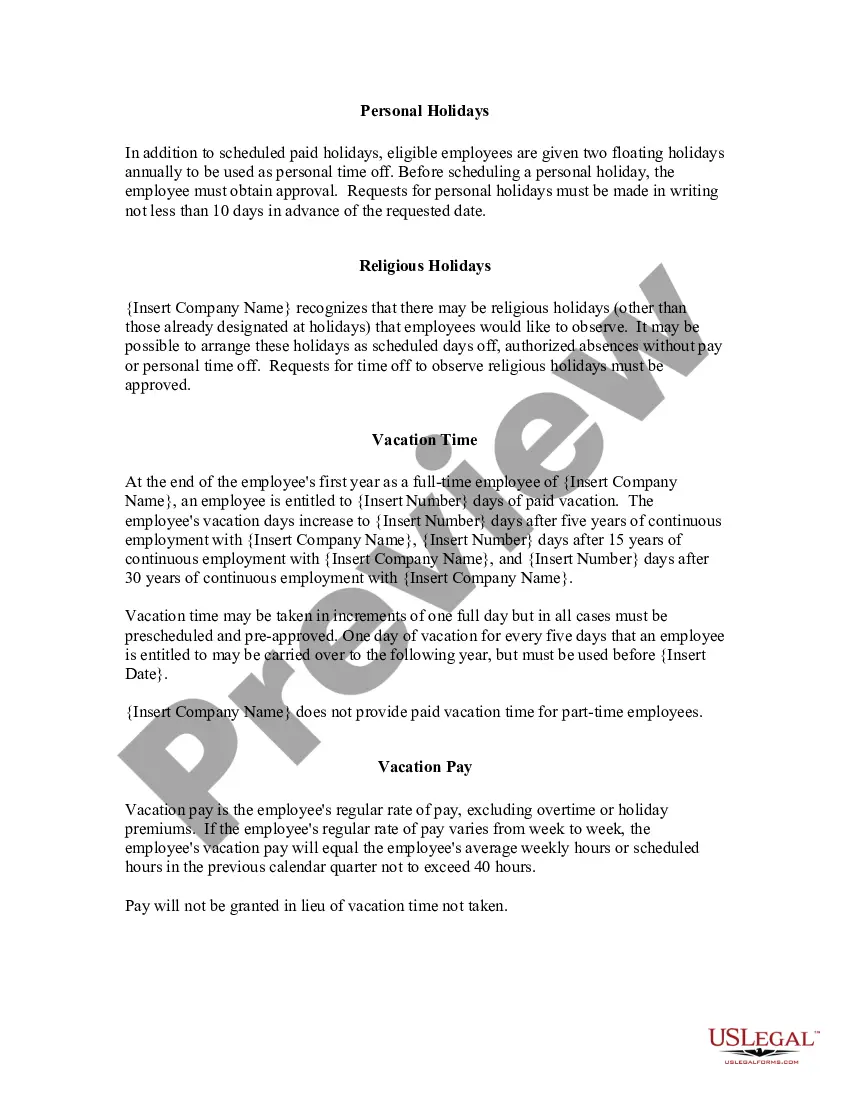
Pennsylvania Holiday Vacation Policy
Description
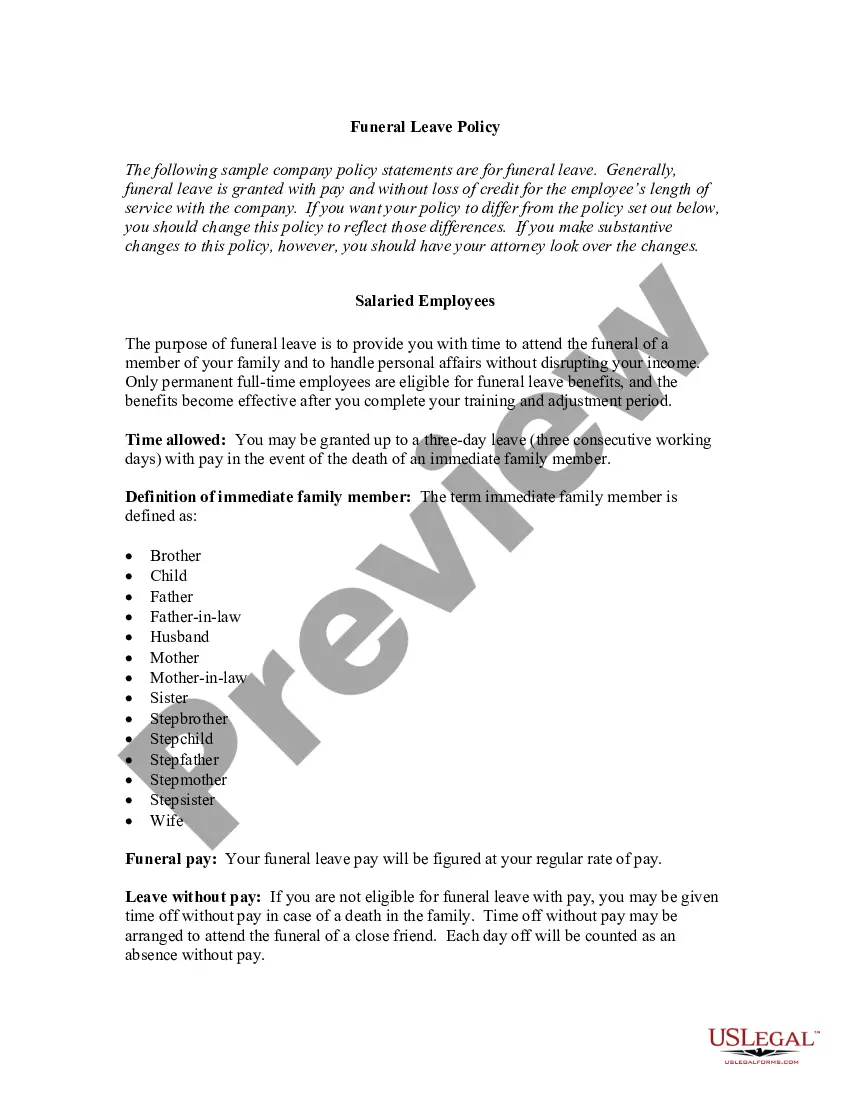
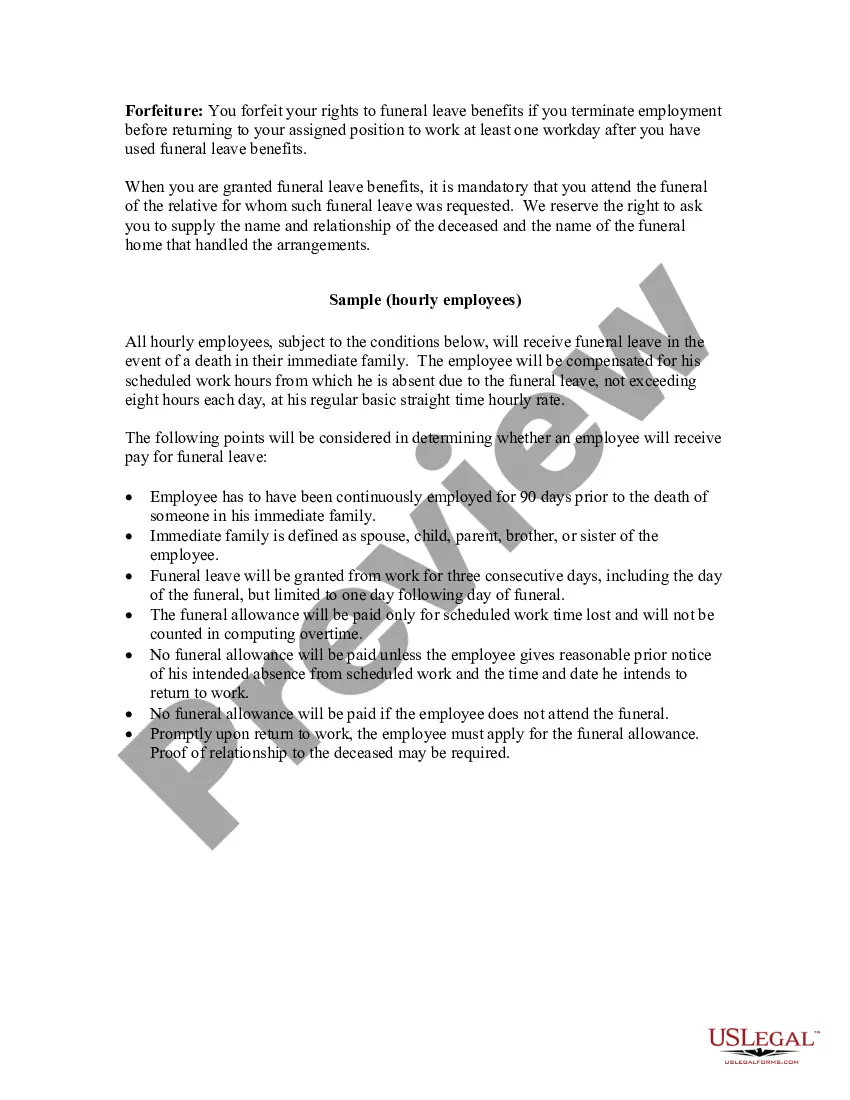
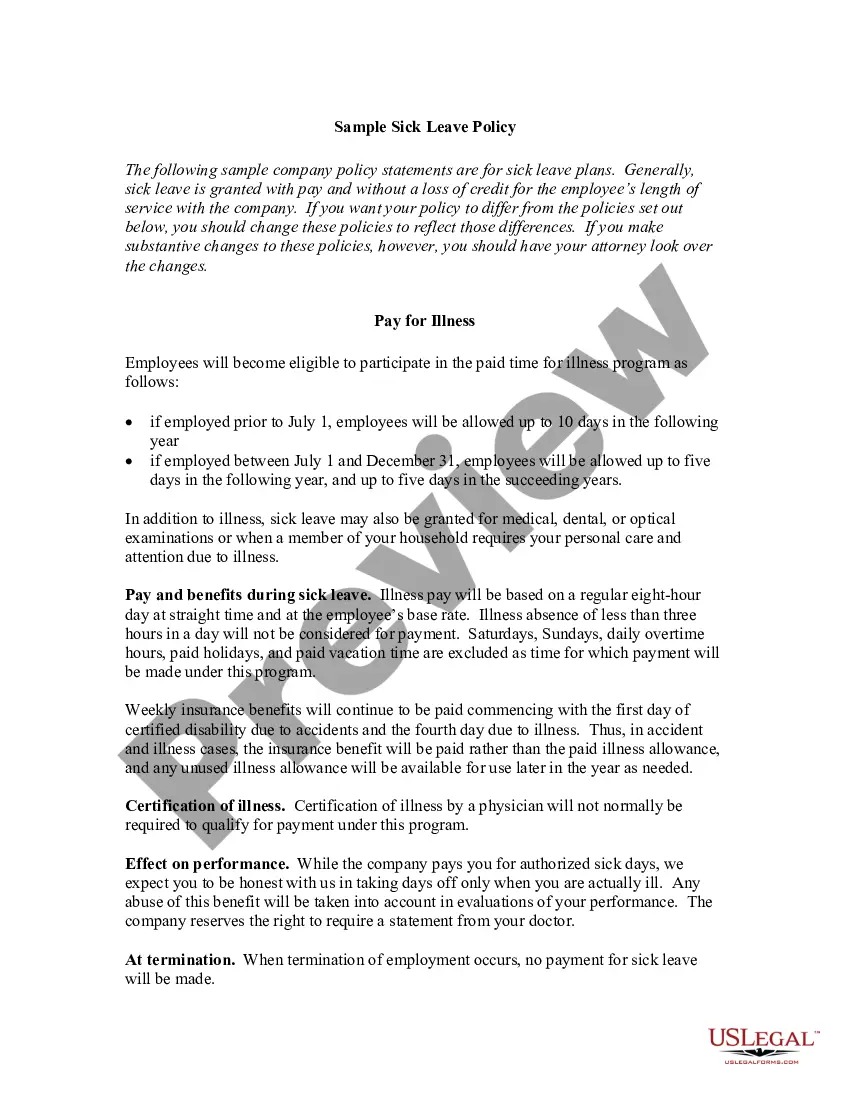

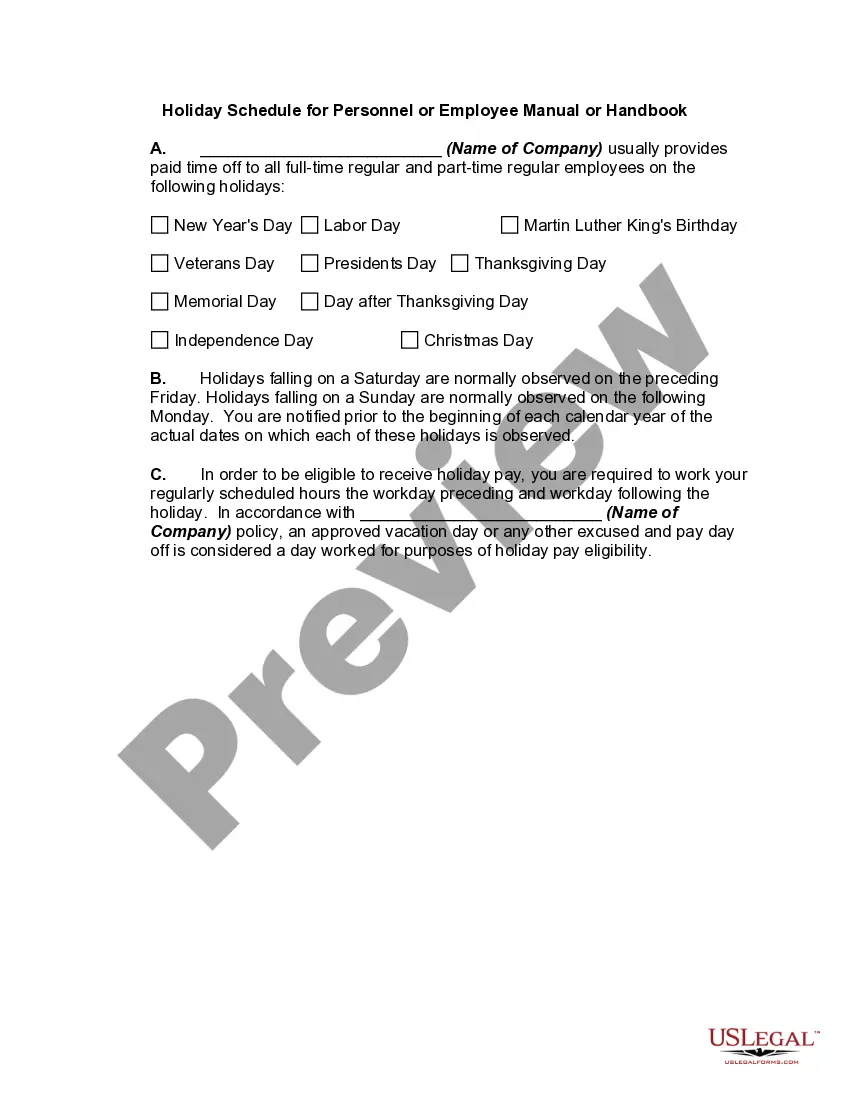

Get your form ready online
Our built-in tools help you complete, sign, share, and store your documents in one place.
Make edits, fill in missing information, and update formatting in US Legal Forms—just like you would in MS Word.
Download a copy, print it, send it by email, or mail it via USPS—whatever works best for your next step.
Sign and collect signatures with our SignNow integration. Send to multiple recipients, set reminders, and more. Go Premium to unlock E-Sign.
If this form requires notarization, complete it online through a secure video call—no need to meet a notary in person or wait for an appointment.
We protect your documents and personal data by following strict security and privacy standards.

Make edits, fill in missing information, and update formatting in US Legal Forms—just like you would in MS Word.

Download a copy, print it, send it by email, or mail it via USPS—whatever works best for your next step.

Sign and collect signatures with our SignNow integration. Send to multiple recipients, set reminders, and more. Go Premium to unlock E-Sign.

If this form requires notarization, complete it online through a secure video call—no need to meet a notary in person or wait for an appointment.

We protect your documents and personal data by following strict security and privacy standards.
Looking for another form?




How to fill out Holiday Vacation Policy?
Have you ever found yourself in a scenario where you require documents for either business or personal reasons on a daily basis.
There are numerous legitimate document templates accessible online, but locating ones you can trust is challenging.
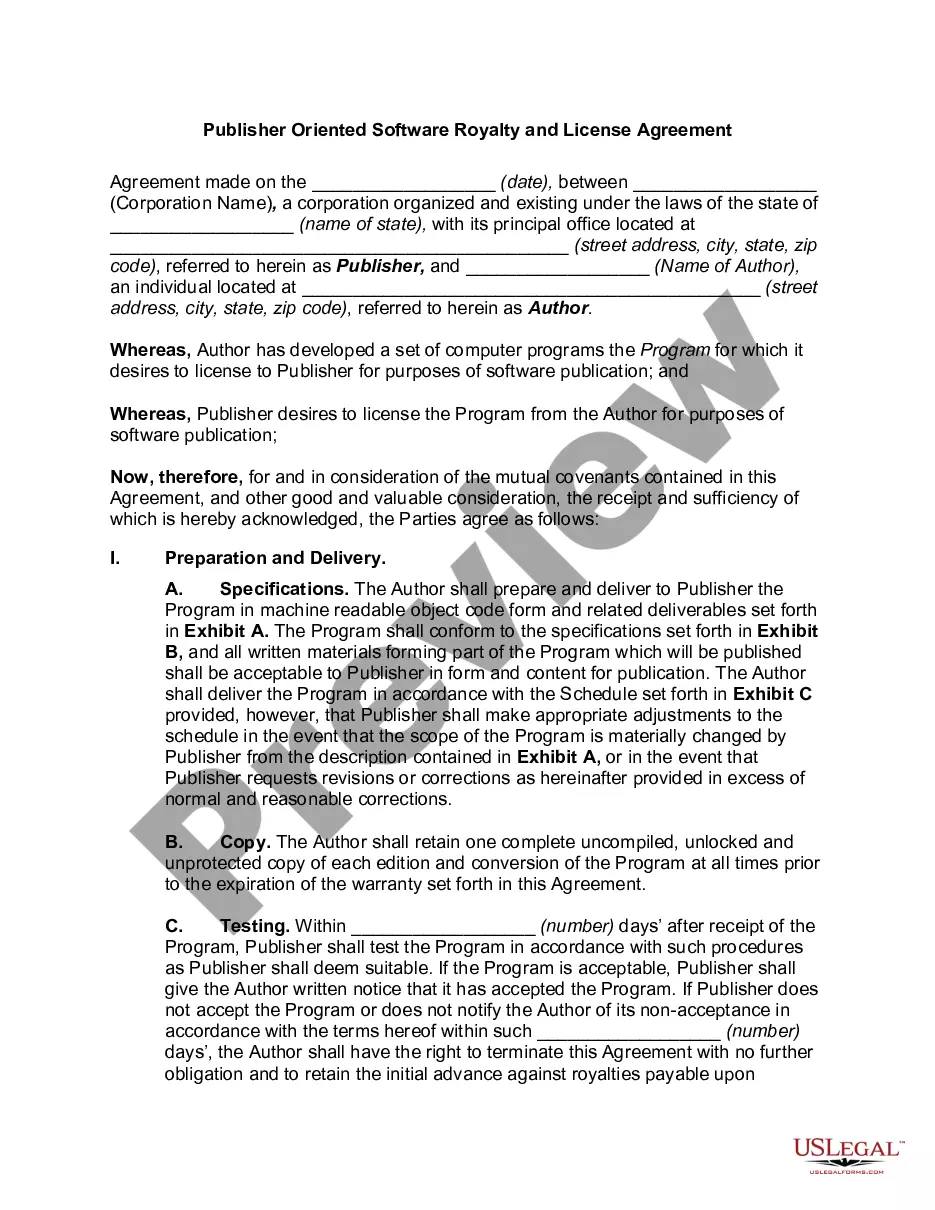
US Legal Forms provides a vast array of form templates, including the Pennsylvania Holiday Vacation Policy, which can be customized to comply with state and federal regulations.
Once you acquire the correct form, click Purchase now.
Choose the payment plan you desire, fill in the required information to create your account, and pay for the order using your PayPal or Visa or MasterCard.
- If you are already familiar with the US Legal Forms website and hold an account, simply Log In.
- Afterward, you can download the Pennsylvania Holiday Vacation Policy template.
- If you don’t have an account and wish to start using US Legal Forms, follow these steps.
- Retrieve the form you need and ensure it is suitable for the correct city/region.
- Utilize the Preview button to inspect the form.
- Check the description to confirm you have selected the appropriate form.
- If the form is not what you're searching for, use the Search field to find the form that fits your needs.
Form popularity
FAQ
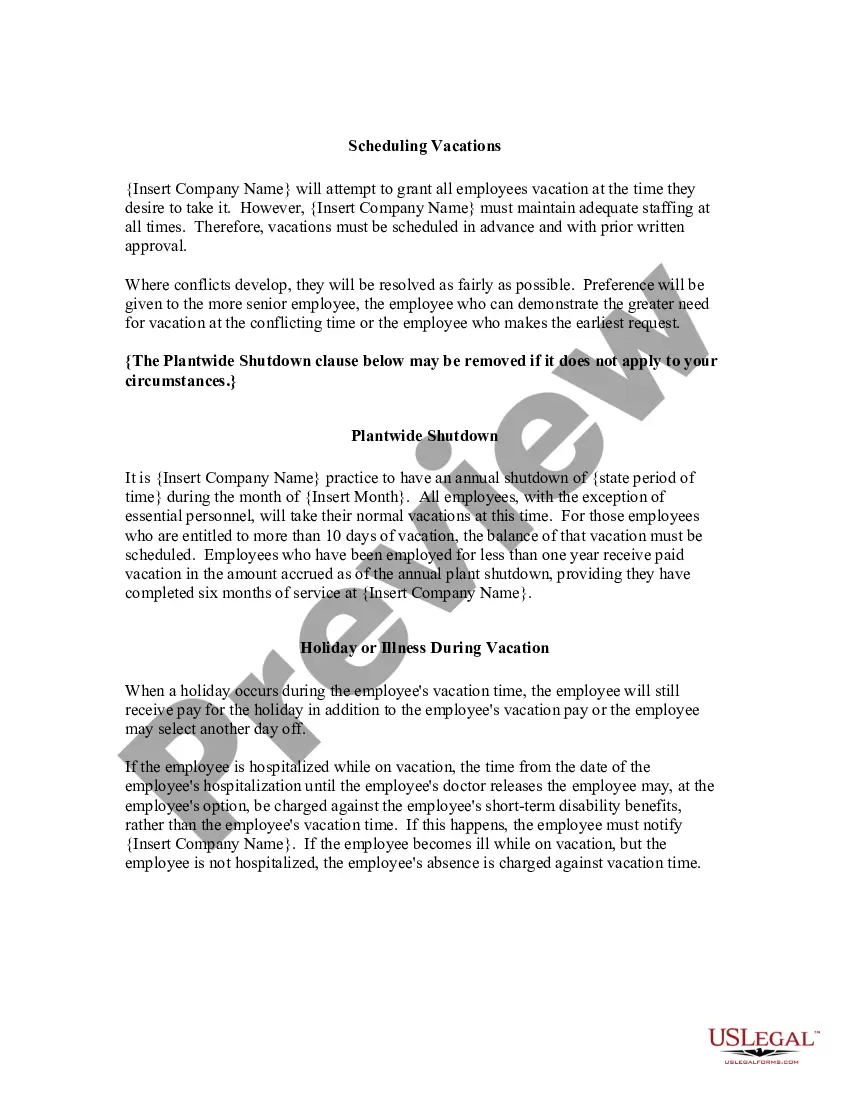
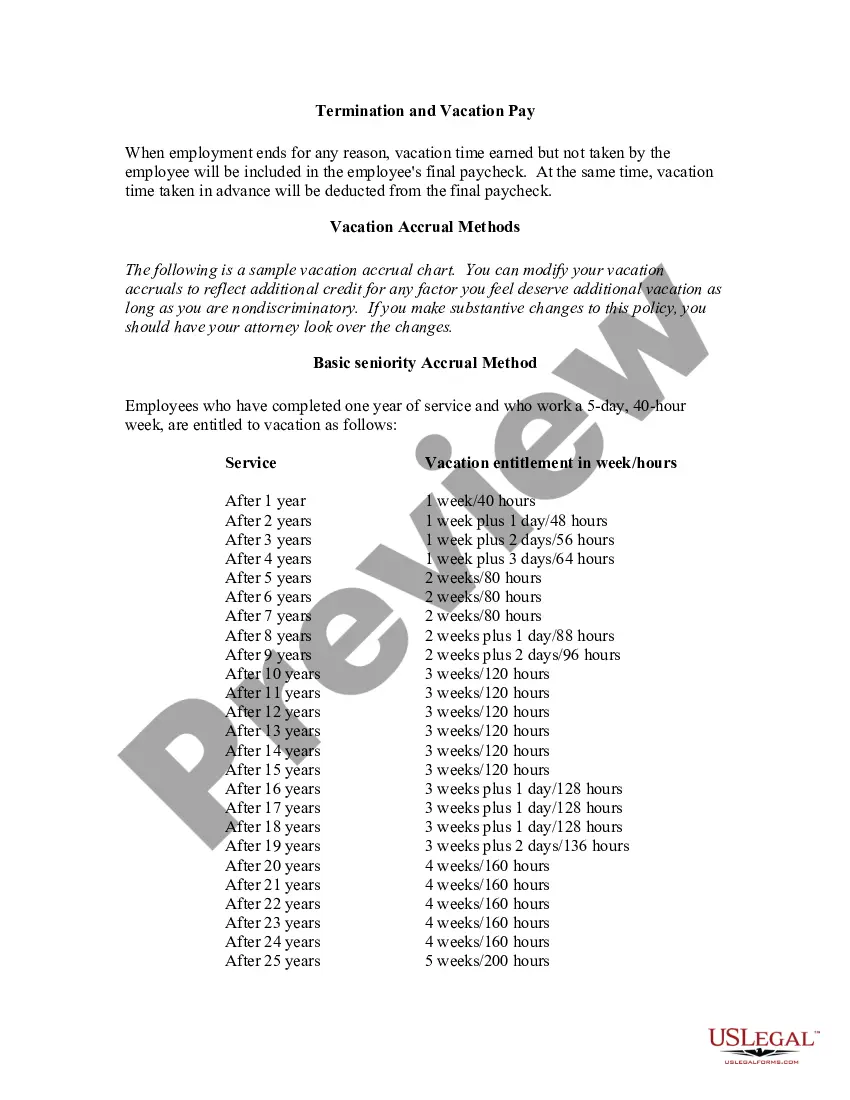
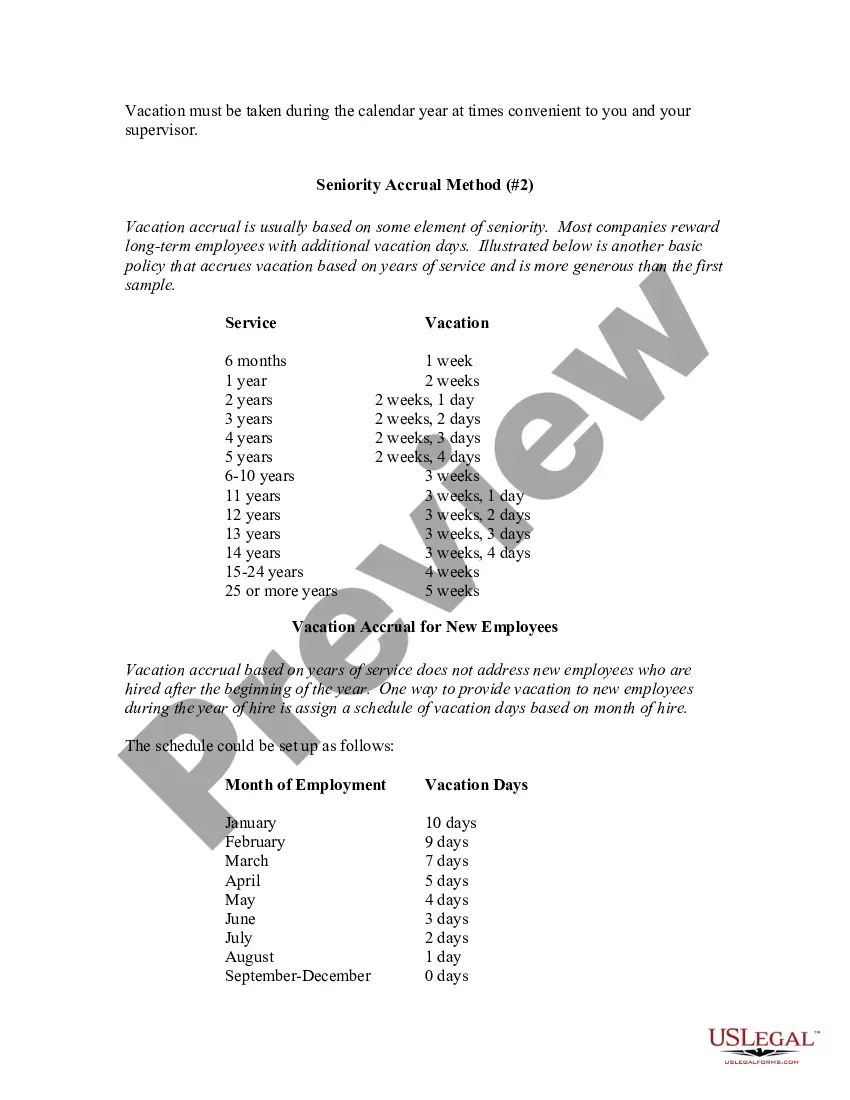
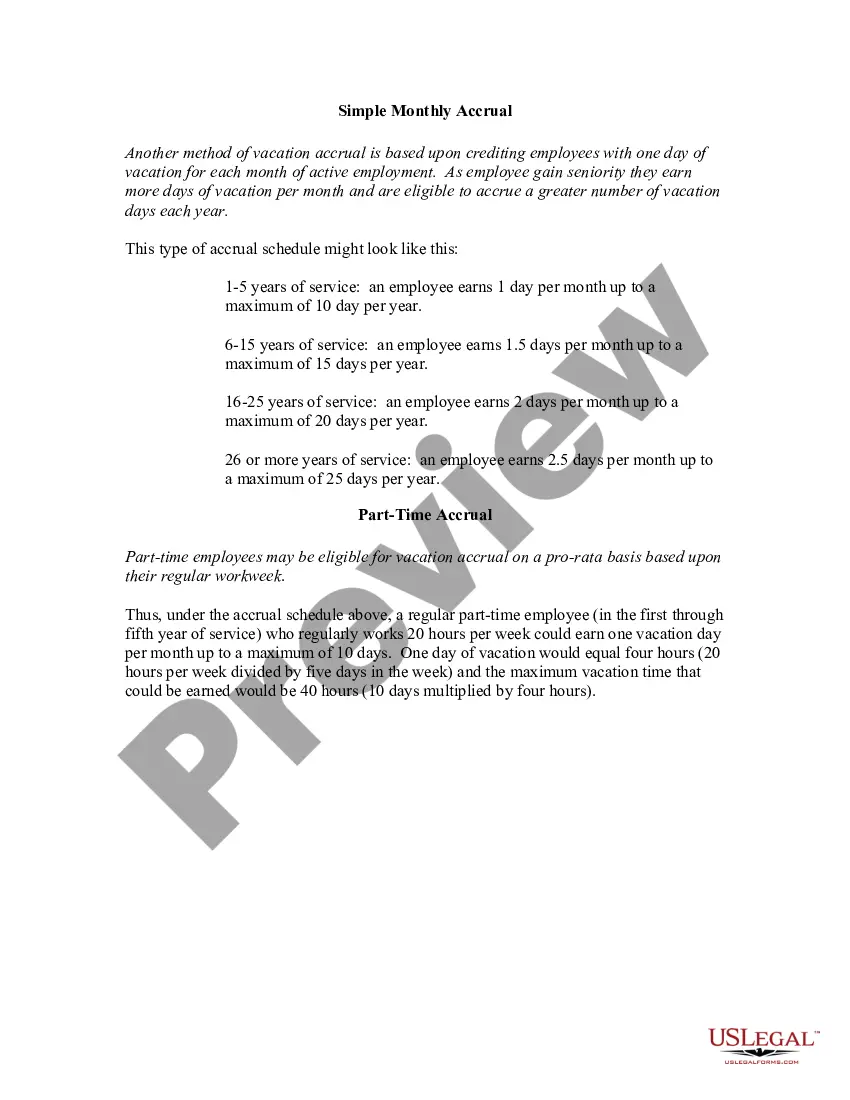
In Pennsylvania, employers are not required to provide employees with vacation benefits, either paid or unpaid. However, to the extent an employer chooses to provide such benefits, it must comply with the terms of its established policy or employment contract.
It depends on how many years you have worked for the state. Currently I am offered 15 annual days 4 personal and 11 sick days a year. As long as you have available vacation time, you can vacation. Earned at 3.33 hours per week.
Pennsylvania law does not require an employer to pay you for a holiday or pay you more than your regular wage if you work on a holiday. If your employer has a holiday pay policy, then they must follow it.
Right to payment for unused vacation time in Pennsylvania If an employer has a policy and practice of paying paid vacation time, the employer must pay a terminated worker for the unused vacation time that has been accrued at the time of the employee's separation.
Private employers often close on designated holidays, but are only required to pay non-exempt (usually salaried) workers their regular rate. Private employers are not obligated to pay employees a holiday premium (often 150 percent regular wages) if they work on those days.
The state of Pennsylvania has no statute governing vacation, sick, safe, PTO leave. It applies to employers with 10 or more employees and employees who work at least 40 hours a year in Philadelphia. Employers are required to give 1 hour for every 40 hours worked. The annual accrual cap is 40 hours.
Pennsylvania law considers accrued but unused vacation to be wages, and depending on the agreement between the employer and the employees, employers may be required to pay out accrued vacation on termination (43 P.S. § 260.2a; Harding, 882 F. Supp.
Yes, your employer can refuse your holiday request, for example during busy periods. If you have already booked your time off, your employer must give as much notice for you to cancel it as the amount of leave you have requested.
In general, all employees who perform work on regular workdays are entitled to receive holiday pay as mandated by the government. However, there are several employees who are exempted from receiving holiday pay benefits, such as: Employees for retail and service companies with less than ten (10) regular employees.